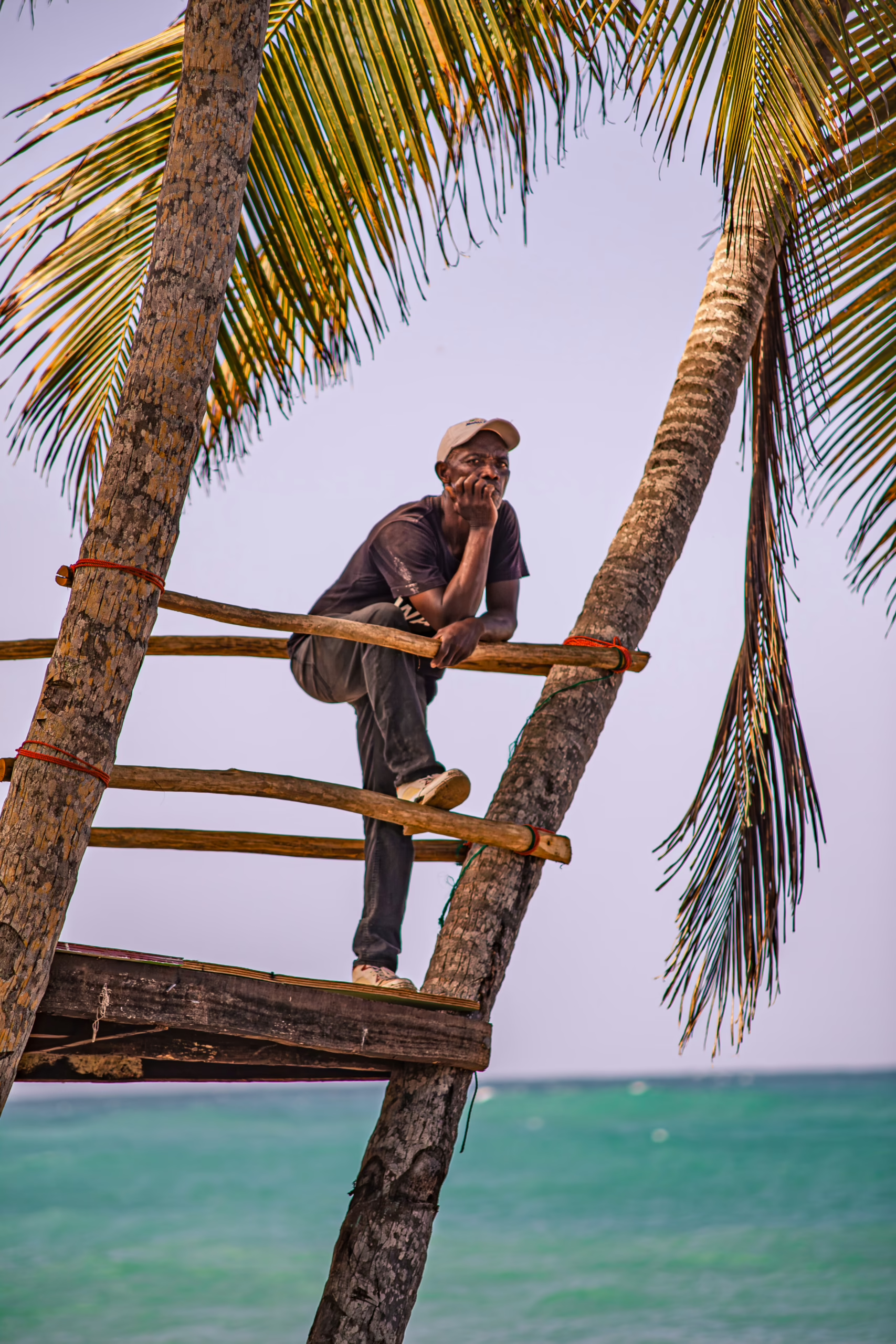
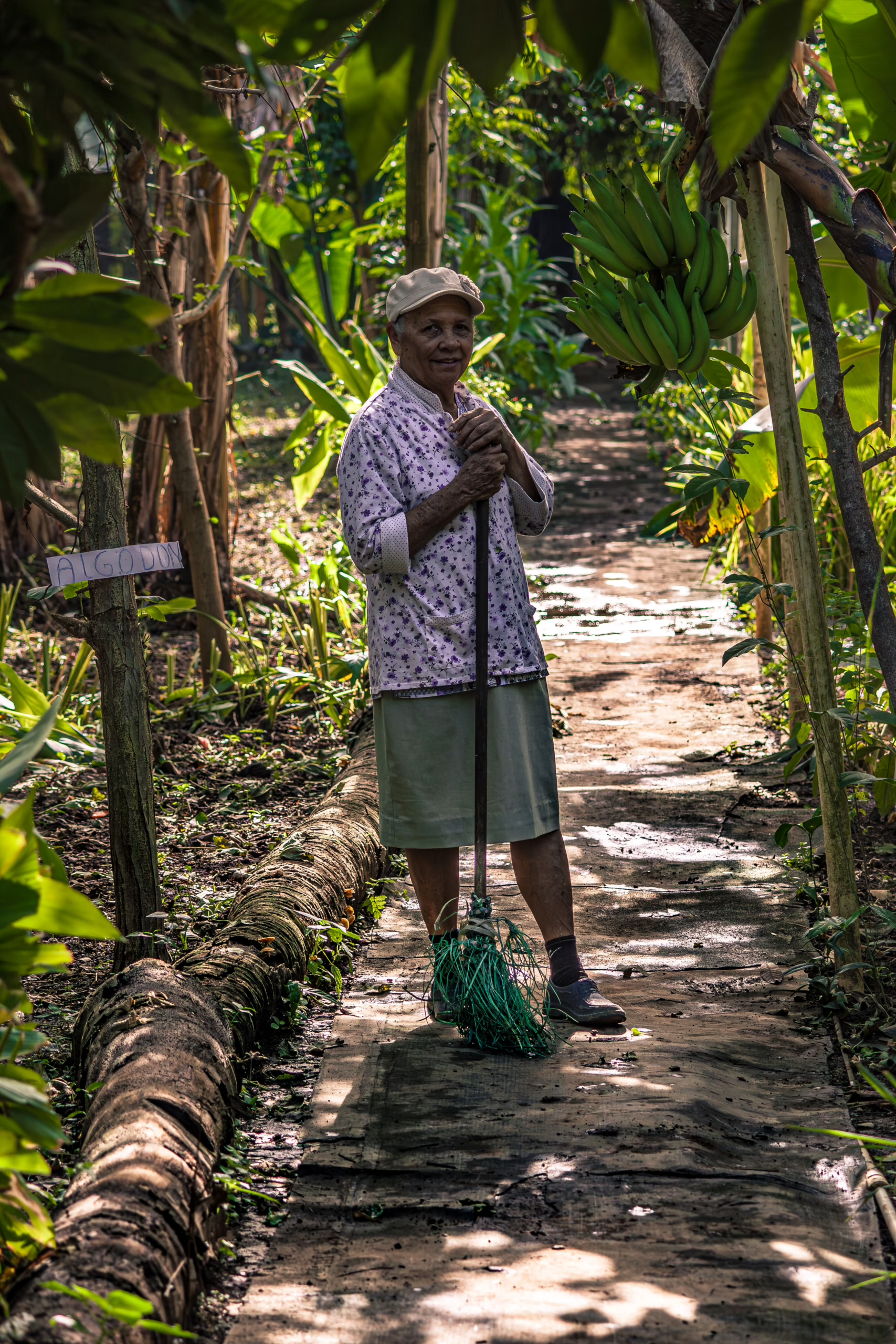
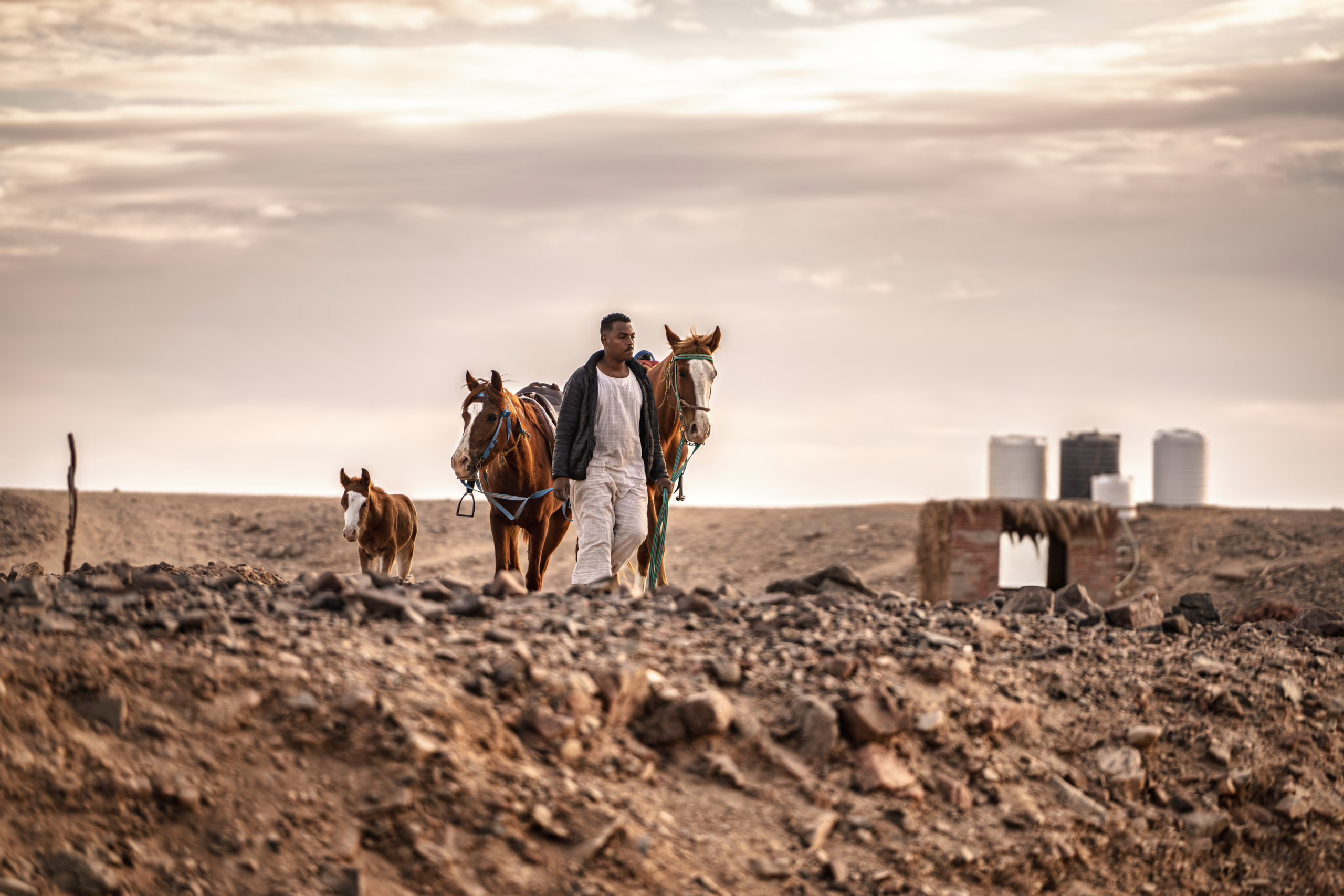
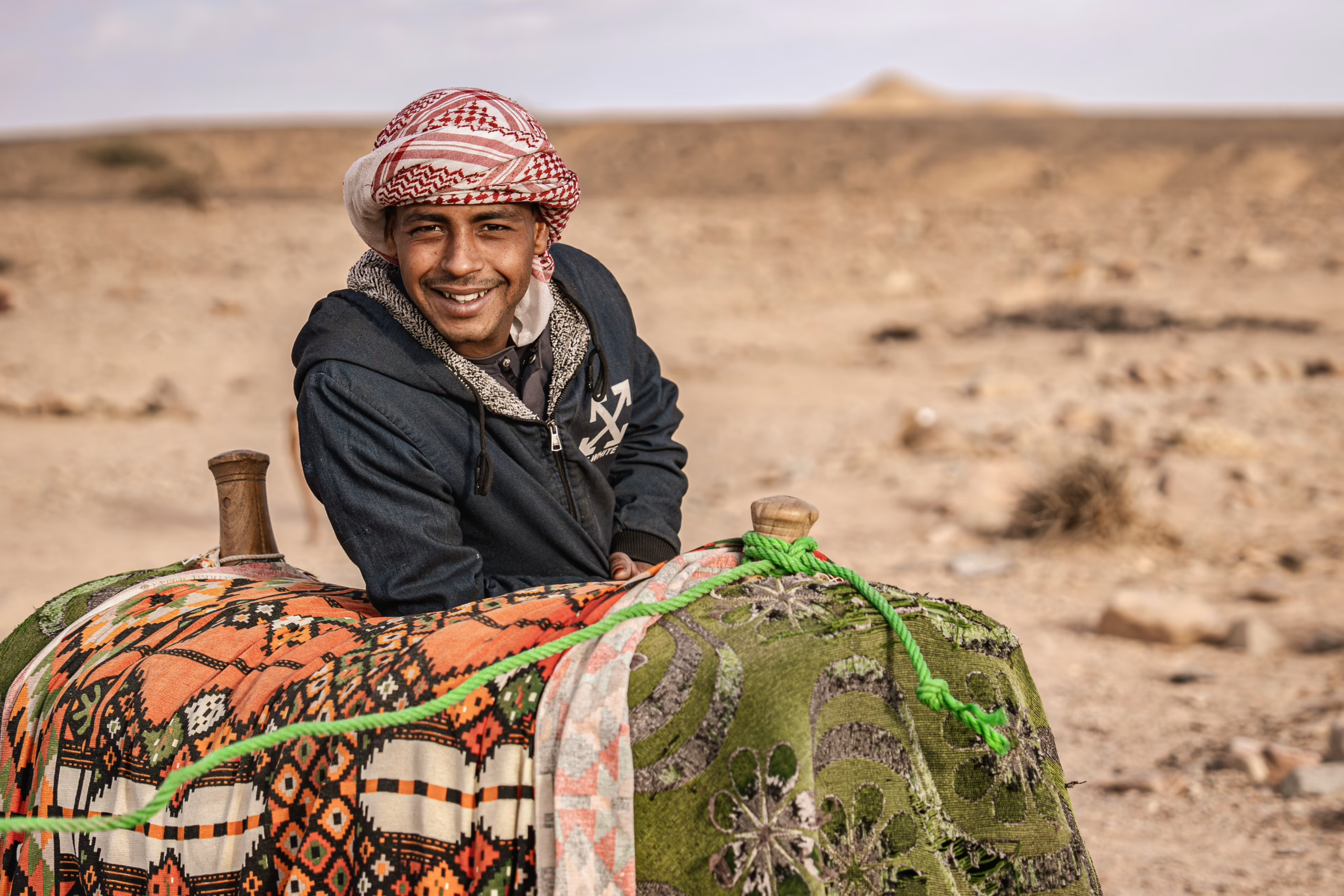
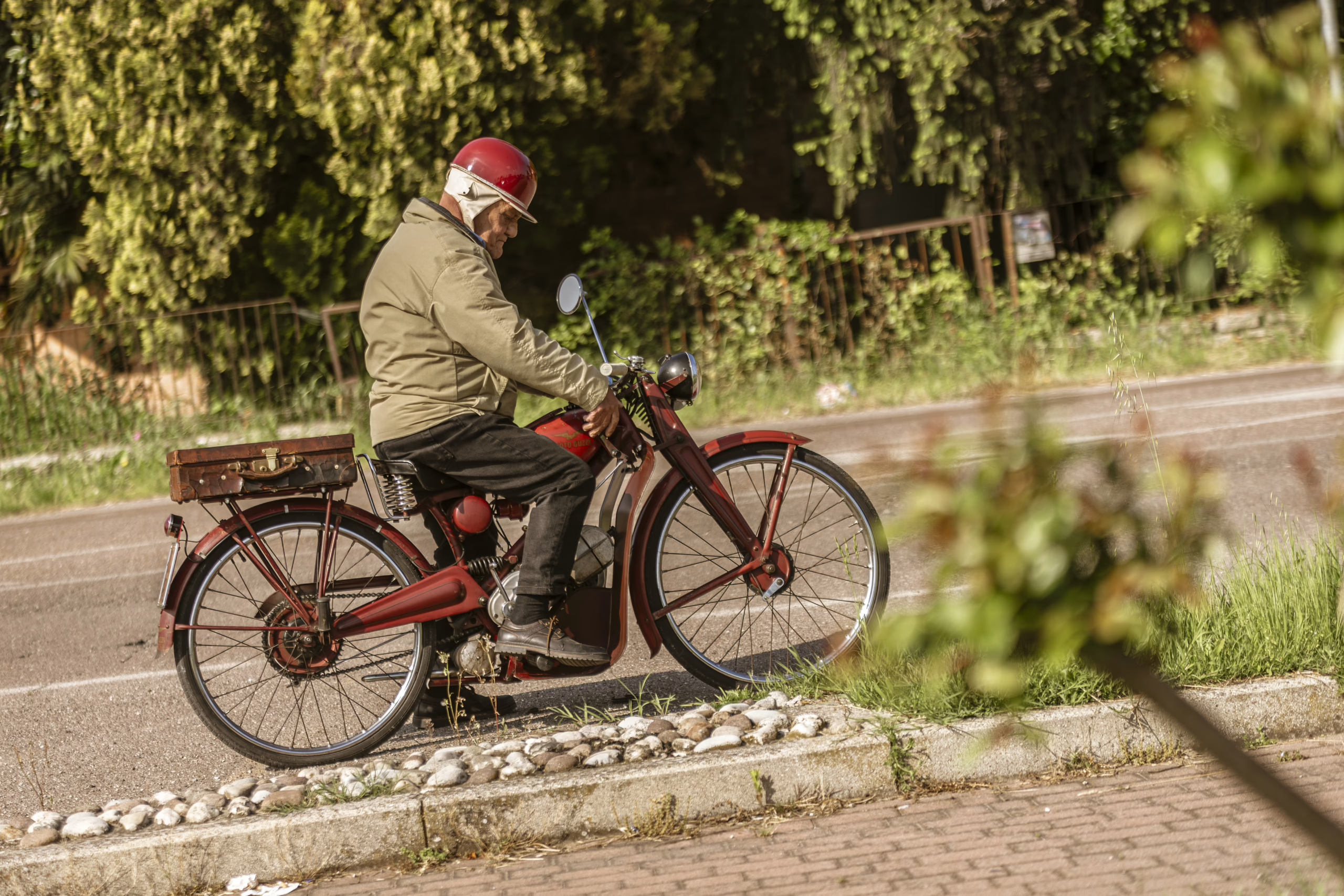
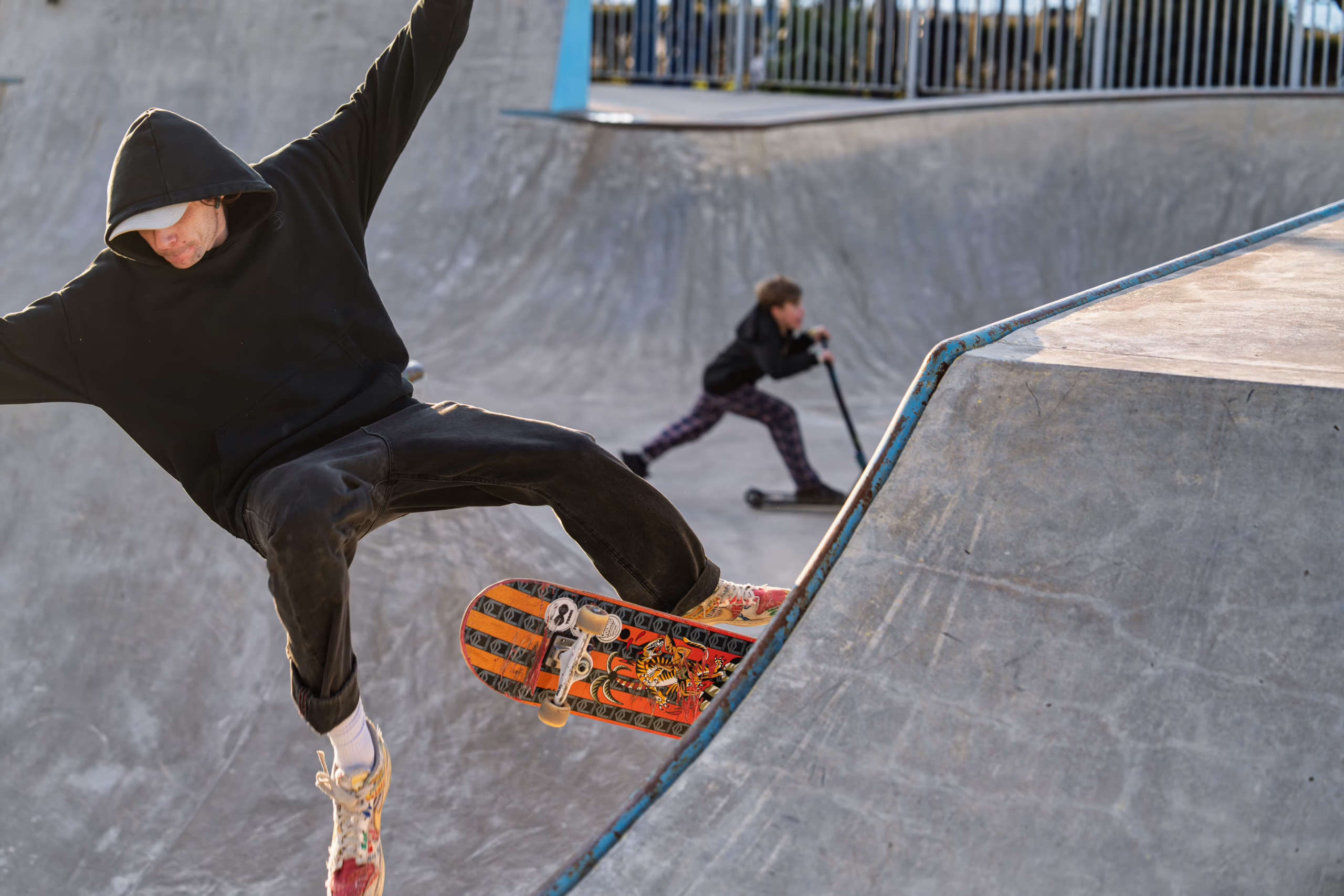
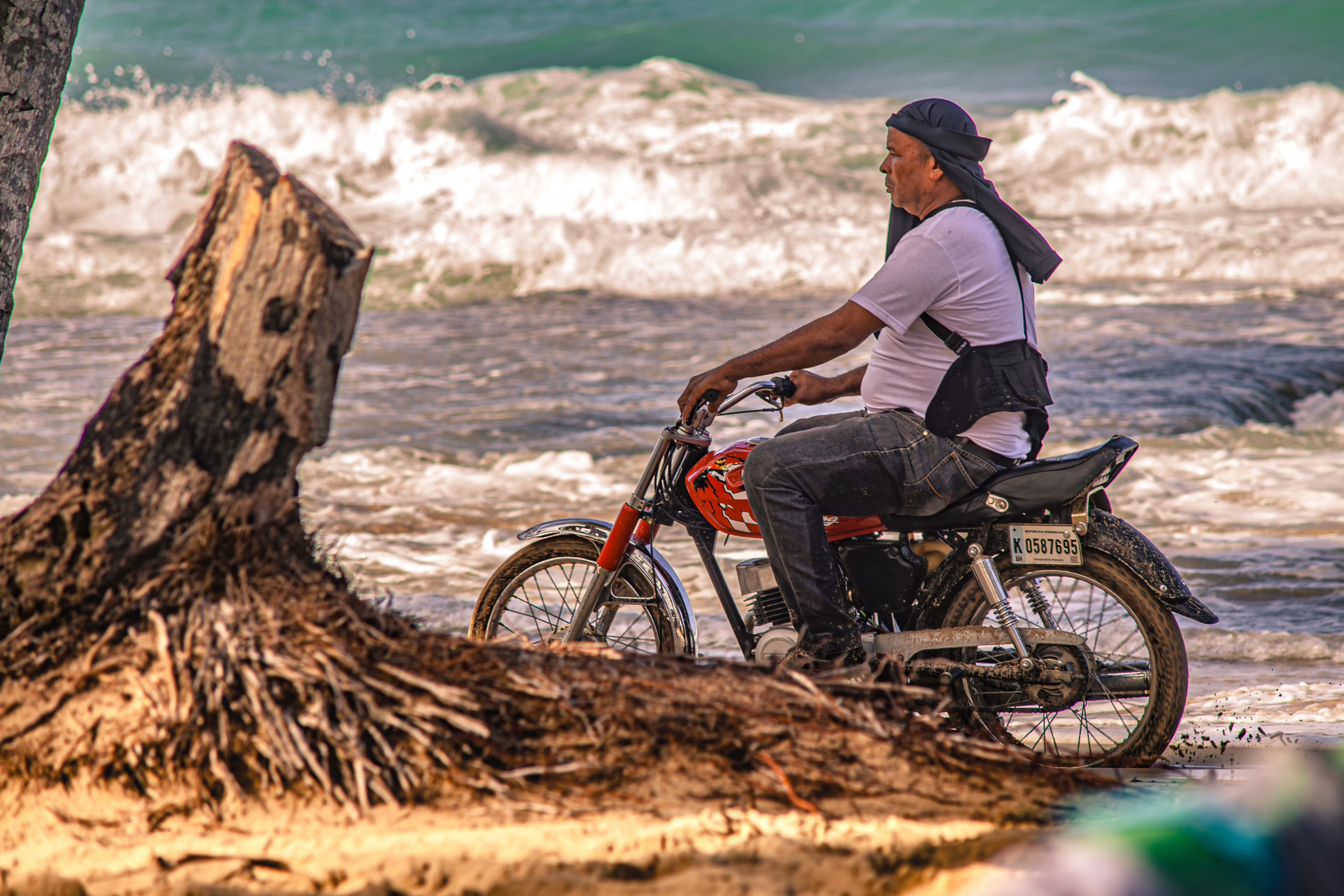
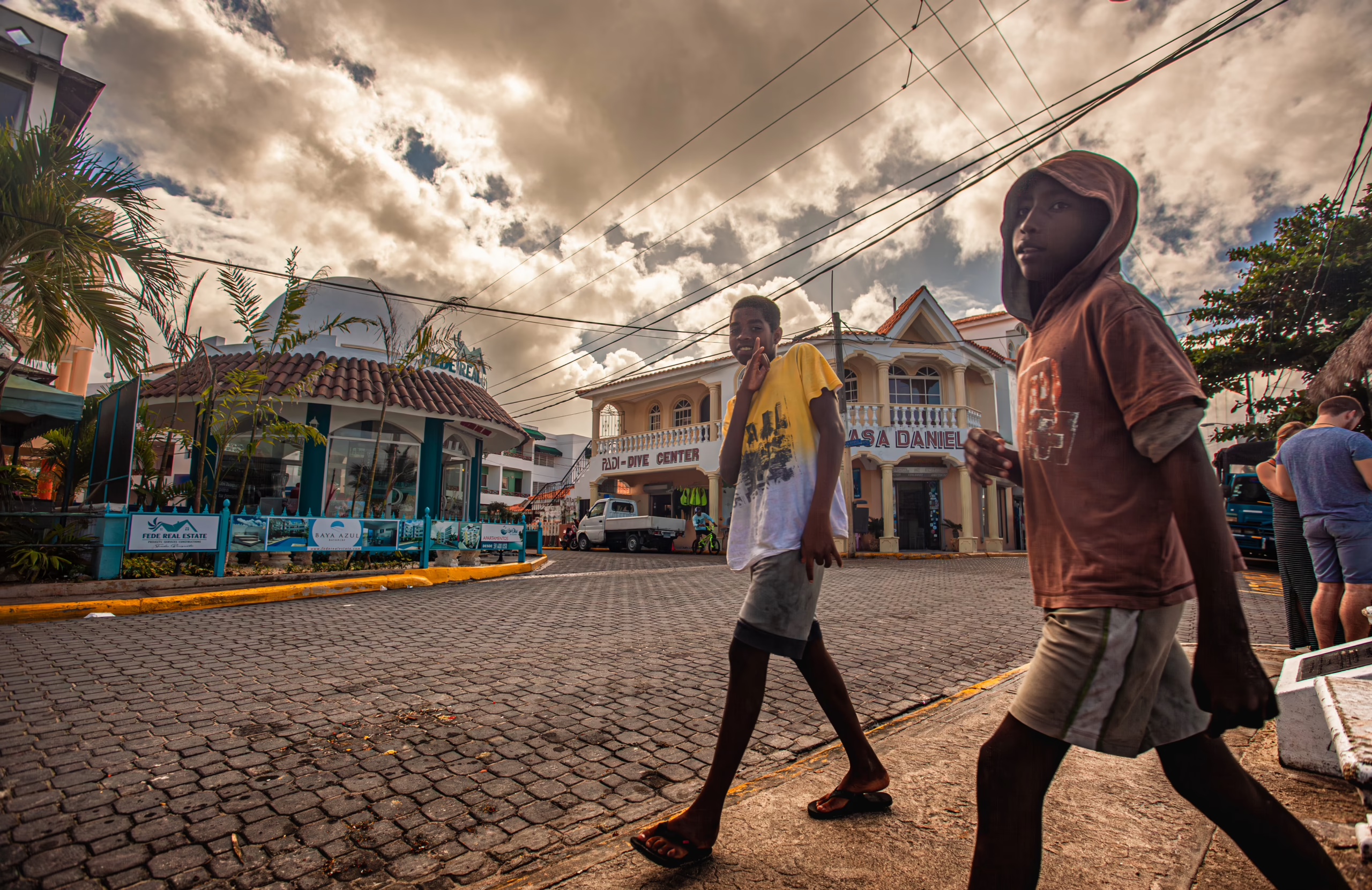
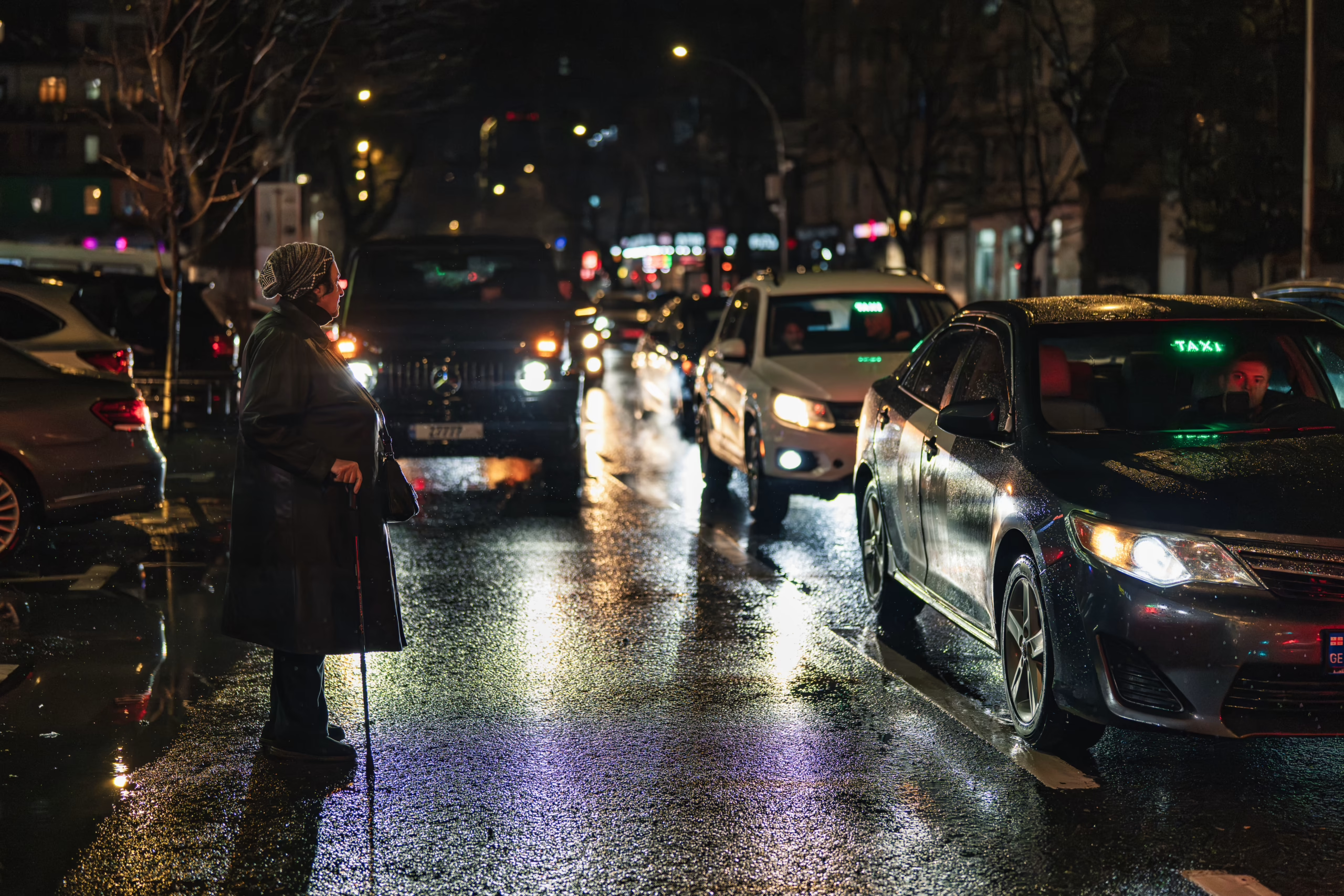
A collection of photographs, a genetically suspect species, and a few mitigating circumstances no one asked for
Before we begin, let us do something profoundly human: pass a definitive judgment on something we barely understand.
You will be the jury.
I will bring the photographs.
The defendant is the human being.
Yes, you too.
Do not make that face.
Do we deserve to go on existing?
If tomorrow a sufficiently advanced civilization parked a ship above the planet and asked you to prepare our defense, what would you show them?
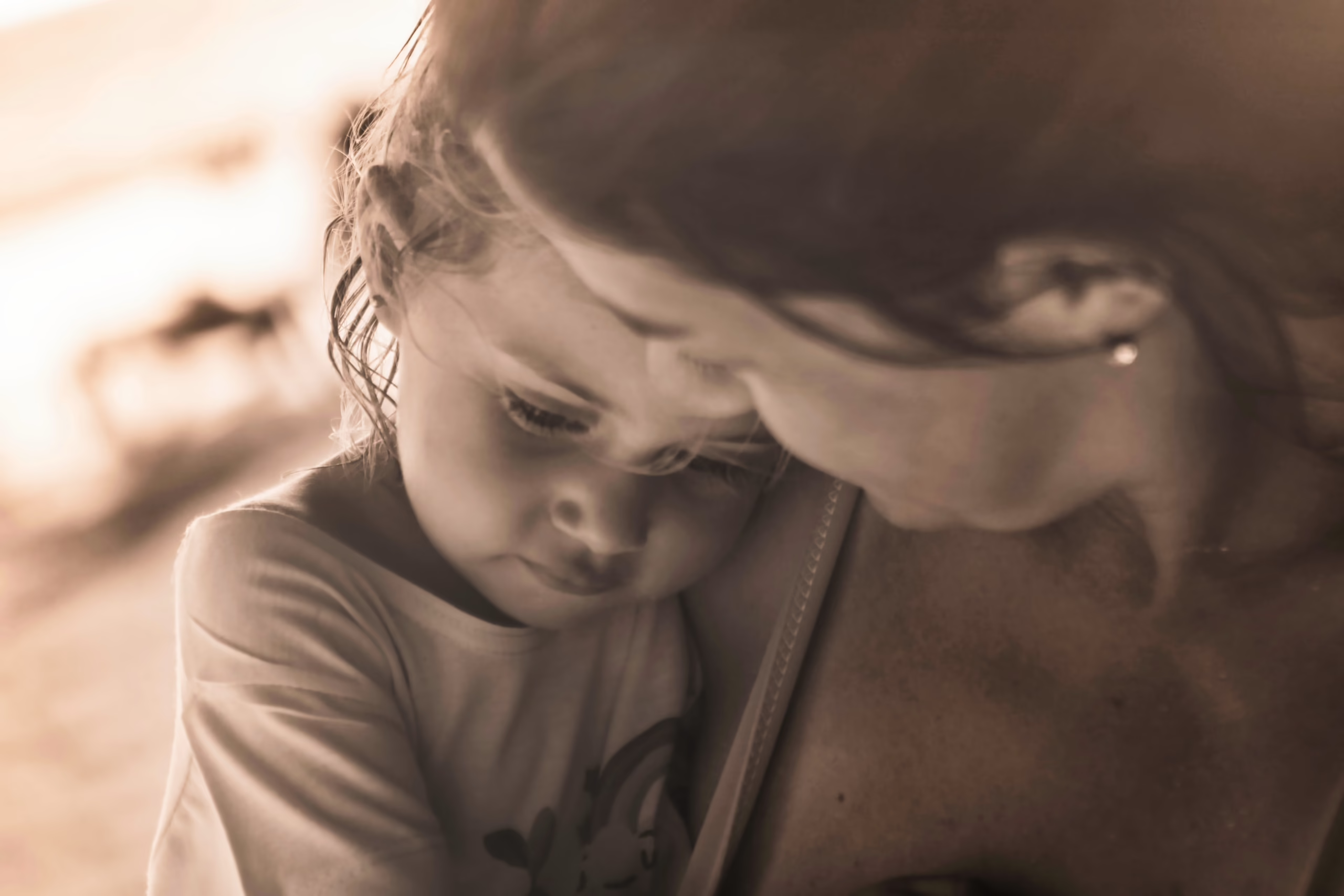
A father holding his daughter?
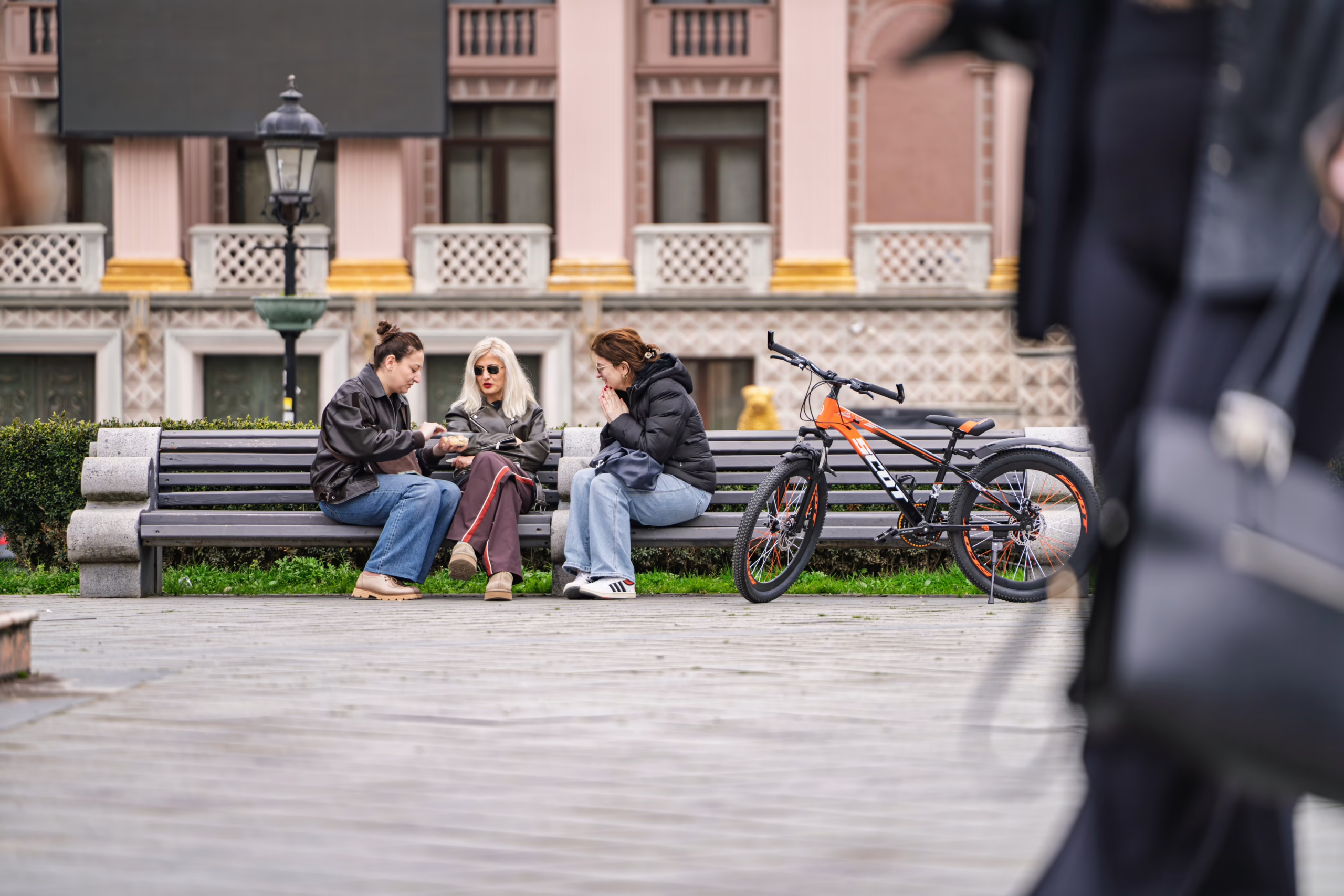
A woman sharing her food?
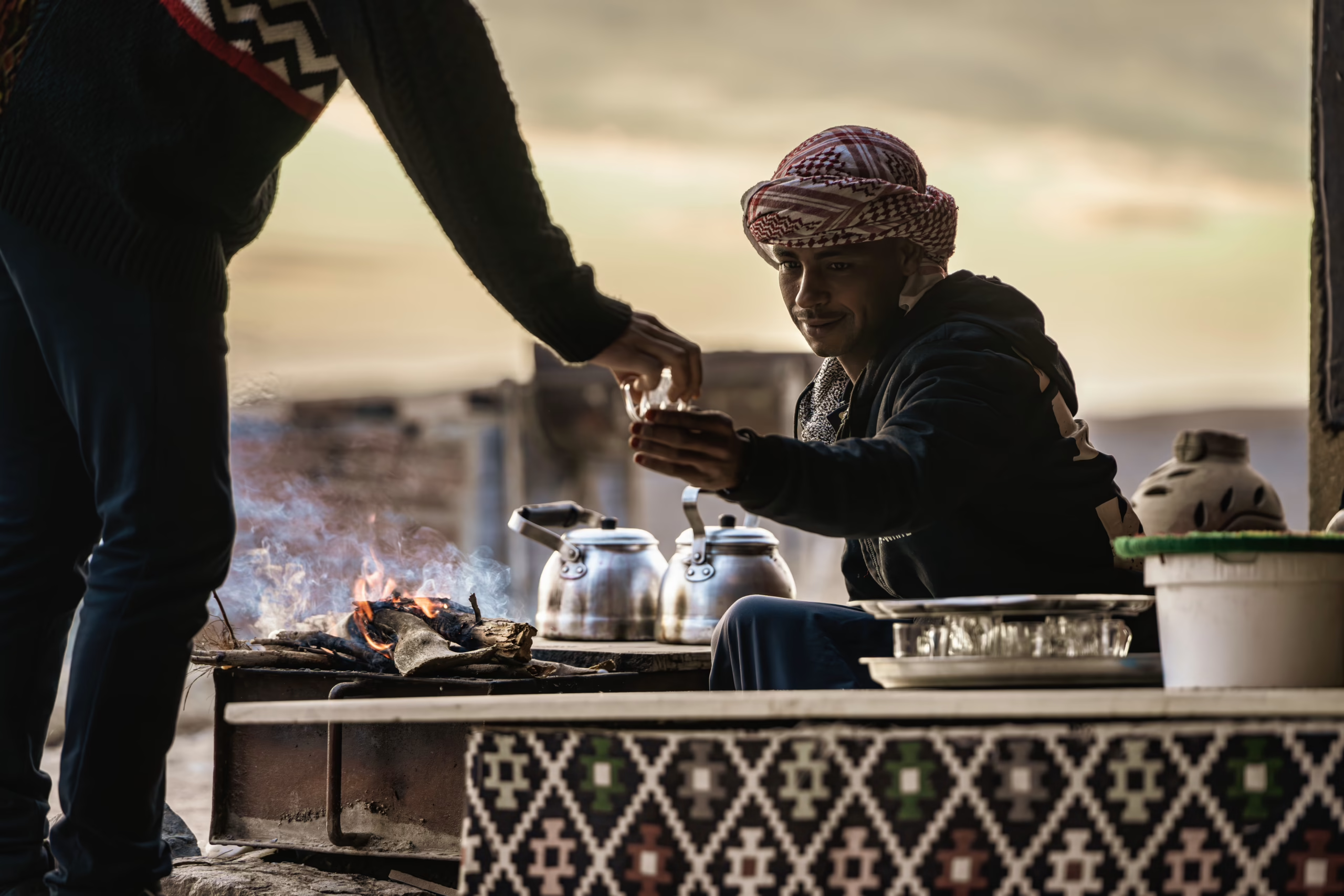
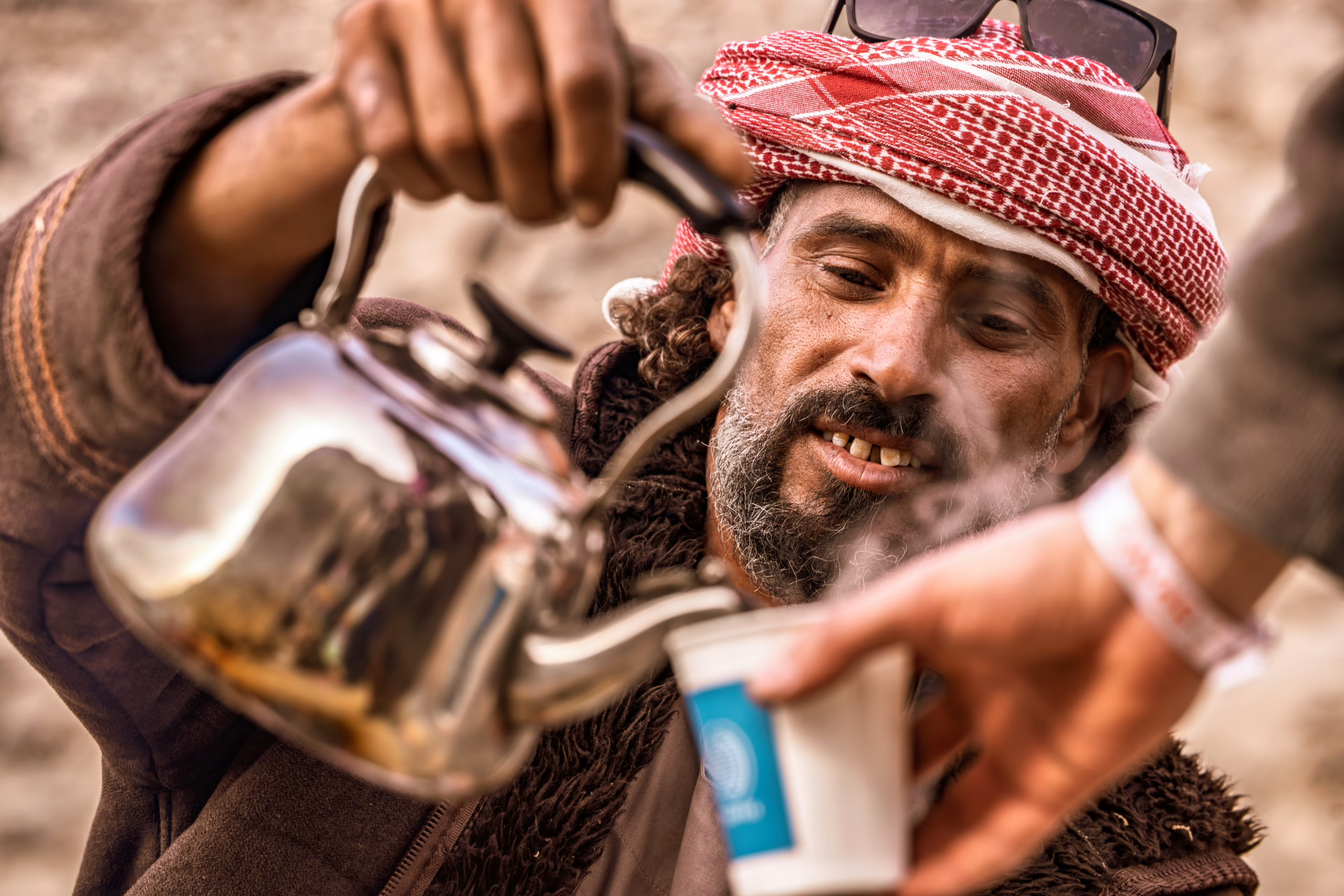
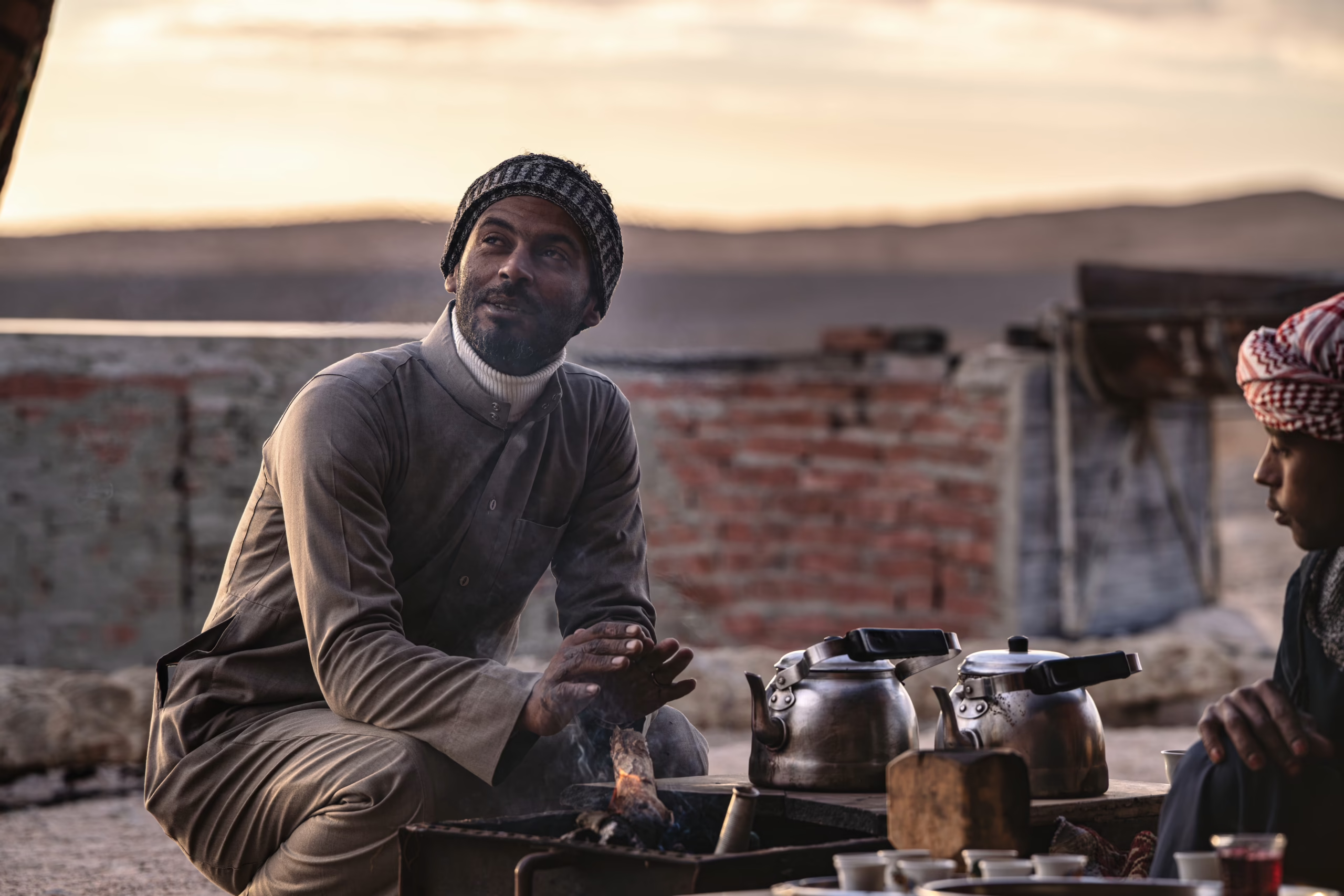
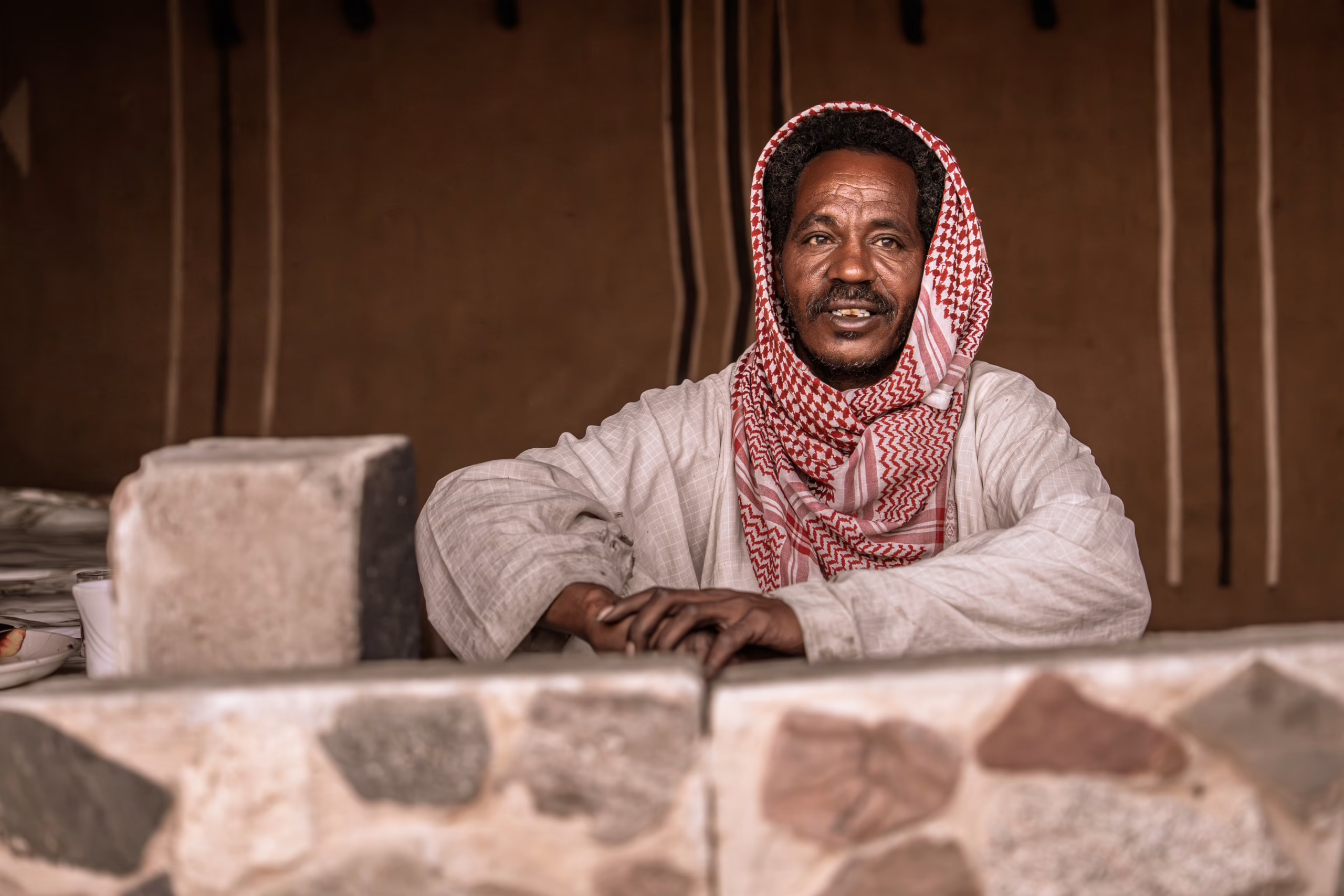
A man preparing tea for a stranger?
A song written by someone who could quite easily have devoted that time to a more profitable pursuit, such as selling online courses to other desperate people?
Or would you simply hand over the wars, the genocides, the tortured animals, the atomic bombs, the starving children, and our extraordinary capacity to turn any difference into a sufficiently respectable reason to behave like sons of bitches?
How much cruelty does it take to condemn a species?
How much kindness is enough to acquit it?
Can an act of love truly count as a mitigating circumstance, or is it merely the commercial break between two atrocities?
And you?
In humanity’s case file, did you end up among the exhibits for the defense or the prosecution?
You need not answer aloud.
You would probably lie.
Moral autobiographies have this small defect: they are written by the defendant, revised by his ego, and published by a memory that removes anything capable of hurting sales with remarkable efficiency.
So let us simply look.
No preemptive acquittals.
No uplifting verdicts.
None of that comforting bullshit about how deep down we are all good and merely need to love one another a little more, preferably after purchasing the right book.
Keep your verdict suspended.
Let us see whether these photographs can make it worse.
Or, against every reasonable expectation, postpone it.
Let us begin with the first witness.
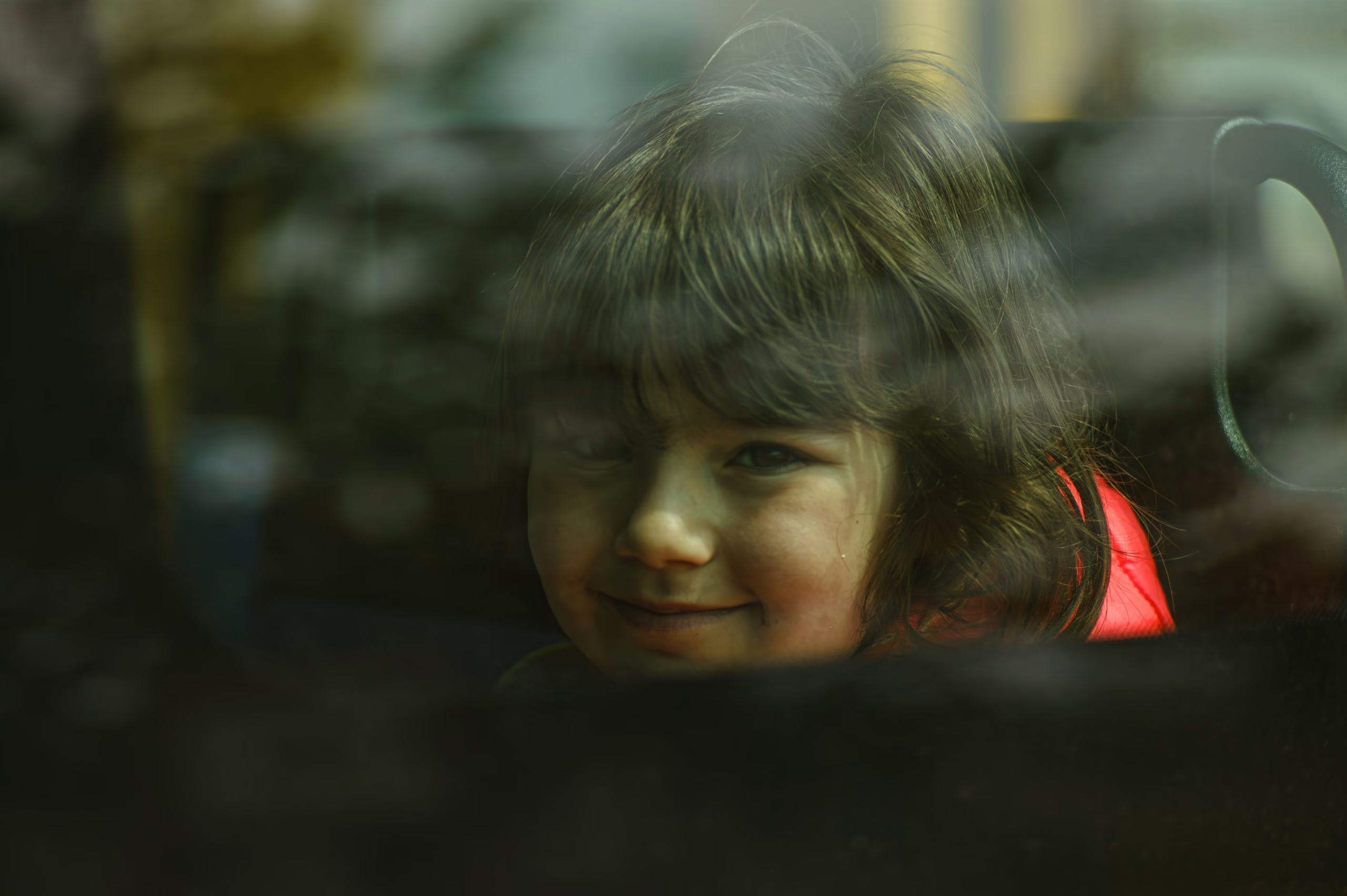
The first human being staring at me does so from behind glass, like a goldfish judging another goldfish convinced it is the one outside the bowl.
She is a little girl.
Her small face floats behind a car window, amid reflections, lights, and fragments of a world that has not yet troubled to explain the rules to her. She barely smiles, with the surgical caution of children who have not yet decided whether the adult before them is interesting, harmless, or merely another asshole with a camera and a frankly inflated opinion of himself.
The entire novel is already inside that frame.
Curiosity.
Distance.
The primal need to be seen by someone who is not contractually bound by blood to do so.
A transparent surface that permits looking without touching.
And an adult outside the frame who is probably deciding where we are going.
This is how we begin.
Small.
Defenseless.
Delivered into the hands of a species that possesses nuclear warheads, call centers expressly designed to keep you waiting, religious wars, perfume commercials in which no one appears ever to have experienced the biological need to take a shit, and a comical inability to understand when someone—anyone, literally anyone—simply wants to be left alone.
Quite a gamble.
Sometimes I look at human beings and think evolution cannot possibly bear the entire responsibility.
It feels like slander against nature.
Nature, certainly, has its lapses in taste: parasites, mosquitoes, hemorrhoids, certain deep-sea fish so ugly they look like the outcome of a rigged public competition. But we are a more ambitious project. We are a mistake with a marketing plan, a broadband connection, and a natural talent for persuading other mistakes to die for a flag sewn by someone else.
Perhaps someone put us here.
I do not claim to have evidence.
I am not a scientist, a prophet, or one of those men on YouTube who connect pyramids, Masonic reptilians, and esoteric symbols over photographs compressed worse than a 2003 JPEG, all accompanied by a soundtrack capable of making even a carbonara recipe sound sinister.
But the hypothesis retains a certain charm.
Perhaps an ancient civilization landed with the discretion of a drunken teenager, found a primate respectably settled in its ecosystem, and decided—with the ethical rigor of a student the night before his thesis was due—to tinker with it.
A little more intelligence.
Opposable thumbs.
Awareness of death.
An utterly disproportionate ego.
Performance anxiety, naturally, because why not.
And that particular urge that drives us to build something, declare it sacred, then kill anyone who prefers a slightly different model.
Then the experimenters left.
Perhaps because the project was complete.
Perhaps because it had gone off the rails.
Perhaps because someone, watching us destroy the laboratory, said:
‘Oh well, leave them there and let us see how long they last.’
We may be the longest-running reality show in the universe.
Or perhaps God created us.
That remains a possibility too.
If so, I have a few questions for the design department.
Nothing aggressive.
I would merely like to understand why an omniscient entity considered it wise to place the organ of pleasure beside the sewage system, grant us the capacity to imagine infinity, then compel us to spend a significant portion of existence searching for forgotten passwords, filling out forms, and feigning interest during conversations we would have preferred to end with a quick death.
Perhaps God possesses an especially sophisticated sense of humor.
Or perhaps He created us late on a Friday afternoon.
Either way, here we are.
Eight billion traumatized apes, each equally convinced that the universe holds a personal opinion about their career.
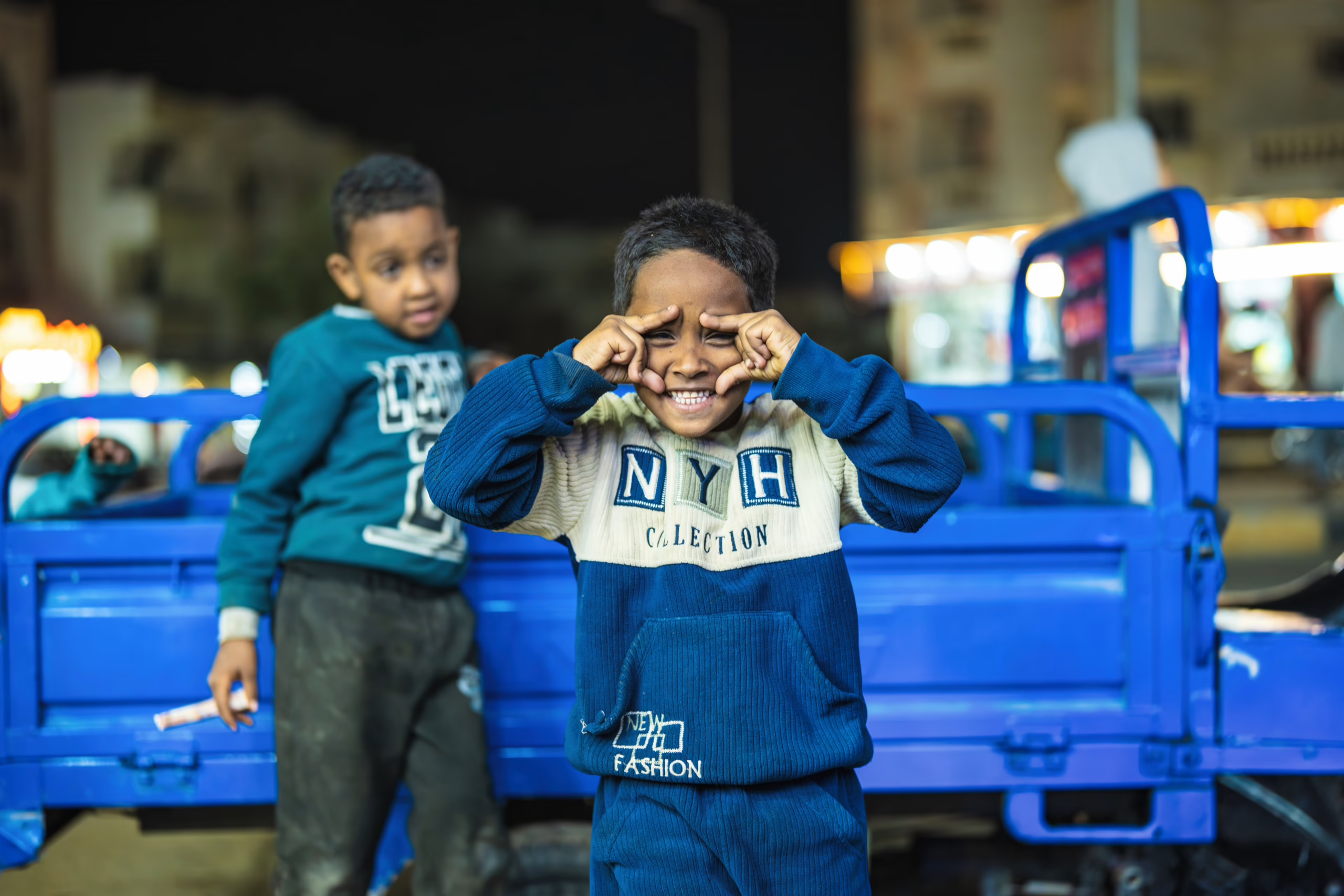
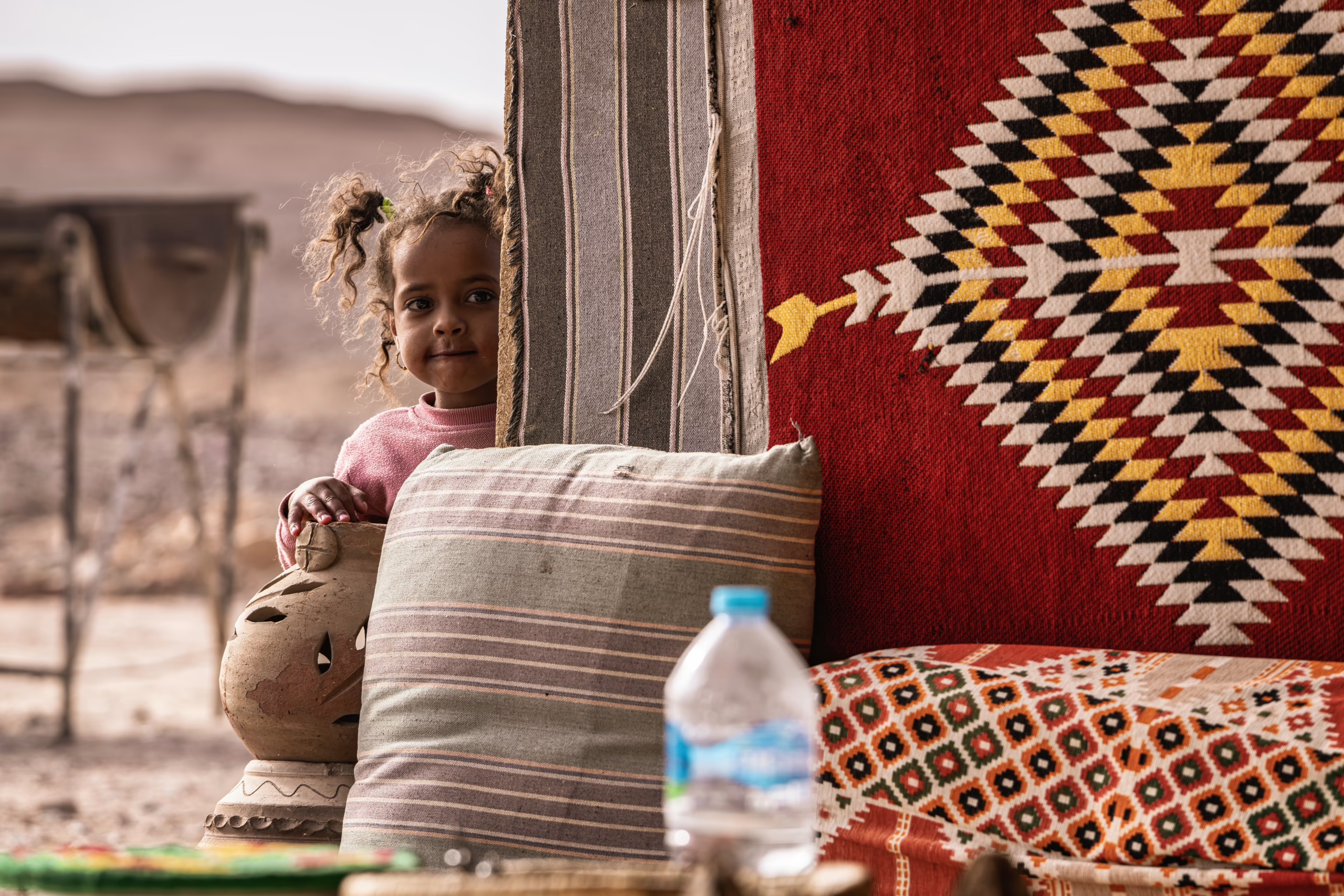
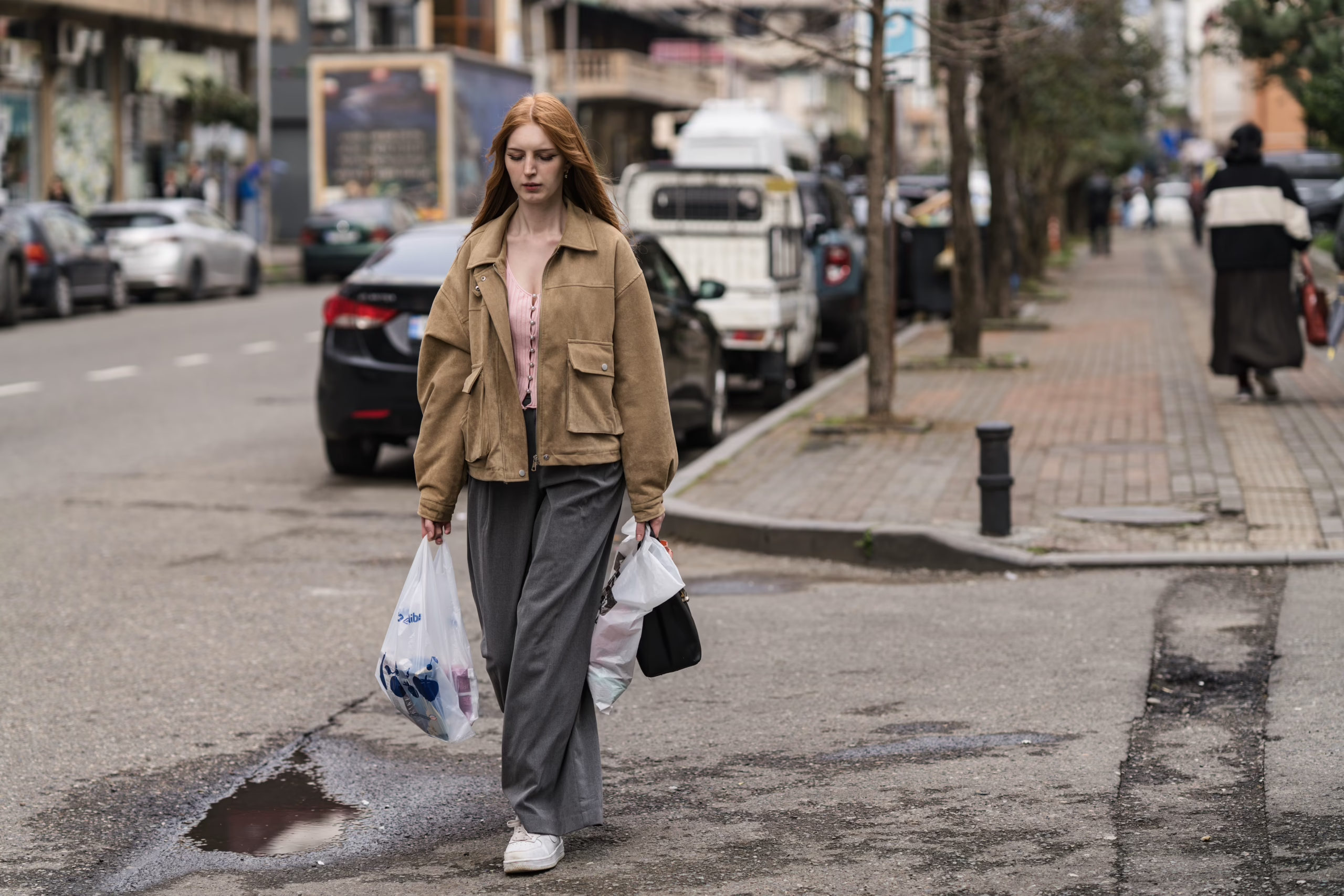
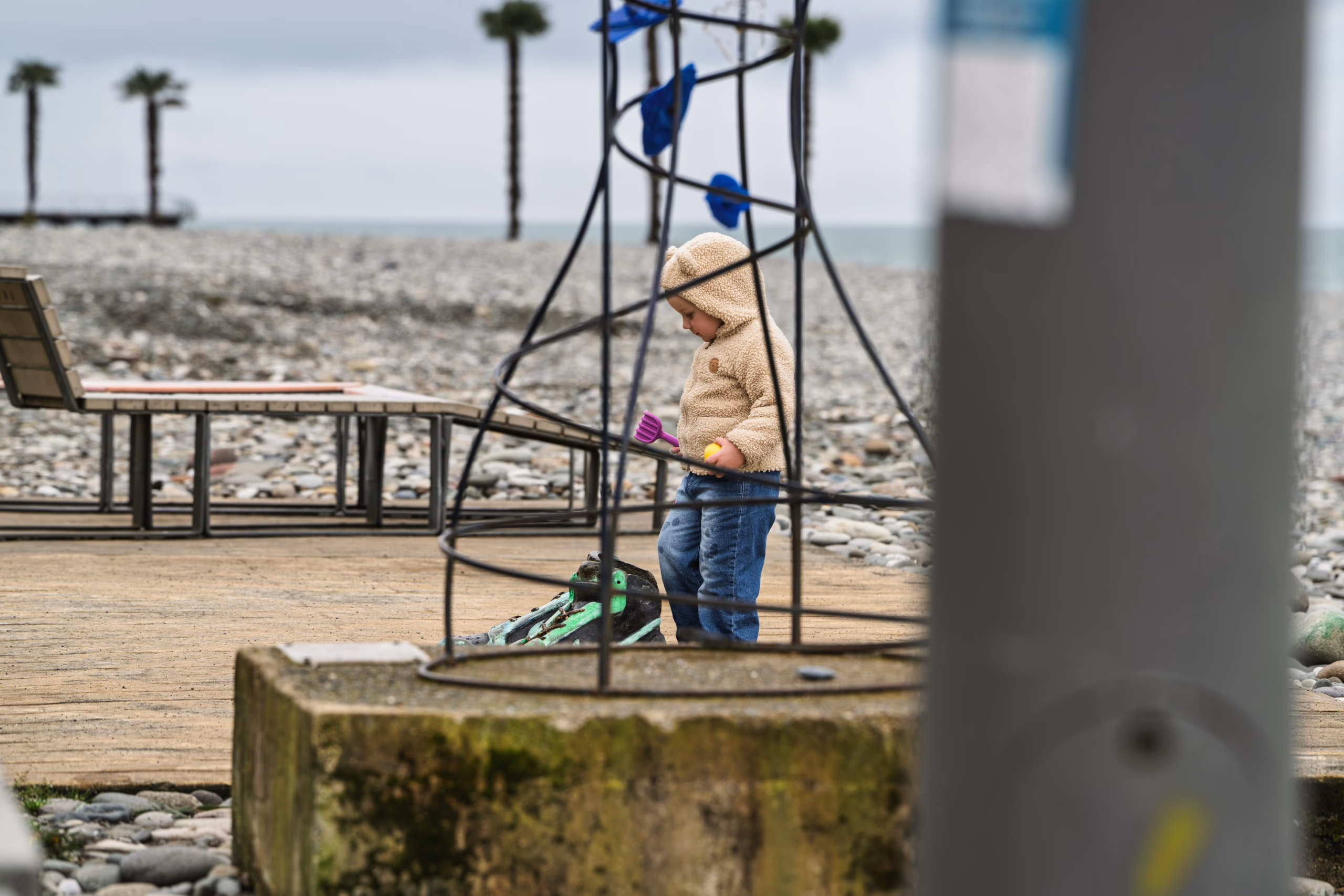
I watched the children.
There were quite a few.
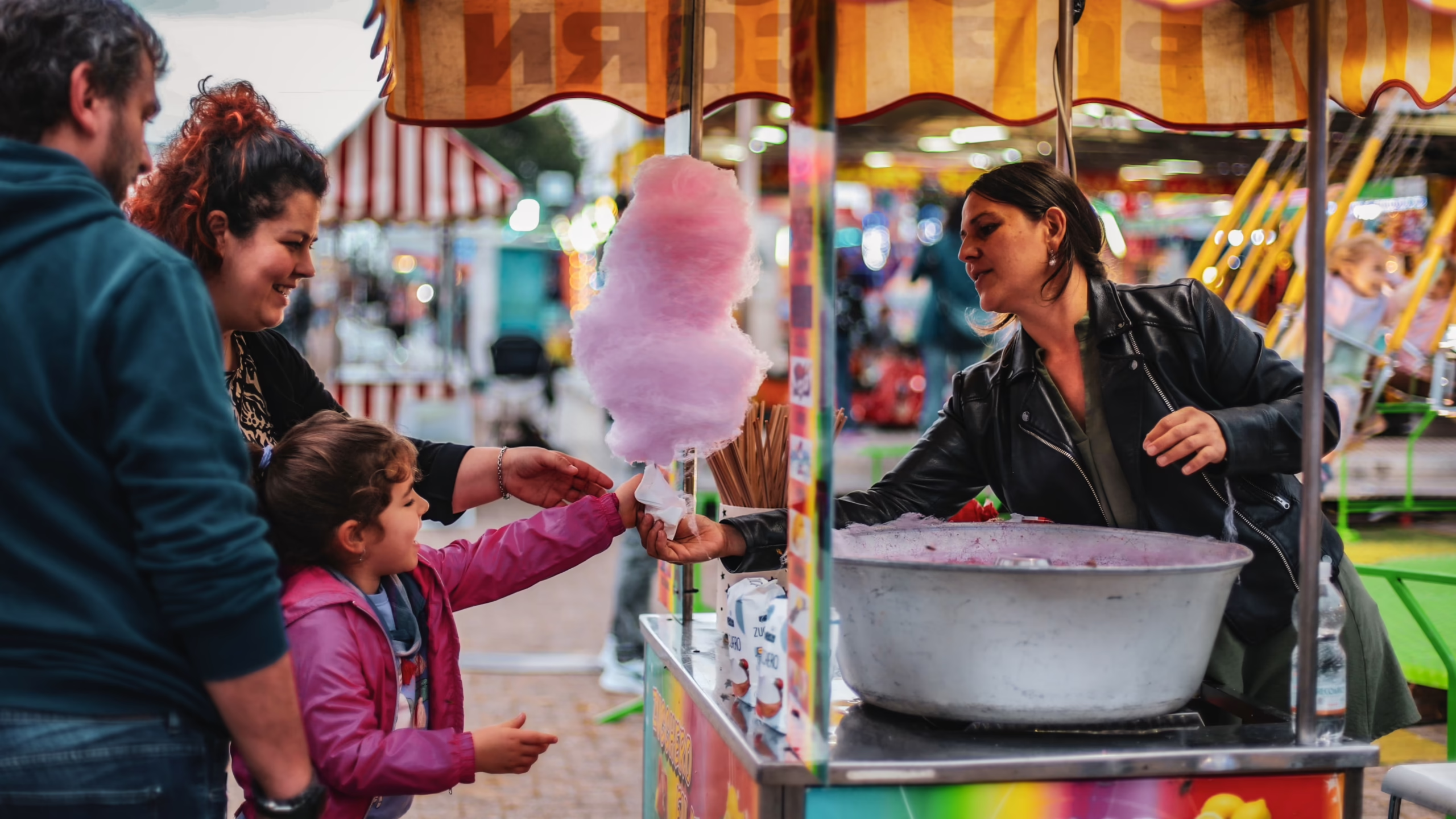
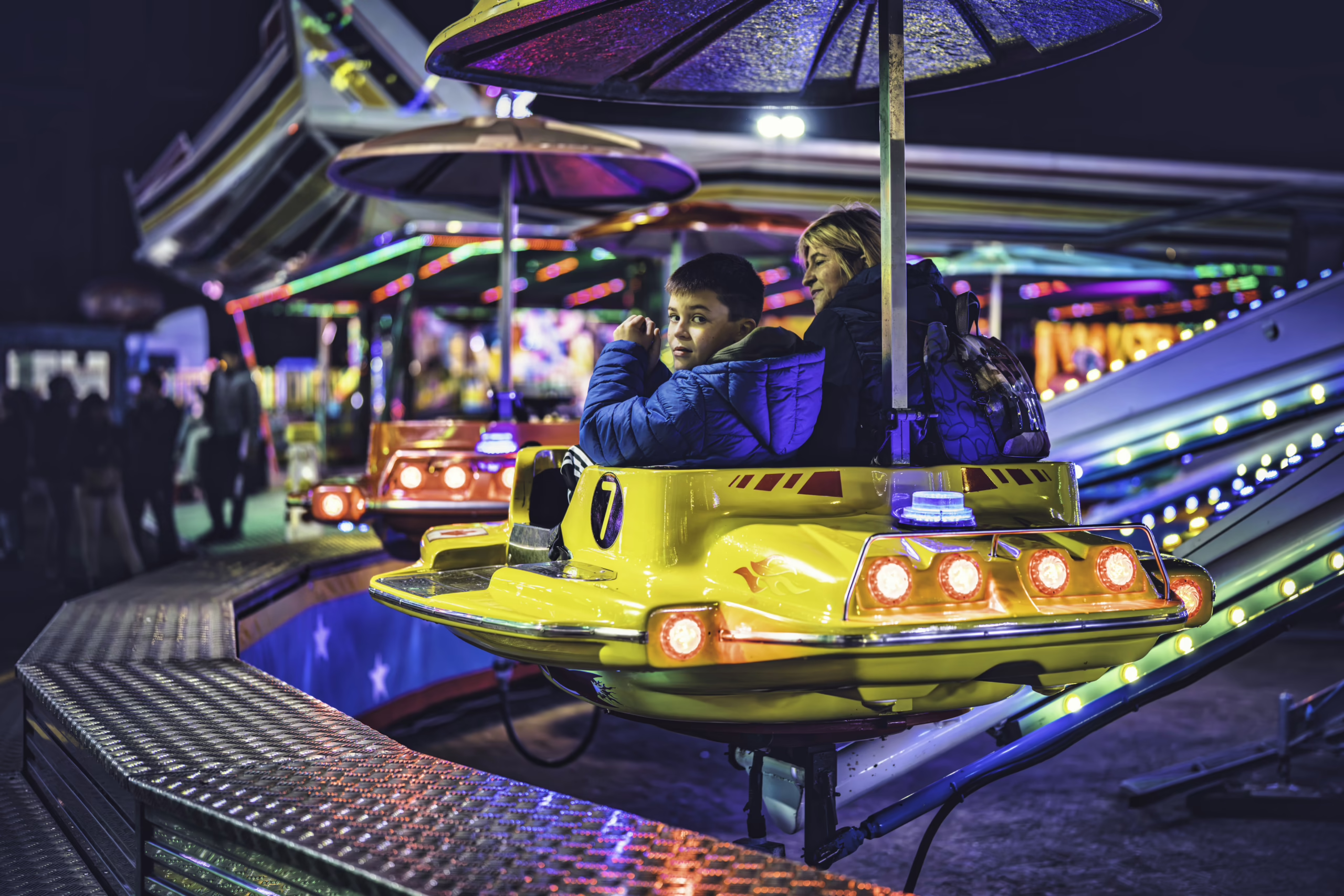
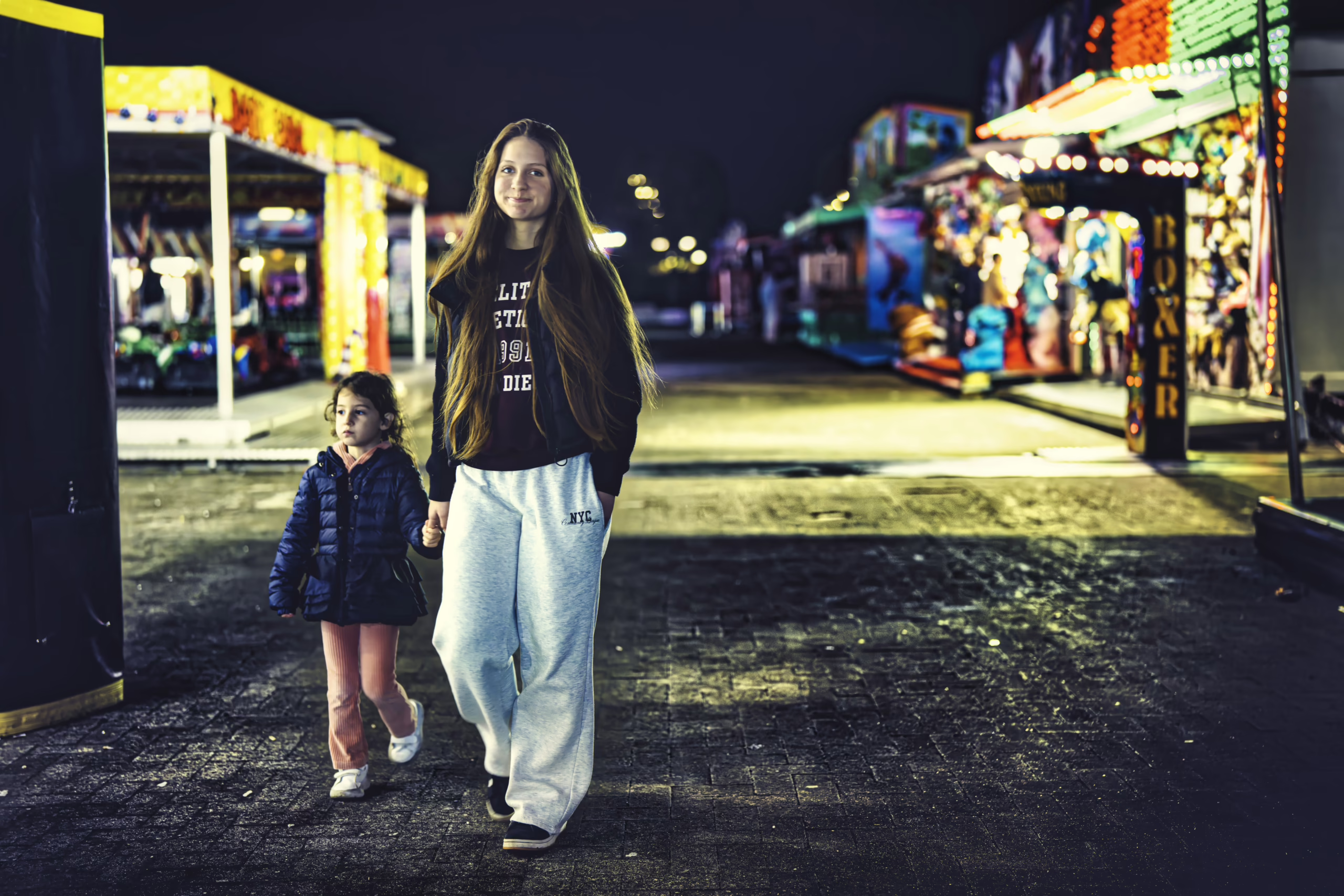
Children in markets, on rides, in streets, on beaches, in toy cars. Children clutching something, waiting for someone, following an adult, or trying to decipher a world that had already begun issuing orders without ever bothering to explain the rules.
Children are our finest defense attorney and, at the very same time, the prosecution’s star witness.
They are born without knowing what a nation is.
They do not know money.
They cannot distinguish a true religion from a false one, a superior race from an inferior one, a respectable neighborhood from one to be crossed with lowered eyes.
They do not know that certain bodies are meant to be desired and others hidden beneath two layers of shame.
They do not know that one profession can make a man important and another almost invisible to everyone around him.
They do not know that God, apparently, loves only those who call Him by the correct name, in the correct language, with the correct accent—an infinite being who appears rather touchy about pronunciation.
They do not know that skin color, birthplace, accent, surname, and bank balance will determine an obscene number of possibilities before they have even learned to tie their own shoes.
We teach them this bullshit with painstaking devotion.
It is our great cultural inheritance, passed down more faithfully than any family recipe.
First, we protect them from traffic.
Then we throw them into History without a helmet.
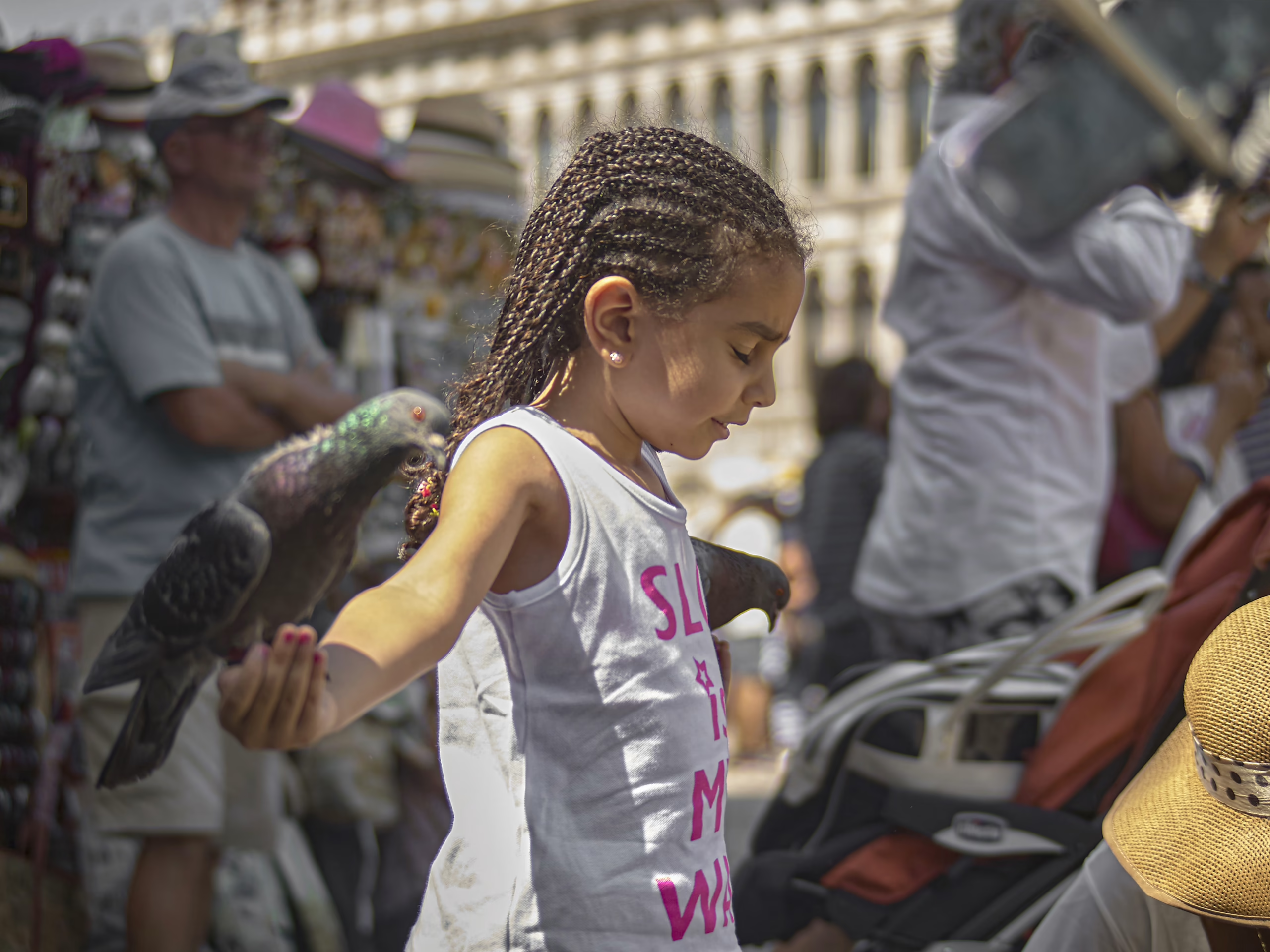
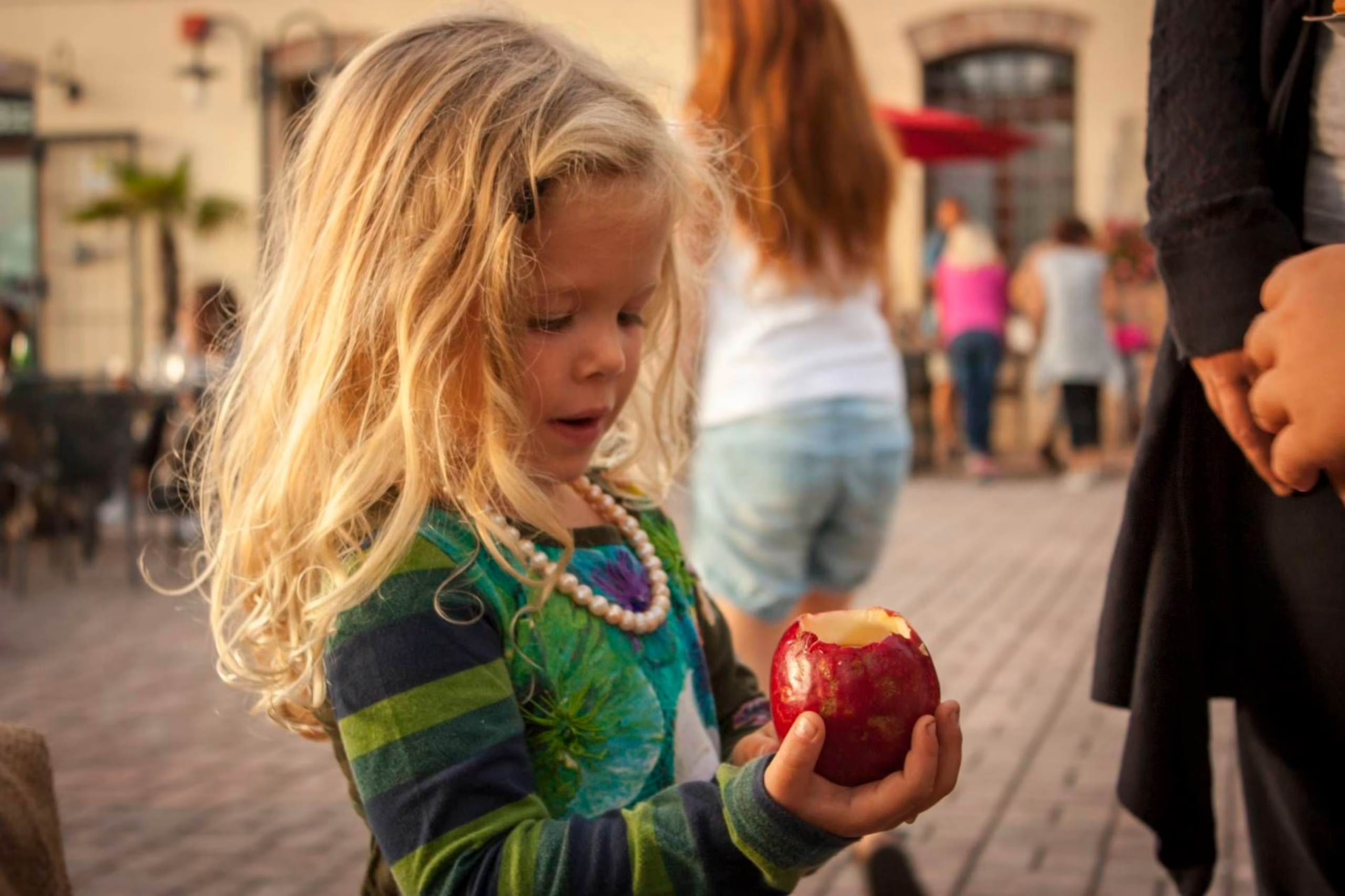
One little girl held a toy.
Another watched something with the absolute concentration adults can devote only to a phone when awaiting a message from the wrong person.
Two children played on a small toy car. One seemed genuinely delighted; the other already wore the expression of someone who has realized that life will be a condo-board meeting organized by people with questionable ideas and endless agendas.
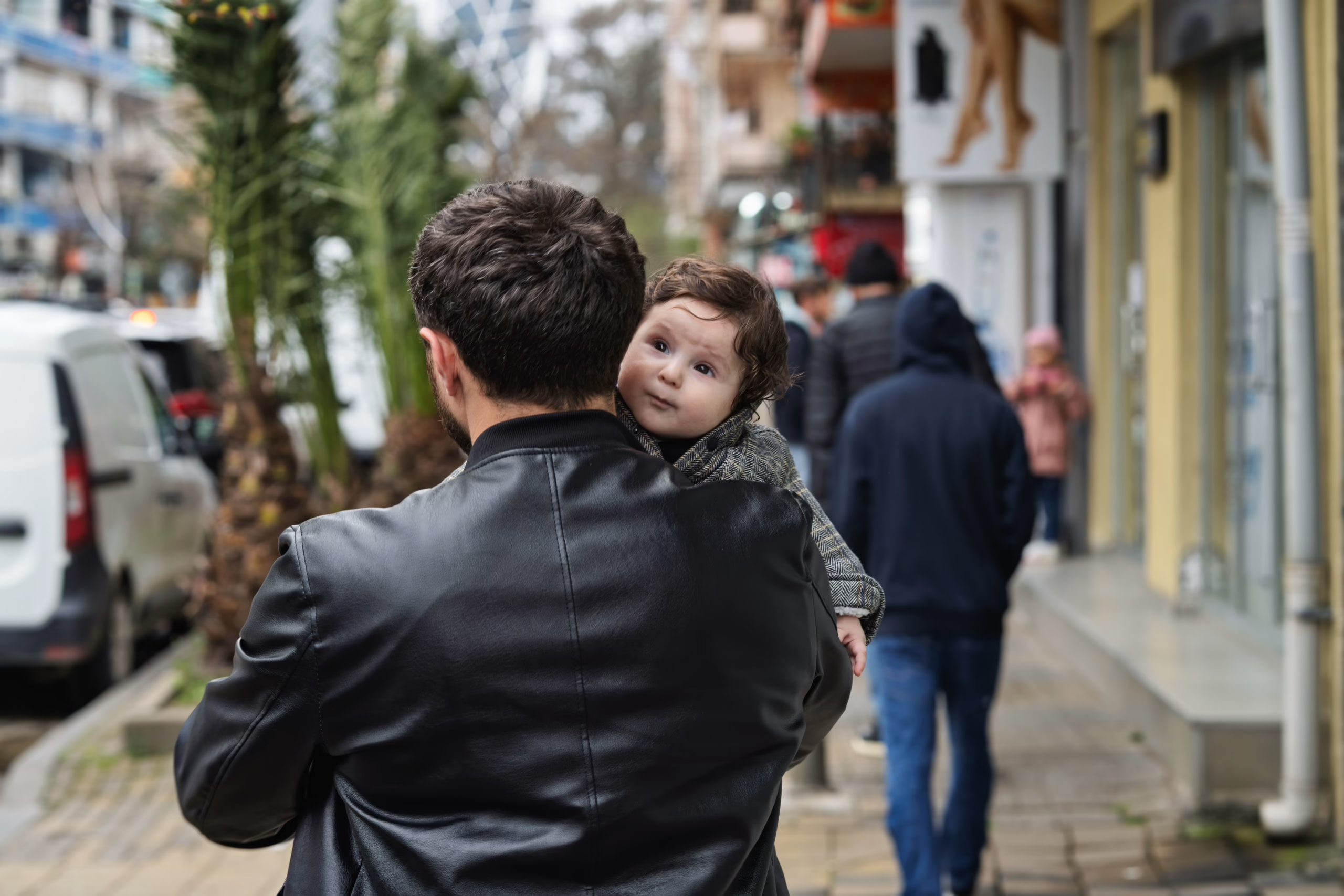
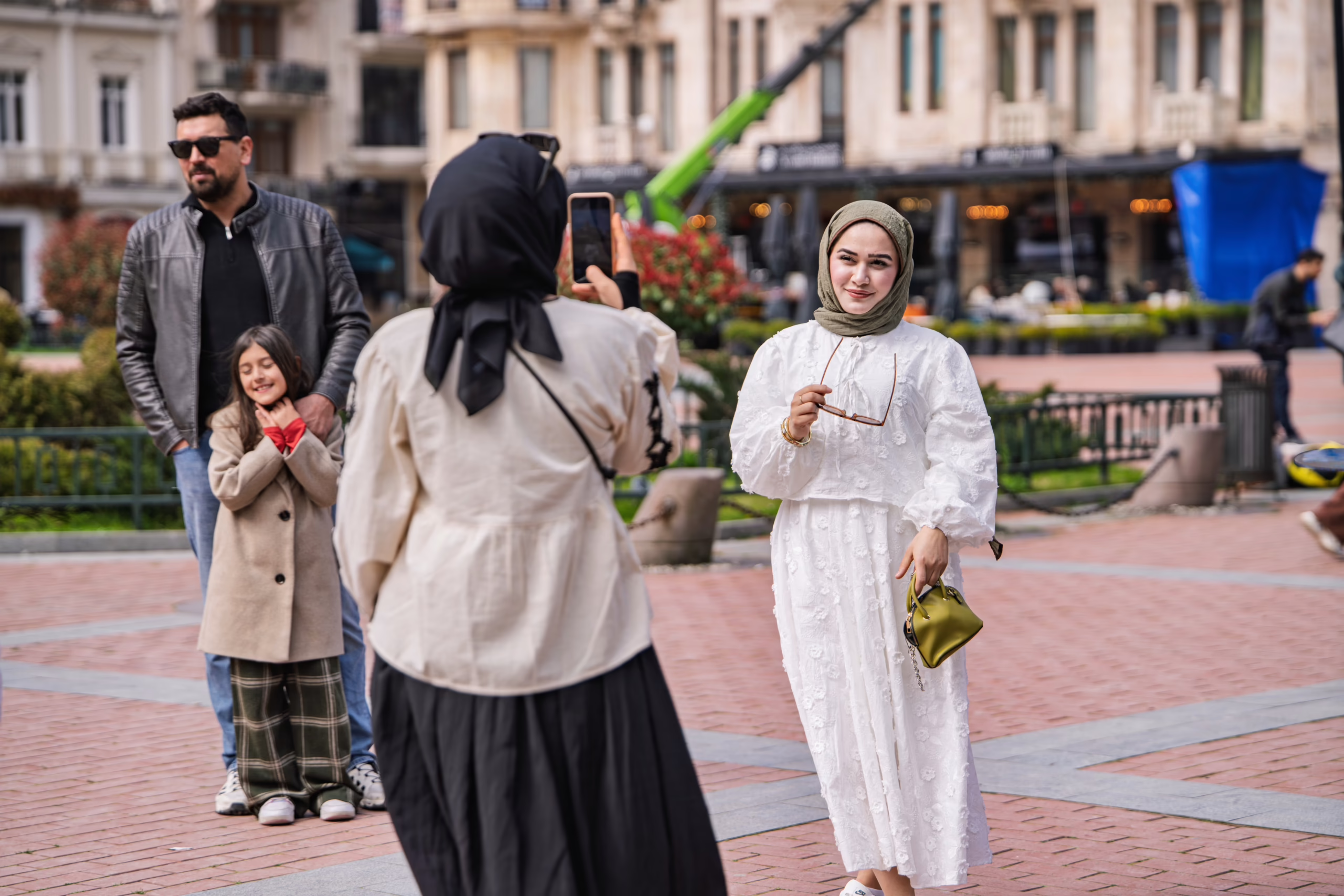
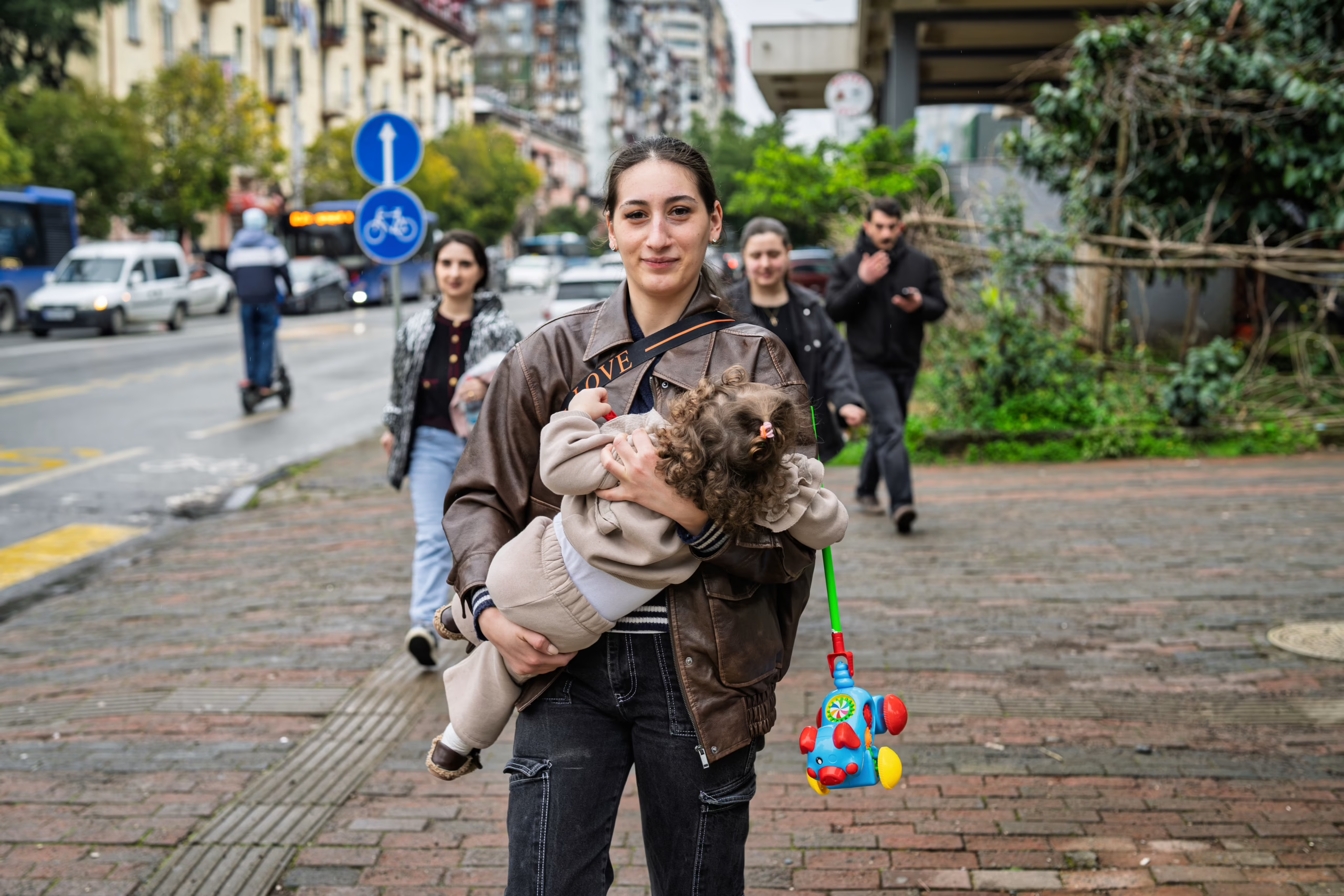
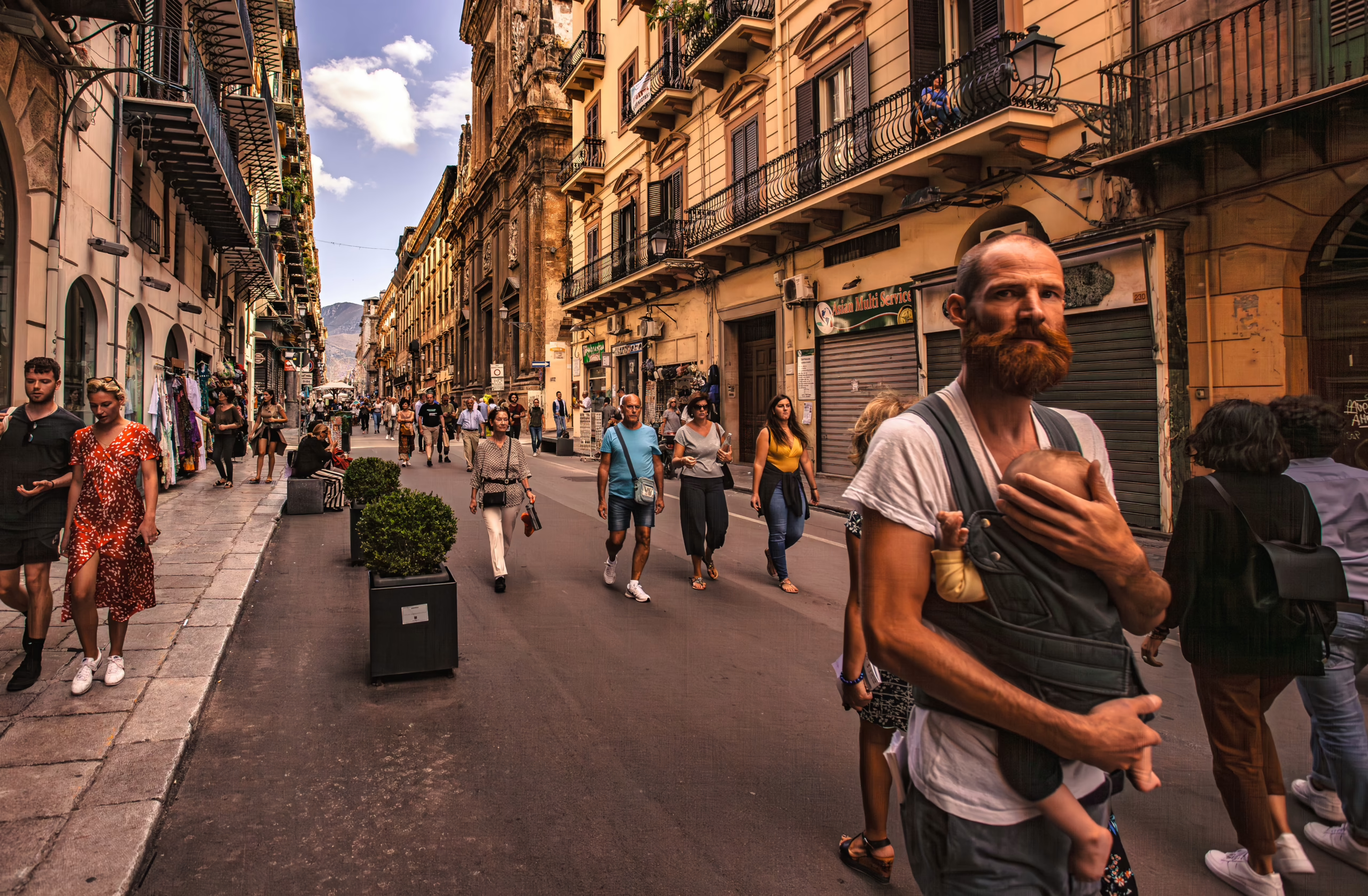
A little farther on, a father carried a girl in his arms.
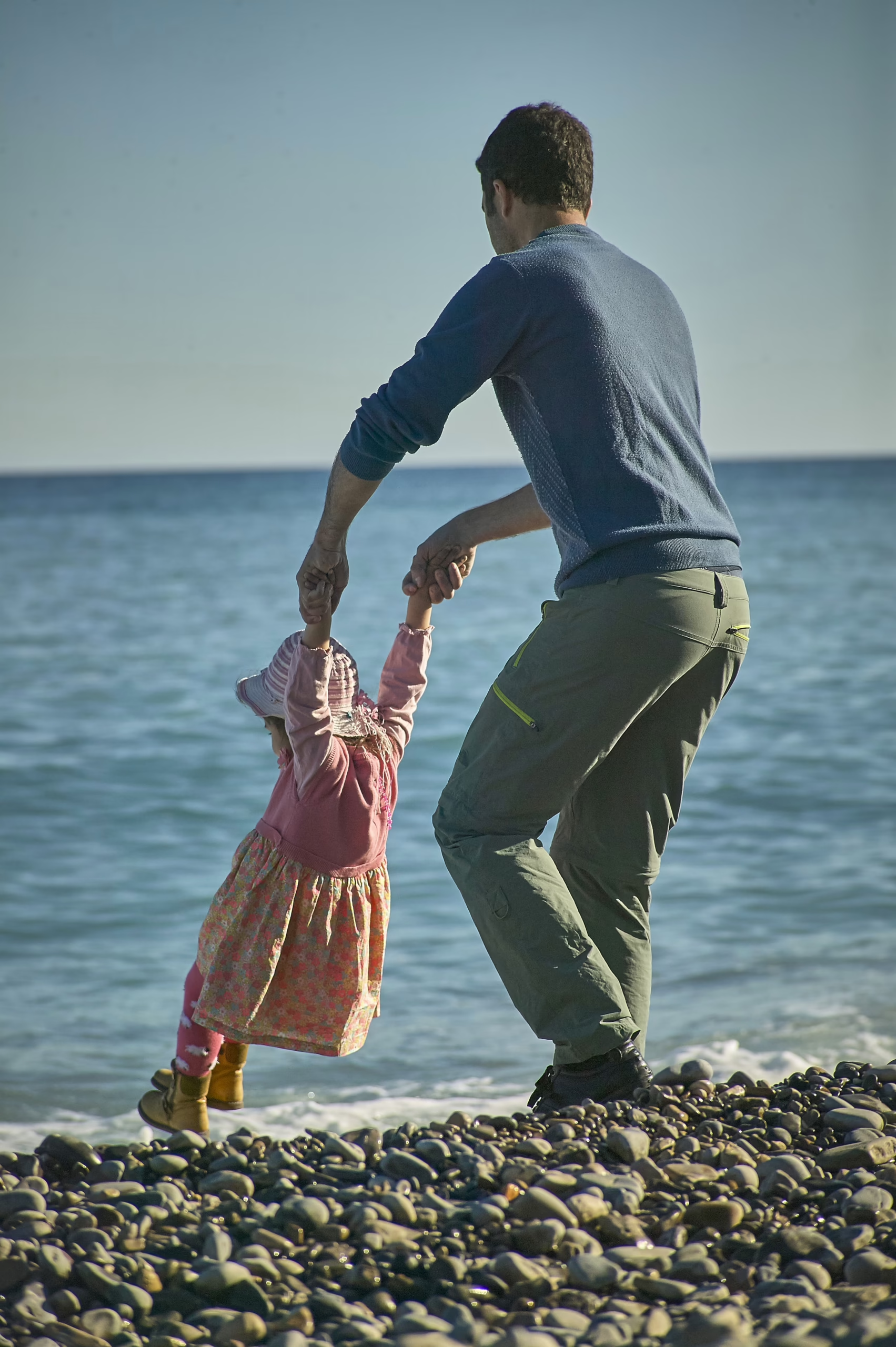
Another lifted her beside the sea, like a trophy no one will ever contest.
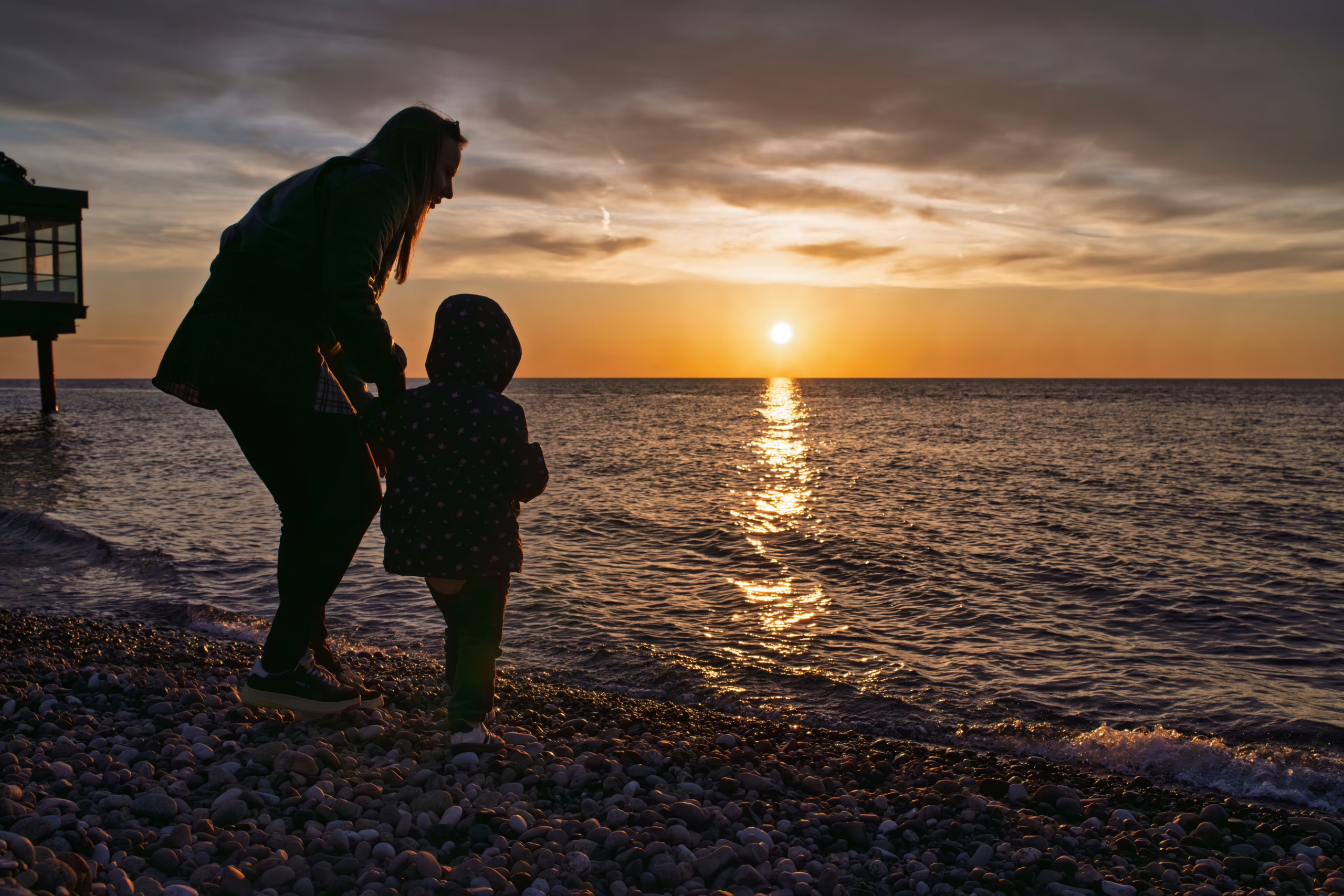
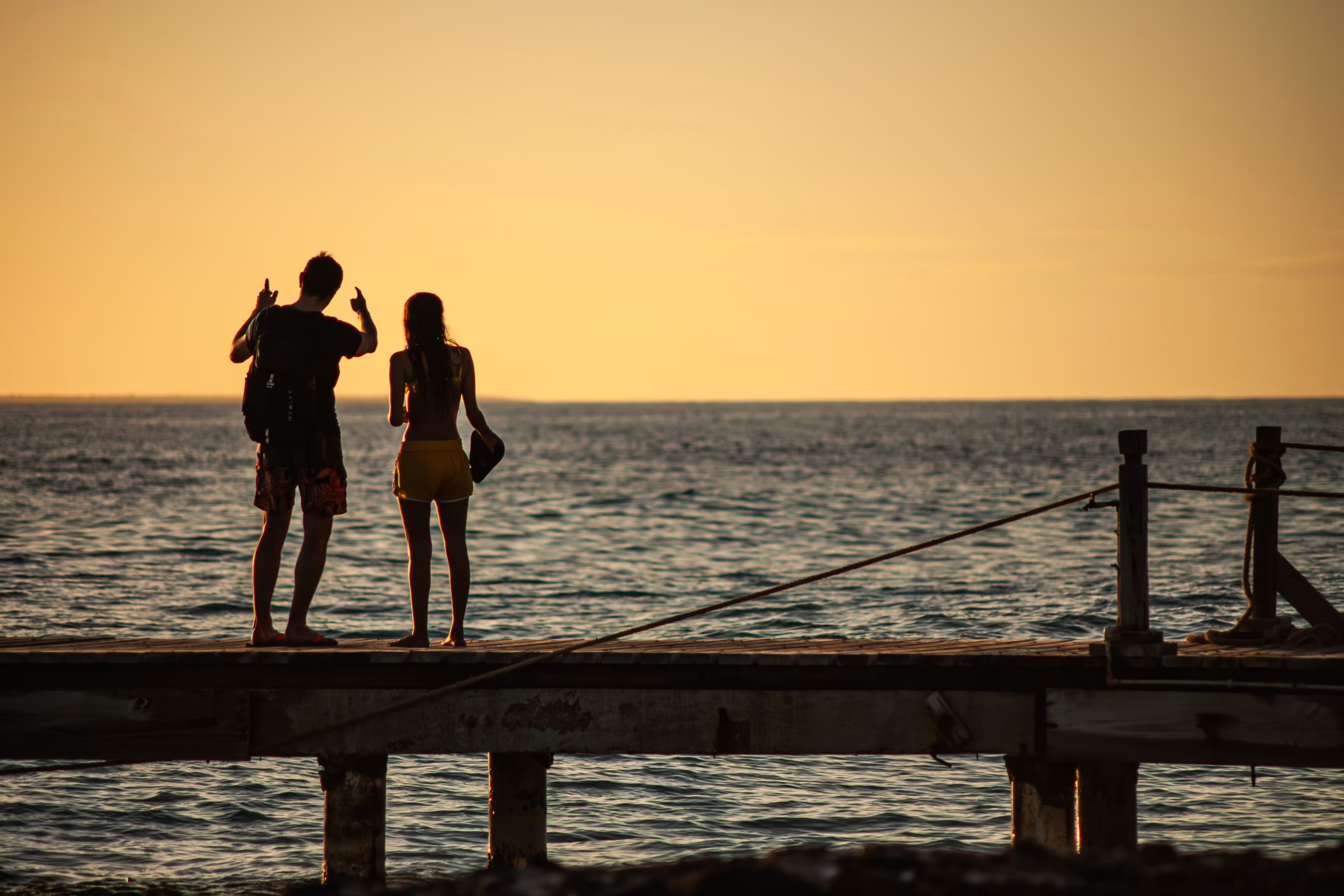
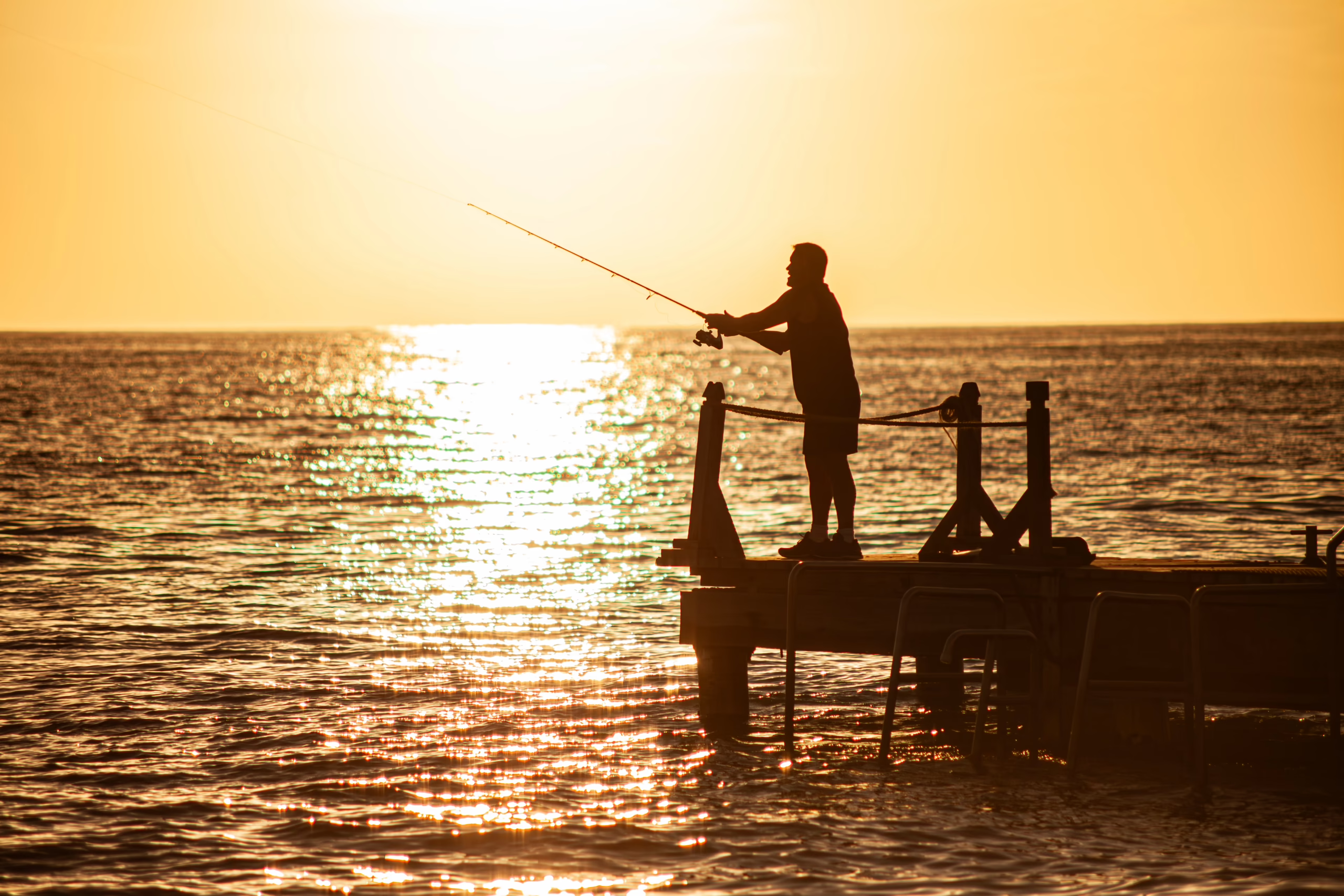
An adult figure guided a small body toward the water as the sun went down.
This is where the case against humanity begins to grow complicated.
Because we can build weapons powerful enough to erase a city from the map, and use those very same hands to keep a child from scraping her knee.
We can authorize a bombing in the morning and come home at night to ask our child what he learned in school, wearing the face of someone who spent the day at the office.
We can be moved to tears by a film and completely ignore a real person sitting on the ground six feet away, with neither screenwriter nor soundtrack to serve as a megaphone.
Our cruelty is not born from an inability to feel.
That would almost be comforting, were it so simple.
It is born from the far more sophisticated, far more obscene capacity to feel selectively.
We love deeply.
We merely choose, with surgical care, who is entitled to benefit from it.
We call that boundary family, homeland, belonging, national interest, the market, or simple fucking convenience, depending on how many corpses are required to defend it.
And yet that father held his daughter.
In that moment, he represented no civilization, religion, or economic system.
He was merely a man charged with not letting her fall.
A modest task.
Enormous.
If anything sacred exists, it probably has neither marble columns, billion-dollar budgets, nor elaborately dressed men claiming to administer it.
Perhaps it is only this.
Someone strong enough to hurt you choosing, for once, not to.
The images continued.
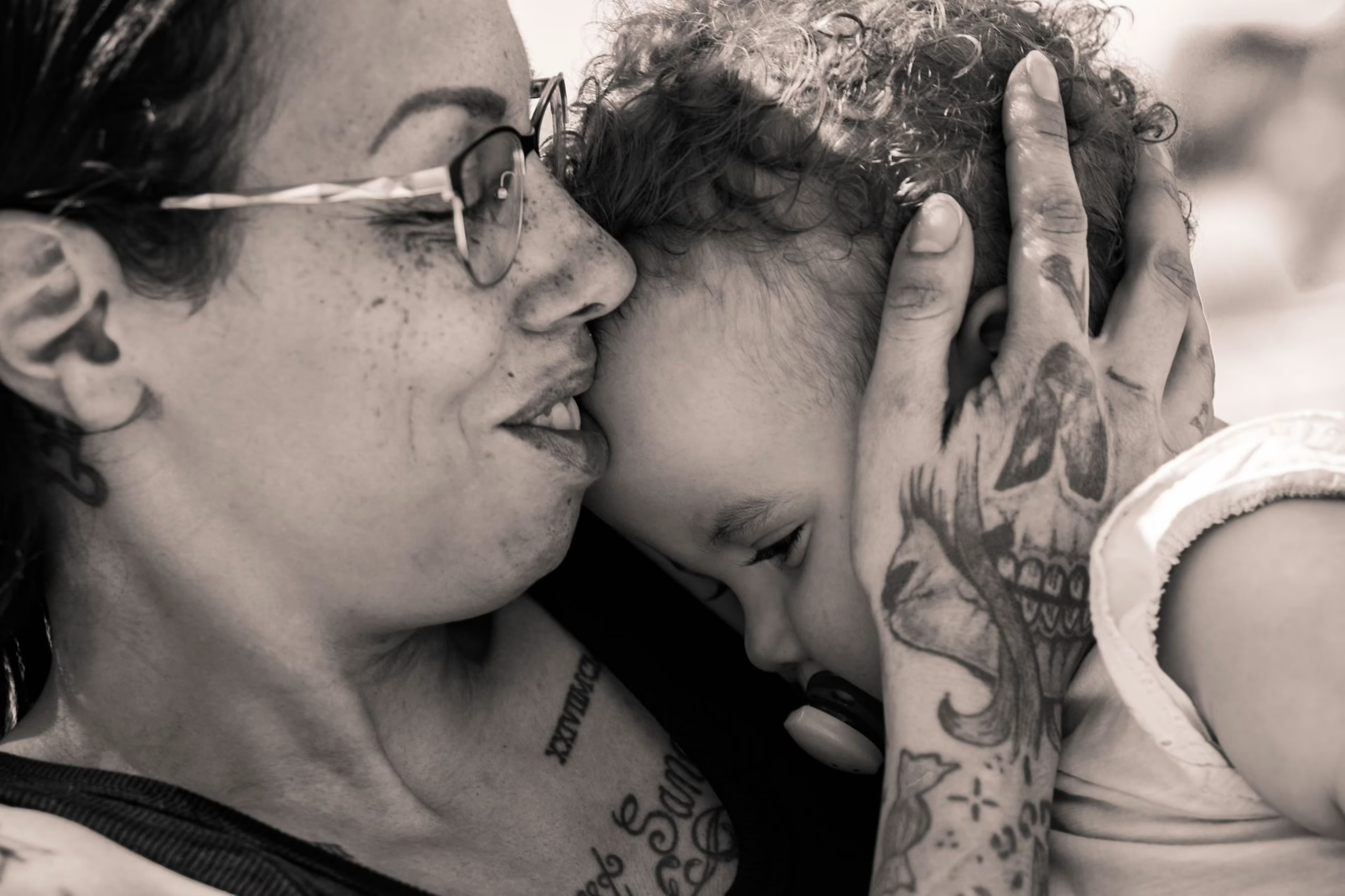
Mothers.
Children.
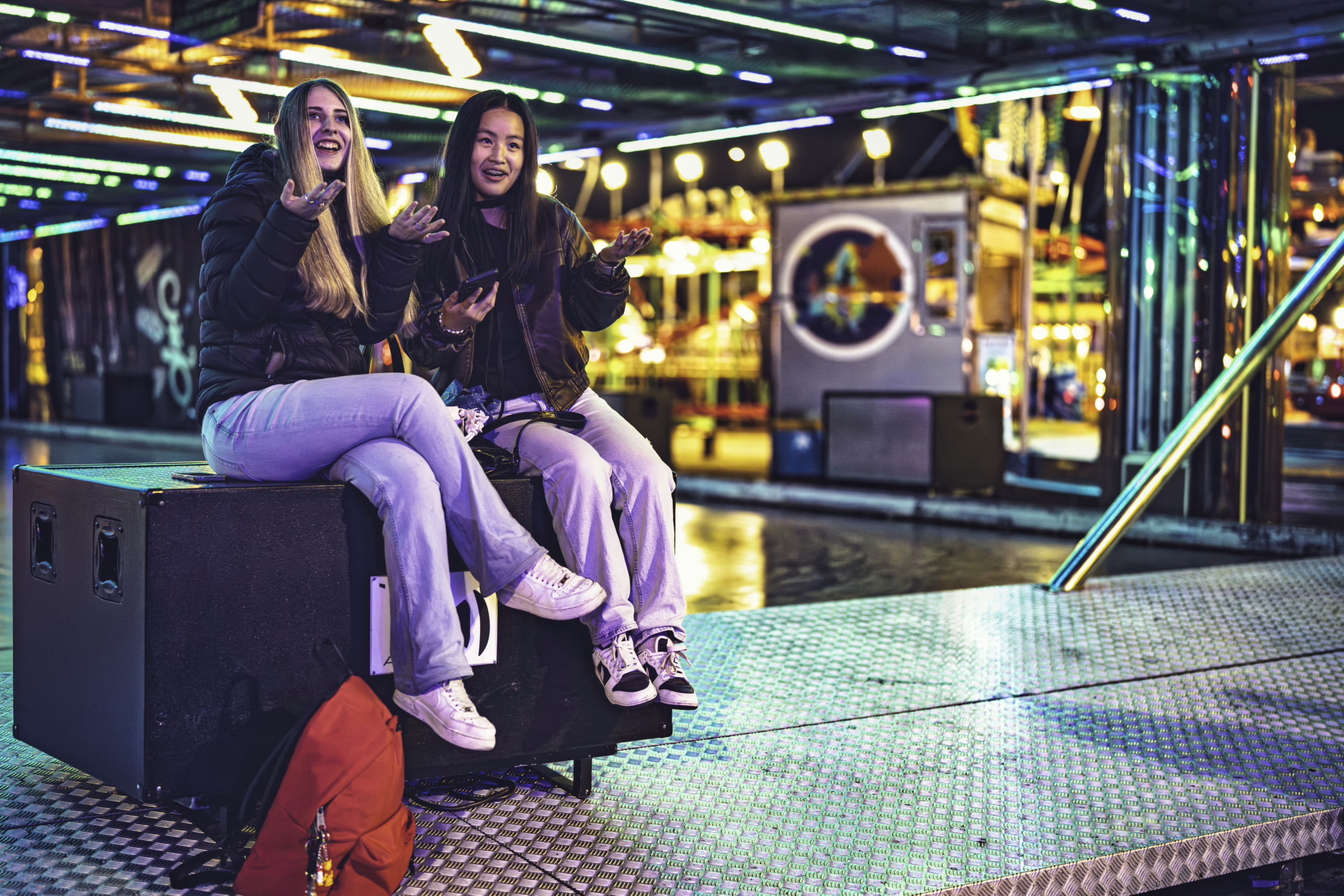
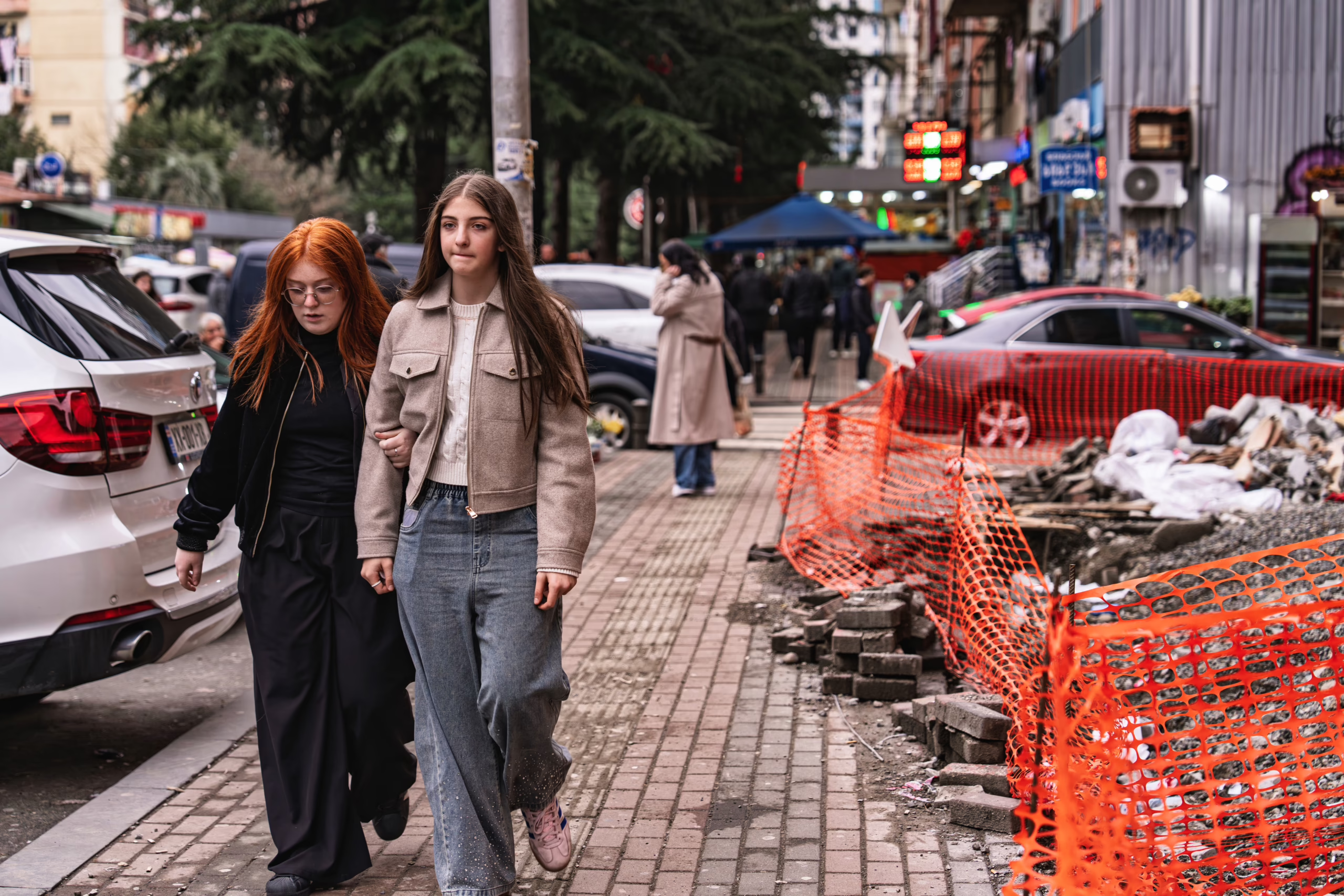
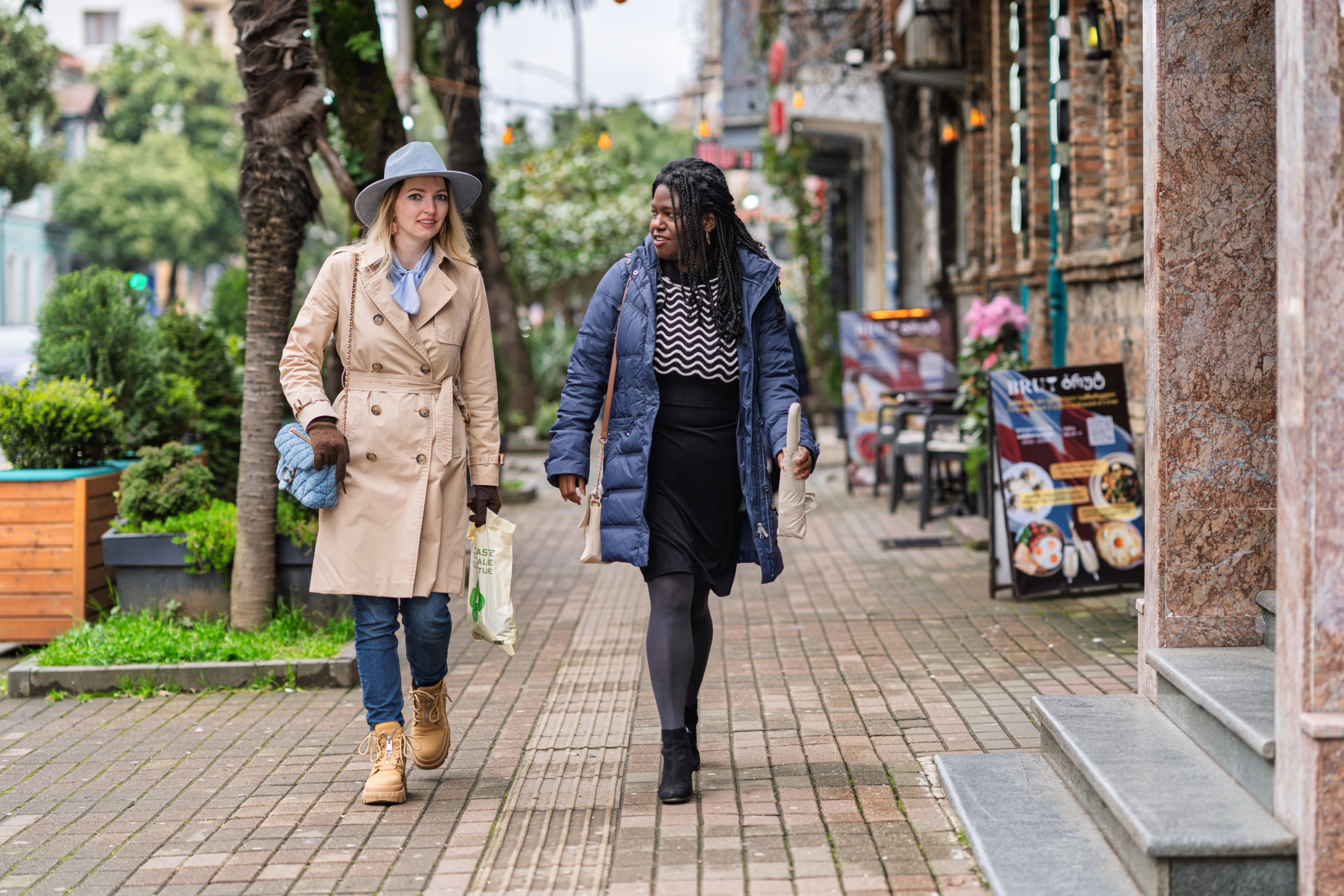
Friends.
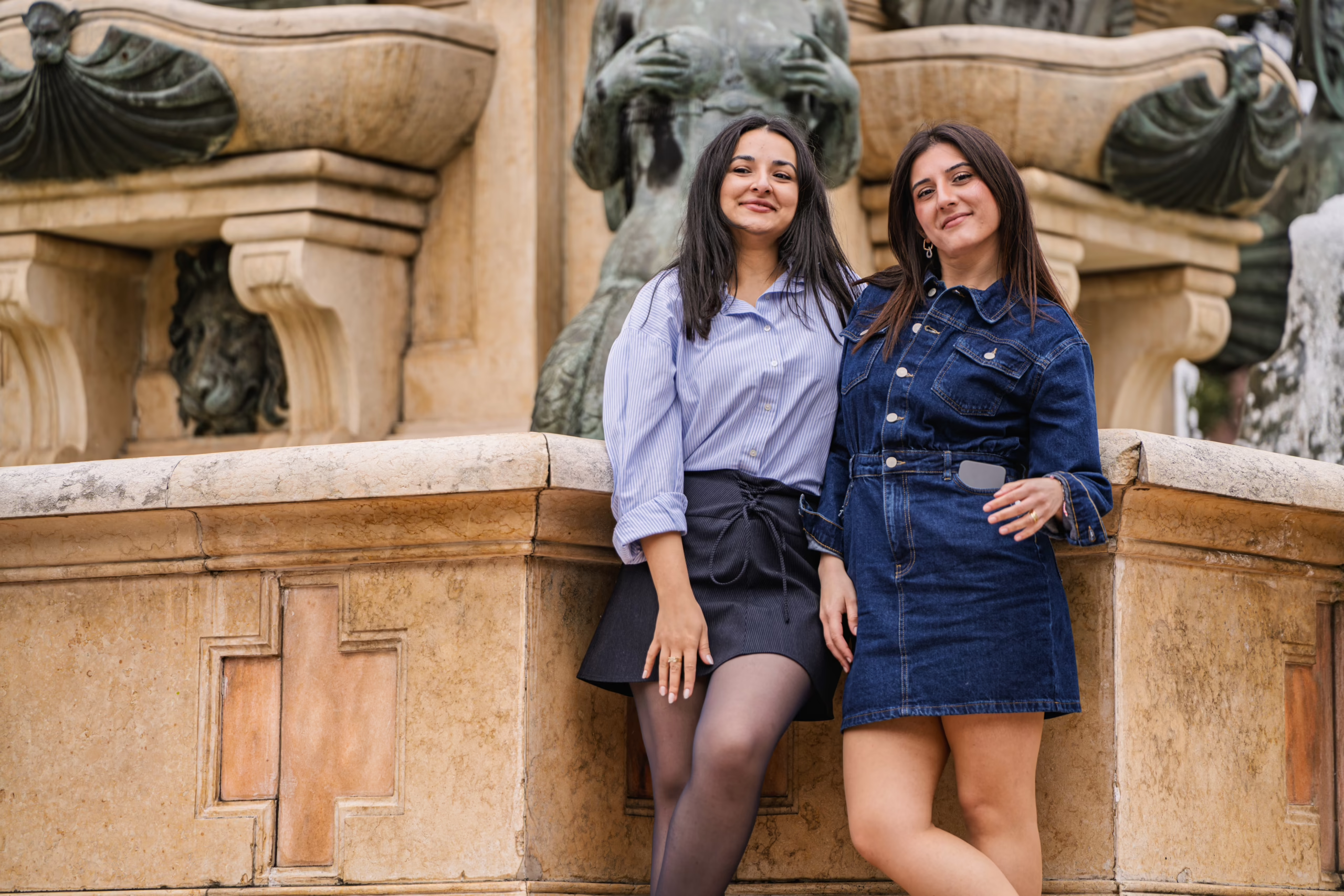
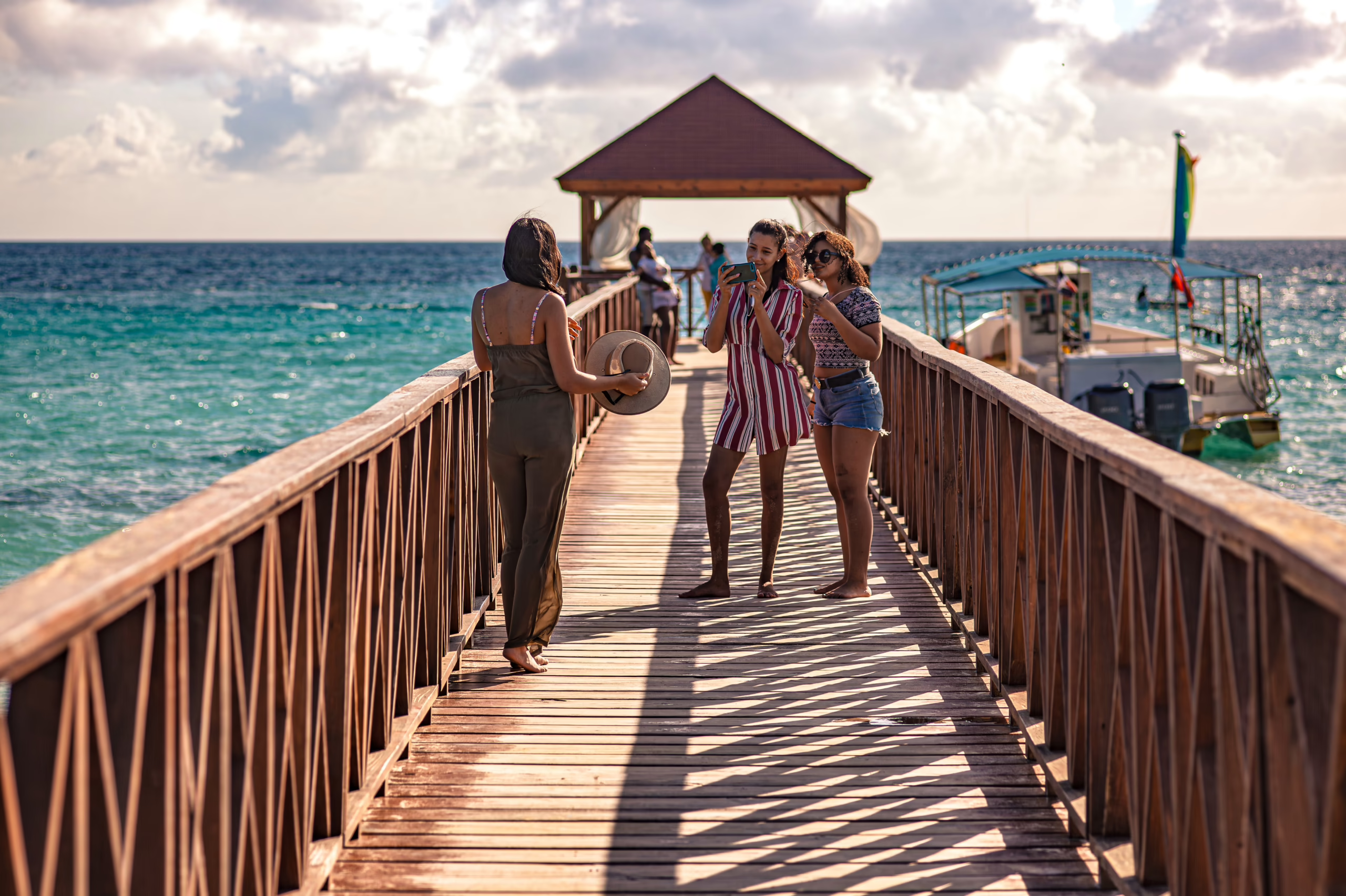
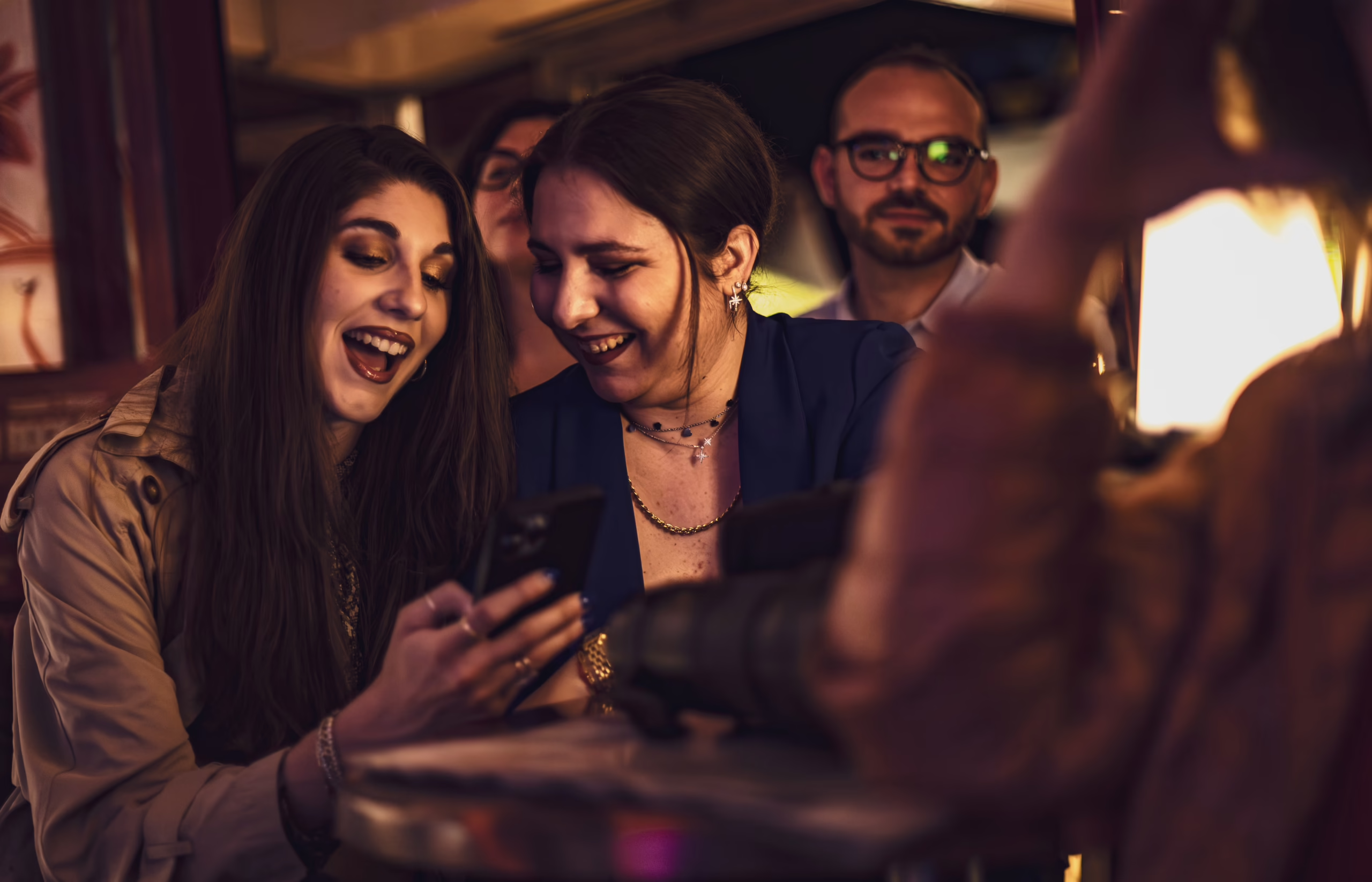
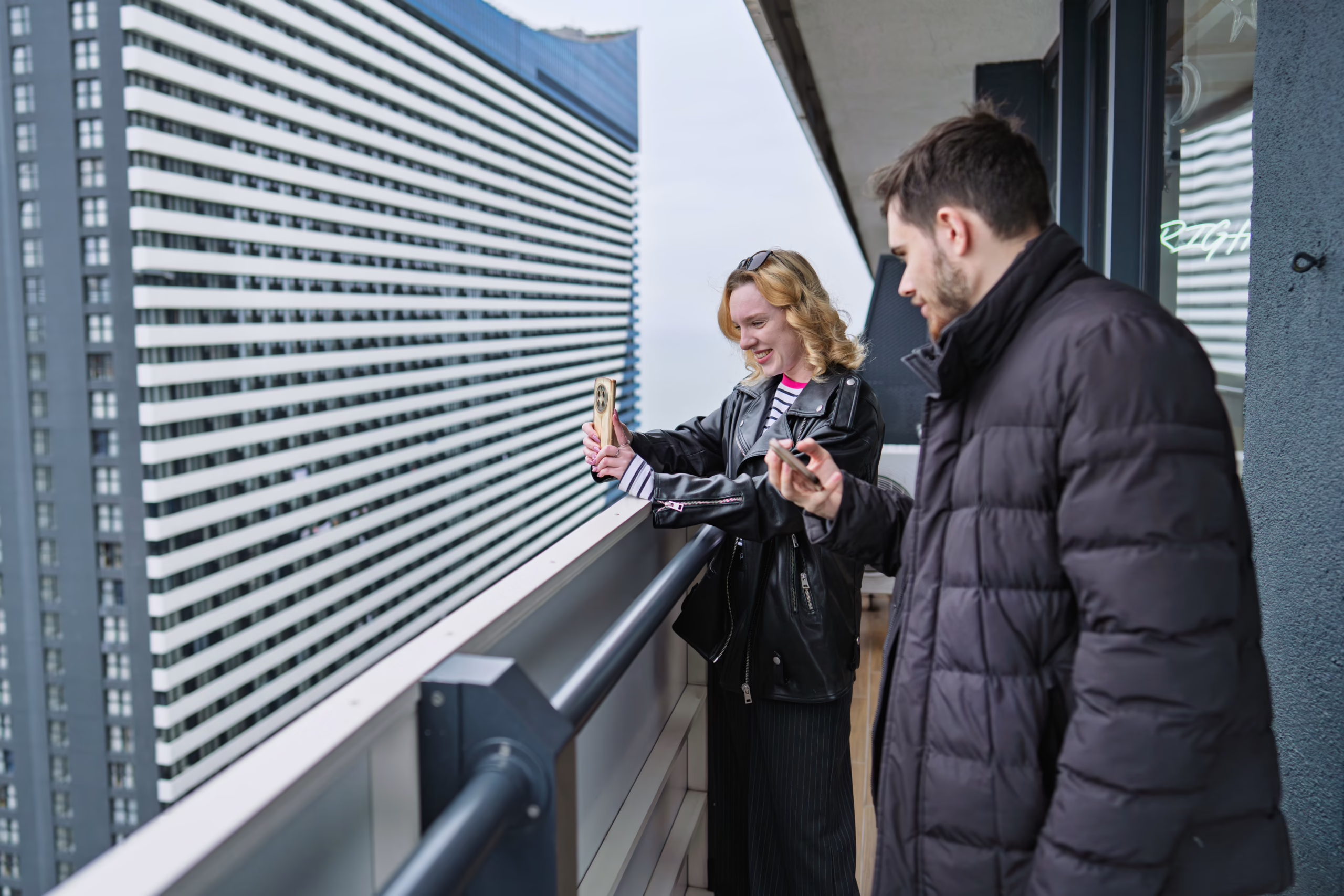
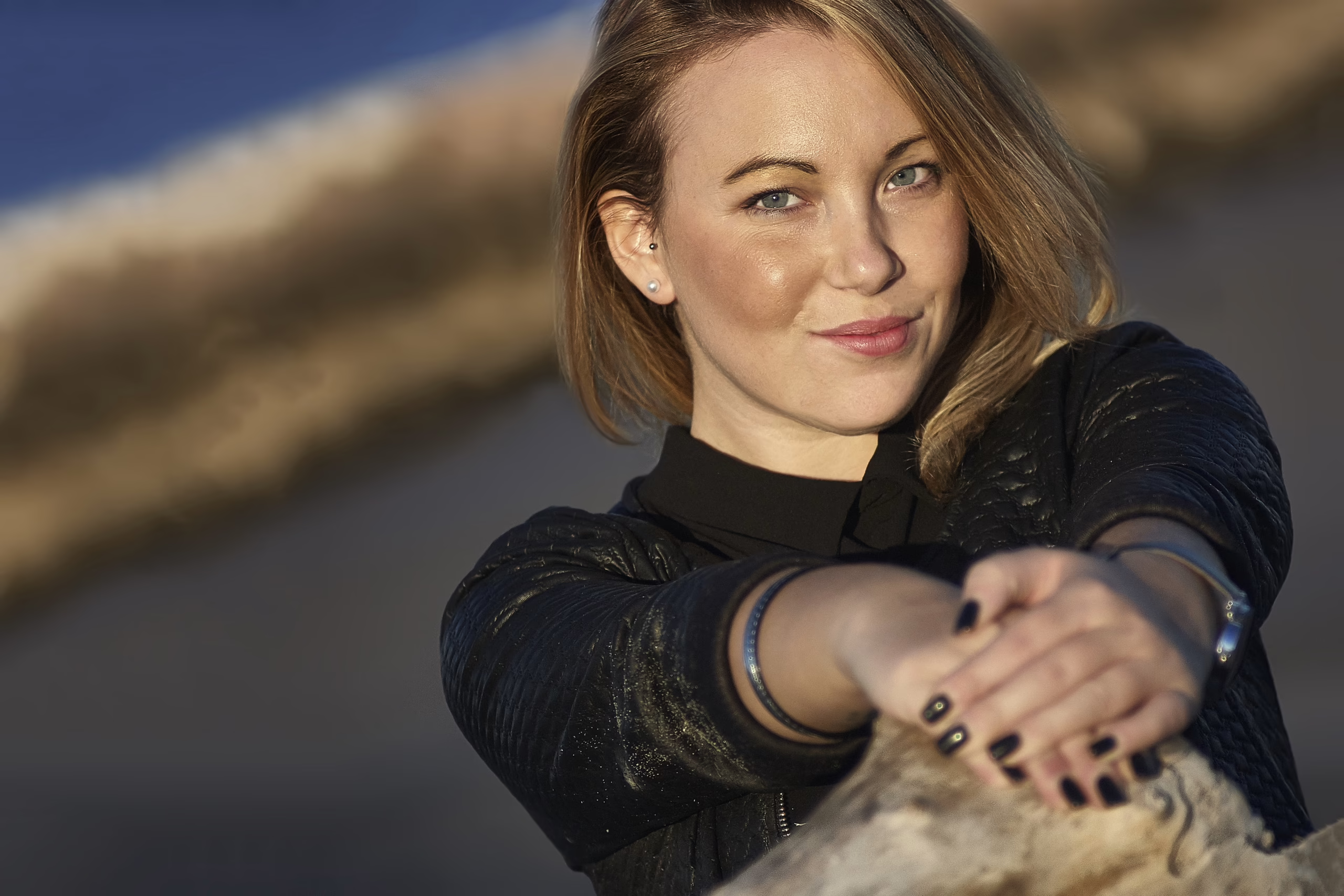
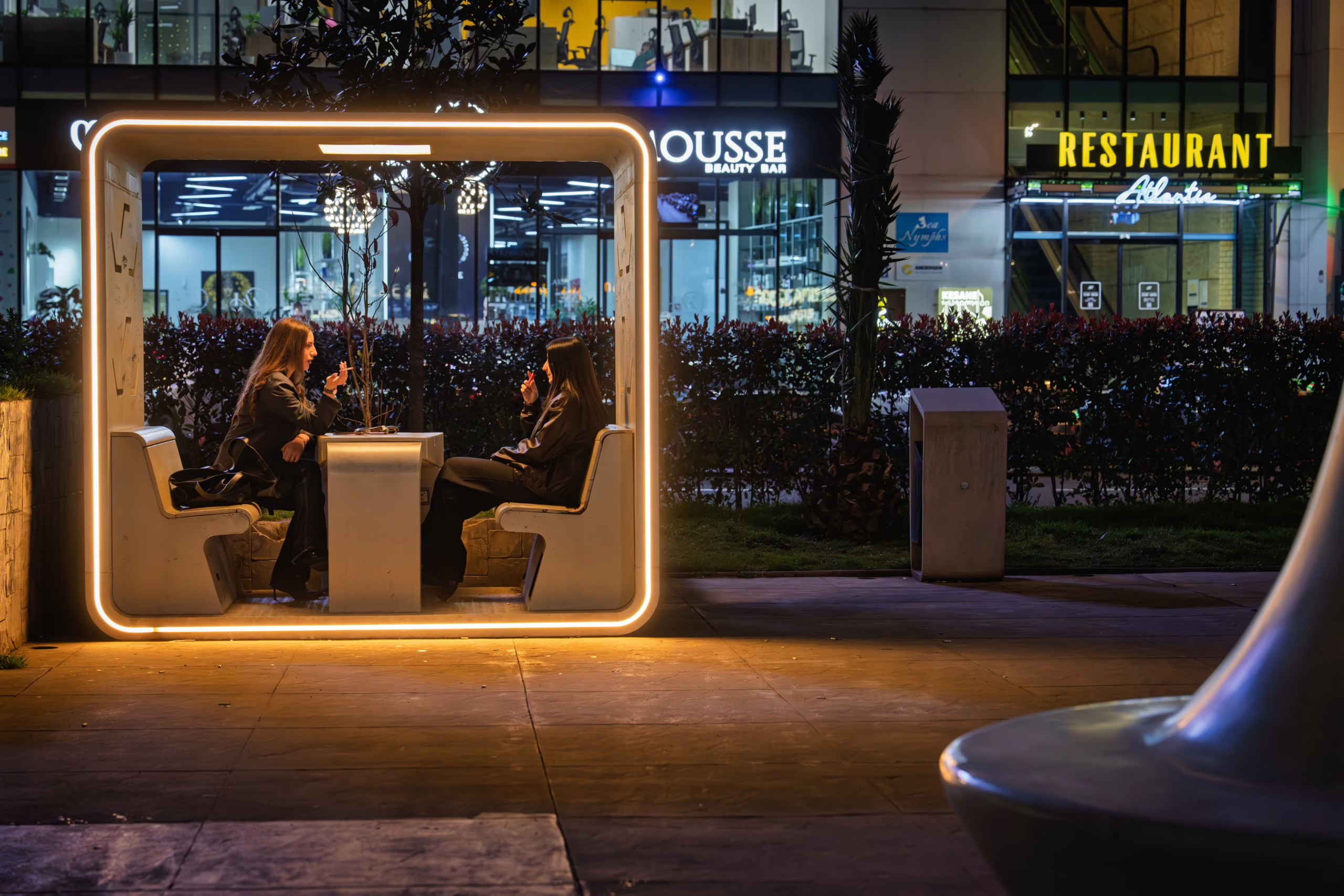
Young women laughing.
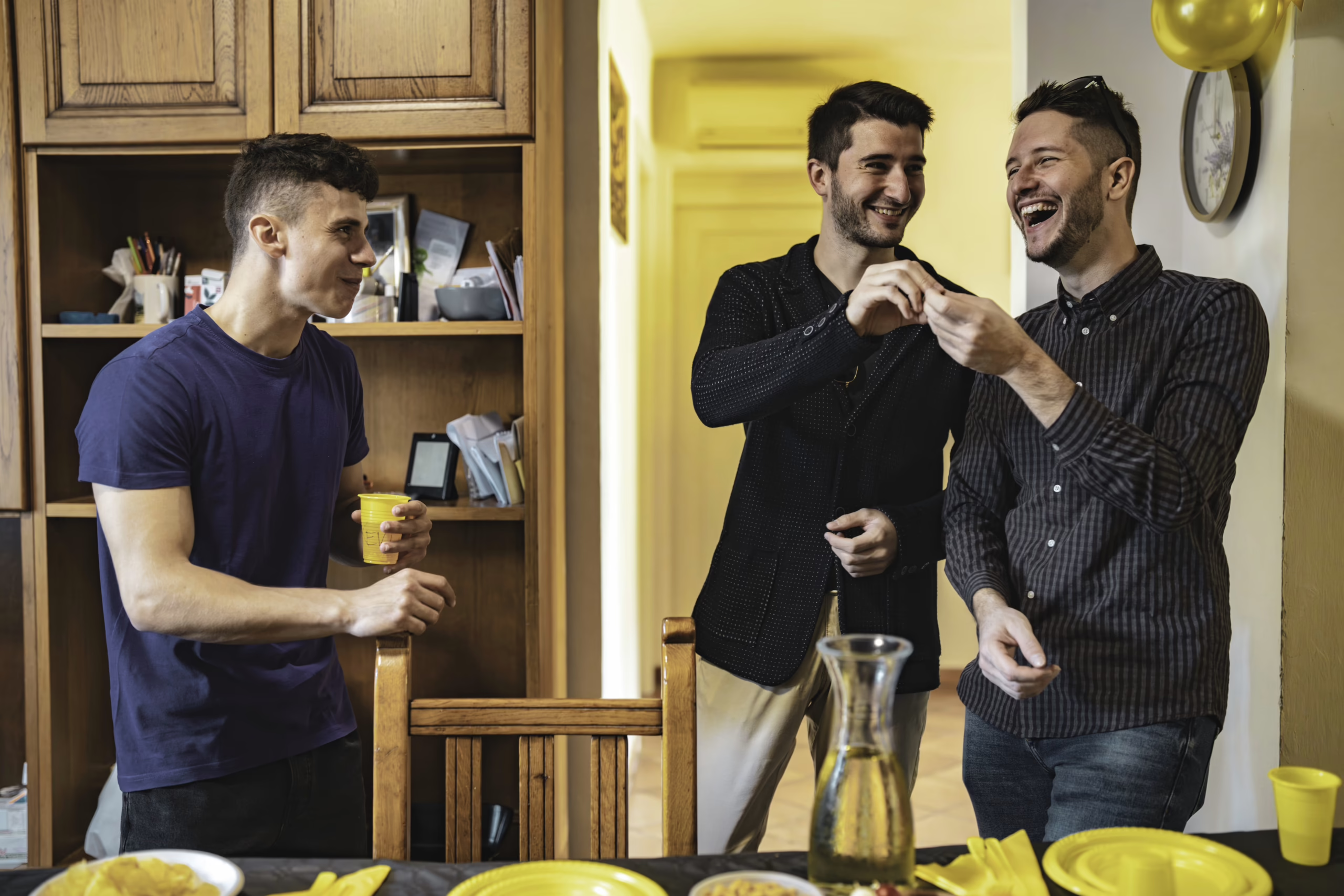
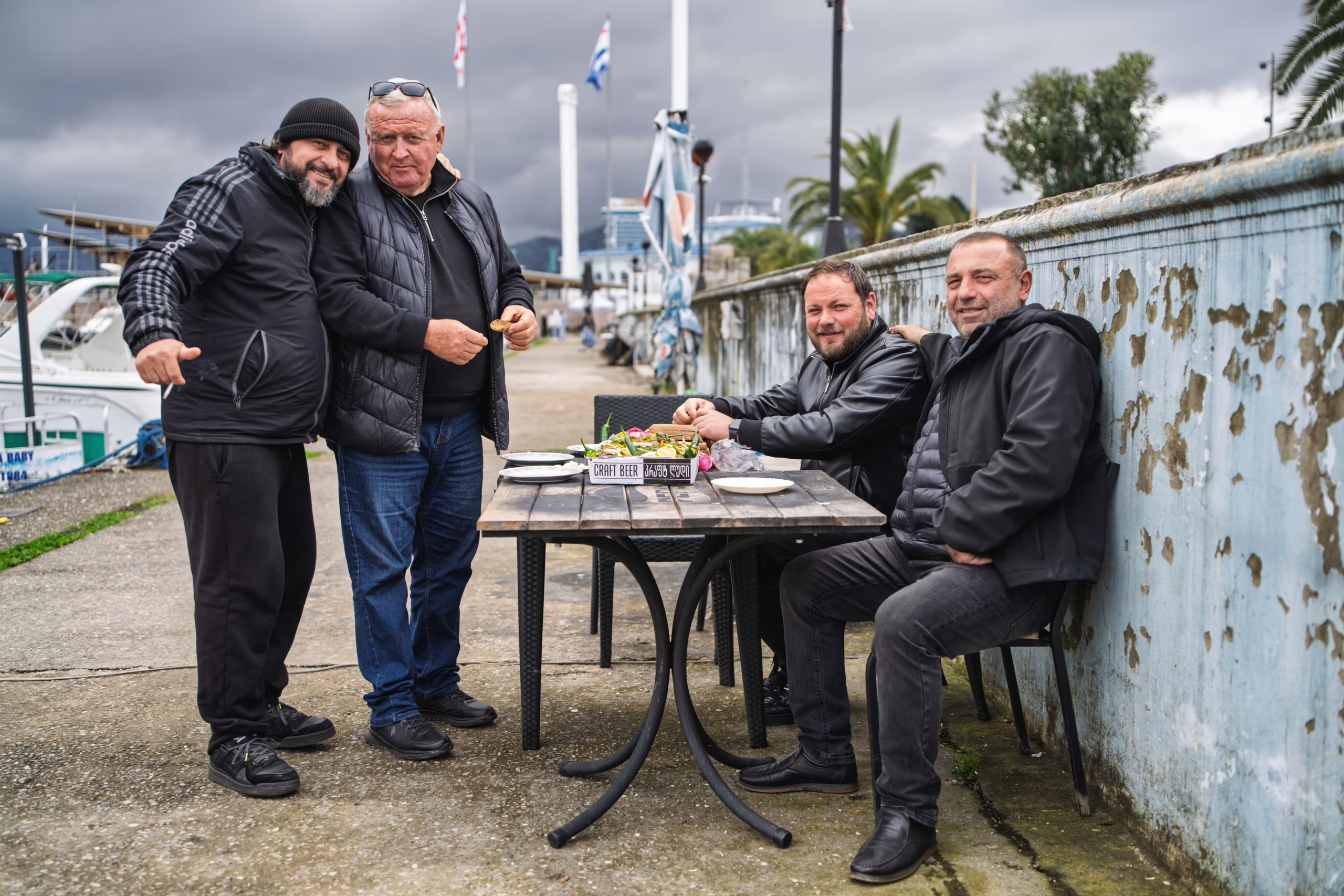
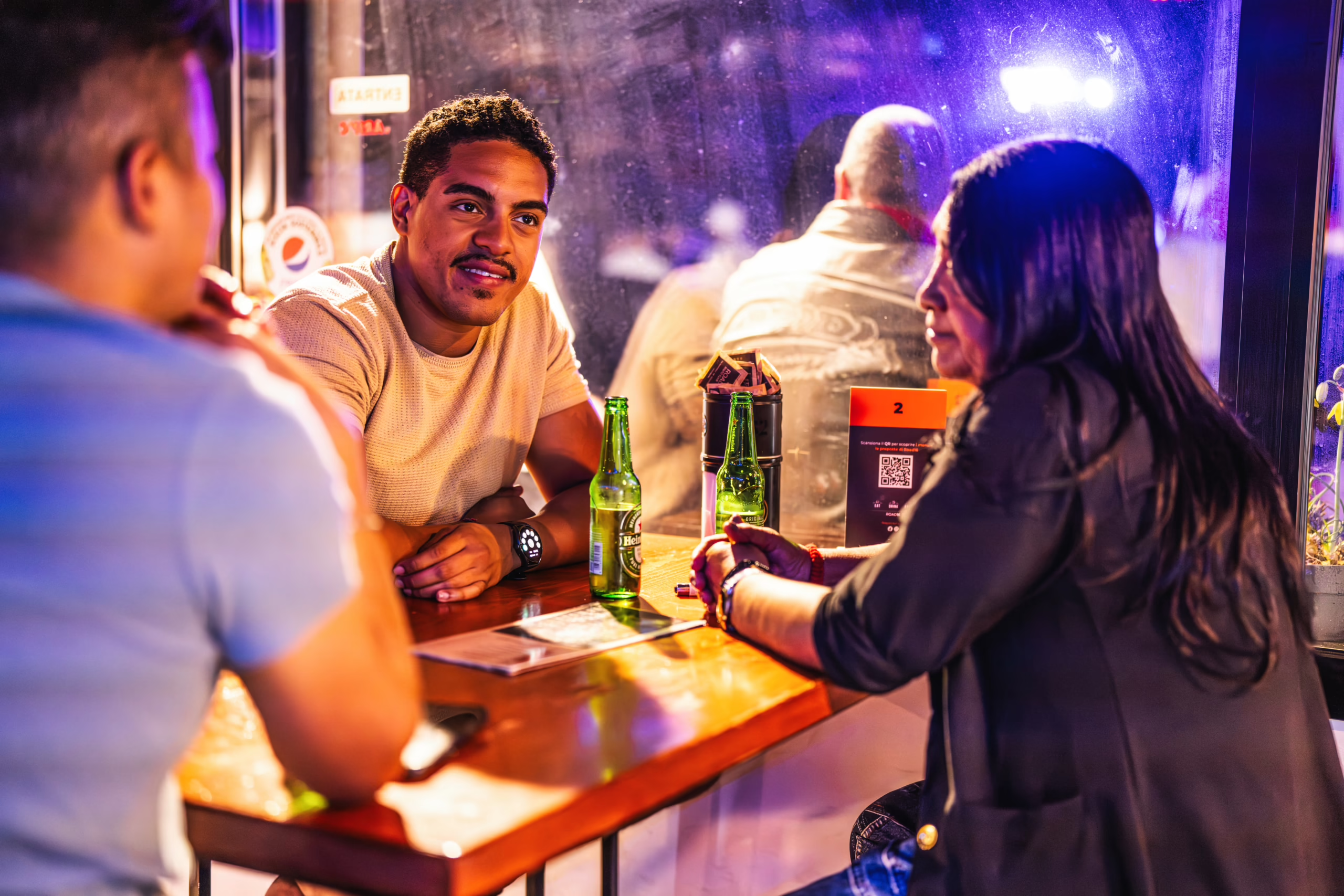
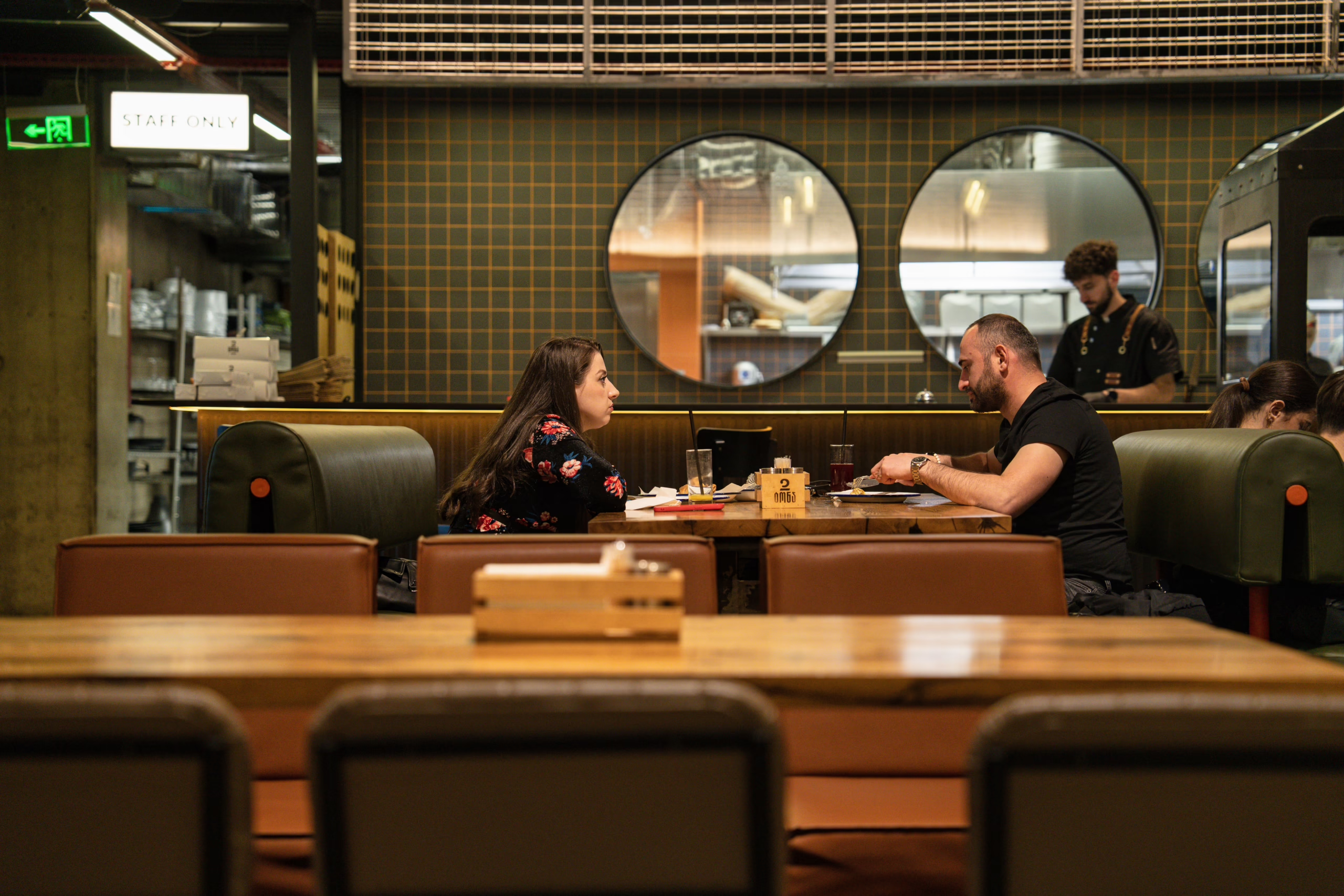
Men gathered around a table.
People drinking, talking, touching, waiting, walking together, or sharing the kind of silence that becomes comfortable only after a certain number of useless conversations.
The human being is a social animal.
That is an elegant way of saying that alone we go mad slowly, and in groups we become dangerous much faster.
We need others to survive, then spend our lives complaining about their intrusive presence.
We search for someone who understands us.
When we find them, we immediately begin hiding the parts we fear they may misunderstand.
We want to be loved for who we are, provided no one looks too closely at the inconvenient details.
We build friendships on laughter, beer, confessions, shared interests, and a tacit moratorium on one another’s flaws. A true friend is not necessarily someone who knows your best version. It is someone who has witnessed at least three of your worst decisions and still answers the phone—perhaps after letting it ring long enough to communicate displeasure.
The men in the photographs drank.
They laughed.
Embraced one another.
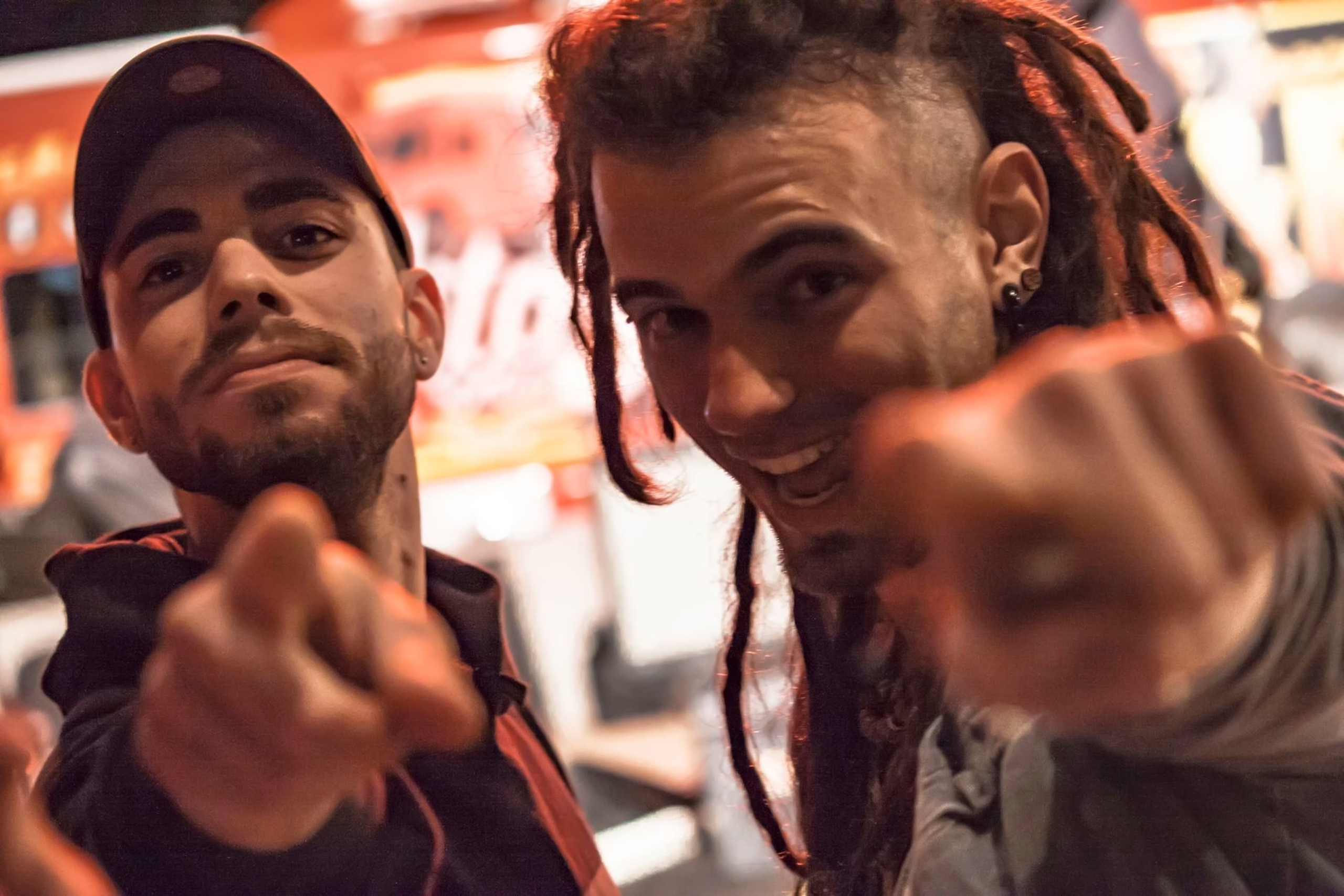
Some pointed toward the lens as though they had just recognized someone.
Others sat around a table with the gravity only slightly drunk men can assign to conversations of which, the following day, they will remember two stray sentences and an urgent, vital need to drink half a liter of water.
Perhaps civilization was not born around the fire.
Perhaps it was born the instant one man looked at another and said, his voice thick:
‘Stay a little longer.’
Then came the couples.
Naturally.
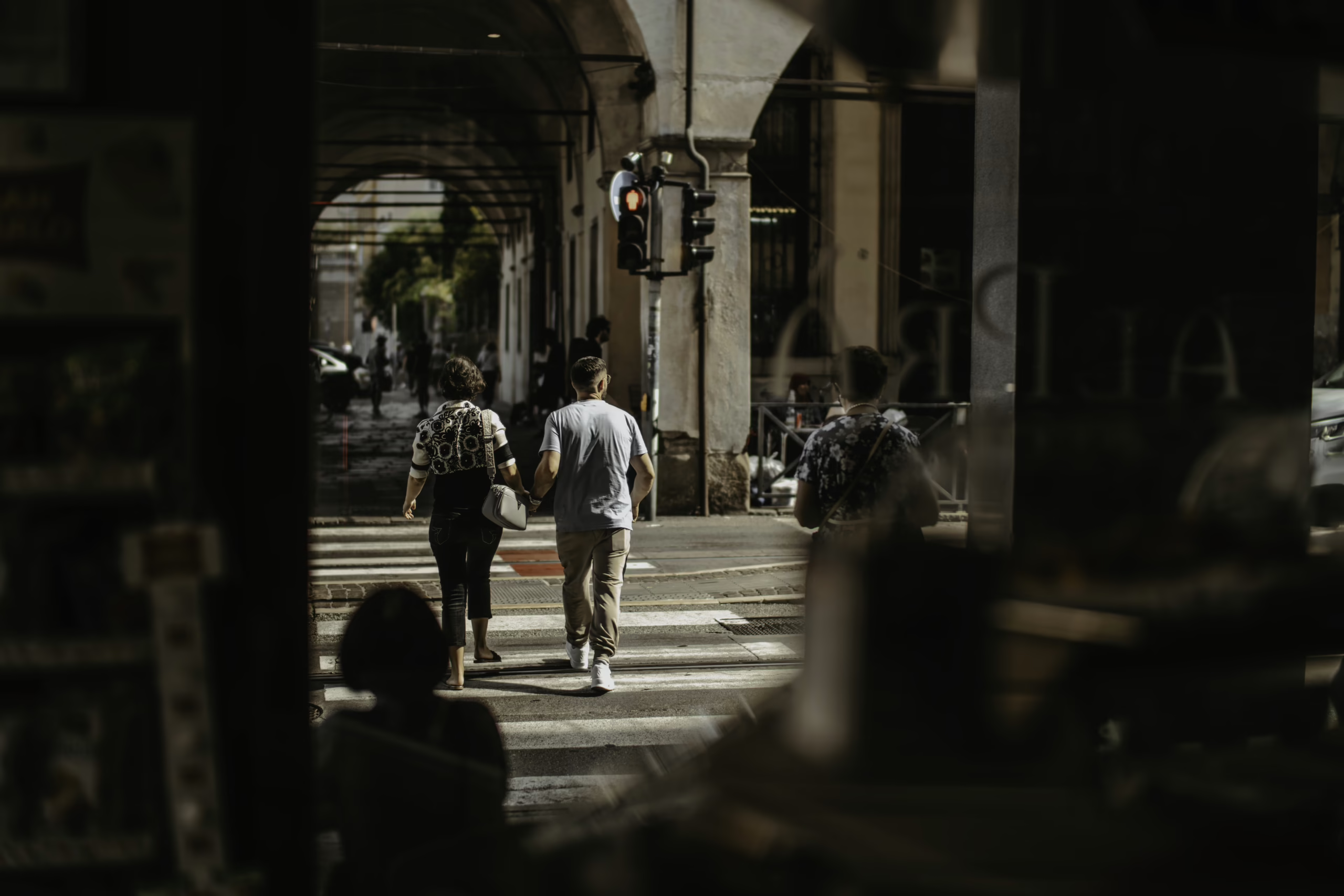
You can study humanity through war, religion, economics, and political philosophy, but sooner or later you must confront the disaster’s true infrastructure:
two people convinced that this time will be different.
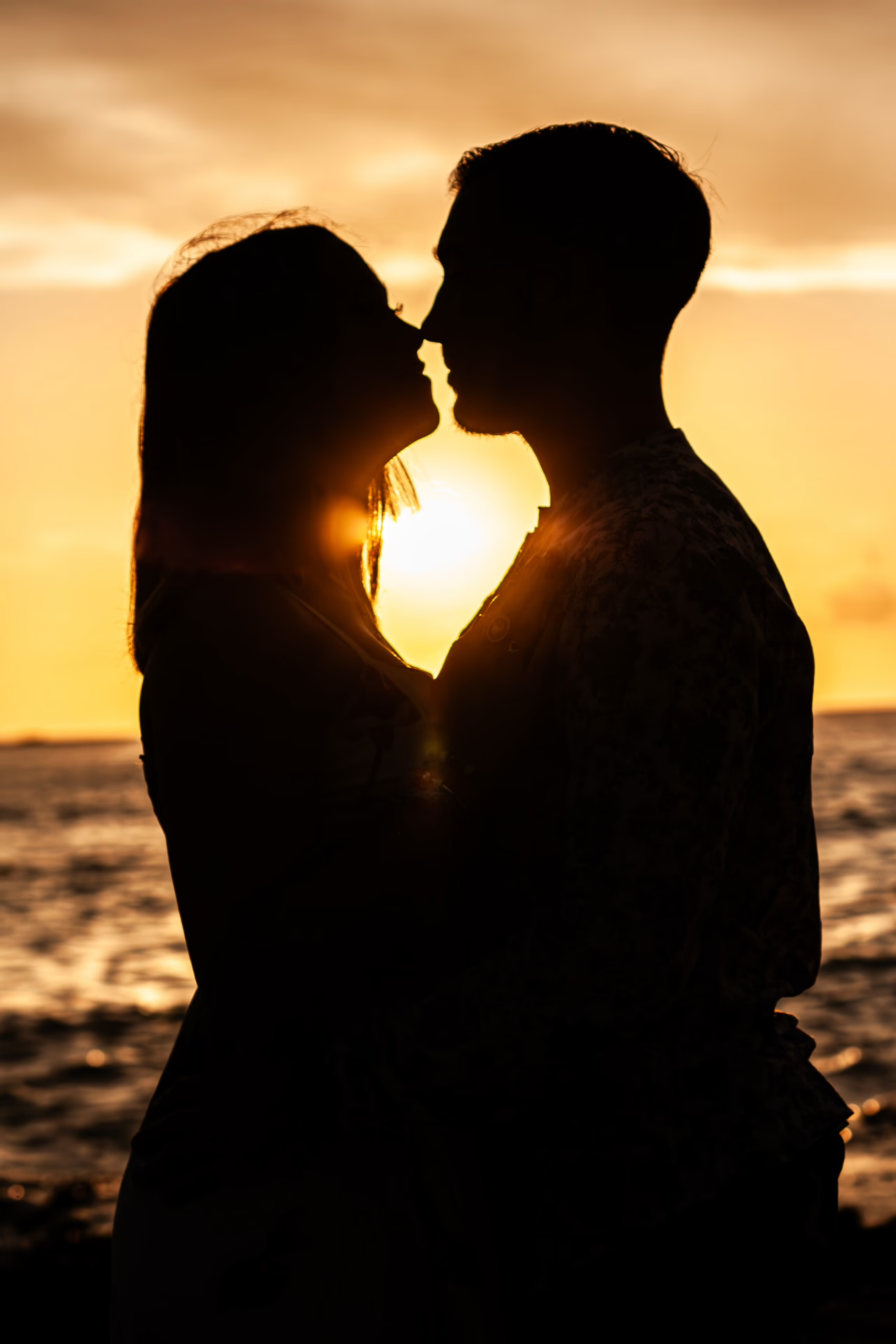
I saw them kiss.
Embrace.
Walk beside the sea as though the sea existed expressly for the two of them.
Pose before a sunset with the solemnity of signing a treaty.
Look at each other through the light like happy idiots—which, incidentally, is probably the most dignified human condition available to us.
Love is our most refined form of pathological optimism, a disorder no diagnostic manual will ever have the courage to classify as such.
We meet someone.
We know they might lie to us, grow bored, change their mind, desire someone else, develop a sudden and intolerable passion for padel, or start using the word ‘resilience’ over breakfasts that did not require it.
We know they might hurt us in ways we had not even anticipated.
We know they might die.
We know that even in the best case, one will witness the other’s end.
And yet we draw near all the same.
It is statistically irresponsible behavior, the kind of thing that would make any risk analyst shudder.
It is also, let us say without shame, marvelous.
Then comes the propaganda.
Because we humans cannot live a single fucking thing without immediately constructing a glossy copy of it, better lit and already packaged for the shelf.
We took love and pasted onto it sunsets calibrated to the millimeter, white sheets no living human has ever ironed personally, kitchens without a dirty plate in sight, couples laughing over salad as though it were the most hilarious event in human history, and men who have just woken up with already chiseled abs and breath apparently blessed live by the bishops’ conference.
We took sex and made pornography of it.
Pornography has its own totalitarian geometry.
The cock remains neatly inside.
It never slips out.
Every movement is precise, harmonious, photogenic. The bodies know their positions, the light arrives in the right place, and no one stops everything because of a cramp, a knee that needs moving, or the sudden recollection that they never answered their mother.
Those are sex scenes designed by the same creative department that produces perfume commercials—people who probably have not sweated for love since high school but know how to sell you the idea perfectly.
Real life works differently.
One wrong half-movement is enough, and the cock slips out.
End of the magic.
Perhaps just as you were about to come, with the exquisite timing of a waiter asking whether everything is all right at the exact moment you were about to say ‘I love you’ for the first time.
Then you have to stop, reposition, try not to laugh—or laugh, because by now all solemnity is dead and nothing remains but to pick up the thread.
There.
The difference between the counterfeit life we have been taught to expect and the real one is more or less this.
The life shown to us by advertising, glossy magazines, newspapers, television, cinema, and social media always keeps the cock perfectly inside.
Every movement leads somewhere.
People always deliver the right line at the right moment.
Relationships possess a clear meaning.
Pain automatically produces personal growth, like emotional fertilizer.
Careers follow a trajectory.
Vacations prove certified, taggable happiness.
Bodies remain aroused, young, tanned, and conveniently shaved.
Real life is forever losing the rhythm.
Slipping out.
Sliding.
Making noise.
Having to start again, sweaty and embarrassed.
Someone laughs at the wrong moment.
Someone cries during a day that was supposed to be happy.
Someone meets the love of their life while still busy ruining the one before it.
Someone gets what they wanted and discovers they no longer want it.
Someone fails well.
Someone else succeeds terribly.
Reality is not less true because it interrupts the magic.
It is true precisely because it has the inelegant habit of interrupting it.
Perfection is not the opposite of error.
It is the opposite of life. Period.
The people in the images were not perfect.
Thank God—assuming He does not truly hate us.
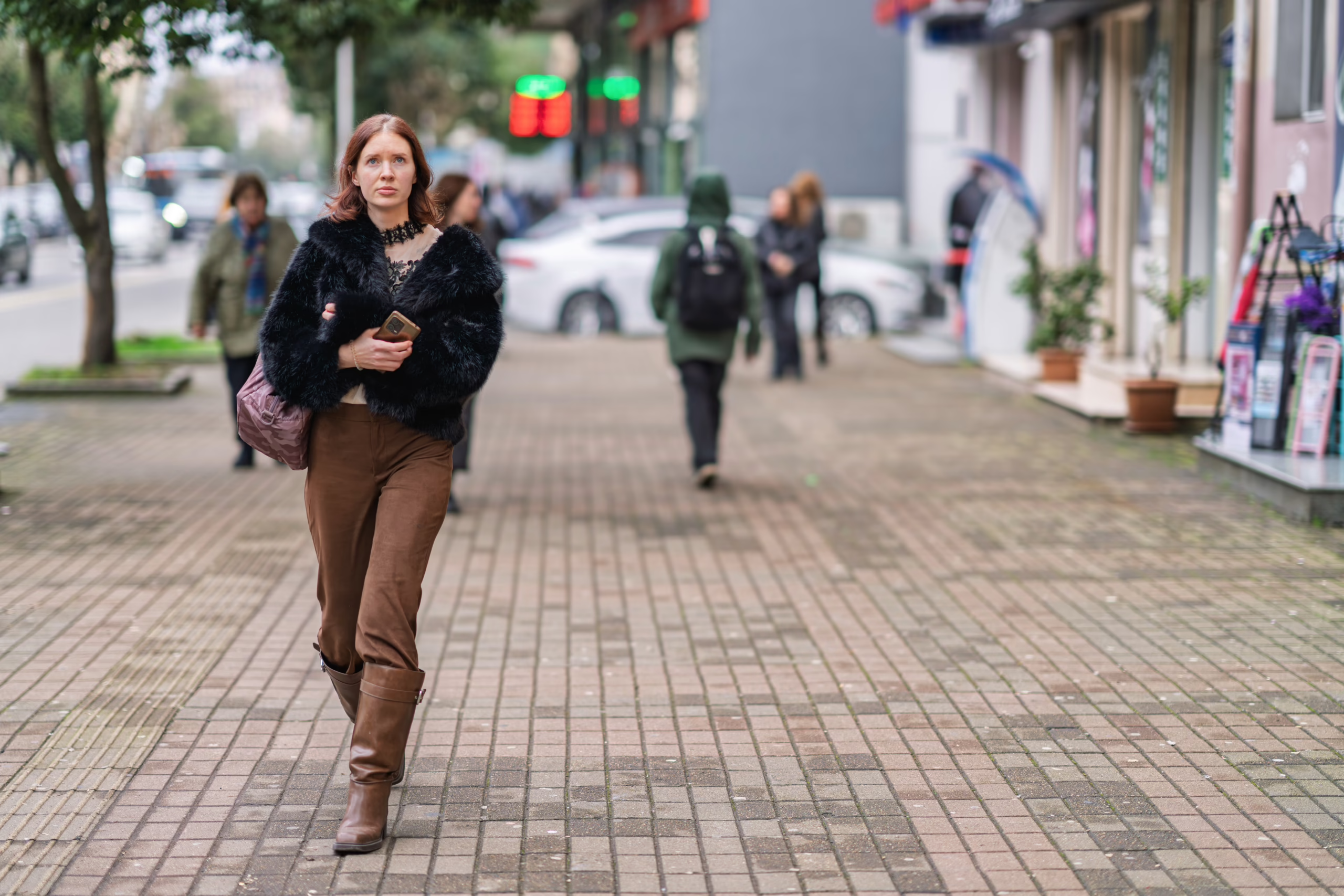
They had bags beneath their eyes, unretouched wrinkles, rumpled clothes, questionable posture, hair disordered by the wind, and that particular expression that appears only when no one has yet had time to put on the face reserved for strangers.
Some were laughing.
Others looked mortally bored.
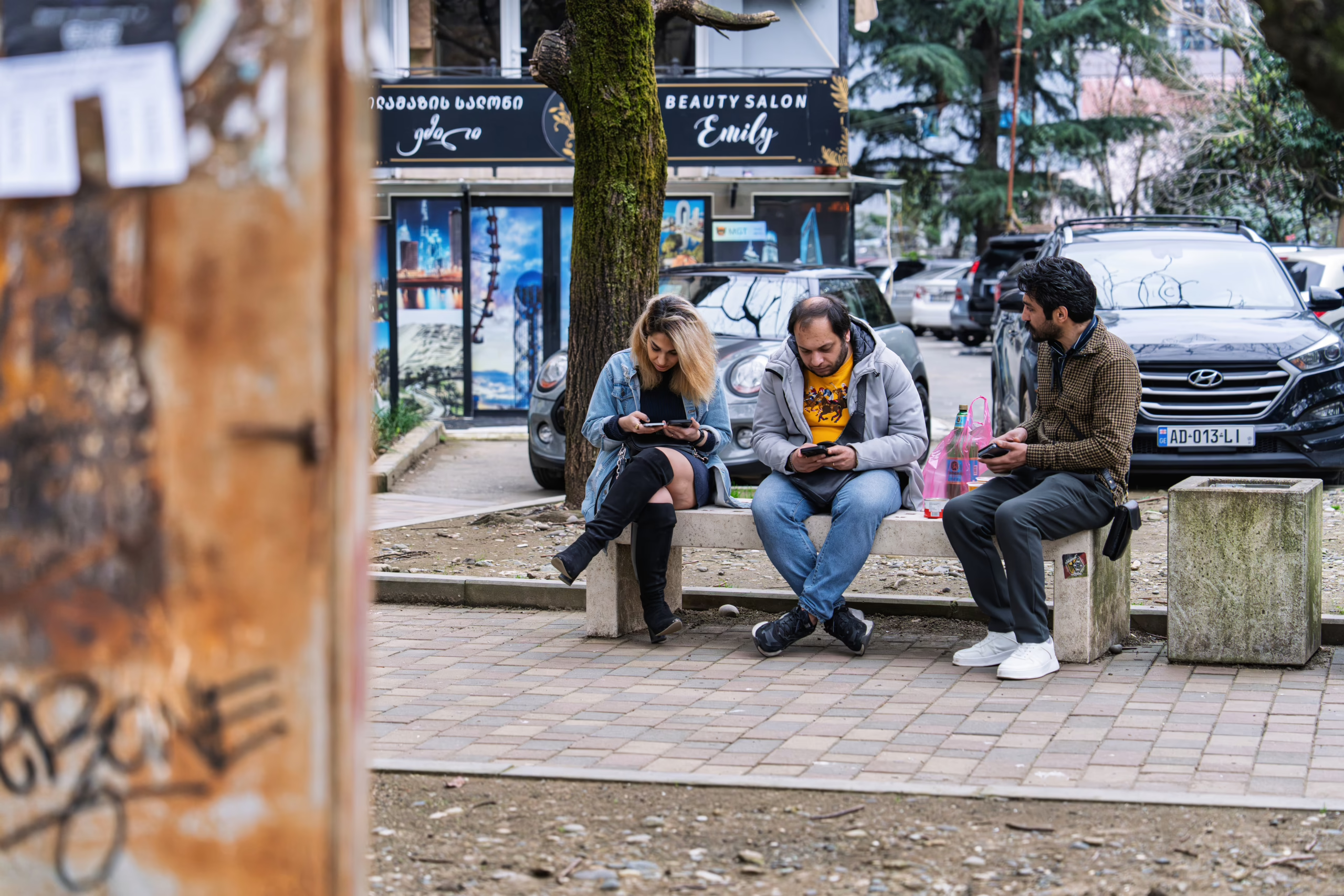
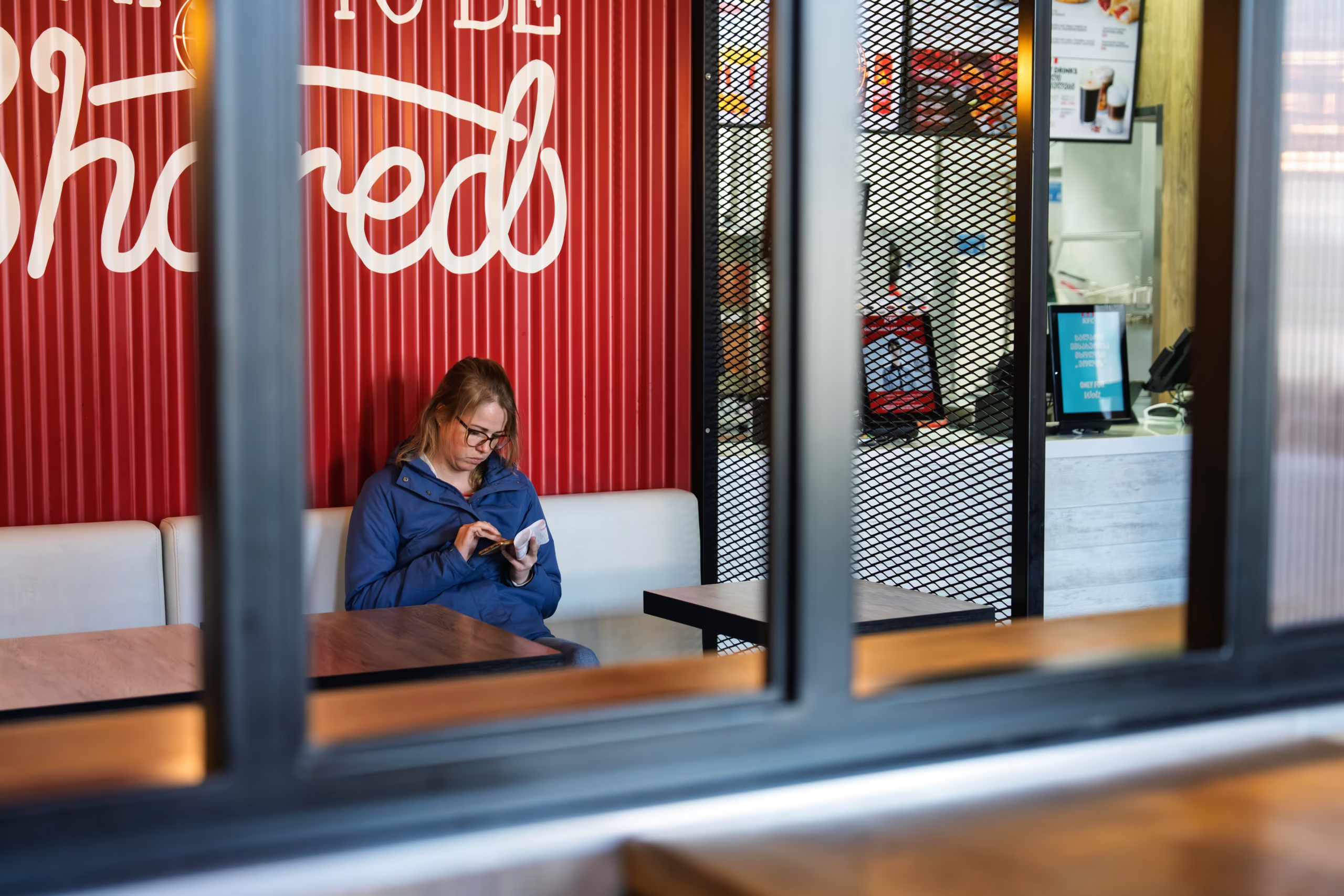
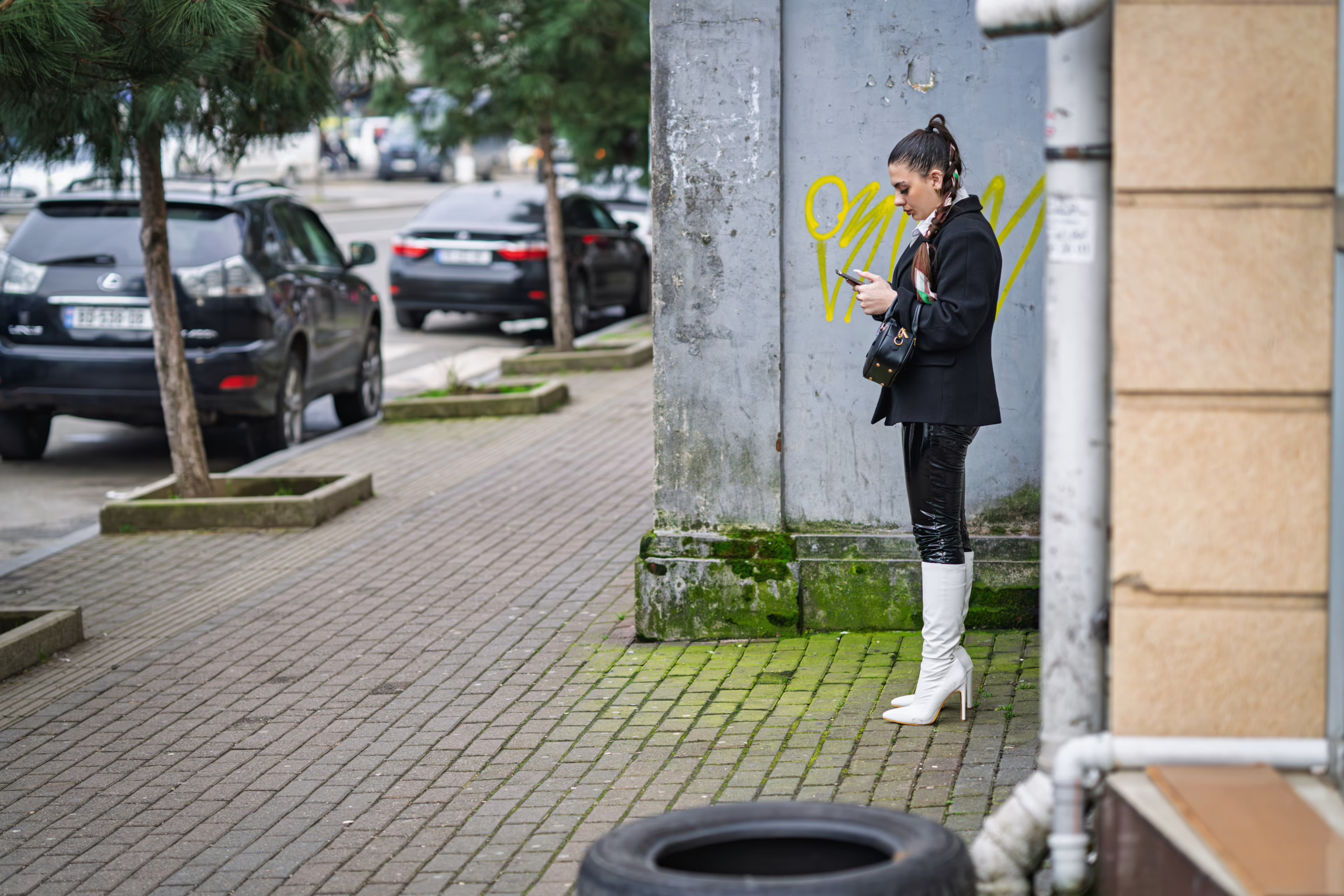
Someone stared at a phone while an entire portion of the world continued existing around him with very little commercial cooperation.
They were alive.
Not well positioned for the lens.
Alive. Simply alive—which, when all is said and done, is already quite a lot.
Then they began to work.
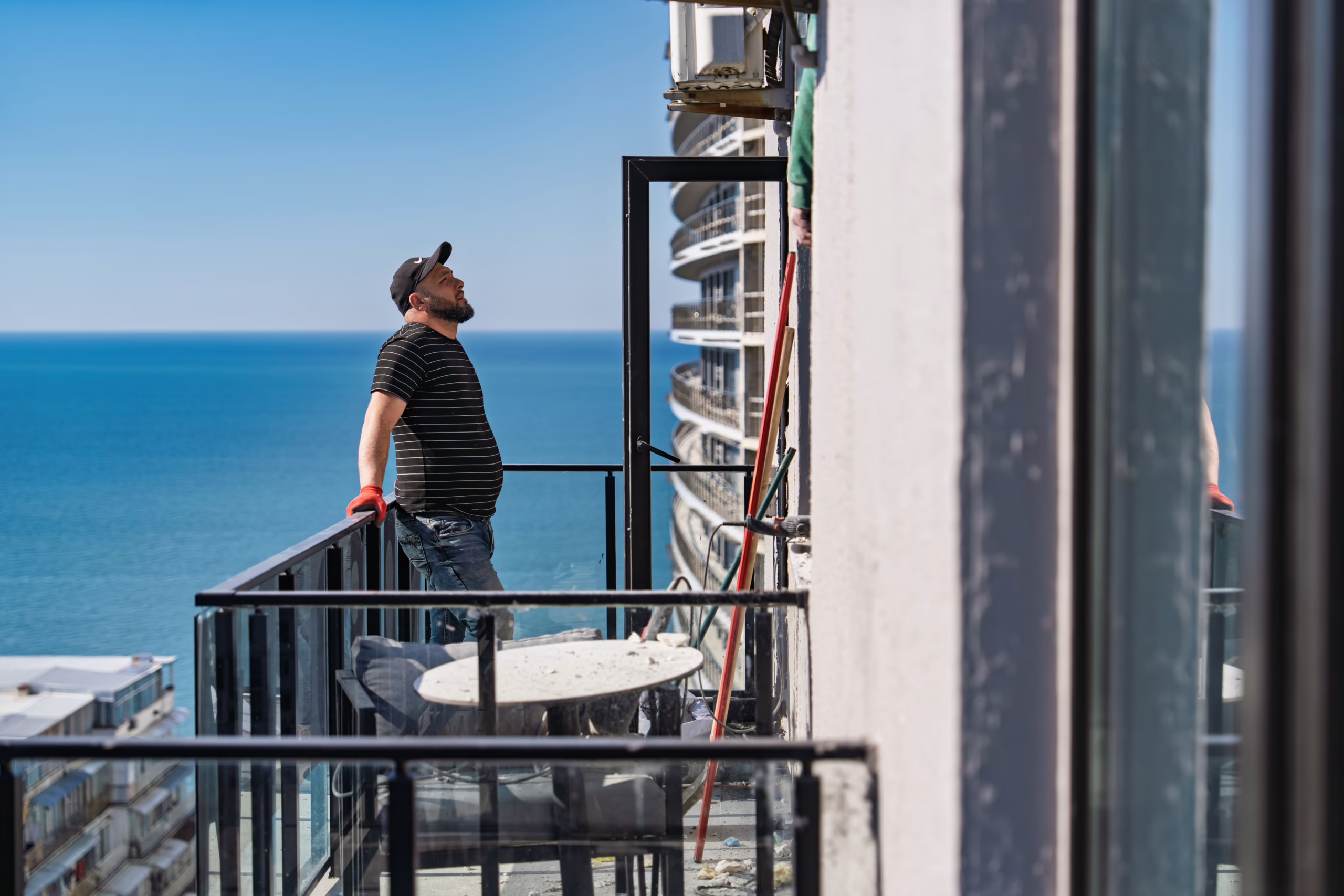
Construction workers.
Drivers.
Waste collectors.
Cooks.
Shop assistants.
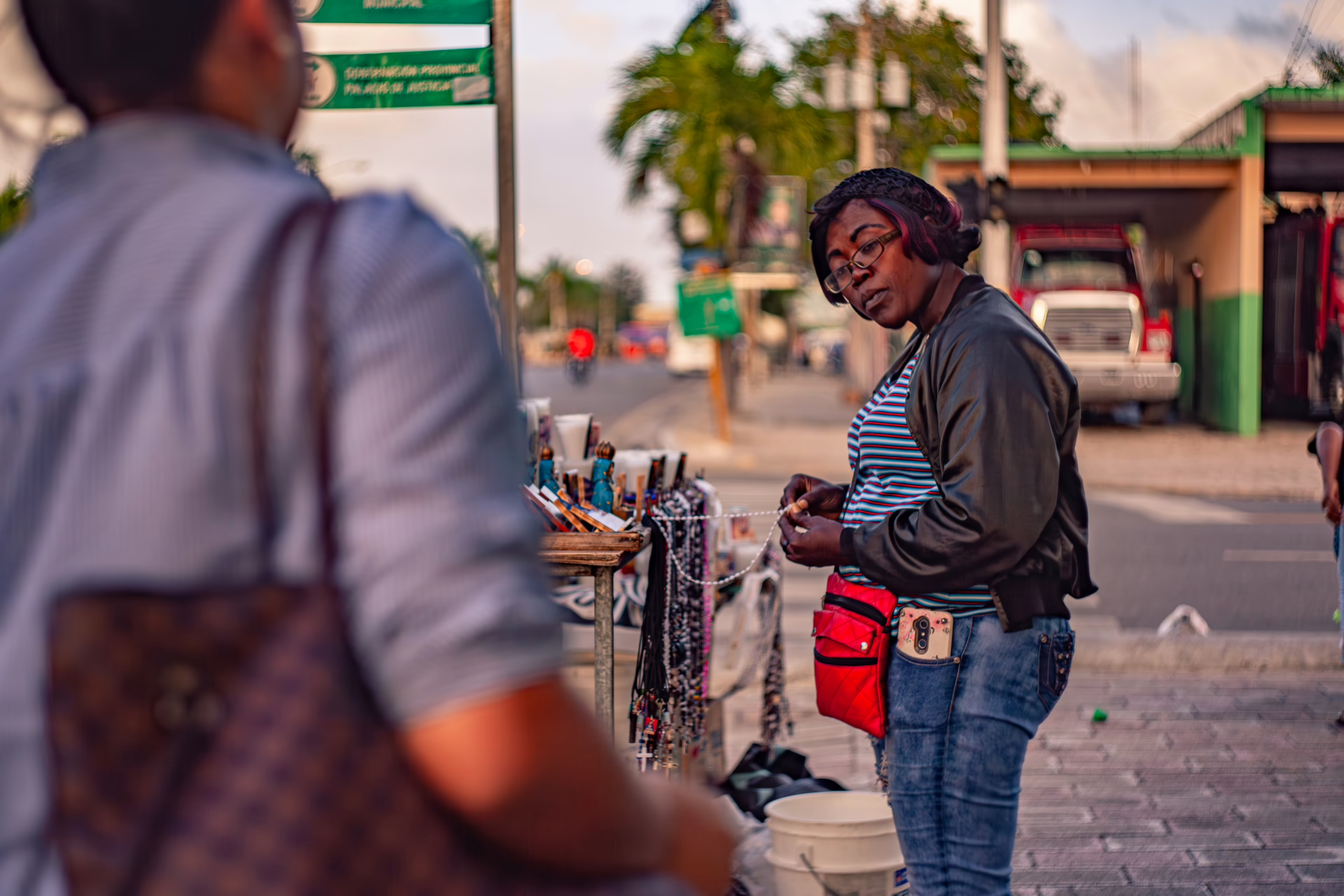
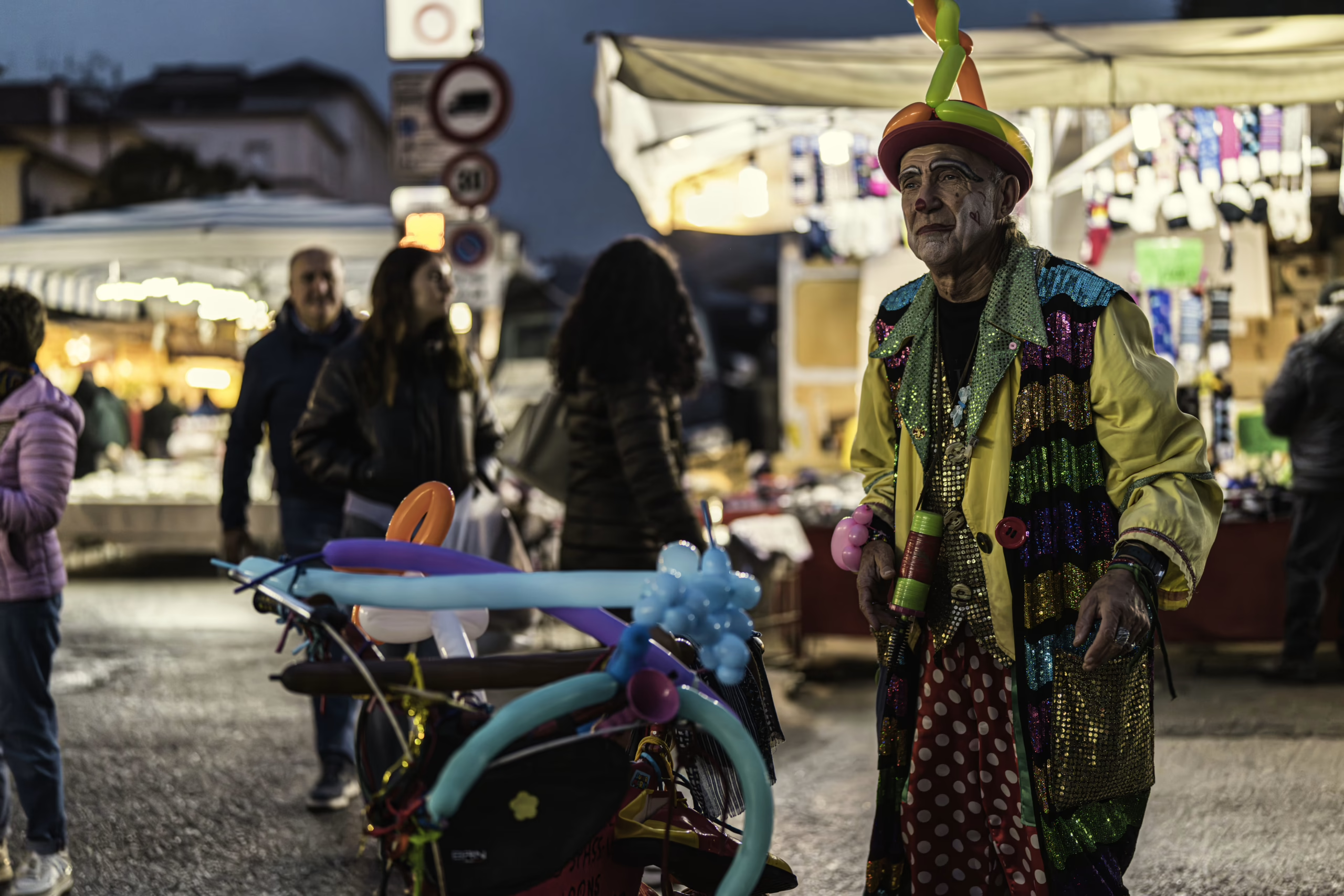
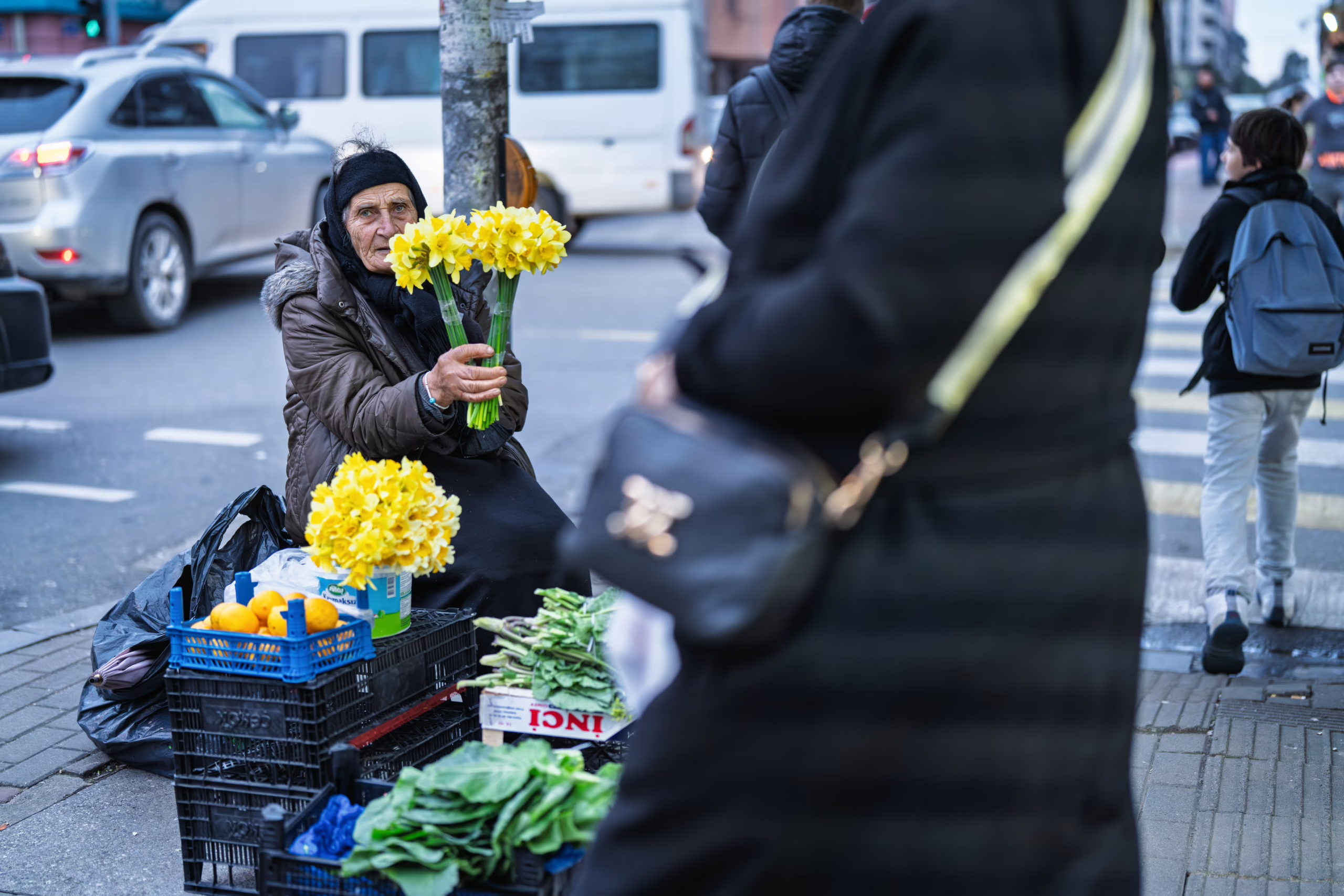
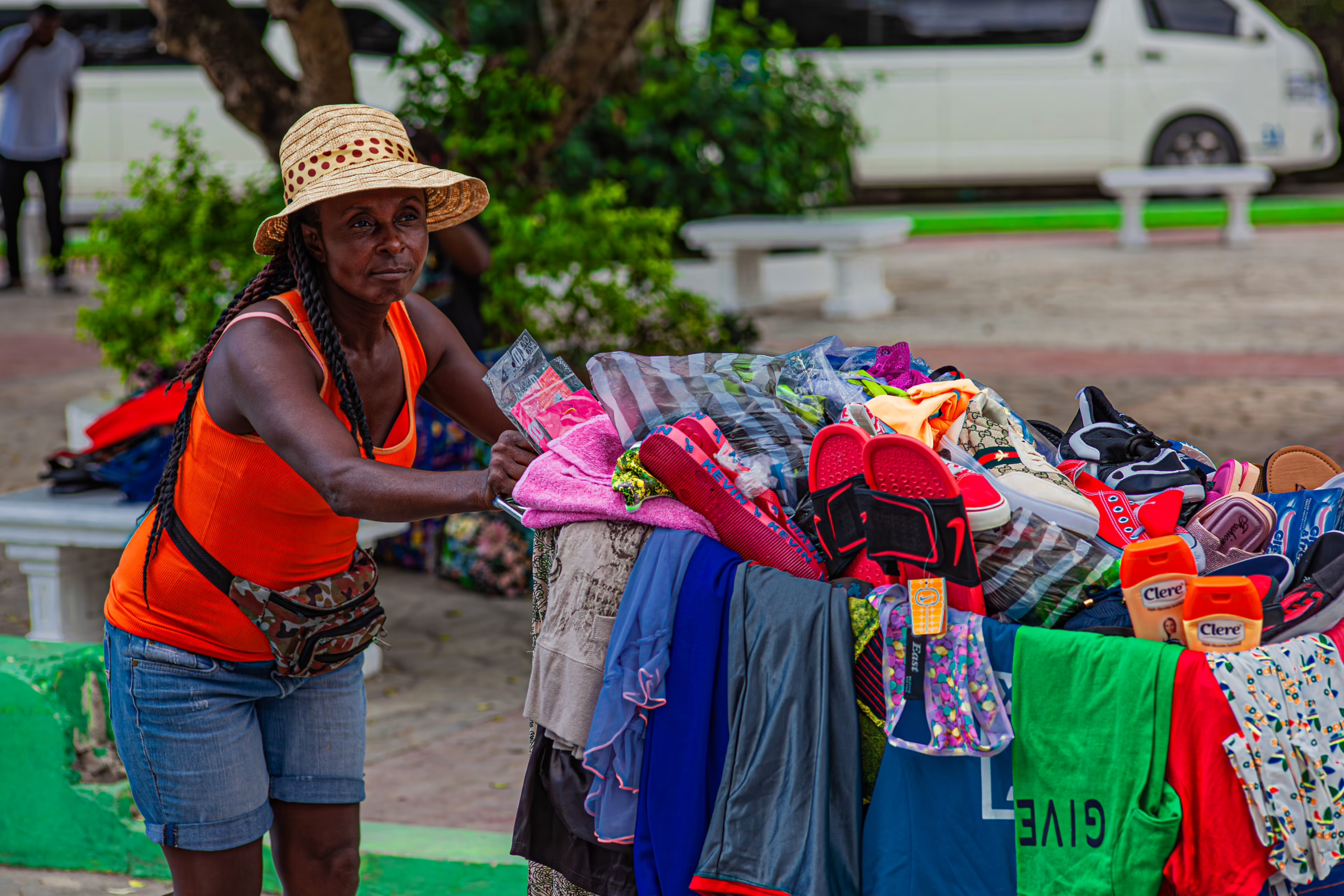
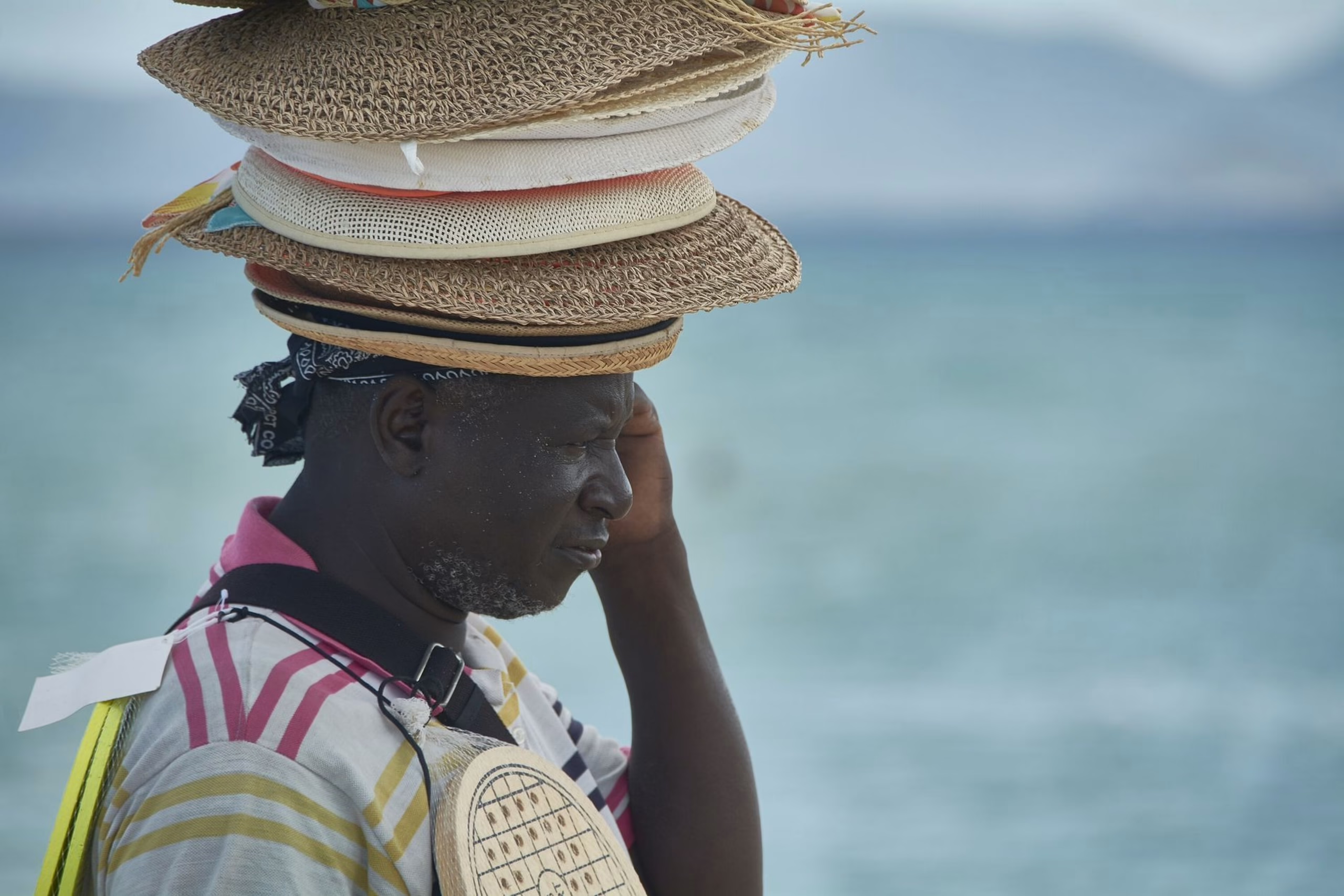
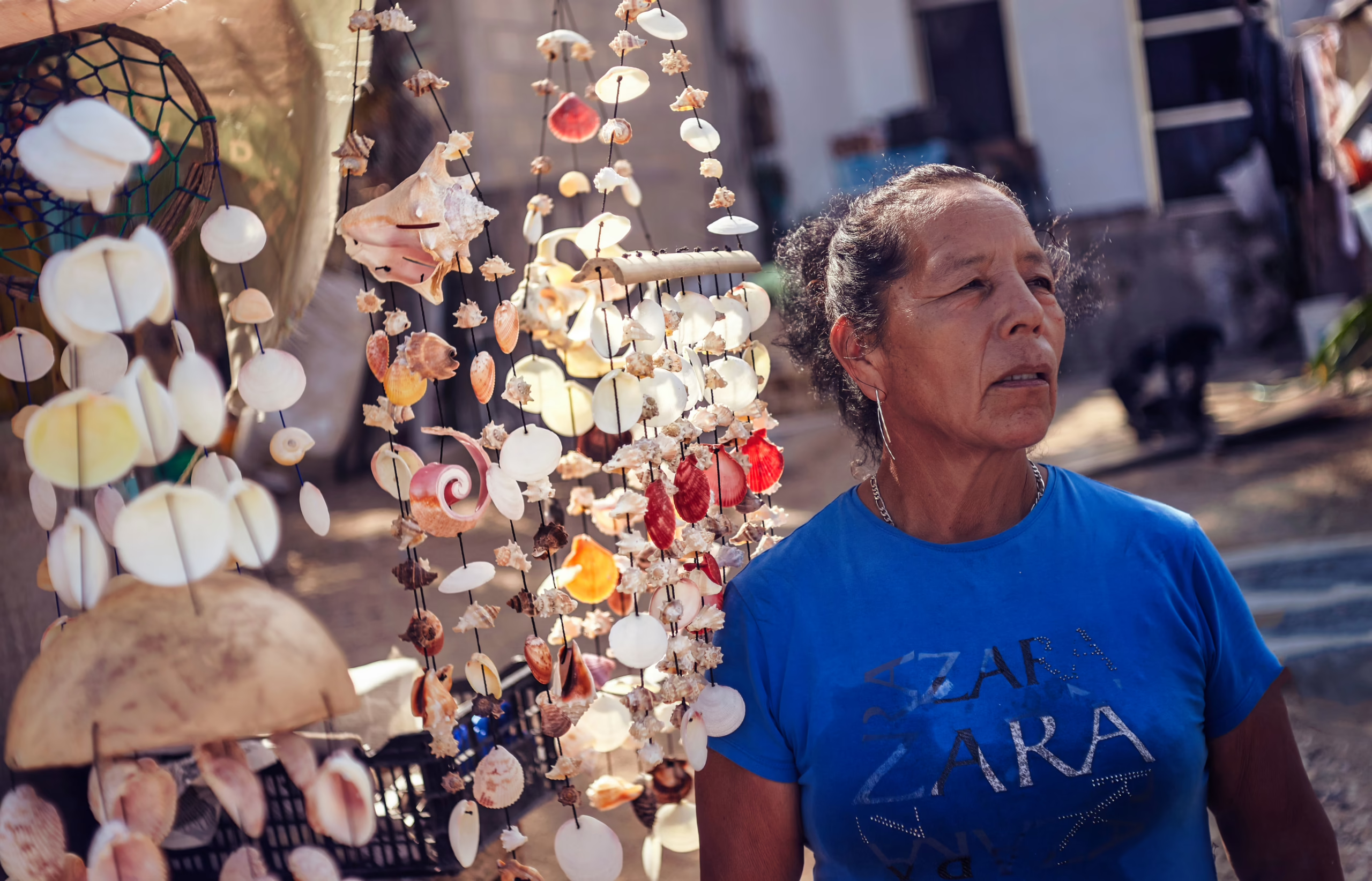
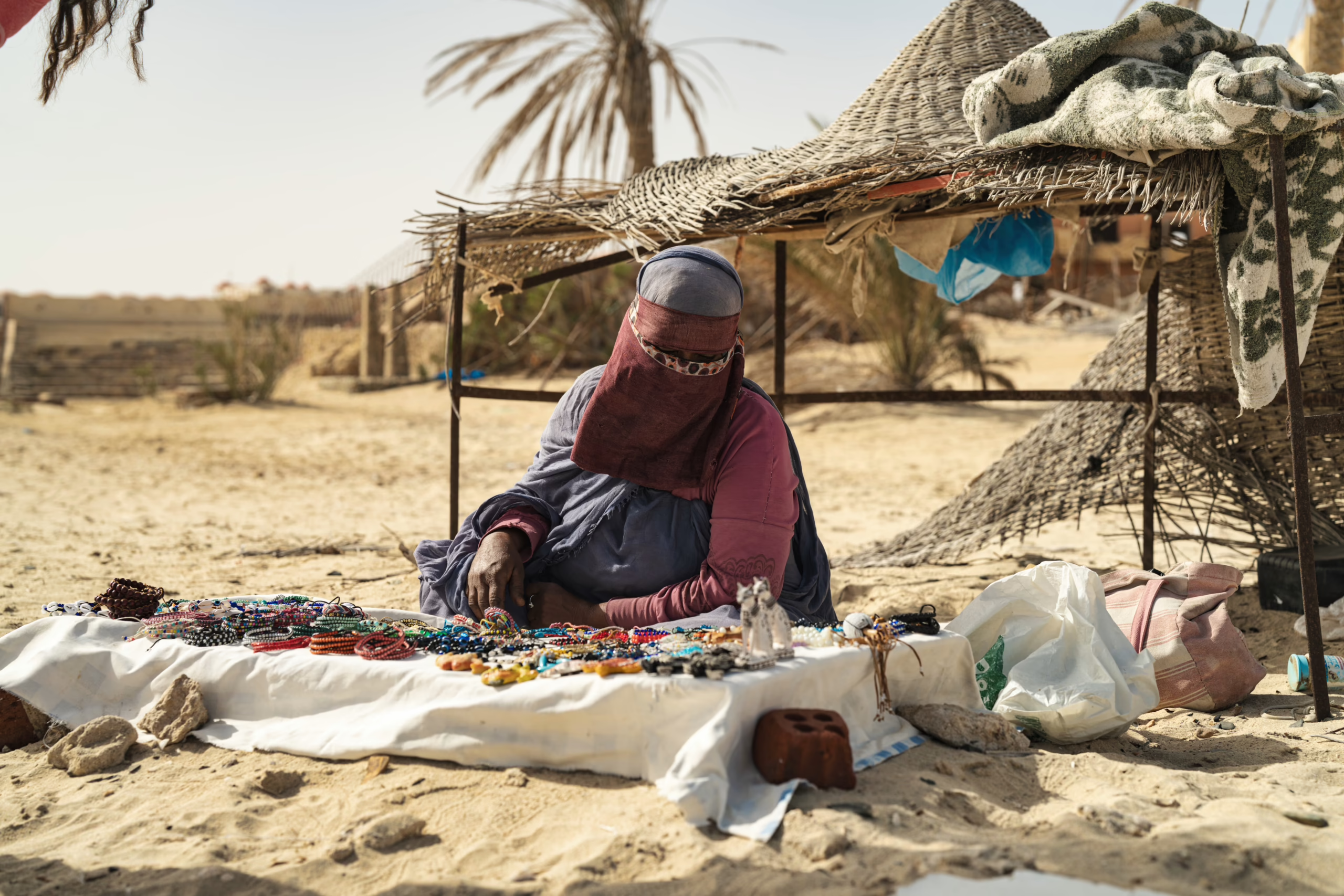
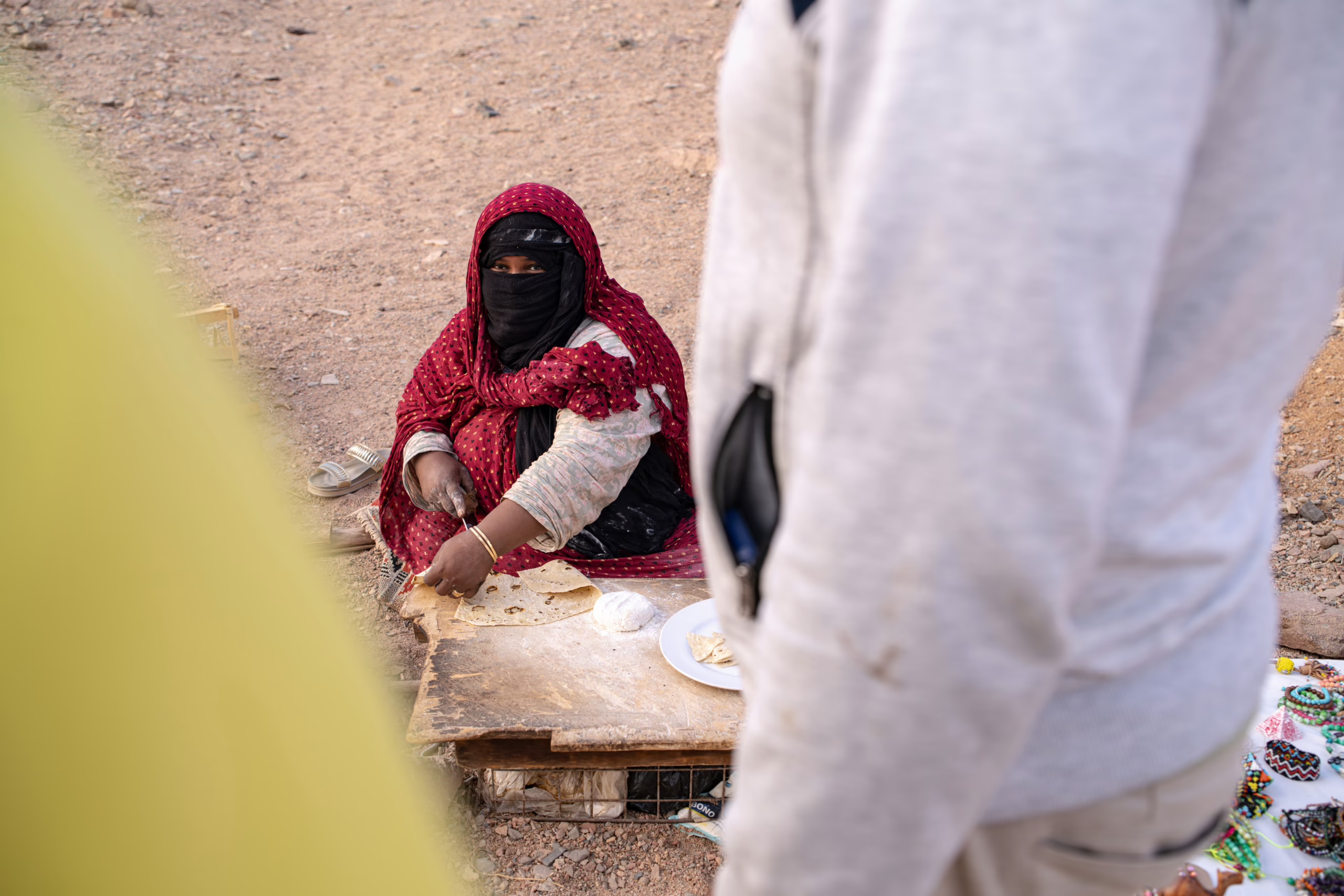
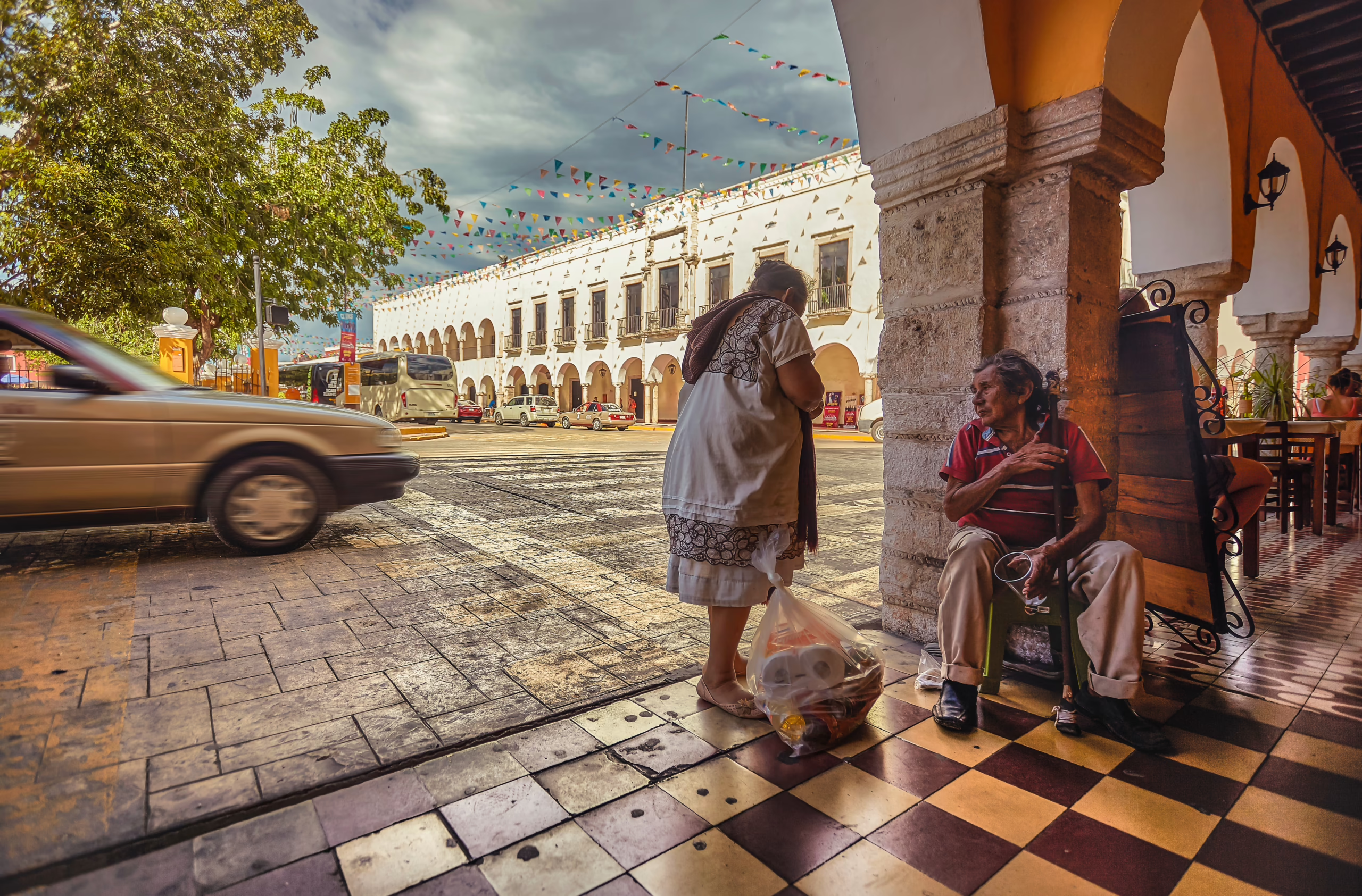
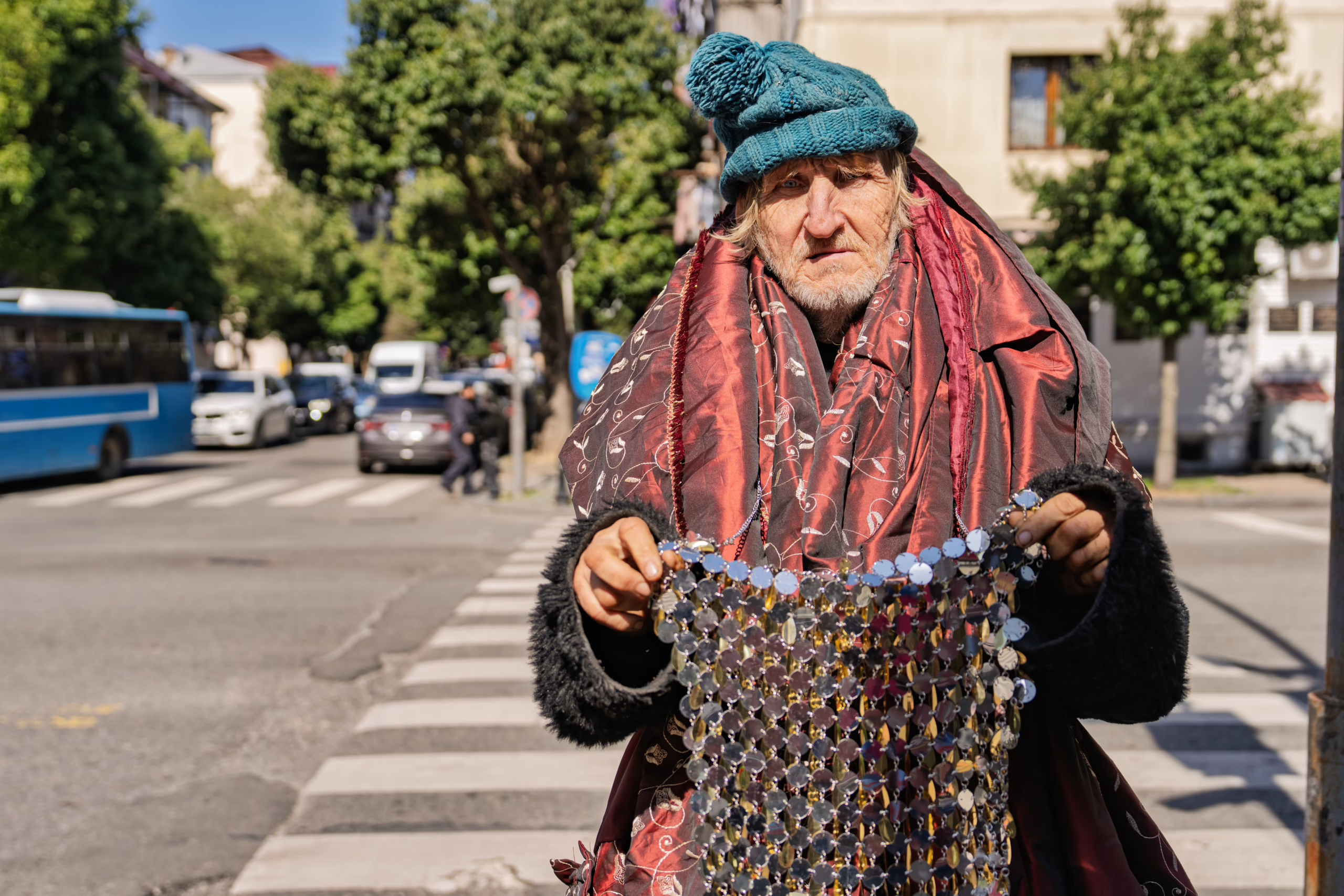
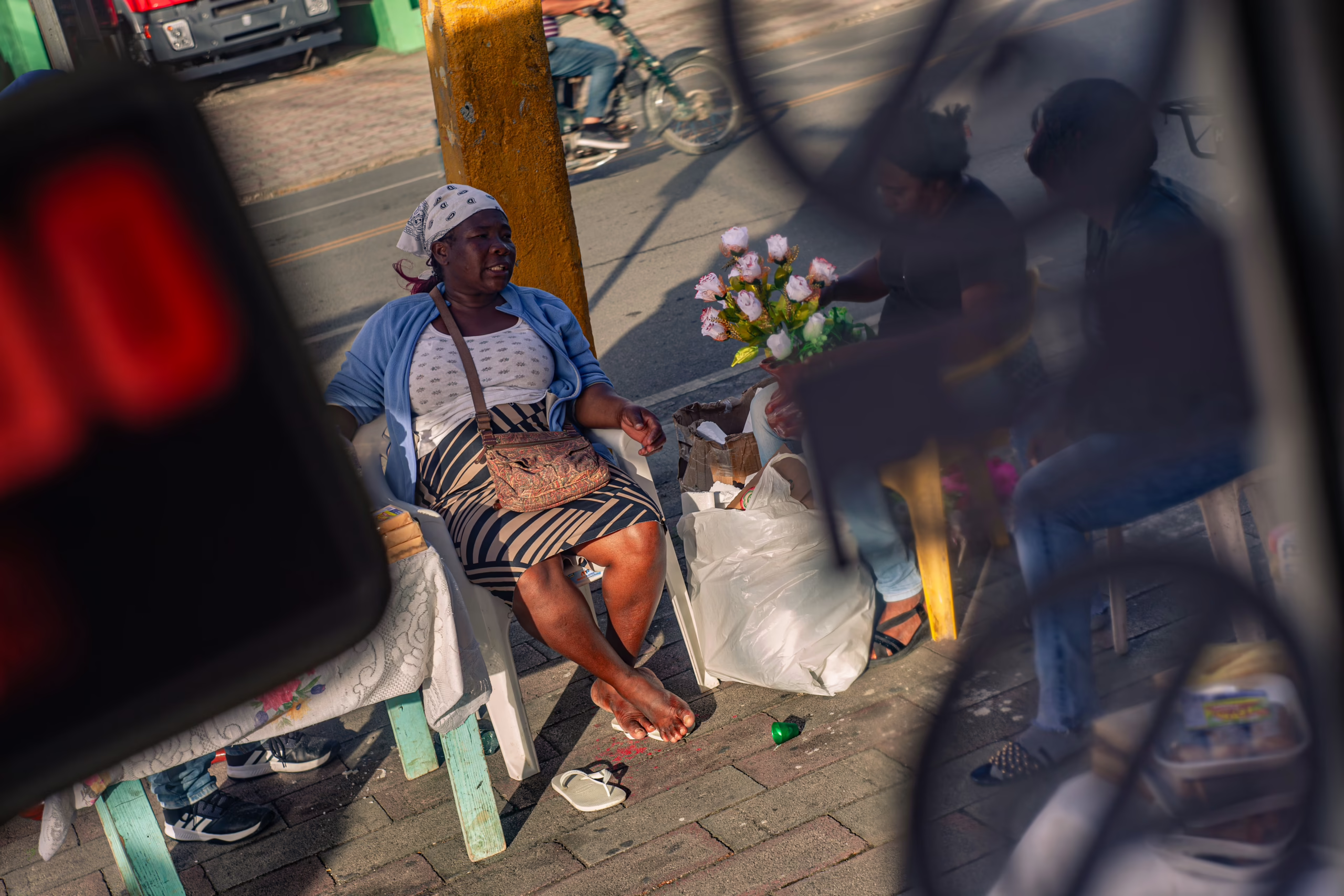
Street vendors.
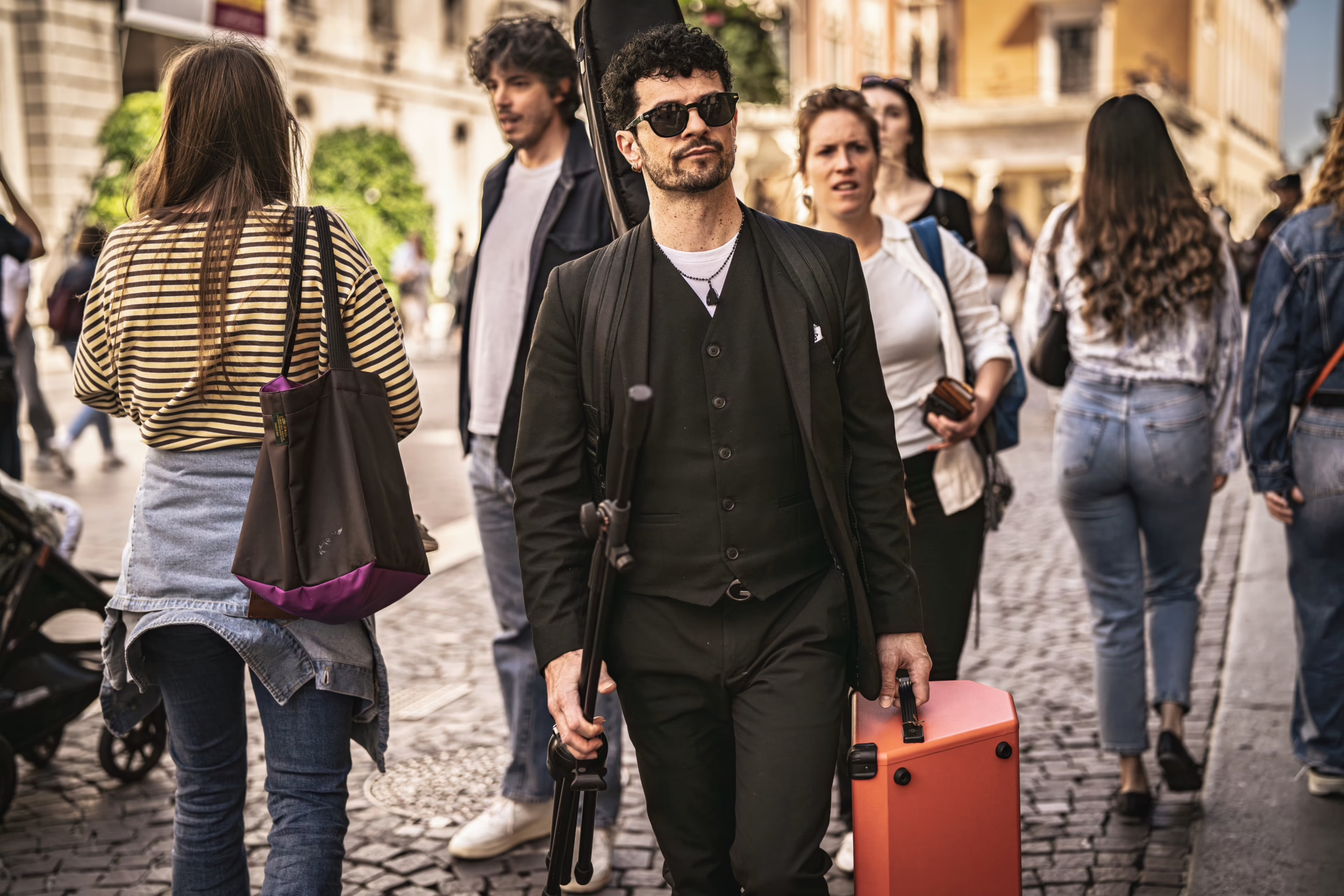
Musicians.
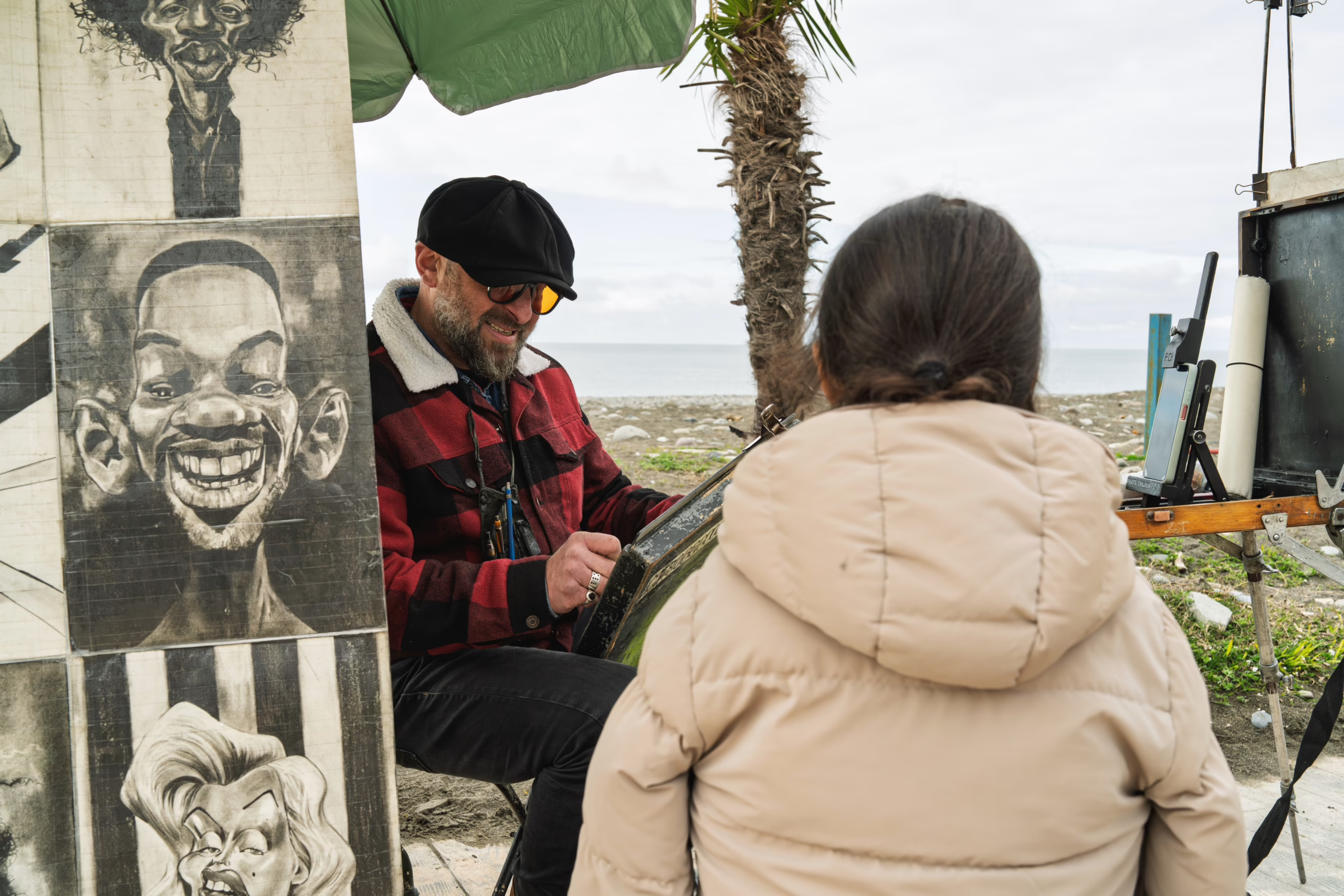
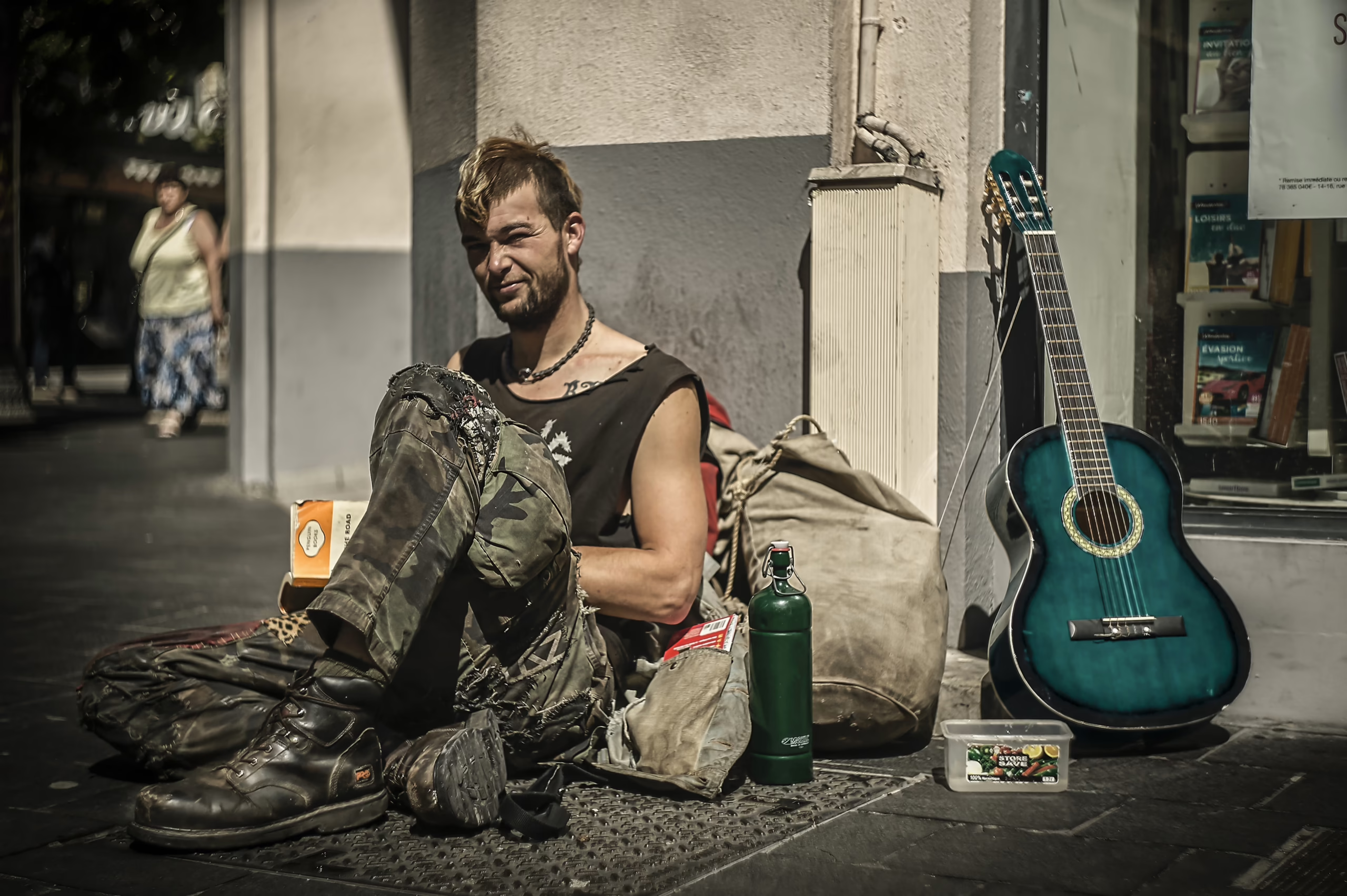
Penniless artists.
Men suspended above scaffolding.
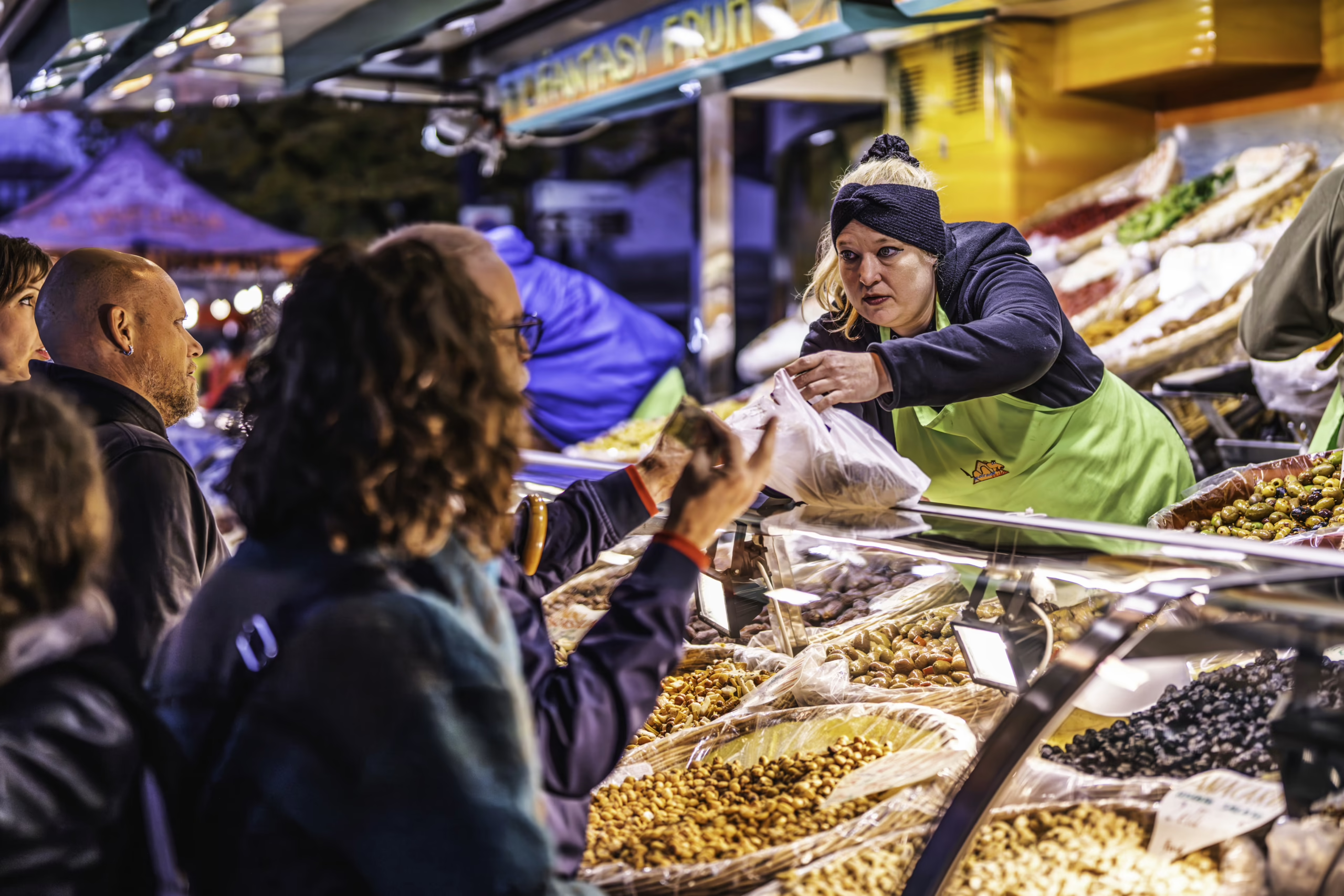
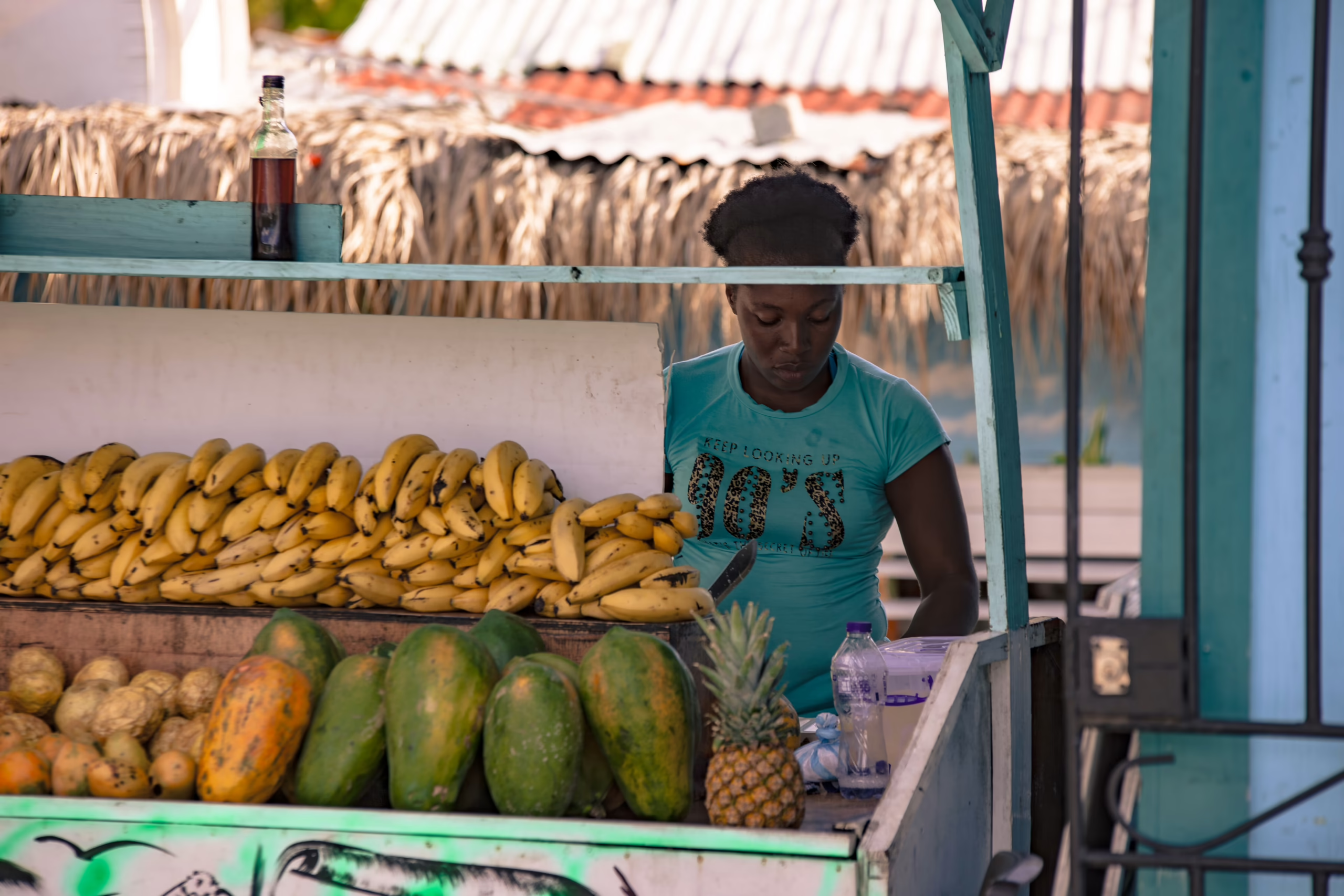
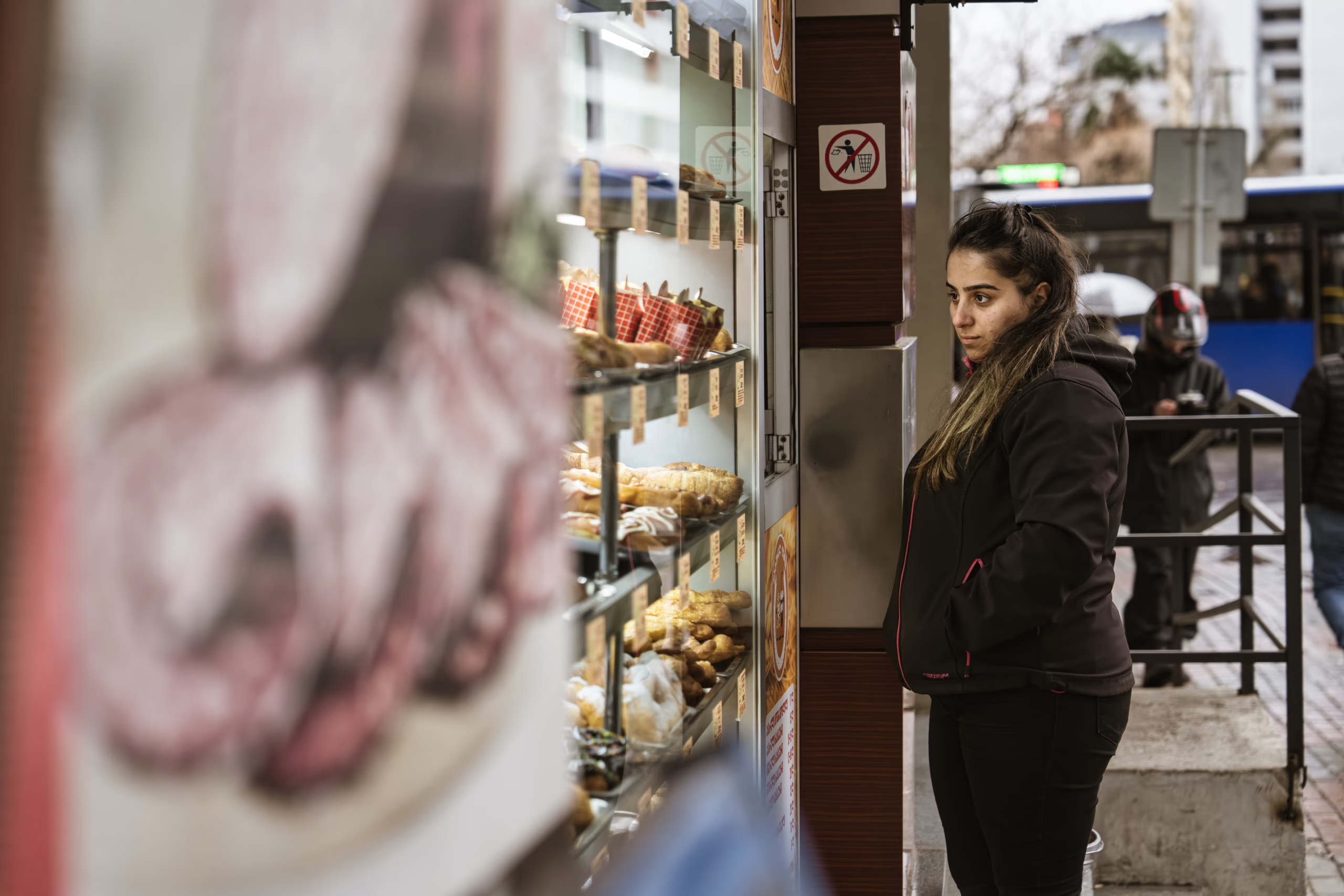
Women behind counters laden with fruit.
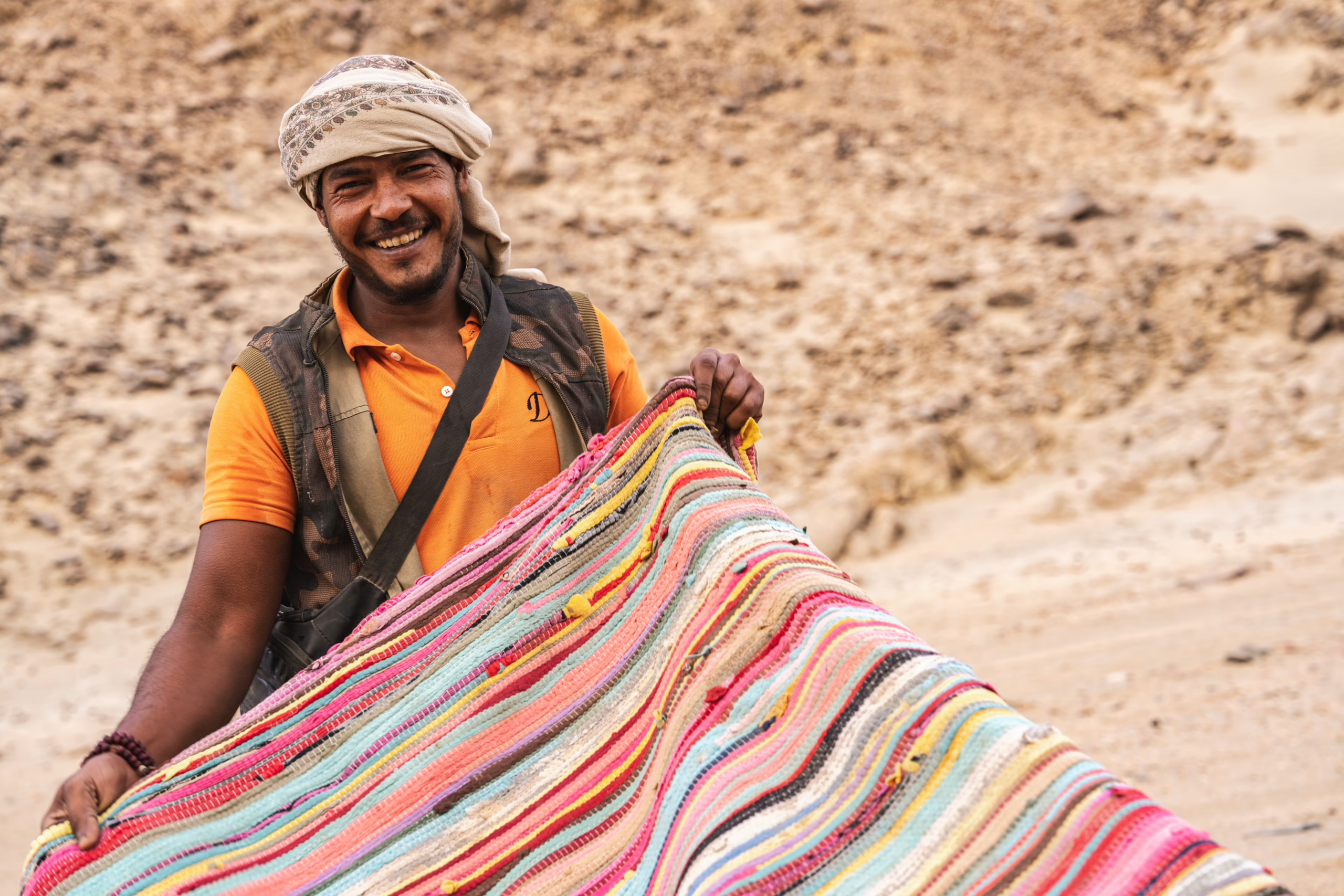
People selling food, flowers, hats, shells, drinks, fabrics, and anything else that could be turned into money before sunset.
We invented work because the world does not spontaneously hand us homes, food, and internet connections fast enough to insult strangers in high definition.
It was inevitable.
Someone has to build.
Drive.
Clean.
Cook.
Move.
Repair.
Collect the shit we leave behind while calling ourselves an advanced species.
The trouble is that after inventing work, we began to worship it.
We turned it into identity, morality, hierarchy, and a permanent court of judgment.
We no longer ask a person who they are.
We ask what they do.
It is our elegant, hypocritical way of establishing how much respect to grant them before we have even met.
A surgeon saves lives.
A chief executive creates value.
An artist produces culture, on a good day.
A man who empties dumpsters ‘does humble work,’ a phrase always spoken by someone who would never do it.
It is a curious definition.
Work becomes humble precisely when it allows others not to deal with their own shit.
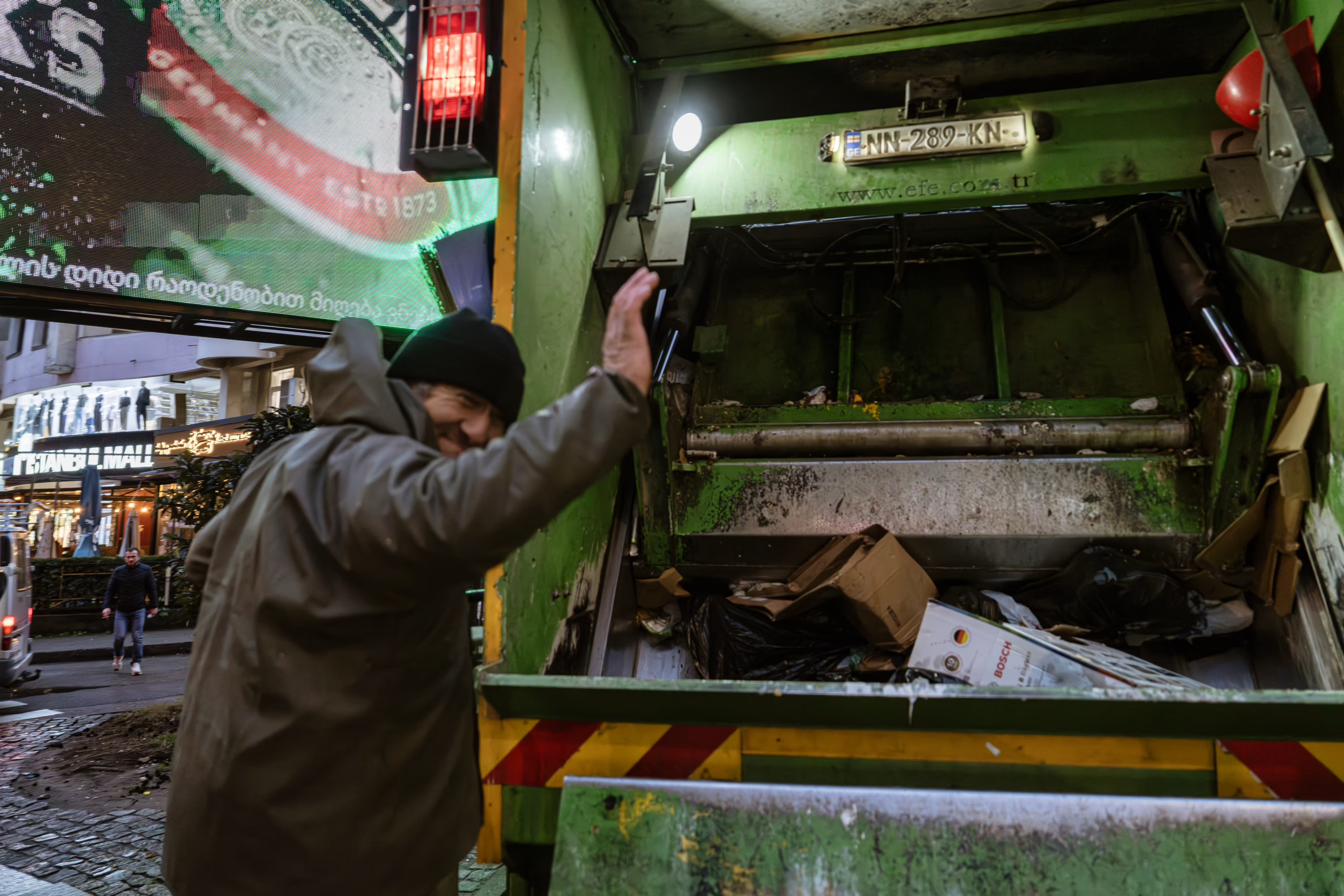
The man clinging to the garbage truck disappears behind the service he performs.
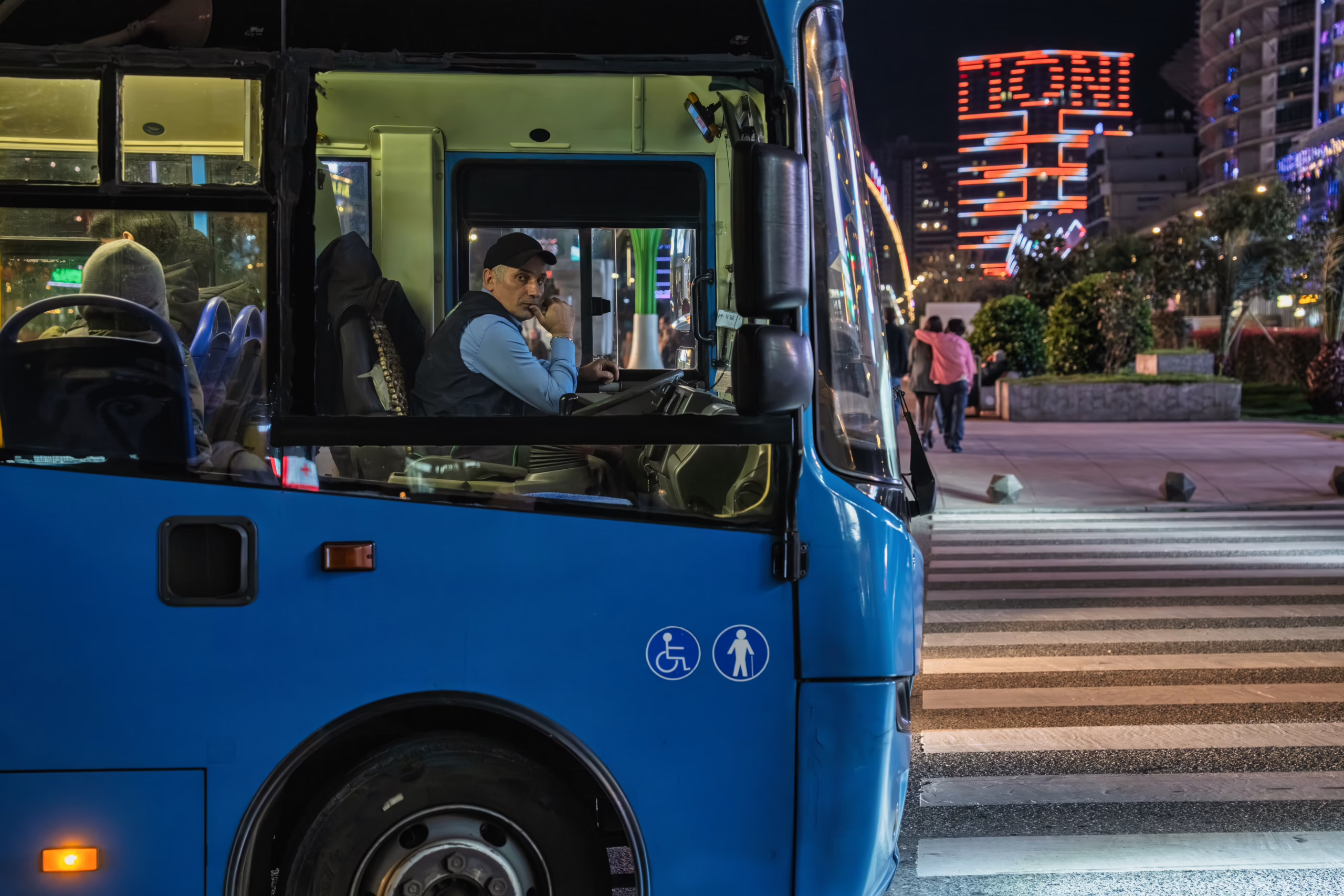
The driver becomes the bus.
The waiter becomes the tray.
The woman behind the counter becomes the price.
The construction worker becomes the building.
We see the result.
Not the body that makes it possible.
Then comes a flood, a strike, a pandemic, a breakdown, or a day when someone simply stops showing up, and we discover that the whole of civilization rested on people whose names we did not even know.
Capital has this remarkable gift: it turns human beings into functions, then publicly congratulates itself on the efficiency achieved.
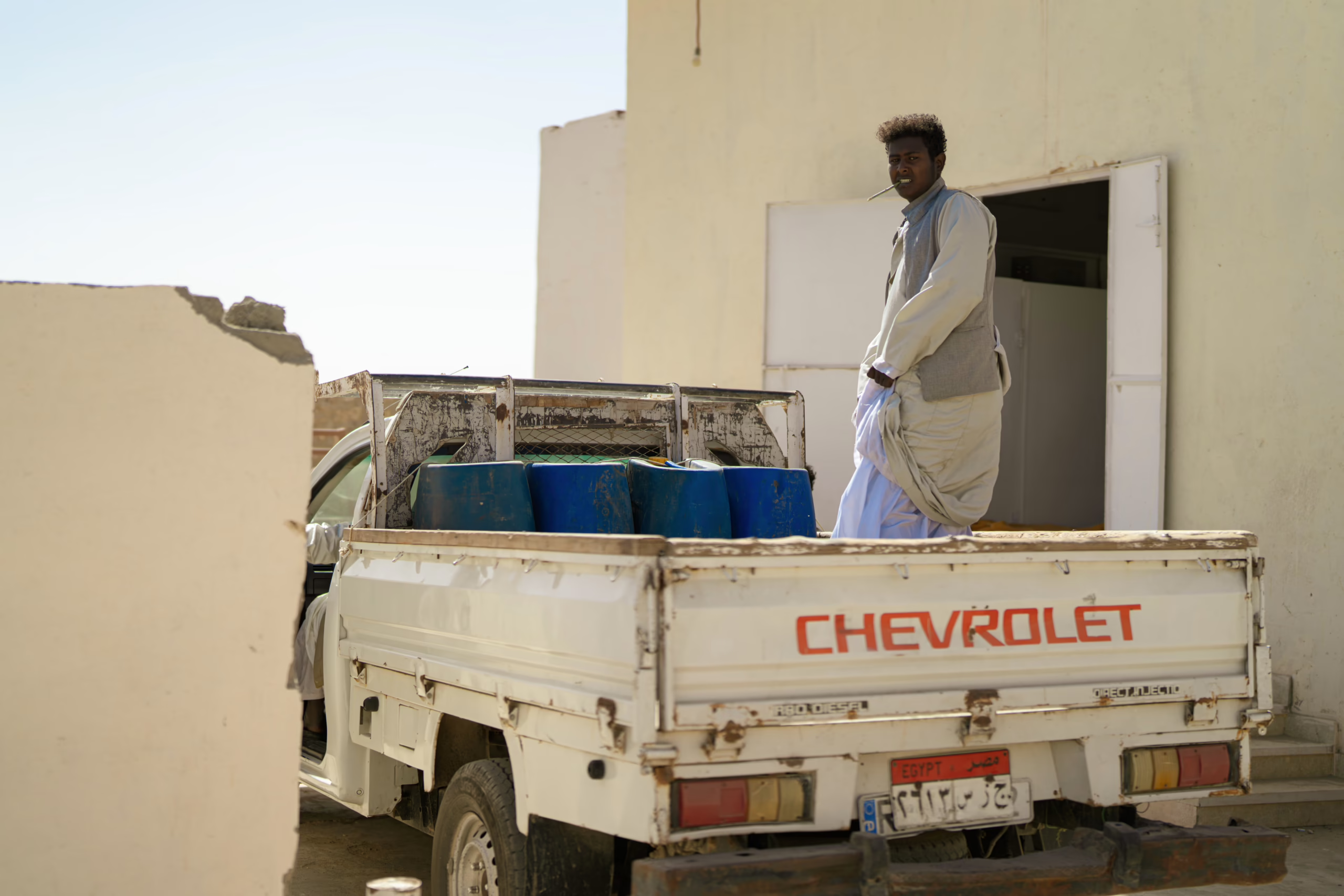
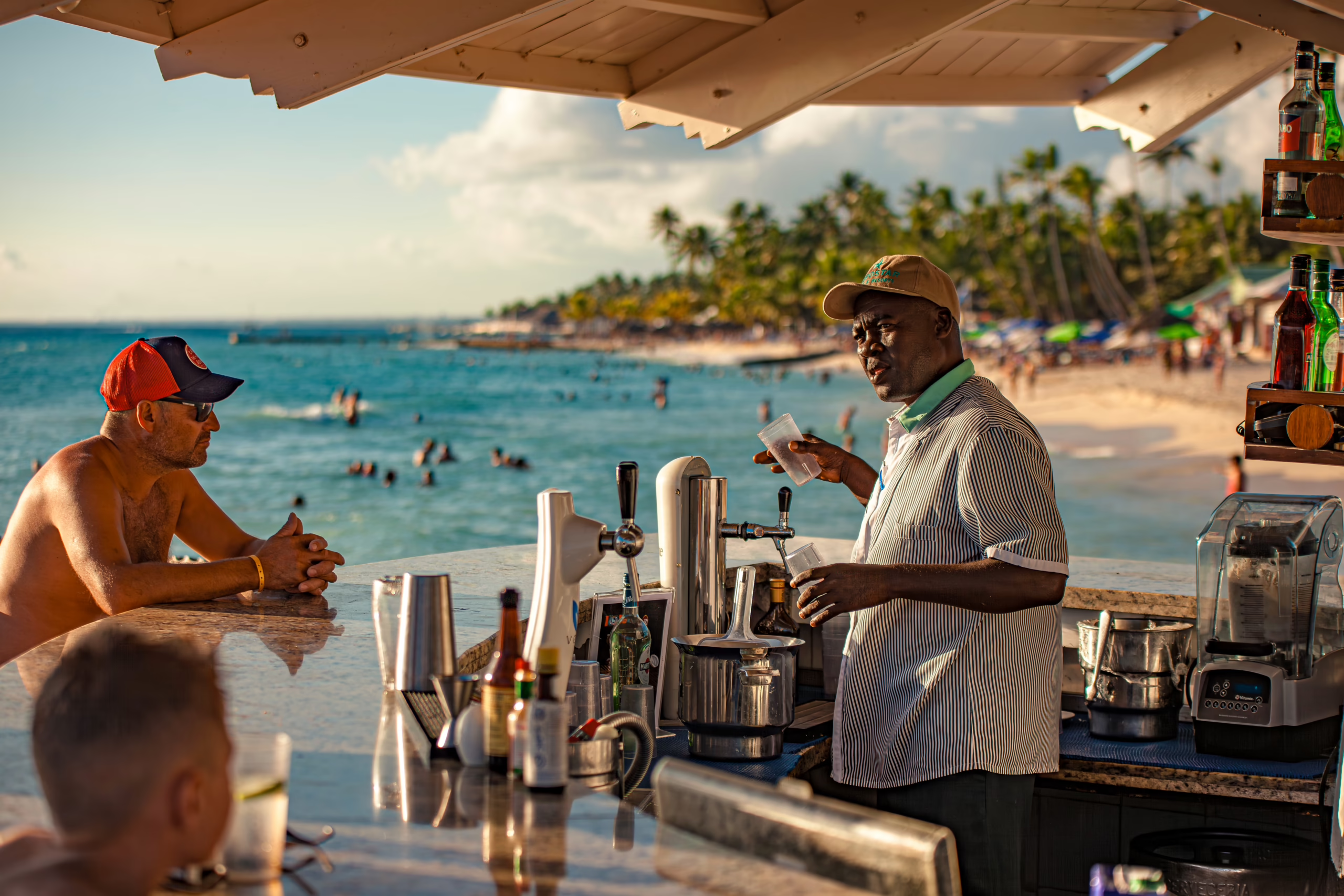
One man delivers water.
Another prepares food.
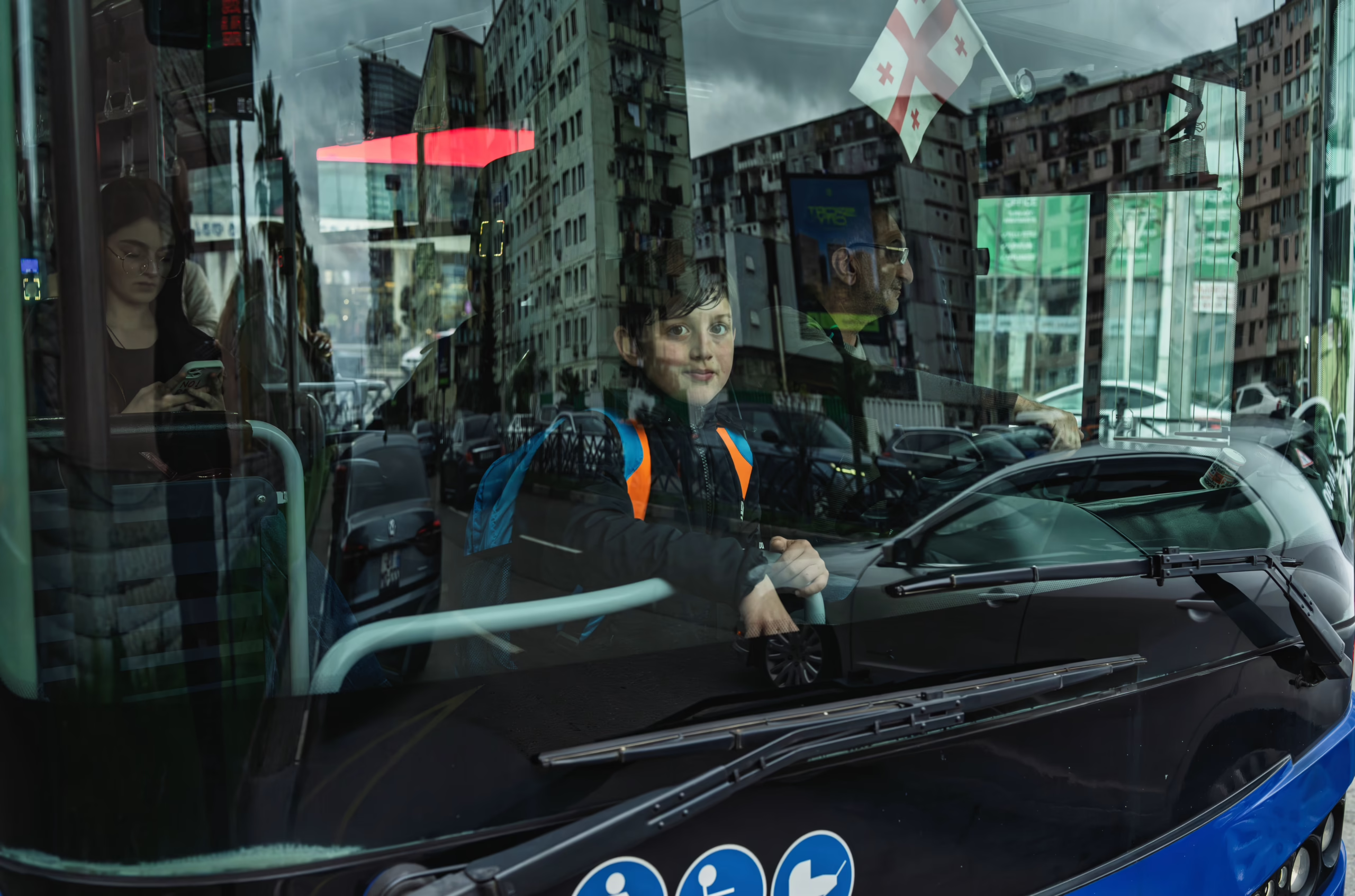
One drives a bus at night.
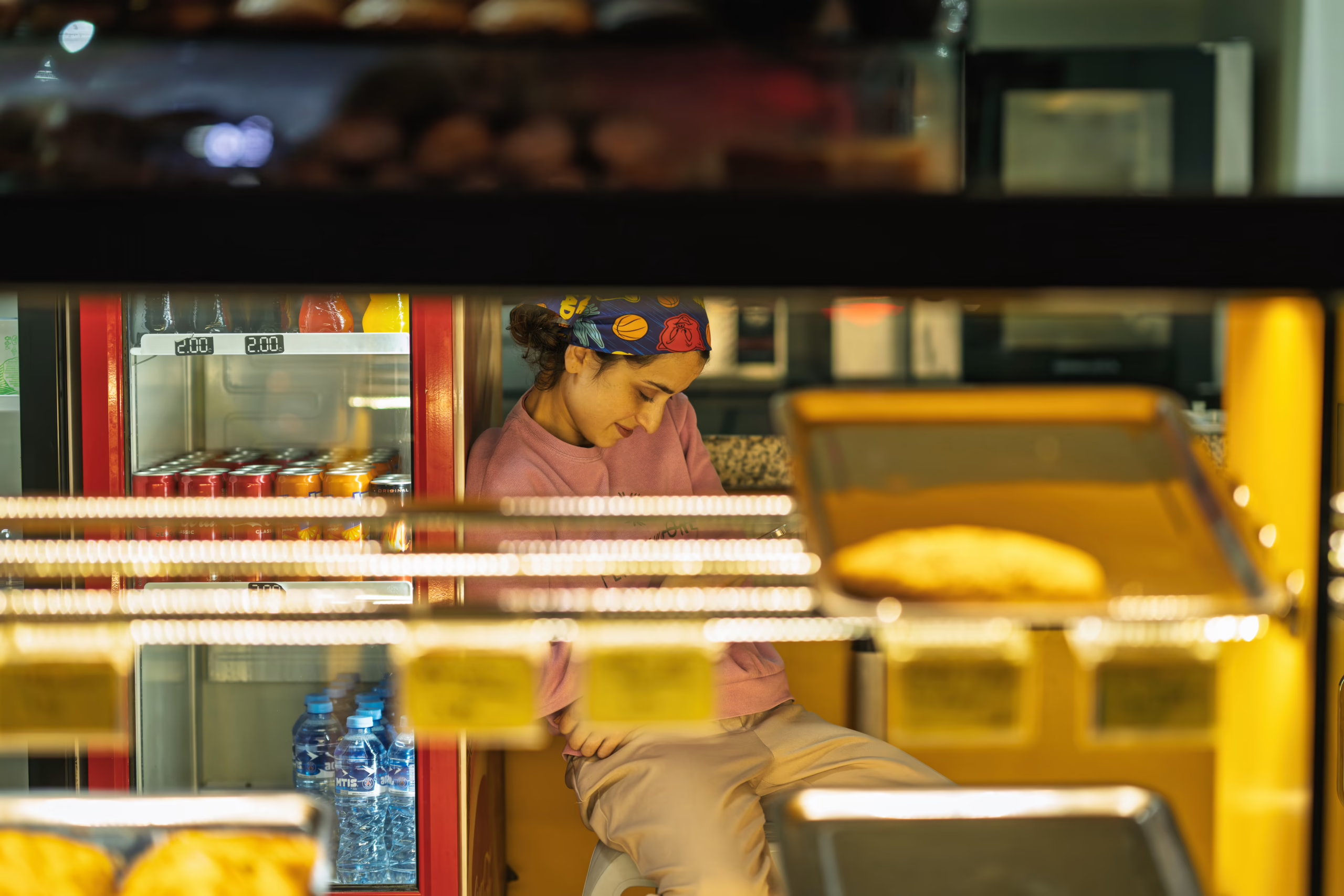
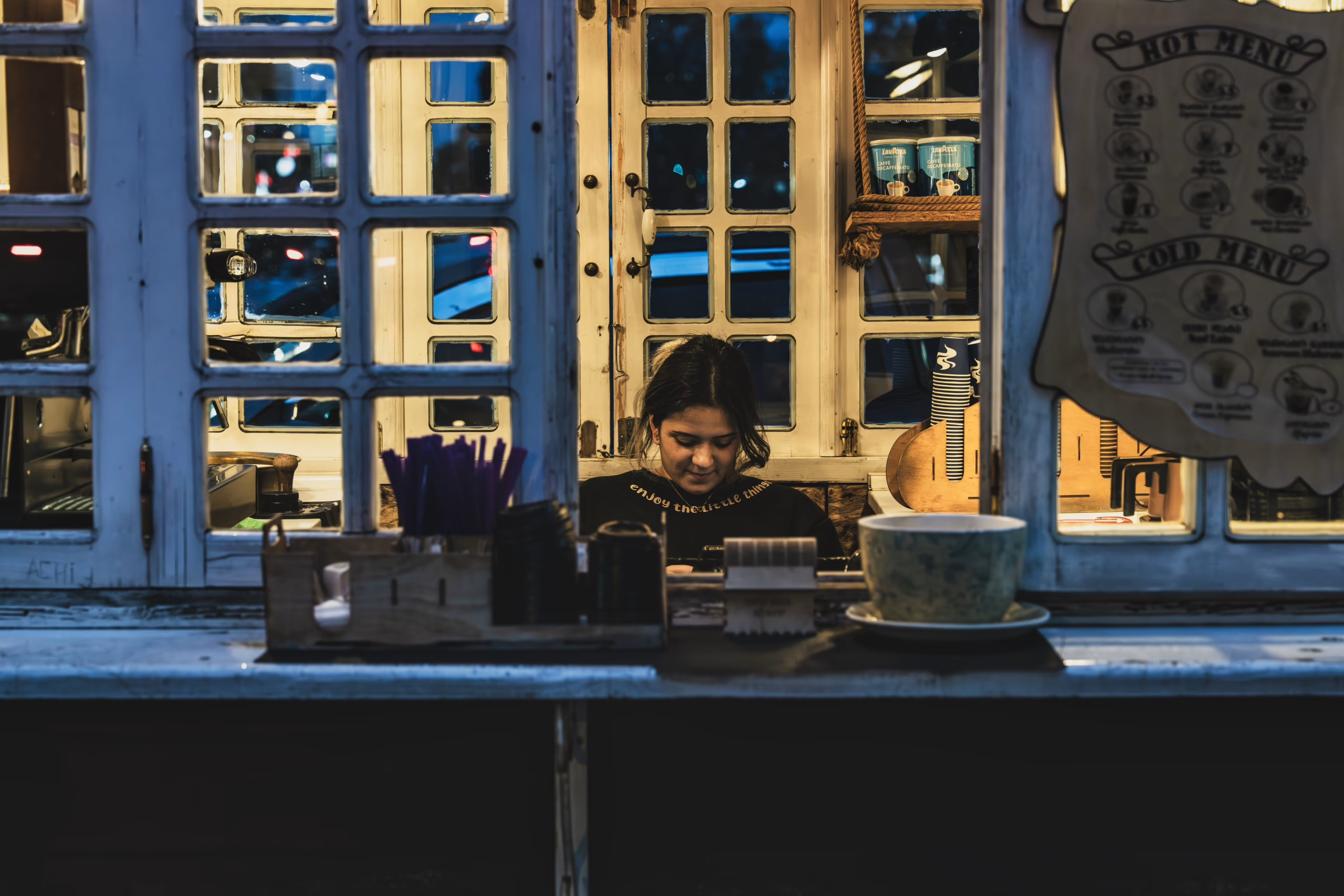
A woman waits for customers behind a poorly lit counter.
Another collects garbage in the rain.
Somewhere, at that very moment, someone in shoes costing as much as their monthly wage attends a leadership conference and explains that the secret of success is leaving your comfort zone.
Of course.
Of course.
It is very easy to love discomfort when the minibar is included in the price.
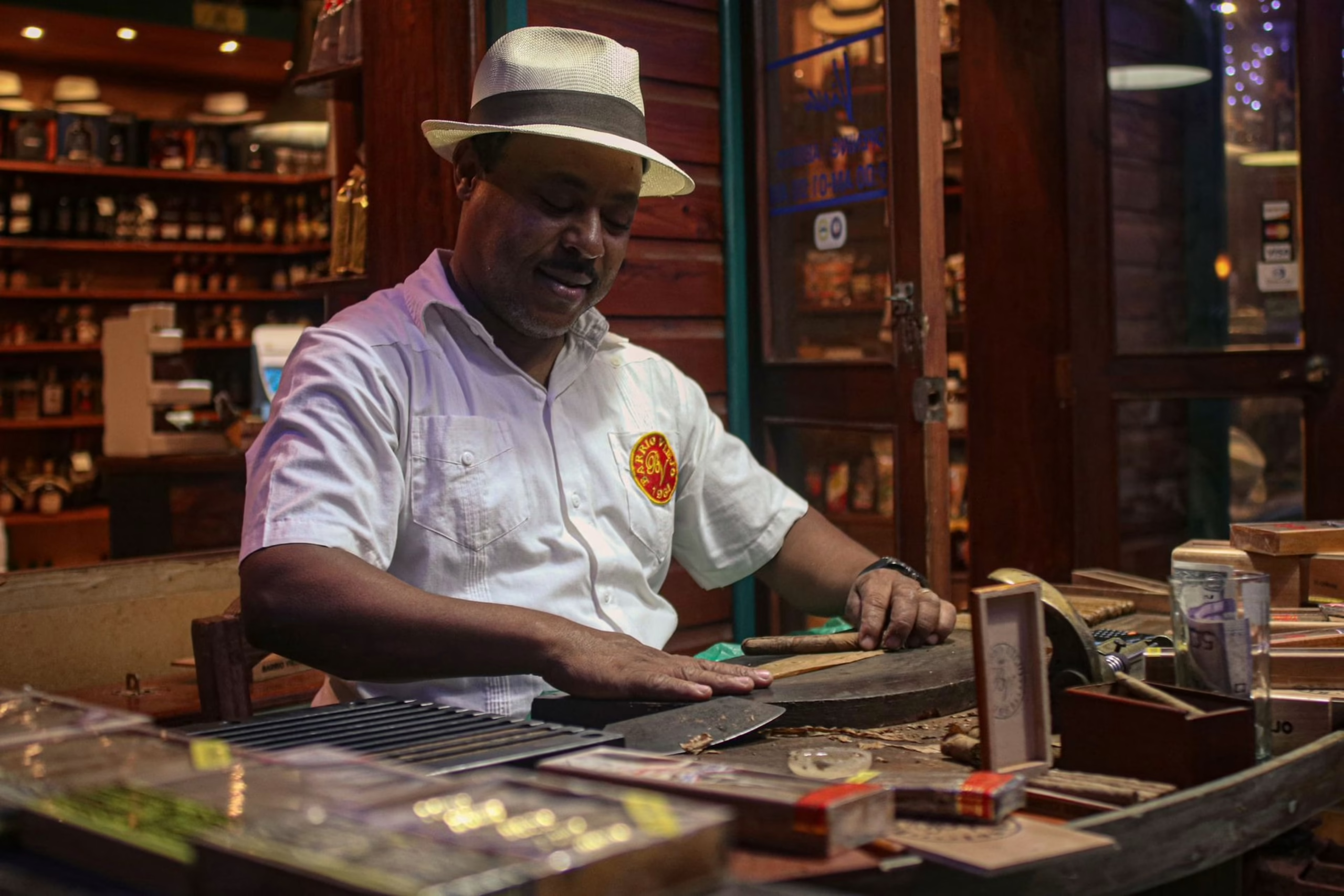
And yet even inside the most anonymous job, something appeared that deserved respect.
Skill.
Total concentration.
The gesture learned and repeated thousands of times.
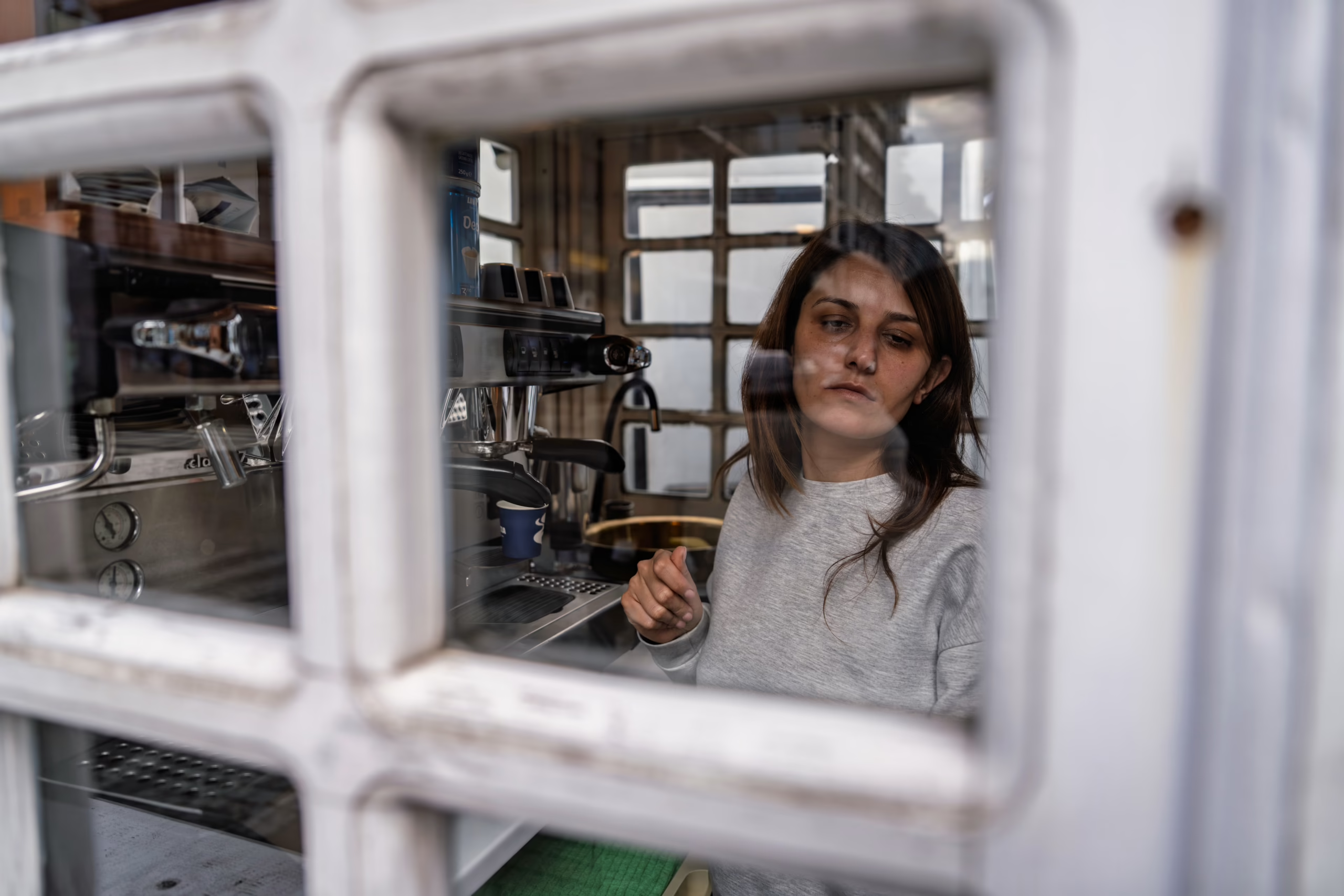
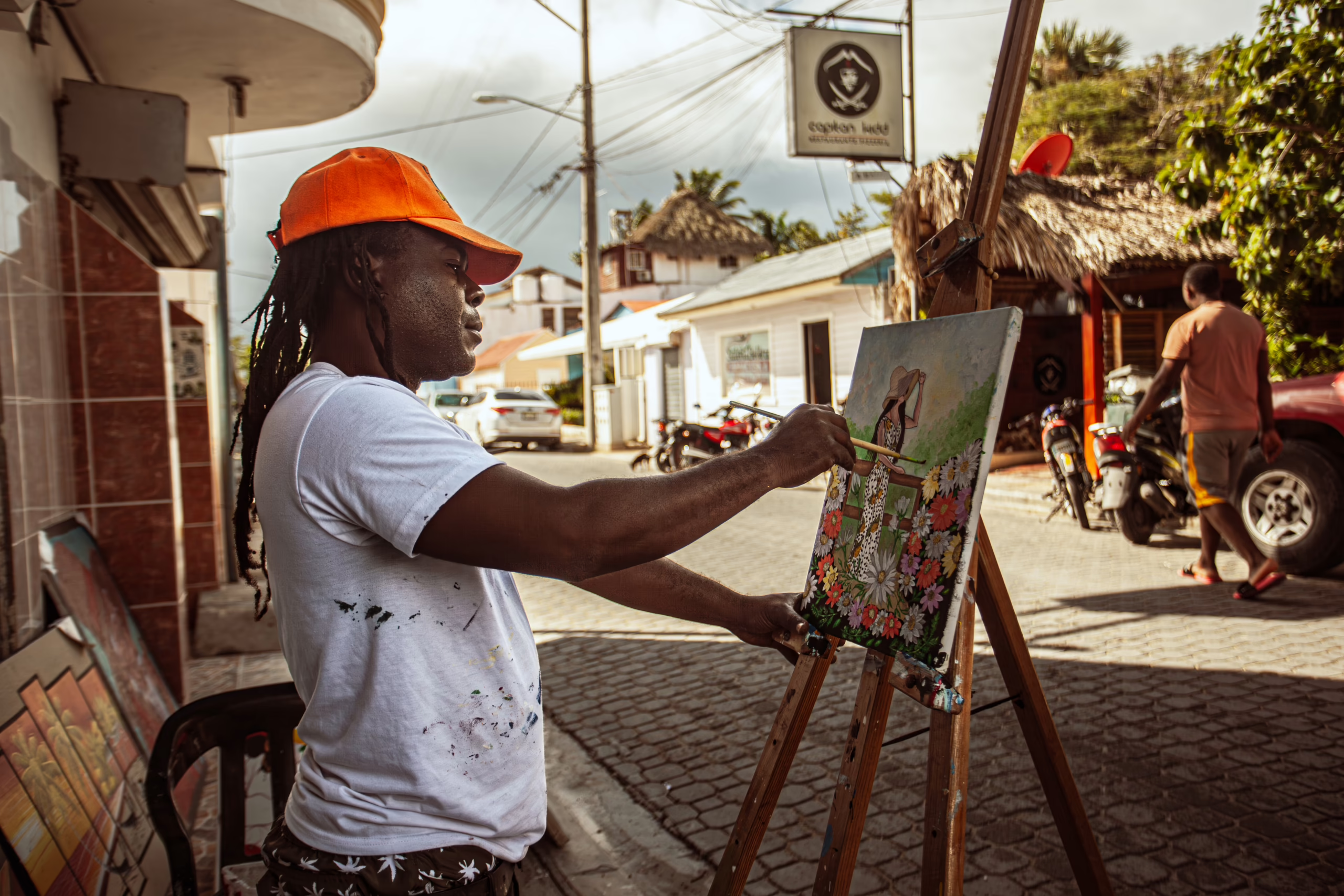
A man prepared drinks with a surgeon’s precision.
A woman painted without looking at her hands.
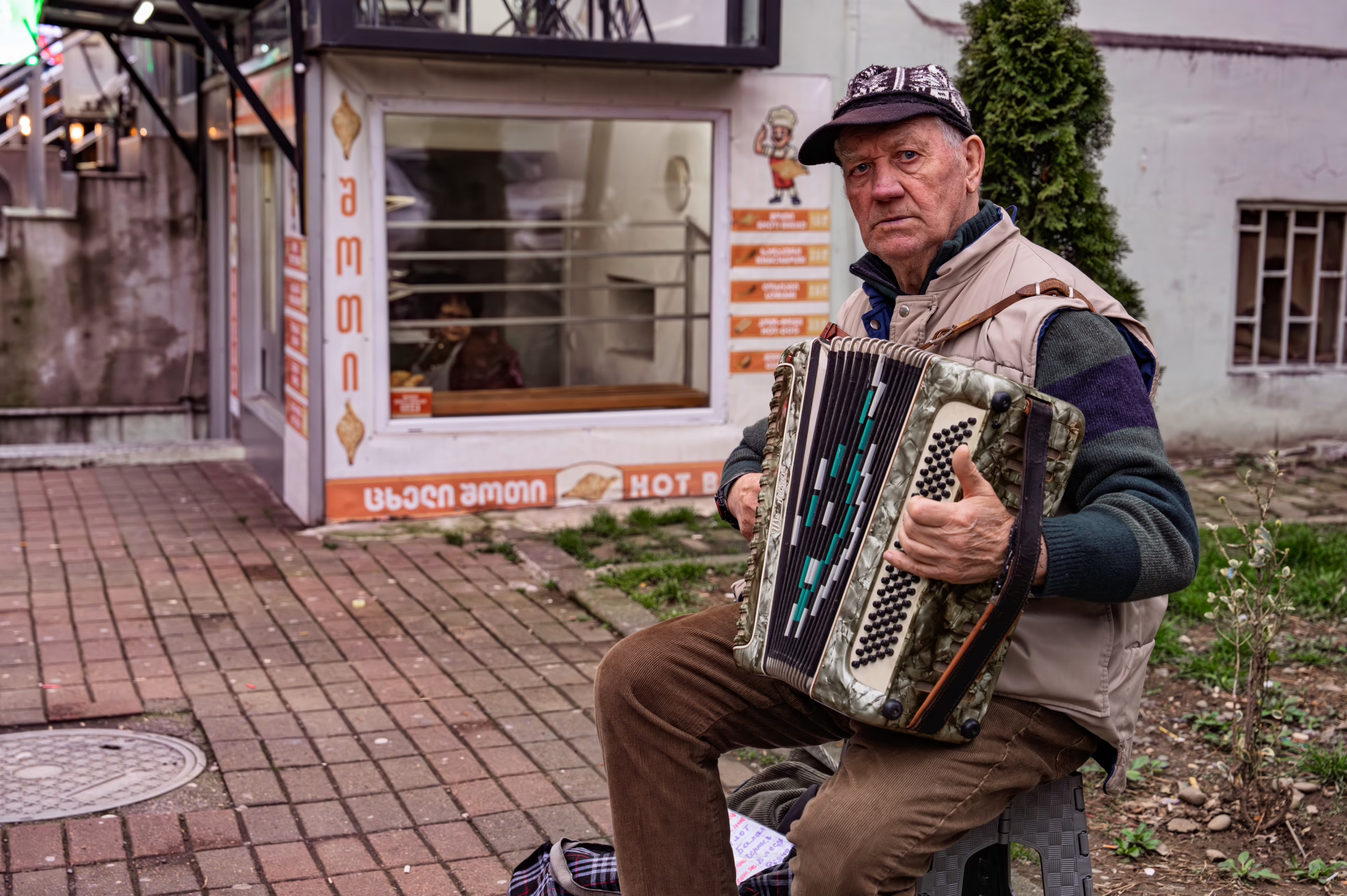
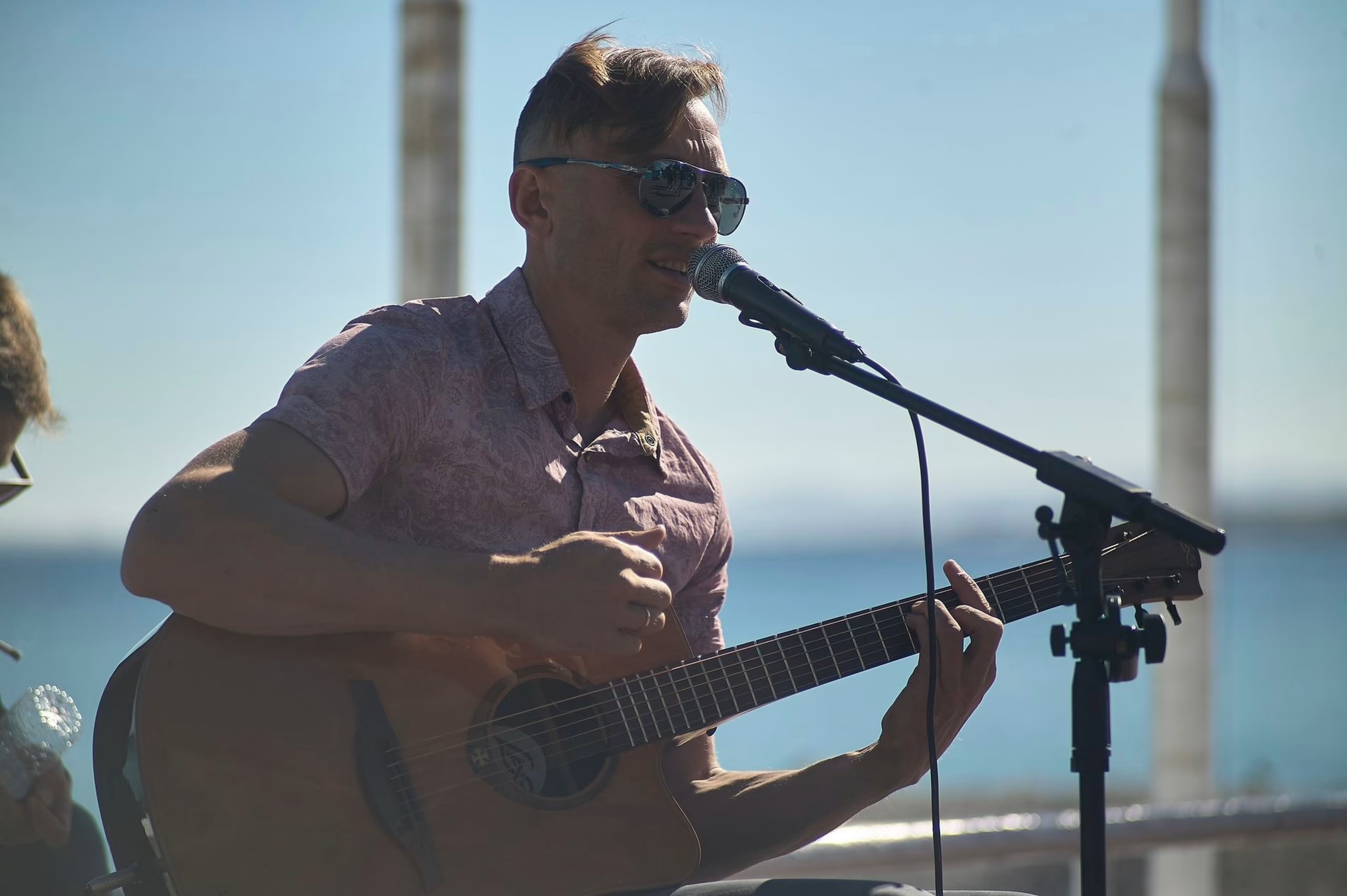
A musician held his accordion the way one holds something alive.
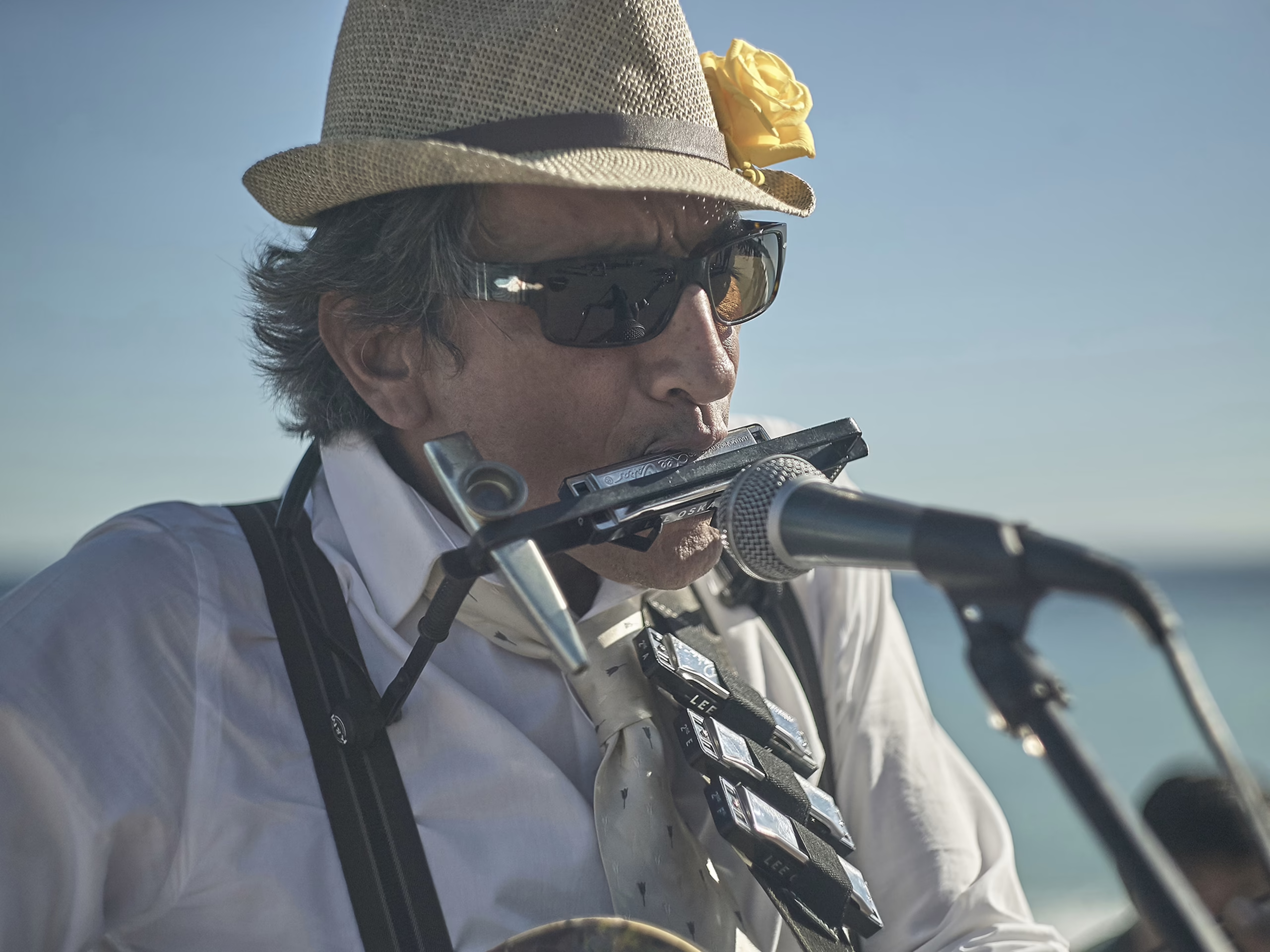
Another played harmonica in the street, free, for anyone who cared to listen.
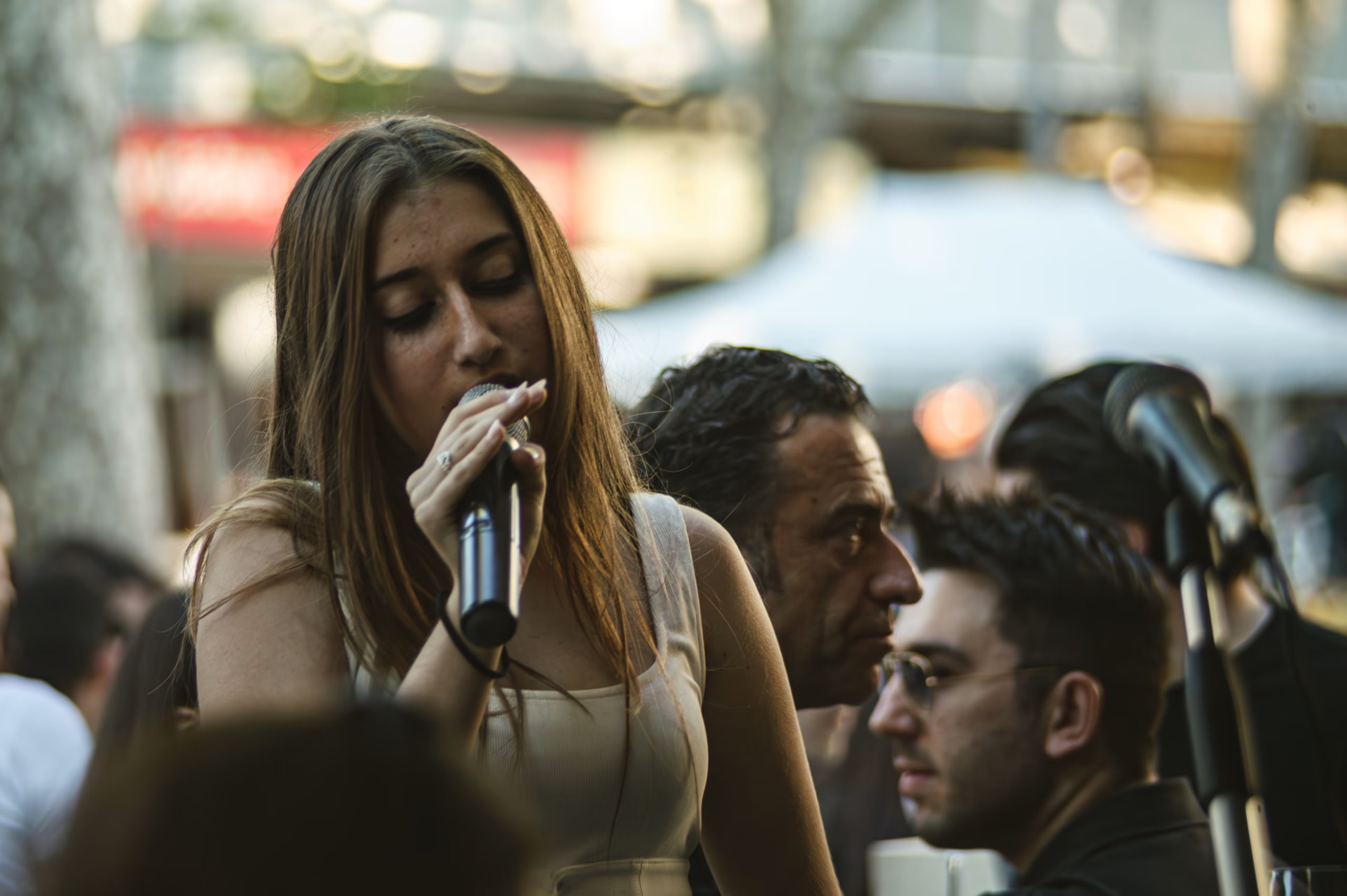
A young woman sang at the top of her lungs for a few coins and a round of applause.
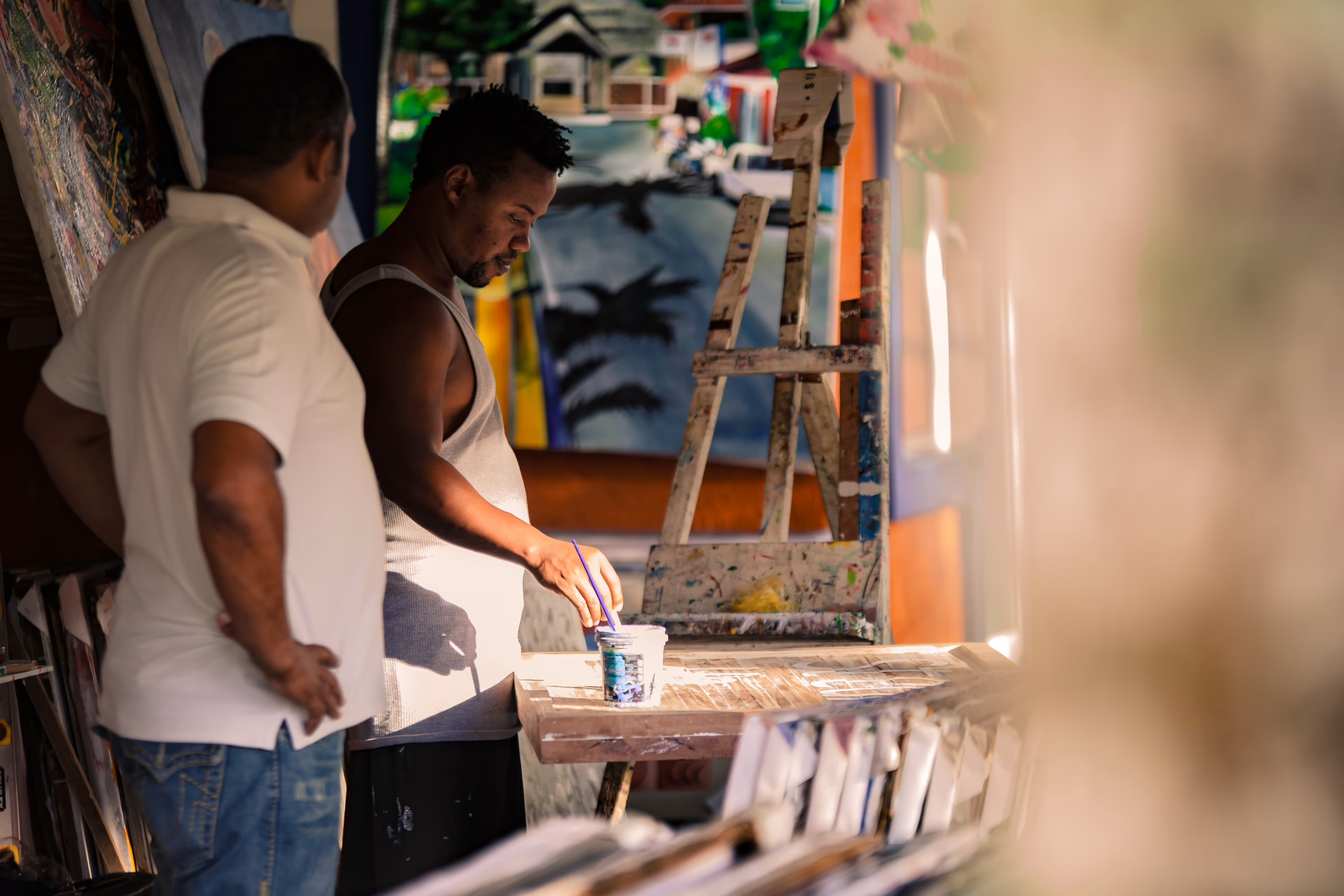
A painter regarded the surface before him as though the world had finally stopped demanding explanations.
Creation is one of our finest mitigating circumstances.
It does not necessarily make us good.
Artists can be narcissistic, manipulative, petty, and perfectly capable of turning refined sensitivity into a weapon of domestic destruction.
Talent does not purify.
It merely makes the charge sheet more interesting.
But to create means taking something unnecessary and making it exist.
A song.
An image.
Color on a blank canvas.
A story.
A sound made in the street before people who could perfectly well have kept walking without turning.
The universe did not need it.
We did, desperately.
Perhaps this is the part that most distinguishes us from the machines we build and the animals we continue to regard ourselves as superior to.
Not intelligence.
Not language.
Certainly not wisdom, judging by the record.
The need to add something useless to the world without which, for reasons impossible to account for, the world would seem poorer to us.
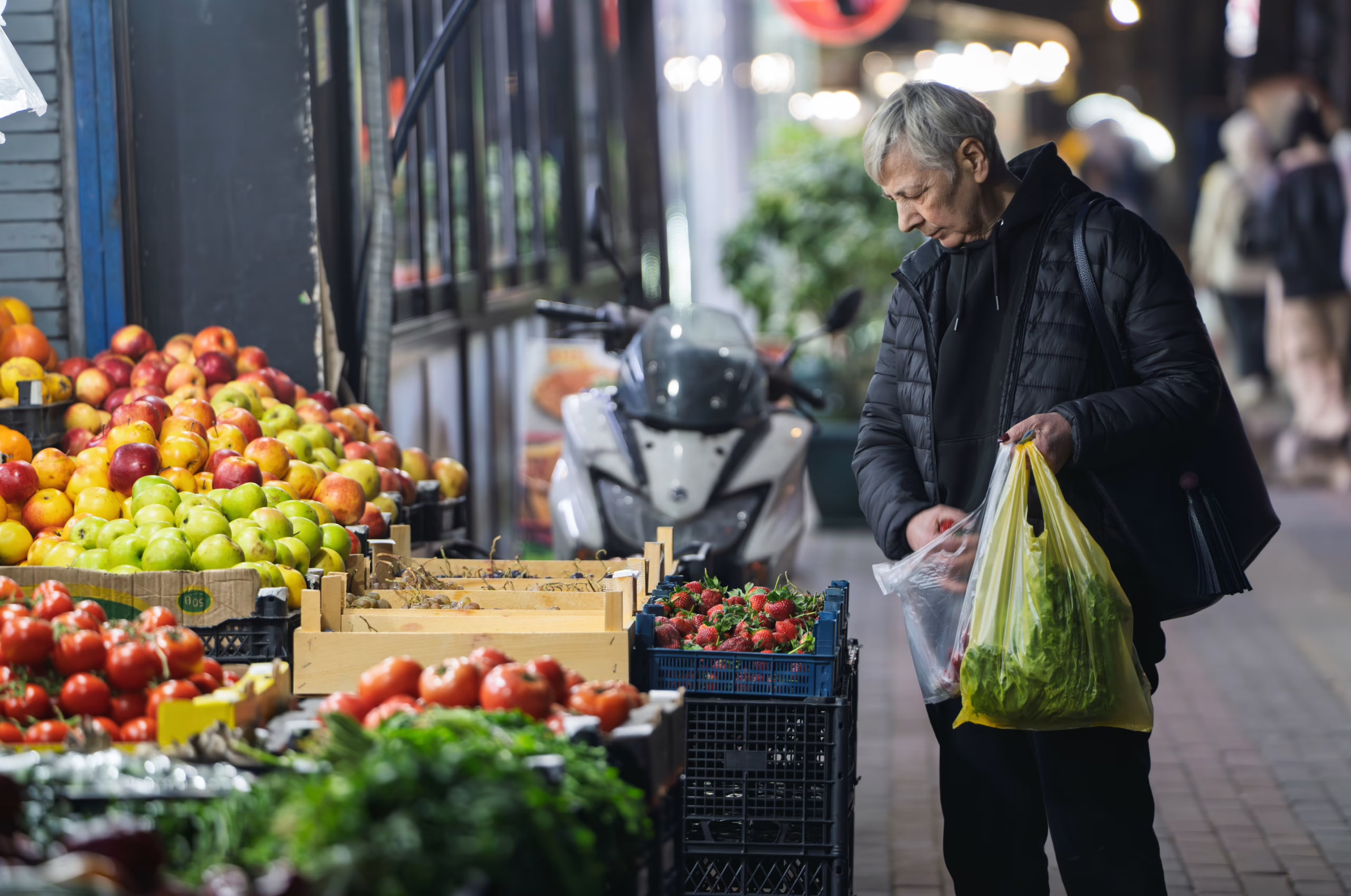
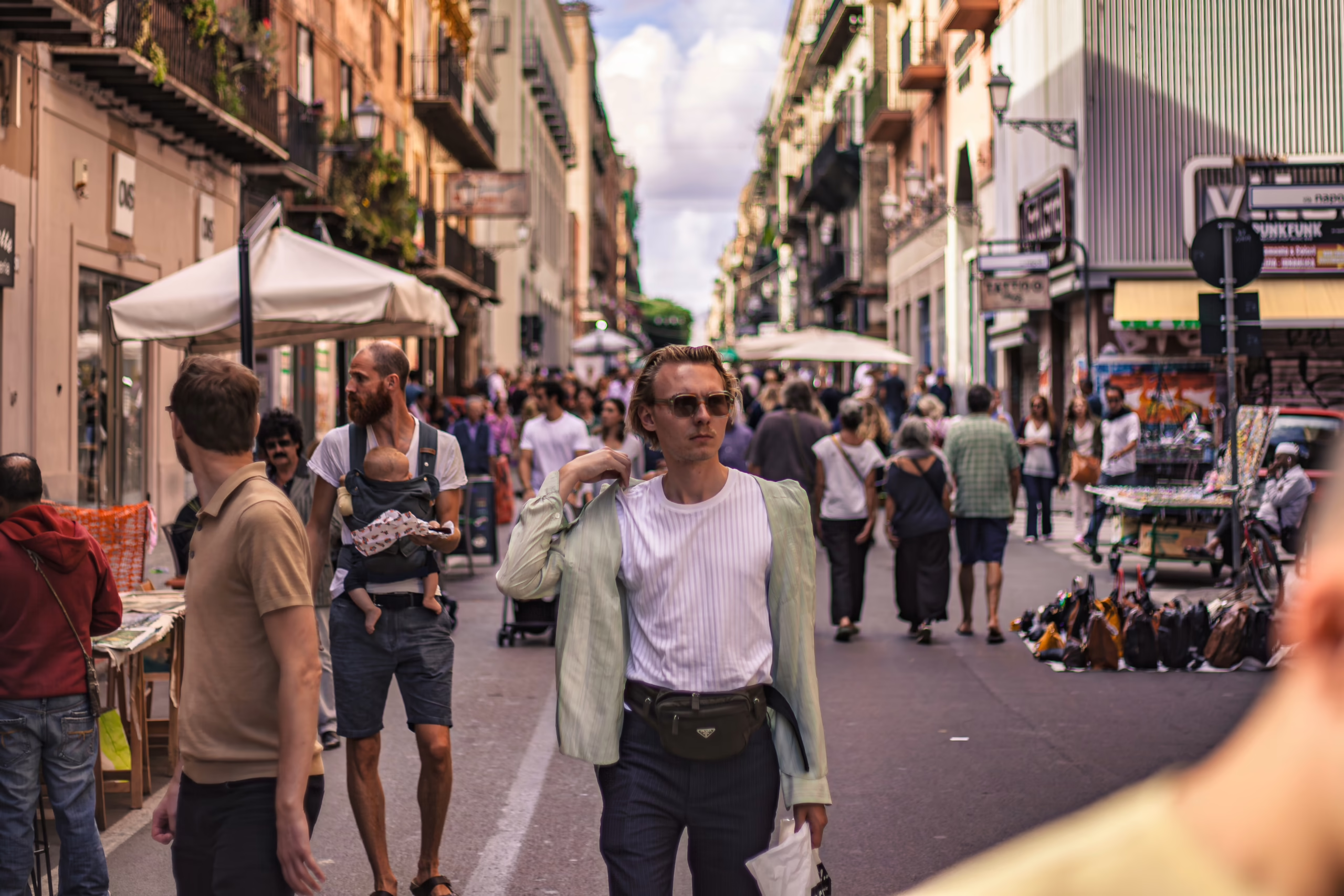
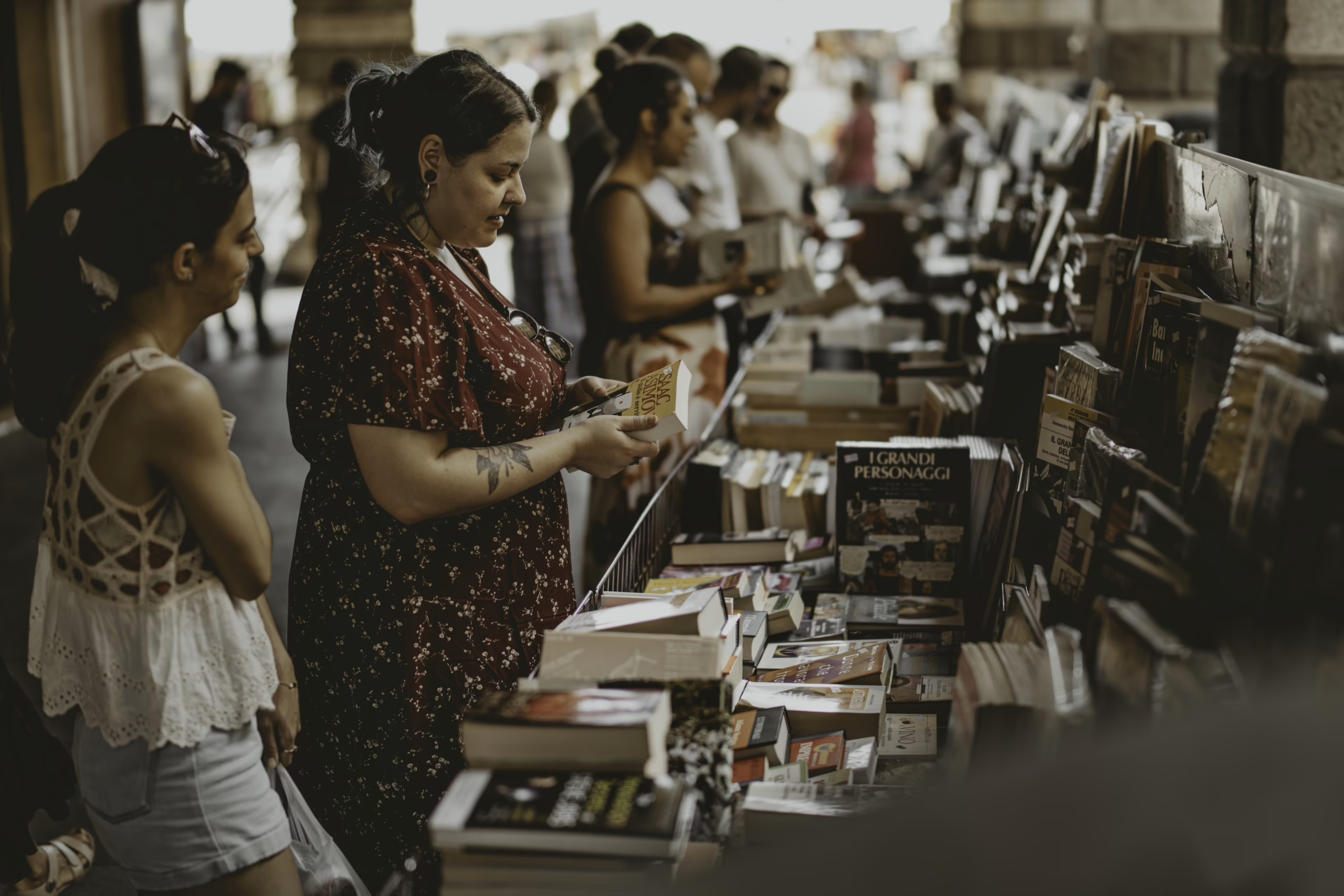
In the markets, everything had a price.
The fruit.
The clothes.
The hats.
The flowers.
The shells.
Even a photograph of that market’s authenticity could have been sold elsewhere by some photographer convinced he was documenting the system without participating in it.
Me, for example.
I am not outside what I observe.
I am merely another man who has turned curiosity into a profession, the encounter into an image, and the image, sometimes, into a product.
It is easy to photograph a poor vendor and feel morally complex.
Far harder to ask what he receives from our complexity.
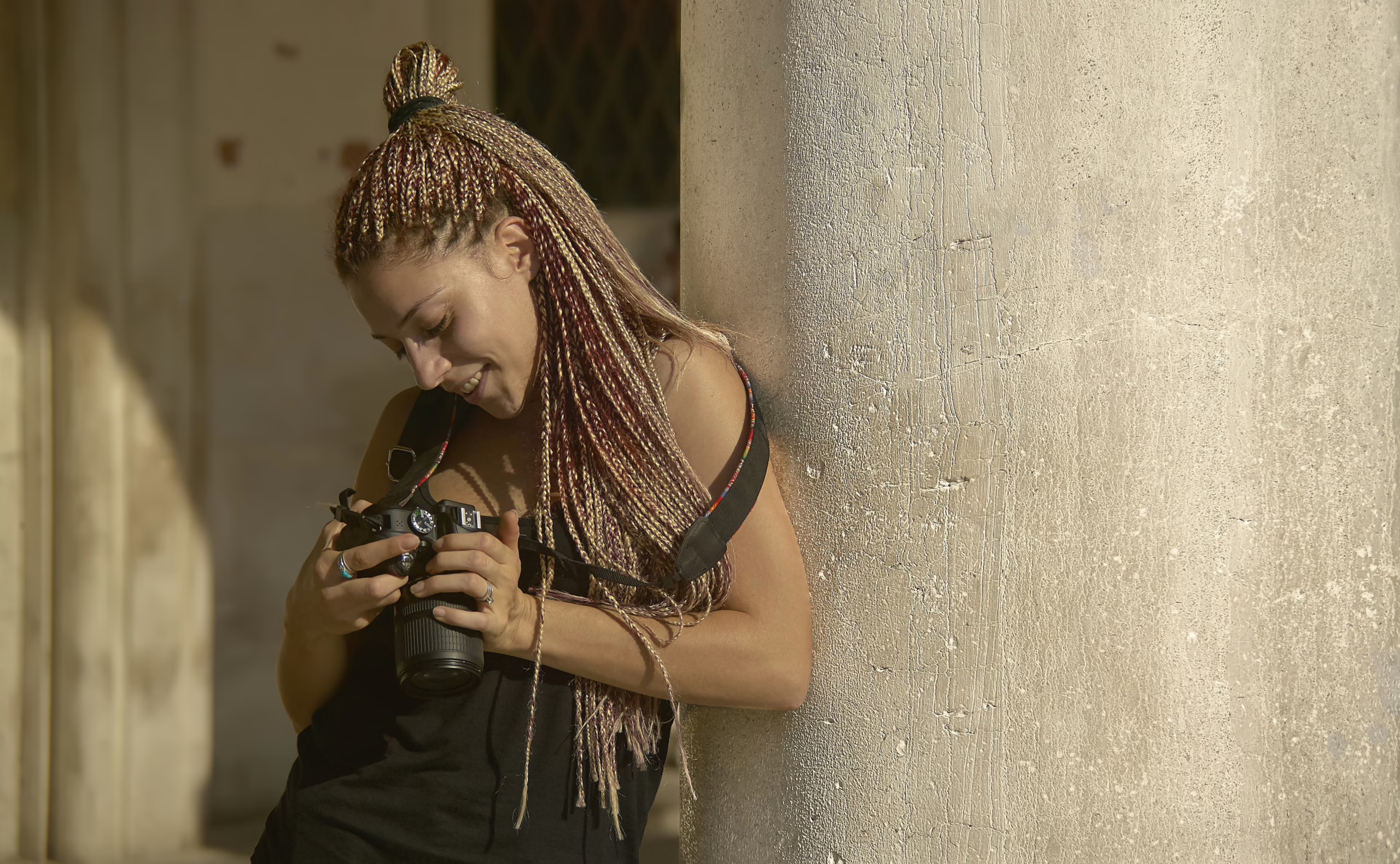
We photographers love to speak of bearing witness.
It sounds considerably better than appropriation, which is the precise word—the one we would use if we were honest all the way through.
We say we capture a moment, an expression criminal enough in itself to warrant at least an interrogation.
The truth is that we take.
A face.
A gesture.
A light.
A piece of a life that does not belong to us.
We carry it away on a memory card and, later, comfortably seated, decide what it means.
The subject does not participate in the edit.
He does not correct the metaphor we have sewn onto him.
He cannot tell us that in that moment he was not embodying the dignity of labor, the melancholy of old age, or the resilience of the poor.
Perhaps he merely had a painful wisdom tooth.
Perhaps he was furious because someone owed him money.
Perhaps he was thinking about lunch.
A photograph is extremely convincing evidence of something it never promised to explain.
That is why I try to remain in the middle.
Not a judge.
Not an attorney.
Not an anthropologist landed from another planet with the moral authority of someone flying home on Sunday evening.
An observer.
A fucking observer.
I see.
I choose.
I shoot.
Then I try with all my strength not to lie too much about what I saw.
It is the highest degree of purity I can offer.
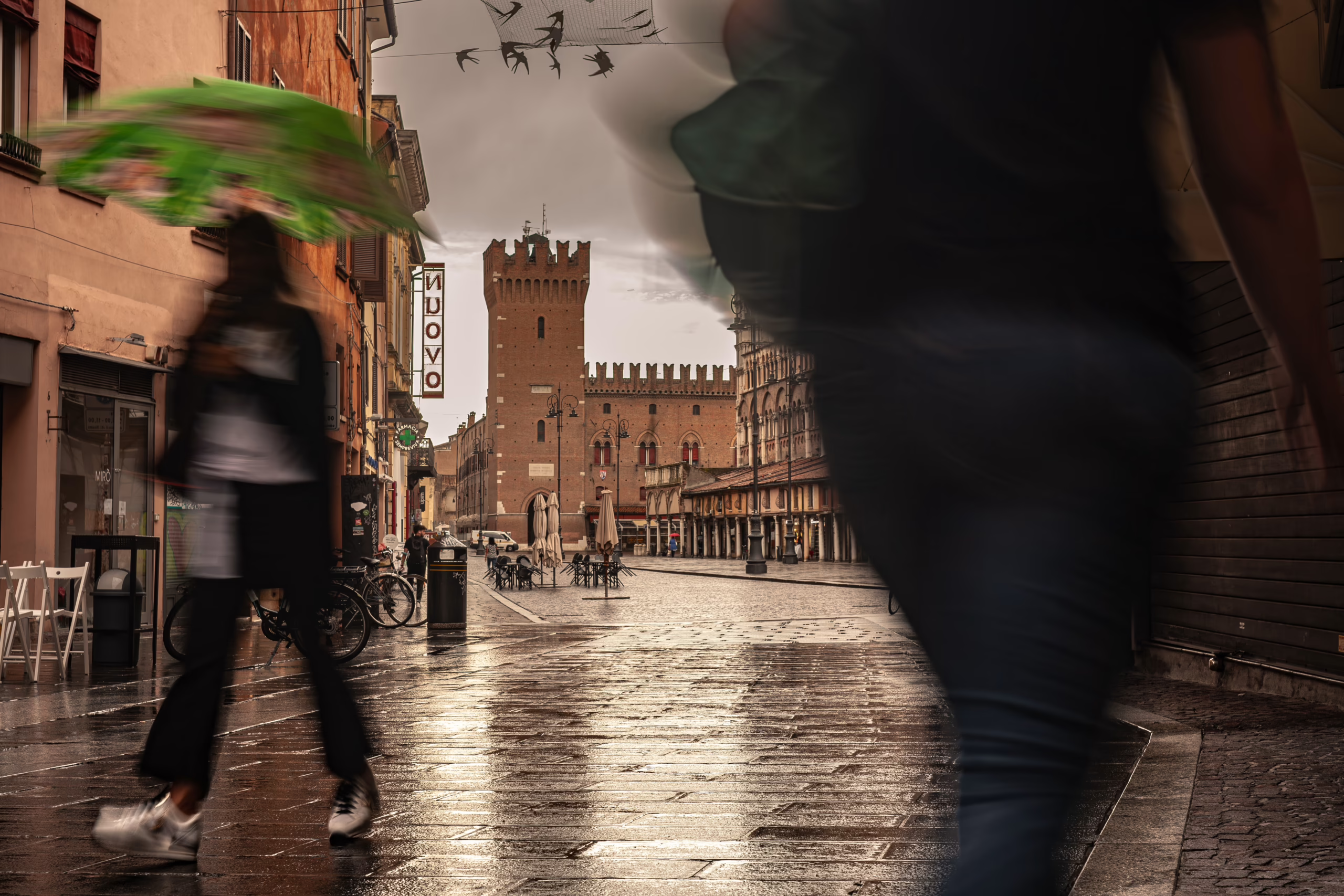
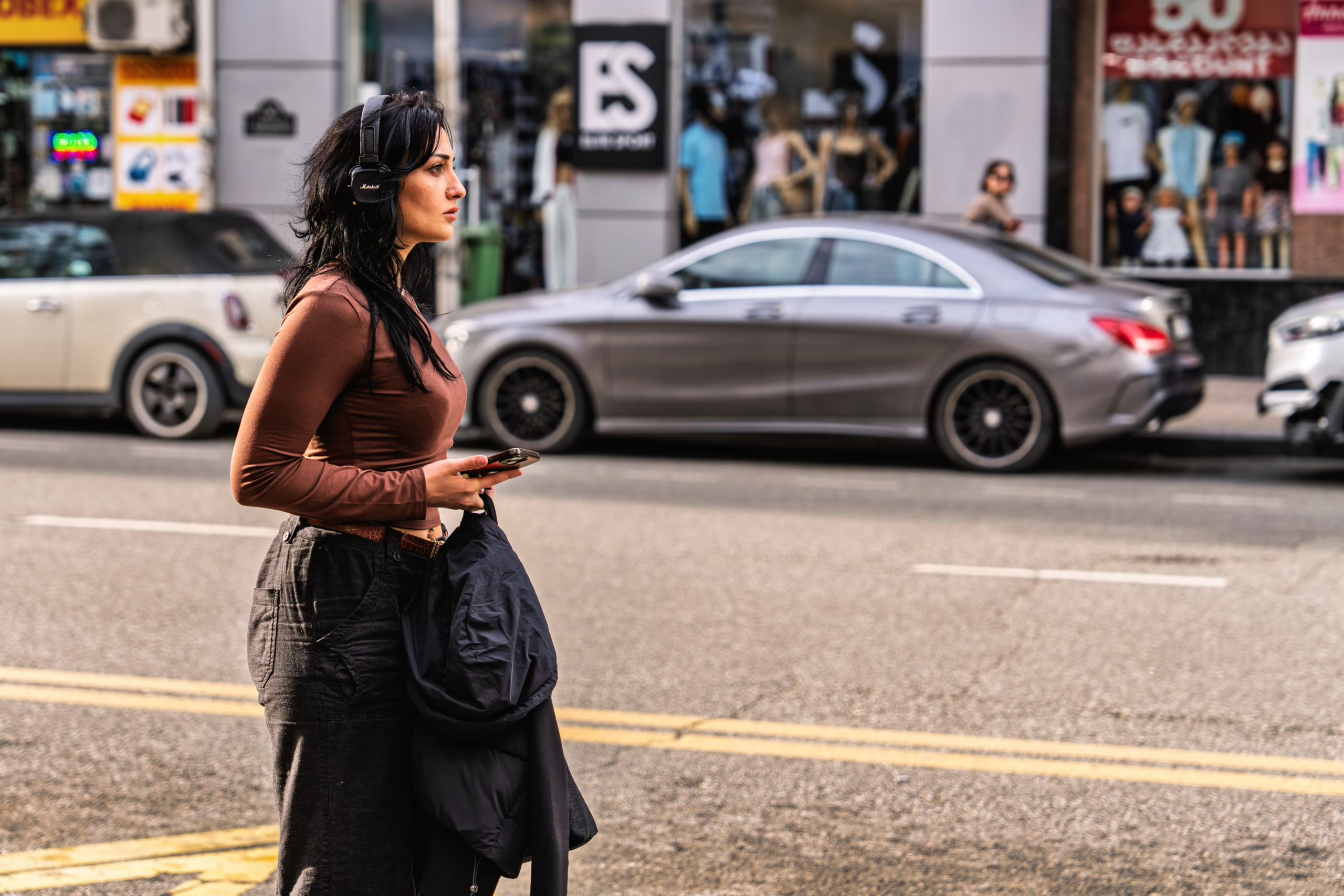
People moved.
Trains.
Buses.
Motorcycles.
Bicycles.
Lines of cars.
Crosswalks.
Sidewalks.
Stations.
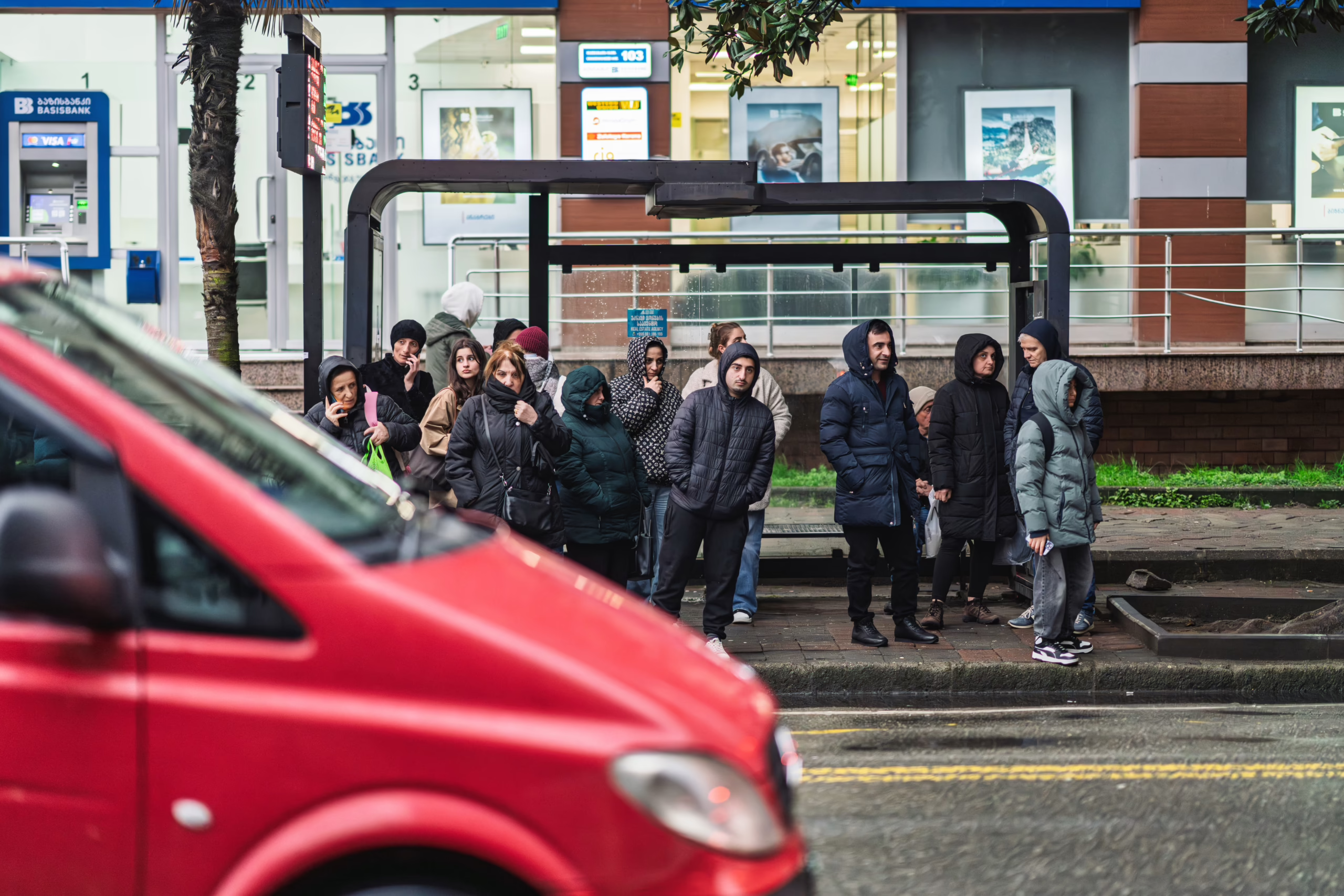
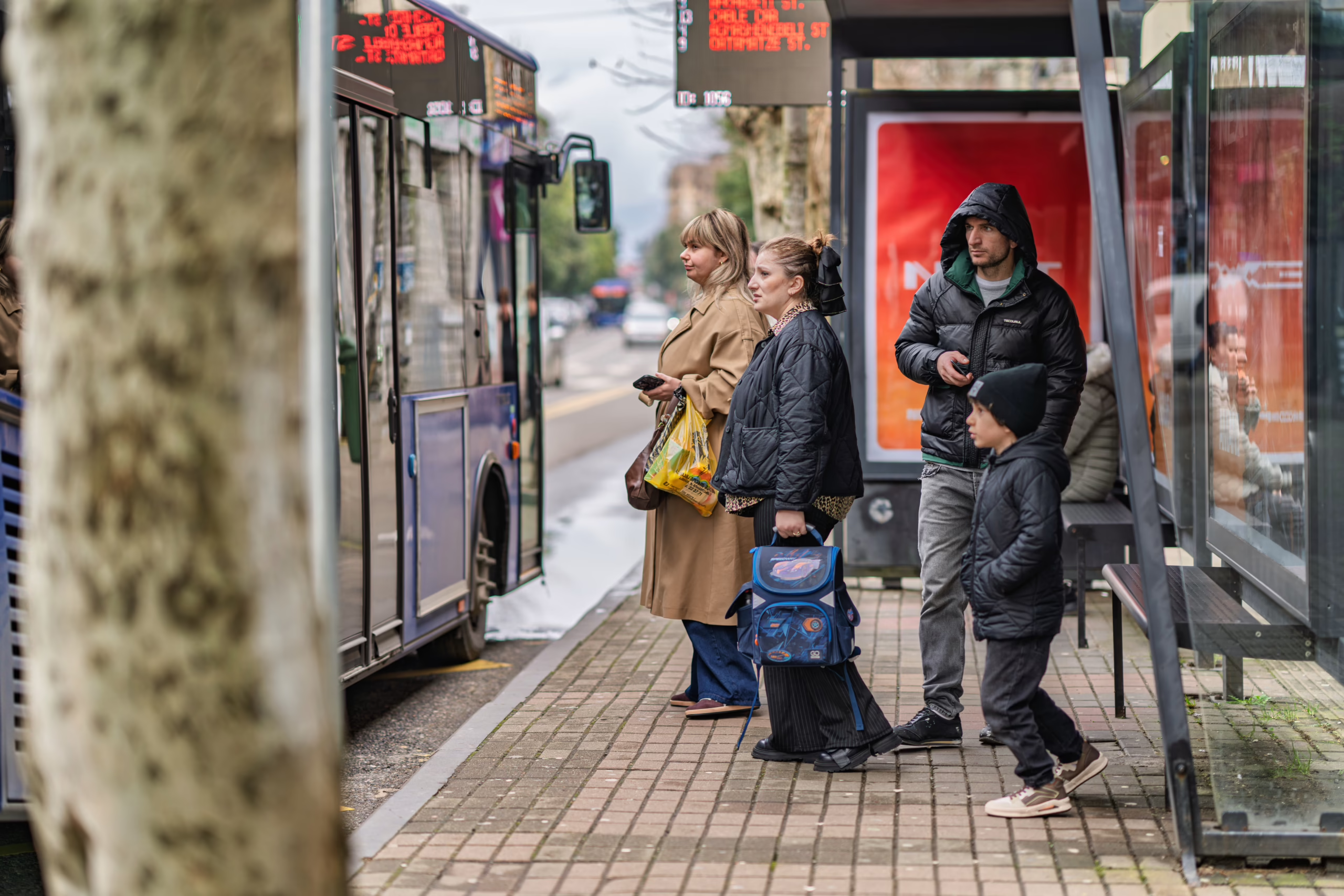
Stops.
Endless lines.
We built enormous cities to hold millions of people, then designed every morning so that none of them wants to be wherever they are going.
We wake.
Dress.
Leave homes we pay for by working.
Enter vehicles we pay for by working.
Cross traffic to reach work.
Return home too tired to use the things we paid for by working.
It is a system so demented that, to make it seem like something responsible adults do, we named it the economy.
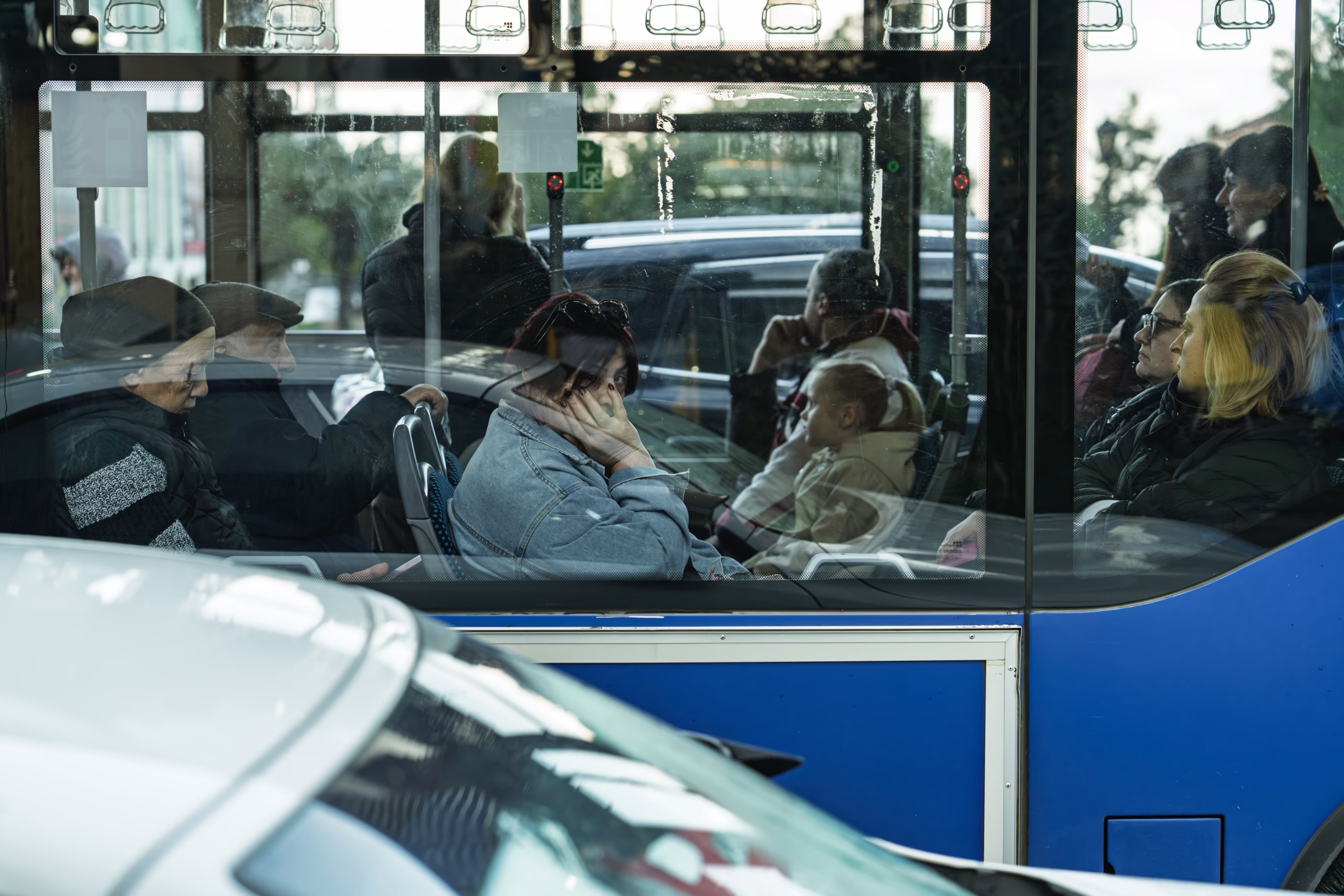
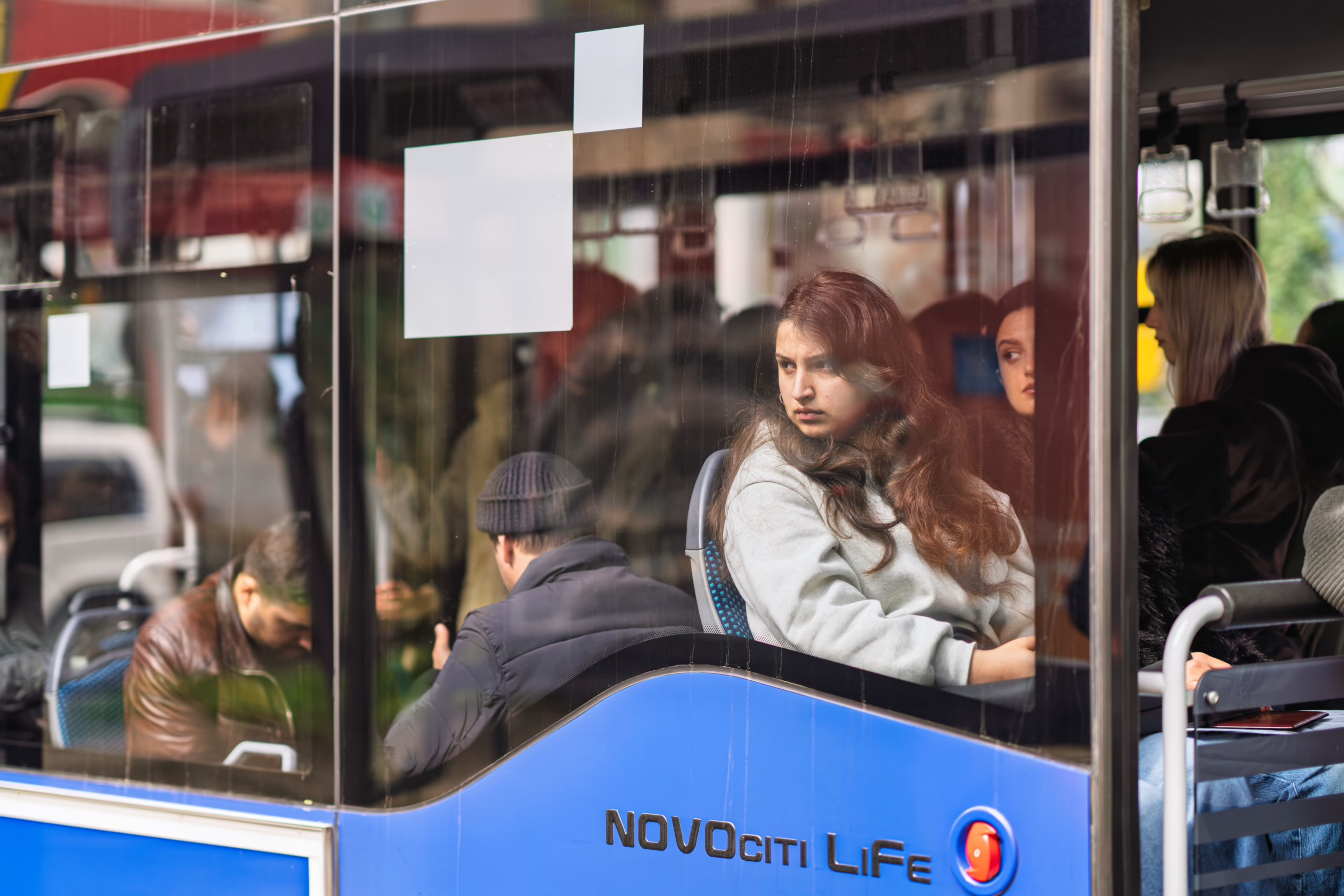
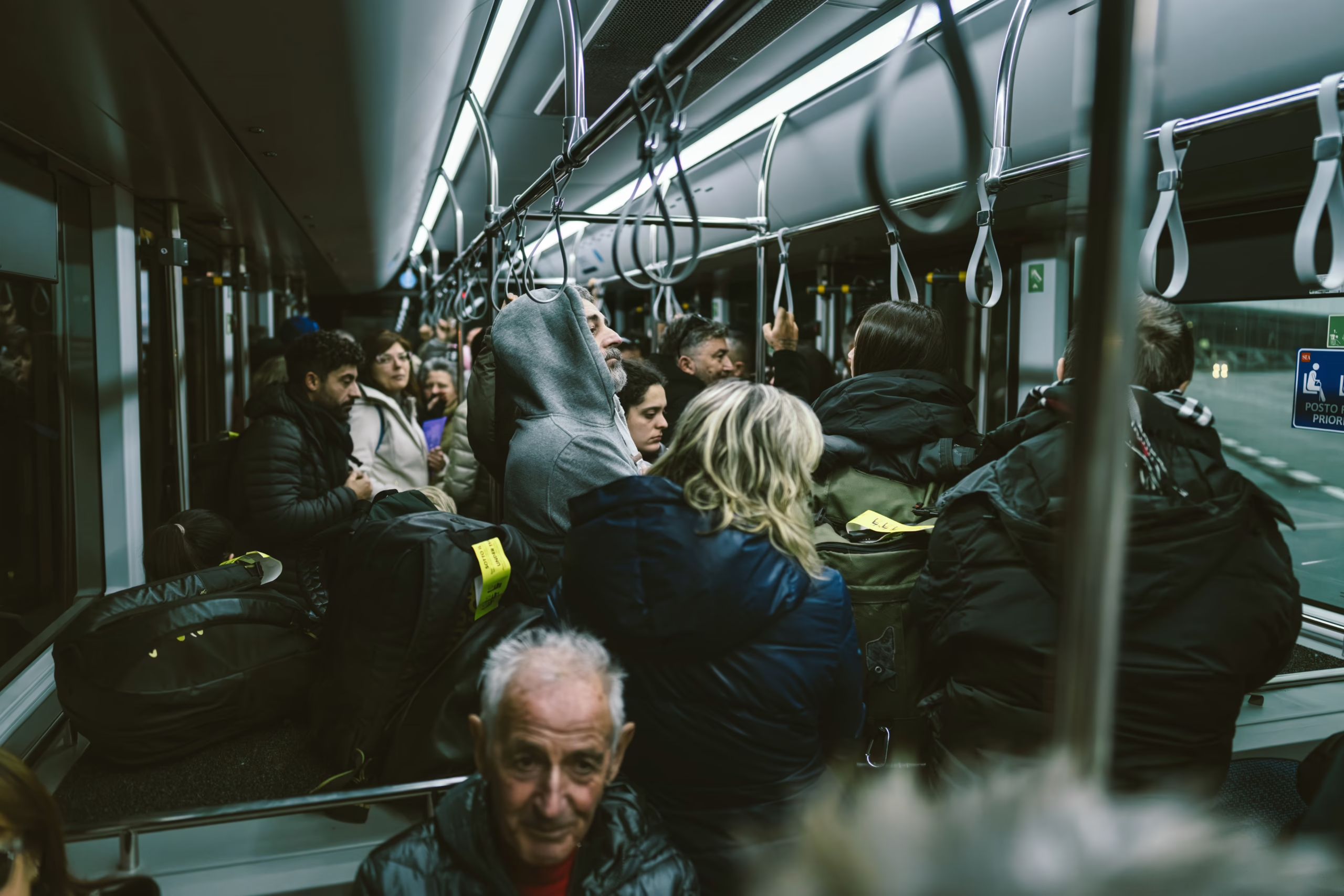
Inside the buses, people looked out the window.
Or into a screen, which by now is almost exactly the same thing.
Someone slept standing up with practiced artistry.
Someone waited without quite knowing for what.
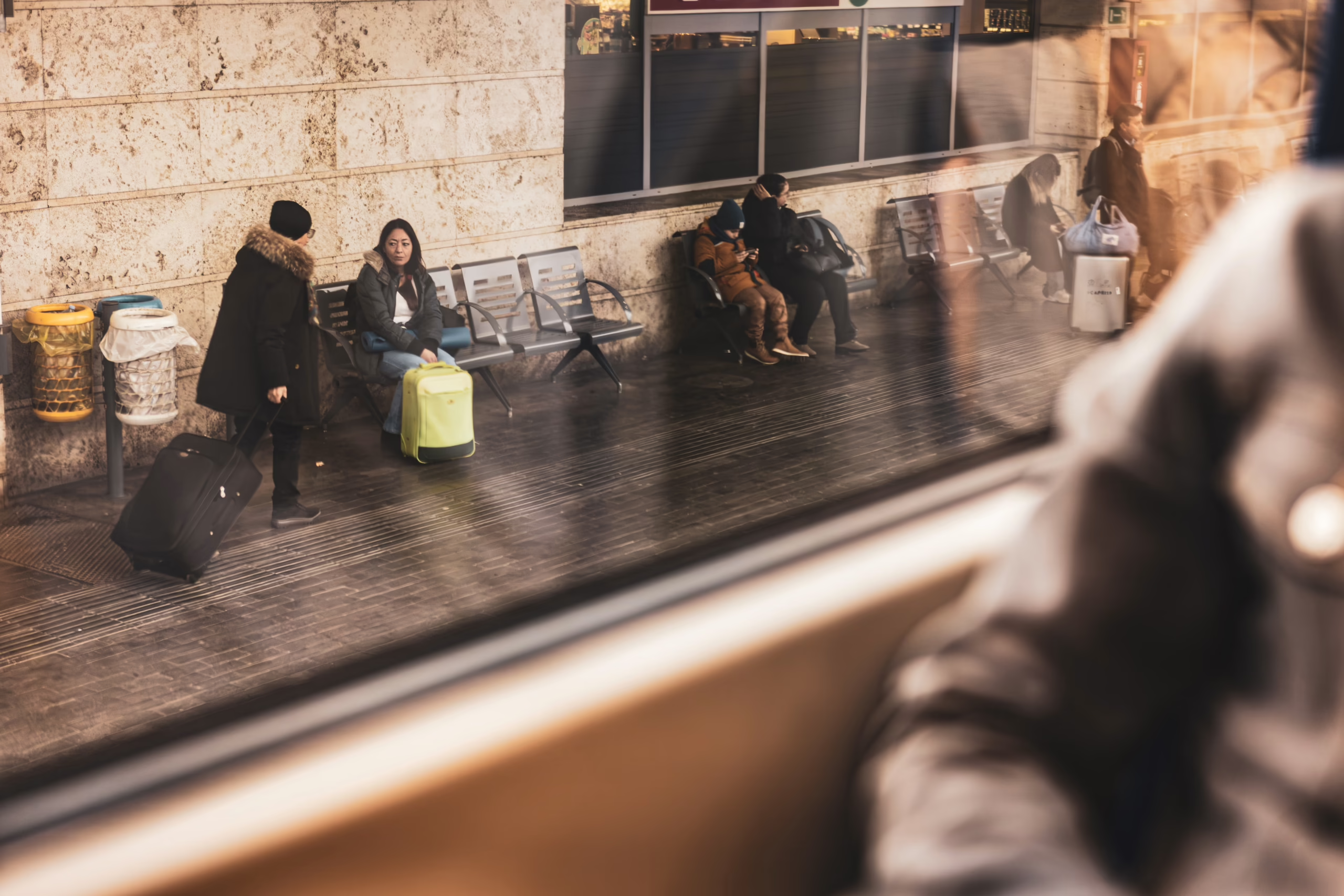
Someone was crushed against other bodies whose names he would never know.
A crowd is one of loneliness’s most efficient forms.
You can be surrounded by a hundred people and reached by none.
You can feel the warmth, smell, breath, and voice of others without your existence ever truly touching theirs.
We share seats, roads, elevators, Wi-Fi connections, epidemics, and climate catastrophes.
And stubbornly continue to call ourselves individuals.
It is our favorite illusion.
We are interdependent to the marrow, but find the idea that we made ourselves alone from nothing—as any miniature god might—profoundly exciting.
No one is self-made.
Someone fed you when you could not hold up your head.
Someone built the road.
Produced the food.
Laid the cables.
Treated an illness.
Collected the garbage.
Drove the train.
Even the most self-sufficient hermit in history emerged from someone else’s vagina.
Complete self-sufficiency is capitalism’s masturbatory fantasy.
It allows you to attribute every success to merit and every failure to personal fault, avoiding the tiresome question of starting conditions.
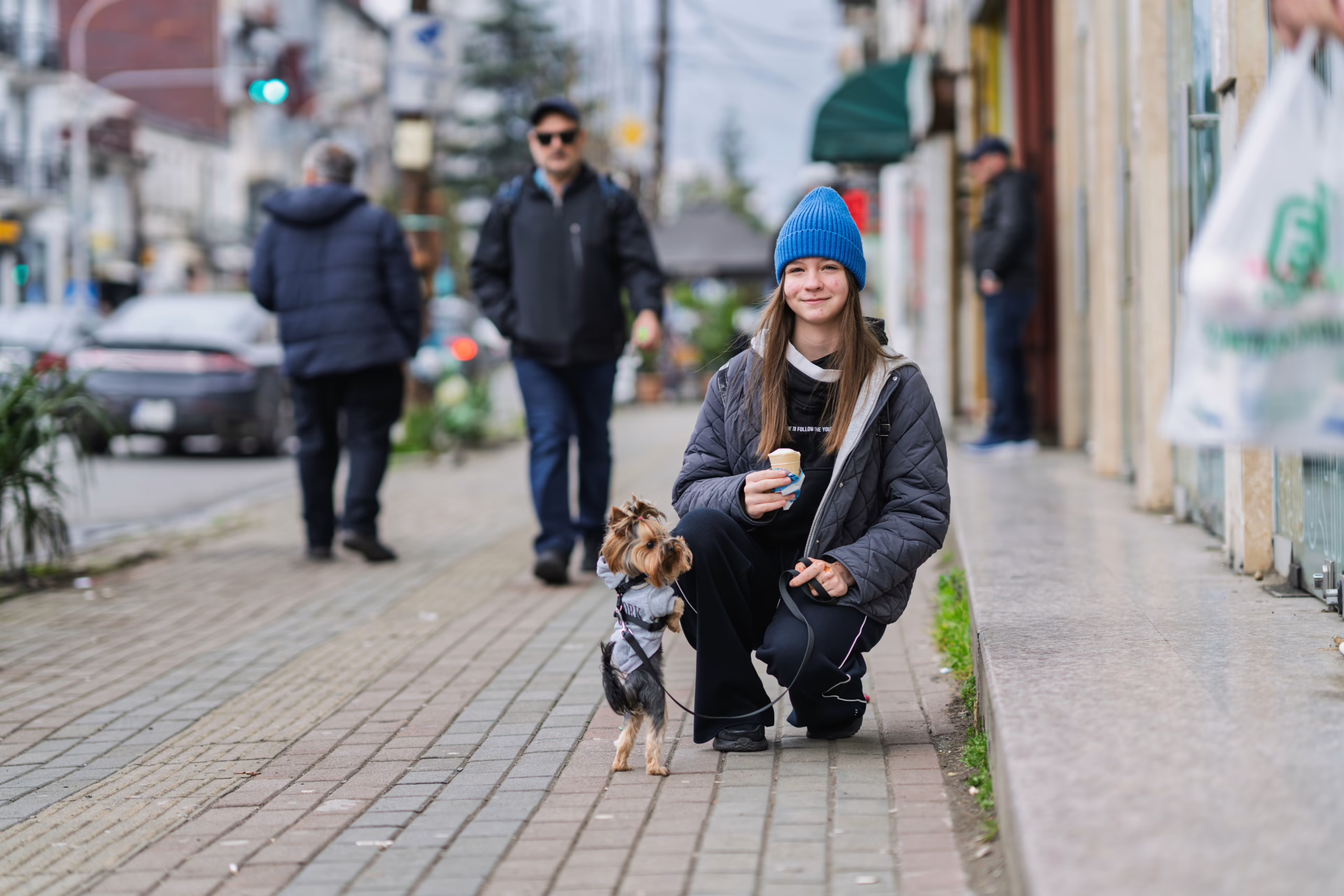
Then the dogs appeared.
Beside people.
On leashes.
In their arms.
On the sidewalks.
Before the sea, noses in the wind.
Dogs are a grave philosophical humiliation for human beings.
We have written treatises on unconditional love.
They practice it while sniffing a lamppost.
Perhaps they agreed to live with us because, after observing us long enough, they understood that we could not be left alone.
They follow us.
Wait for us.
Celebrate our return as though we had come home from a war, even when we merely went out to buy bread.
They do not ask what our mission is.
They do not inspect the revenue.
They do not compare the body we had at twenty with the one we have now.
They know we have returned.
That is enough for them.
Naturally, we abandon them on highways, mistreat them, breed them until we produce animals that can barely breathe, and dress them in ridiculous fucking raincoats to satisfy aesthetic demands they never, in any conceivable way, expressed.
We remain consistent.
We receive devotion.
We respond with woolen coats and a designer leash.
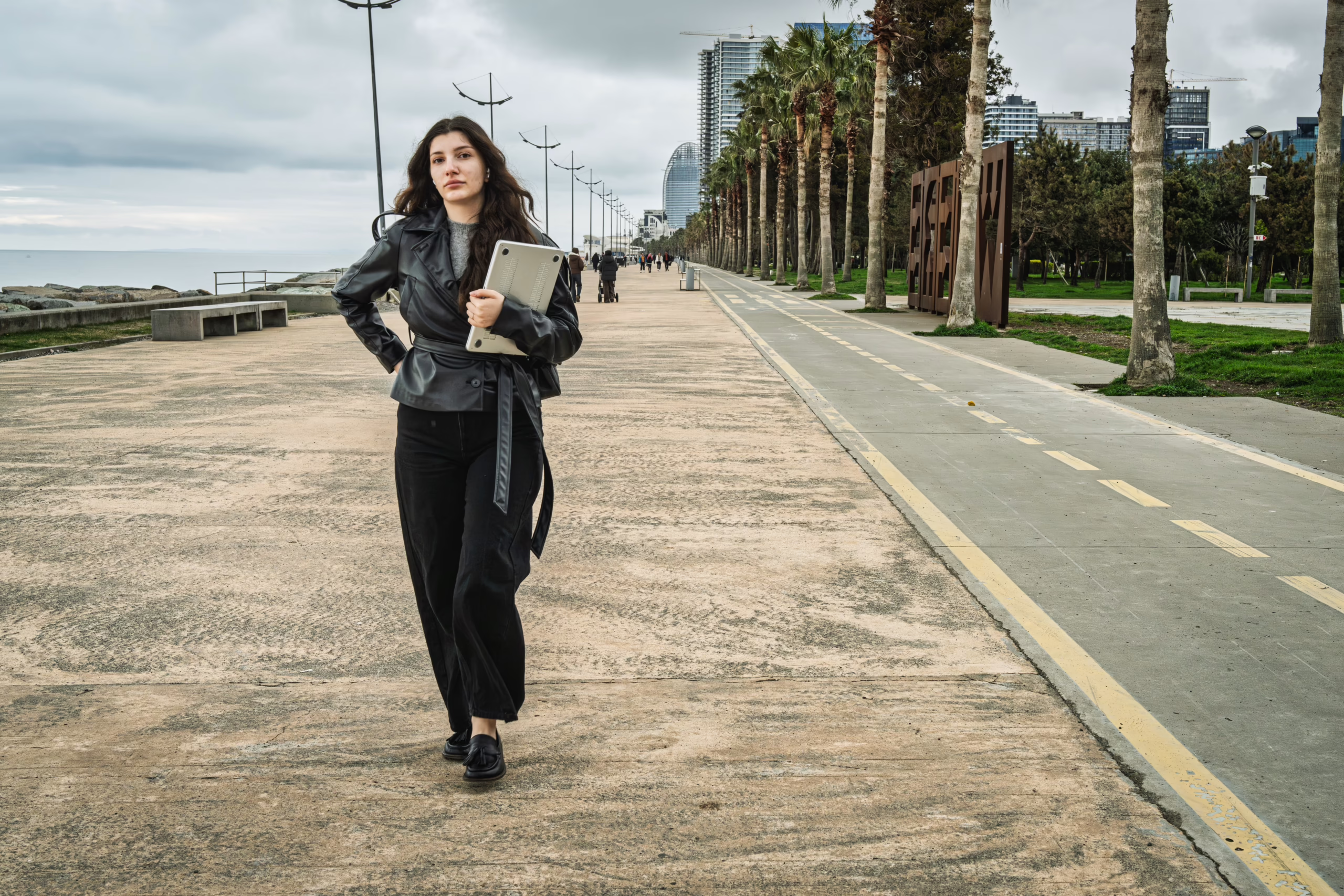
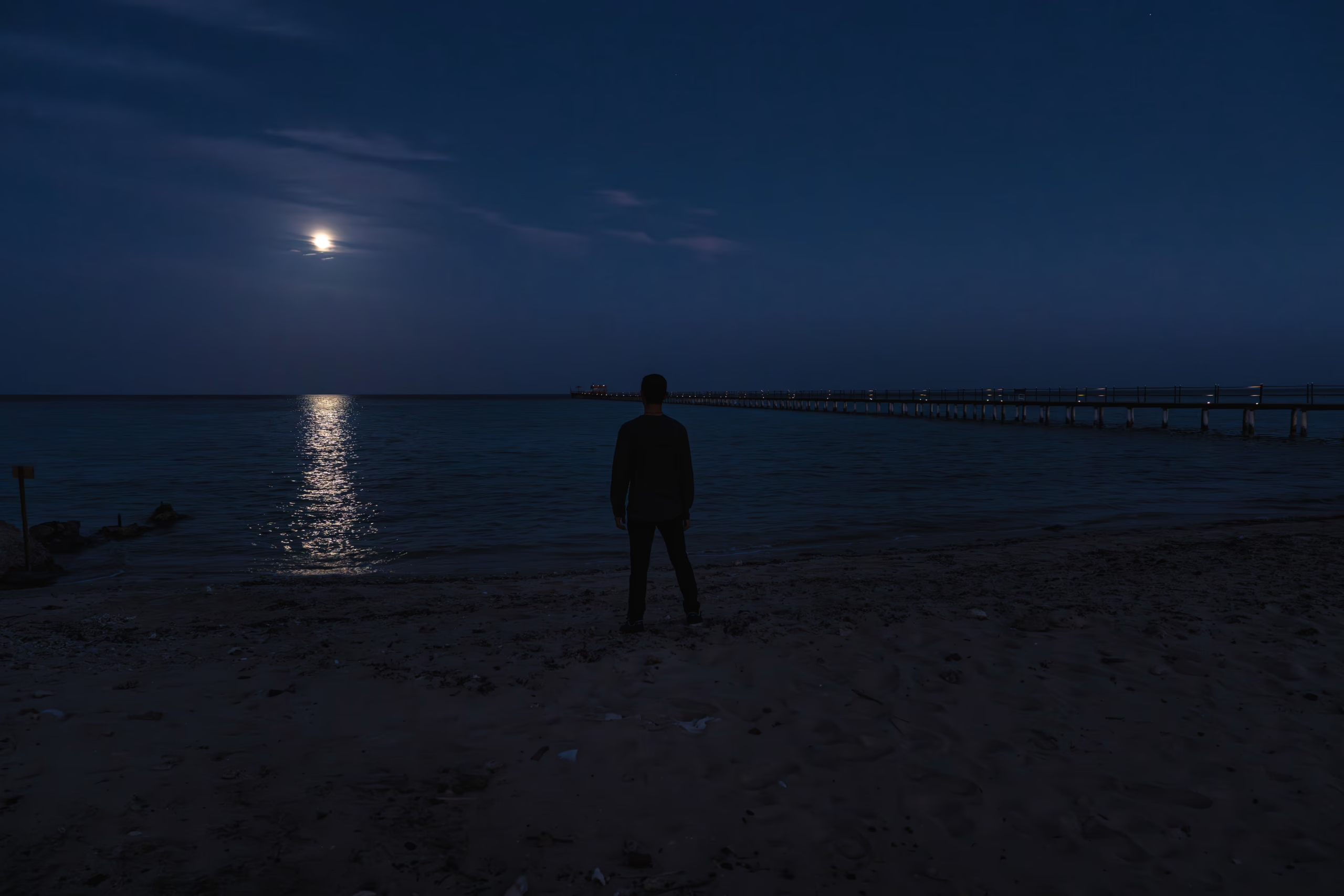
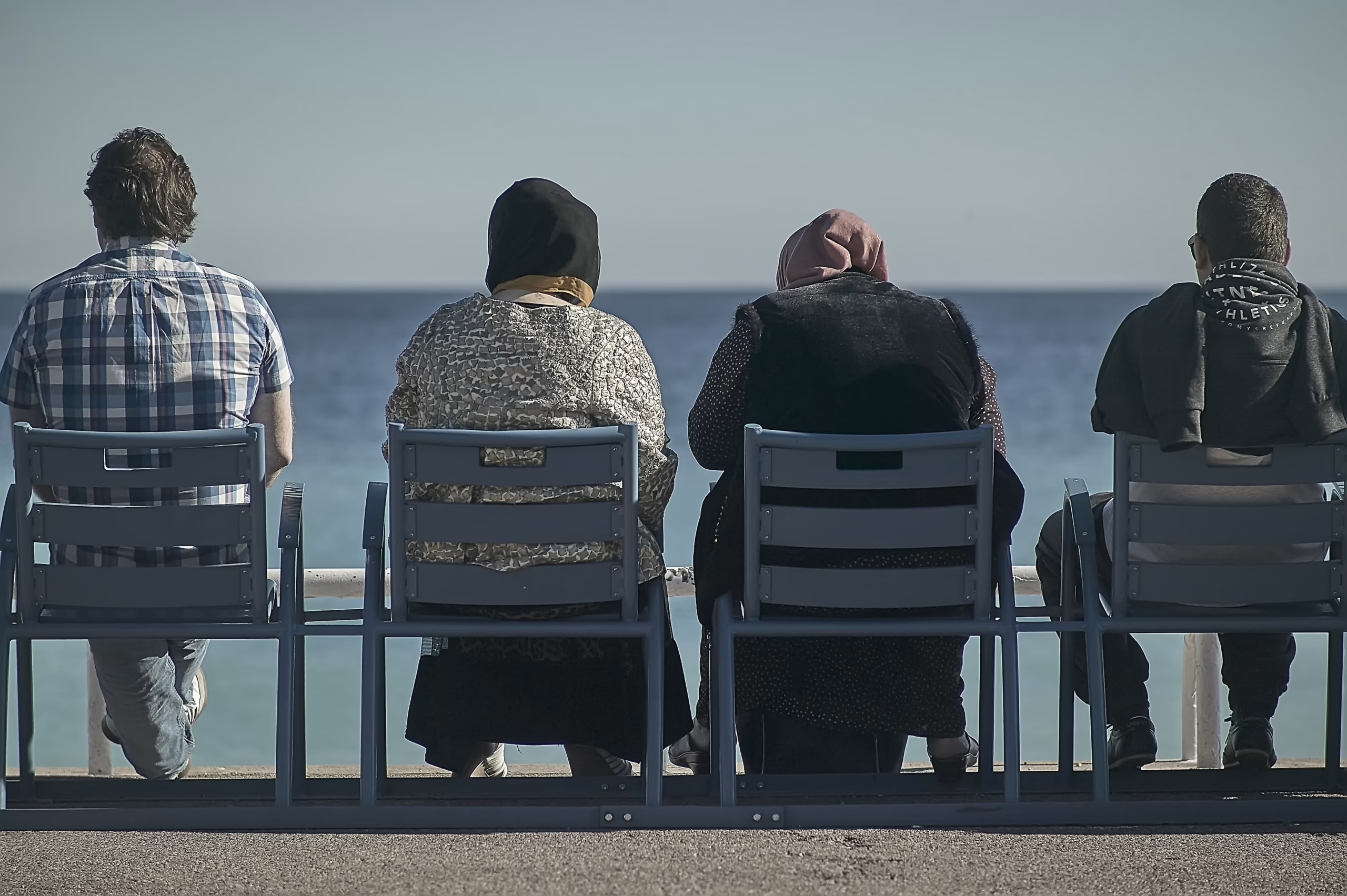
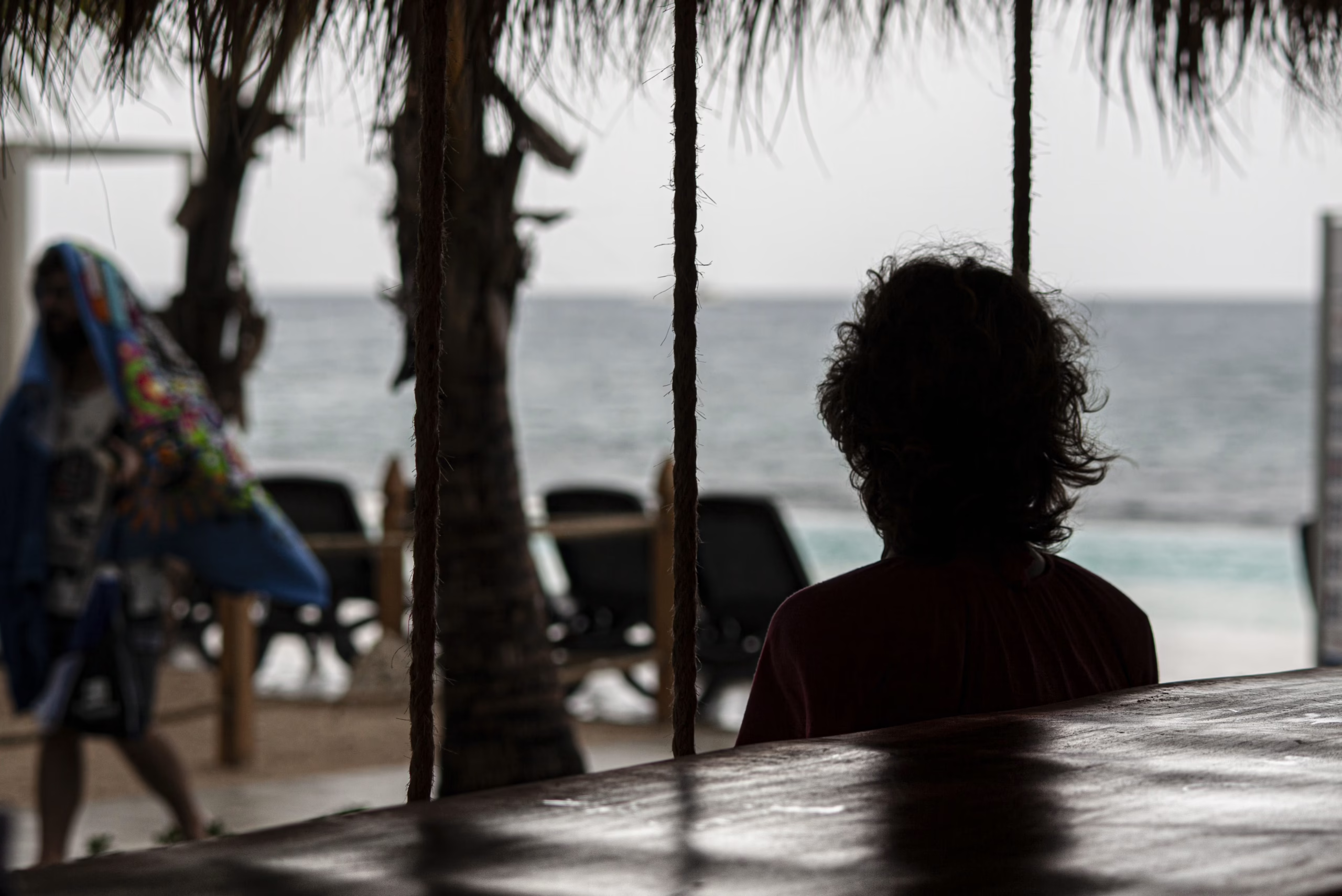
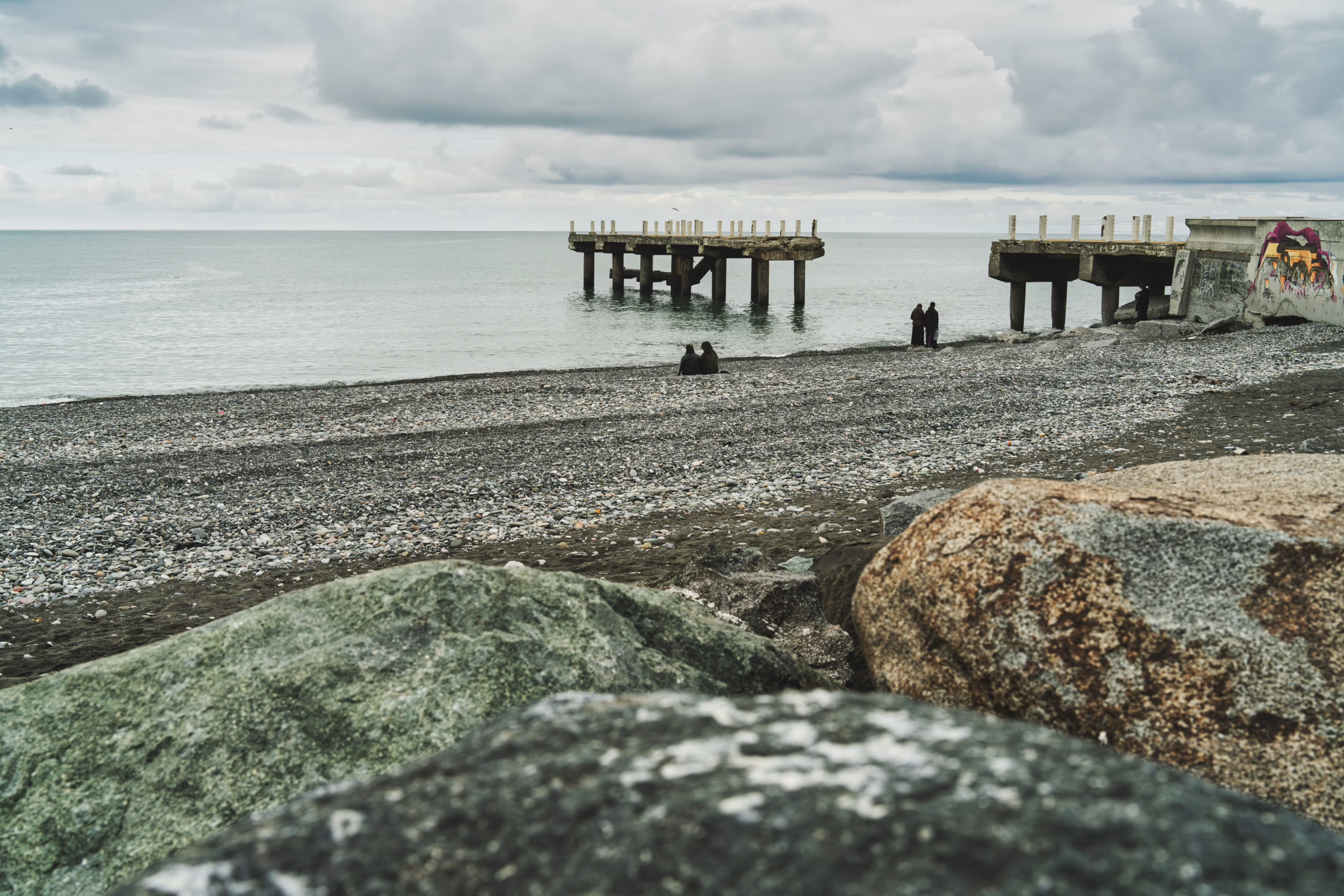
After the crowd came the sea.
And before the sea, people suddenly became alone again.
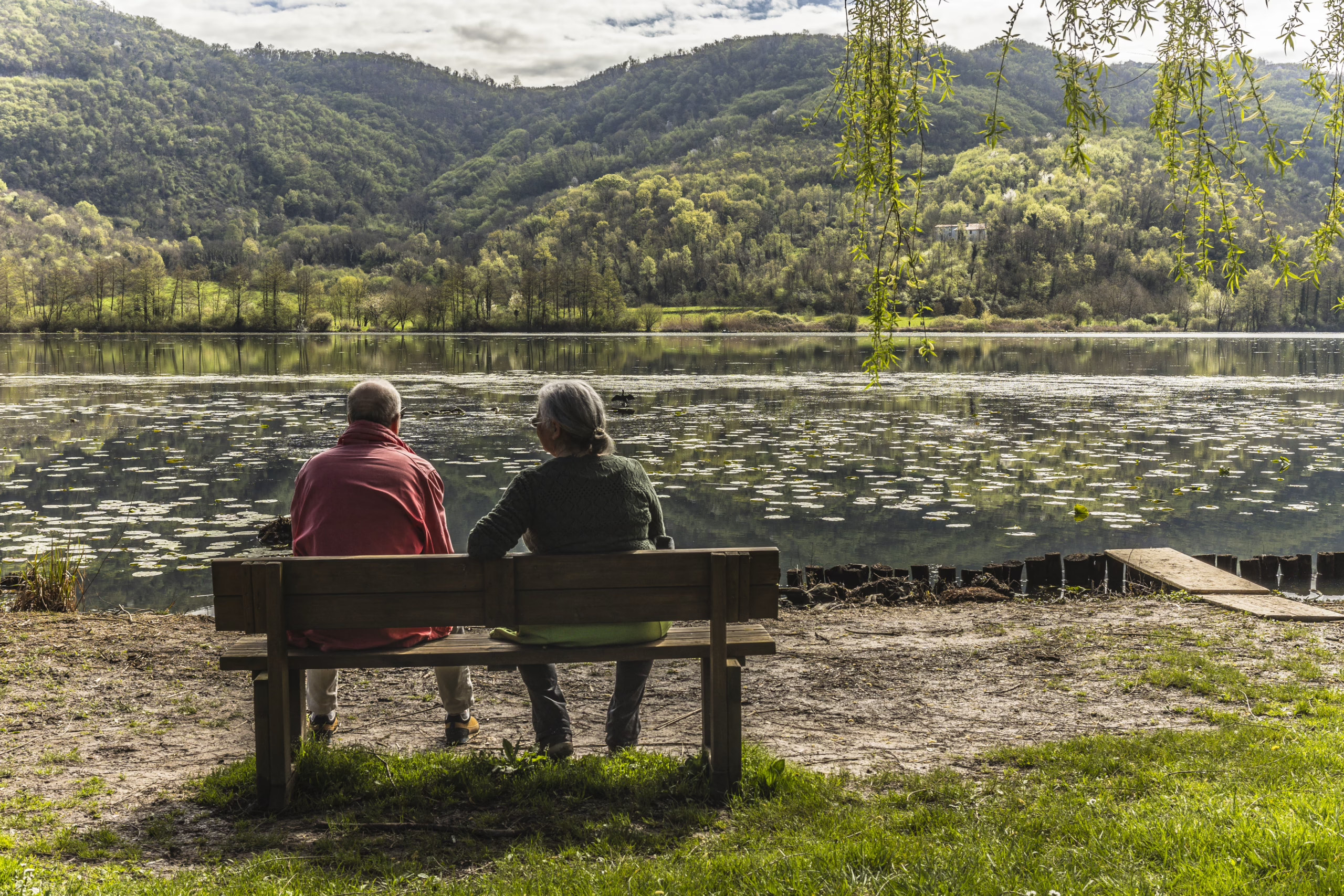
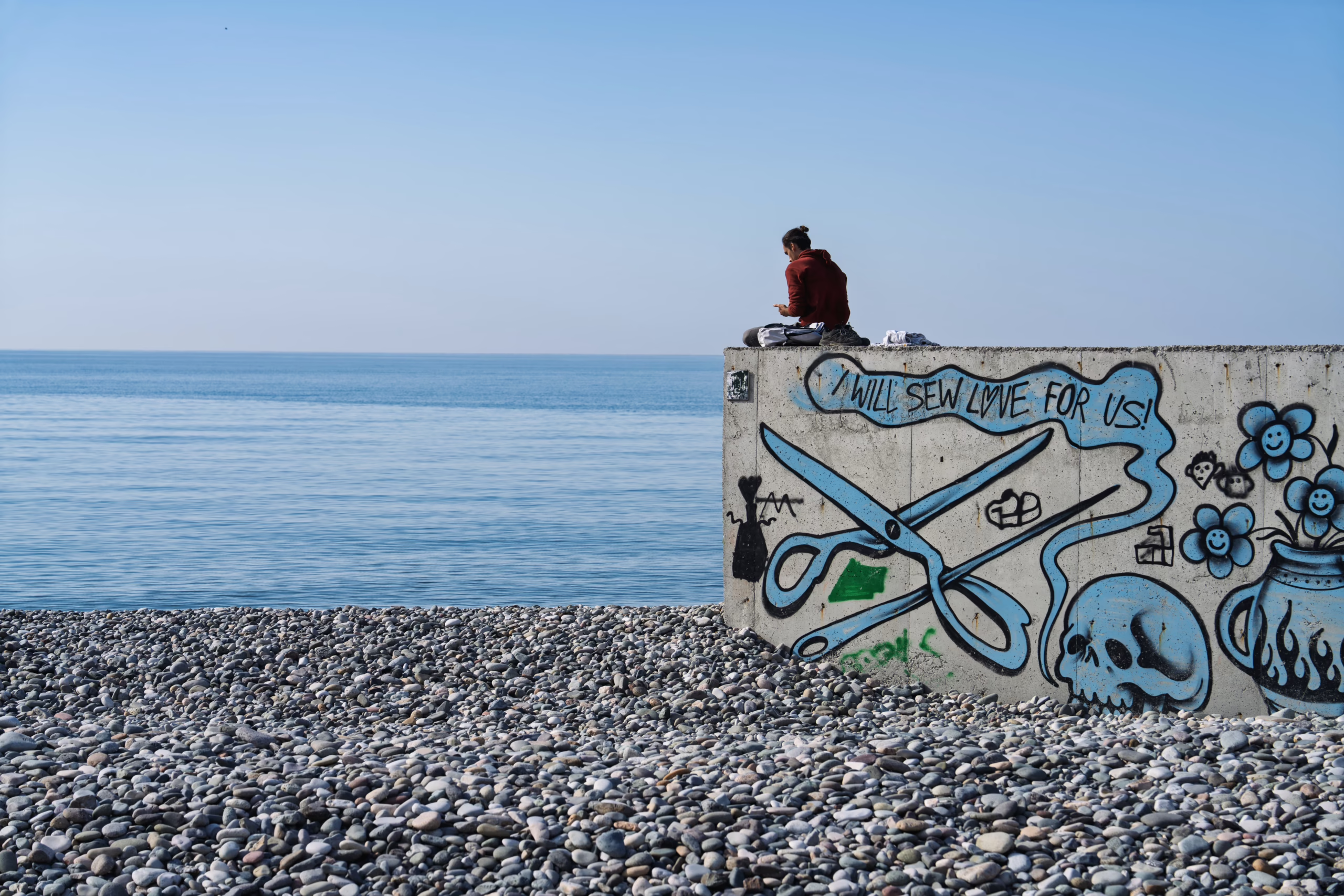
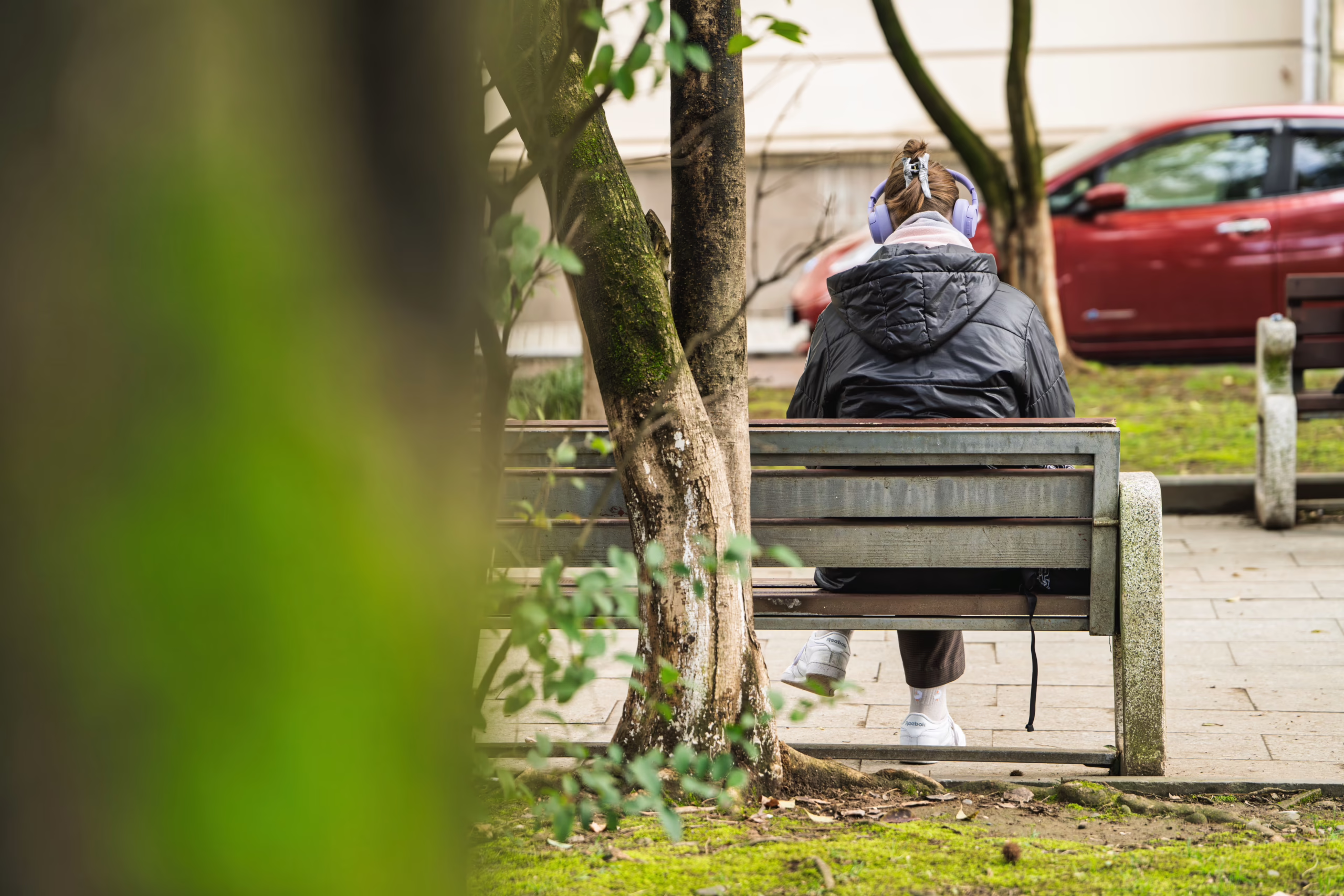
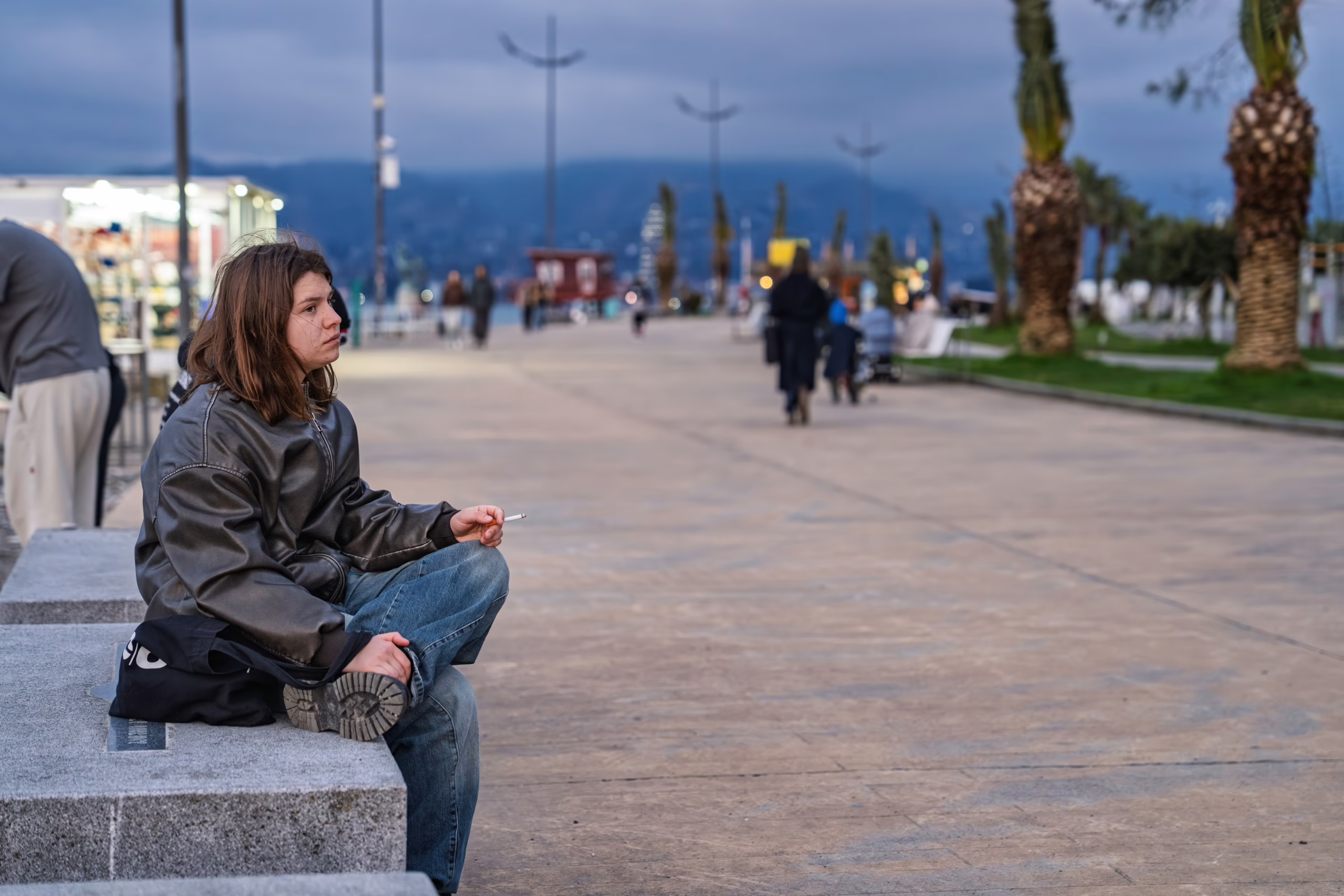
Seated on walls, rocks, benches, and chairs.
Still.
One before the horizon.
Another beneath the moon.
One smoked.
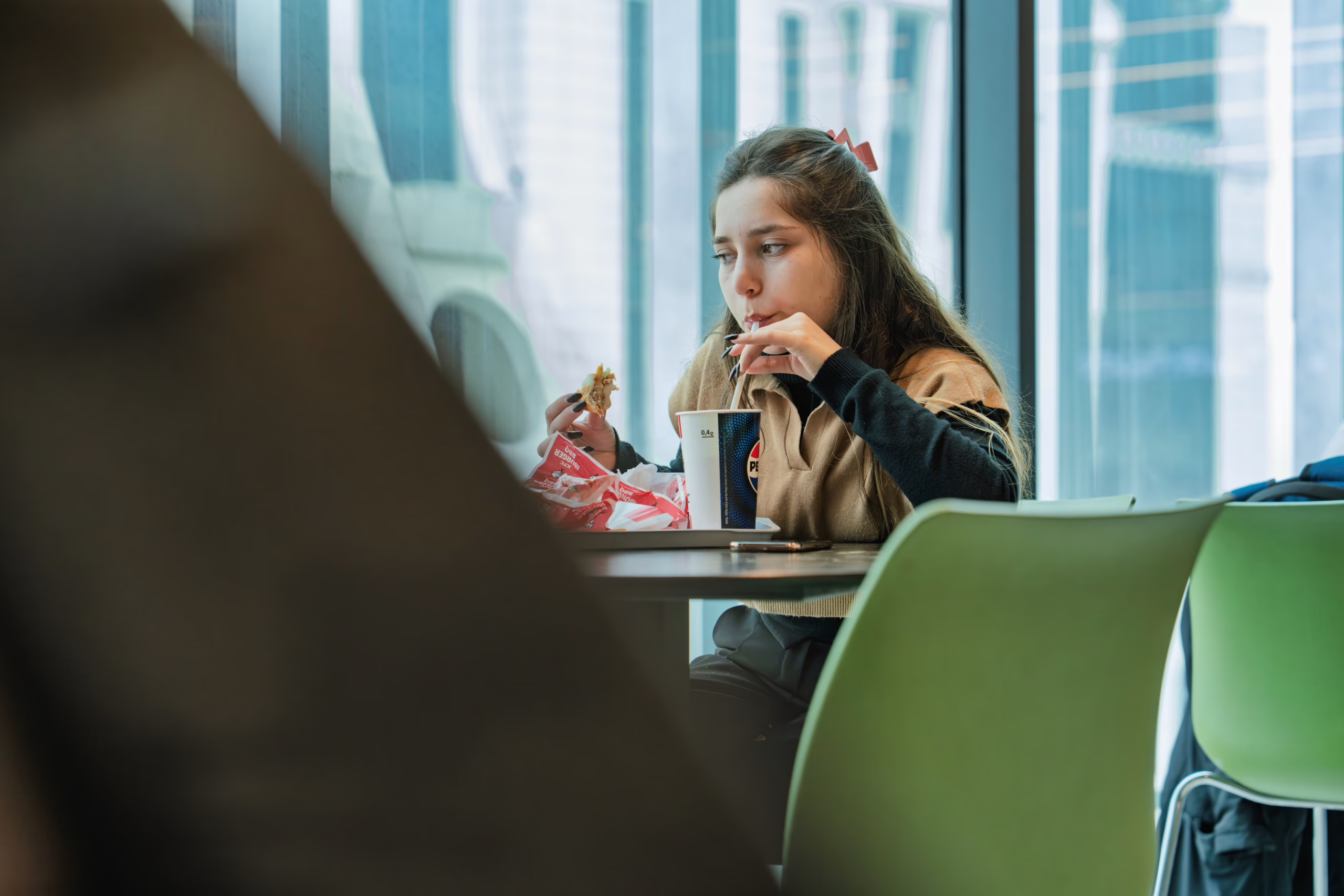
One ate.
One looked at a phone.
A man sat with his back to the entire world, the universal posture of someone who wishes to be left alone and, at the same time, secretly hopes someone will notice his heroic absence.
We go before the sea when we no longer know where to look.
It is a kind of customer service desk for infinity, with infinite wait times and no guaranteed solution.
It does not answer.
Does not solve.
Does not suggest seven simple steps for manifesting abundance before the next full moon.
It keeps moving.
Perhaps that is precisely why it works better than a two-hundred-euro therapy session.
The sea reminds us that something can exist without caring about our opinion.
Devastating news.
Liberating too.
I watched those solitary people and wondered how many were truly alone.
Loneliness does not always consist in the absence of others.
Sometimes it is the absence of someone before whom you need not translate yourself.
You can have friends, colleagues, children, lovers, and thousands of contacts saved in your phone.
You can receive messages all day long.
You can never spend an hour without speaking.
And still have nowhere to set down the public, polished, presentable version of yourself at last.
We have become accessible to everyone and reachable by very few.
The phone vibrates.
Someone reacts.
Someone reads and disappears.
Someone places a heart beneath a photograph in which we smile through the worst day of the month.
Technically, we are connected.
Emotionally, we are trying to warm ourselves before a picture of a fire.
Perhaps God does not hate us quite so much after all.
Perhaps He has merely turned off notifications.
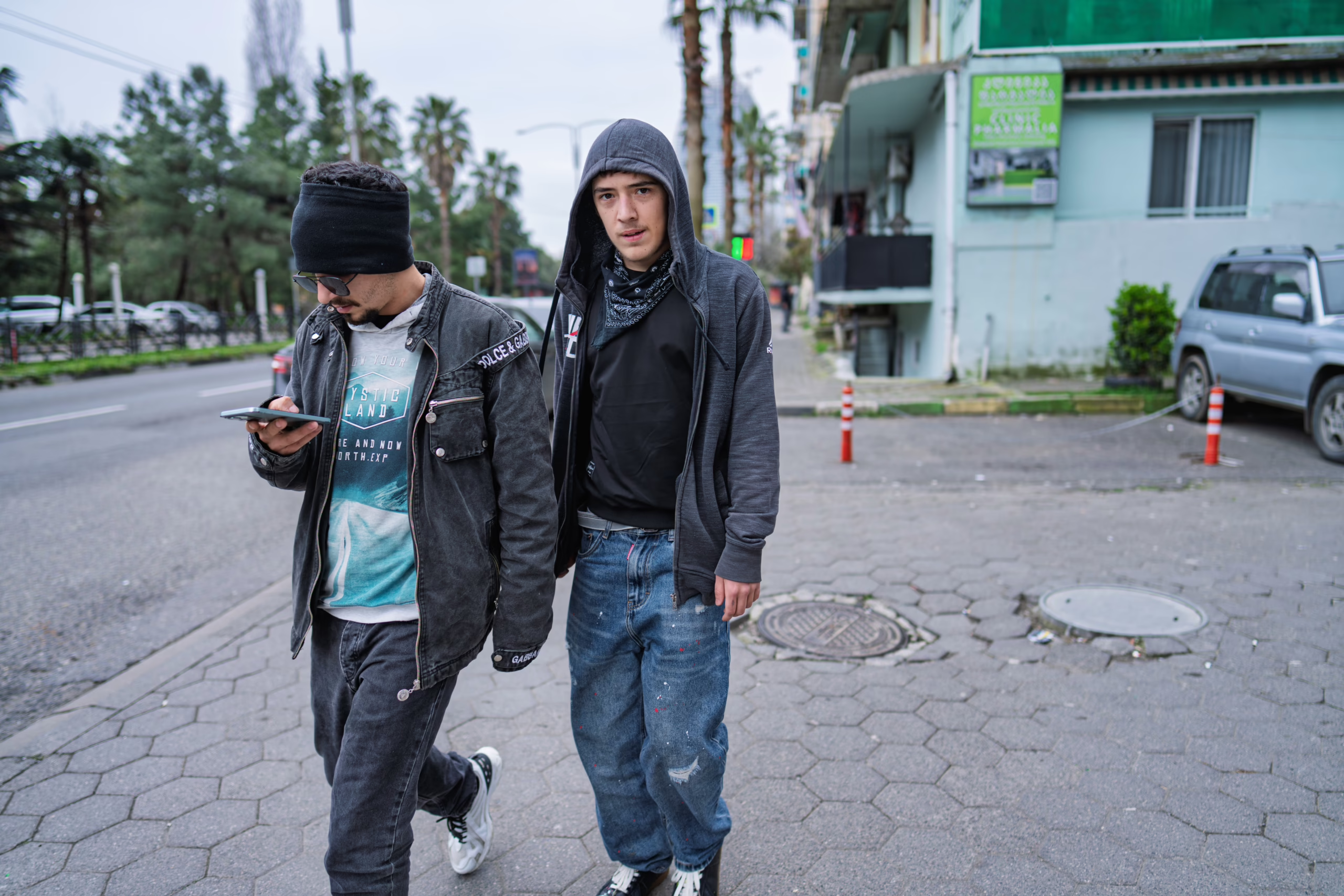
Then came the faces.
At last without the distance required to pretend humanity is an abstract concept to debate over dinner.
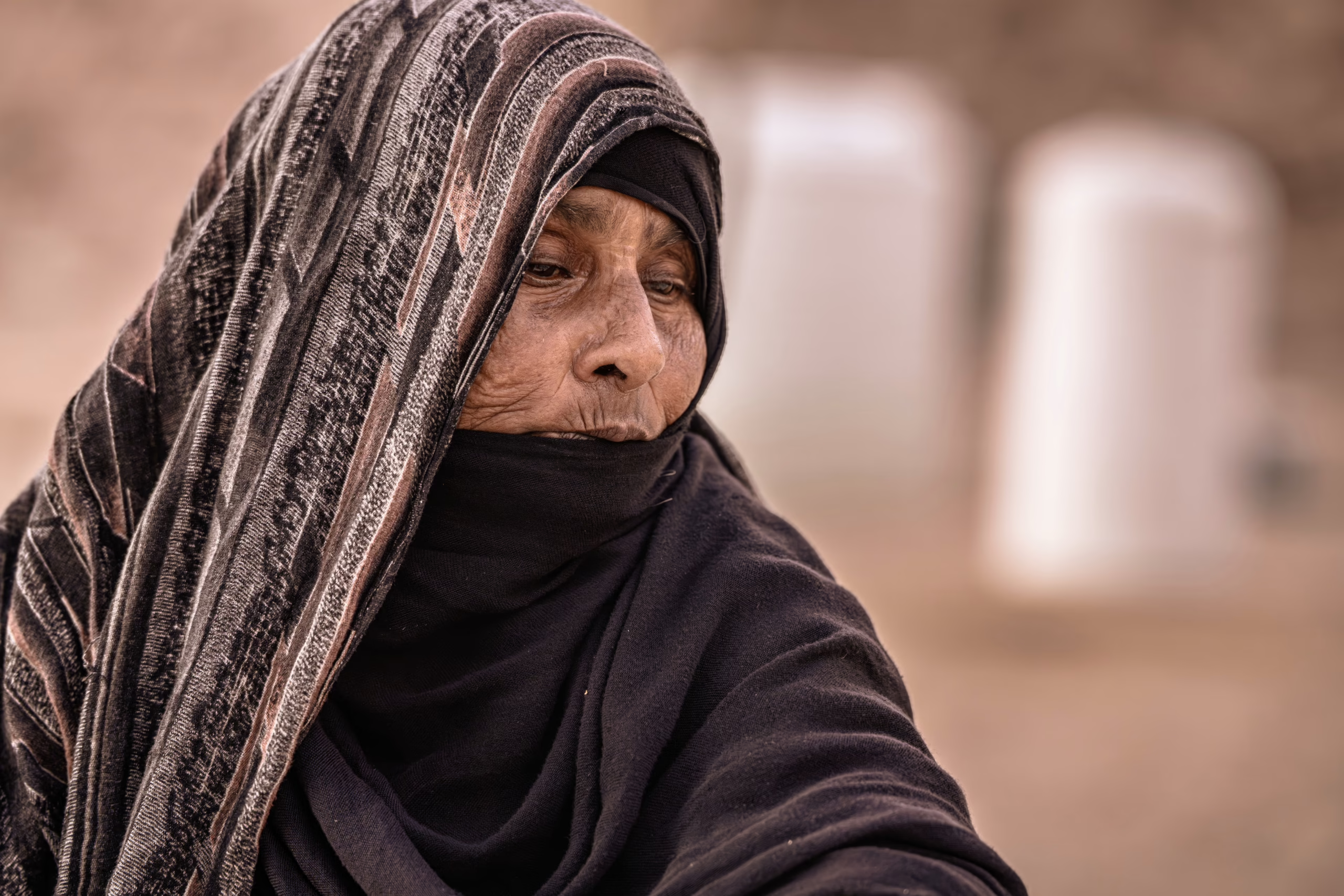
Women.
Men.
Wrinkles.
Tattoos.
Makeup.
Tired eyes.
Proud eyes.
Faces constructed, defended, offered, concealed.
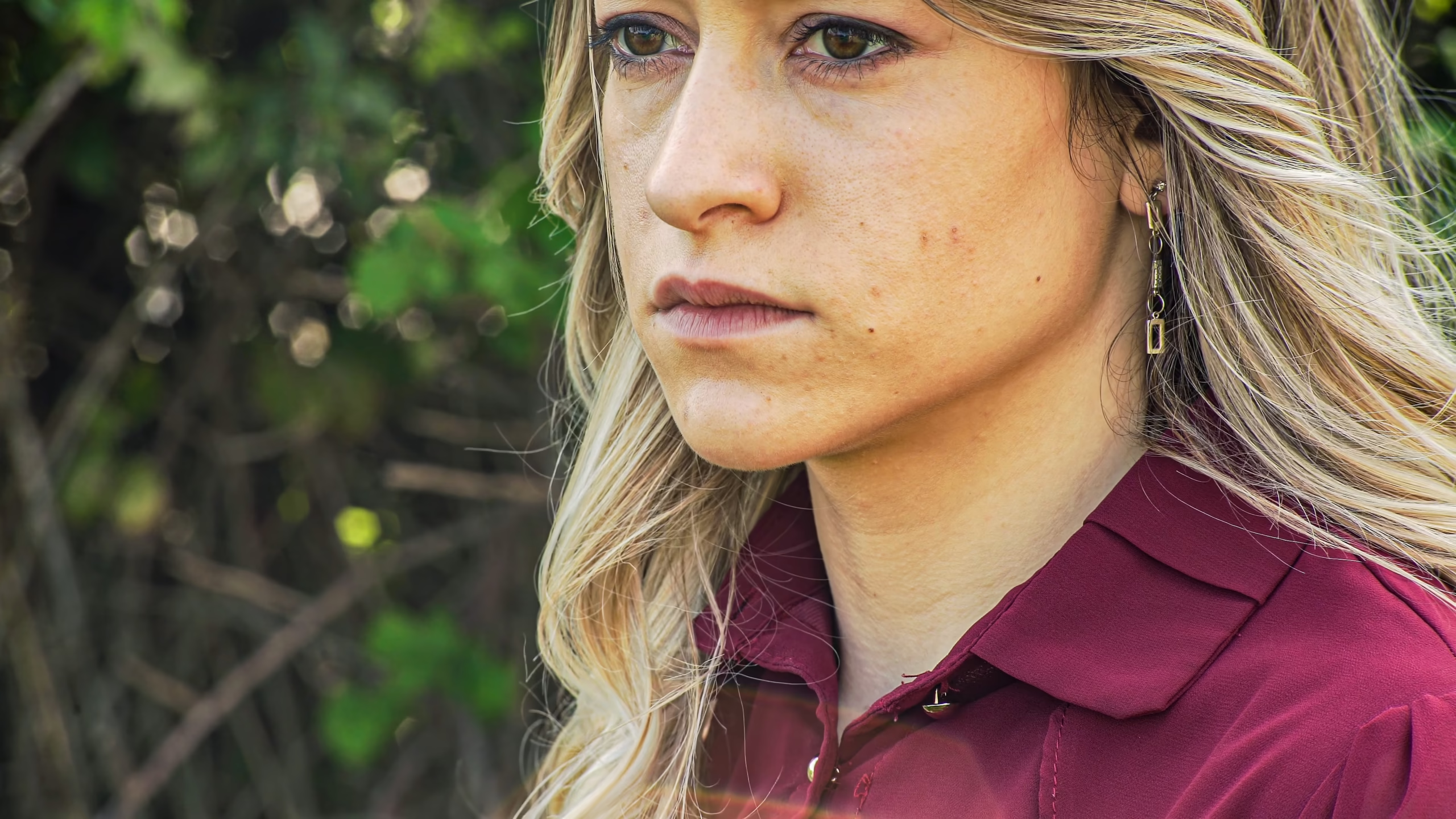
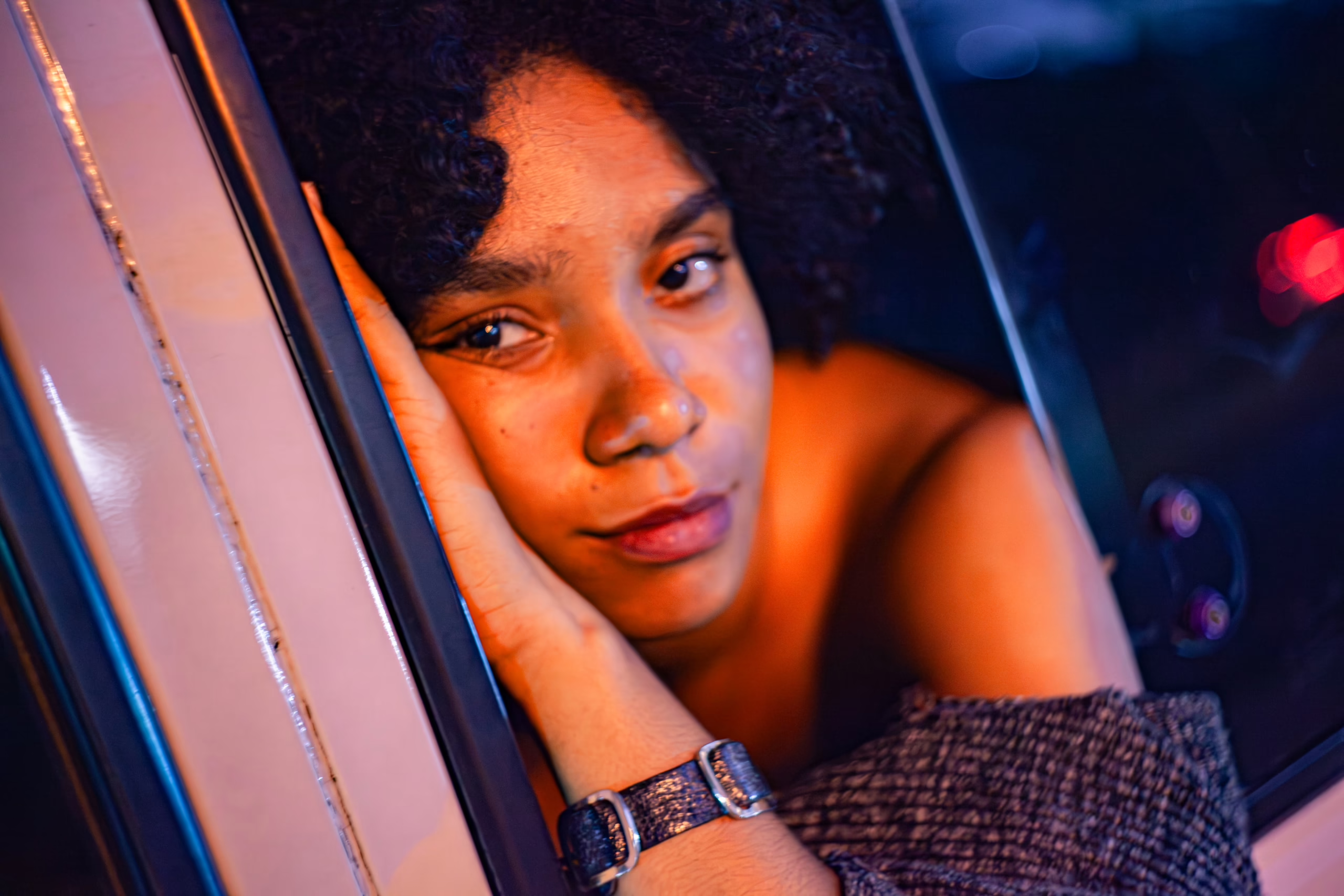
A young woman held her hands against the sides of her head as though her thoughts were attempting a desperate escape from her skull.
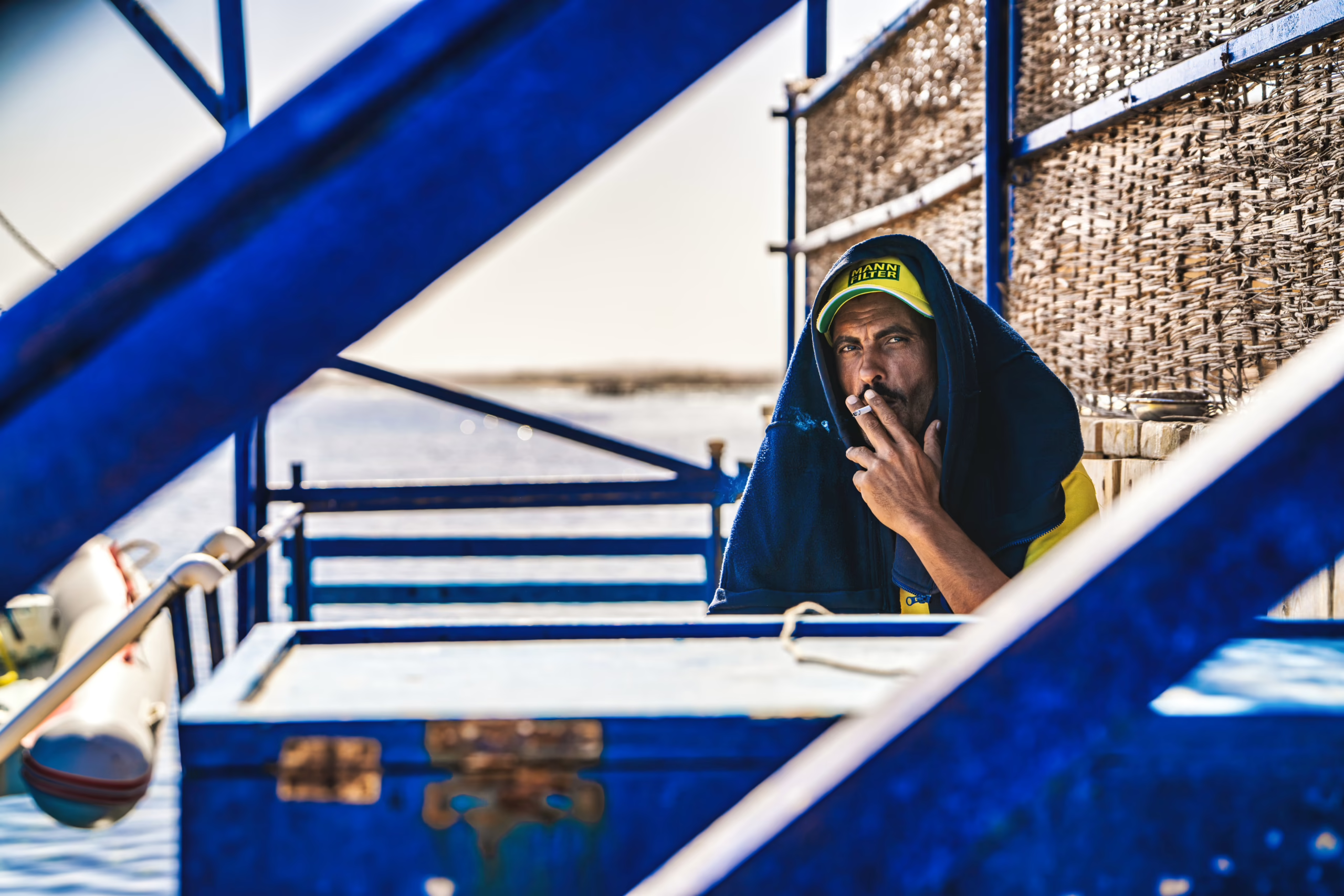
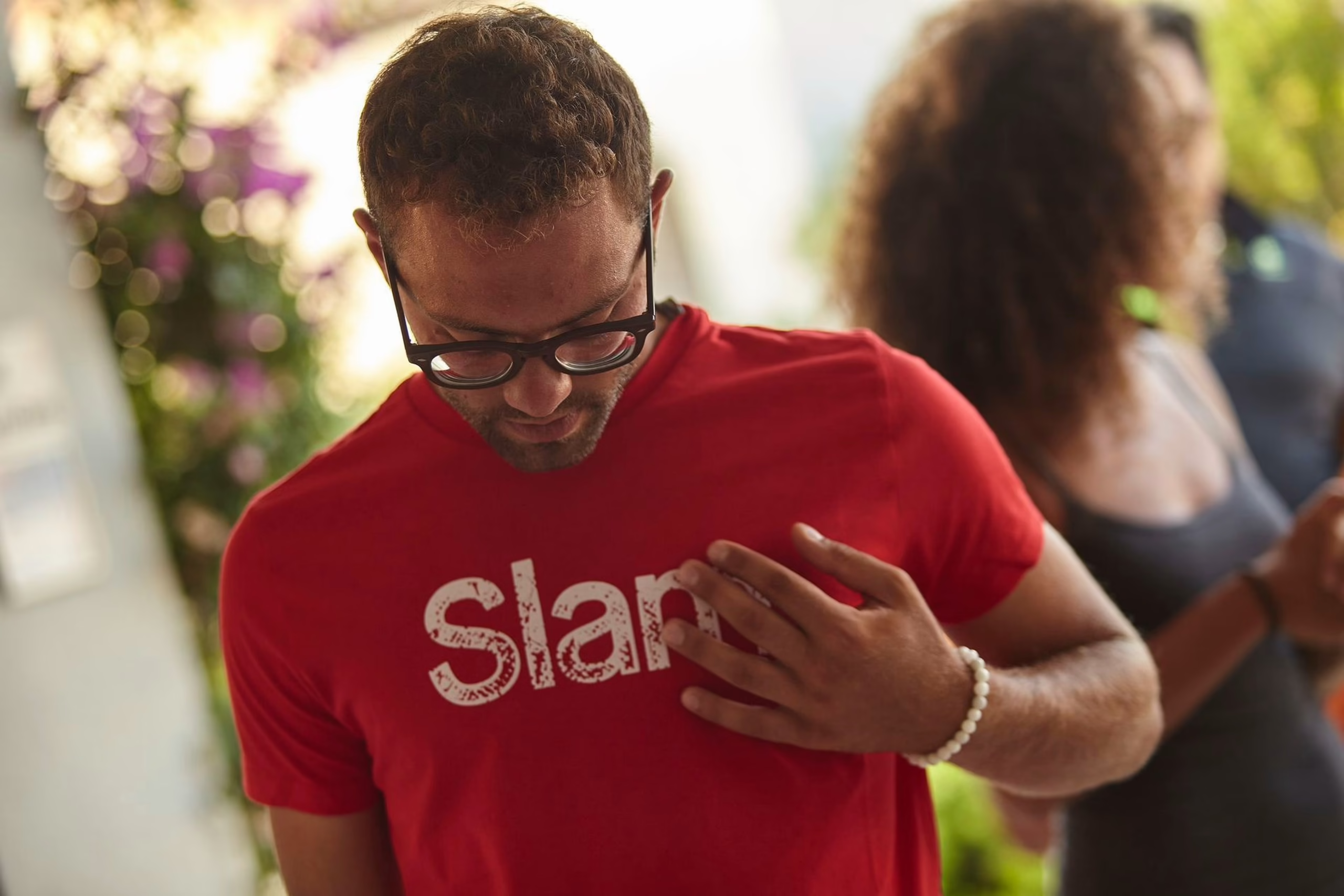
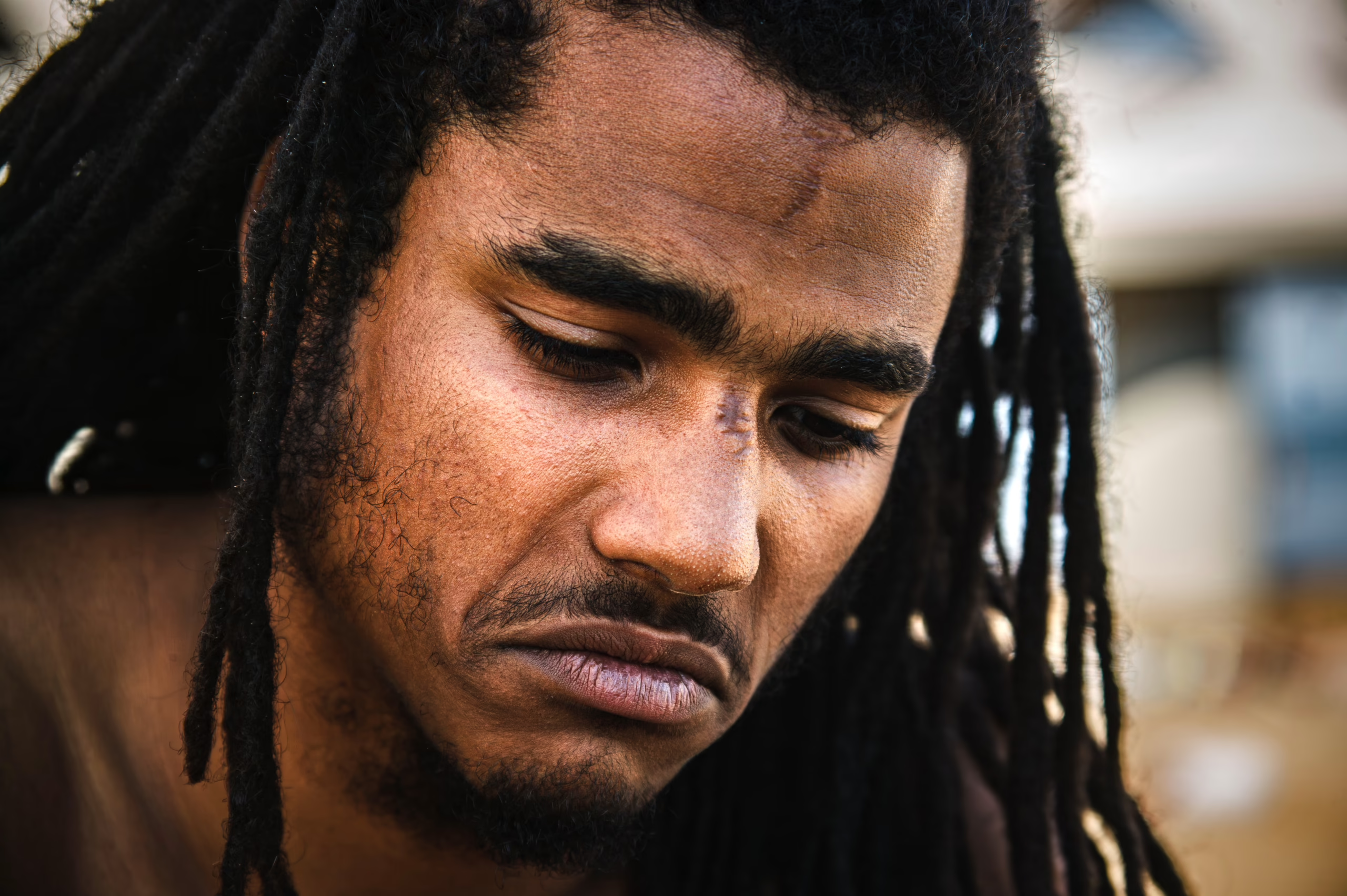
A man lowered his gaze.
Another smoked in red light.
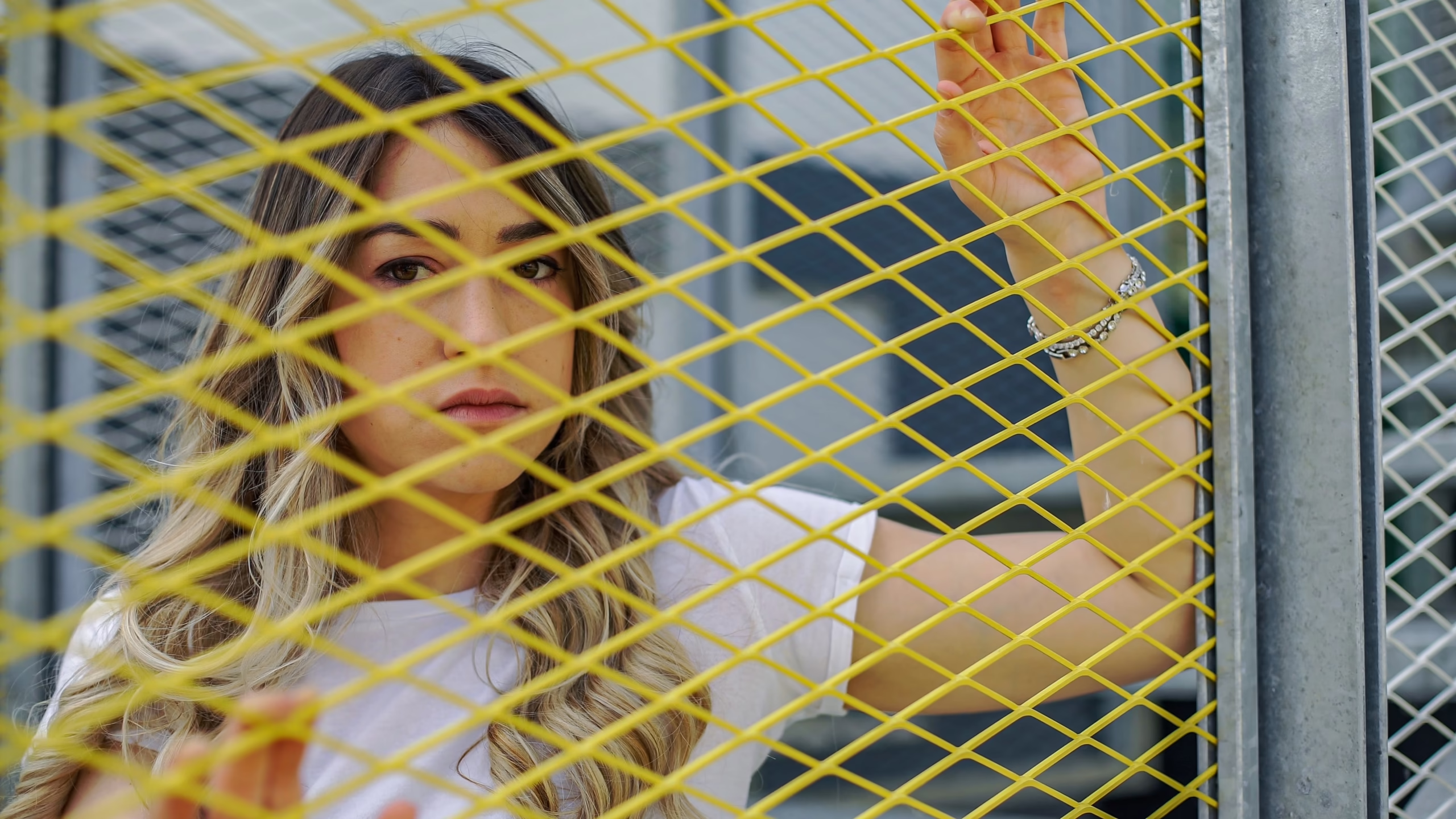
A woman appeared behind a grille.
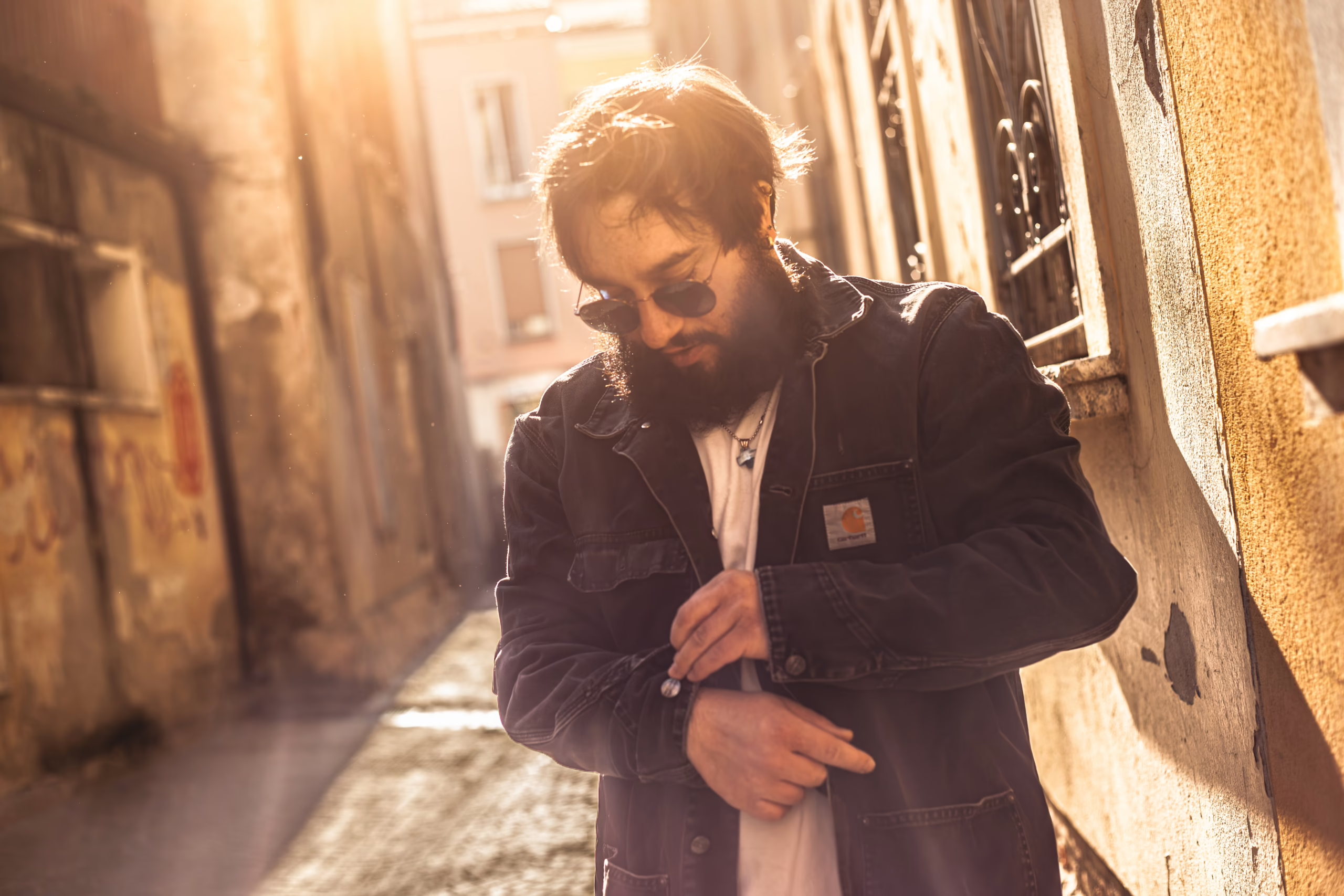
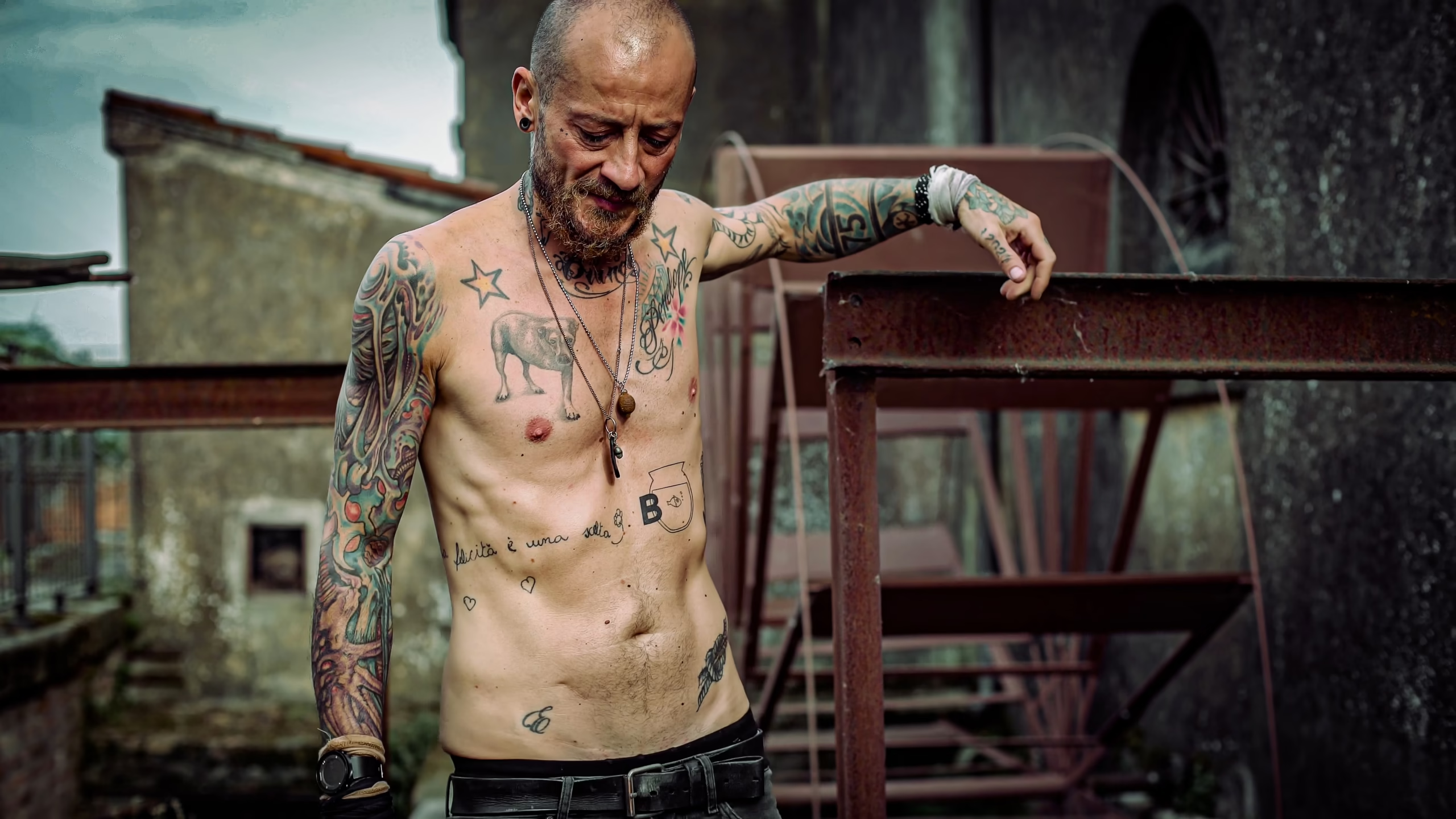
A tattooed body seemed to have turned its skin into an archive.
A man shouted behind a fence.
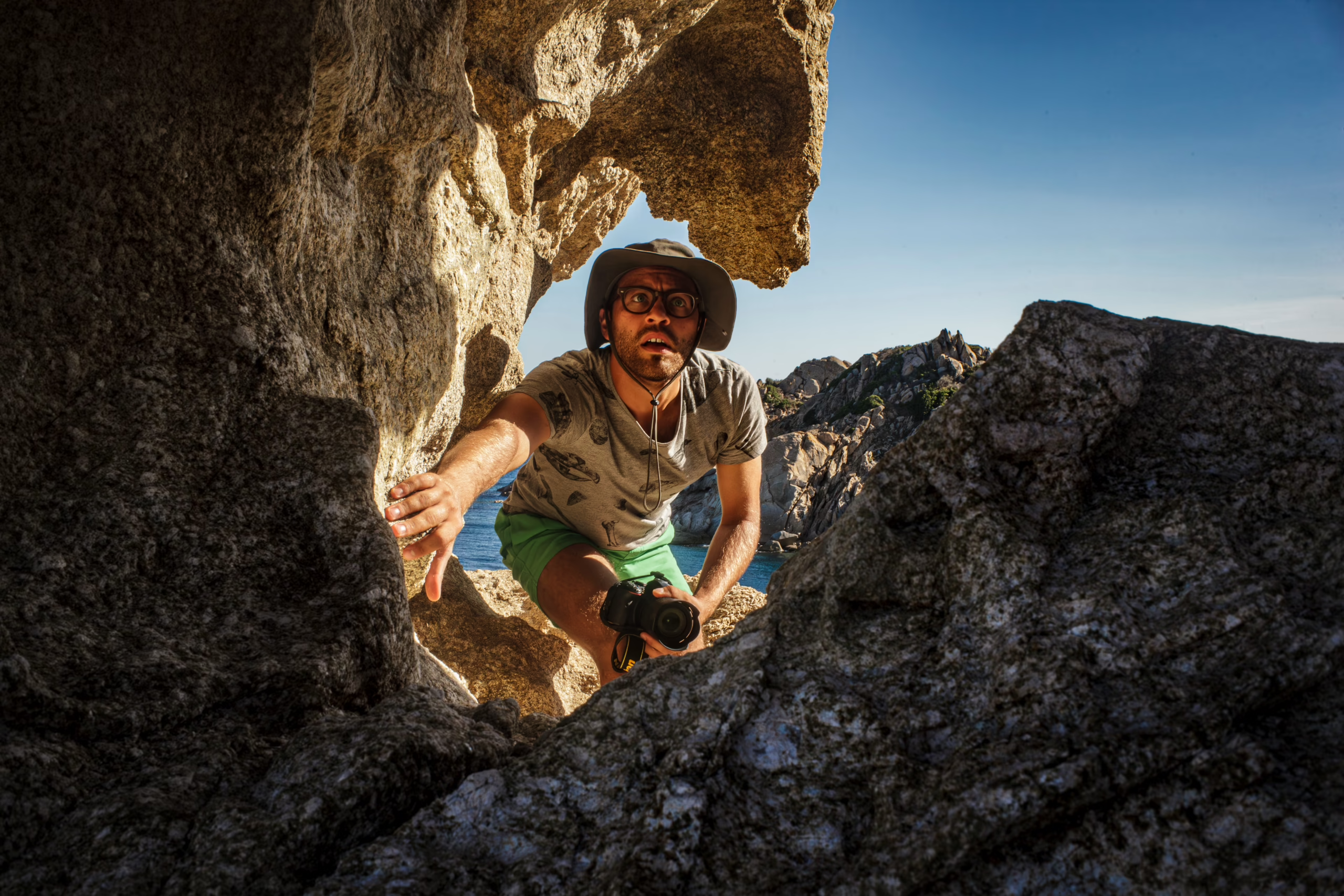
Someone climbed over rock.
Others faced the lens with the serenity, challenge, or fear of people who know they are being observed and have no guarantee of how their faces will be used later.
Identity is the costume we wear so long that we forget where the fabric ends and the skin begins.
We define ourselves.
Artist.
Mother.
Father.
Professional.
Rebel.
Victim.
Survivor.
Strong woman.
Free man.
Spiritual person.
Respectable citizen.
We take an experience, a wound, a sexual preference, a job, a diagnosis, or a mistake and build a nation around it.
Then station guards at the border.
Identity serves a purpose.
Without a story about ourselves, we would become a mass of impulses, memories, and contradictions incapable of completing a dating-app bio.
But every story, repeated long enough, becomes a prison. We say ‘that is simply how I am’ when what we truly mean is ‘I am fucking terrified of discovering who I might become if I behaved differently, even for a single day.’
We defend our character even when it is merely trauma that has learned how to dress well.
The people in the photographs were never only one thing. Never.
No one is.
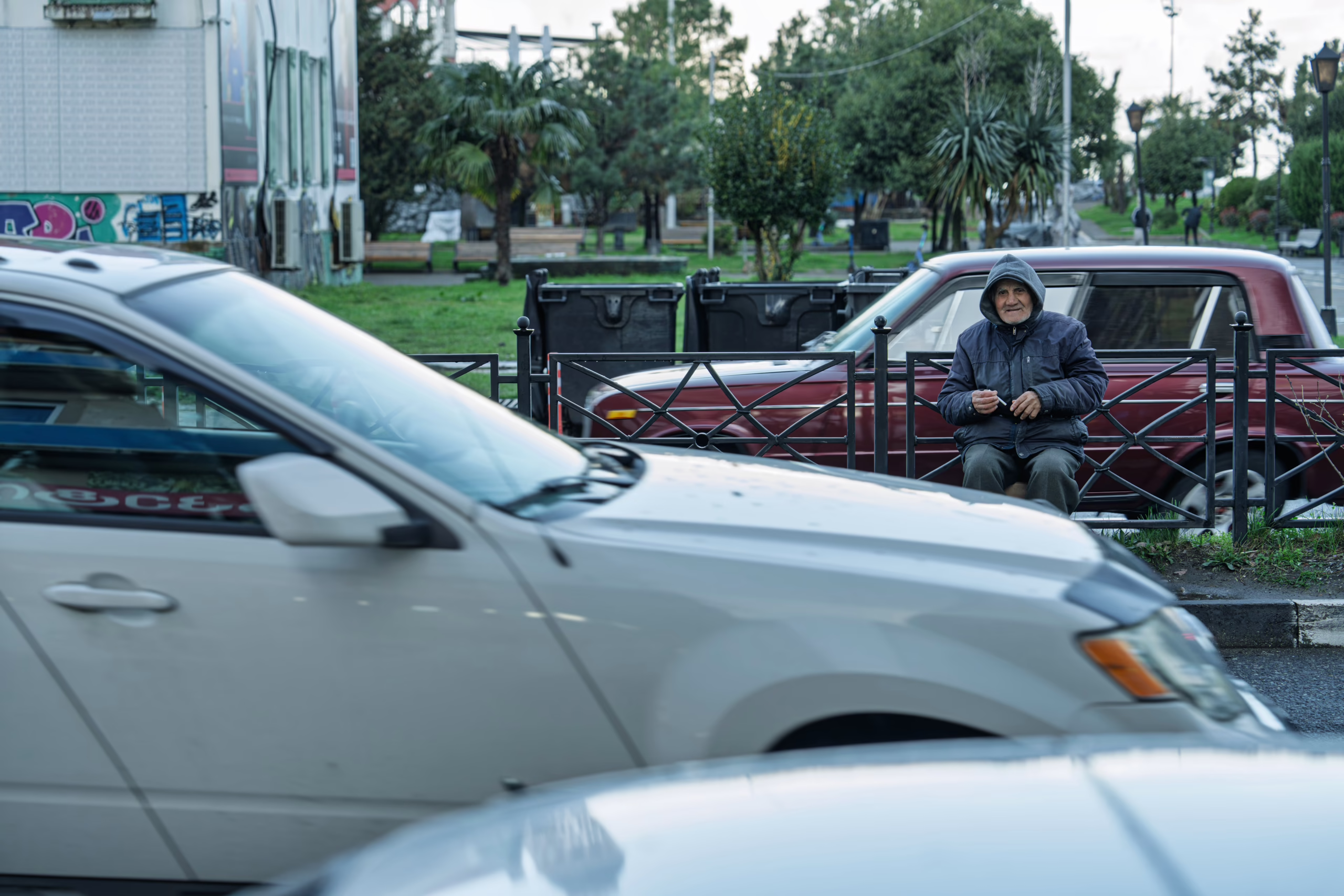
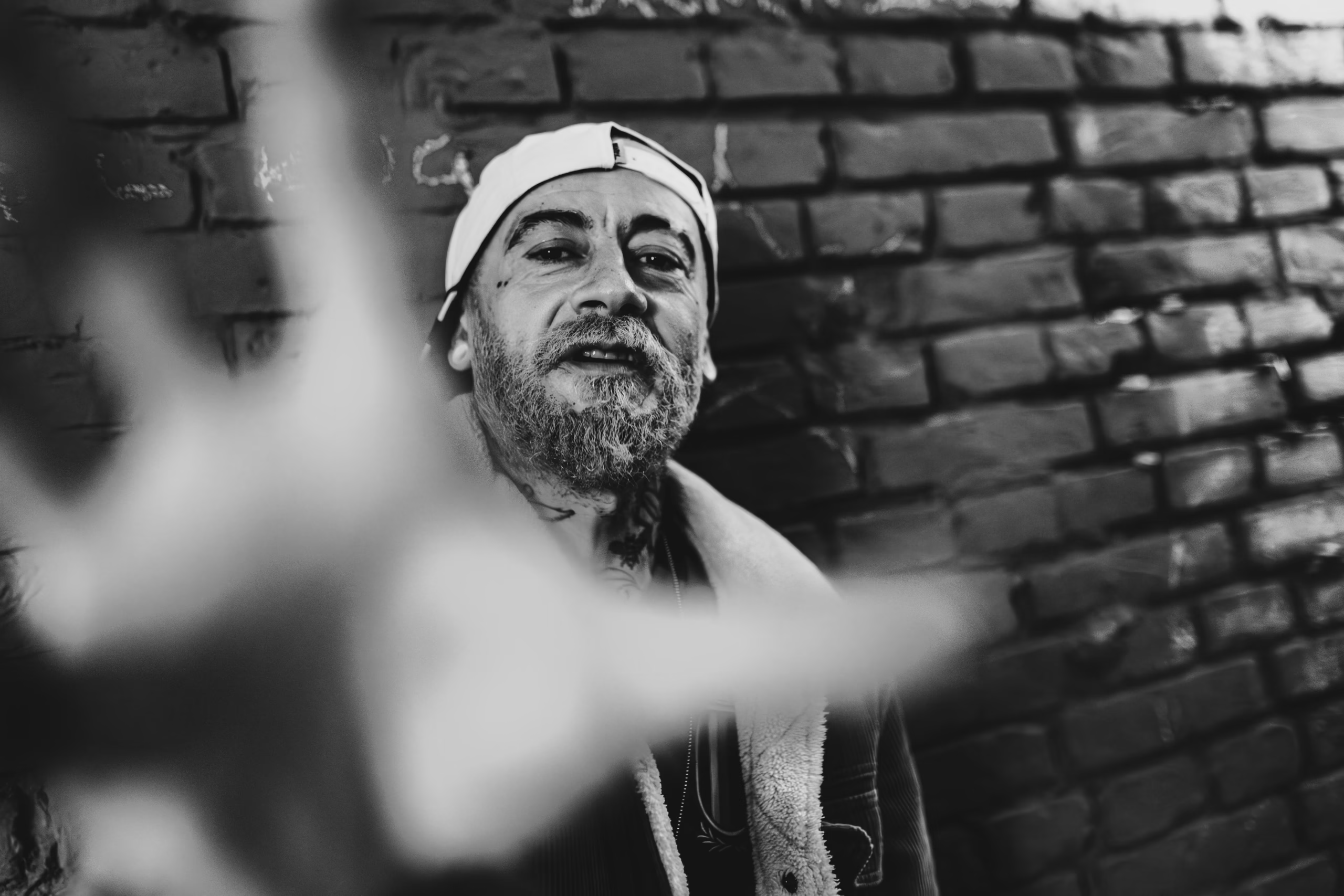
The beggar can be proud.
The model can be insecure.
The tattooed man can fear emotional needles.
The smiling woman can be tired.
The old man can still desire.
The worker can secretly be a poet.
The artist can openly be a first-class asshole.
The victim can wound.
The person who saved you once can destroy you the next time.
We desperately want human beings to be consistent, because complexity makes it exhausting to decide quickly whom to love and whom to hate without remorse.
We prefer categories.
Good.
Bad.
Weak.
Strong.
Us.
Them.
It is the moral operating system of a species incapable of tolerating too many windows open at once.
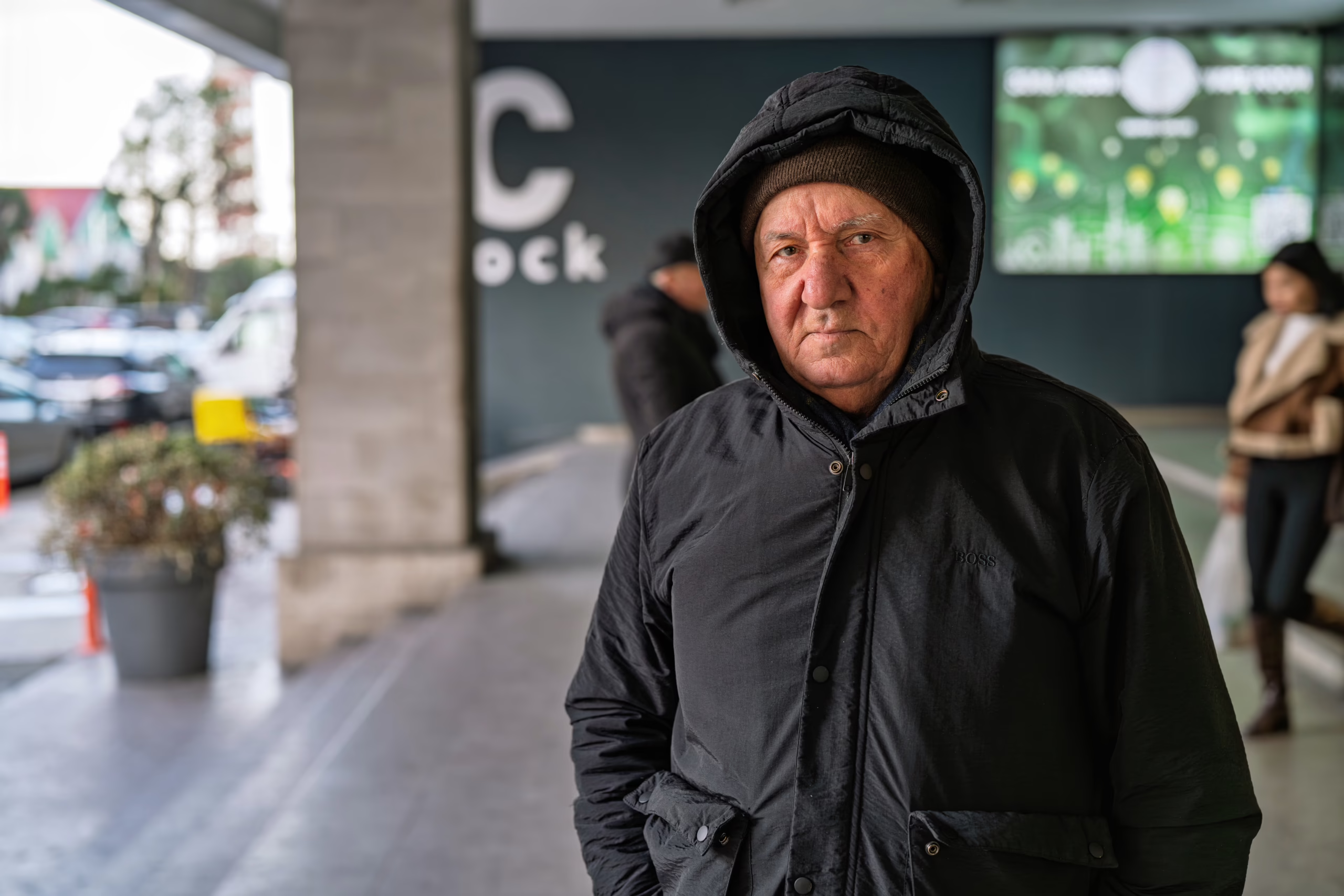
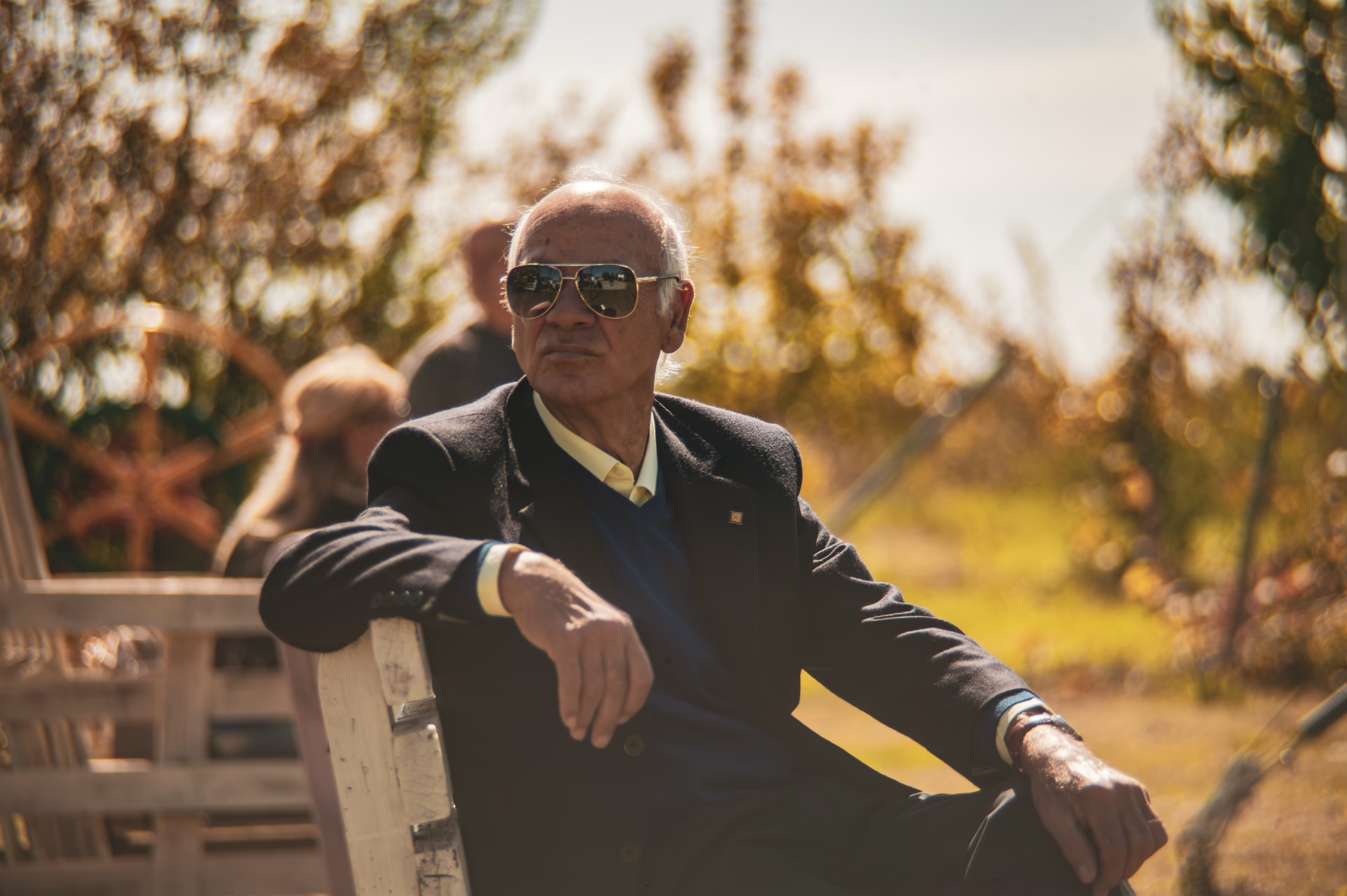
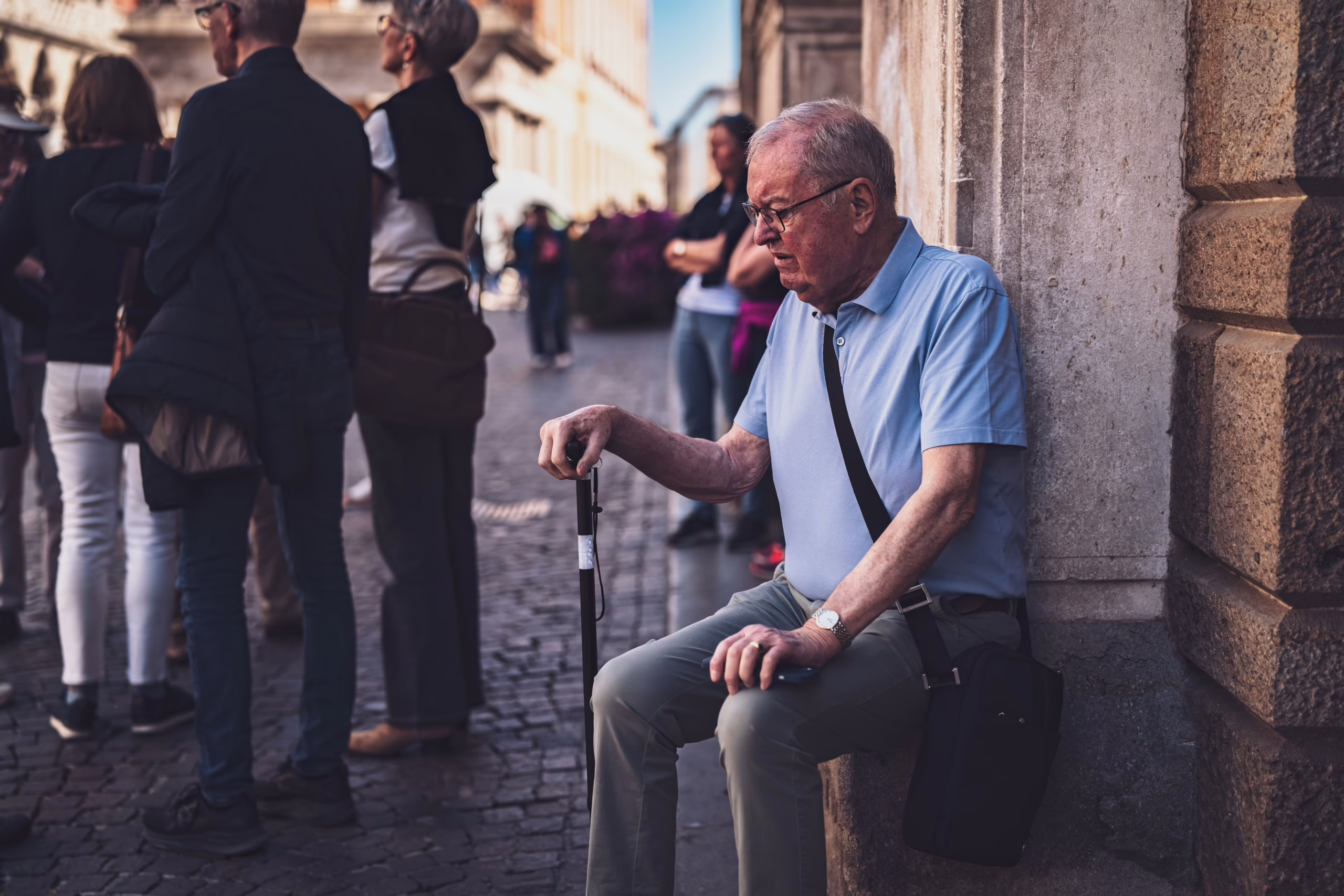
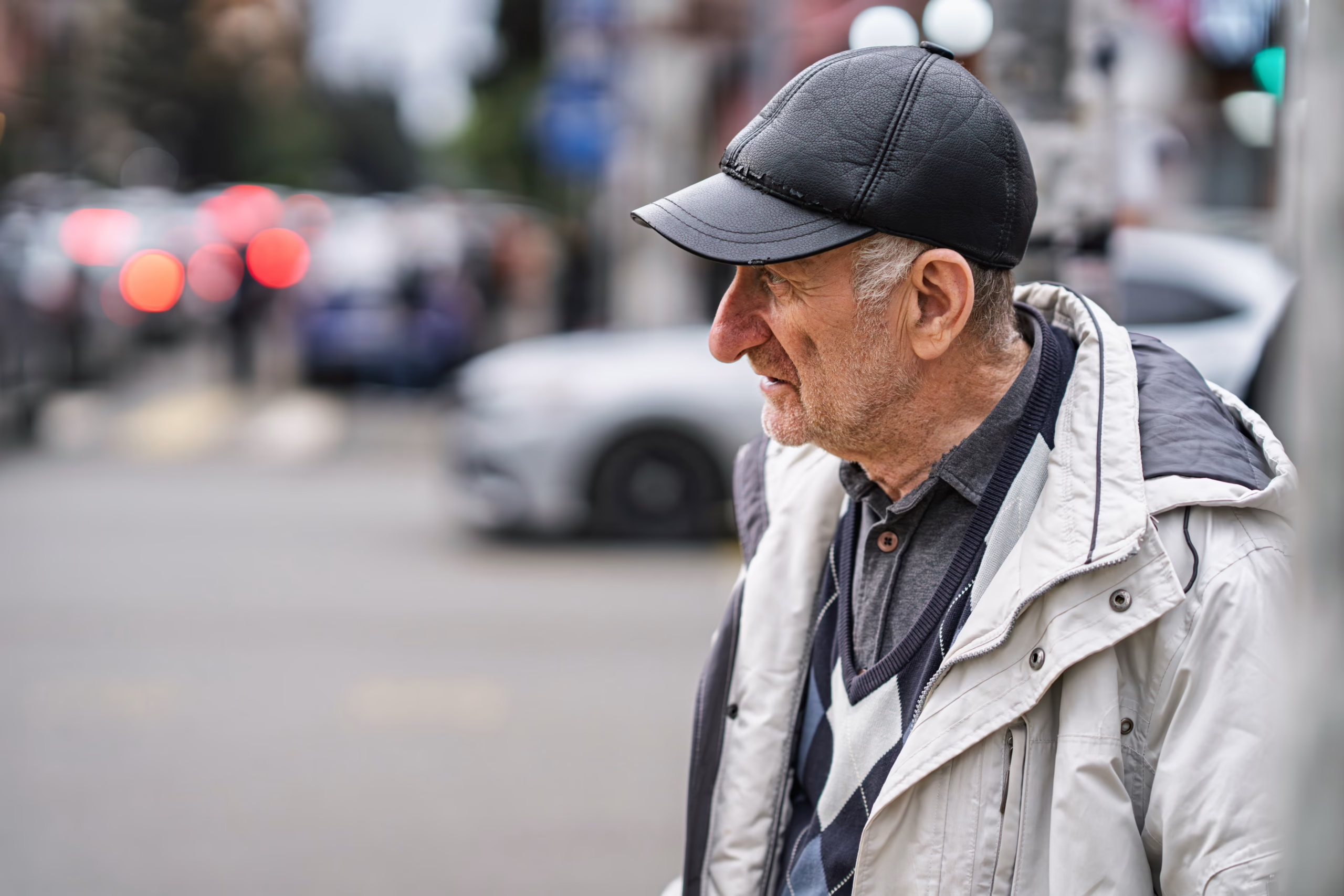
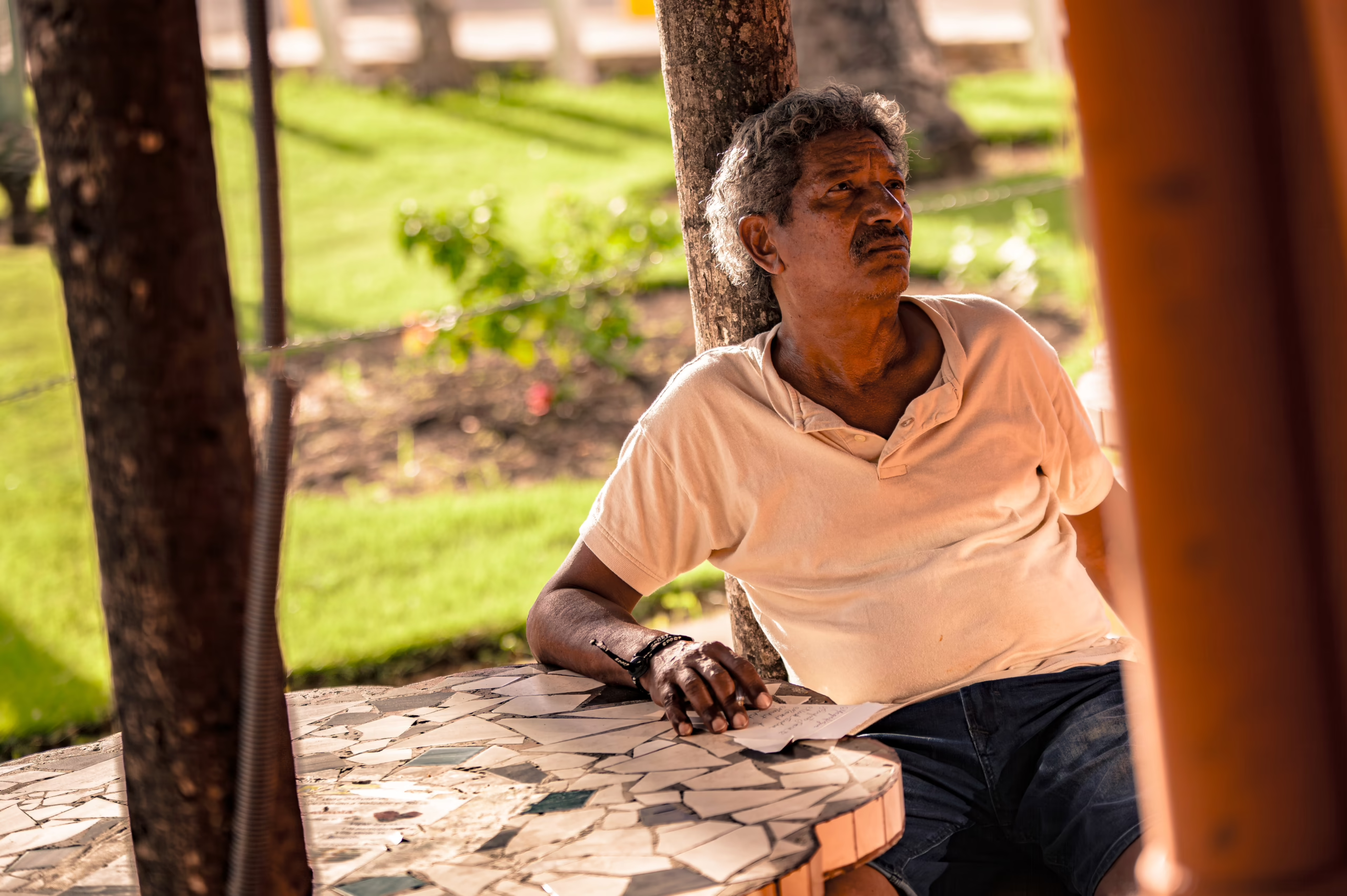
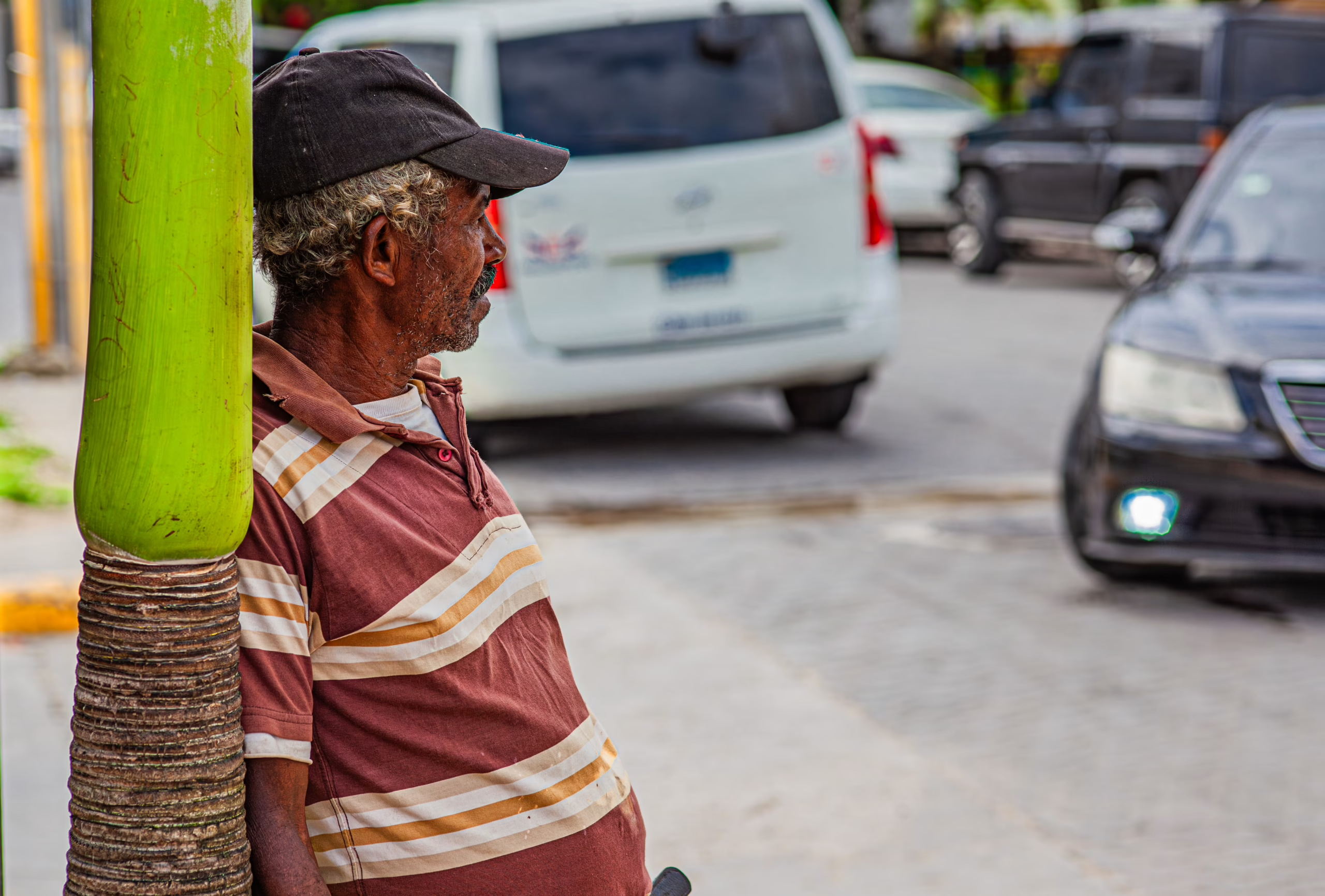
Then came old age.
Slower eyes.
Bodies bent forward like question marks.
Hands that had held, worked, struck, caressed, prayed, sold, built, and let go.
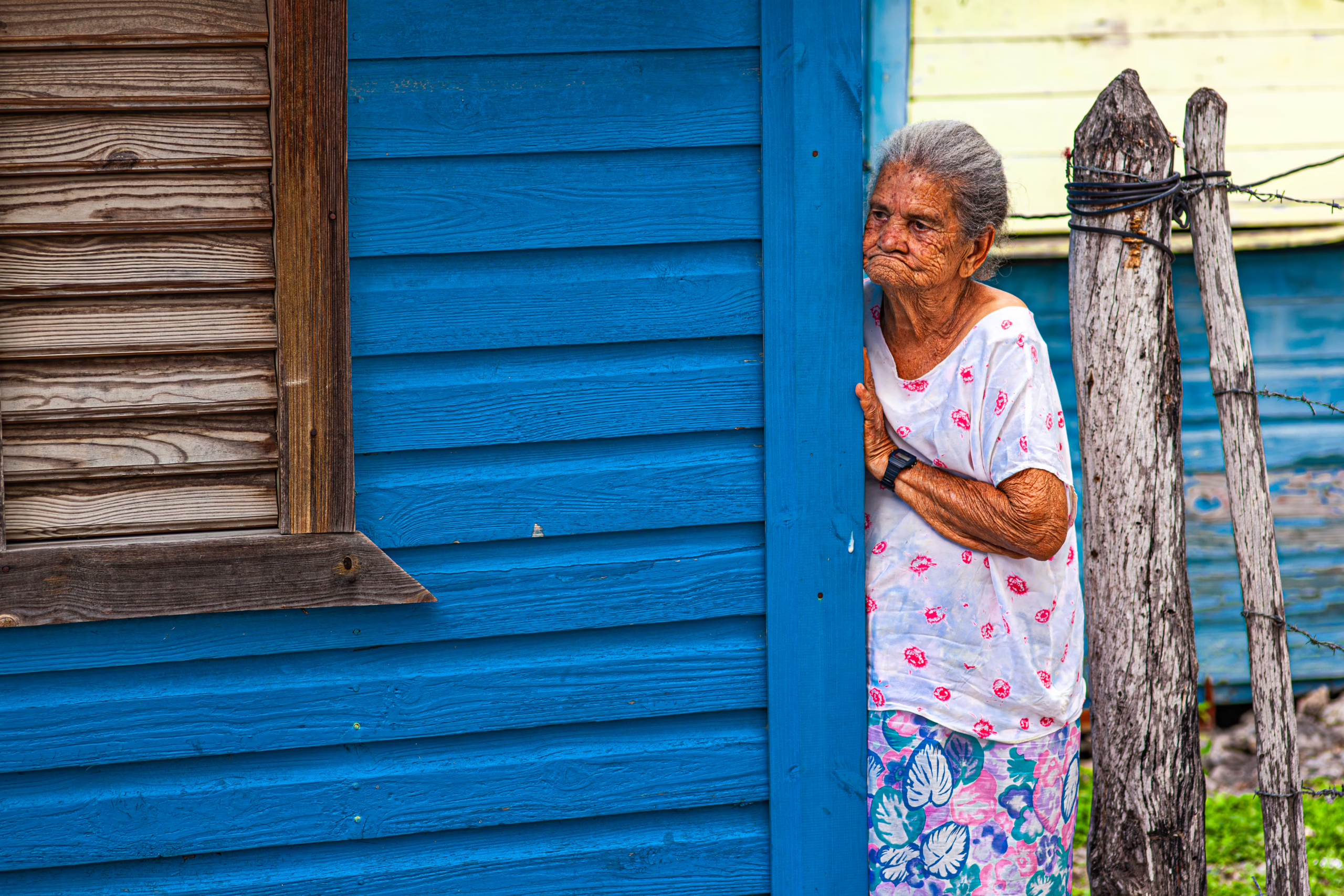
A woman watched from the doorway of a colorful house.
Another sat in the street.
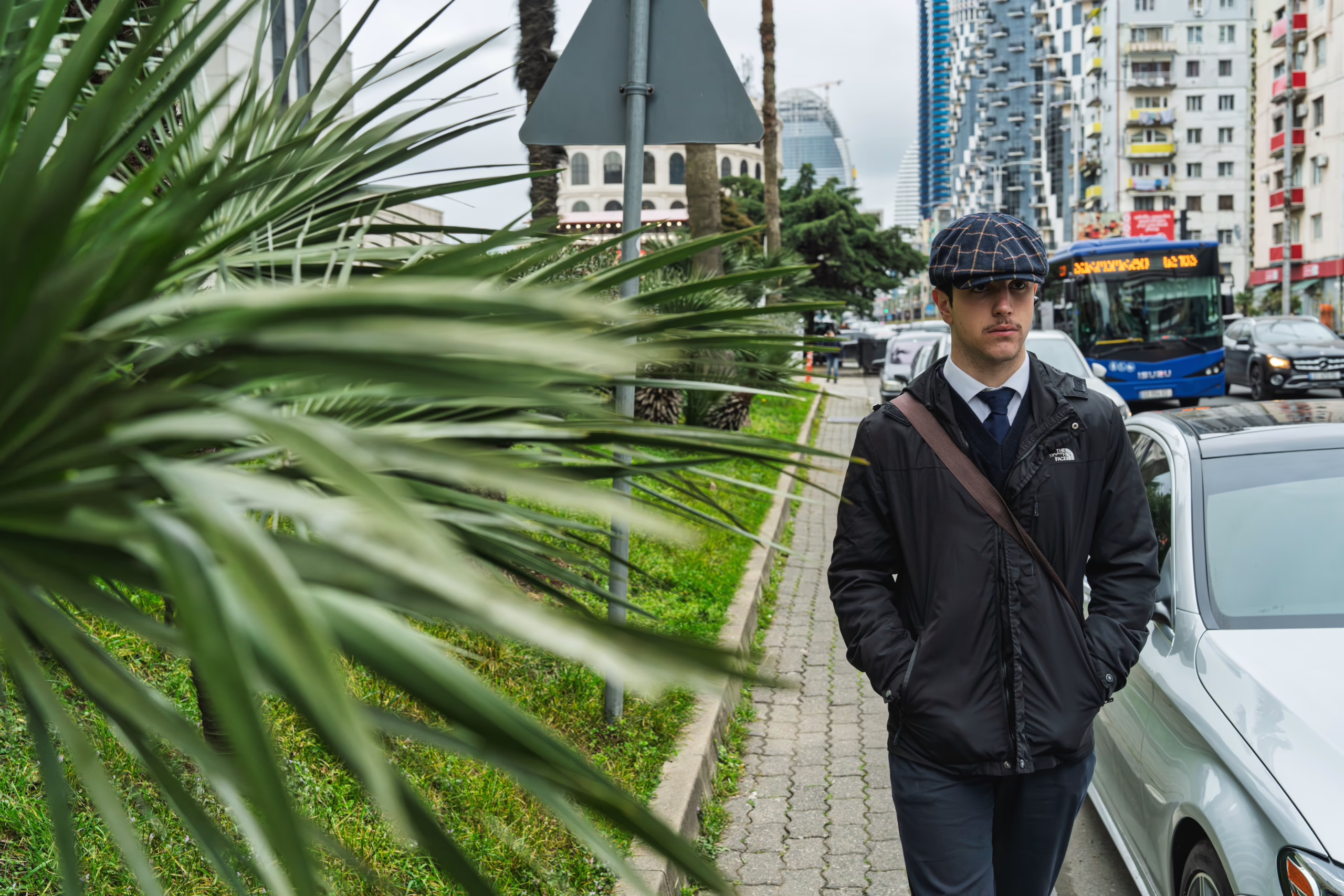
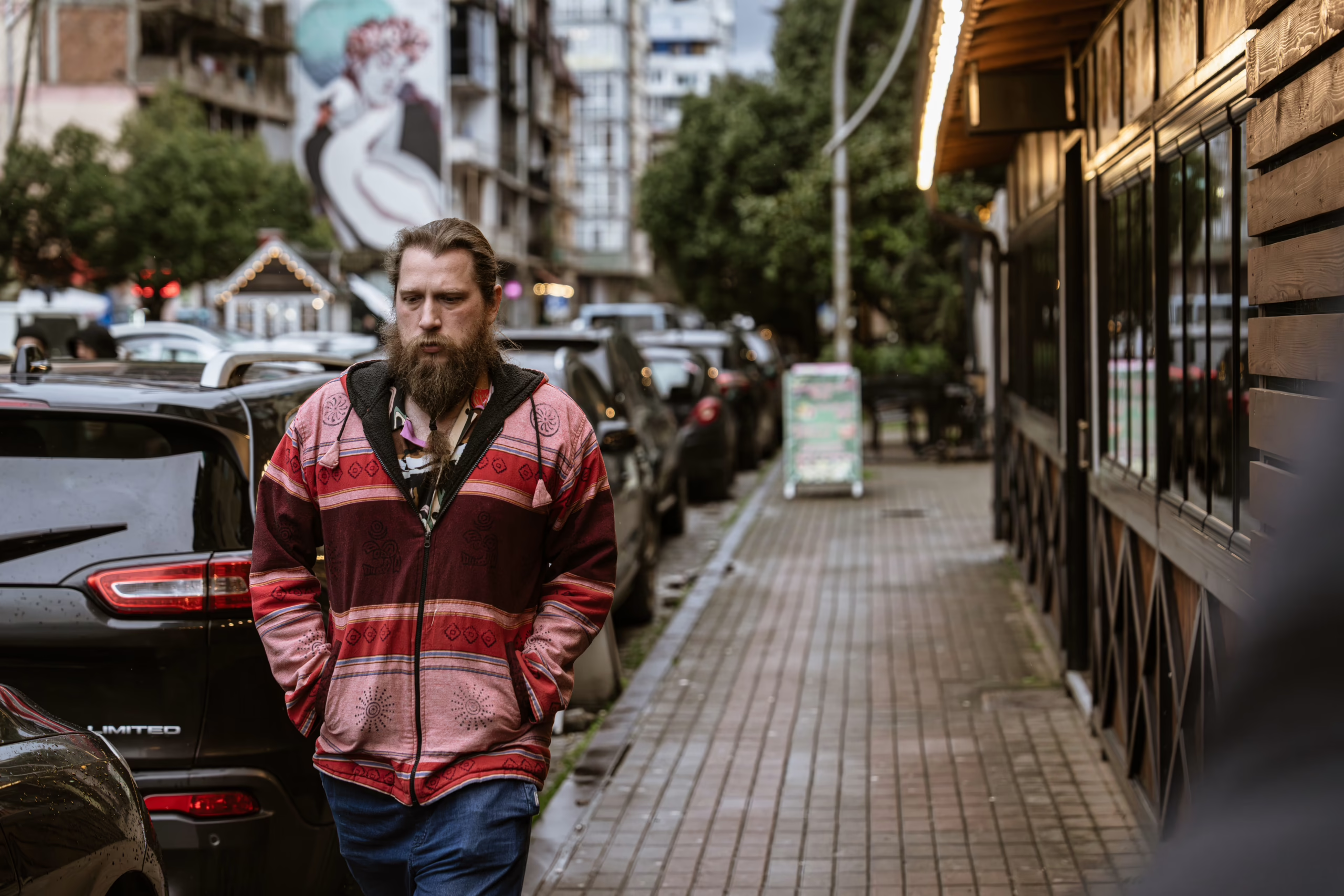
A man walked through the city.
Someone sold small objects.
Someone waited.
I do not know for what.
A child.
A customer.
Evening.
The end of pain.
Old age is what our culture desperately tries to conceal behind reassuring words such as wellness, longevity, and ‘silver economy’—an expression deserving of a public burning.
We do not want to grow old.
We want to remain young for a very long time and then die suddenly, preferably without wrinkles and after finishing every series we started.
We treat the aging body as a maintenance defect.
We sell anti-aging creams, anti-aging diets, anti-aging treatments, and anti-aging lifestyles, as though time were a sexually transmitted disease caught by associating with people born a few decades before us.
And yet growing old means having continued.
Not necessarily well.
Not necessarily with wisdom.
There are old people who are stupid, cruel, and perfectly capable of learning nothing during eighty years of instructional material.
Time does not improve automatically.
It preserves.
But every old face carries proof of endurance.
Something tried to erase it.
Illness.
Poverty.
War.
Loss.
Work.
Love.
Disappointment.
Public administrations.
It is still there.
Survival does not always possess a profound meaning fit for framing.
Sometimes it is merely biological stubbornness.
But stubbornness deserves respect too.
I saw people sitting on the ground.
People selling what little they could sell.
Bodies wrapped in worn clothes.
Faces the entire city had methodically learned to step over without lowering its gaze.
Poverty embarrasses us profoundly because it exposes, without mercy, how riddled with holes the entire moral framework is with which we justify our daily comfort.
We need to believe that those with much earned it, and those with little made some mistake.
Otherwise, we would have to admit that luck deals the cards with the sobriety of a drunken croupier.
One person is born with a passport, health, family, money, education, and a safety net ready to catch them when they fall.
Another is born already indebted to the entire world, before drawing a first breath.
Then we place them on the same starting line and call the race meritocracy.
It is one of our finest jokes.
Almost no one laughs, but it produces excellent dividends.
Night arrived as it always does.
Without solving anything.
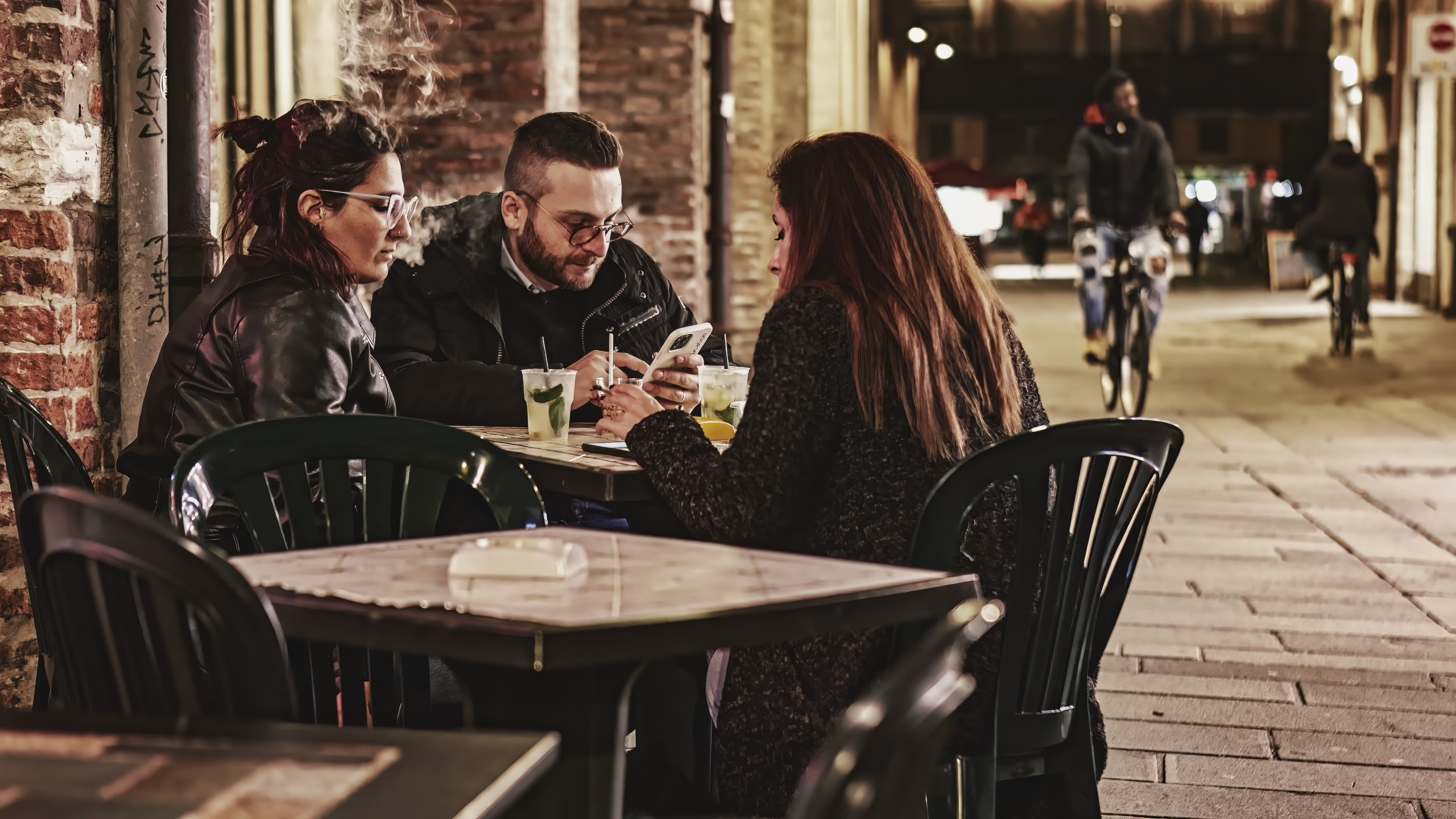
People entered the bars.
They sat beneath red, blue, and violet lights.
Drank.
Smoked.
Flirted.
Laughed.
They drew close enough to hurt one another seriously, and remained far enough apart to pretend the following day that it had not mattered very much.
Every nightclub is an emotional emergency room without doctors.
People enter carrying loneliness, excitement, mortal boredom, desire, restrained anger, the terror of returning to an empty home, and the hope that enough alcohol will make at least one of these things slightly more bearable for a few hours.
Someone seeks sex.
Someone seeks company.
Someone seeks distraction.
Someone seeks the person they were before becoming so tired.
We dress up.
Put on perfume.
Arrange flattering light.
Order drinks.
Say we are there to have fun.
We almost never specify from what.
Night allows us to become temporary versions of ourselves.
Braver.
More desirable.
More stupid.
One woman smoked.
Another laughed with her mouth wide open.
A man drank alone at the bar.
Two people spoke too closely to be entirely uninterested, and too far apart to have decided anything final.
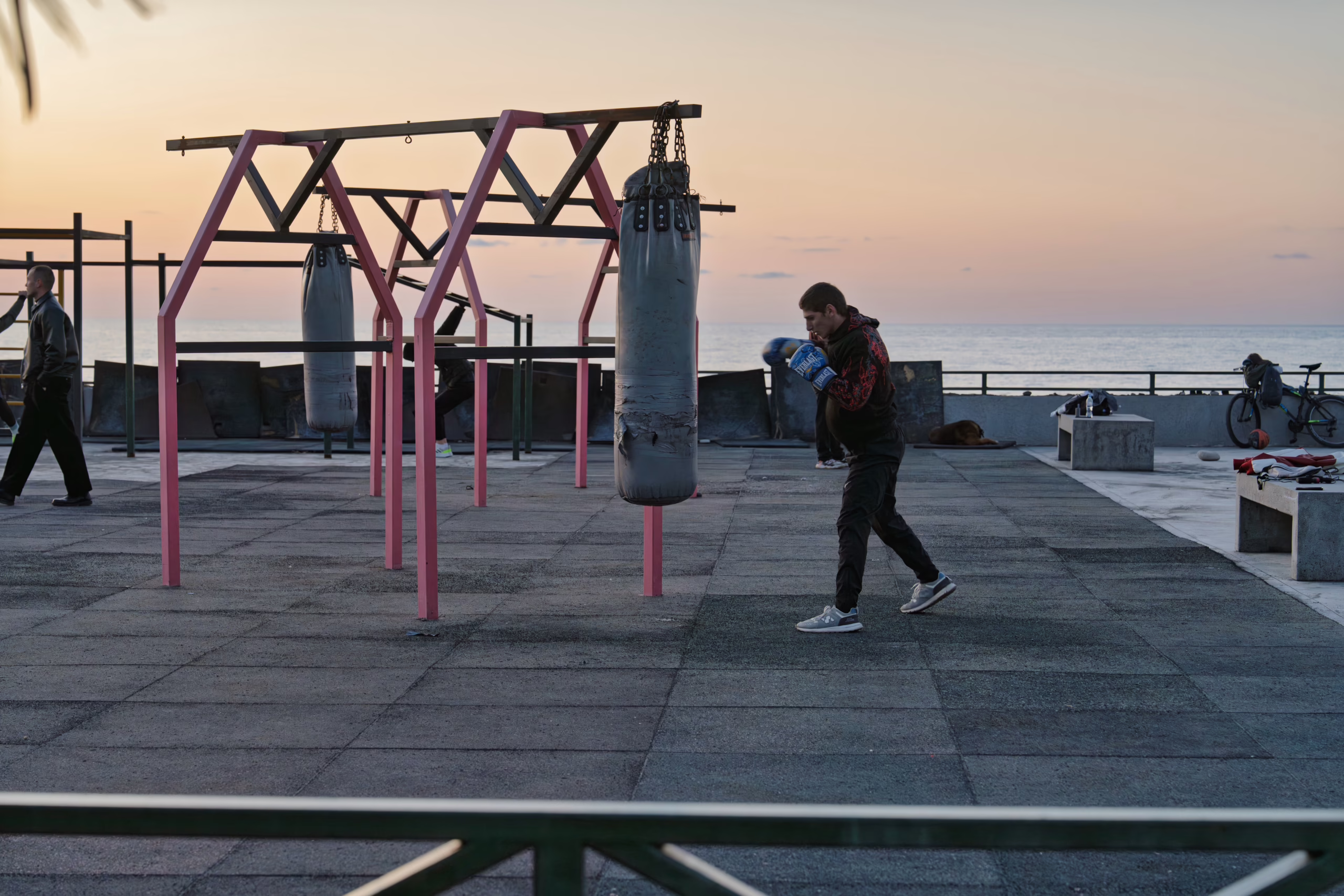
The species continued its ritual.
Approach.
Reveal.
Conceal.
Try.
Fail.
Begin again.
Let the metaphorical cock slip out at precisely the least opportune moment, then behave as though it had always been part of the choreography.
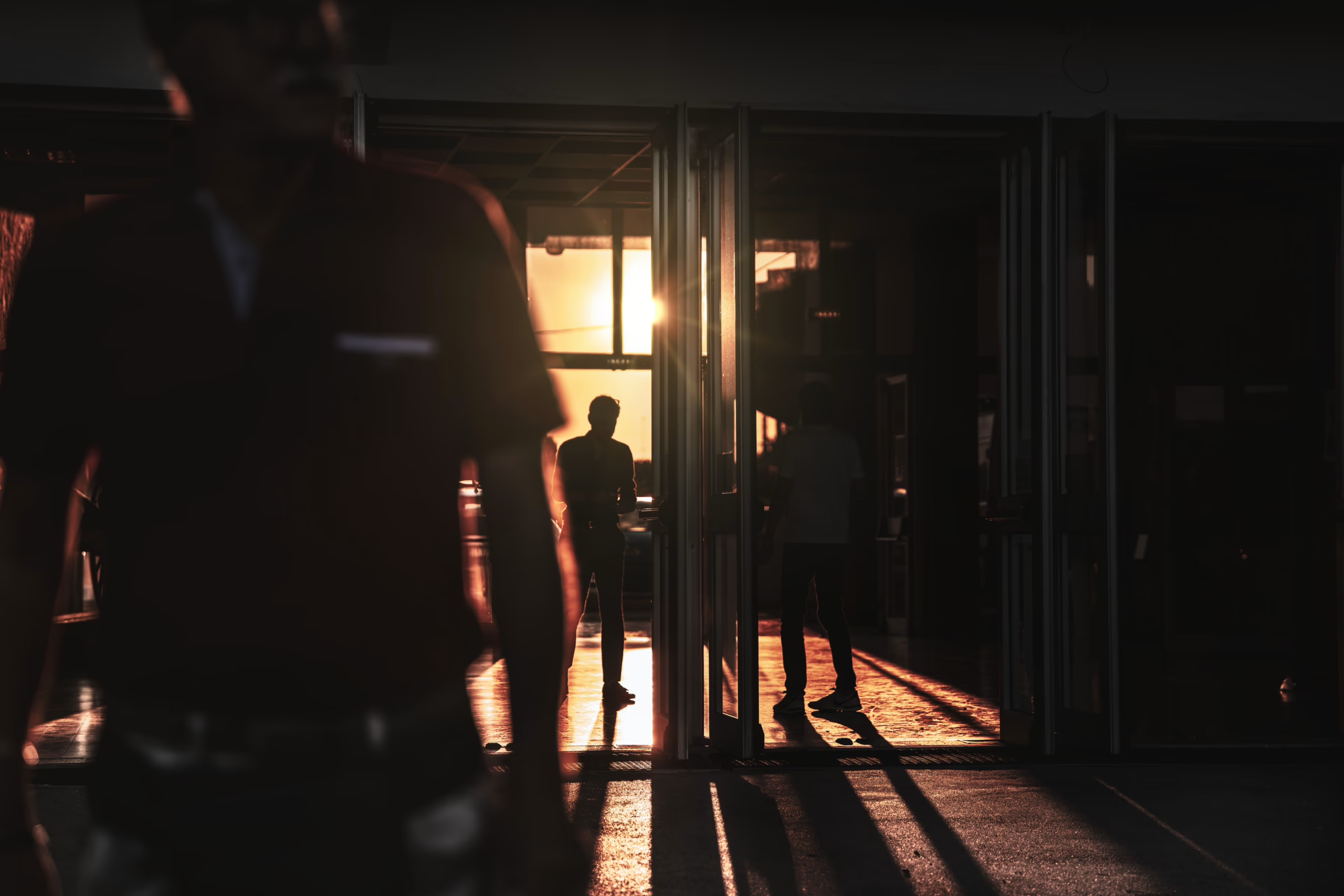
Then the cities went dark.
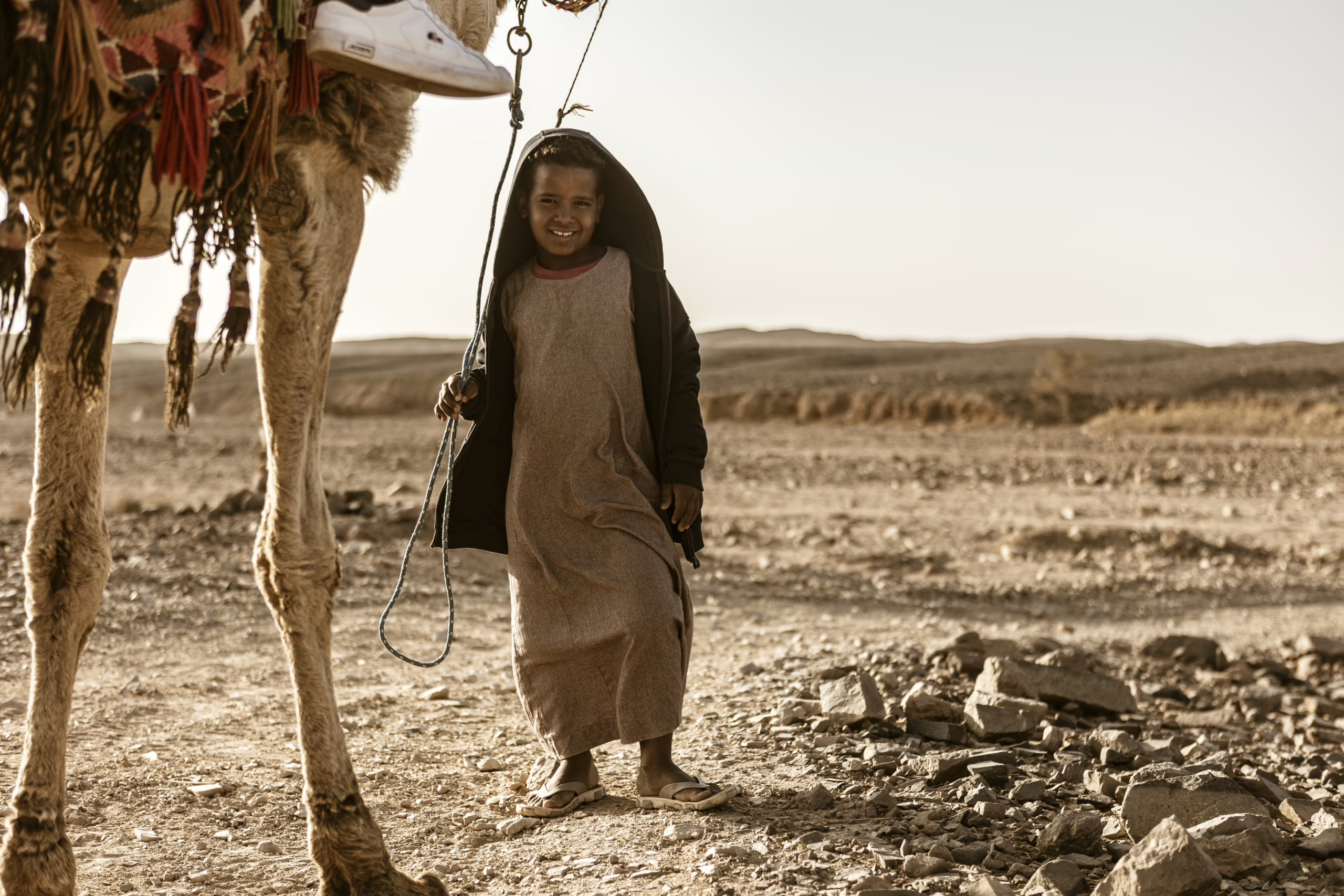
The desert, the figures, and the fire remained.
The final part of the series went backward.
Before the markets.
Before the buses.
Before the skyscrapers.
Before apps, résumés, professional identities, and online courses taught by men who use the word ‘mindset’ because ‘timeshare-salesman personality’ would take up too much room in the bio.
Men.
Animals.
Earth.
Light.
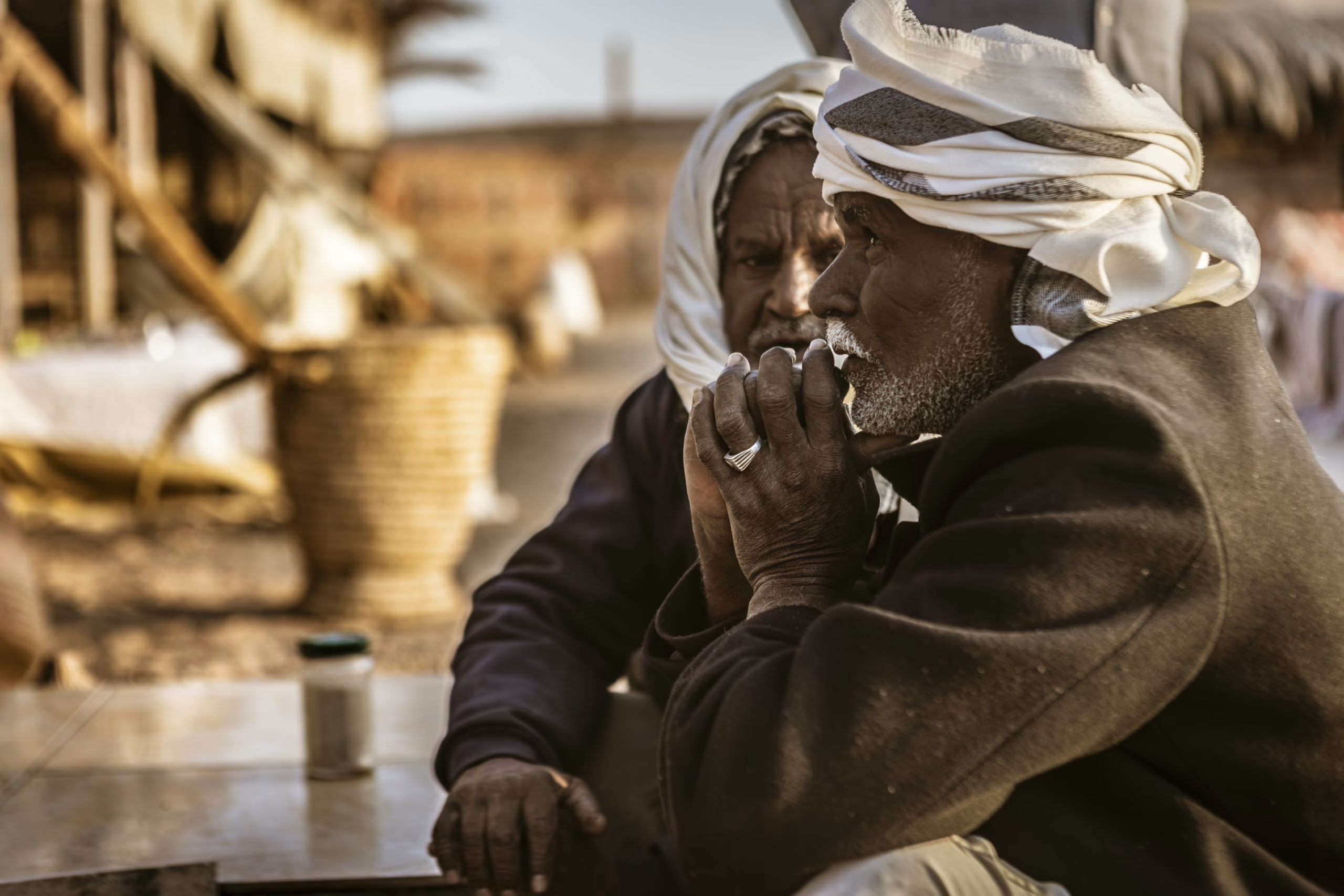
Someone prepared a drink.
Someone sat beside a fire.
Someone mounted an animal and crossed the landscape.
Someone else huddled around a small source of warmth.
We had returned to the original configuration.
Before becoming citizens, taxpayers, consumers, registered users, voters, followers, and mere demographic profiles to monetize, we were vulnerable bodies gathered around a fire, and nothing more.
We were afraid of the dark.
We were hungry.
Something could kill us.
Someone told a story to keep the silence from growing too vast.
Perhaps we have not changed that much.
We replaced the fire with screens.
Stories with content.
The village with an audience.
The predator hidden in the night with the mortgage payment, the cancer diagnosed too late, the sudden abandonment, and the cold knowledge that one day no one will remember even the passwords to our social-media accounts.
We still gather around something that produces light.
We still tell stories.
We still hope someone will remain awake with us.
I looked at the final images.
Faces lit from below.
Hands.
Steaming tea.
Embers slowly consuming themselves.
The darkness all around, patient.
And I could not deliver a final verdict.
I had begun this work convinced that the human being was, quite simply, a manufacturing defect.
I still had considerable evidence in support.
We are territorial, vain, manipulable, violent, sexually confused, and intelligent enough to split the atom, but not always a dinner bill fairly.
We turned the Earth into a mine, animals into products, people into resources, and attention into a commodity.
We possess weapons capable of rendering the entire planet uninhabitable, and leaders who sometimes seem to regard that as little more than one negotiating detail among many.
Perhaps an alien civilization truly is watching us.
Perhaps it keeps its distance for the same reason we avoid a drunken man waving a knife in a parking lot:
it does not matter how friendly he claims to be.
You wait for him to fall.
From a galactic perspective, we may be a contamination to contain.
An invasive species with surprisingly good poetry.
Do we deserve extinction?
On certain days, I would say yes without the slightest hesitation.
You need only read the news and look clearly at what we are capable of inflicting upon children, animals, the defenseless, lovers, strangers, and even those we solemnly swear to love more than anything else in the world.
Hobbes wrote that man is a wolf to man.
A statement profoundly unfair to wolves.
Wolves kill from hunger, for territory, in defense.
We can destroy an entire life because someone failed to answer a message in the tone we had arbitrarily deemed appropriate.
We are simply more creative in our cruelty. That is all.
But then a father lifts a little girl into his arms.
A woman offers food.
A man prepares tea for someone who does not speak his language.
A friend remains when disappearing would have been far more convenient.
A musician plays before distracted people and continues anyway.
Someone collects the garbage before the city wakes.
One person sits beside another without trying to fix them.
A dog waits.
A hand supports a body that might fall.
And the sentence must inevitably be postponed.
Not overturned.
Postponed.
I do not believe goodness erases evil.
That is childish accounting.
A kind gesture does not bring a dead person back.
A song does not defuse a bomb.
An embrace does not absolve a species.
But it proves that the verdict is not yet complete.
Something terribly lovable exists within us.
A minute deviation from selfishness.
The capacity to recognize another’s pain and, sometimes, consider it important enough to interrupt our schedule.
It does not always happen.
It does not happen in everyone.
It does not happen enough.
But it happens.
Perhaps humanity is not good.
Perhaps it is not evil.
Perhaps it is a frightened animal handed too much power before it learned how to manage its own childhood.
A nuclear-armed cosmic teenager.
It wants to be loved.
It wants to be right.
It wants to command.
It wants to be free.
It wants someone to say it is special.
And when it does not receive enough attention, it threatens to destroy the house.
I remain there in the middle.
Not optimistic enough to acquit us.
Not pure enough to condemn us.
Not intelligent enough to explain why we exist.
I observe.
Children.
Lovers.
Workers.
Vendors.
Artists.
Commuters with lifeless eyes.
Solitary people, by choice or sentence.
Happy drunks and sad ones.
Old people enduring.
Poor people selling what little remains.
Women.
Men.
People laughing, waiting, desiring, working, smoking, falling, climbing, getting lost, searching desperately for one another, and sometimes, by pure chance, truly finding each other—just as they were doing everything in their power to pretend they needed no one in the world.
I press the shutter.
I preserve the evidence for the prosecution and the defense.
Perhaps that is what these photographs mean.
Not to prove that humanity deserves to be saved.
That would be too convenient a conclusion.
To show why, despite everything, I have not yet managed to wish for its complete end.
Does God hate us all?
Possibly, and with good arguments on His side.
Judging by the evidence available to Him, He would have solid grounds, and even a halfway competent attorney could still secure some general mitigating circumstances.
Perhaps He loves us anyway, despite it all.
In that case, He has questionable taste, superhuman tolerance, and the same weakness as parents who watch their child destroy the living room and continue to glimpse, beneath the shit, the creature they once held in their arms.
Or perhaps God is not looking.
Perhaps we are alone.
No creator.
No experiment.
No ancient civilization preparing to return.
No cosmic tribunal.
Only us, on a small rock moving through the dark, charged with deciding what to do with one another before time resolves the matter anyway.
That would be the most frightening possibility of all.
Also the one that gives us the fewest alibis.
If no one is coming to save us, then every single gesture truly matters, all the way through.
Not because the universe records it.
Because someone, regardless, receives it upon their skin.
A glass of water.
A seat left open.
A hand.
A photograph.
A story.
A presence that remains a few minutes longer.
They will not save the species, let us be clear.
But they might save a day.
Sometimes that is all we have.
The final embers sank lower.
The men remained seated.
The world beyond the fire stayed dark.
They were not saints.
They were not symbols.
They did not represent the essential goodness of humanity, or any other comforting New Age bullshit.
They were people.
Contradictory to the marrow.
Incomplete.
Capable of offering tea and perhaps behaving like bastards the following morning.
Exactly like all of us.
The light did not purify them.
It made them visible.
Perhaps that is what I am trying to do as well.
Not save.
Not absolve.
Not explain.
Make visible.
Thinking back, perhaps it was no accident that my gaze settled on precisely those people.
A camera is not neutral.
Before you press the shutter, you choose.
You choose where to look, which face to rescue from the crowd for an instant, and which to let disappear.
I had chosen them.
Or perhaps they had drawn me.
I cannot know whether they were truly good people.
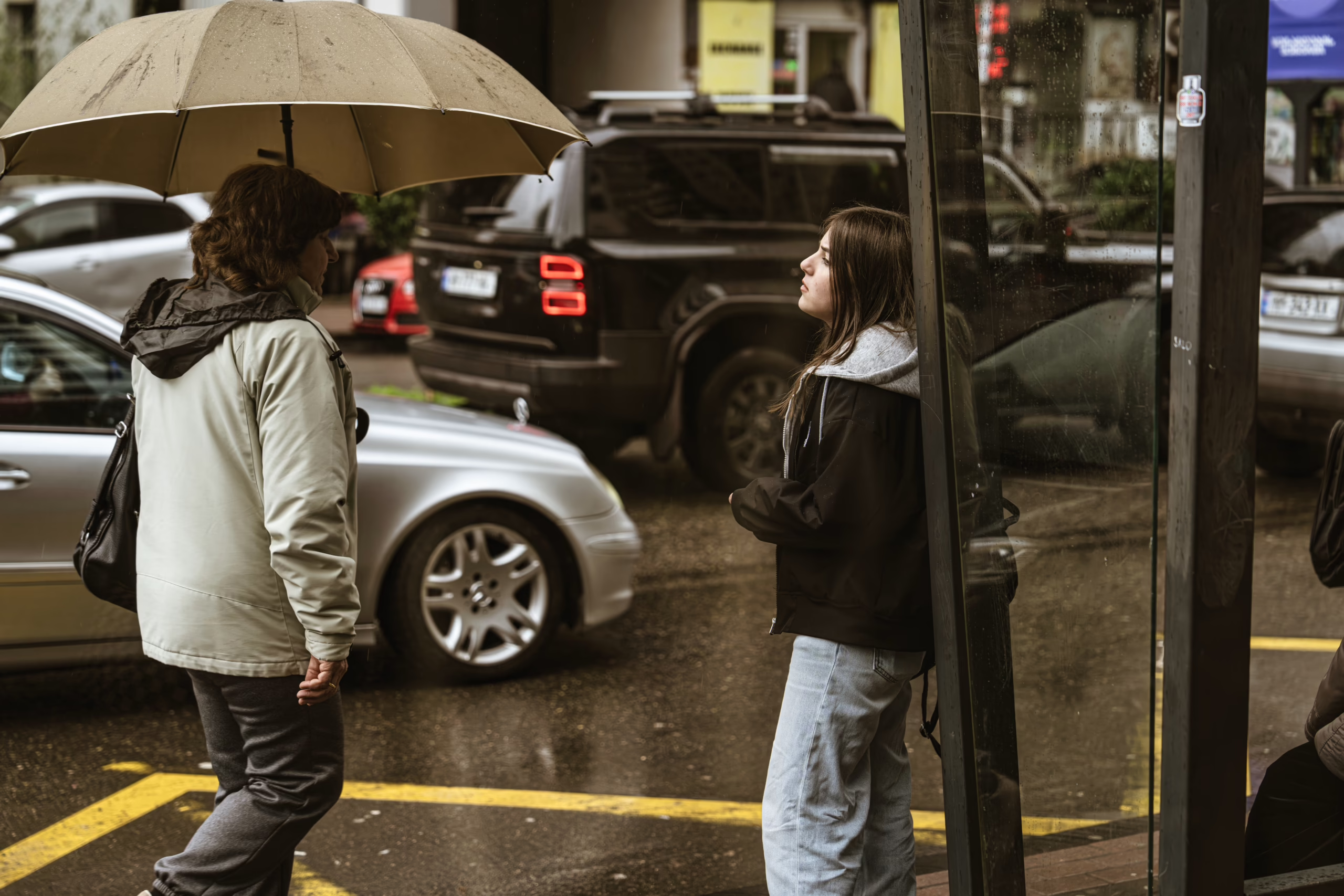
I know almost none of them. Many were encounters lasting only a few seconds, lives crossed on a sidewalk, inside a market, at a bus stop, or before the sea.
A photograph is not a moral certificate.
A smile may belong to a bastard.
A sad face does not guarantee depth.
The right light does not make a person good.
It merely makes them more photogenic.
But in that instant, I had seen something.
A sadness.
A smile.
The concentration of work.
A modest joy.
The daily tribute paid to existence in exchange for another twenty-four hours.
I had seen goodness.
Not enough to acquit humanity.
Enough to postpone the sentence once more.
Perhaps these were precisely the people I would save.
Not because they were innocent.
Because, through their ordinary lives, they had reminded me that something in this species still deserves a place in the world.
I have no faith in humanity.
That would require a form of optimism incompatible with even the most cursory reading of History.
I have faith in certain human beings.
That is different.
Those who work.
Who support.
Who wait.
Who laugh while everything continues going reasonably to shit.
Those who will not save the world, but at least manage not to make it worse with every move.
Against every reasonable forecast, they are the ones who keep pushing me forward.
The truly evil people, by contrast—those who govern the world as though it were property inherited from an even greater asshole of a father—have never made me want to raise my camera.
Not because power is not photogenic.
It is terribly so.
It has tailored suits, flags, black cars, podiums, trained smiles, and press offices capable of transforming sociopathy into institutional authority.
But it already has enough images.
I have no desire to grant it more eternity.
If God loves us, He continues to have questionable taste.
If He hates us, frankly, I understand.
But if one day He asked me for a reason not to turn everything off, I would not show Him rulers, generals, or saints with an especially efficient marketing department.
I would show Him these people.
Those who do not rule the world.
Those who, without knowing it, stubbornly continue to hold it up.
Those who govern already have enough photographers.
I will keep photographing the mitigating circumstances.