How many times have you left without truly knowing where you were going? And how many times has an ordinary day, born almost by accident, left something on you that you understood only years later? This is the story of a journey that lasted a few hours, a camera I still had to learn, and a world that suddenly seemed much larger.
The journey did not begin with a map. It began with a late invitation and my yes, fired off before common sense could pull on its pants.
Nice. One day. No plan, no list of places to see, none of those schedules for psychopaths where even wonder must arrive punctually at three thirty. I was little more than a kid, had only recently begun taking photographs, and held my camera like a key found in the street: unsure which door it might open, but feeling it would be a shame to leave it there.
These photographs do not tell the whole story of Nice. That would be a ridiculous claim. They tell what my eyes could see back then: a musician seated on the sidewalk, a few street performers, people before the sea, a sail, foam between the stones, a Roma woman crossed by light, and finally the city illuminated at night.
A few images, sporadic, perhaps immature. But they are the fingerprints left on the first door travel opened before me.
And behind that door, fortunately, was the rest of the world.
I do not remember whose idea it was.
I remember only that at some point someone said Nice and I answered yes with the clarity of a man accepting another drink at four in the morning. No planning, no research, no itinerary. I did not know what there was to see, where we should go, or which mandatory photographs I had to bring home to prove to others I had truly been there.
A respectable degree of tourist incompetence, in other words.
In hindsight, probably the perfect condition.
It was many years ago. I had not been photographing for long and treated the camera as an almost magical object. I did not truly know it. I studied it, tested it, argued with it. Sometimes it did what I wanted; more often it did whatever the fuck it pleased, and unable to tell the difference, I took the credit anyway.
I was little more than a kid. I had not yet developed that professional disease that makes photographers check the position of the sun, the weather, lenses, batteries, maps, schedules, and probably even the tilt of the Earth’s axis before leaving the room.
I had a camera.
I had one day.
Before me was a city I did not know.
It was enough.
Nice presented herself without the slightest modesty. Pale façades, palm trees, blue sky, and that light of the French Riviera that seems to have been hired by an advertising agency to make everyone feel slightly poorer, paler, and less interesting.
Some cities must win you over slowly. First they show you their flaws, make you walk, wait, sweat. Not Nice. Nice enters the room perfectly aware of her beauty. She does not need to mention it. She simply turns in profile and leaves you to look like the open-mouthed idiot.
Naturally, I cooperated.
The first photograph has the flavor of that introduction: the elegant building rising behind the palms, the clear sky, the Mediterranean still outside the frame but already present in the air. It is a simple photograph. Perhaps even naive.
But innocence, before it becomes stupidity, possesses a grace of its own.
Then he appeared.
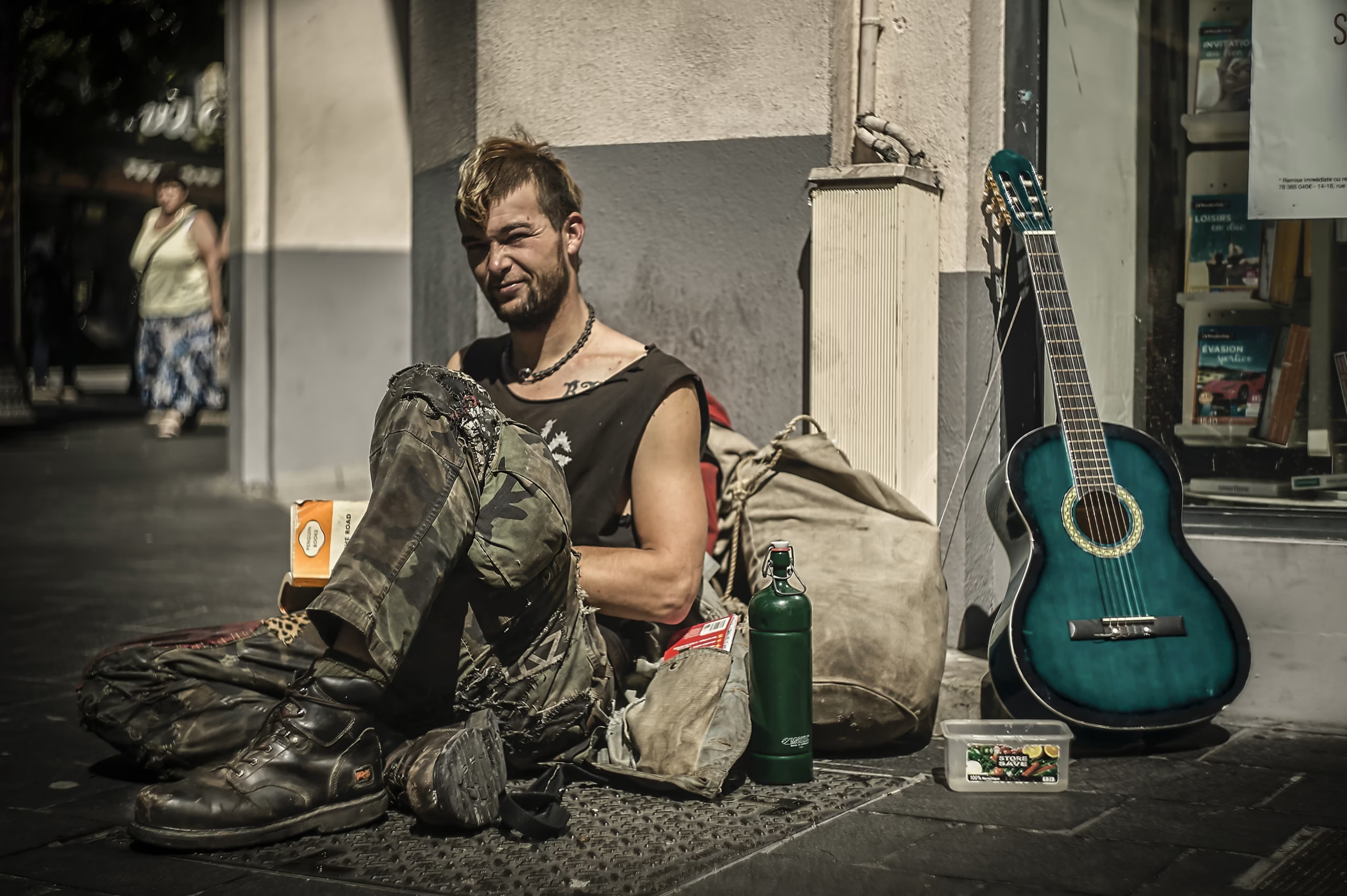
A man seated on the sidewalk, legs drawn up, worn combat boots, clothes stained by the street, and a green guitar leaning against the wall. Beside him, a few belongings. Everything he carried, or at least everything I could see.
I do not know who he was.
I do not know how long he had been there, where he came from, where he slept, or whether that guitar helped him earn something, feel less alone, or simply remember he was still alive.
I do not know, and I will not invent a cheap biography merely to make a photograph seem more profound.
But I know I stopped.
In a city built to seduce the eye with balconies, hotels, and sea, my gaze went searching for a man seated on the ground.
Perhaps that was already the beginning of something.
Perhaps travel photography is born precisely when you stop looking for what a city wants to show you and begin seeing what it has not had time to hide.
He was not an attraction. Not local color. Not a piece of dramatic decoration inserted among bright images to prove I possessed a conscience.
He was a person.
A person and a guitar.
And for some reason, that day they seemed worthier of attention than many buildings I probably should have photographed and cannot even remember.
I kept walking.
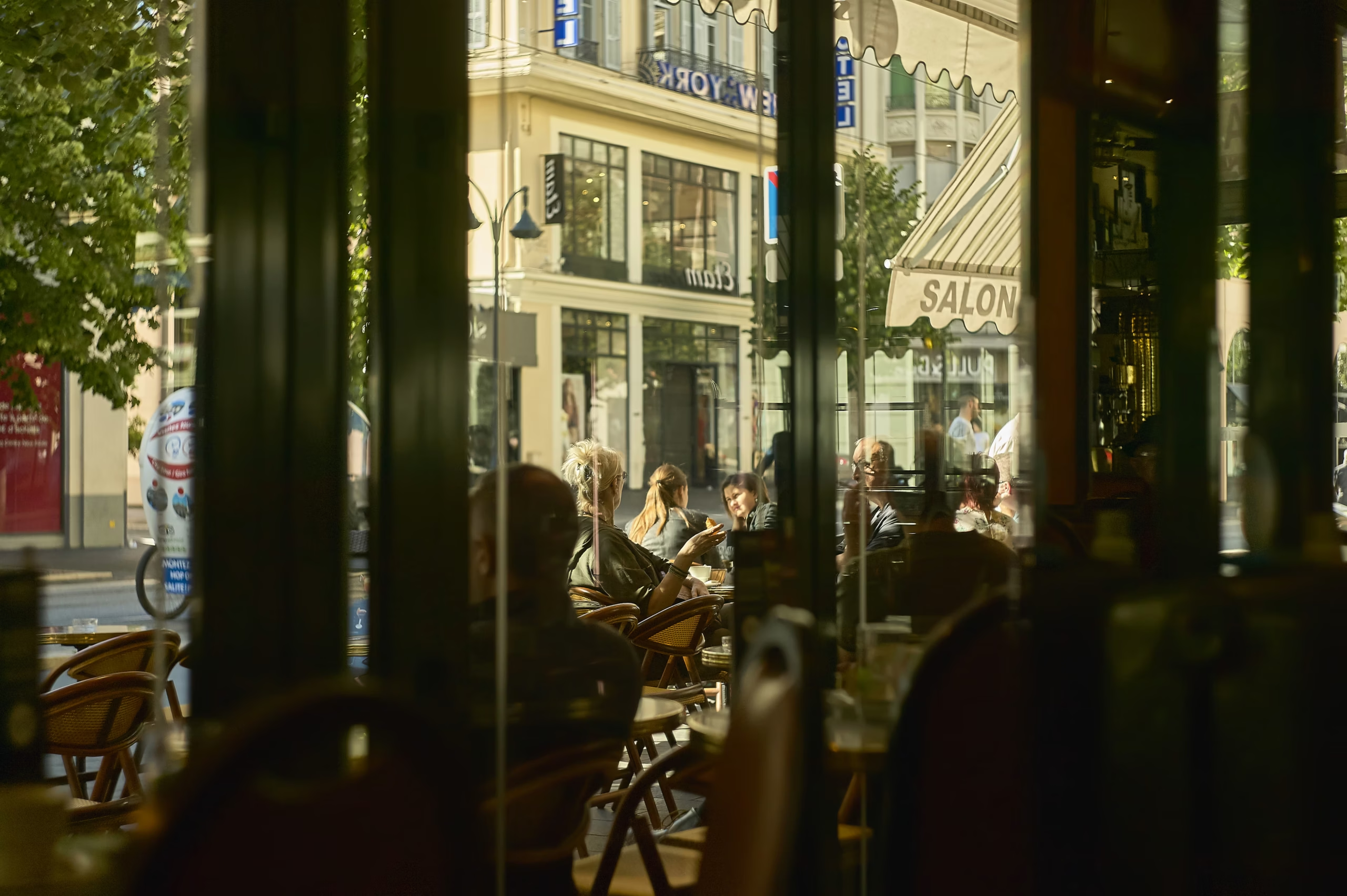
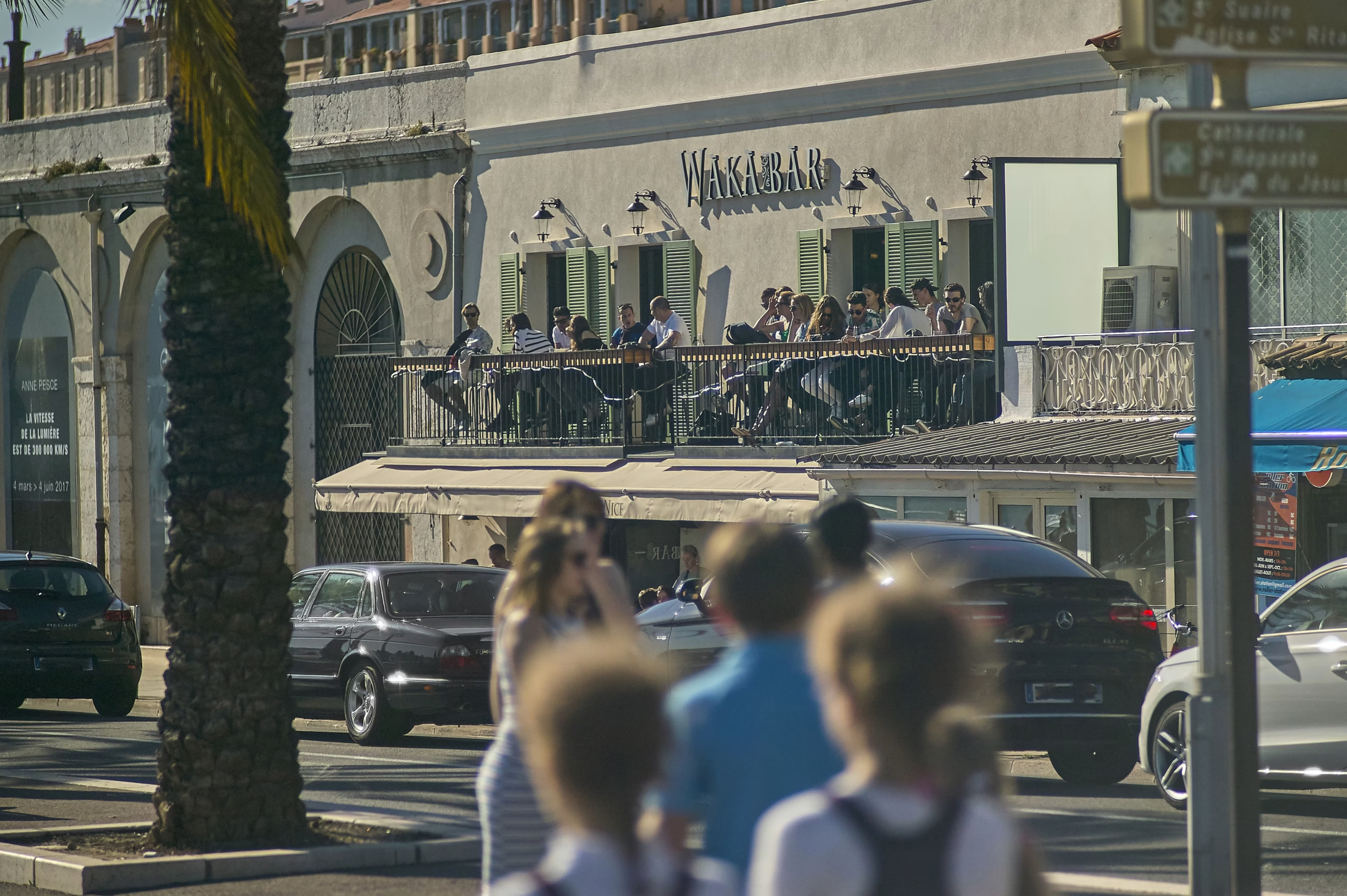
There were bars, tables, windows, and people moving behind reflections and transparencies. The city appeared divided into layers: those inside, those outside, those drinking, those crossing the street, those watching others while pretending not to.
A shop window can turn a café into a human aquarium. People talk, laugh, drink something, fix their hair, and remain entirely unaware that they have become a scene in a stranger’s life.
Cars pass outside.
Inside, someone orders another drink.
In the glass, the two overlap and, for a fraction of a second, the city seems to confess it has more than one life.
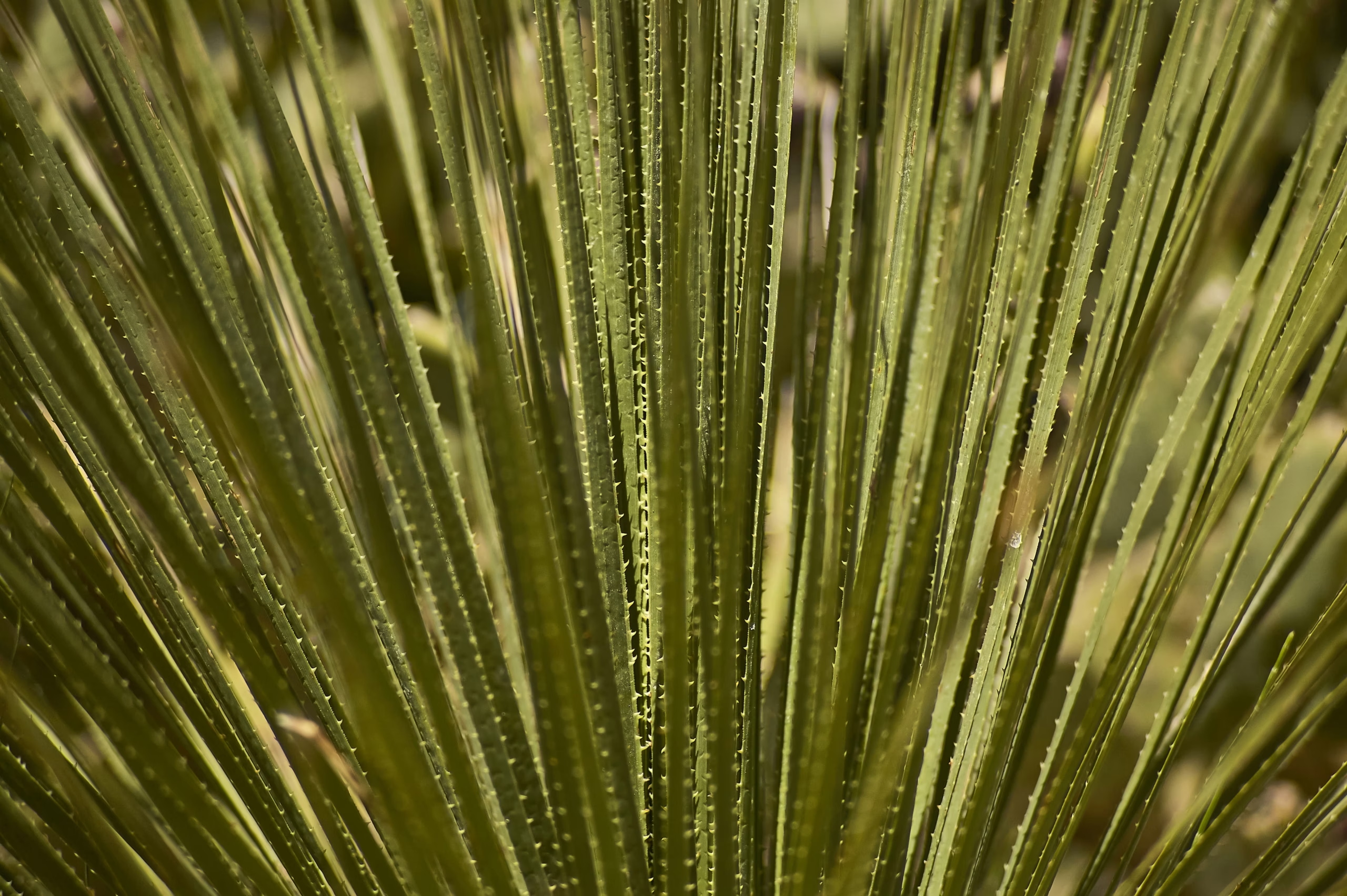
Then I photographed a palm leaf up close.
Why?
Because I was young, had a camera, and the leaves were there. Not everything needs a fucking doctoral thesis.
Yet even that photograph, viewed today, retains something. Curiosity about matter, lines, the way light slips across surfaces. Travel was not only the grand view. It could also be a green texture observed from inches away while everything else continued living outside the frame.
That day was already teaching me that leaving does not necessarily mean going far.
Sometimes it means only getting close enough.
Then the city opened and the sea arrived.
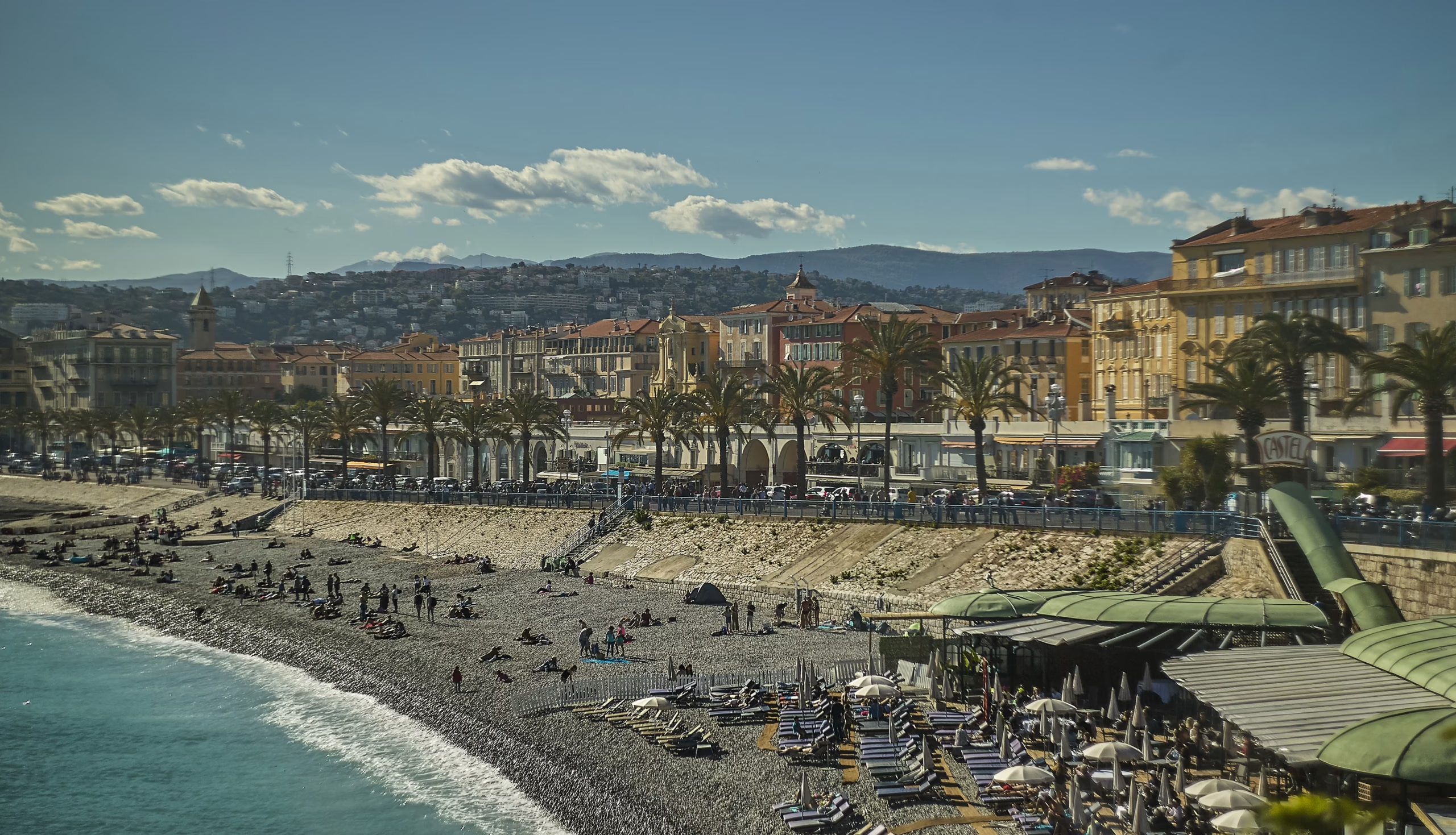
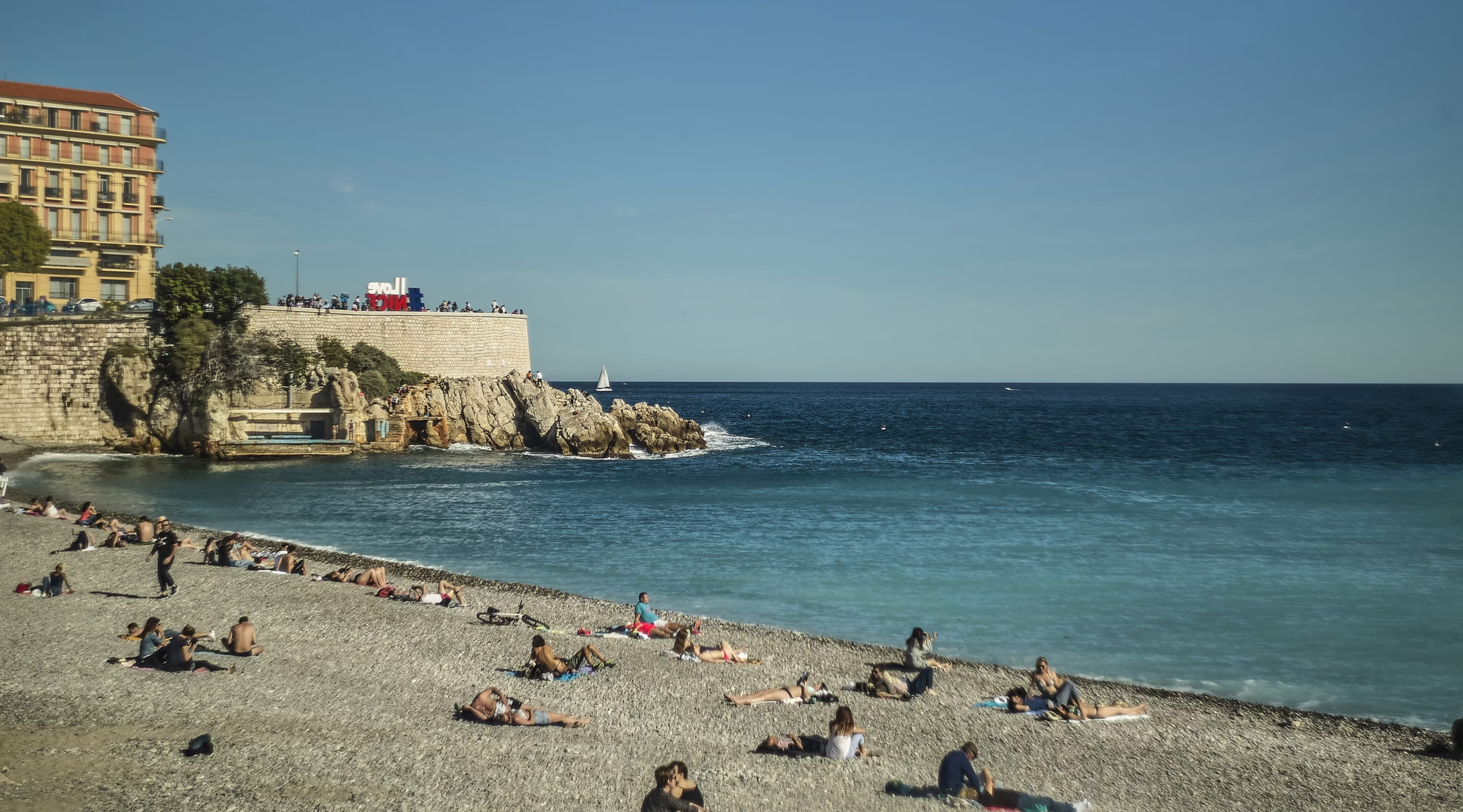
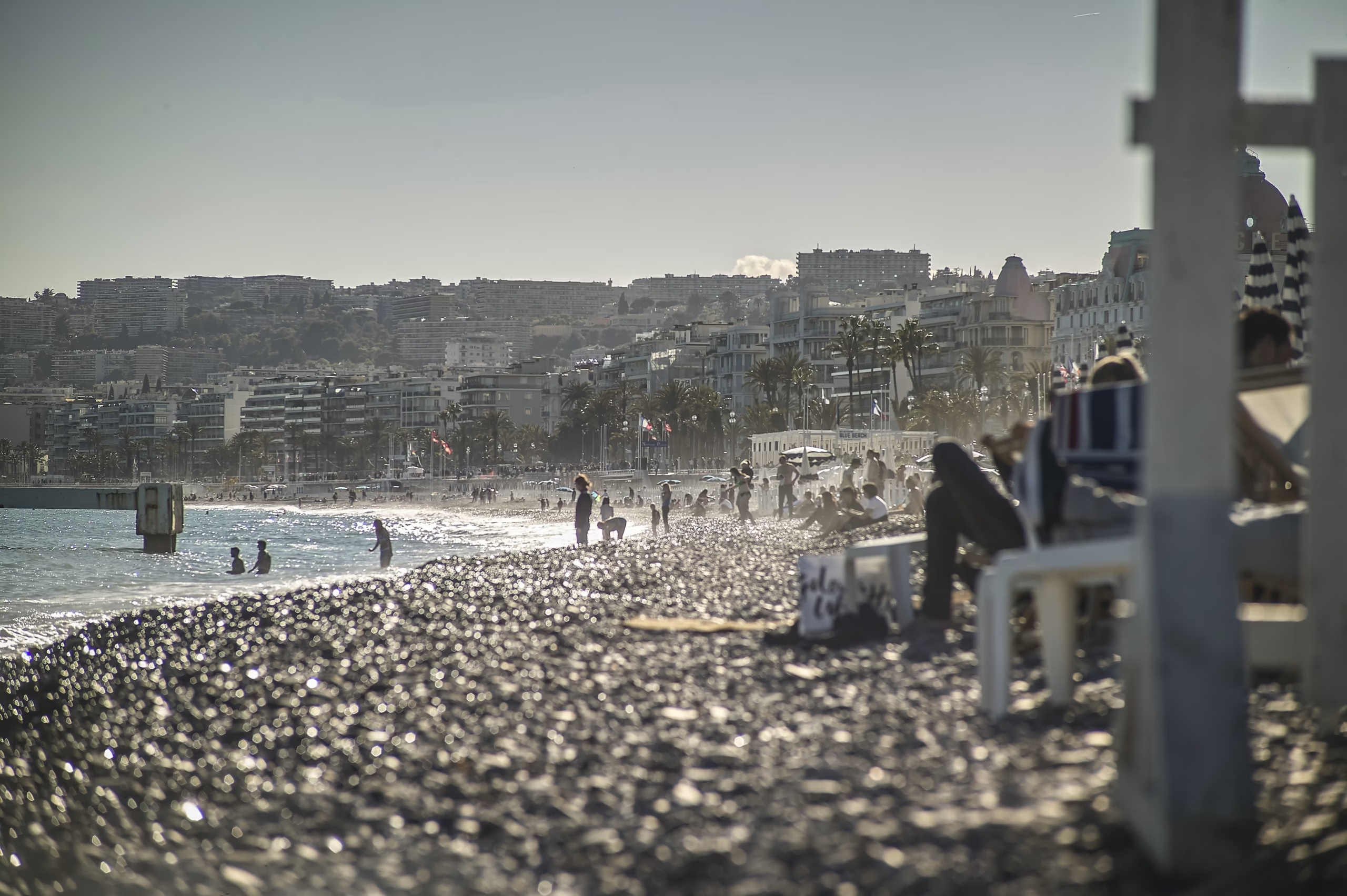
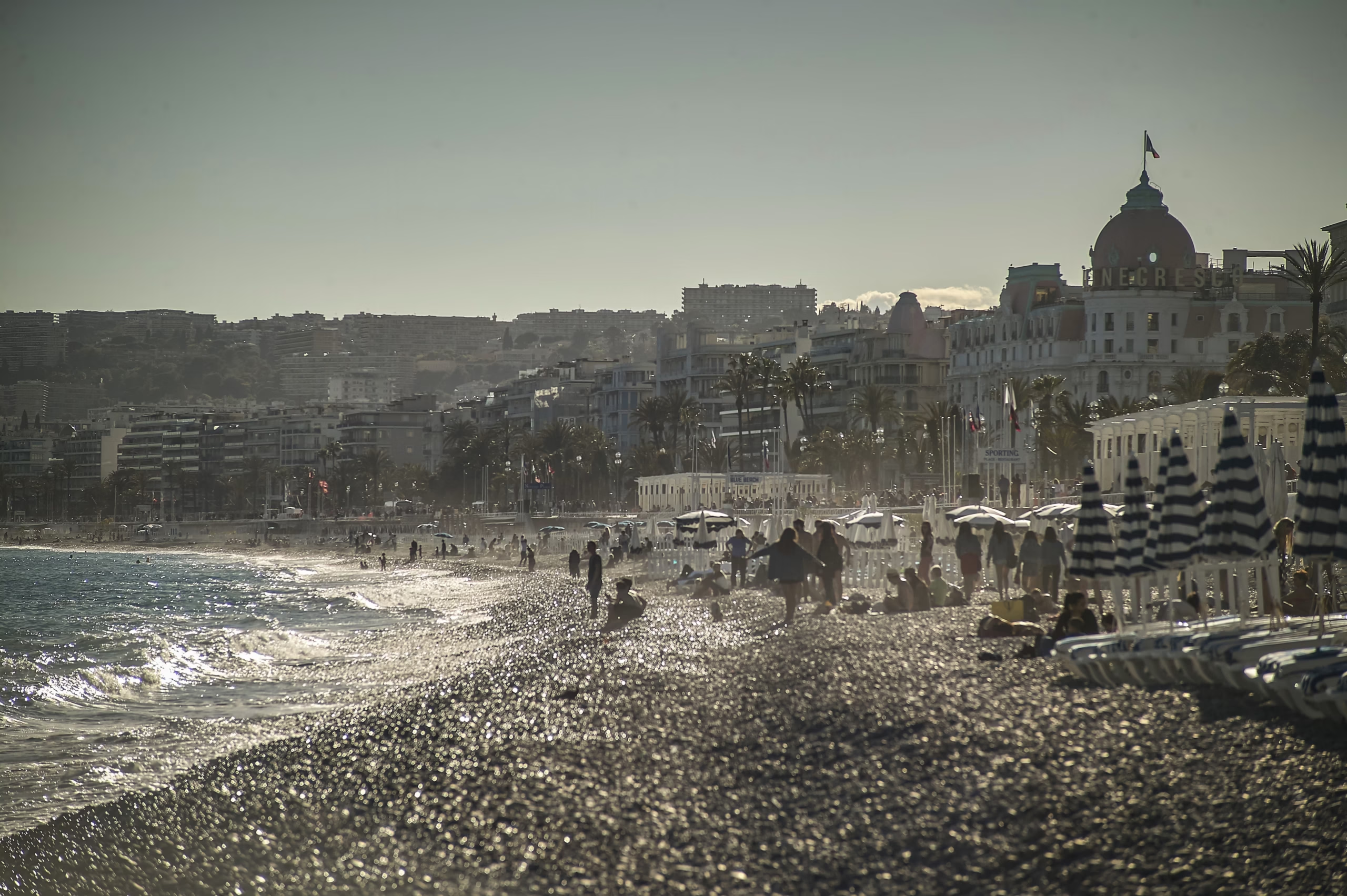
The entire coastline stretched beneath the sun—the buildings, palms, beach, and people reduced to small marks scattered along the shore. It was the kind of panorama that forces you to stop even if you would rather act like a seasoned traveler, a man accustomed to the world, someone too cynical to be impressed.
I was none of those things.
I was as impressionable as a child before the lights of an arcade.
And it was magnificent.

I photographed the coast because it was beautiful. No double meaning, no existential drama, no need to find a hidden metaphor behind every beach umbrella. It was simply beautiful, and I wanted to carry away a piece of it.
I did not yet know this would become one of the main reasons I loved travel photography: that absurd possibility of standing before something that does not belong to you, observing it for a few seconds, and returning home with a small imprint of it pressed into memory.
You do not own the place.
You do not own the light.
You do not own the moment.
You merely witnessed it.
And sometimes being a witness is already an enormous privilege.
An old-fashioned automobile passed through traffic, elegant and perfectly out of place. It looked as though it had escaped an old movie only to find itself surrounded by compact cars with neither its style nor the slightest intention of letting it through.
That car was not merely traveling down a street. It was making an entrance.
Some cars exist for transportation.
Others seem built expressly to remind you that even buying bread can be done with a certain arrogant dignity.
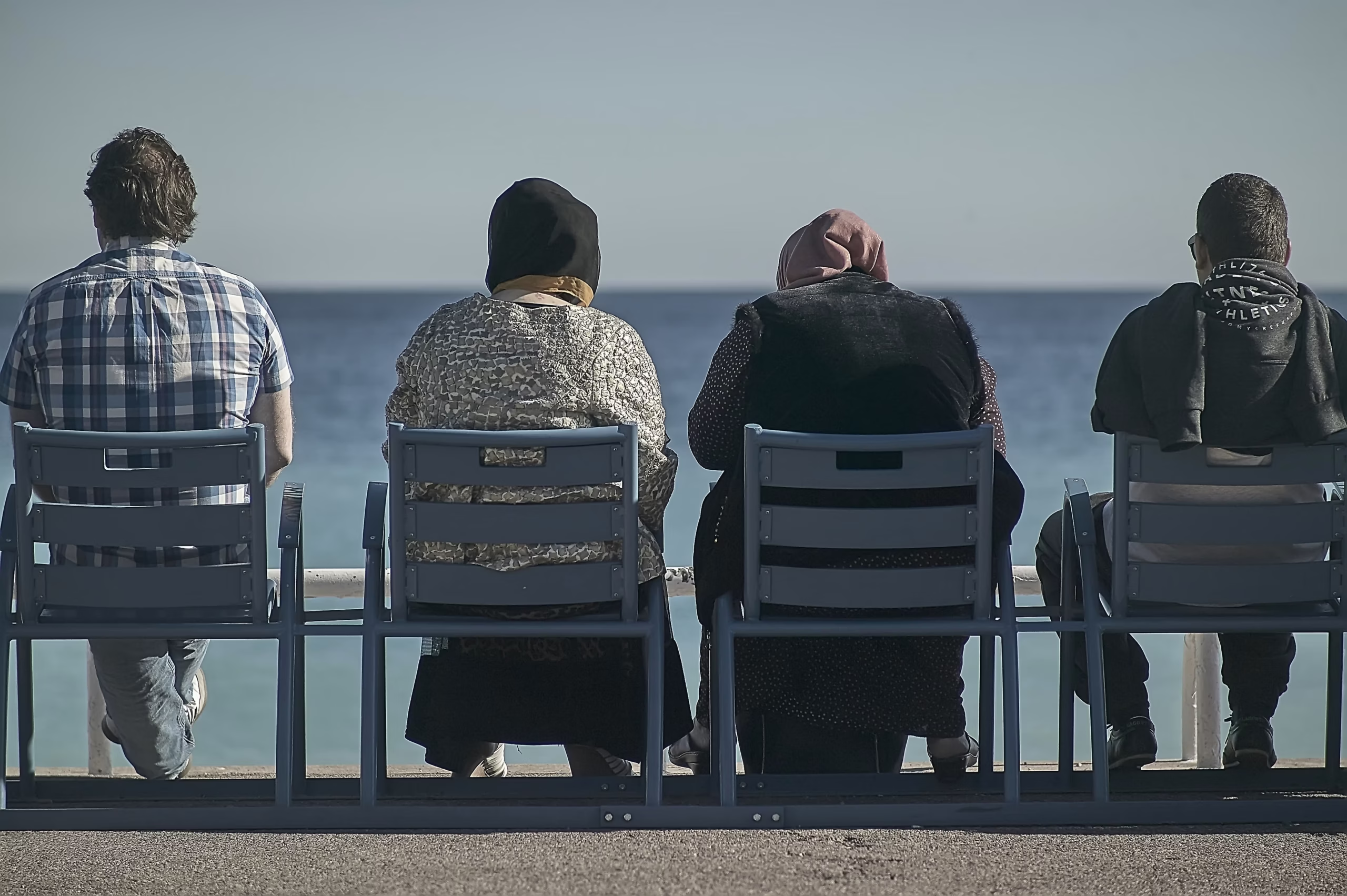
A little farther on, four men sat with their backs to us before the sea. Aligned on their chairs, motionless, they resembled a jury charged with deciding whether the horizon still lived up to expectations.
I could not see their expressions.
And that was precisely the beauty of it.
Four backs, four unknown lives, four different ways of sitting before the exact same expanse of water. Perhaps they did not even know one another. Perhaps they sat there every day. Perhaps one had just lost someone, another was waiting for a phone call, and the other two were simply digesting lunch.
A photograph does not always have to provide answers.
In fact, it often becomes interesting precisely when it stops doing so.
Then came the street performers.
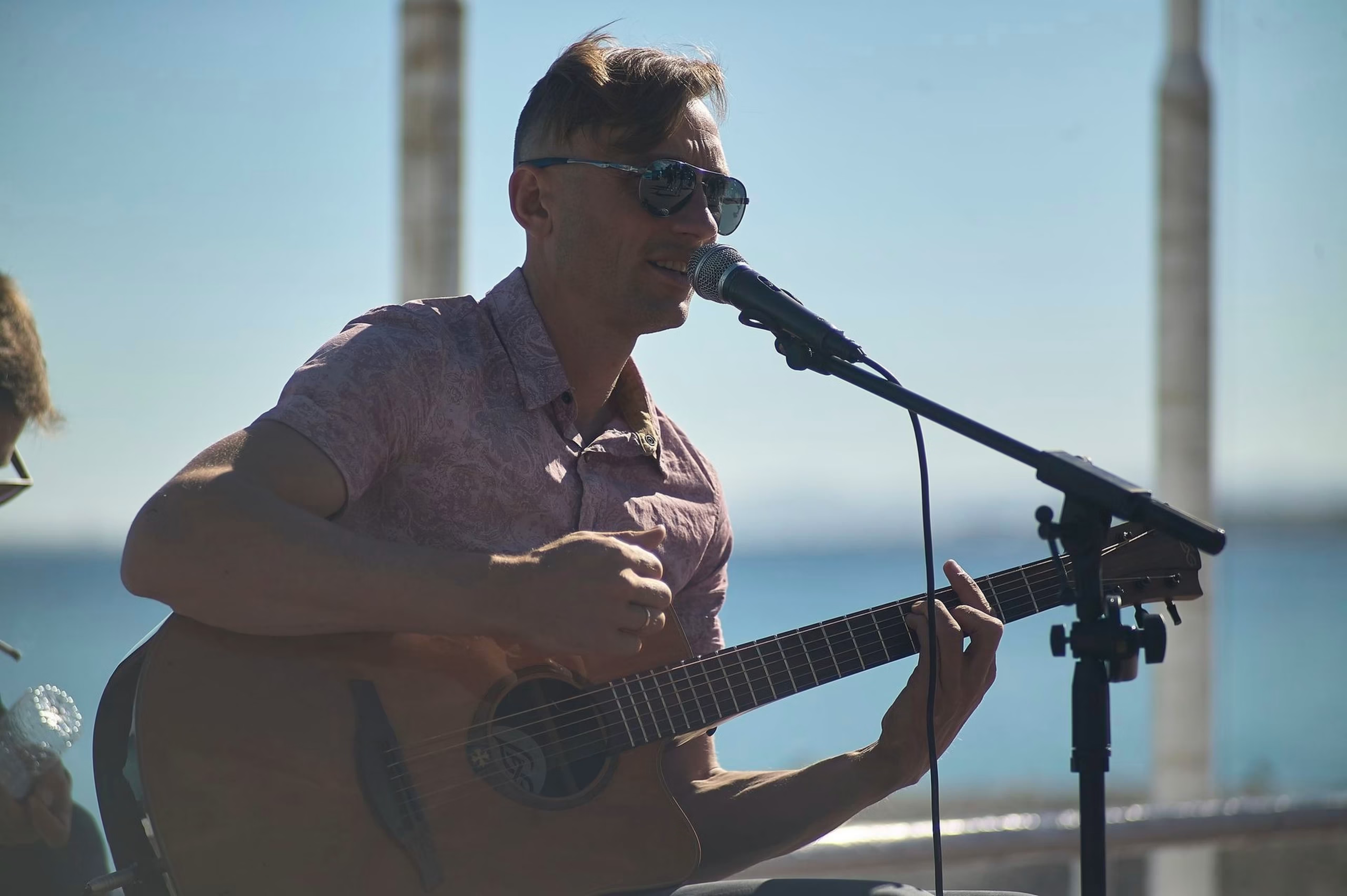
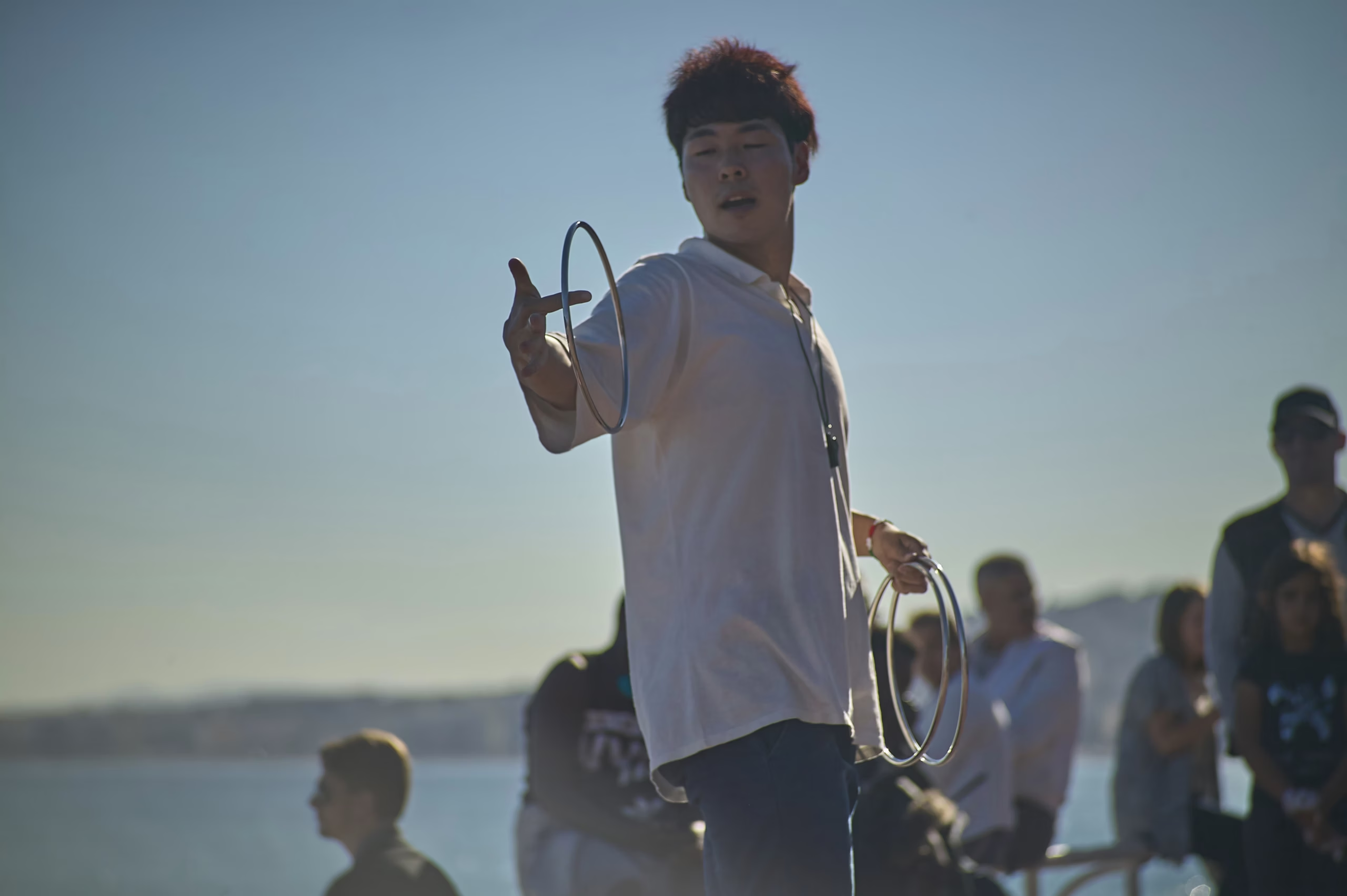
A young man spun rings with the sea behind him. A musician sang into a microphone while holding his guitar. Around them, people stopped to listen, others passed, and others were probably too busy taking photographs to indulge in the luxury of truly looking.
The street had its own show, without tickets, assigned seats, or anyone willing to refund you if you did not enjoy it.
The artist began.
People decided whether to stop.
That was all.
There is something profoundly honest about performing before strangers who owe you nothing. No one is required to listen. No one has paid in advance. No one must fake enthusiasm to justify the ticket price.
You have a few seconds to earn a glance.
Perhaps that is why street performers have always intrigued me. Photography works in a similar way. You raise the camera, choose a fragment of the world, and hope there is enough life inside it to persuade someone to stop.
It does not always happen.
But you continue anyway.
Meanwhile, the sea did what seas do with the irritating competence it has possessed for a few billion years.
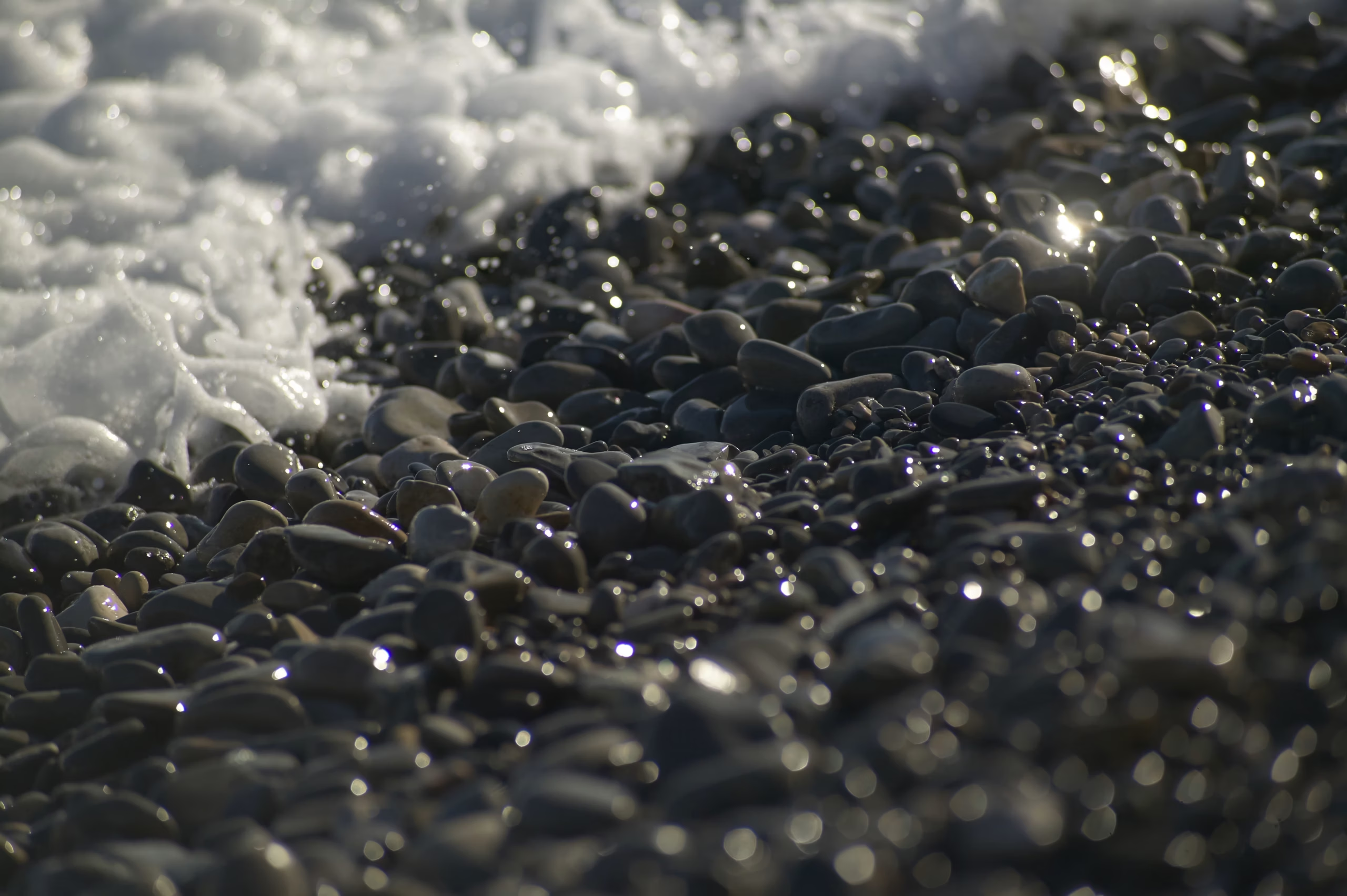
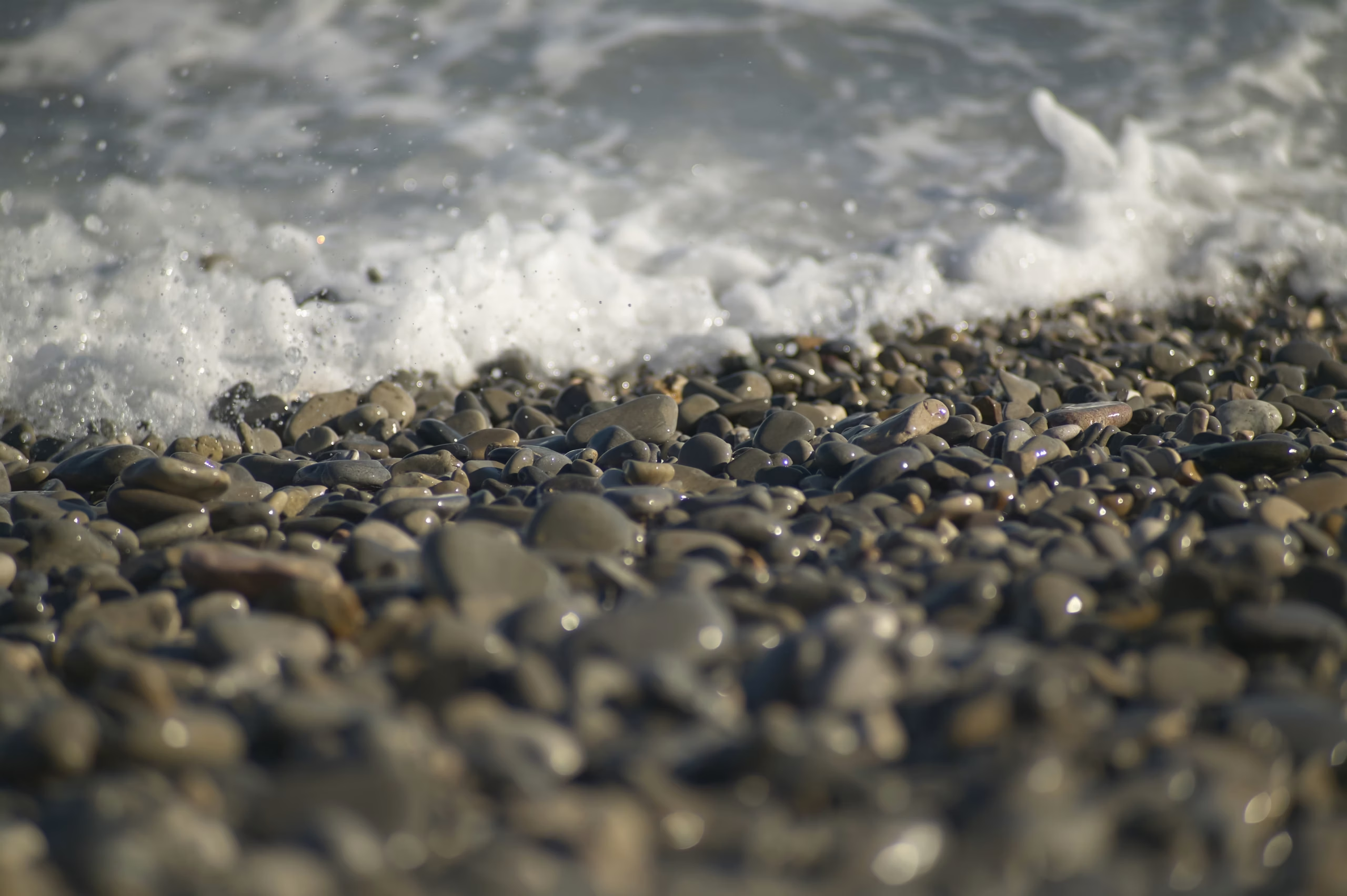
It came in, broke over the stones, and withdrew without asking for approval. The beach in Nice did not have sand’s reassuring softness. There were smooth stones, dark surfaces, water exploding into white foam and disappearing between the gaps.
I photographed those too.
The stones.
The foam.
The reflections.
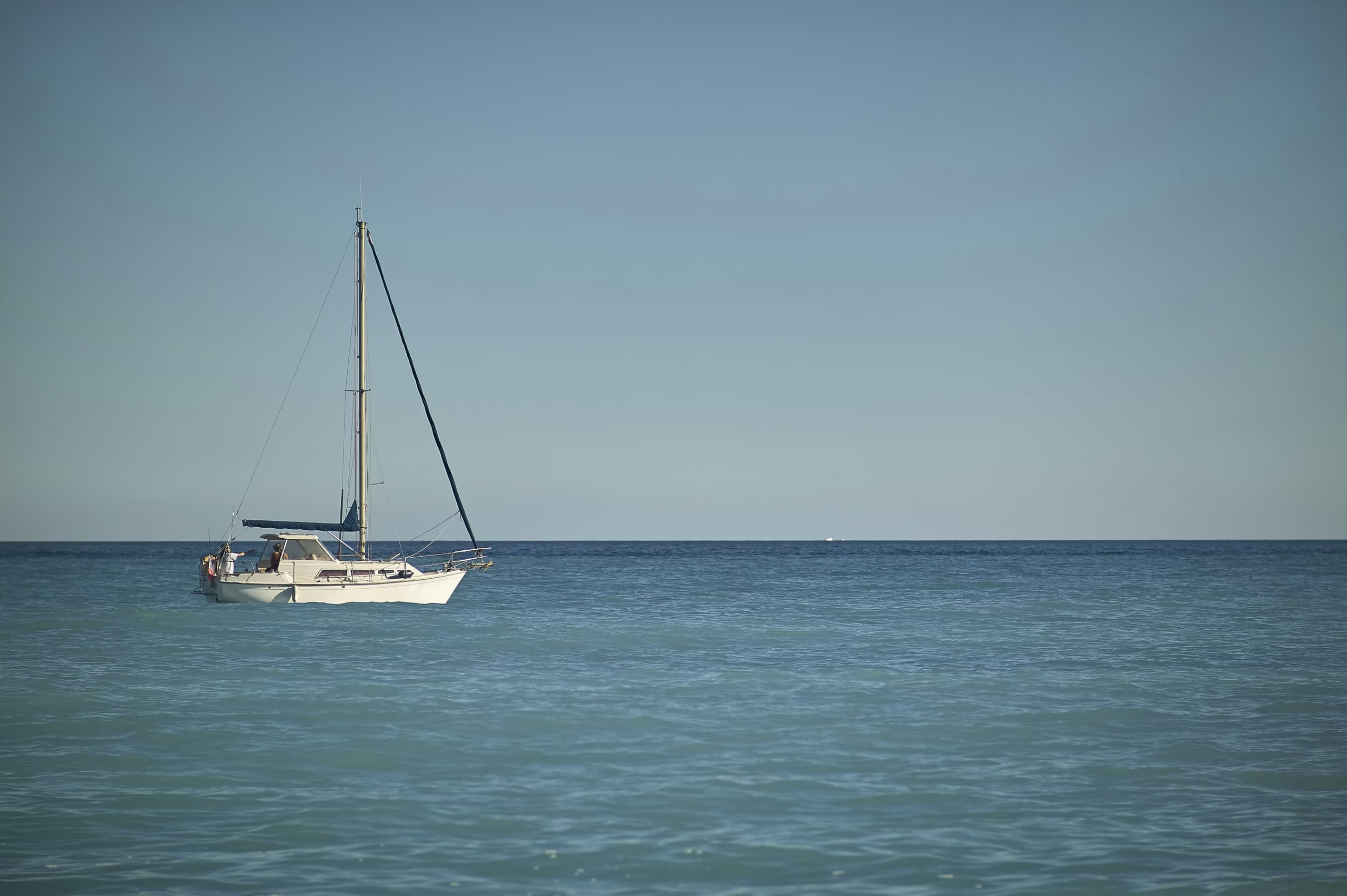
A sailboat suspended between two shades of blue, so distant it appeared motionless.
At that age, I probably mistook it for a symbol of freedom. Today, it might simply be someone with considerably more money than me enjoying a pleasant day on a boat.
Metaphors are free.
Mooring decidedly less so.
And yet that small isolated sail still retains something. Perhaps not freedom in the absolute sense, that enormous word we love using when we do not know exactly what it means. Rather, the feeling that a reachable elsewhere existed.
Not necessarily better.
Not necessarily simpler.
But different.
When you grow accustomed to the same horizons, seeing a boat move toward an unknown point can be enough to provoke a kind of itch in the soul.
You begin wondering where it is going.
Then you wonder where you might go.
Life on the beach continued, unconcerned with my sudden existential revelations.
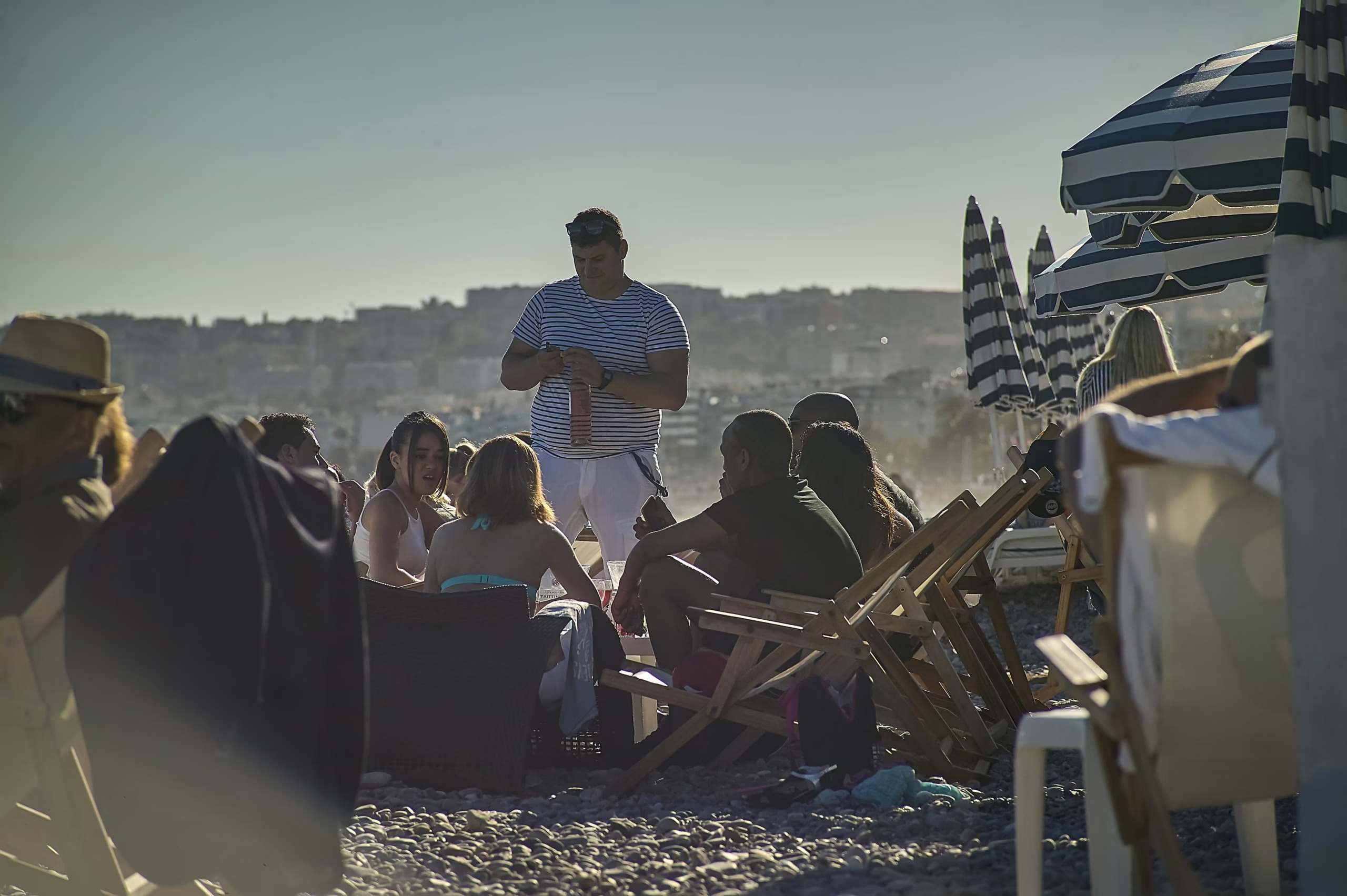
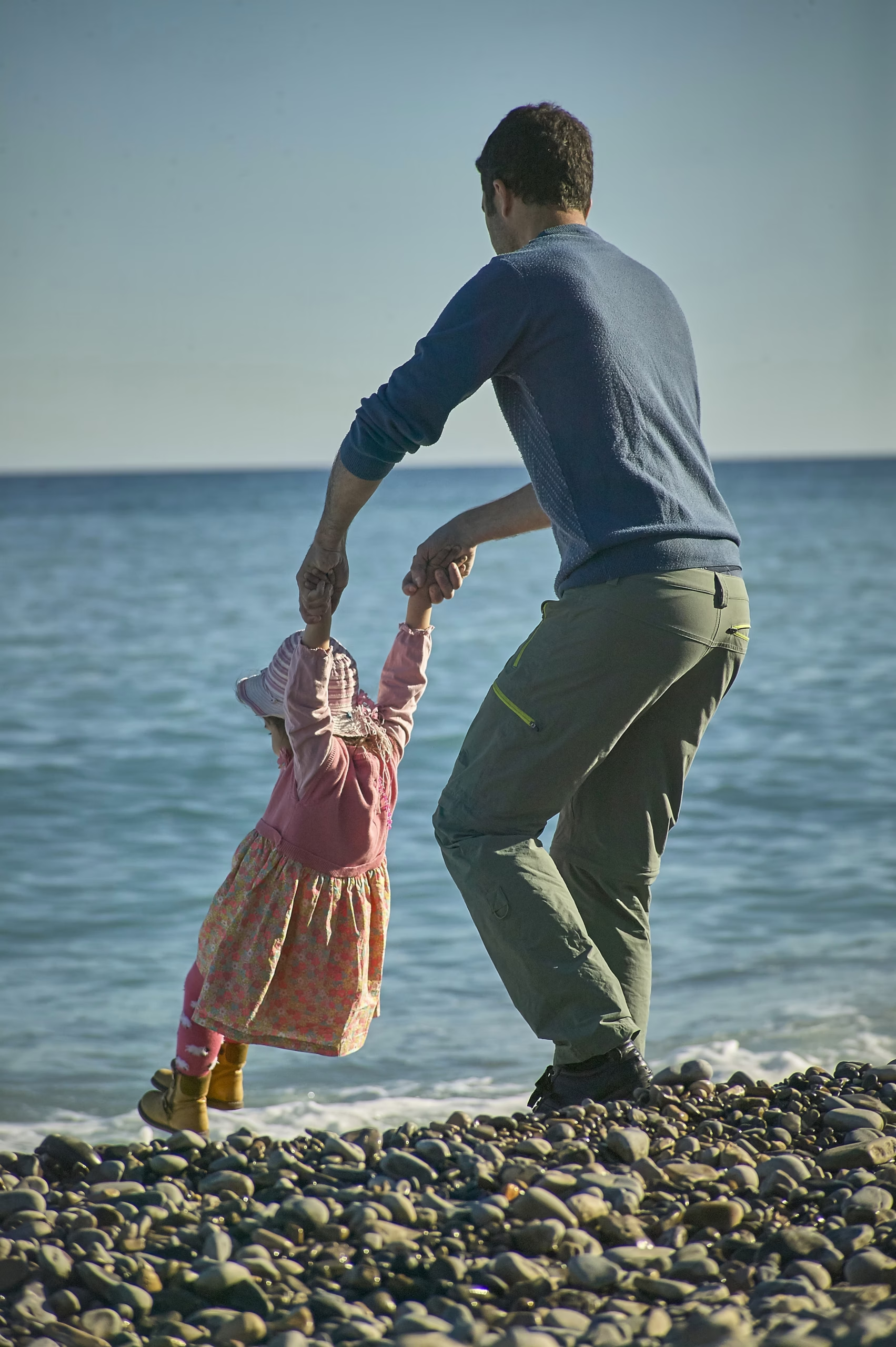
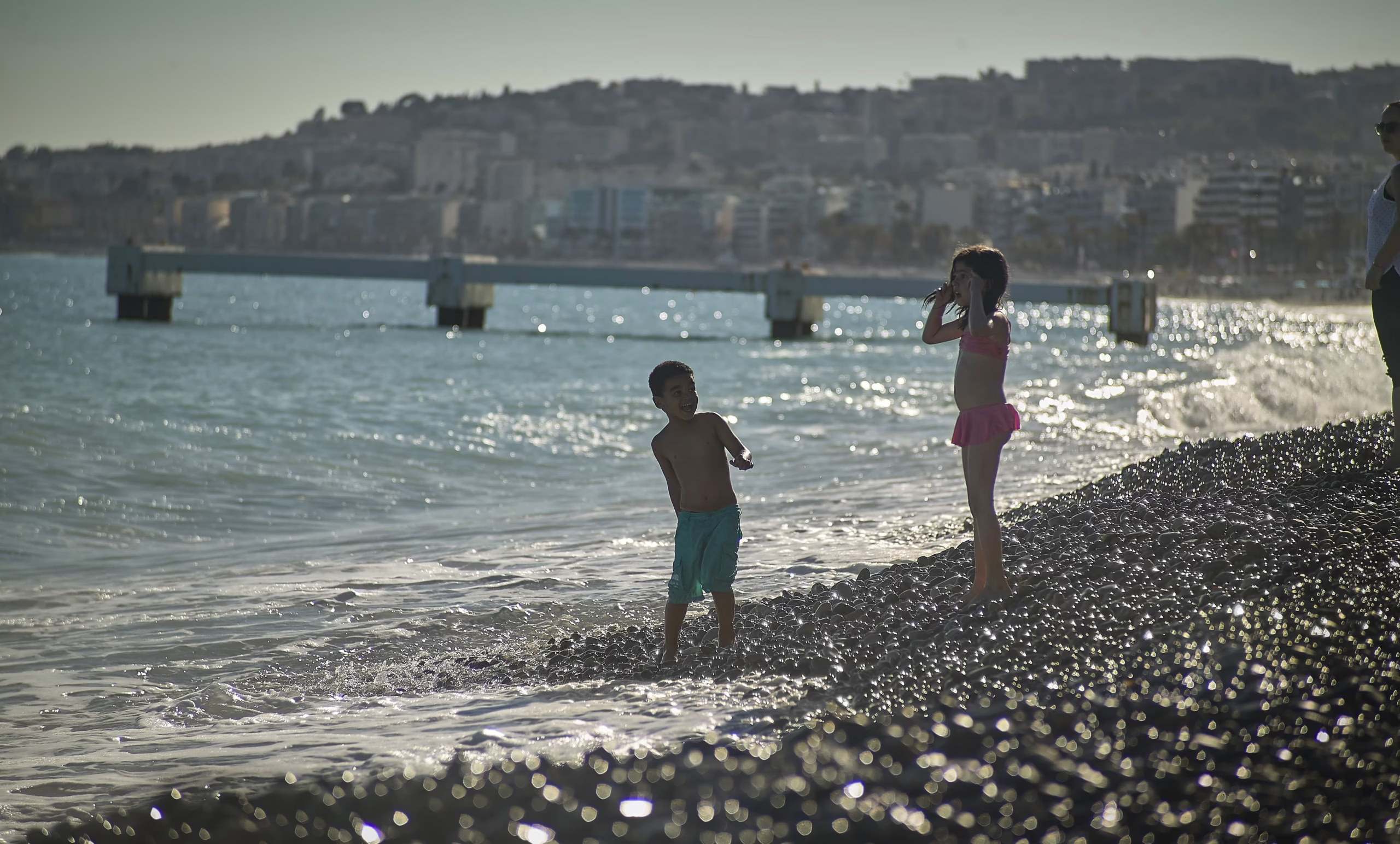
People lay in the sun, tables, beach umbrellas. A man held a little girl by the hands and helped her walk among the stones. Two children stood before the waves, small and apparently indestructible in the way only children can appear.
No one was playing a role for me.
No one knew that many years later I would look at those images again, trying to understand what they had left me.
They were ordinary gestures. An outstretched hand, an uncertain step, someone watching over another, someone else discovering for the first time the feeling of water against their legs.
Photography has this strange ability to save what, as it happens, seems too ordinary to deserve remembering.
Almost all of us wait for exceptional events.
The great departures.
The great loves.
The great tragedies.
Meanwhile, real life enters and exits through an endless series of tiny moments: a father lifting his daughter, four men before the sea, someone smoking, a musician trying to be heard, a child retreating from a wave.
Important things often have the terrible habit of not presenting themselves as such.
Toward the end of the day, I encountered another figure.
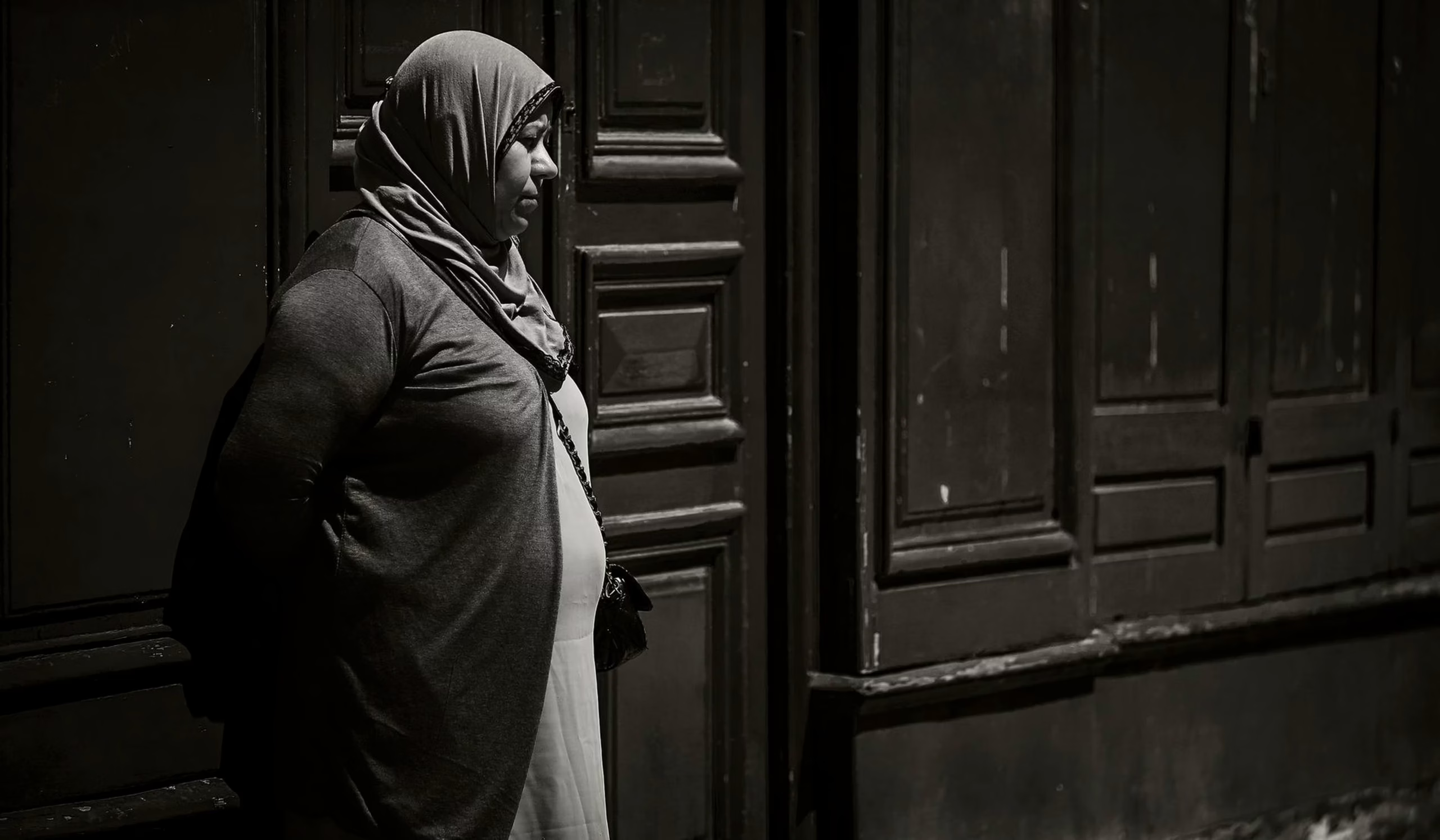
A Roma woman with her head covered walked beside a large dark doorway. A blade of light crossed her profile while everything else seemed intent on swallowing her.
It is one of the images I remember most intensely.
I do not know her name. I do not know where she was going. I do not know what kind of day she was having, and I have no right to fill that silence with an invented story.
I know only that, for one instant, the light decided to stop on her.
And I was there.
A tourist city is full of people deliberately seeking the light: terraces, beaches, café tables, photographs before the sea. She, by contrast, appeared almost removed from the landscape, separated from the bright celebration I had photographed until then.
Nice was not only blue, palm trees, and elegant façades.
No city is.


Every place possesses rooms it does not show in promotional photographs, shadows walking beside its finest views. This is not an accusation. It is simply the normal anatomy of living things.
Light exists because somewhere it ends.
Then evening came.
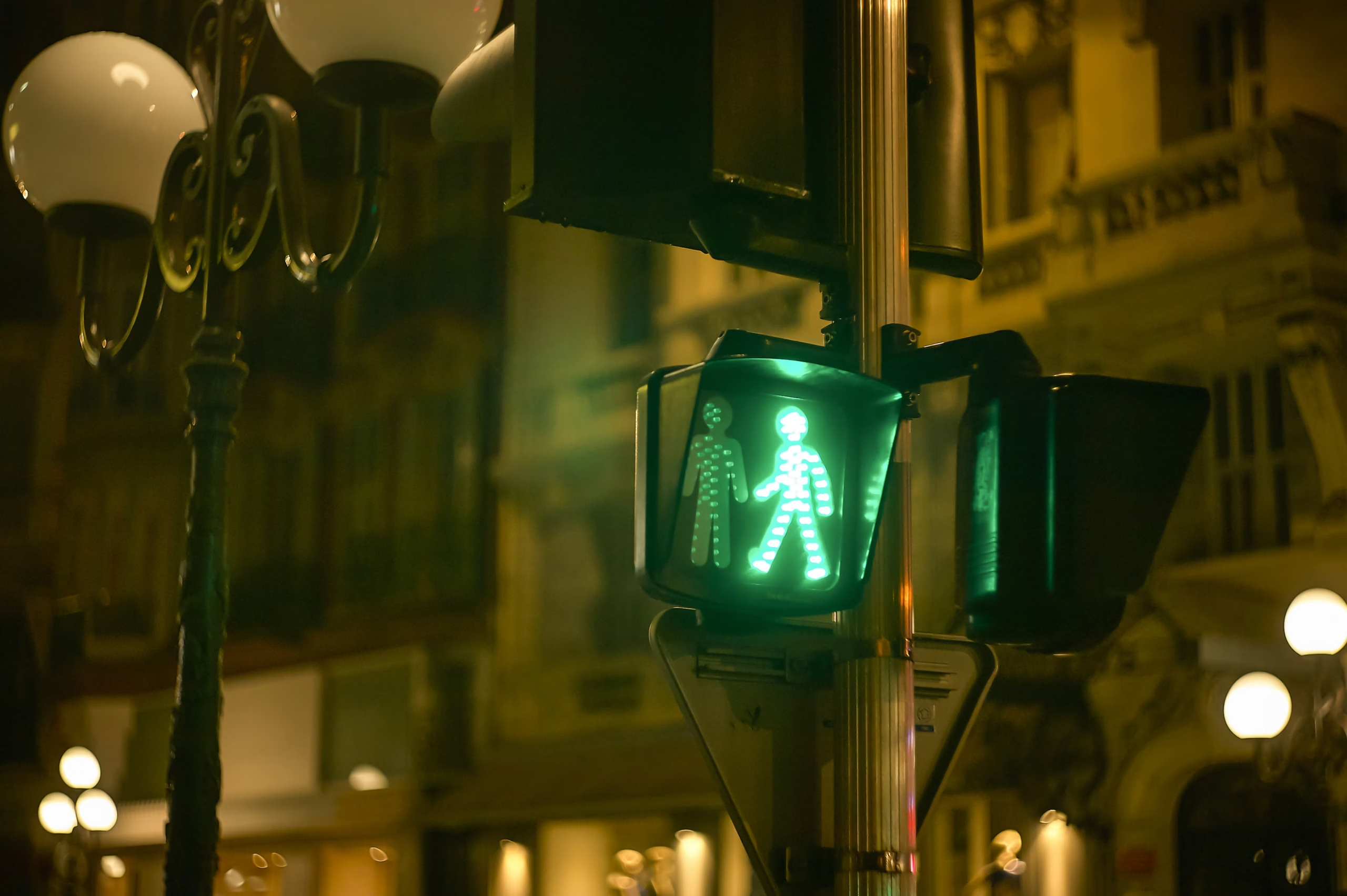
A pedestrian signal illuminated the green silhouette of a small walking man. An electric, anonymous figure, eternally condemned to walk without ever reaching the other side of the street.
It looked like advice.
Go.
Not where. Not why. Not for how long.
Simply: go.
For a few seconds, the world grants you permission to cross. If you stand still too long, it turns red again and you are shit out of luck.
Perhaps all journeys begin this way. Not with certainty, but with a brief window in which something seems possible. Someone makes a suggestion. A door opens. A light turns green.
You can reason.
You can evaluate.
You can prepare a spreadsheet with advantages, disadvantages, weather forecasts, and odds of survival.
Or you can cross.
That time, I crossed.
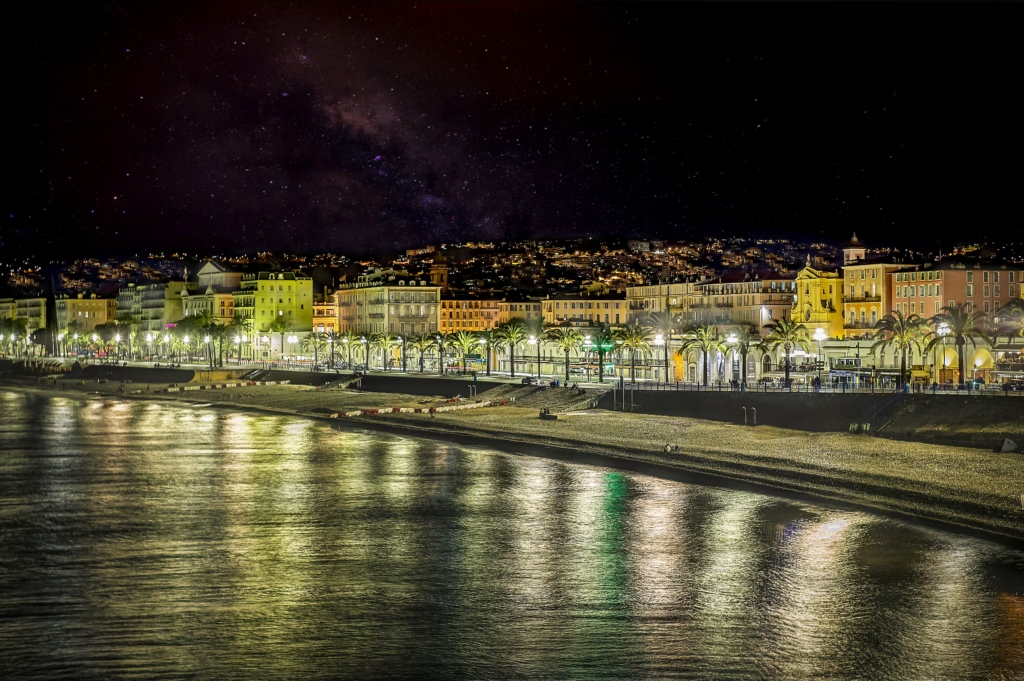
In the final photograph, Nice glows along the sea. Illuminated façades, palms, hills dotted with lights, and reflections stretched across black water.
Night possesses a particular talent for making a city’s promises believable.
It hides the cracks, extinguishes irrelevant details, and leaves lit only the things capable of seducing you. It is a liar, certainly, but a liar with an excellent command of lighting.
I was young and probably pushed colors and contrast with the enthusiasm of someone who had just discovered a slider could turn a photograph into a declaration of war. I was not pursuing absolute fidelity. I was pursuing a feeling.
That city, that night, seemed enormous to me.
Not because of its size.
Because of what it represented.
It was proof that beyond the familiar landscape were other streets, other people, other colors, other ways of inhabiting the world. And that I could reach them with a camera in my hands.
I did not return home transformed into a great traveler.
I had acquired no Eastern wisdom, spoke French no better than before, and probably could not even explain precisely which places I had visited.
I had a few photographs.
Some successful, others immature. Instinctive frames, mistakes, attempts, enthusiasm. No prepared narrative. No checklist to complete.
And yet inside those images was already a direction.
I had discovered that traveling with a camera changed the way I was present. I did not merely pass through a place. I searched it. I watched people, windows, hands, shadows, objects abandoned at the edges of roads.
Photography made even being lost productive.
At home, staring at a stranger too long can make you look disturbing. While traveling, if you carry a camera, you can always tell yourself you are practicing street photography.
It is one of the most elegant alibis art has ever given the curious.
But it was not only curiosity.
Photographing a place meant granting it time to reach me. It meant stopping long enough to notice that every city contains thousands of stories, and almost none needs me in order to exist.
I could only encounter them for an instant.
Sometimes I would have time to know them.
Far more often, I would not.
They would remain a man and a guitar, four backs before the sea, a woman crossed by light, a distant sail, two children at the shore.
Presences without explanation.
And rightly so.
Other journeys came after that one. Longer, farther, more deliberate. I learned to prepare, choose equipment, study the hours of light, and understand more clearly what I wanted to tell.
But no preparation can restore the magnificent recklessness of the beginning.
Back then, I did not know what I was doing.
That was precisely why everything could surprise me.
Today I can look at those photographs and find flaws, naivety, decisions I would make differently. It would be easy to judge them with the eyes I possess now.
It would also be profoundly unfair.
Those images do not document only Nice.
They document the birth of a gaze.
The exact moment when a kid understood that a camera did not serve exclusively to produce beautiful pictures. It could become a way of entering the world, asking questions without speaking, gathering traces, returning home carrying something that took no space in his luggage.
It does not matter that the journey lasted only one day.
Duration is a rather mediocre measure of importance. Entire years leave almost nothing, while afternoons can change the direction of the rest of your life.
That day did not teach me to photograph.
It showed me why I would want to continue.
To chase light across people.
To find a story seated at the edge of a sidewalk.
To discover that a wet stone, seen at the right moment, can deserve the same attention as a famous building.
To observe the sea from a place where I had never observed it.
To be a stranger, and therefore finally free to look at everything as though it were the first time.
These images do not tell the story of Nice.
They tell what Nice opened inside me.
I left for a day without a fucking plan.
I returned suspecting the world was too large to keep looking at it from the same place.
Since then, I have tried to test that suspicion whenever I could.
And so far, the world has not stopped proving me right.