

Here we are, talking about one of the few human inventions still capable of turning gasoline, metal, and a questionable amount of common sense into something that looks an awful lot like happiness.
Some days the brain feels like a room full of televisions left on.
One is broadcasting your problems.
One, your job.
One, all the things you should have done and naturally put off until they became minor administrative disasters.
In one corner there’s the channel devoted to women, which never gets a clear signal but keeps airing reruns of old tragedies anyway. A little farther over, the existential channel wonders what any of this means, preferably just as you’re trying to fall asleep.
One hell of a shitty lineup.
Then an engine revs.
And everything goes quiet.
Not gradually.
Not through mindful breathing, Tibetan bells, or some wellness professional asking you to picture a beach while billing you eighty euros.
It goes quiet all at once.
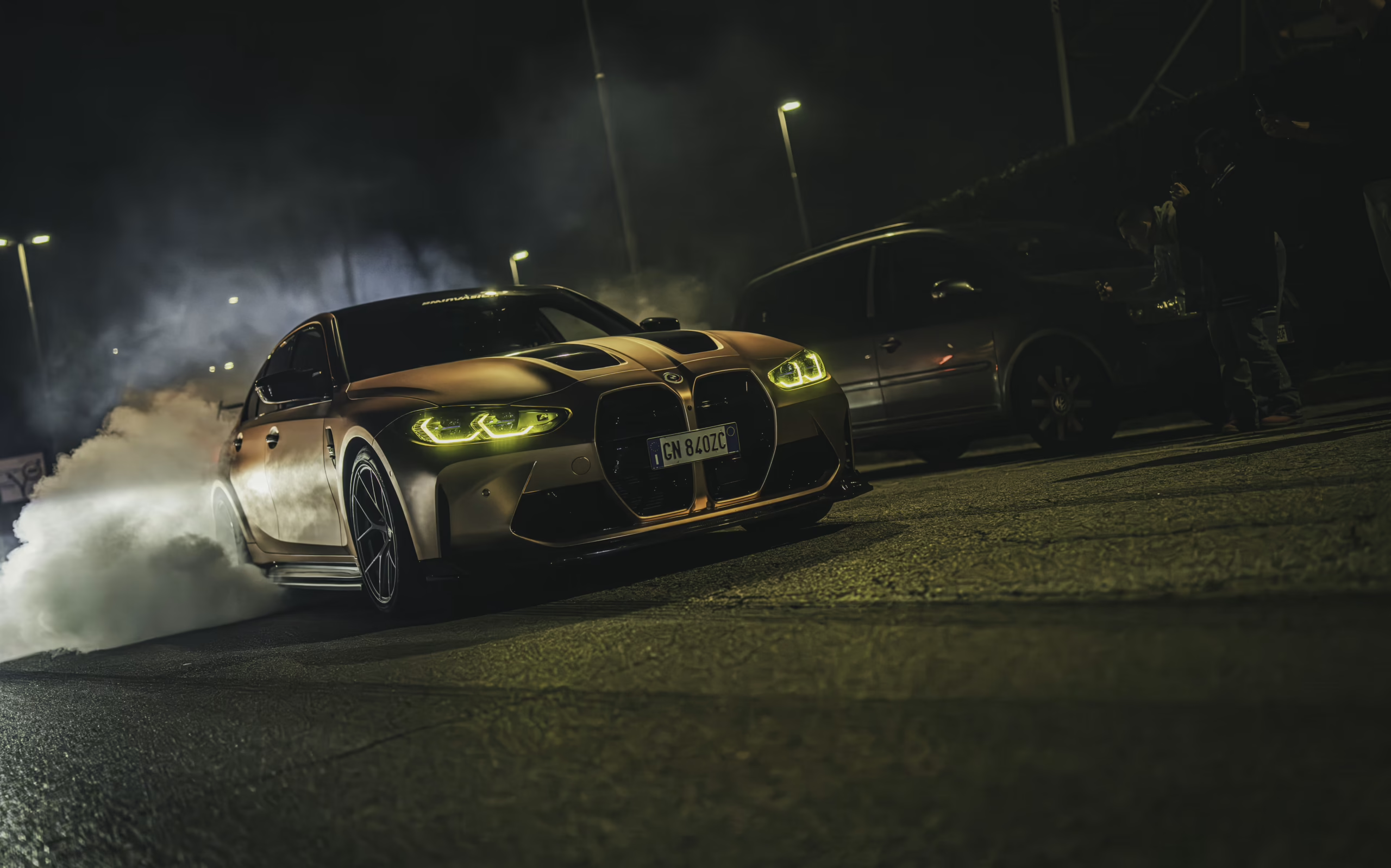
The tach climbs, the tire begins to spin, smoke spreads across the asphalt, and for a few seconds there is no past, no future, no one else’s expectations, no persistent feeling that you’ve shown up at the wrong party called life.
There is only now.
And truth be told, now isn’t bad at all when it smells of gasoline, burned rubber, and decisions an insurance company would probably advise against.
Cars do that.
Or at least they do it to me.
Not all of them, naturally.
A gray economy car in Monday-morning traffic rarely inspires spiritual revelation, unless spending forty minutes trapped behind a tractor counts as an especially advanced form of meditation.
I’m talking about cars that still have something to say.
Old, new, immaculate, battered, modified beyond decency, or held together by zip ties, profanity, and more affection than any shop manual could ever quantify.
Cars that arrive making noise.
Cars that slide sideways.
Cars that spit fire from the exhaust as if they’d just remembered they were descended from dragons.
Cars that don’t ask to be understood.
They pass in front of you, fill the air, and for a moment demand every ounce of your attention.
That’s a rare quality.
These days almost nothing can hold our attention without sending us a notification first.
An engine can.
It doesn’t need your consent.
It gets inside your sternum.
It rattles the windows.
It makes you turn around even if you’ve solemnly declared yourself a grown, responsible person, immune to this kind of bullshit.
Then you see a motorcycle standing inside its own cloud of smoke, the rider checking the rear wheel as though he and the machine were having a private conversation.
You see a drift car come in sideways, its front wheels aimed opposite the direction common sense suggests it should be going.
The tail breaks loose.
The driver catches it.
Smoke swallows half the world.
And you smile.
Not because it’s useful.
Not because it solves hunger, war, or the neighbor drilling holes on Sunday morning.
You smile because it’s beautiful.
And we’ve developed a strange sense of guilt about things that are simply beautiful.
Everything has to be productive, sustainable, educational, monetizable, or at least photogenic enough to grow a social-media following.
We can’t simply feel pleasure.
We have to justify it.
Explain it.
Turn it into a personal-growth journey with five key takeaways and a discount code valid until midnight.
Sometimes, though, something is beautiful because it makes you feel good.
Period.
A car takes a corner sideways.
The engine screams.
The tires draw black circles across the asphalt.
You’re there with your camera, hunting for the right spot, waiting for the light to touch the bodywork, pressing the shutter an instant before the scene disappears into the smoke.
You haven’t attained enlightenment.
You haven’t changed the world.
But for a few seconds, you were completely present.
Which is already more than many people can say about their entire week.
Maybe that’s what we seek in speed.
Not death.
Not necessarily danger.
Not even the childish need to prove something, though that one still shows up from time to time, puts on sunglasses, and asks to take the wheel.
We seek absolute concentration.
That point where you can’t afford to be anywhere else.
When a car starts sliding, the road has no interest in your unresolved trauma.
The corner doesn’t want to hear about your last relationship.
The engine doesn’t listen to excuses.
You have to be there.
With your hands.
With your eyes.
With your body.
All of it together, finally in the same place.
Maybe that’s why some people race, some jump out of airplanes, and others fall in love with emotionally unavailable people. We all need something that forces us to live in the present.
Some methods, it must be said, cost less in tires.
Car culture is full of contradictions.
On one side there is engineering, discipline, hours spent fine-tuning details almost no one will notice. On the other, grown men perfectly willing to spend a month’s salary for seven more horsepower and an exhaust note capable of making every dog in the neighborhood bark.
It’s hard not to feel affection for madness that specific.
Open a hood and you’ll find people gathered around the engine with the concentration of surgeons performing a delicate operation. They study hoses, wires, manifolds. They debate temperatures, pressure, intake. One points at something. Another shakes his head. A third proposes a solution that almost always involves dismantling half the car and buying a component worth more than the vehicle’s remaining value.
It isn’t rational.
Serious passions rarely are.
If they were rational, they’d be called retirement plans.
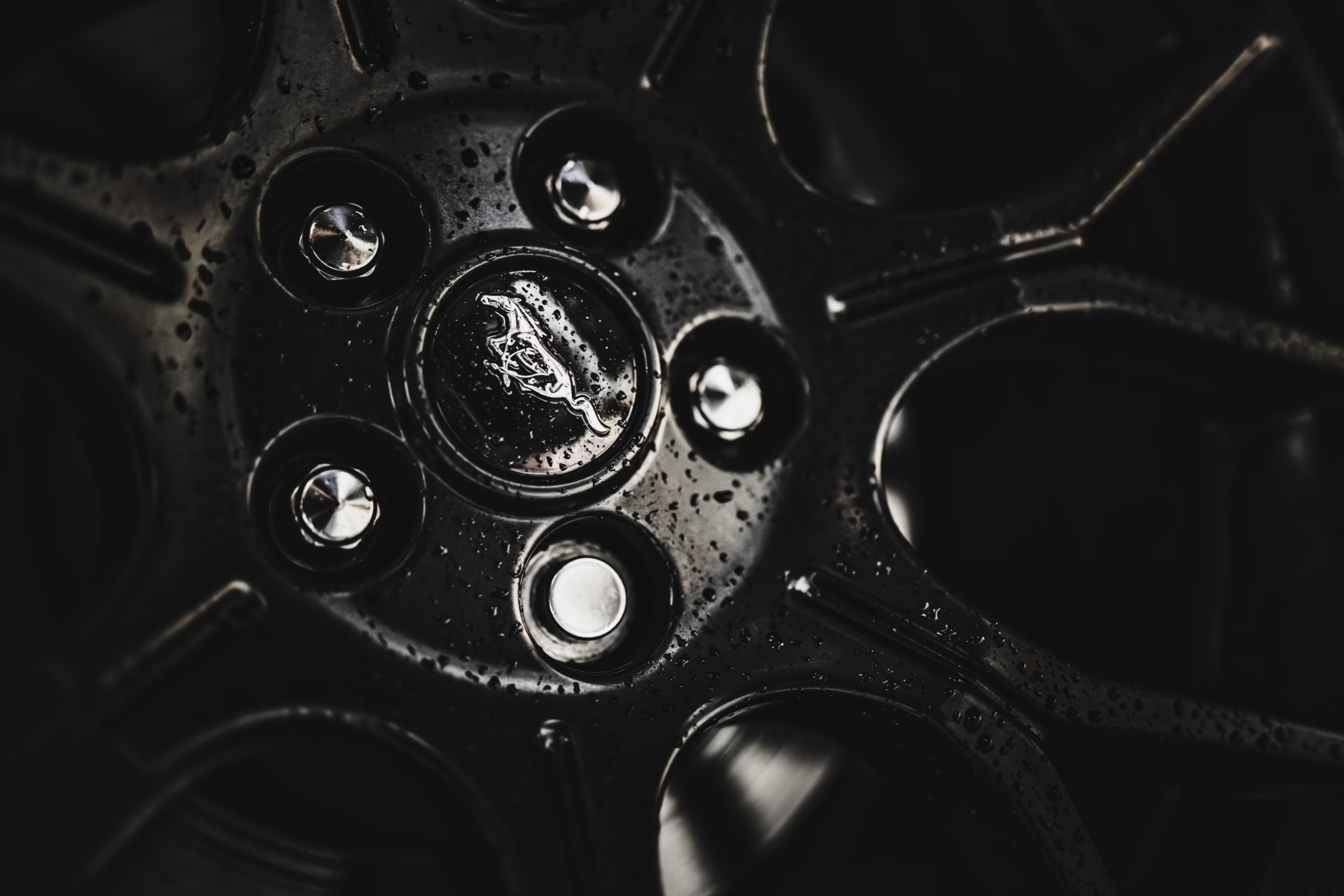
Then there are the details.
The worn steering wheel.
The enormous tachometer, there because sometimes engine speed matters more than the time of day.
The switches.
The welds.
The fabric wrapped around the levers.
The scarred bodywork.
The absurd liveries.
The scraped bumpers and dirty wheels.
Every detail says that this car wasn’t bought merely to be owned.
It was used.
Pushed.
Modified.
Sometimes lovingly abused, one of the sincerest and least advisable forms of affection.
Then the sun goes down.
The shops, lots, and parking areas change their faces.
The lights come on.
The shadows.
Smoke lit from below.
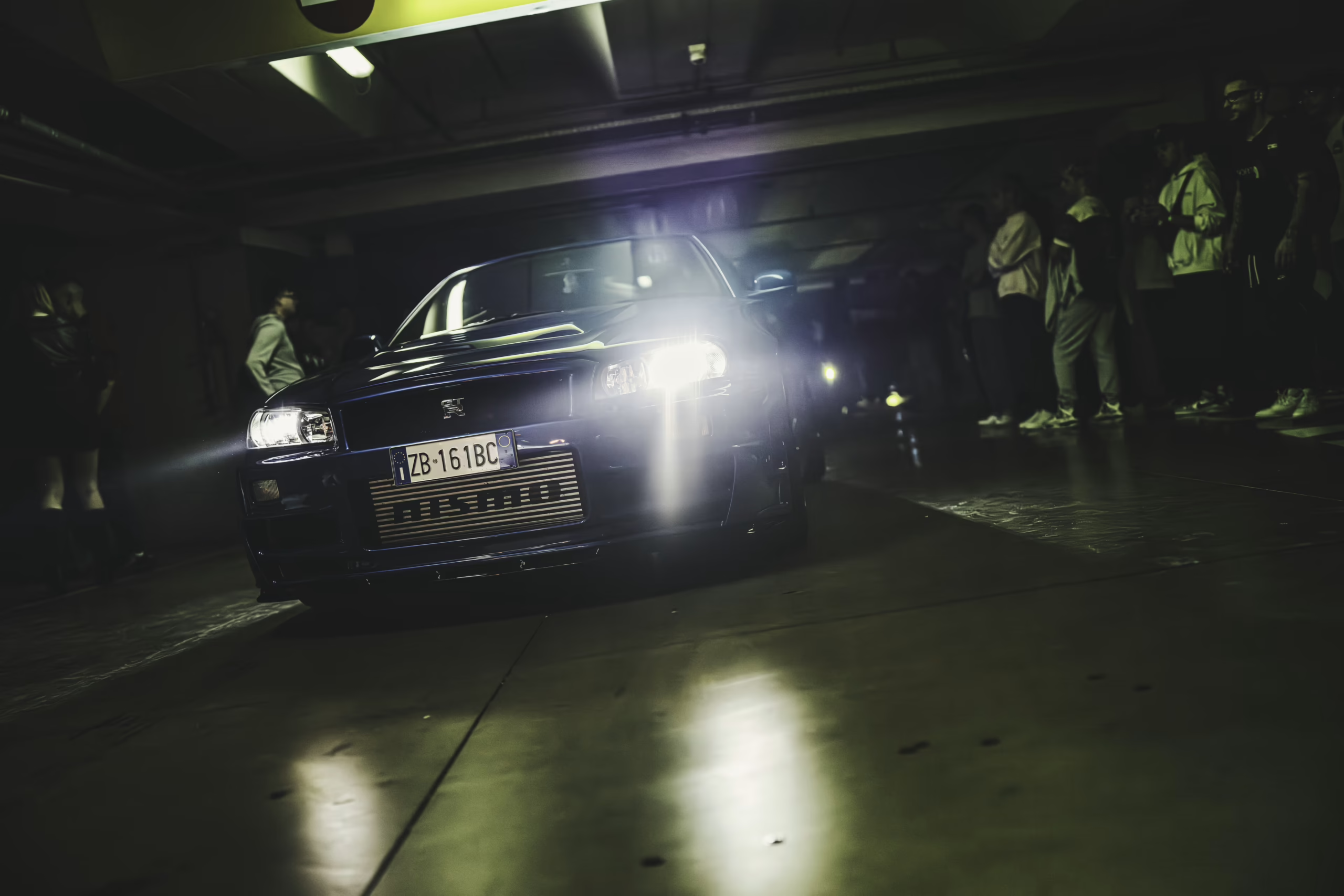
An old car enters the night behind a beam of light, followed by the eyes of people gathered along the sides like believers witnessing a mechanical apparition.
Others wait their turn.
Engines running.
Uneven exhaust notes.
The air has that electric taste of things about to happen.
That’s where cars stop being transportation.
They become characters.
Some make their entrance gracefully.
Others with all the discretion of a fist against a door.
A modern sedan wraps itself in smoke, almost as if trying to prove that beneath the screens, sensors, and all the electronics in the world, there is still a beast capable of forgetting its manners.
An old brightly colored coupe crosses the lot carrying years of modifications, stories, races, and owners who have probably talked to it more than they ever talked to their partners.
Another spits a flame.
For an instant, night becomes day.
Someone shouts.
Someone laughs.
Someone pulls out a phone too late and gets nothing but shaky footage of everybody reacting.
I try to photograph the moment before.
The point where the energy is still building.
The wheel beginning to turn.
The tire deforming.
The driver’s eyes.
The light settling on the hood.
The first thread of smoke.
Because afterward comes spectacle.
Before it comes tension.
And that is often where photography lives.
I’ve found myself in these places for pleasure and for work.
Sometimes someone hired me to tell the story of an event. Other times I went because I felt like it, which remains one of the best reasons to be anywhere with a camera.
But in the end, the difference is small.
When something truly moves you, even the work retains an element of play. You keep searching for the frame not because you have to deliver it, but because you want to see whether you can catch that feeling and lock it inside a rectangle.
It’s a ridiculous ambition.
Like photographing the wind.
Speed doesn’t want to be stopped.
Adrenaline refuses to be archived.
Noise won’t fit inside a file.
And still, you try.
You photograph the smoke parting.
The car leaning.
The driver correcting.
The crowd watching.
Then you look at the image again and, if you were lucky, a fragment of that charge is still inside it.
Not the sound.
Not the smell.
But enough to remember them.
Human beings have invented a fair number of questionable things.
Motivational meetings.
Taxes on taxes.
Social media.
Television shows where strangers fight in a villa while the rest of the country tries to work out how to pay the heating bill.
But we also invented the engine.
We took metal, air, and fuel and persuaded them to produce motion.
Then, still unsatisfied, we decided that motion should be faster, louder, and preferably capable of going sideways.
You have to give us that much.
Every now and then, even we get something right.
Of course, that isn’t everything.
I don’t believe happiness lives inside a cylinder, or that a tank of gas can fix your life. That would be convenient, especially considering how many people manage to be miserable inside cars that cost as much as an apartment.
Passions don’t save us.
They remind us why we might be worth saving.
They are interruptions.
Open windows.
Small territories where we recognize ourselves again.
For some, it’s music.
For some, the sea.
For some, a canvas, a mountain, a kitchen, or the body of a woman loved enough to make you forget your name and remember everything else.
For me, among other things, there are cars.
The lines.
The engines.
The engineering.
The culture that grows around them.
The people who gather in a parking lot and speak a language made of models, suspension setups, horsepower, impossible-to-find parts, and projects that will never truly be finished.
And then there is speed.
Not the stupid kind on public roads used as racetracks by people convinced their egos have better safety systems than their cars.
I mean speed sought in the right place.
Where risk is understood, prepared for, respected.
Where mistakes carry a price, and every gesture matters because of it.
Speed as discipline.
As presence.
As that rare moment when the body moves before thought and everything that matters happens within a few yards.
There is no room to pretend.
Either you control the car or it controls you.
A more honest relationship than many marriages.
In the end, the smoke thins.
The cars stop.
The hot tires crackle.
The engines are shut down one by one, and silence returns to the lot with the offended air of someone thrown out without warning.
Black marks remain on the asphalt.
A few parts to inspect.
Clothes steeped in the smell.
The photographs.
And that lightness difficult to explain to anyone who has never had a passion strong enough to make them forget the clock.
The problems are still there.
Naturally.
They are patient bastards.
They wait for you at home, sitting on the couch, and may even have helped themselves to a drink.
But for a few hours, they weren’t in charge.
For a few hours, you chose where to look, what to hear, what to chase.
And maybe freedom isn’t the enormous concept sold in solemn speeches.
Maybe it’s something much briefer.
The moment the engine revs.
Smoke invades the scene.
The present grabs you by the collar and says:
You are here now.
Not tomorrow.
Not in the life you wish you’d lived.
Not inside everything that went wrong.
Here.
Now.
Alive.
And for once the brain, that tireless bastard, has nothing to add.