Dear friends, let us play a little game: if you had a bottle, a blank sheet of paper, and the certainty that no one would ever know what you wrote, which part of yourself would you entrust to the water?
A name? A scream? A regret? A declaration that arrived too late? Or perhaps the truth you keep telling yourself you do not have?
This time I am taking you on a rather strange journey. It begins in a car, continues through a dream, and ends beside a lake, with a bottle in your hands and a few too many questions in your head.
Because sometimes you have to fall asleep to see certain things clearly.
And other times you have to let something go before you understand how much it weighed.
Some journeys begin with a map, others with a badly made reservation, and still others with the wrong woman. Then there are the ones that begin in the most honest way possible: bored out of your fucking mind, with some road still ahead, the radio on merely to keep you from hearing your own thoughts, and your eyelids eventually deciding, by democratic vote, that they do not give a fuck about your plans.
That is how it happened.
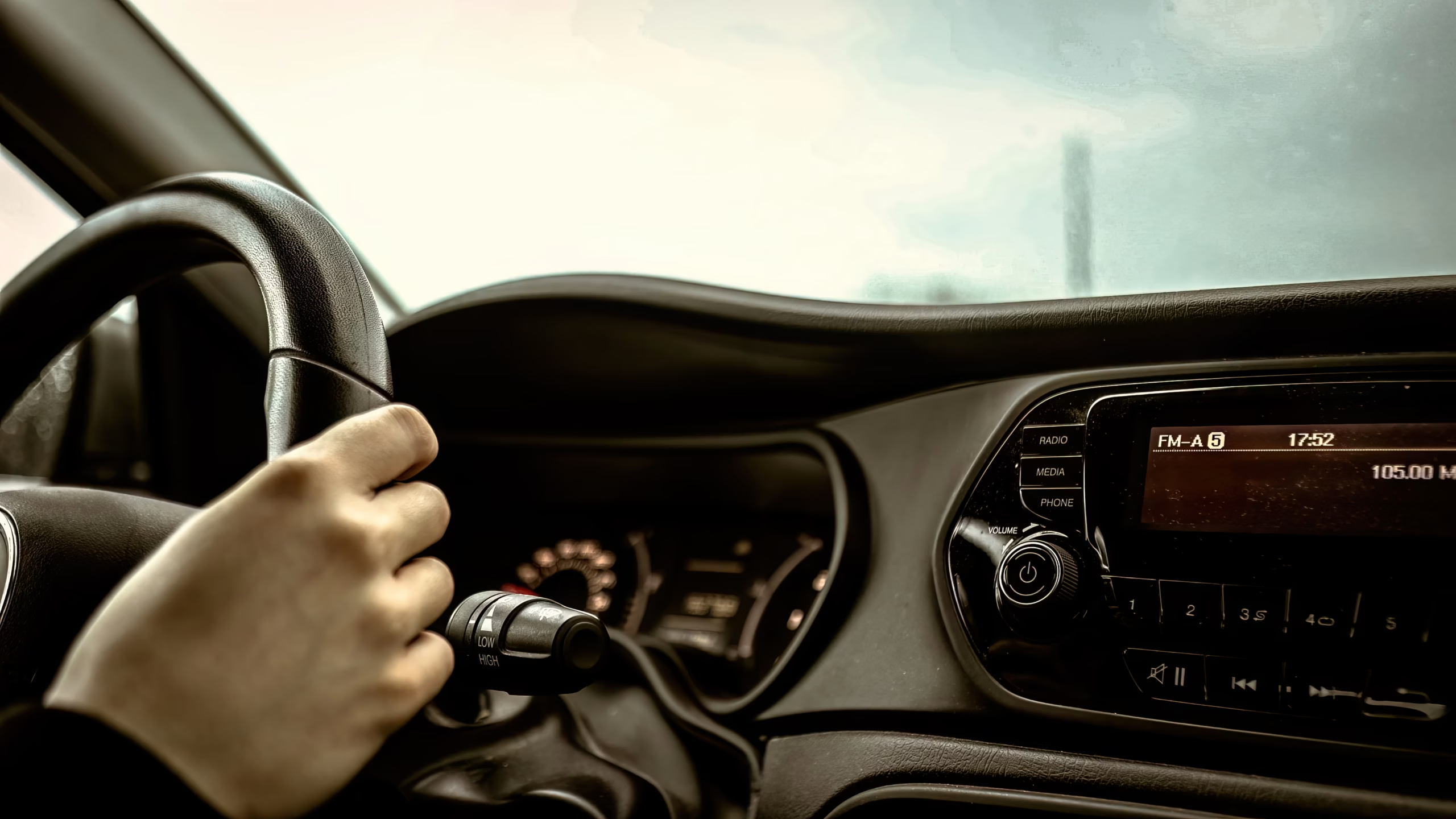
First, the steering wheel gripped between his hands, the warm interior, that windshield landscape that always feels suspended, as though the real world were just beyond the glass but had no genuine intention of making itself understood. The radio mumbled songs and advertisements, as radios everywhere do: they sell you happiness in three-and-a-half-minute packages, then slip in a deal on mattresses or modular kitchens. Modern life, after all, is also this: a decent soundtrack interrupted by someone trying to sell you a couch.
Then sleep.
That bastard—sudden, viscous. The kind that arrives when you stop resisting and grabs you by the collar like an old friend who is drunk but honest. It says: sit down, son, you have played tough long enough. Now close your eyes and, for once, let the world come to you.
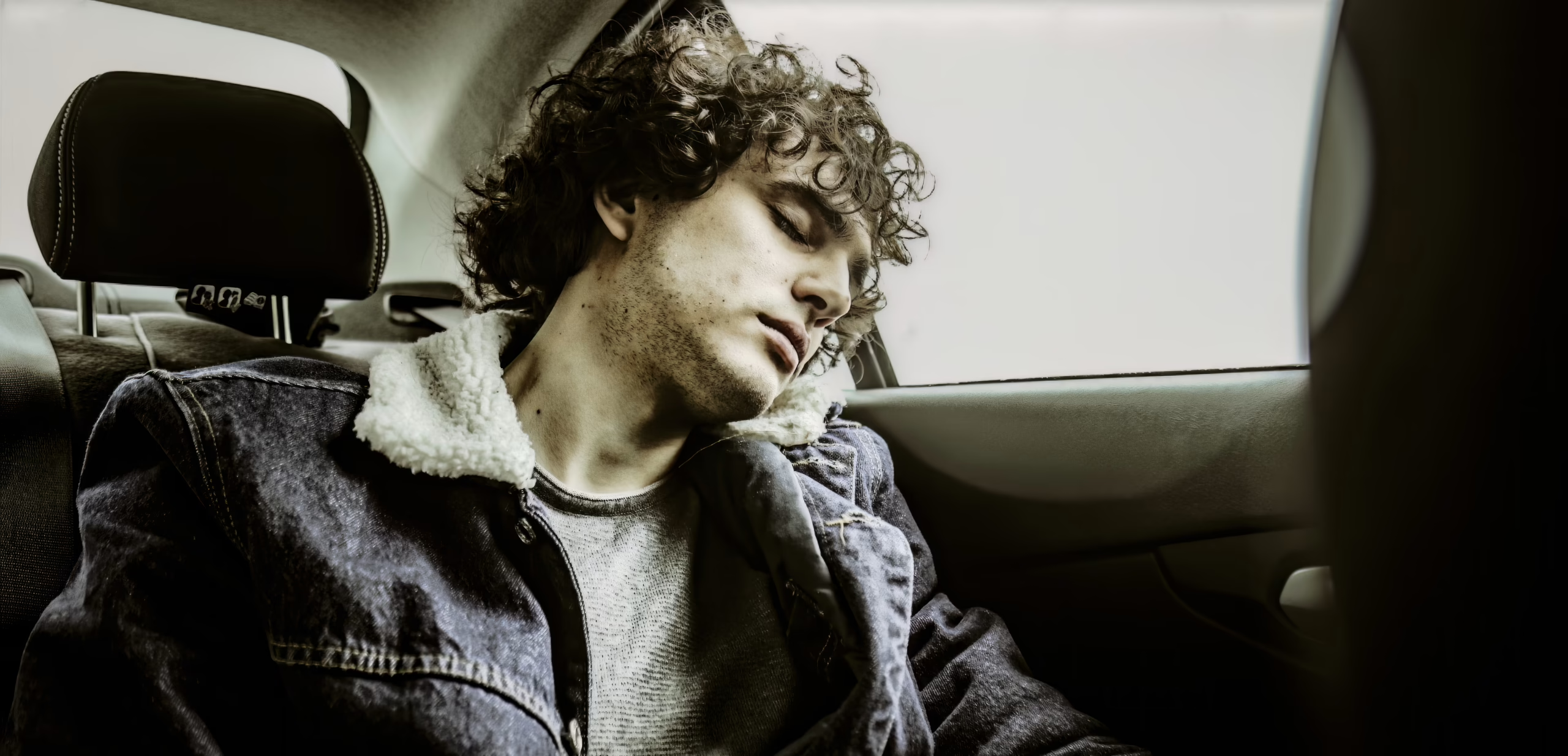
He sat in the back seat of the car with his head resting badly, that elegant position we all assume when we are about to fall asleep in a car and that makes us look as though we have survived a night of unforgettable sex even when, far more prosaically, we have merely slept four hours and eaten like shit.
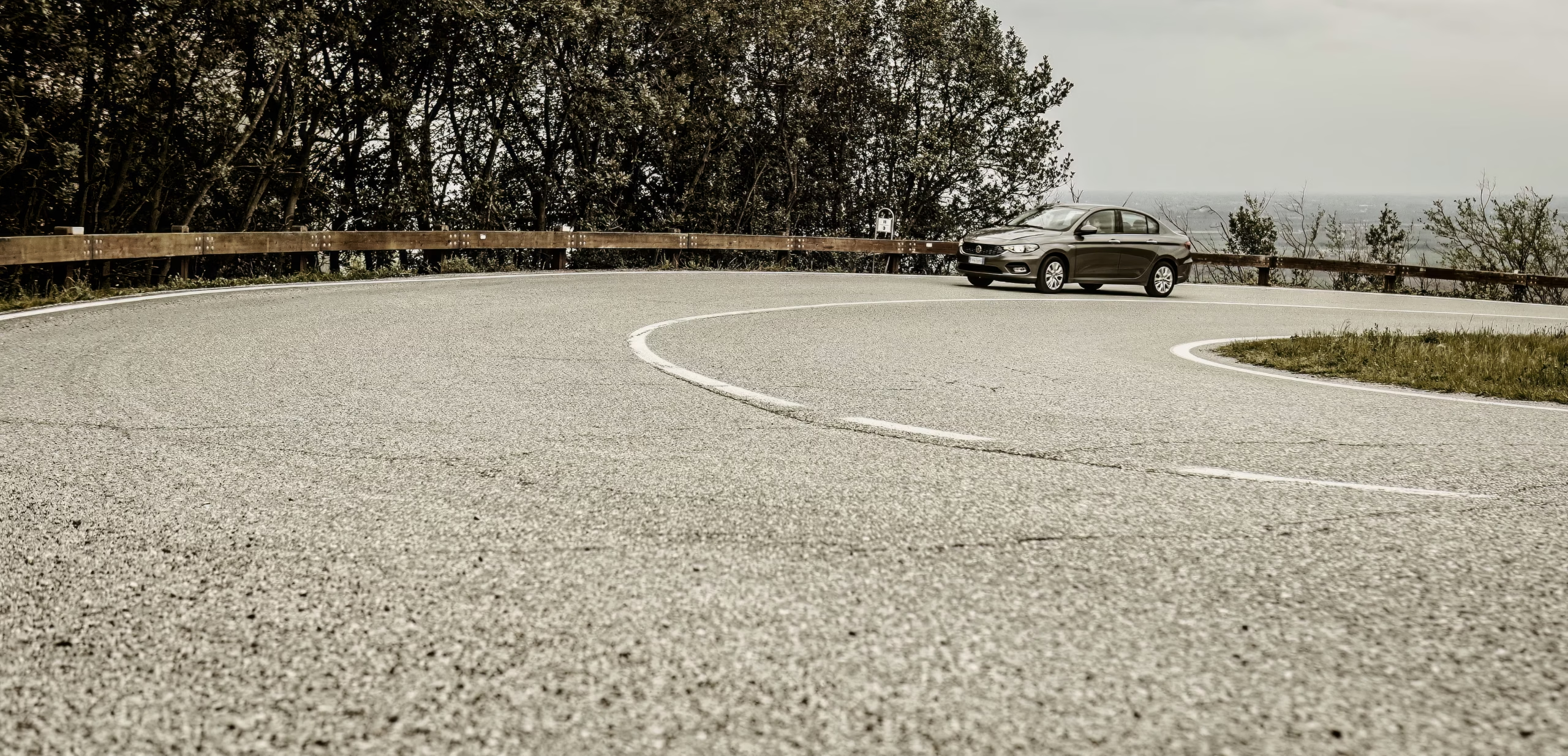
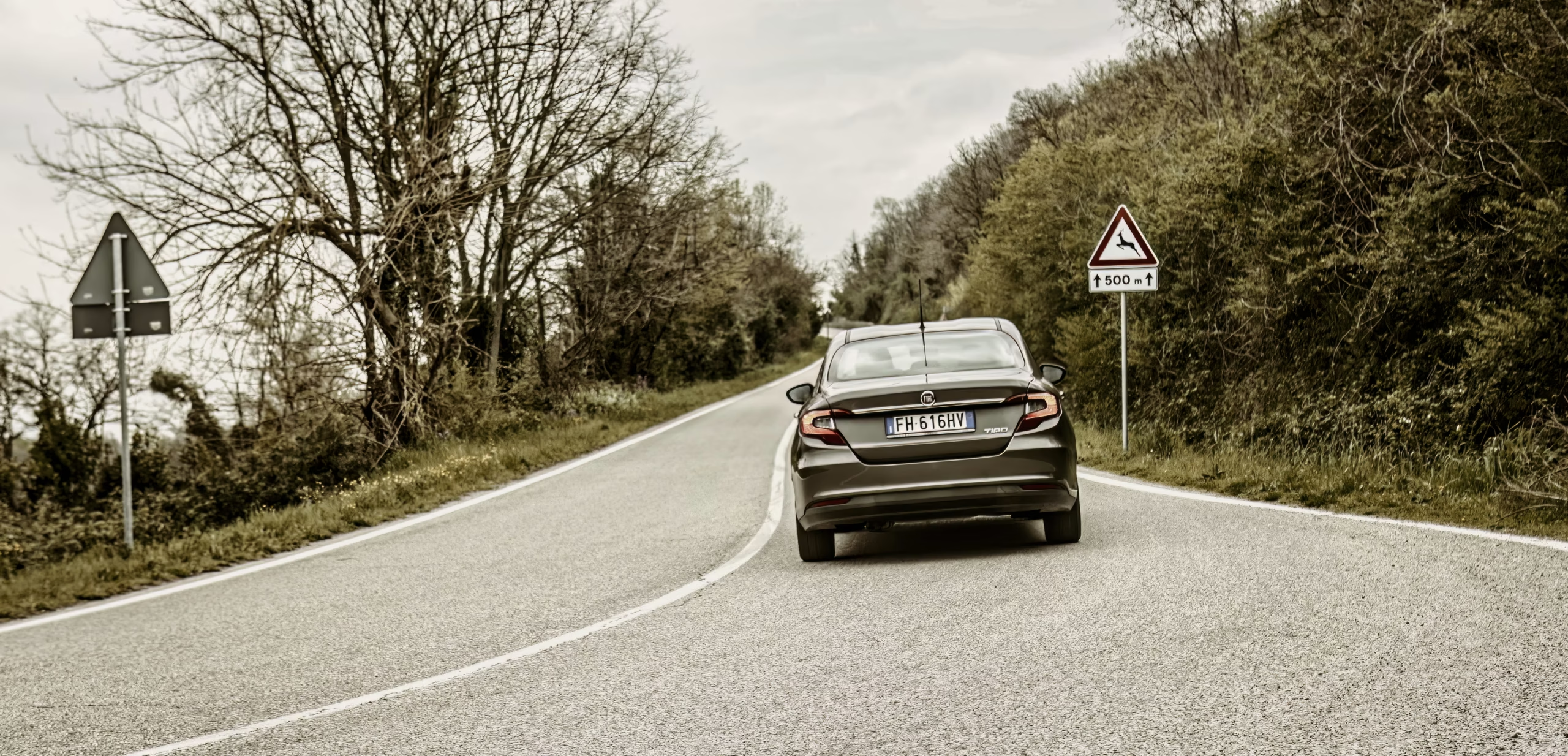
Outside, roads, bends, and trees slipped past.
Inside, probably much more.
At some point, the car ceased to exist.
No engine.
No asphalt.
No destination.
Only water.
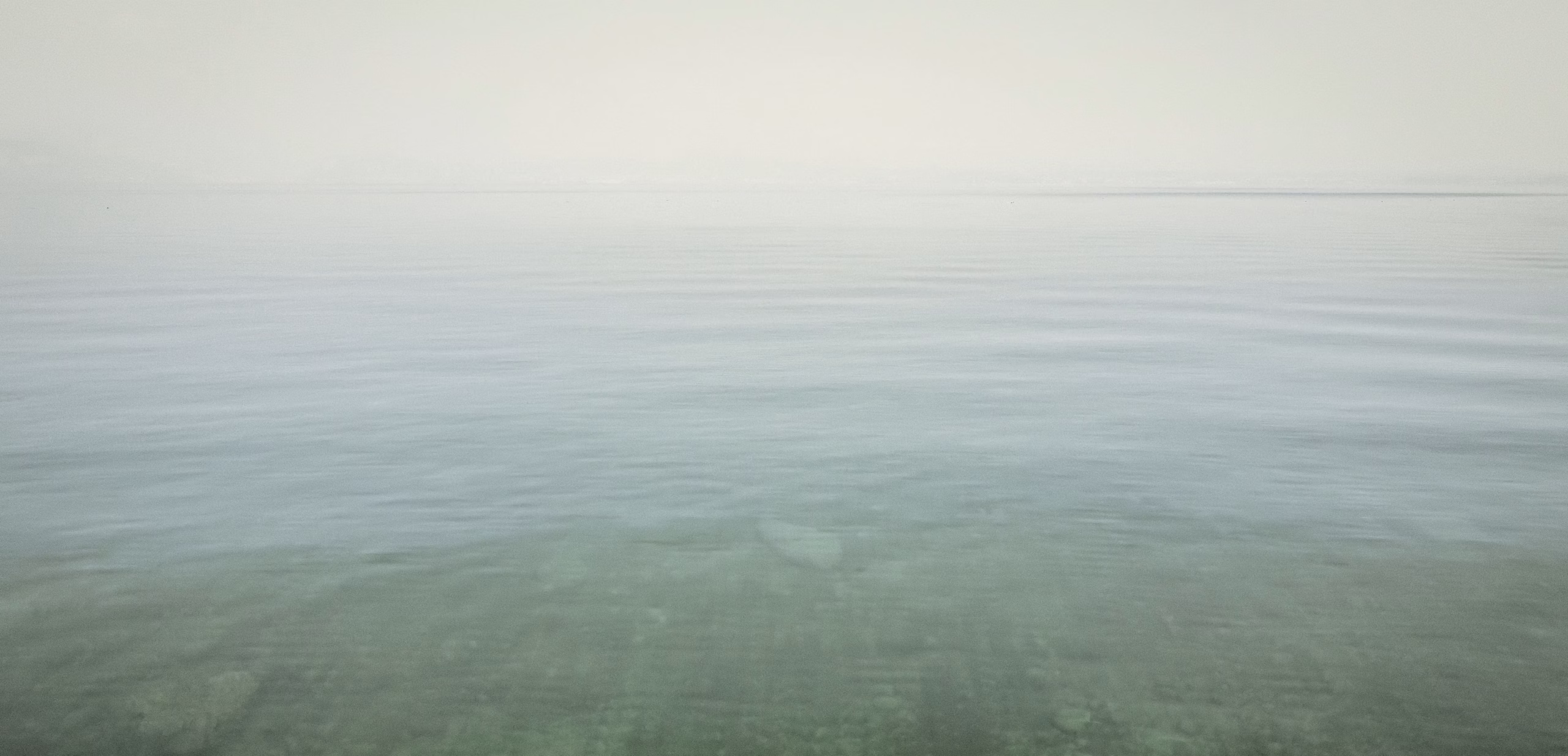
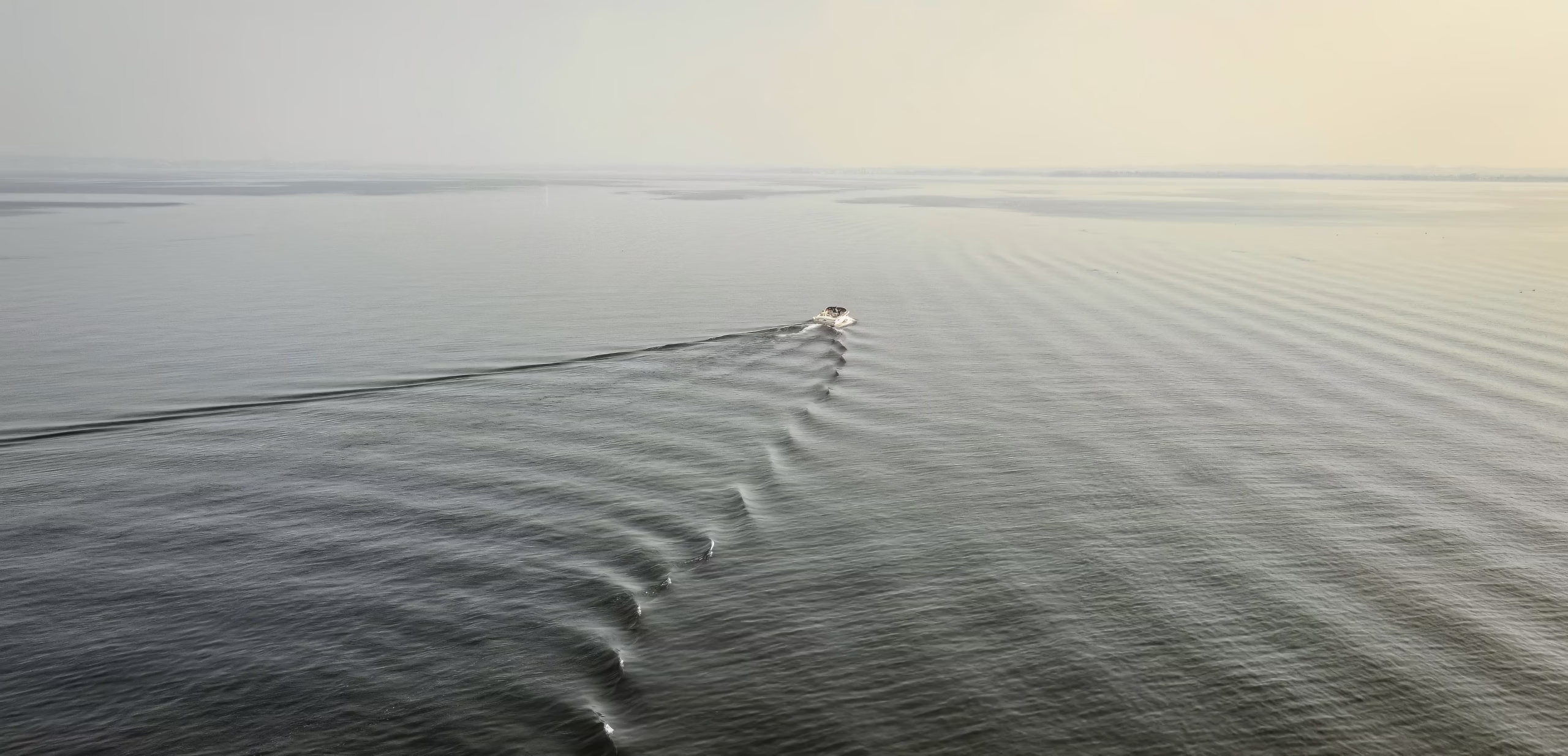
An enormous expanse of motionless, pale, nearly boundless water.
And him standing before it.
He did not know how he had arrived.
But in dreams, that is a pointless question.
In dreams, you do not ask the conductor for a ticket, consult Google Maps, or receive an email reading Welcome, check-in is available from 2:00 p.m.
You are there.
The end.
It is one of the few freedoms we have left.
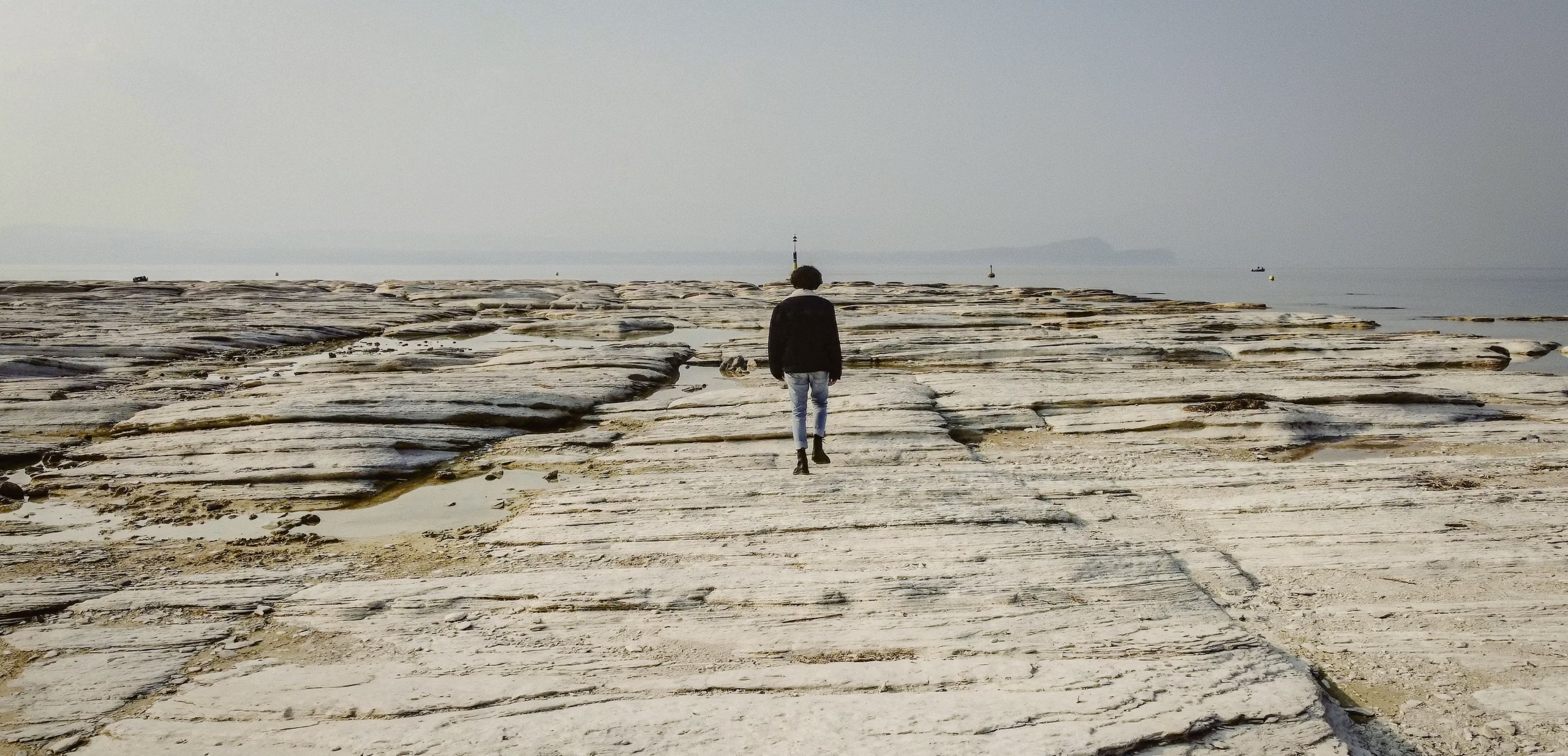
He walked along that shore the way certain people do when they are going nowhere but still feel that stopping would be worse.
He stood there in the middle of that liquid silence, watching the horizon vanish into mist. There was no clear boundary between sky and water, and it possessed a dirty, almost irritating fascination. Like certain people when you cannot tell whether they are about to save you or ruin your week. The horizon had disappeared, yet the world continued. There is a beautiful lesson in that, if you think about it: not seeing the end of something does not mean it does not exist. Sometimes it means only that you are too small, too tired, or too human to bring it into focus.
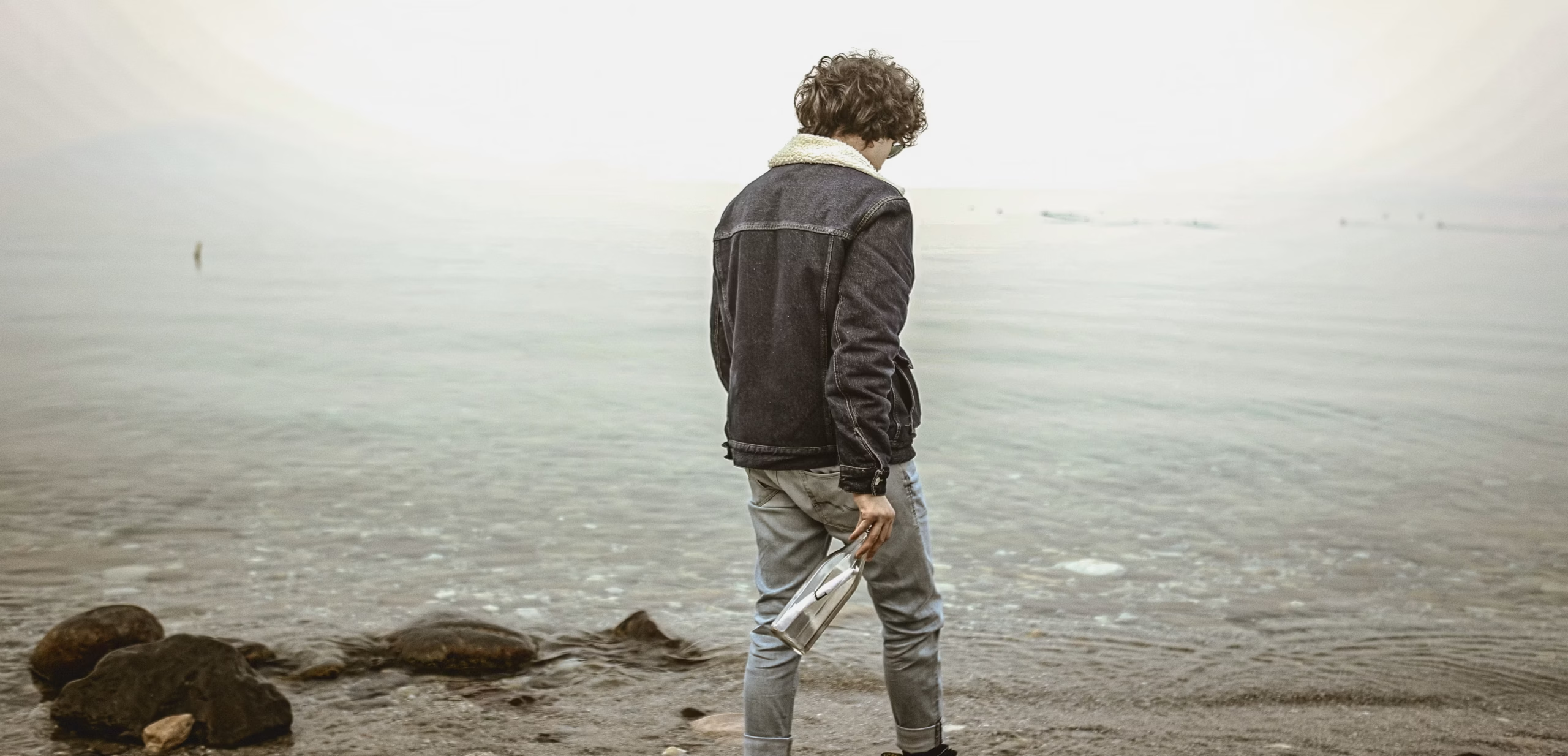
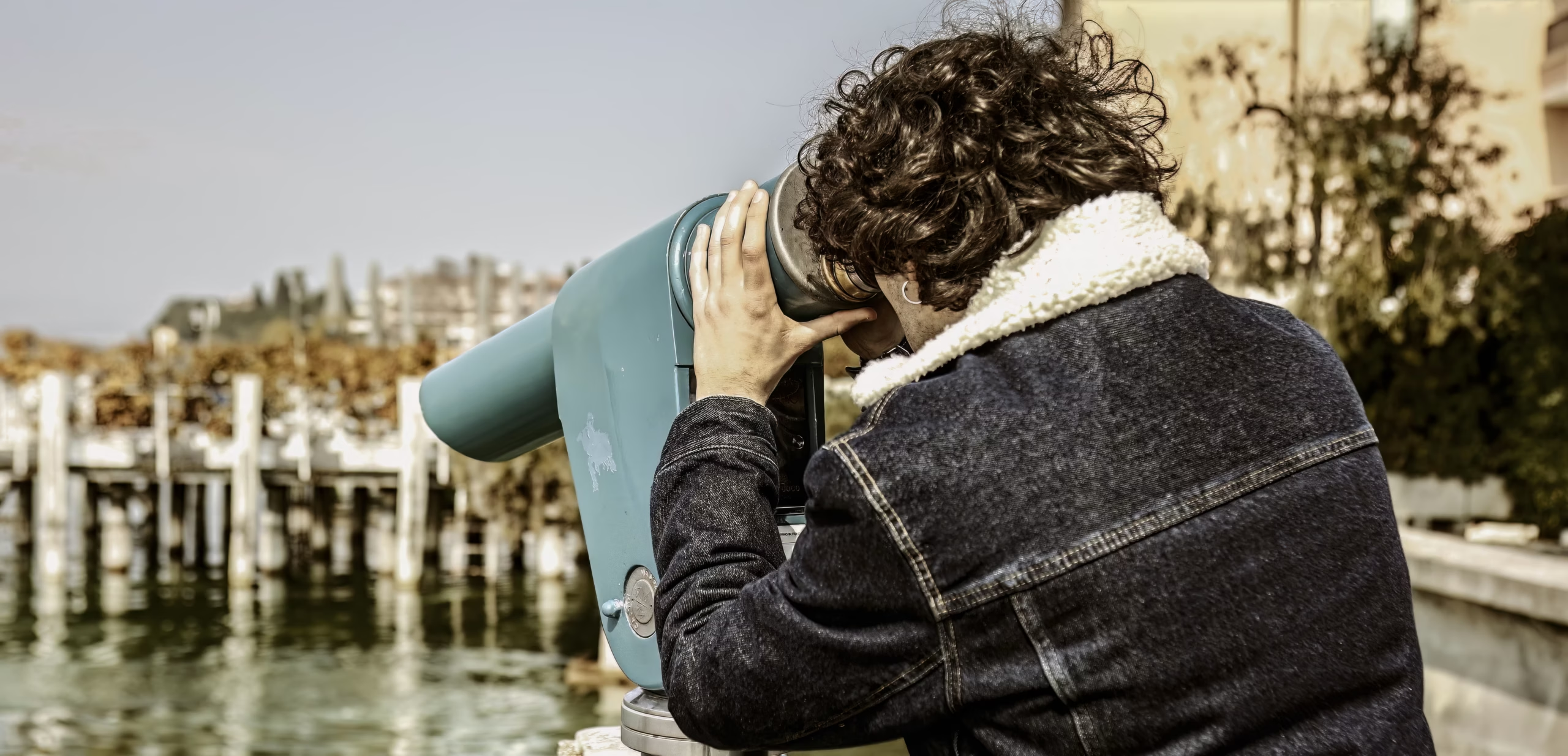
A young man with his head still half full of sleep, jacket on, wearing the expression of someone who does not know whether he has reached the right place or whether the right place, for a change, is only an urban legend invented to keep us from putting a gun in our mouths on Monday morning. He watched the water from behind, in silence, the way one watches something one does not want to disturb.
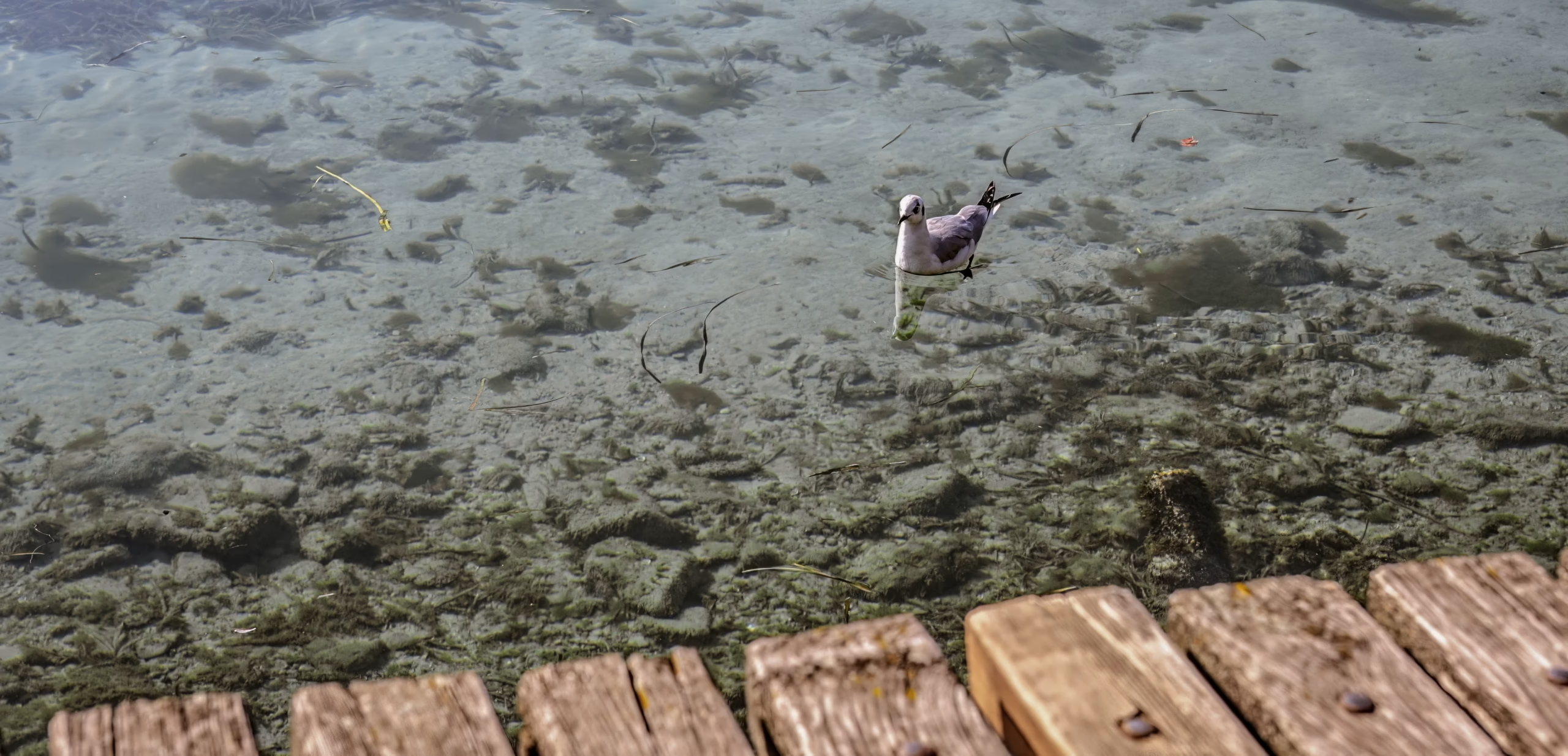
A seagull crossed that milky air like a sentence that came out well by accident. Quick, essential, almost insolent. Birds possess this privilege: they have to explain nothing. They fly. That is all. We, on the other hand, must always account for our collapses, escapes, returns, and silences. If you move away from someone, you have to say why. If you stay, you have to say for how long. If you love, open up. If you do not, clarify. A bureaucracy of the heart that makes you want to reincarnate as a seagull and shit serenely on tourists’ boats.
The curious thing was the silence.
Not true silence.
That almost never exists.
There were footsteps, water, a few distant voices, the noise of people crossing the day while occupied with their small human affairs.
But the chaos was missing.
That mental buzz we normally carry like a broken radio no one can switch off anymore.
For once, there was nothing to solve.
And perhaps that is one of the hardest things to accept.
We have built lives in which we must constantly arrive somewhere.
We have to improve.
Understand.
Decide.
Become.
Find love.
Leave it.
Take it back.
Send it a message at two in the morning and regret it at 2:07.
We have turned even happiness into a project with deadlines.
He, meanwhile, walked.
And it was enough.
He watched people.
He liked that.
From a distance, a crowd is only a crowd.
Then the light changed.
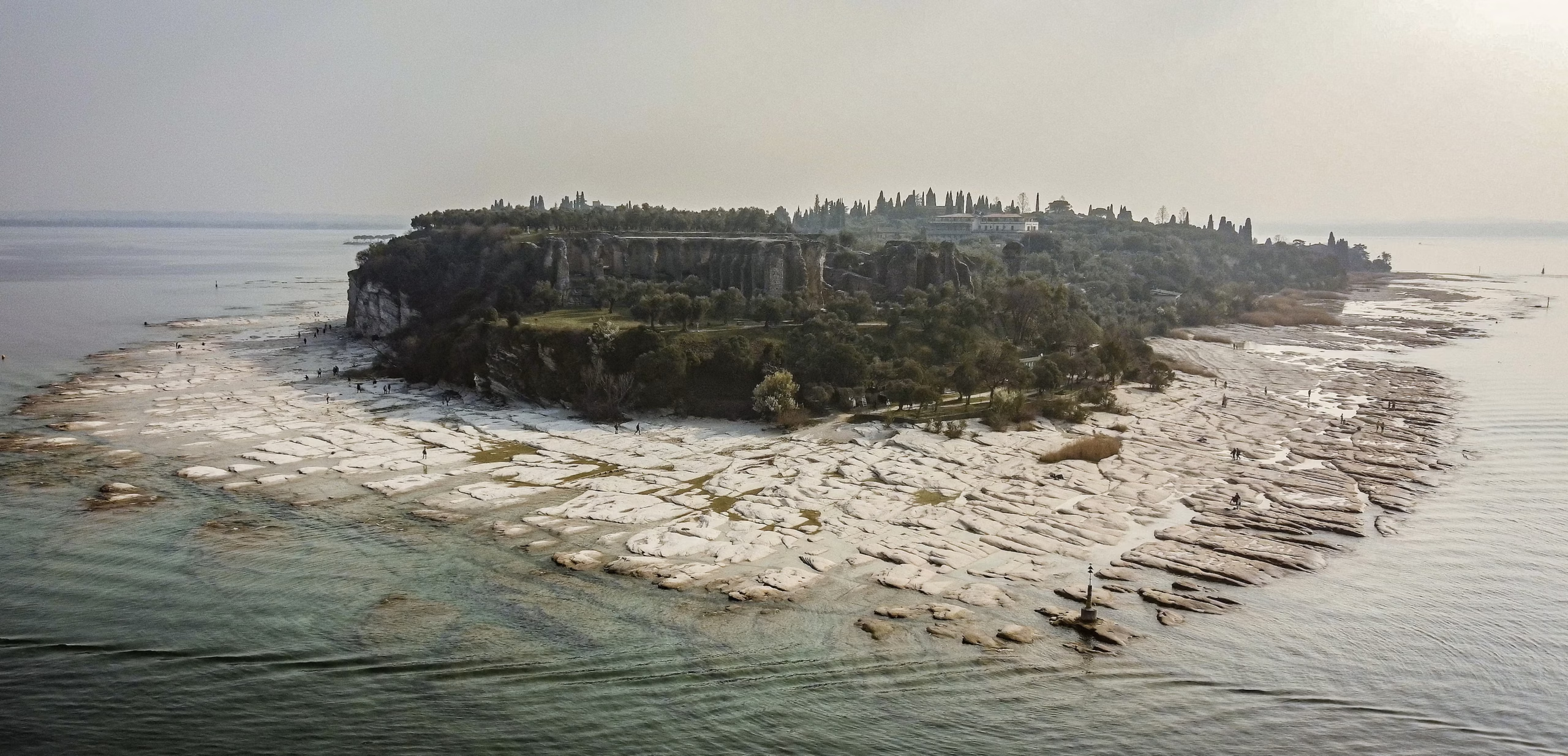
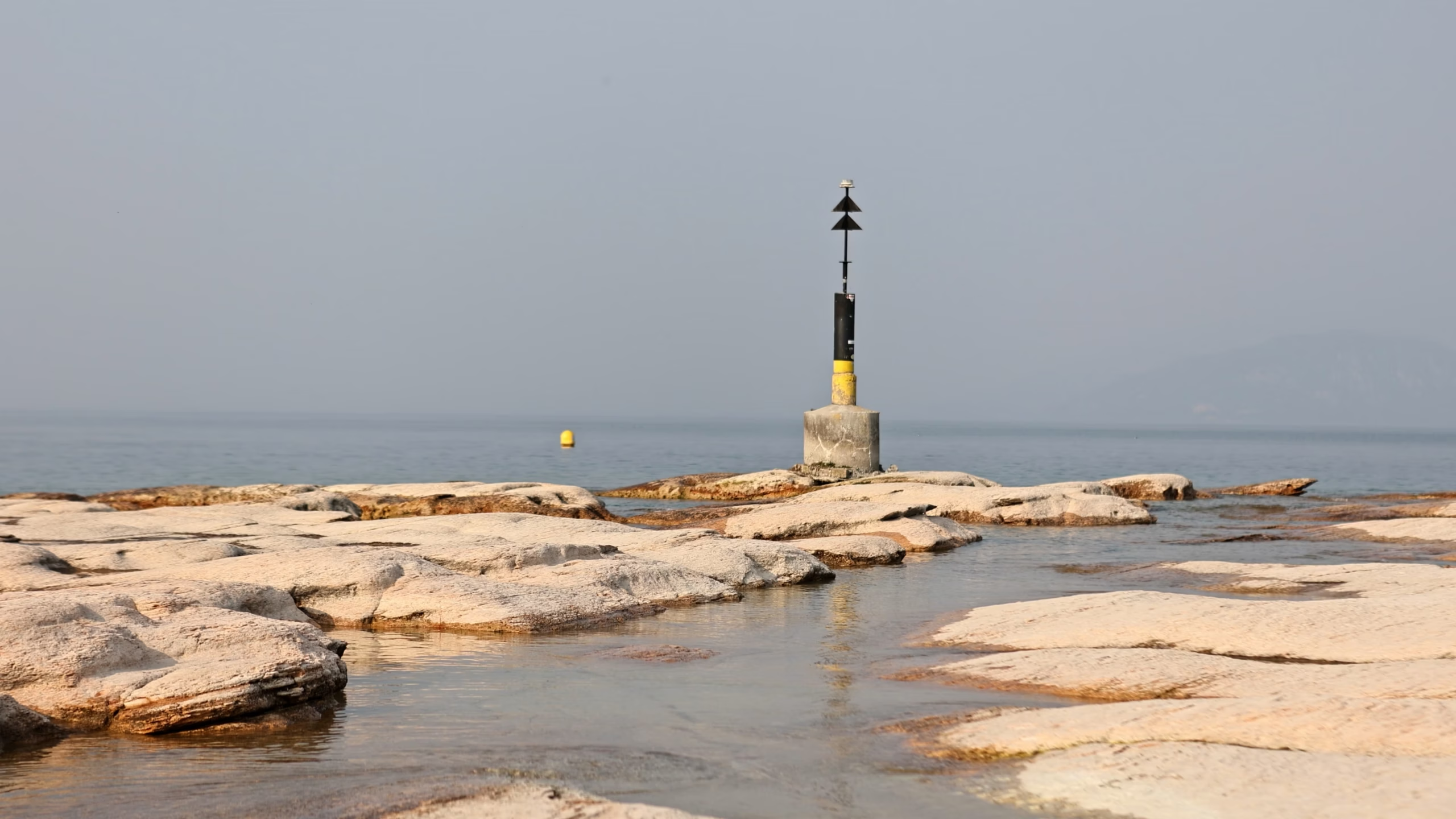
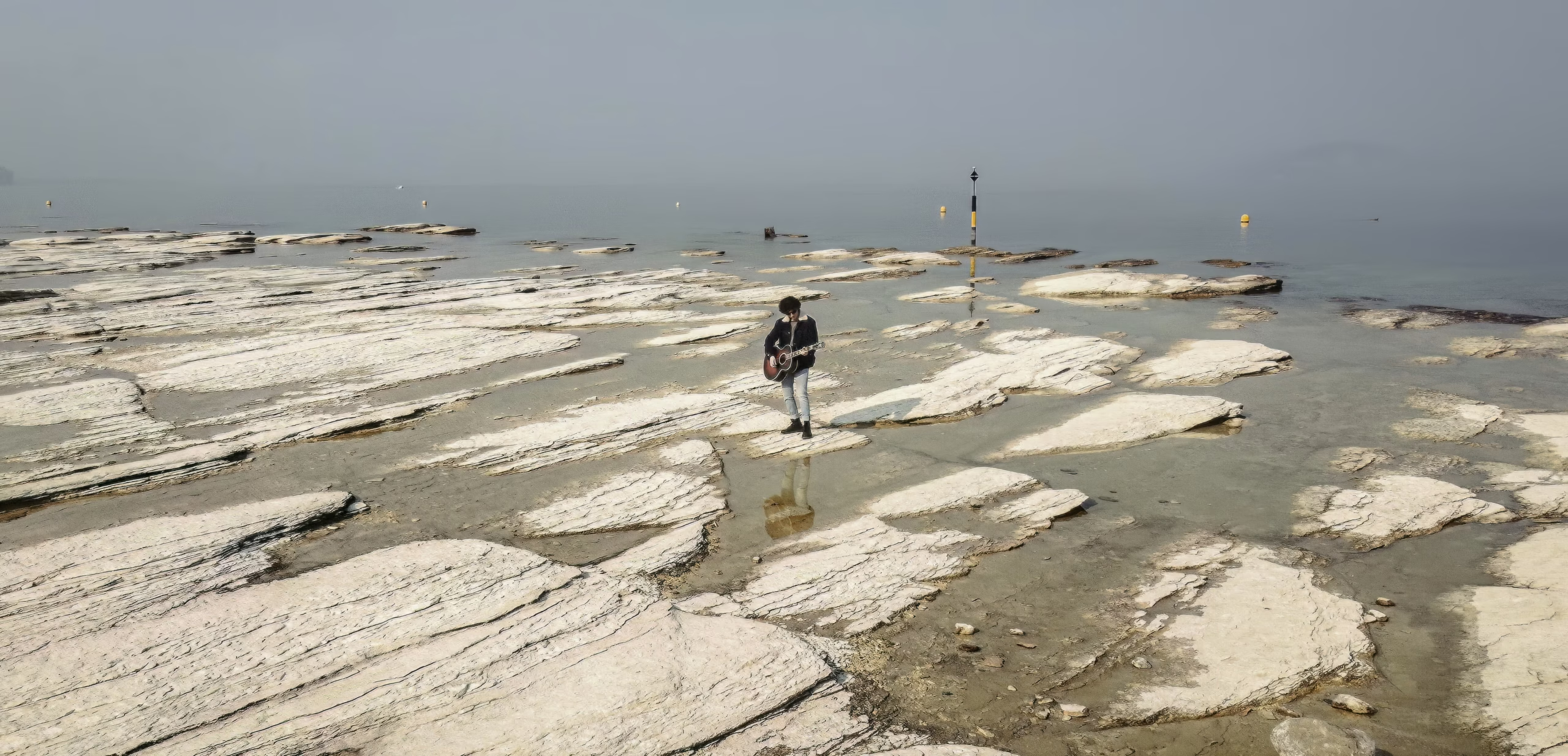
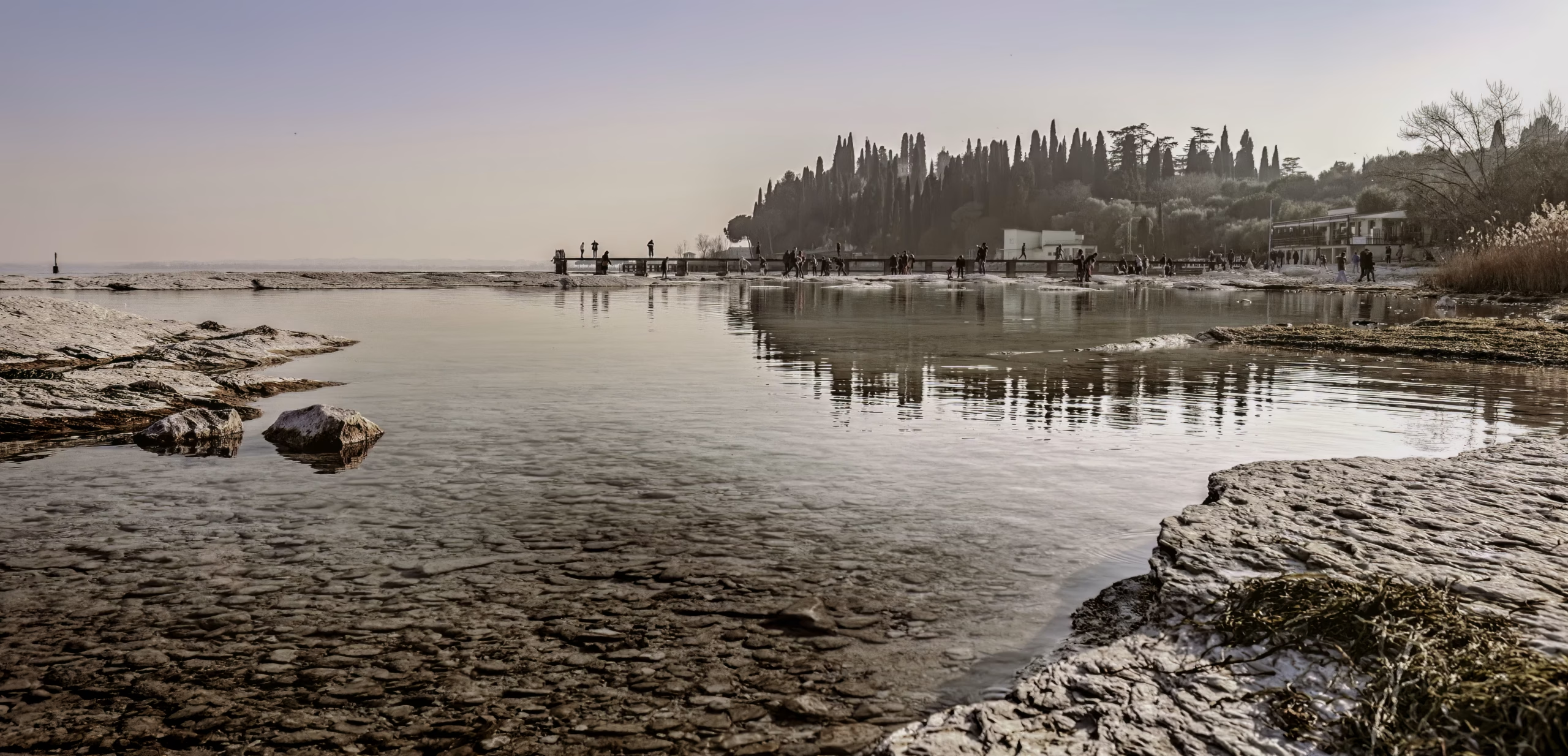
As happens in good dreams, the landscape opened little by little. It did not reveal itself; it yielded. Flat rocks, transparent water, wooden walkways, pale shores, a few living creatures reckless enough to wander around pretending it was an ordinary day. But there was nothing ordinary about that place. It had that rare quality possessed by things that look simple and instead open a trapdoor beneath your feet.
There were people, yes. People everywhere. People walking, people watching, people talking, people who probably even loved each other—or at least hoped they did. All engaged in the customary human balancing act: existing in public without revealing too clearly how alone they were. He watched them one by one, the way you watch the supporting characters in a film when you begin to suspect they may be more real than the protagonist.
Couples.
Families.
Strangers.
Someone in love.
Someone who had just argued.
Someone probably thinking about dinner.
Someone else perhaps seriously considering abandoning everything, moving to Portugal, and opening a bar on the beach.
He could not know.
That was precisely the beauty of it.
People are novels we always meet on page 173.
We do not know what happened before.
We do not know what will happen afterward.
And yet we pass beside them and, for a few seconds, become extras in each other’s stories.
He watched.
He did not judge.
Or at least he tried not to.
Which, for a human being, is already a considerable athletic achievement.
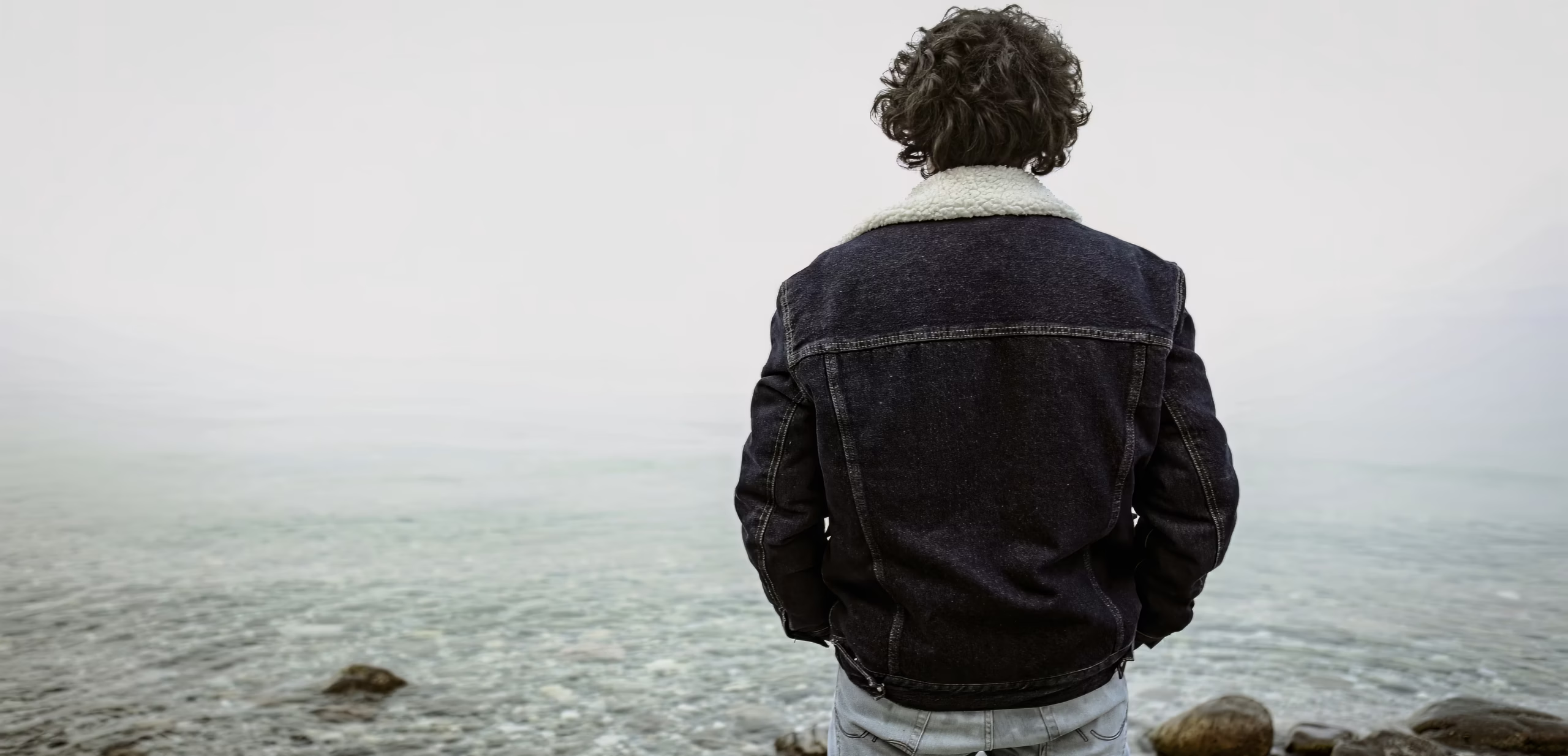
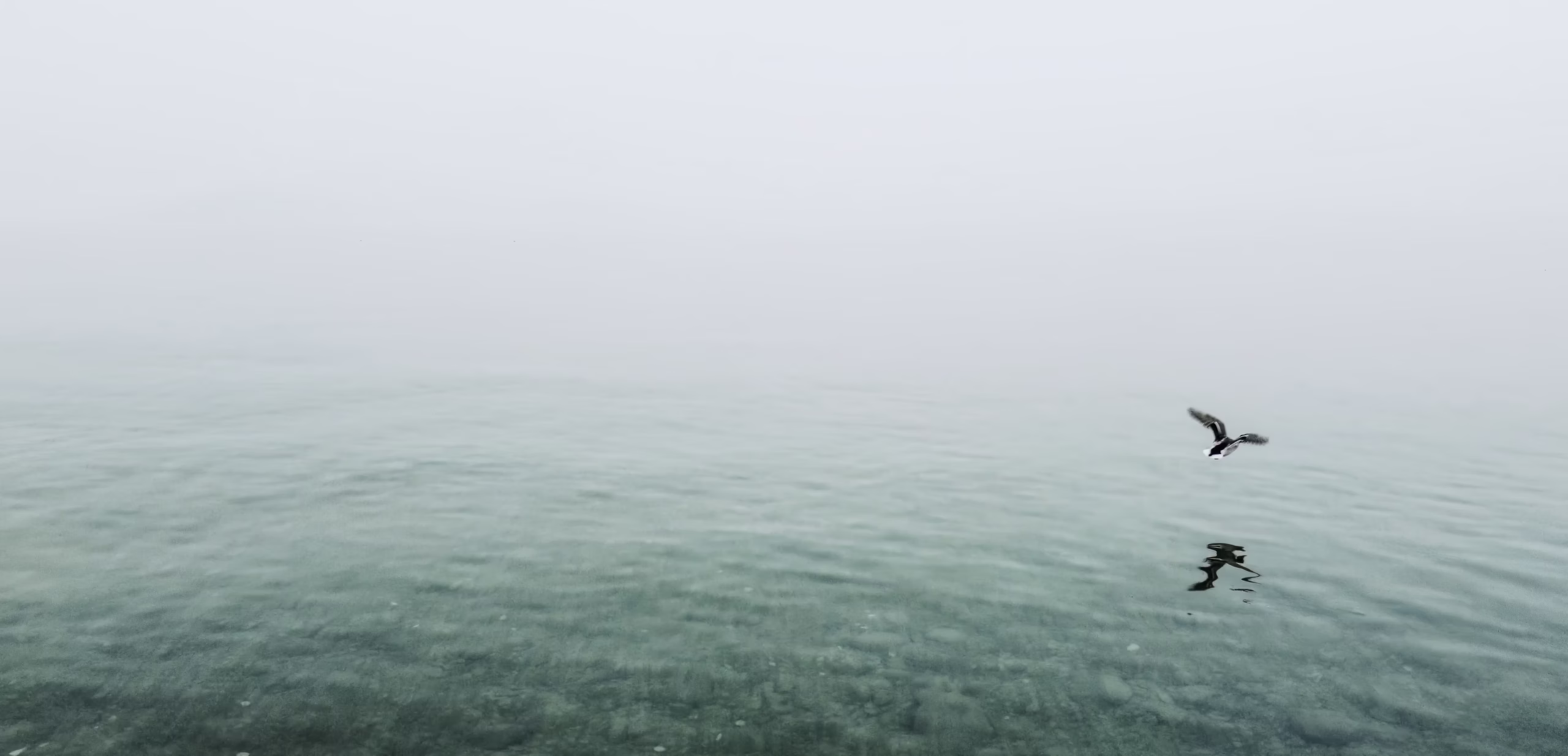
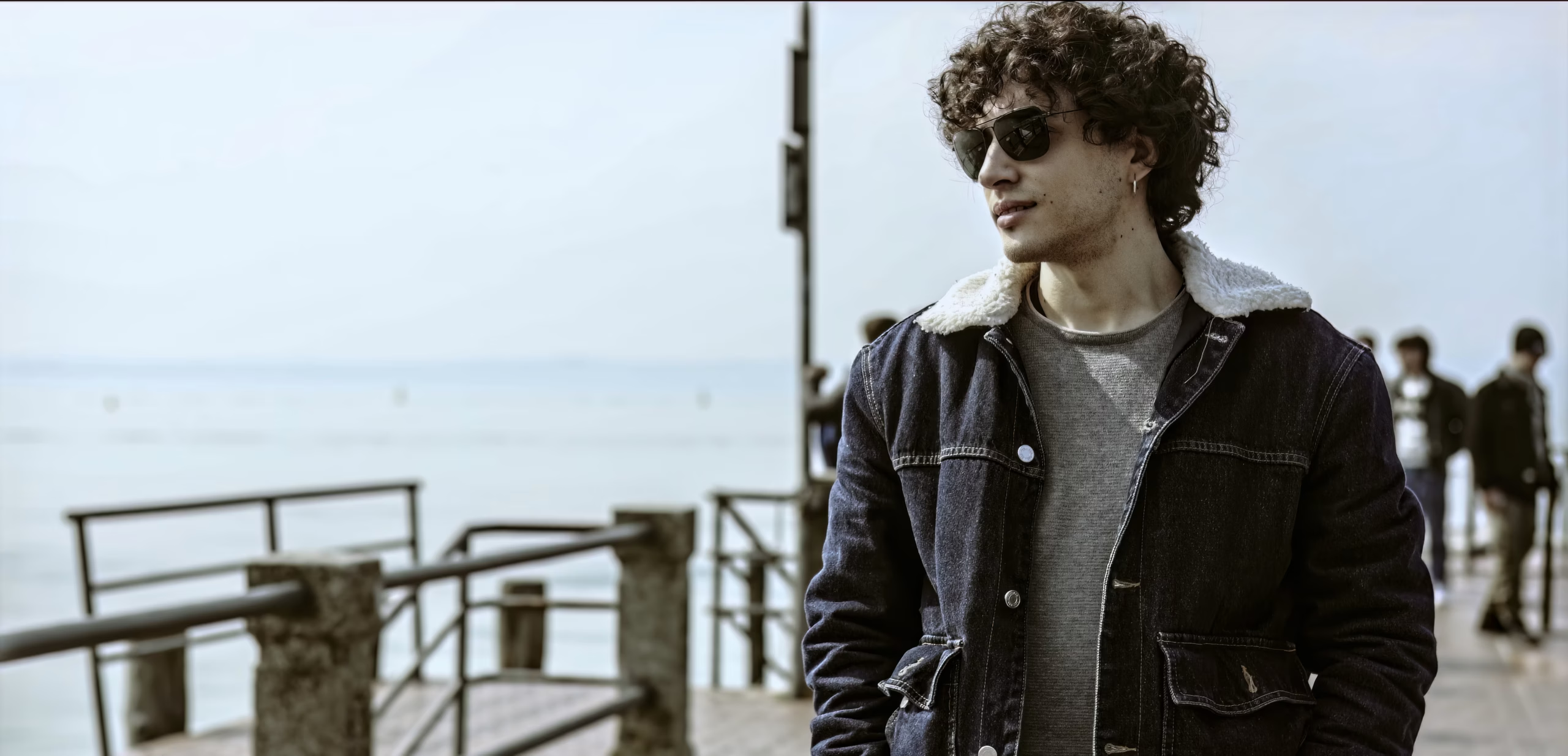
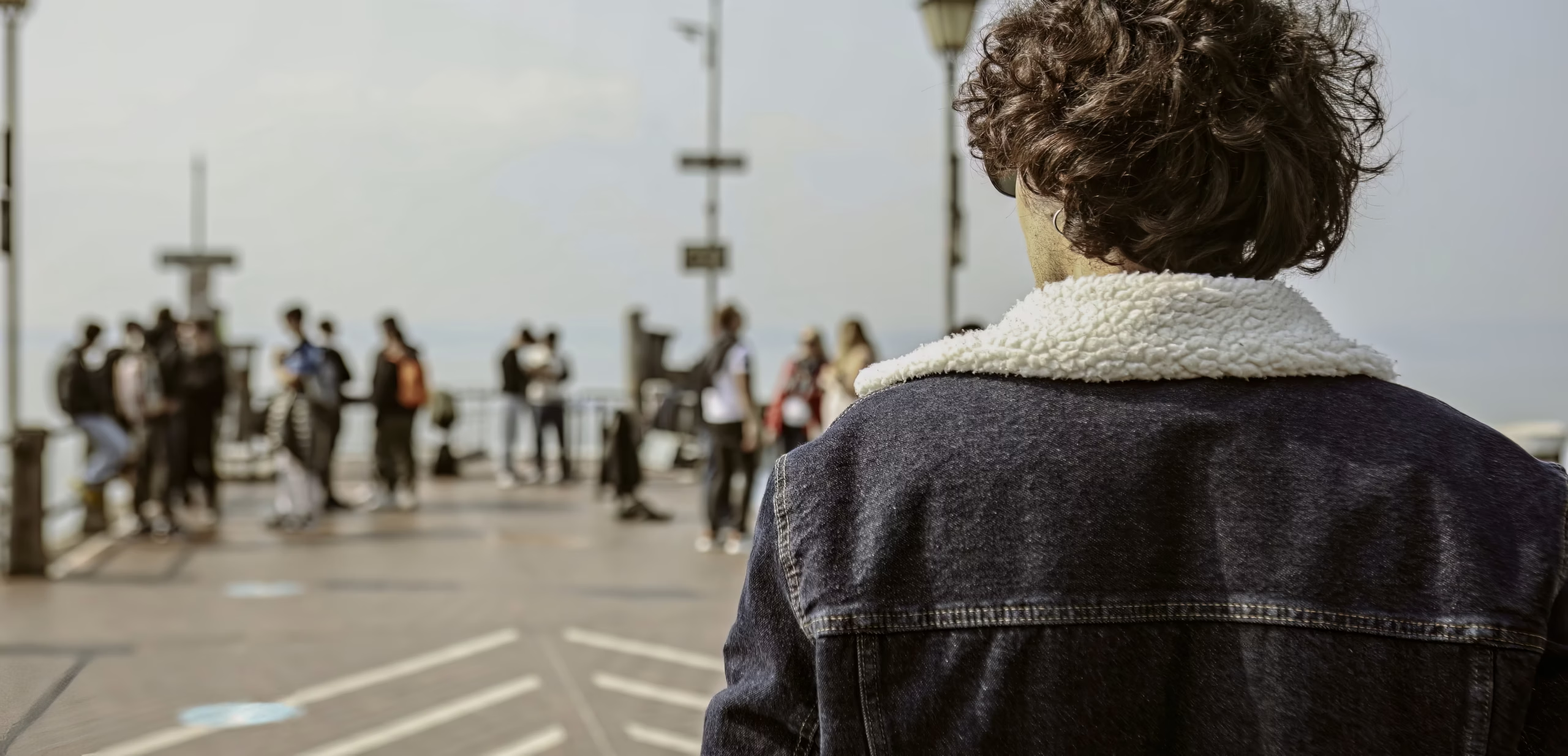
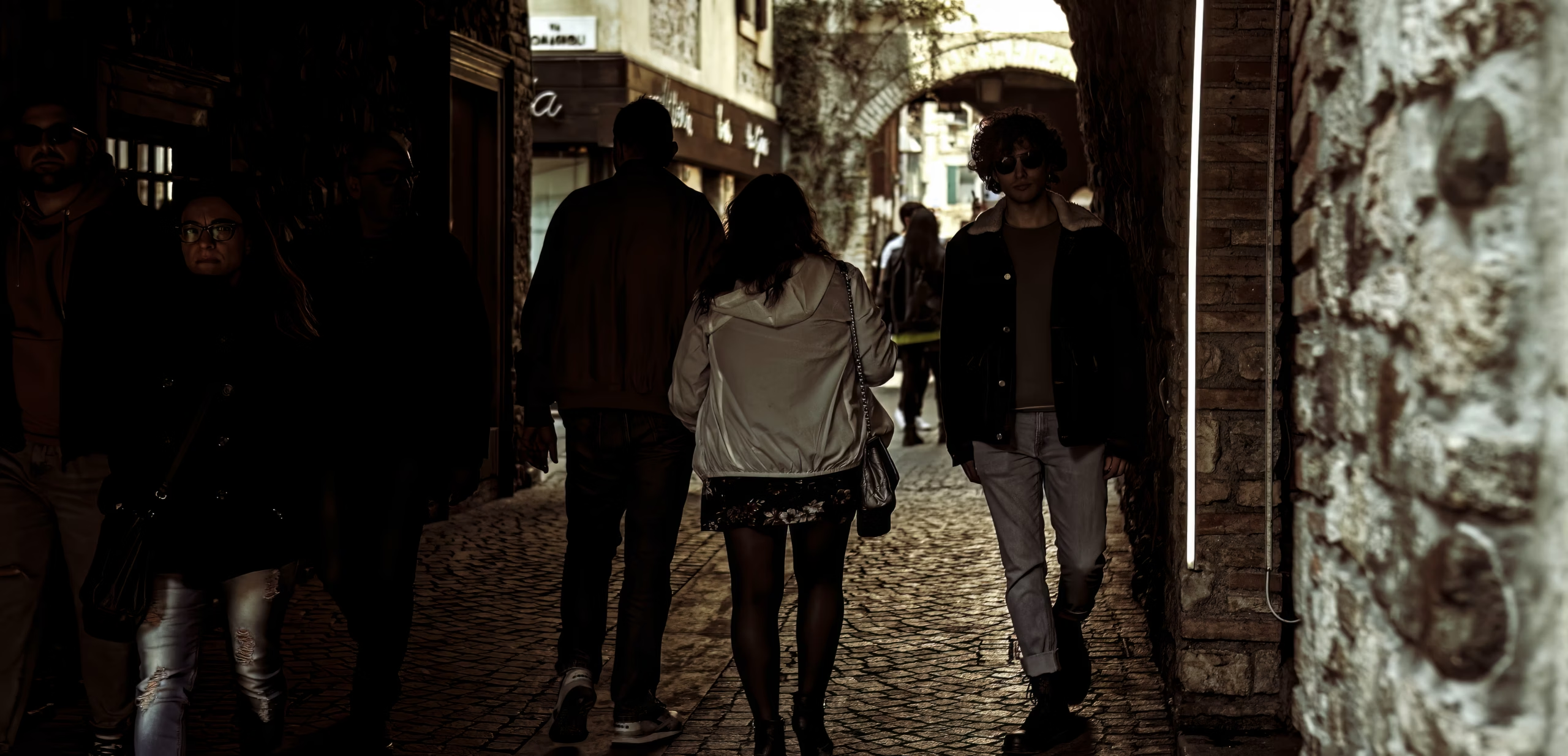

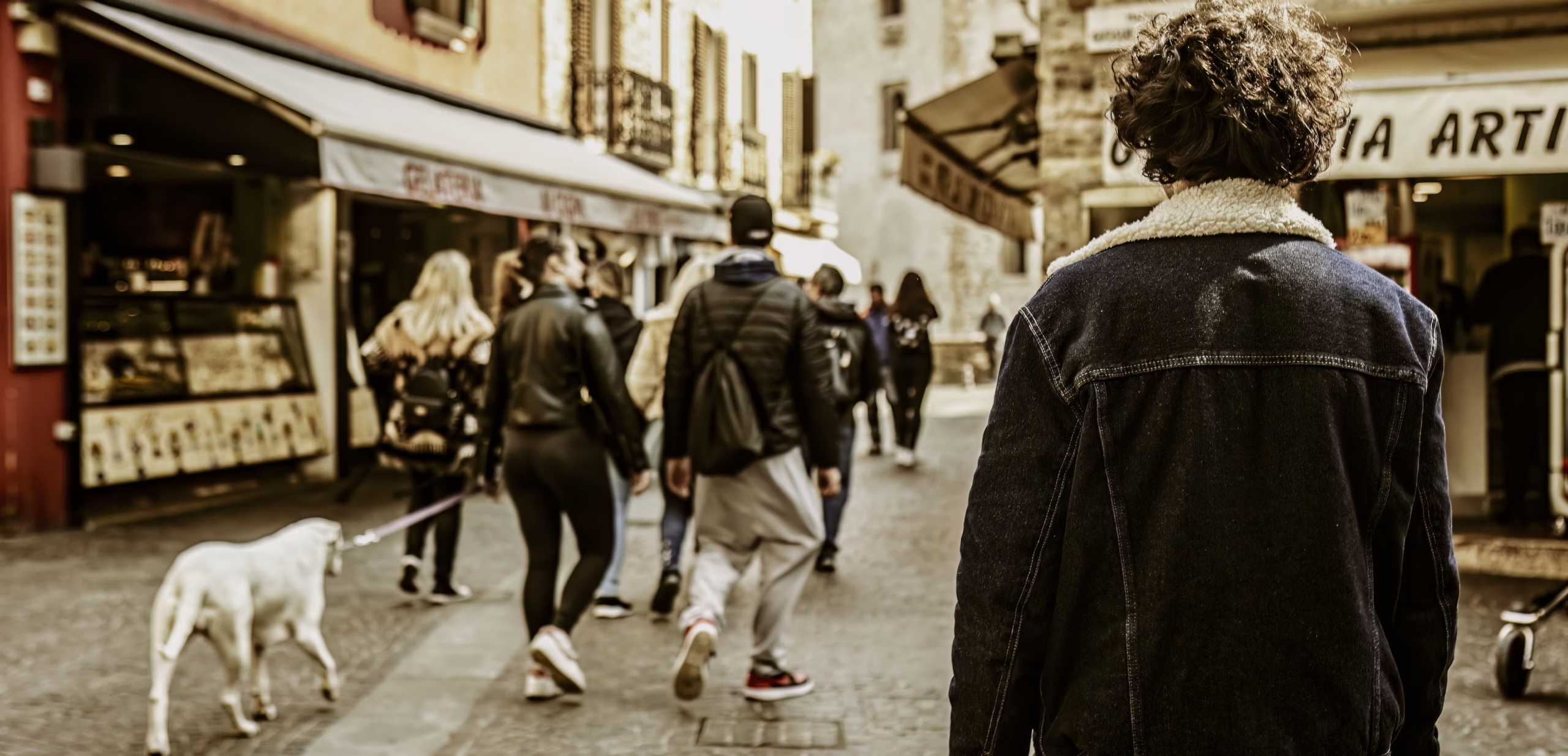
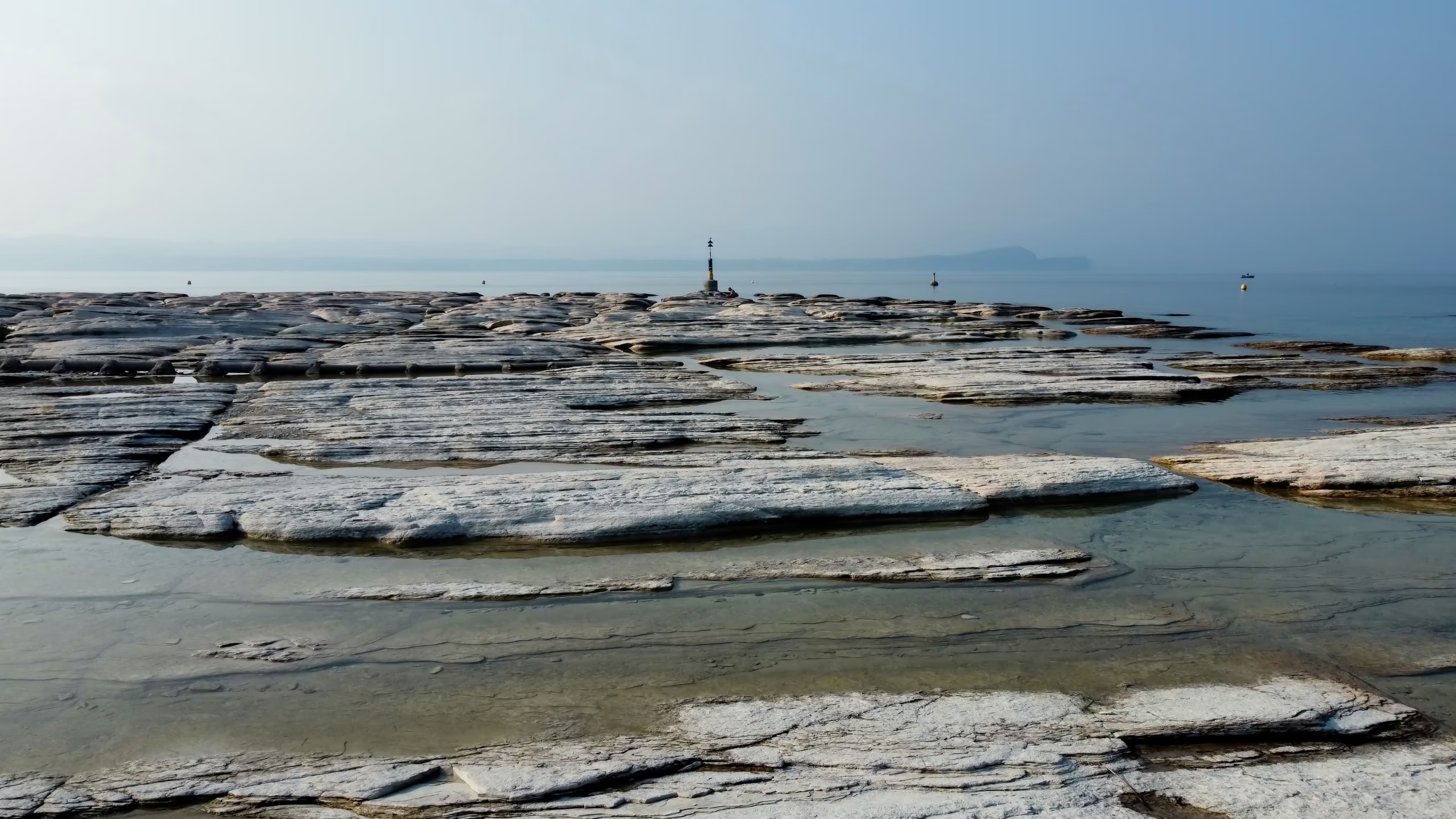
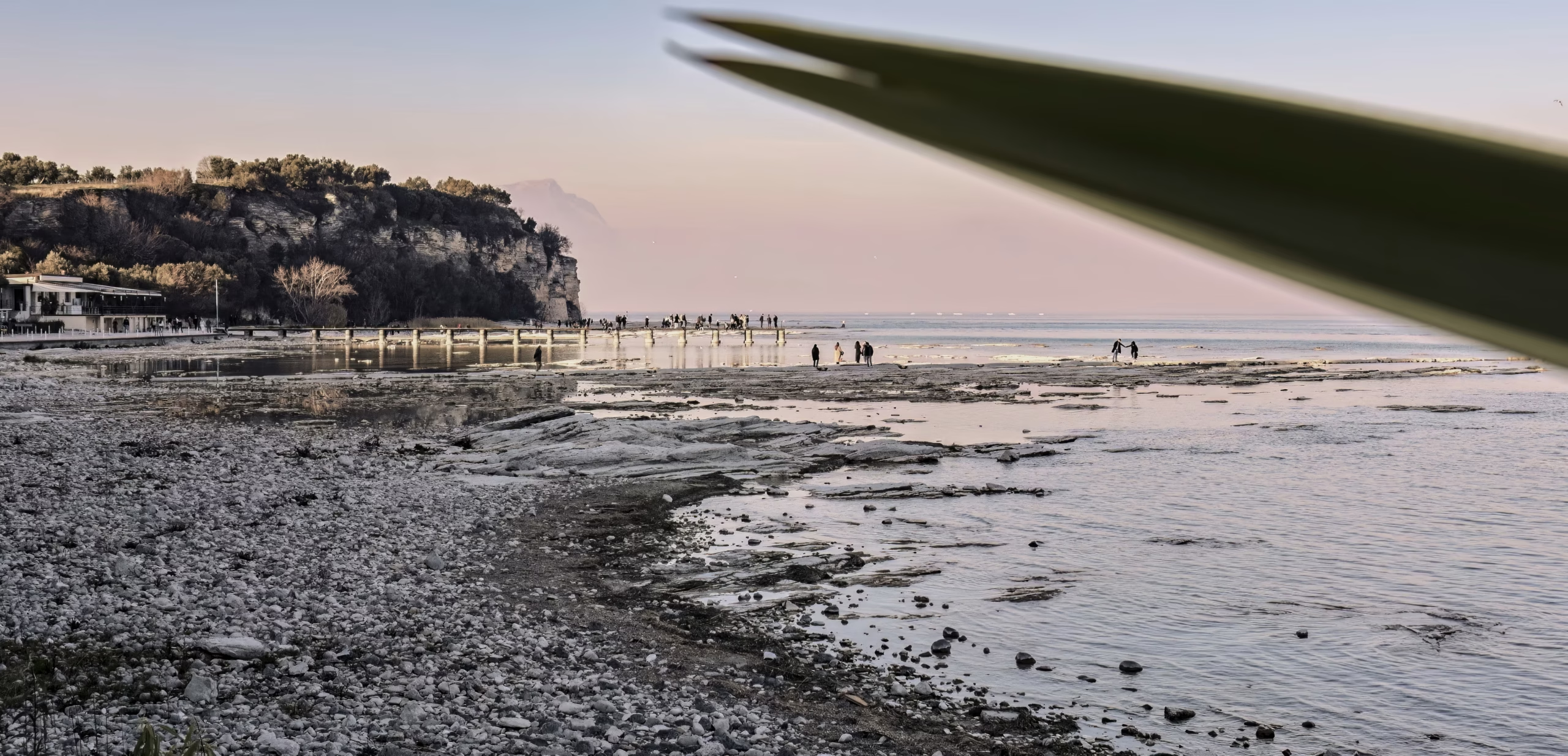
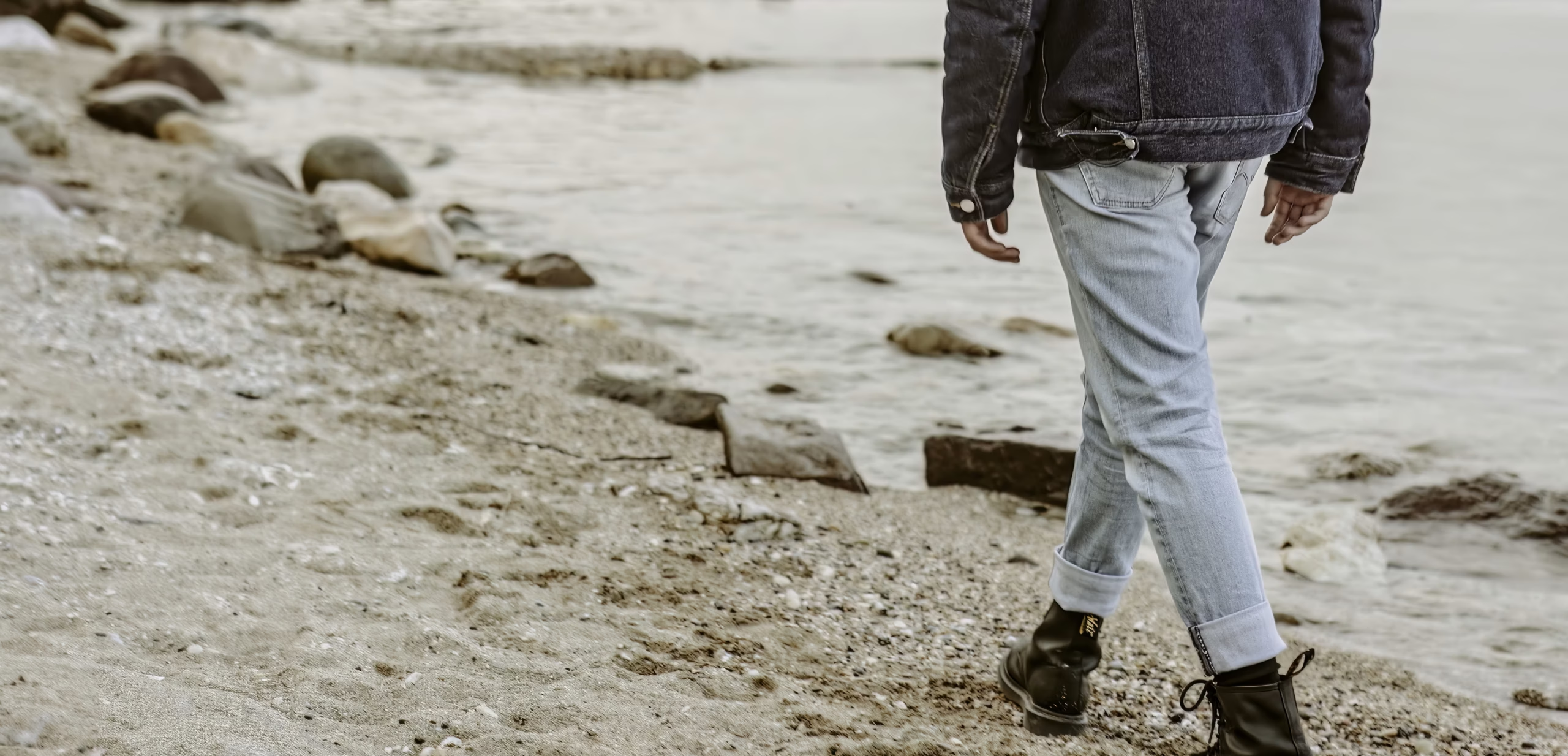
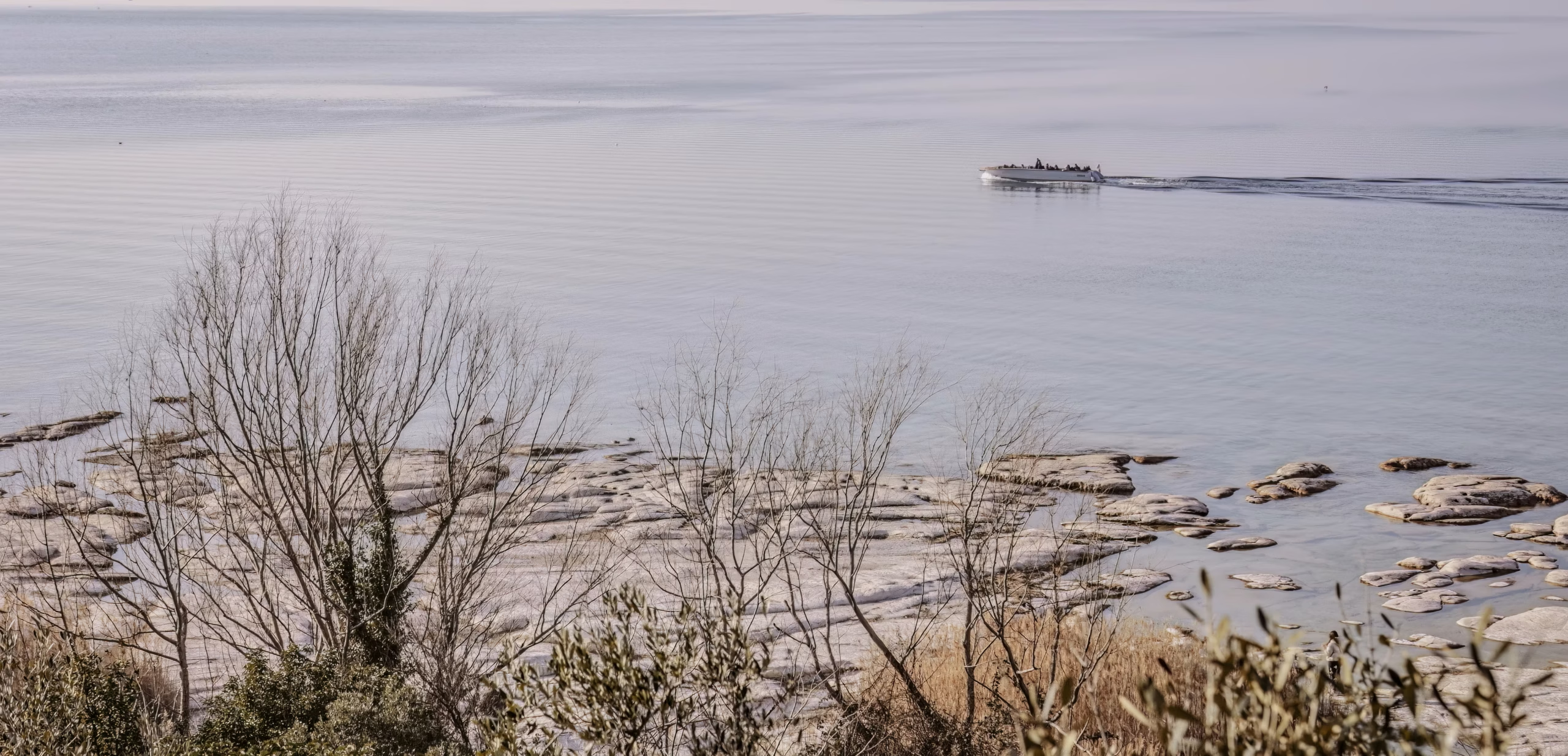
People on lakeshores always possess something tenderly absurd. They walk slowly, stop, point at things, take pictures of themselves, fix their hair, and carry dogs, children, sunglasses, and pieces of lives they do not quite know how to hold together. And yet, seen from a distance, they all look perfectly in place. Distance retouches things. Up close, we are all a failed draft. From far away, we almost look like poetry.
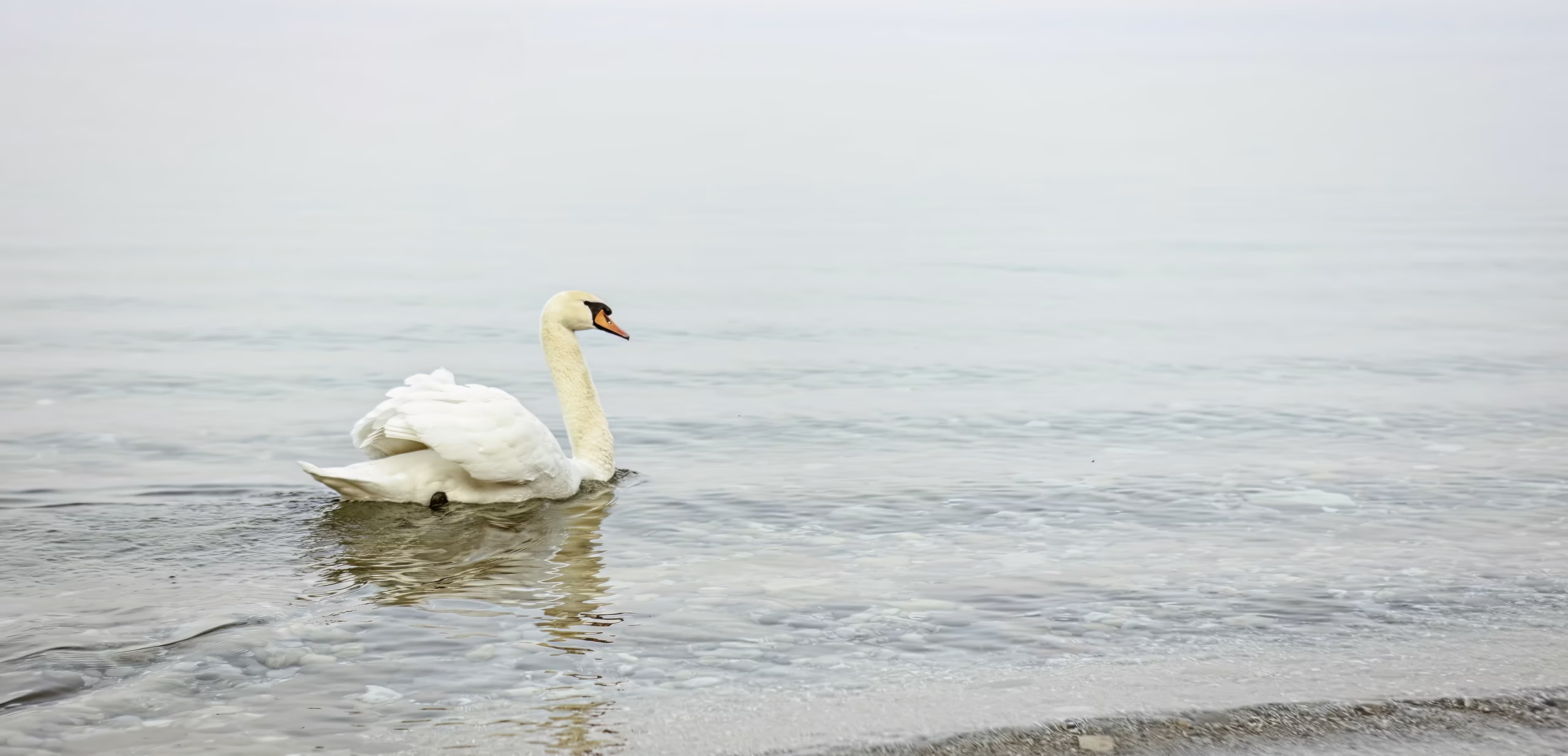
At one point, there was a swan.
White, placid, regal, with that elegant arrogance only swans and certain exes can display. It swam slowly near the shore as though the lake belonged to it by inheritance. And perhaps it did. In that dream, at least, everything seemed to know exactly where it belonged. The swan in the water. The seagull in flight. People in the lanes. I, meanwhile, was there trying to understand whether I was a visitor, a survivor, or an intruder.
Then came the music.
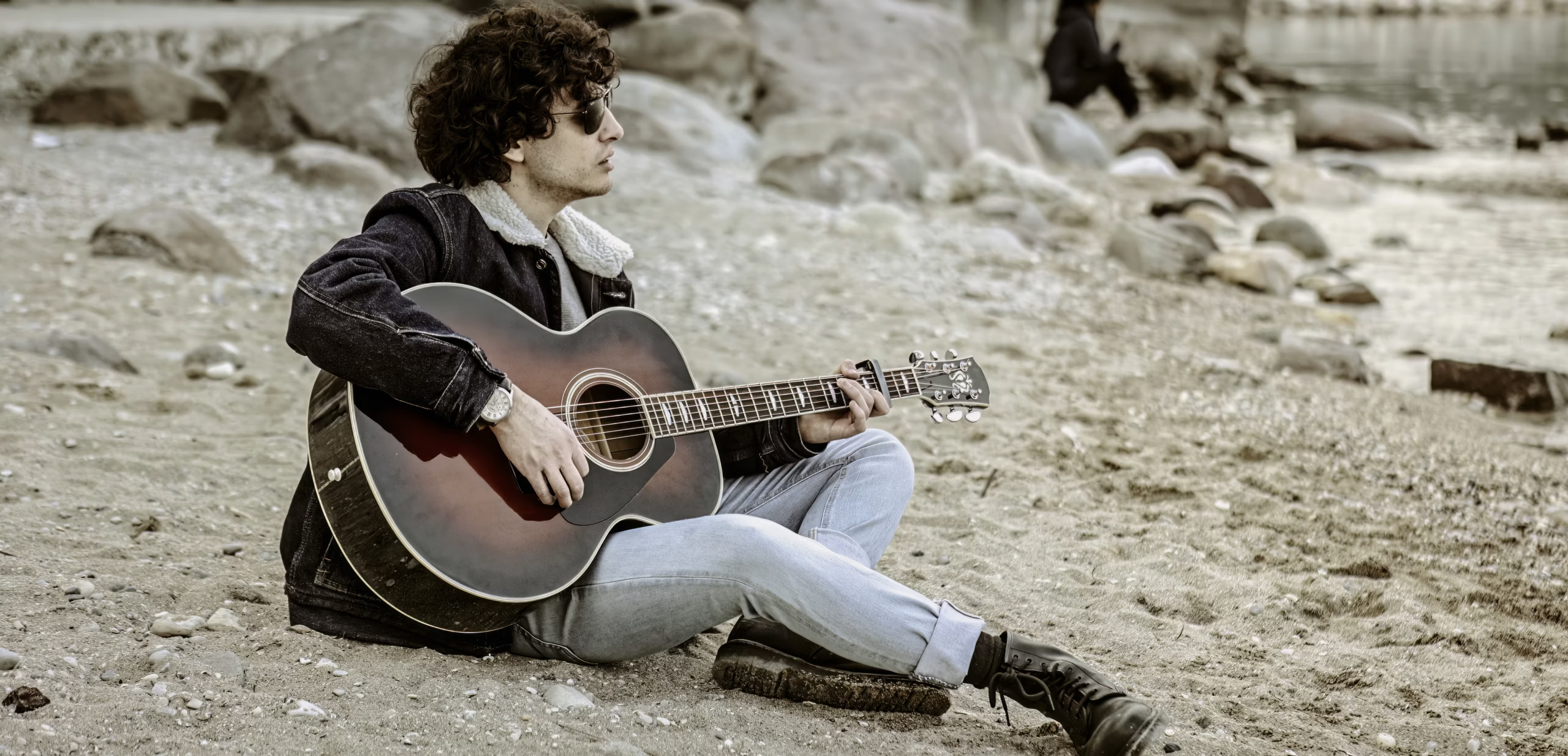
A guitar.
No stage.
No spotlights.
No fucking press release explaining how authentic the experience was.
Only a few strings, a few chords, and the water ahead.
Playing in a place like that seemed almost absurd.
Like telling God a joke.
But perhaps that was exactly why it made sense.
Music has this strange ability to slip into the places where words are turned back at the border.
It does not have to explain.
It does not have to persuade.
It does not even claim to be right.
It arrives.
Takes something inside you and moves it a few inches.
Sometimes that is enough.
Because perhaps most of our tragedies do not need to be solved.
They only need to find a position in which they hurt a little less.
He kept playing.
The strings vibrated softly and the lake listened, or at least I like to think it did. At certain moments, everything around him seemed to hold its breath. The low rocks, clean water, the promontory in the distance, the far-off passersby. Even time seemed to sit beside him for a moment like a polite spectator. No applause. No ovation. Only the dignified presence of something true. And fuck, that is enough.
The lake ahead seemed to have no particular opinion of the performance.
Water, it must be admitted, is a rather difficult audience.
It does not applaud.
Does not give you a like.
Does not tell you that you did well.
It reflects you for a few seconds and then distorts everything.
Perhaps that is why human beings have always been drawn to it.
Water is memory without an archive.
It receives everything and preserves nothing in the same form.
A stone falls and becomes a circle.
A body enters and becomes a wave.
A memory returns and becomes something else.
Even we become slightly different before water.
Perhaps because we are made largely of the same substance.
Or perhaps because when we look at something that seems never to end, it suddenly becomes difficult to go on believing our small personal catastrophes are the center of the universe.
He remained there.
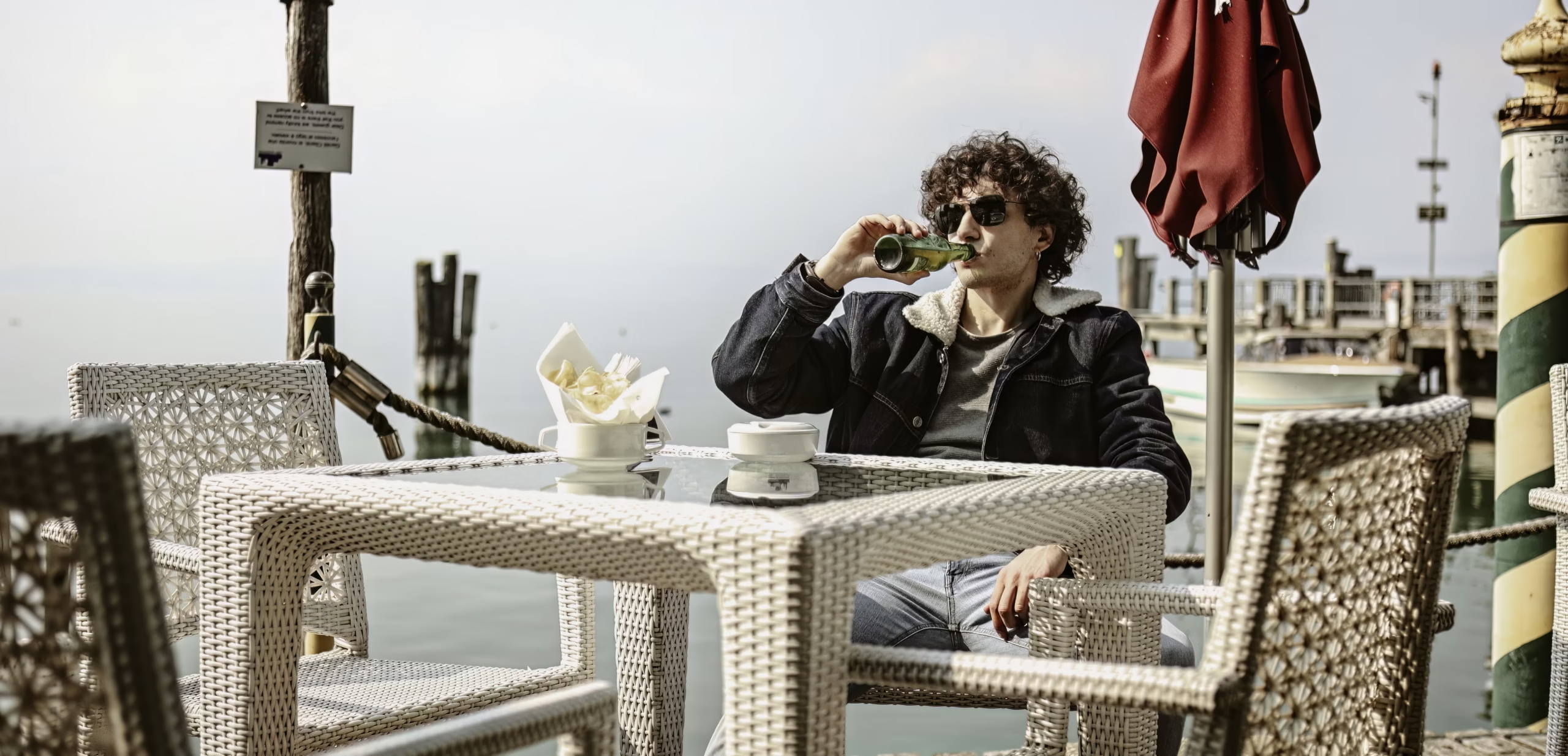
Then he drank a beer.
Because introspection is all very well, infinity is all very well, questioning the meaning of existence is all very well.
But at a certain point, a man gets thirsty.
Put that way, it sounds like a minor detail, but details are the true religion of the living. A beer drunk in the right place can work more miracles than a motivated priest. The bitterness, the cold glass between your fingers, your throat opening, your head loosening its grip. Sometimes paradise has perfectly ordinary flavors. People complicate everything because they are convinced happiness must be sophisticated. It does not. Sometimes it is only a cold drink before the water, the sound of your thoughts slowing, and no one coming to bust your balls for a few minutes.
And between us, the history of philosophy would probably have been far less tragic if someone had simply offered Nietzsche a cold beer.
Time passed unnoticed.
In the dream, it was impossible to tell how much.
Ten minutes.
Three hours.
A lifetime.
Some moments last almost no time and remain inside us for twenty years.
Others occupy twenty years and, when they finally end, we cannot even say what the fuck happened.
Perhaps time is not truly measured in minutes.
Perhaps it is measured by what it manages to leave on you.
And that was when, naturally, the dream decided to become serious.
Because until then it had been beautiful, yes, but only beautiful. And beauty alone is never enough. At some point you need a crack, a sign, an enigma. Something that leaves behind the subtle sting distinguishing a pleasant moment from a story that stays inside you.
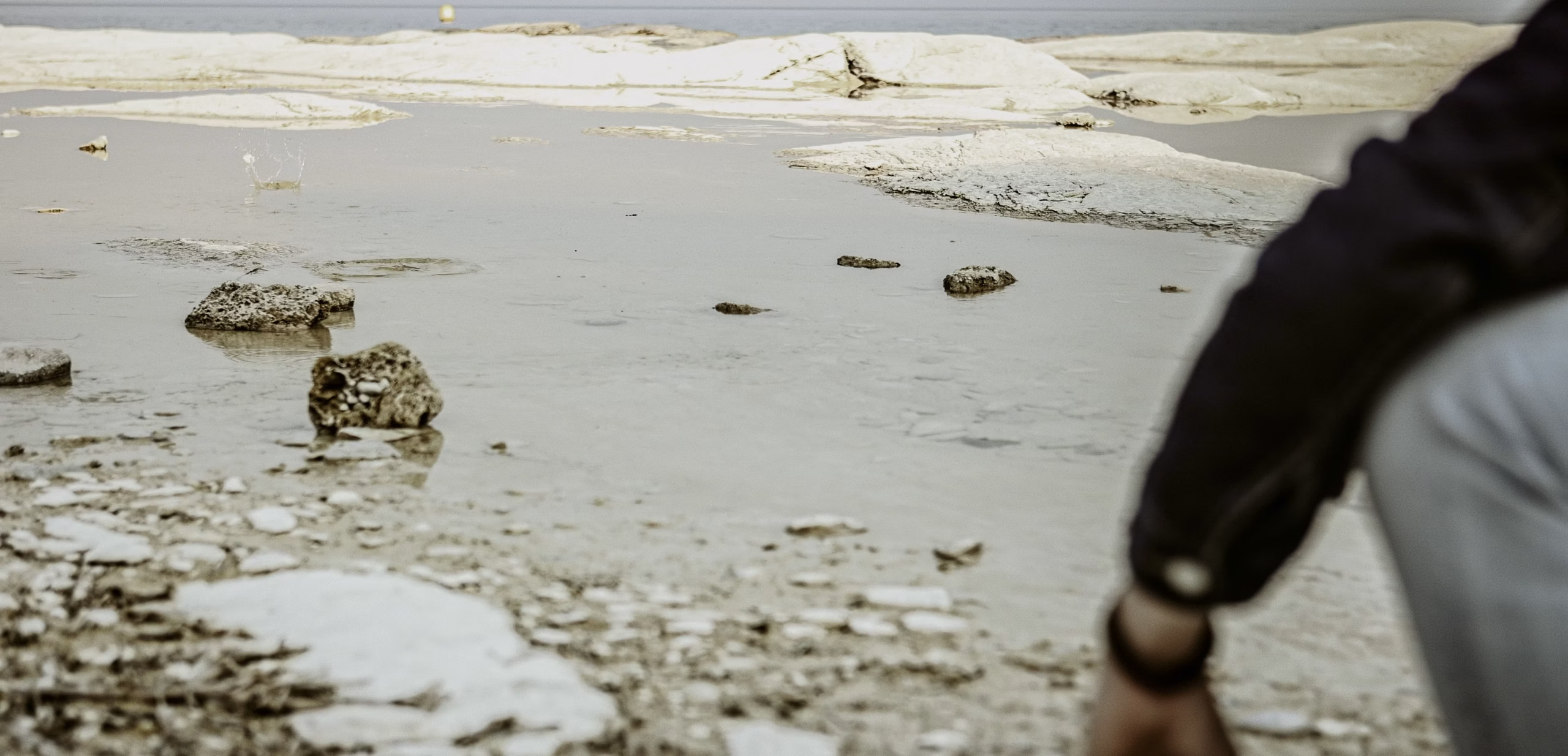
So he approached the shore.
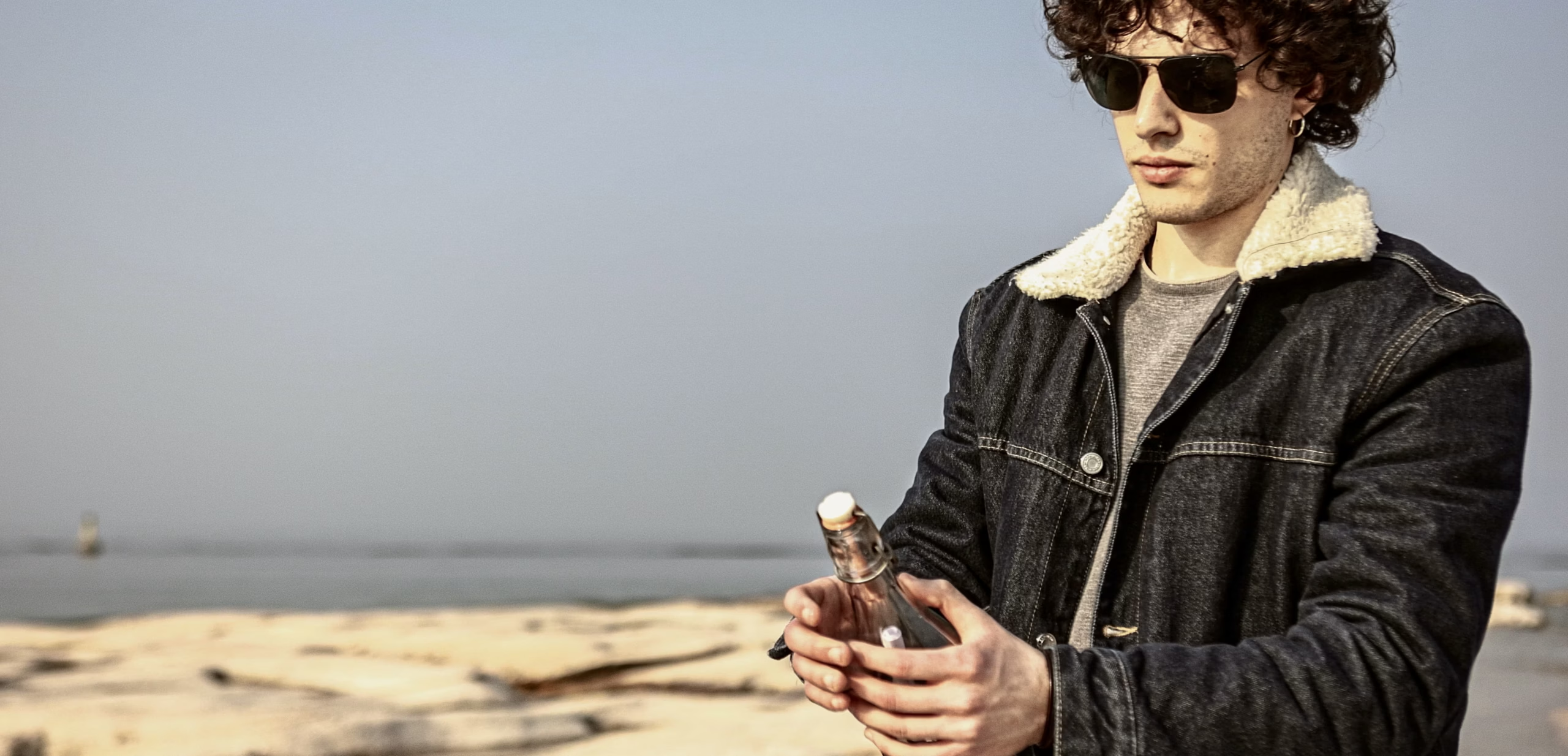
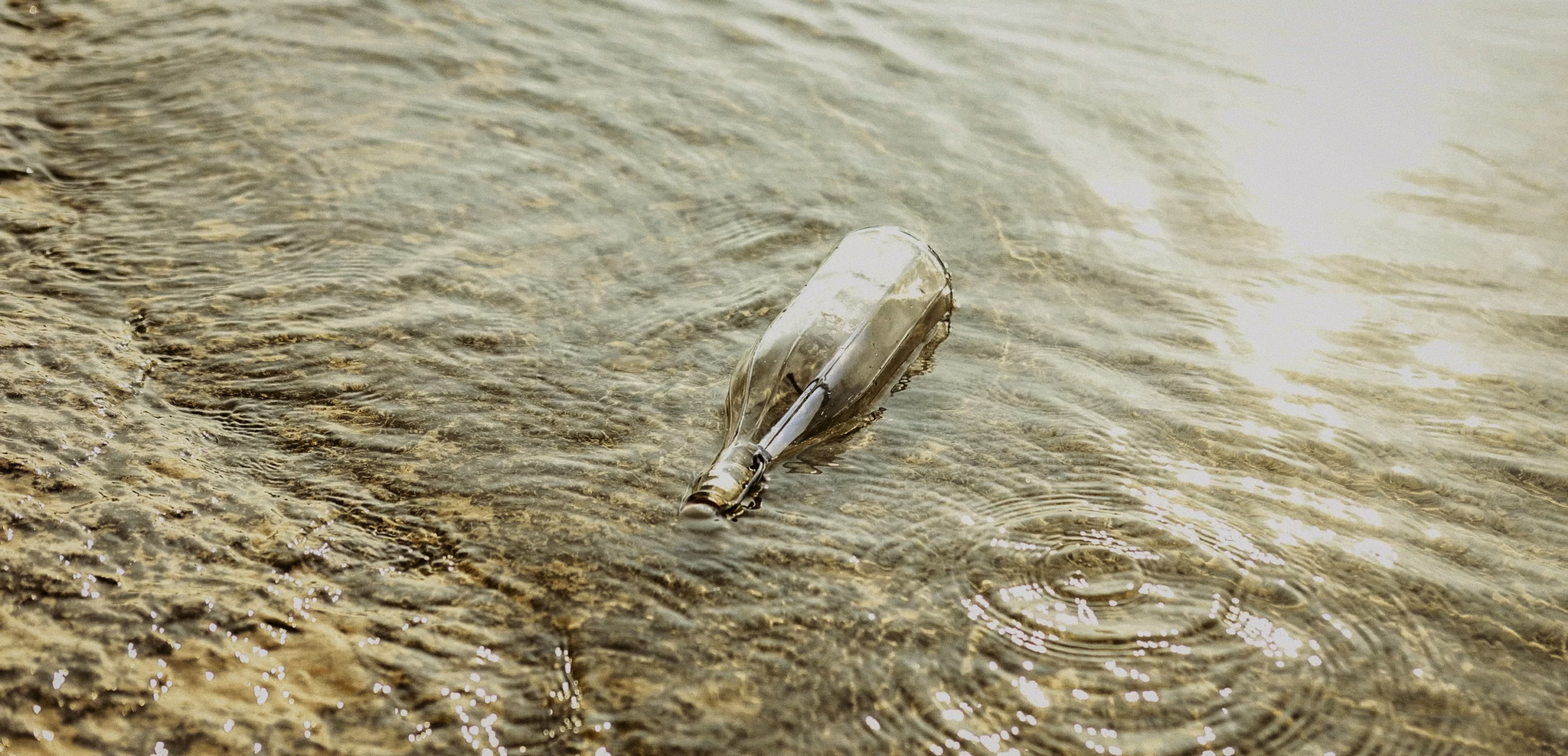
And there, between the still water and pale stones, a bottle appeared.
No special effects. No Oscar-winning score. No divine flash. Only a bottle returned by the water, as though the lake had decided, for once, to speak. Or perhaps to answer. Because lakes, like the sea, never speak first. They wait. Watch you. Let you pour everything out. And only when they understand you are tired enough to truly listen do they return something.
One of those scenes so perfect it looks suspicious even inside a dream.
He picked it up.
Inside was a piece of paper.
Naturally.
Because if you find a bottle containing a note beside a lake while inside some kind of existential tale, there are two possibilities: either it contains a mysterious message, or someone threw away a grocery list with a decidedly excessive sense of drama.
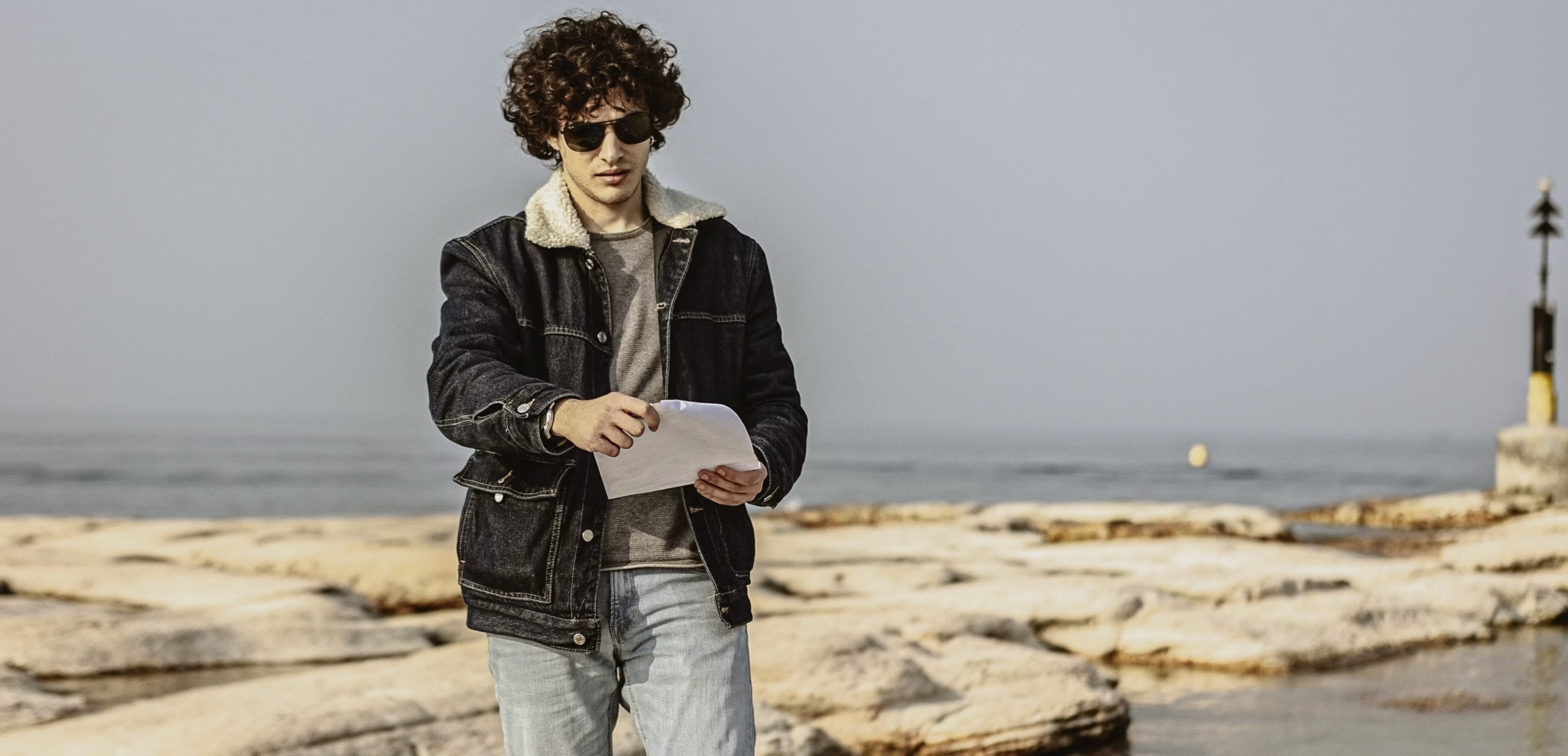
He unfolded the paper.
Read.
And here it might be important to know what was written.
Or perhaps not.
Perhaps it is better not to know.
We have grown too accustomed to stories that explain everything.
We want to know why he left.
Why she did not answer.
Why we lost that opportunity.
Why us.
What our purpose is.
Where we are going.
Whether we chose well.
Whether someone up there has a plan, or the universe has simply been improvising for thirteen billion years and hoping no one notices.
We would like the instruction sheet.
A small manual tucked into the box.
Human life, base model.
Insert two batteries.
Do not fall in love with assholes.
Avoid questionable investments.
Call your mother now and then.
If meaning is lost, press RESET for ten seconds.
It would be convenient.
But no one has found the manual.
And those who claim to have found it generally want to sell it to you.
So perhaps that message should remain there.
Hidden.
So each of us can place our own inside.
A forgiveness.
A goodbye.
A come back.
A go away.
An I miss you.
An I’m sorry.
Or that much simpler and infinitely more bastard question that comes for all of us sooner or later:
Am I truly living the life I wanted?
He remained there looking at that piece of paper.
Everything continued around him.
People walked.
Birds crossed the sky.
The lake went on being a lake.
And that is one of the world’s most elegant cruelties: whatever happens inside us, the rest of the universe calmly minds its own fucking business.
You can fall in love.
You can lose someone.
You can decide to change your life.
You can receive the call you have awaited for ten years.
Outside, a bus passes all the same.
Someone orders a cappuccino.
A dog sniffs a post.
A woman buys bread.
The world possesses an indifference that, seen the right way, is almost reassuring.
It means not everything depends on us.
It means we are even allowed to make mistakes.
The planet will keep turning despite that embarrassing message sent at three in the morning.
Probably.
Then the dream began to come apart.
As they all do.
Not with an explosion.
With small cracks.
A different light.
A distant noise.
The sense that something is calling from somewhere else.
The water disappeared.
The landscape faded.
The bottle was the last to leave.
And he opened his eyes.
Destination reached.
And the beautiful thing—or the catch, depending on how romantic you feel that day—was that the place was almost the same. The hour was different, the color of the sky different, the air different. But the lake was still there. The shore was still there. The rocks, the walkways, the waterline, the ambiguous peace of that landscape. As though the dream had invented nothing. As though it had merely anticipated reality, passed before it a moment earlier. A trailer for destiny, so to speak.
The car was still there.
So was the road.
He had almost arrived.
And waking after certain dreams is strange.
For a few seconds, the brain does not know which side to take.
Reality seems the less credible one.
Then everything returns to its place.
The seat.
The people.
The roads.
The destination.
Except that when he got out of the car, something did not add up.
The place before him looked terribly like the one he had just left in sleep.
Not identical.
Dreams always have a slightly drunk interior decorator.
But close enough.
The water.
The rocks.
The light.
That sense of space he seemed to have breathed already a few hours—or perhaps a few seconds—earlier.
And then I understood something very simple: certain journeys are not meant to take you from point A to point B. They are meant to place two versions of you in contact. The one who falls asleep with his head full of noise and the one who wakes with one less question and one more silence.
He walked.
Found the lake again.
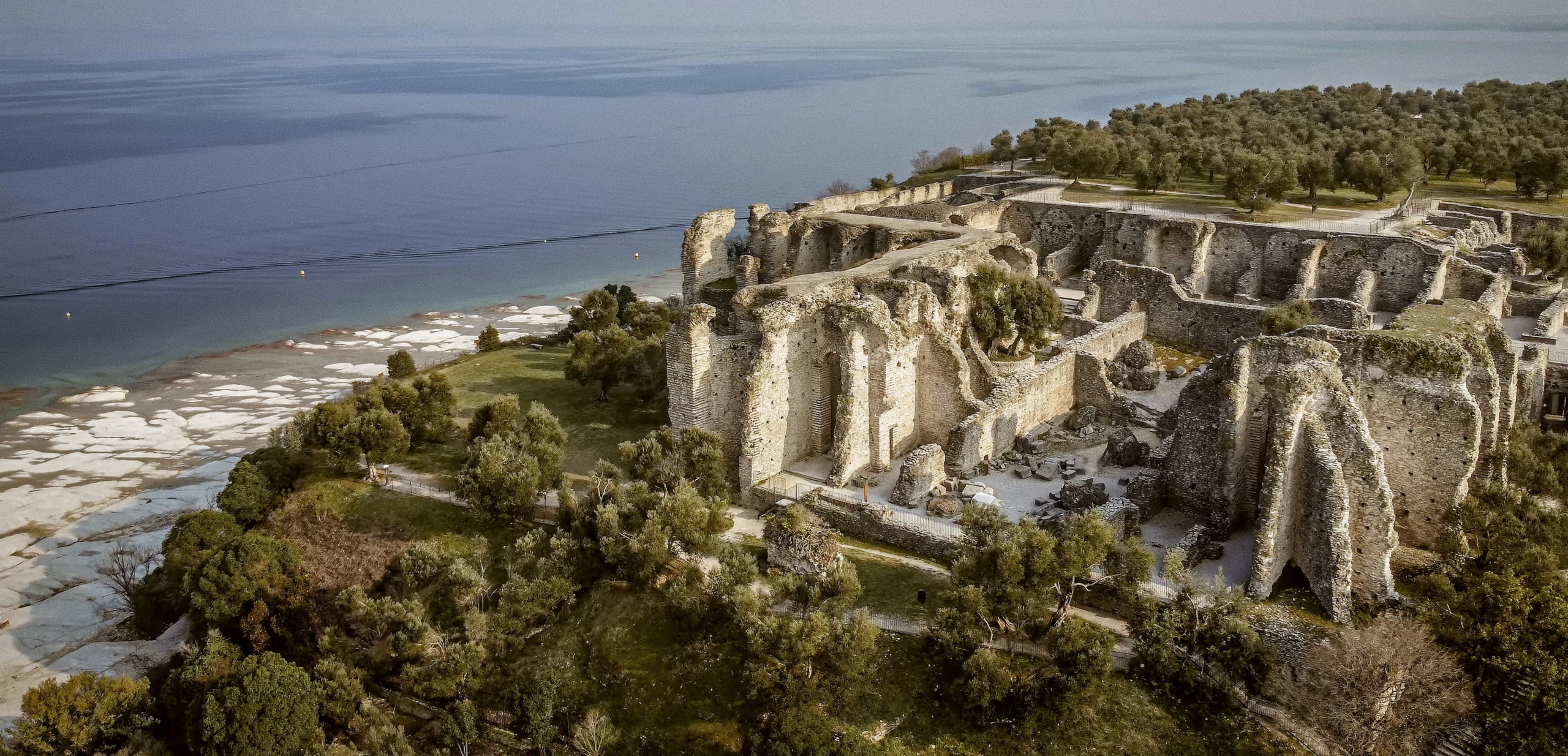
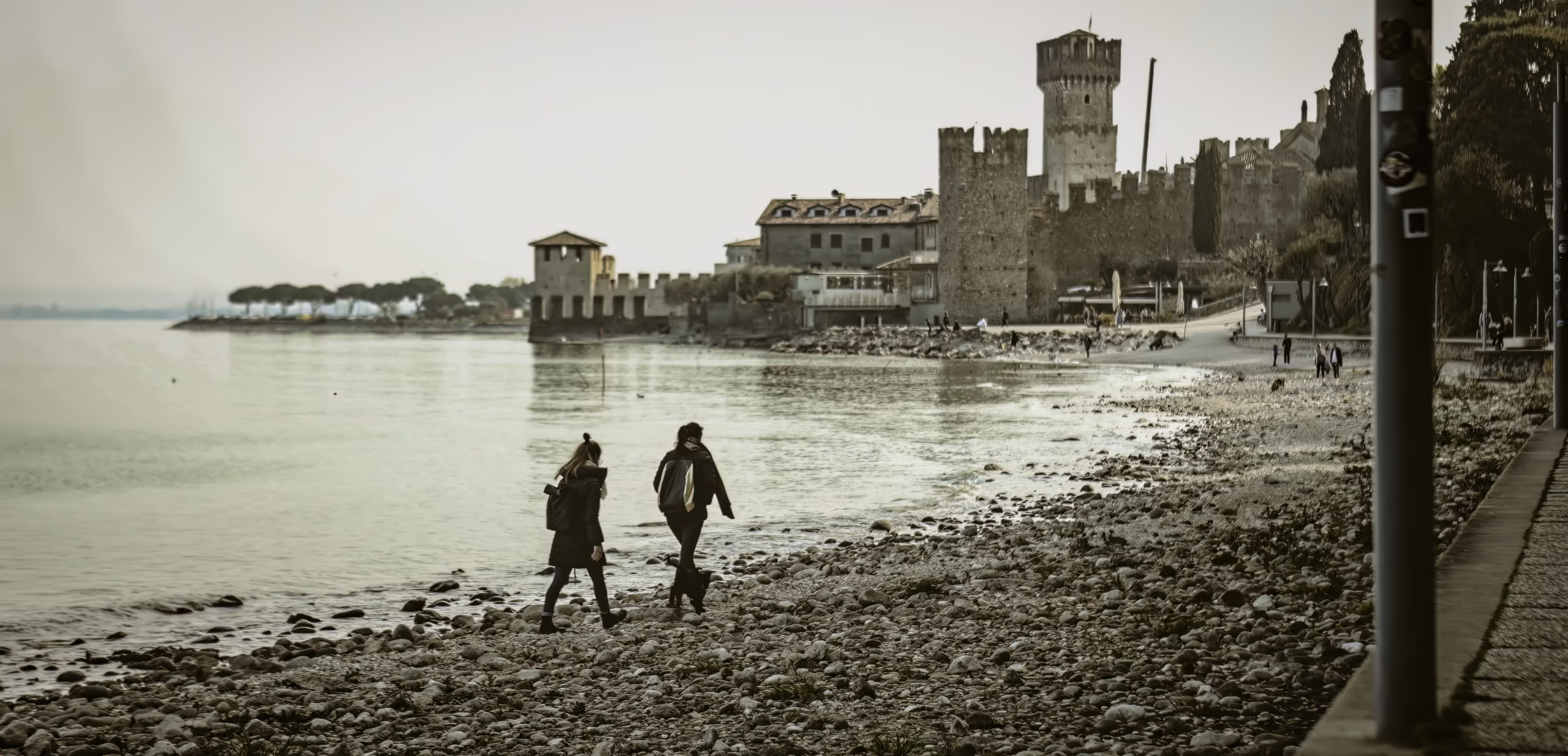
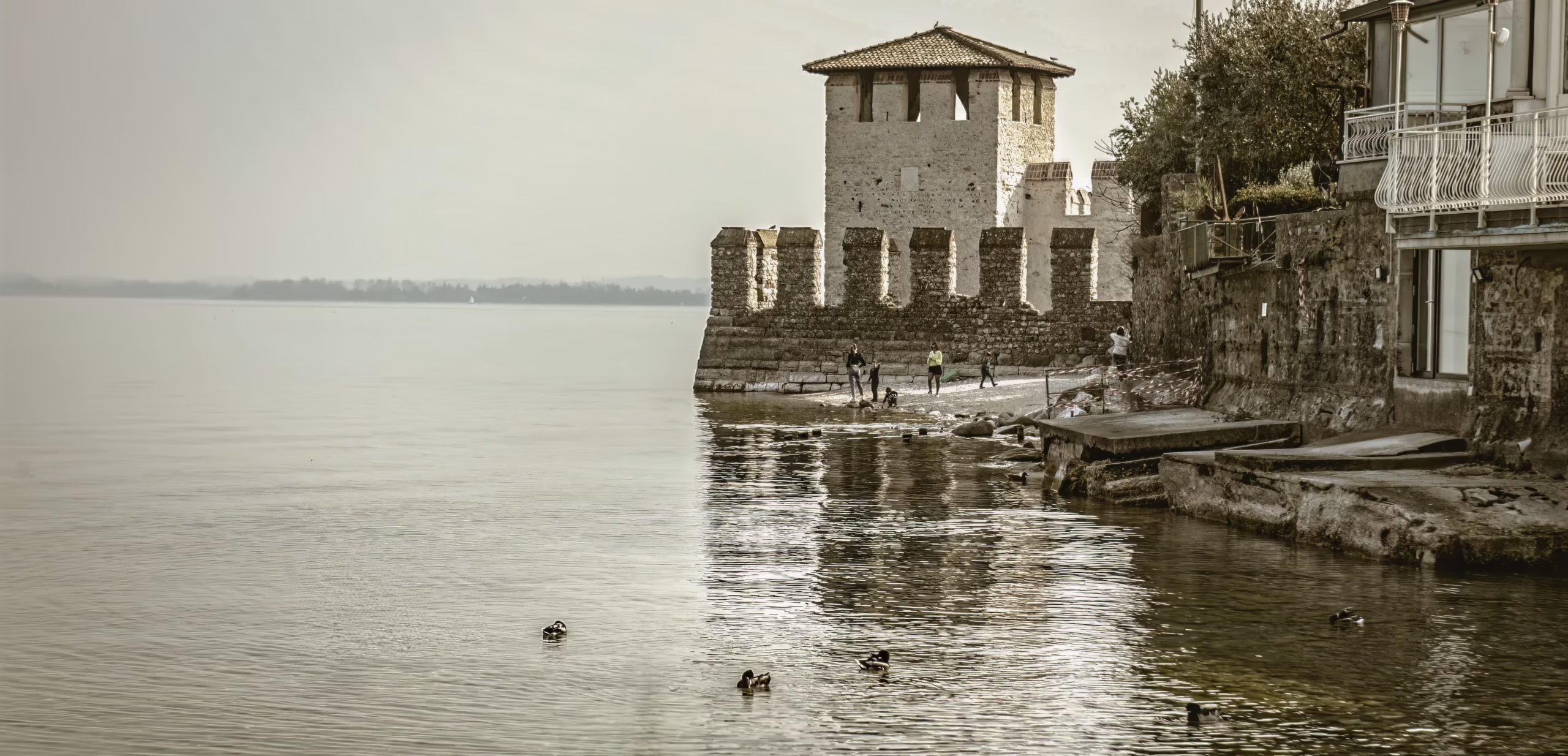
He looked at the castle on the lake, the walls, the towers, the people along the shore, the warmer color of the afternoon. He watched the couples, strangers, passersby, the small human trajectories crossing without knowing that they too were part of this story for a few seconds. He saw the beach again, the still water, the stone paths emerging like pages someone had left open.
And perhaps at that moment he understood something.
Not necessarily about the dream.
About life.
We spend years searching for enormous signs.
Revelations.
Illuminations.
Answers written across the sky in capital letters.
We want something to tell us with absolute clarity:
This is the road.
This is the person.
This is what you must do.
But life does not speak that way.
Life stammers.
Suggests.
Leaves coincidences on the table and walks out of the room without explanation.
A song heard at the right moment.
A person met by chance.
A place that seems to know us before we arrive.
A dream that keeps following us even after we open our eyes.
And then it is up to us to decide whether to call them signs or merely statistics with a good marketing department.
Perhaps it makes little difference.
What matters is what they make us do.
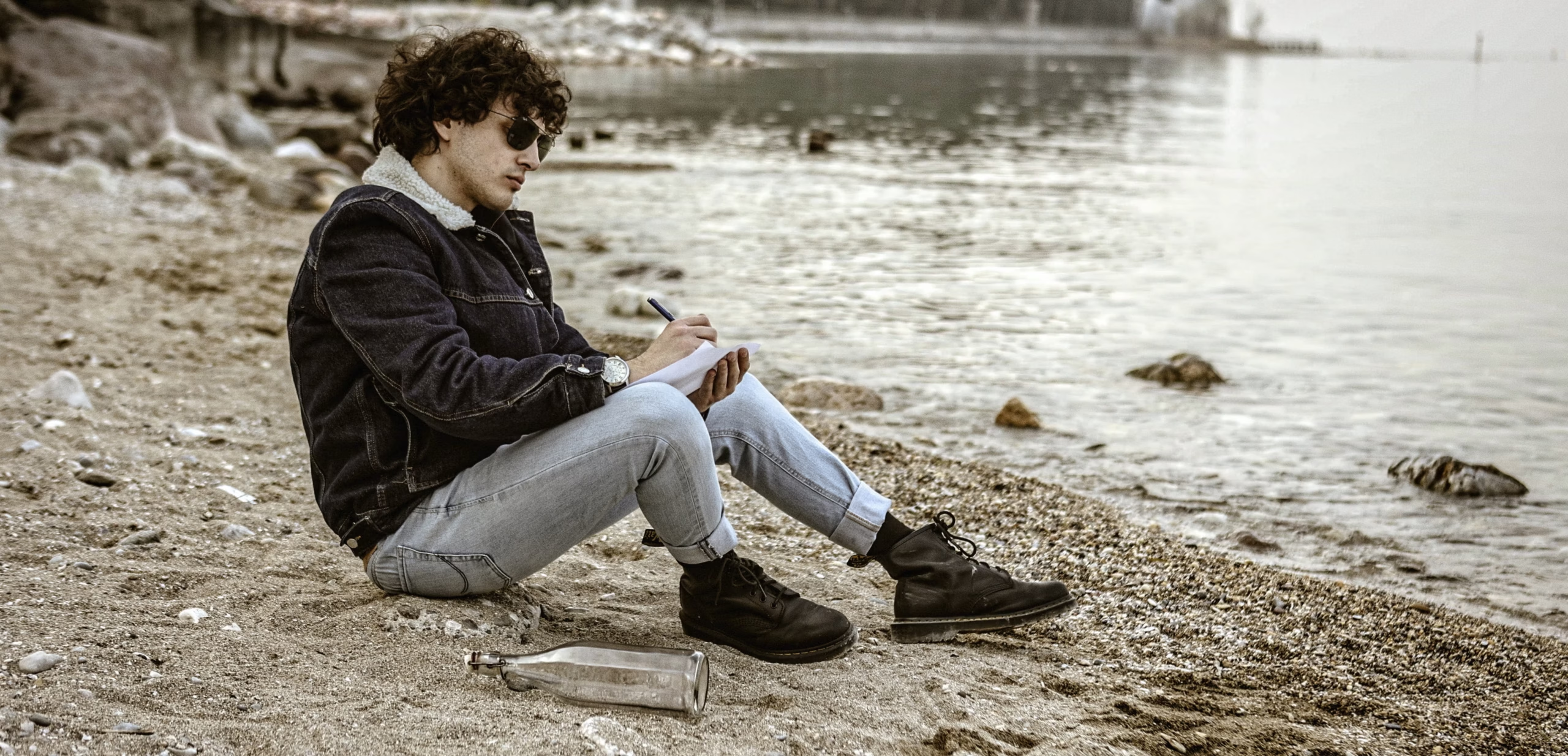
He took a sheet of paper.
Wrote something.
Once again, we do not know what.
And that is as it should be.

Some words lose their value the moment they become public.
They were born for one person alone.
Sometimes not even that person.
Sometimes we write only so we can finally hear what we think.
He rolled up the paper.
Slipped it into a bottle.
Closed it.
Then returned to the water.
Now the story seemed to repeat itself in reverse.
In the dream, he had received something.
Awake, he was returning something.
Perhaps that is how certain encounters work.
With people.
With places.
With life itself.
We arrive believing we have to take.
Then, when we grow enough—or get sick enough of our own bullshit, which is often the same thing—we begin asking what we can leave.
It does not take much.
A photograph.
A song.
A sentence.
A kindness no one will remember.
A phone call.
An embrace.
A message in a bottle destined, in all likelihood, to be read by no one.
Because the value of things does not always depend on who receives them.
Sometimes it depends simply on our having had the courage to deliver them.
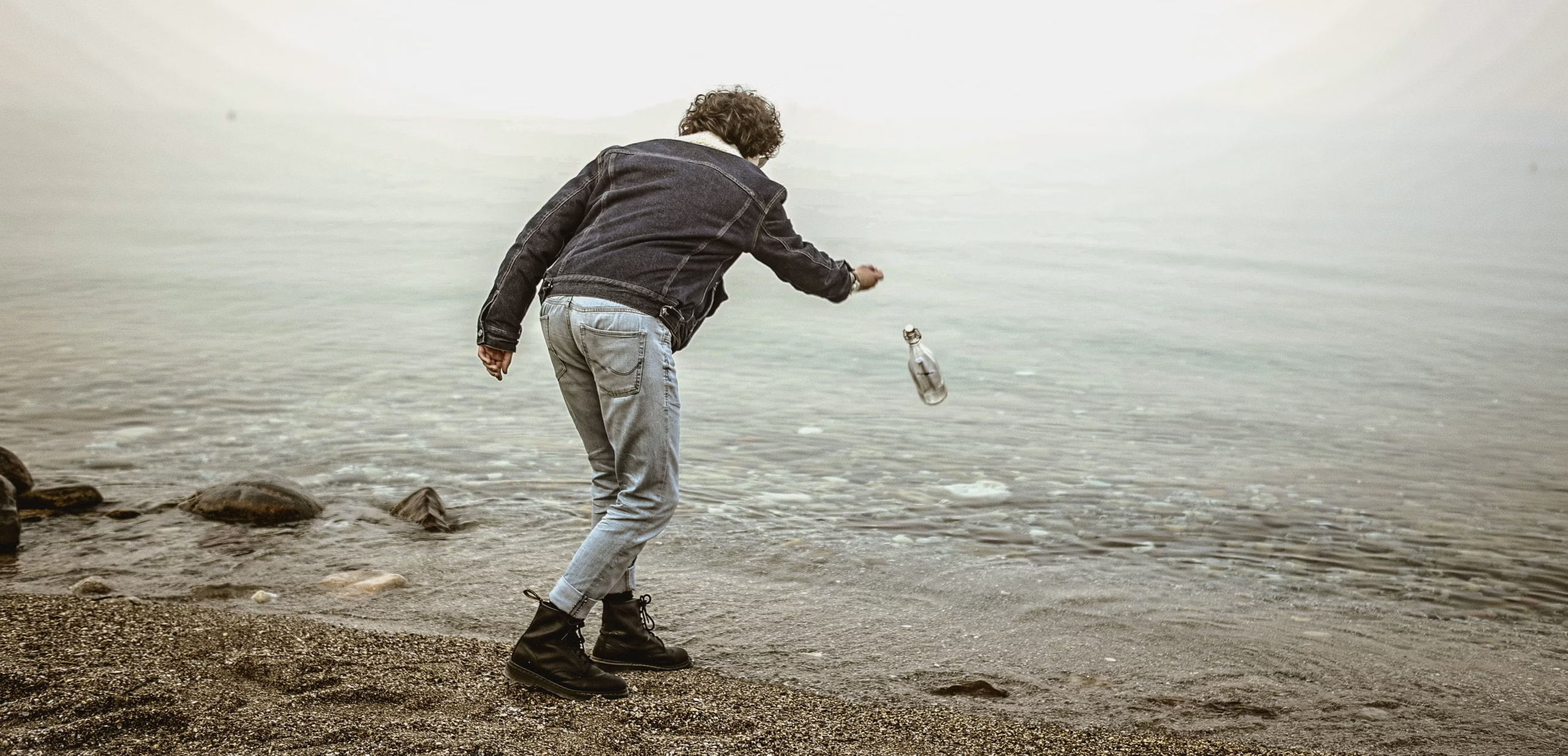
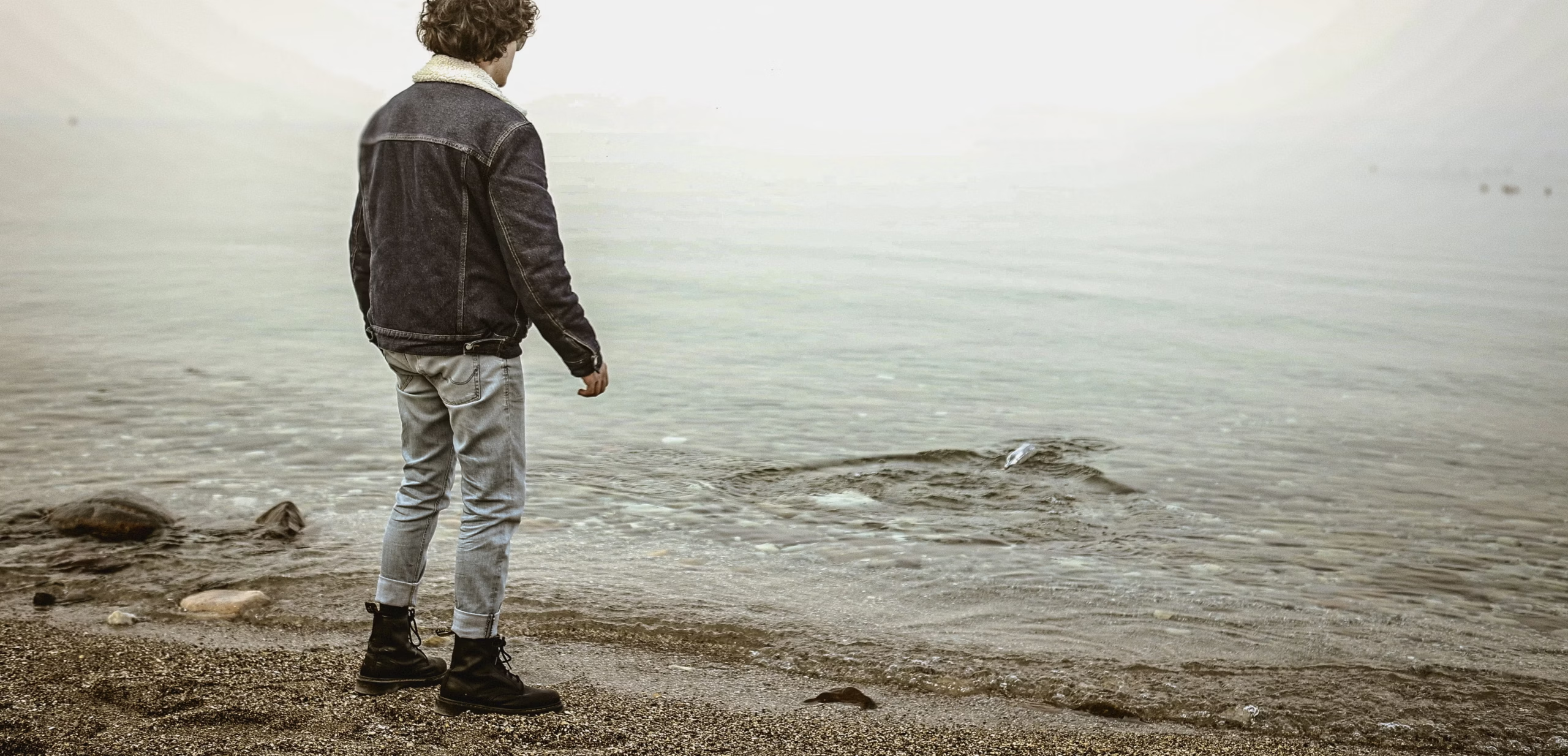
He threw the bottle.
It fell into the water.
Floated.
Drifted slowly away.
Not far enough to look cinematic.
Far enough to look real.
He entrusted it to the water with the same reckless faith with which certain things are entrusted to love, art, or a song heard at the right moment. No guarantee of return. No receipt. No certainty it would truly arrive anywhere. But not everything has to arrive. Some things only have to leave.
Perhaps messages in bottles are not truly meant to communicate with someone out there. Perhaps they are meant to declare to ourselves that we still exist. That we still have something to say. That despite the exhaustion, sleep in cars, trips that lead nowhere, nostalgia, fear, and silences crowding our chests, we have not yet become entirely mute.
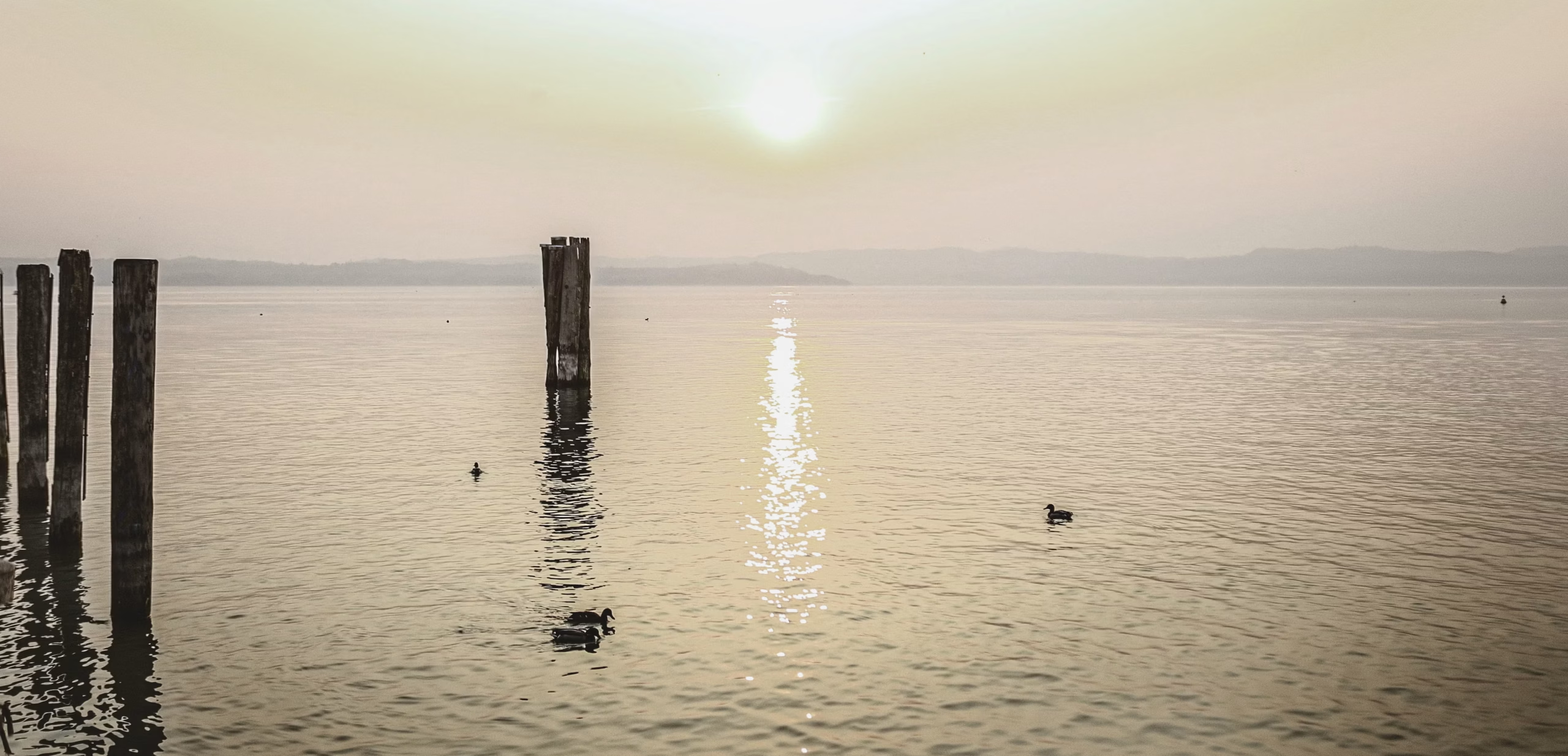
Meanwhile, the sun was sinking.
That enormous luminous bastard that stages the end of the world every evening and returns to work each morning as though nothing happened.
And perhaps there was something to learn from that too.
End.
Begin again.
Let go.
Return.
Without turning every goodbye into a Greek tragedy and every new beginning into a fucking motivational post.
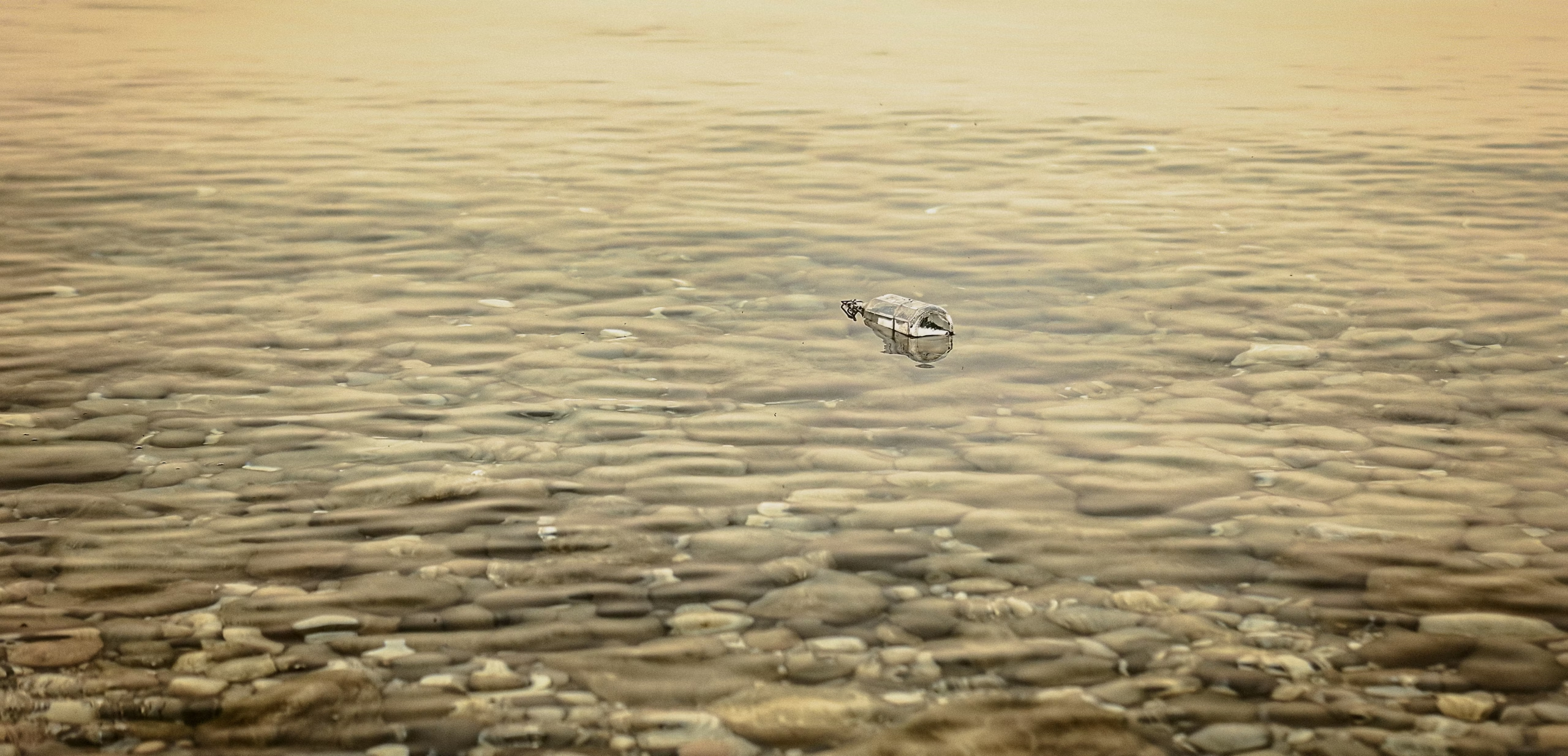
The bottle became smaller and smaller.
Inside was a message.
Perhaps for someone.
Perhaps for no one.
Perhaps for the same young man who, a few years later, would need to remember who he had been that day.
No one would ever know.
And no one needed to.
Because certain questions do not need answers.
They need to accompany us.
They keep us from becoming too certain.
Too still.
Too convinced that we understand everything.
And perhaps that was precisely what the bottle contained.
Not an answer.
A question important enough to deserve the journey.
Then came sunset.
The lake slowly swallowed the light.
And somewhere between what truly happened and what perhaps was only dreamed, a bottle kept floating.
With a few words inside.
A possibility.
And that small, marvelous doubt accompanying nearly every important thing in life:
what if it was not only a dream?
This journey was about a young man falling asleep in a car. But only at first.
Then it was about a dream.
Then water.
Then music.
Then a message found and one returned.
And in the end, as always happens with stories worth something, it was about that ridiculous, moving affair we insist on calling the soul.
The rest is detail.
Beautiful, certainly.
A bend in the road.
A sleeping young man.
A lake that seems never to end.
An aristocratic swan.
A seagull in flight.
A guitar in his hands.
A beer drunk in peace.
A bottle that came from far away.
Another bottle set free.
And a sunset that, without asking too many questions, carries everything away.
Or almost everything.