

This time, no sunsets, metaphorical locks, abandoned boats, or other photographic excuses for talking about our small existential disasters.
This time, we make noise.
The real kind.
The kind that hits your stomach before it ever reaches your ears, that makes a glass tremble on a bar, that tells Monday morning, the bills, complicated relationships, messages seen but never answered, and that whole magnificent collection of bullshit we call daily life to go fuck themselves for a few minutes.
We are talking about live music.
And even calling it simply music feels almost reductive.
Because you can pause a record.
You cannot pause a concert.
A concert happens.
And while it is happening, you have to be there.
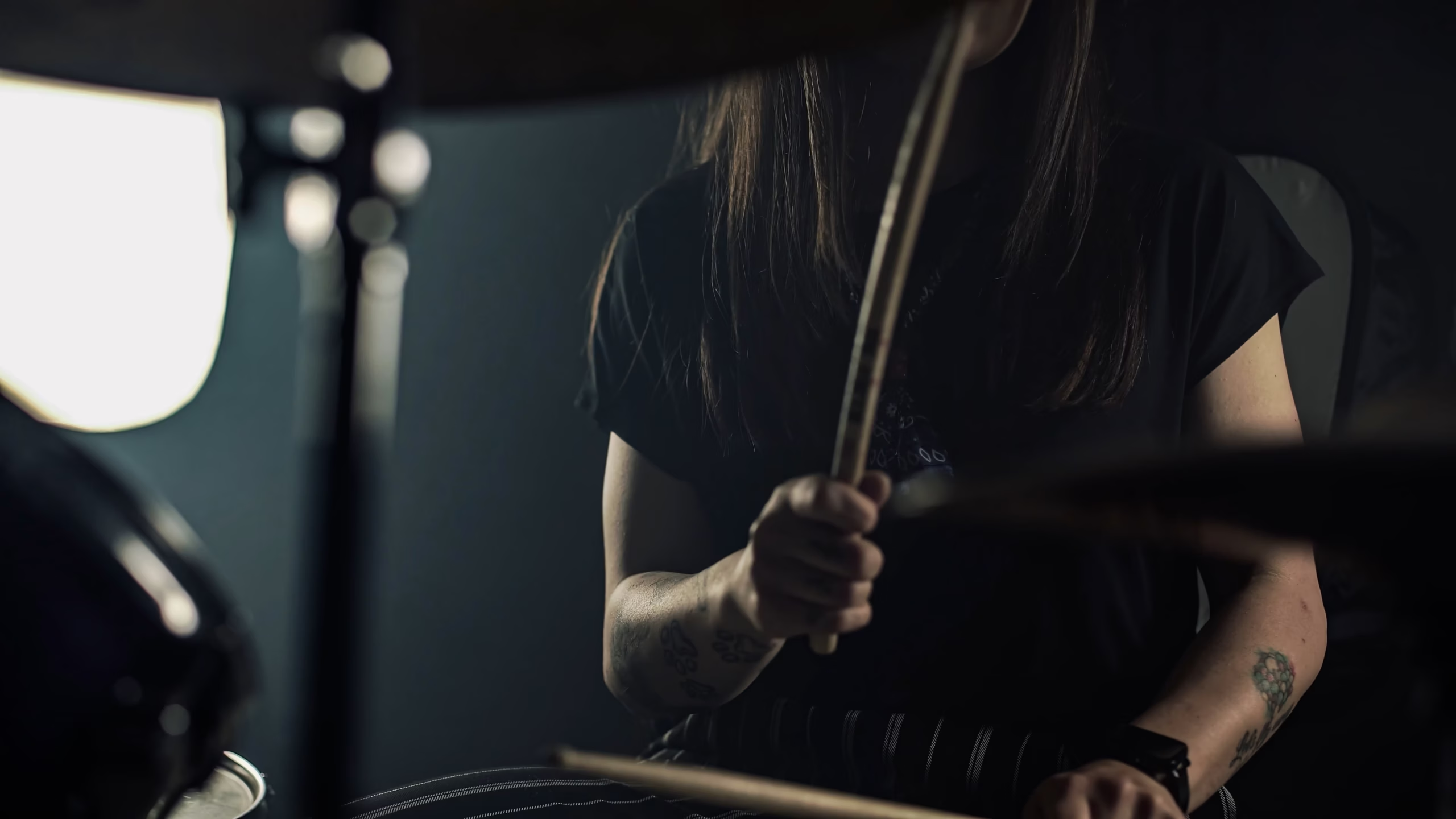
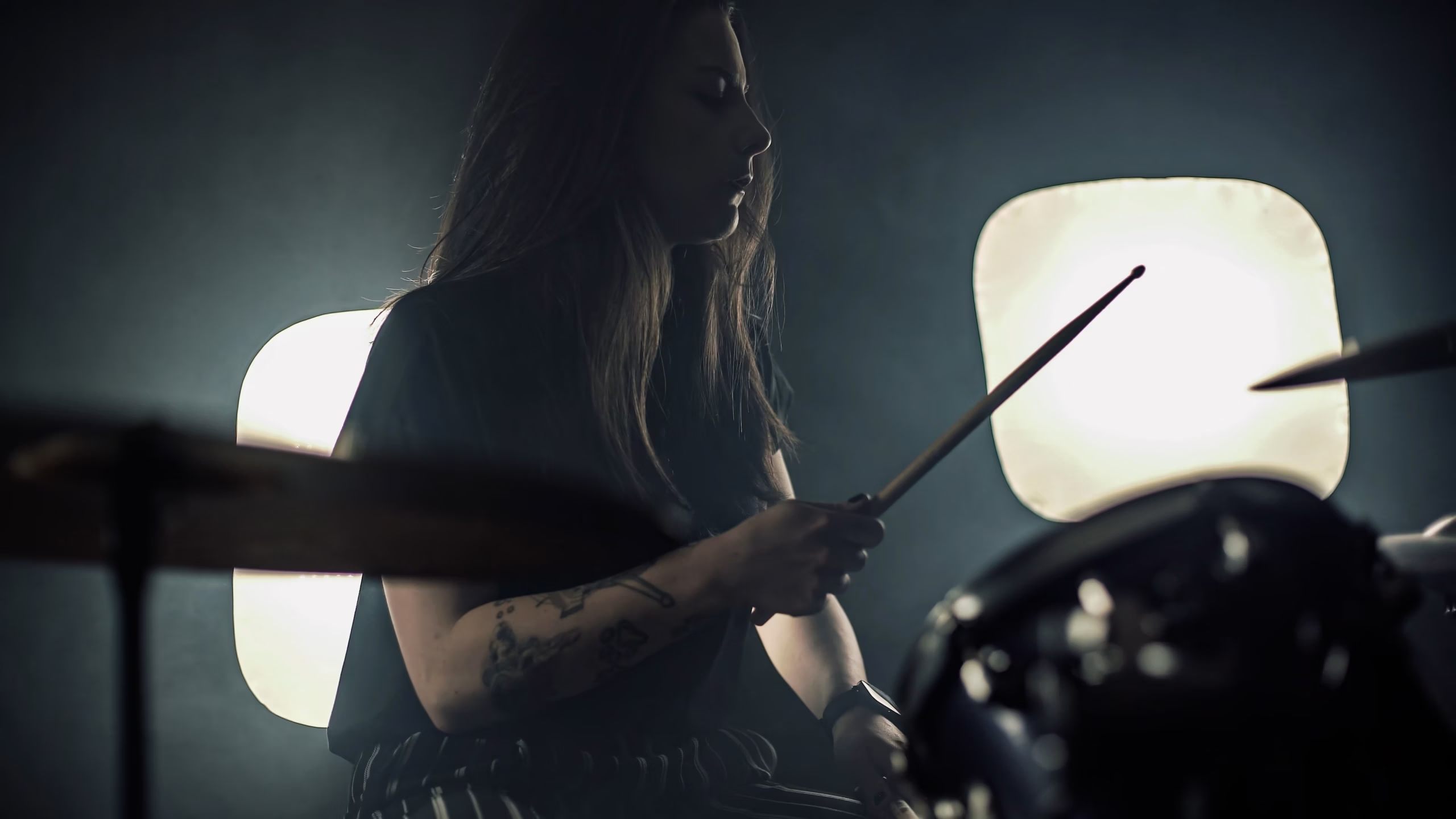
The first thing I see is a woman behind a drum kit.
Long hair, sticks clenched in her hands, low light, cymbals cutting through the frame. She is not posing. She does not seem interested in being beautiful, elegant, photogenic, or any of the other bullshit invented by the image industry to convince us that even while doing something, we should worry about how we look doing it.
She is playing.
Period.
And there is something magnificently brutal about drums.
A guitarist can seduce you.
A singer can tell you a story.
A pianist can make you believe for five minutes that you possess a sophisticated soul.
A drummer picks up two pieces of wood and starts hitting things.
A surprisingly honest form of therapy.


And seeing a woman behind those drums pleases me even more, perhaps because we still live in a world stupid enough to be surprised whenever someone occupies a place some obsolete mental blueprint decided was not meant for them.
But she is there.
She strikes.
She keeps time.
And while everyone else can afford to lose themselves inside a note for a few seconds, she has to know exactly where the fuck we are.
She is the heartbeat of the room.
And not much music exists without a heart that keeps beating.
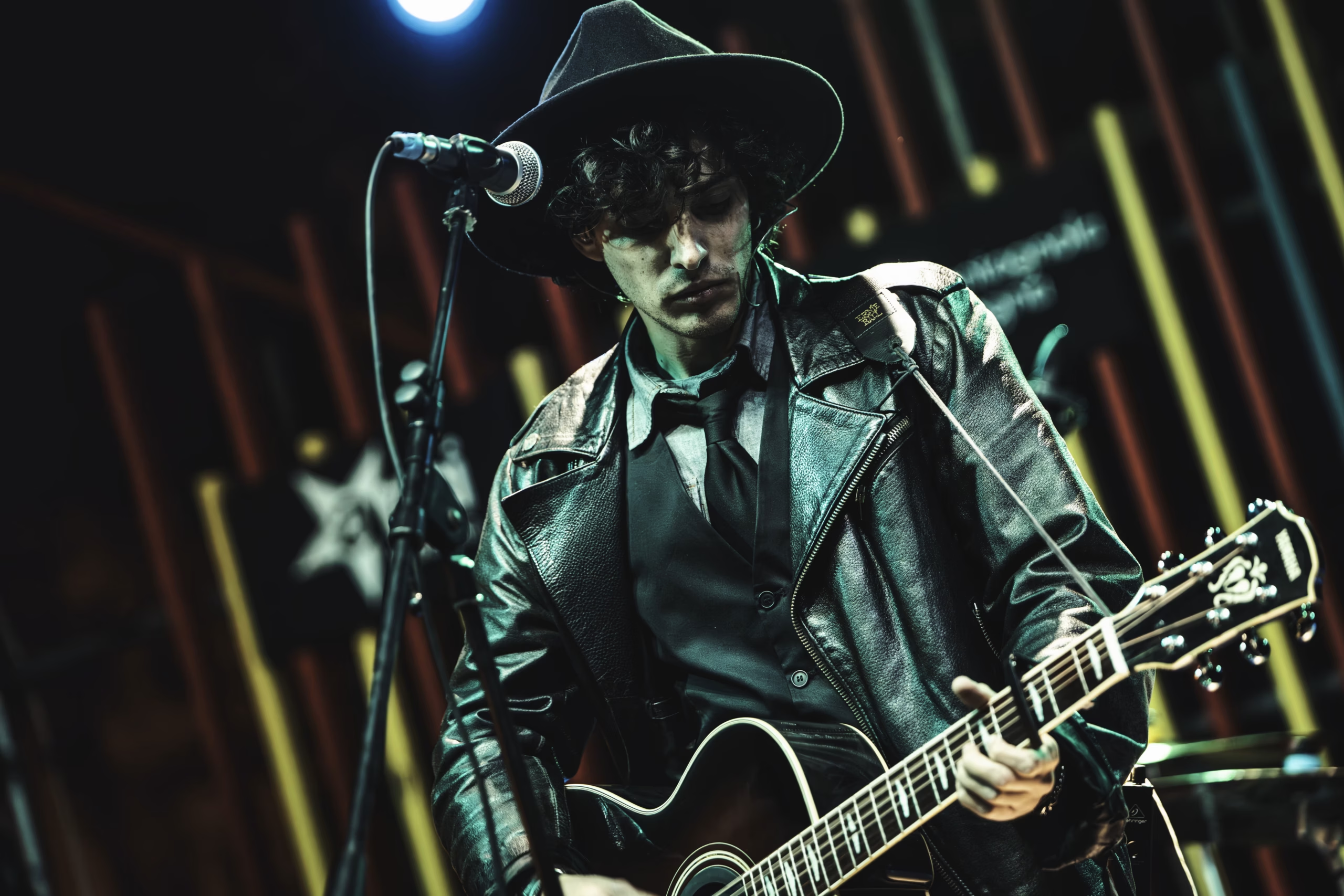
Then the light changes.
A guitar arrives.
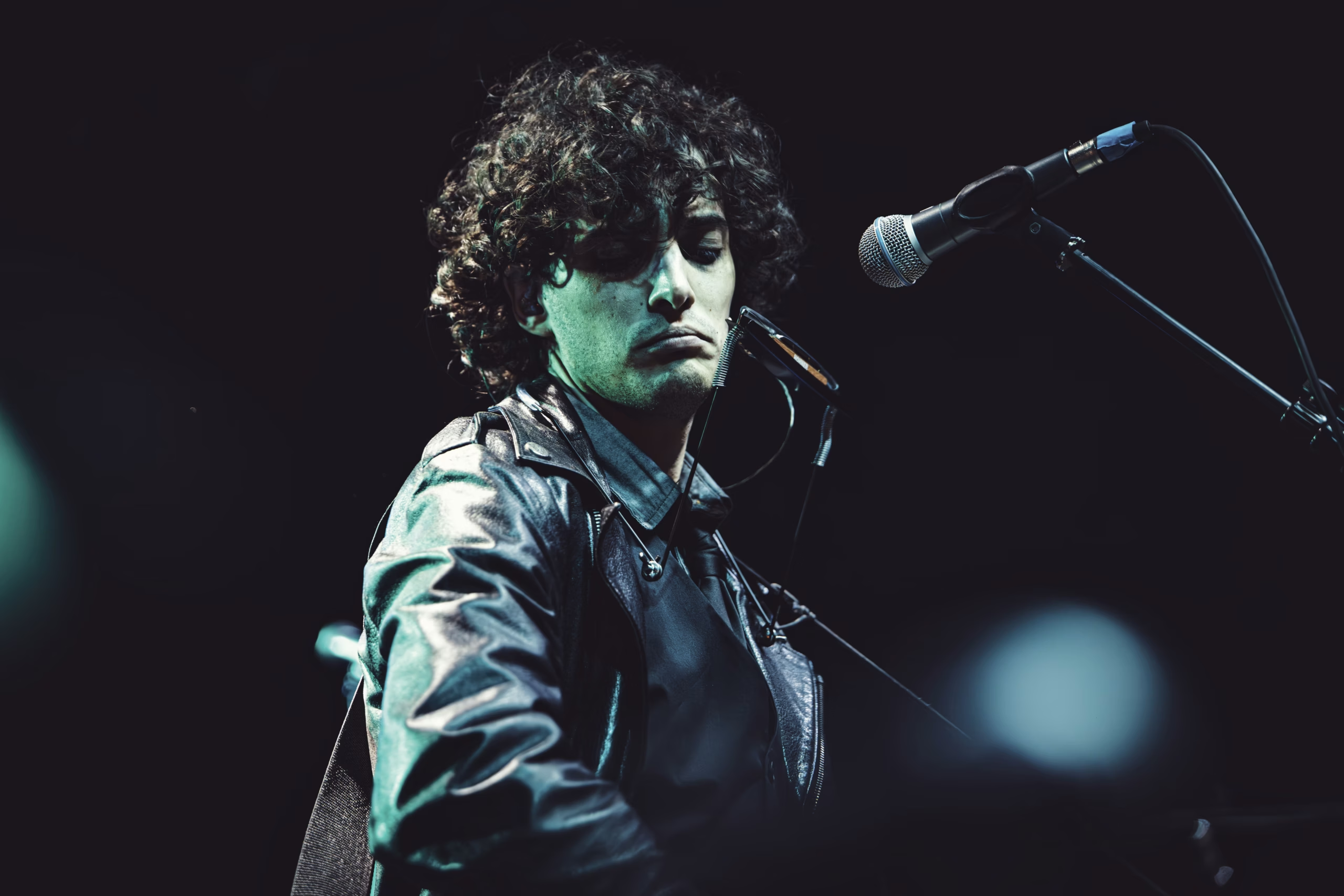
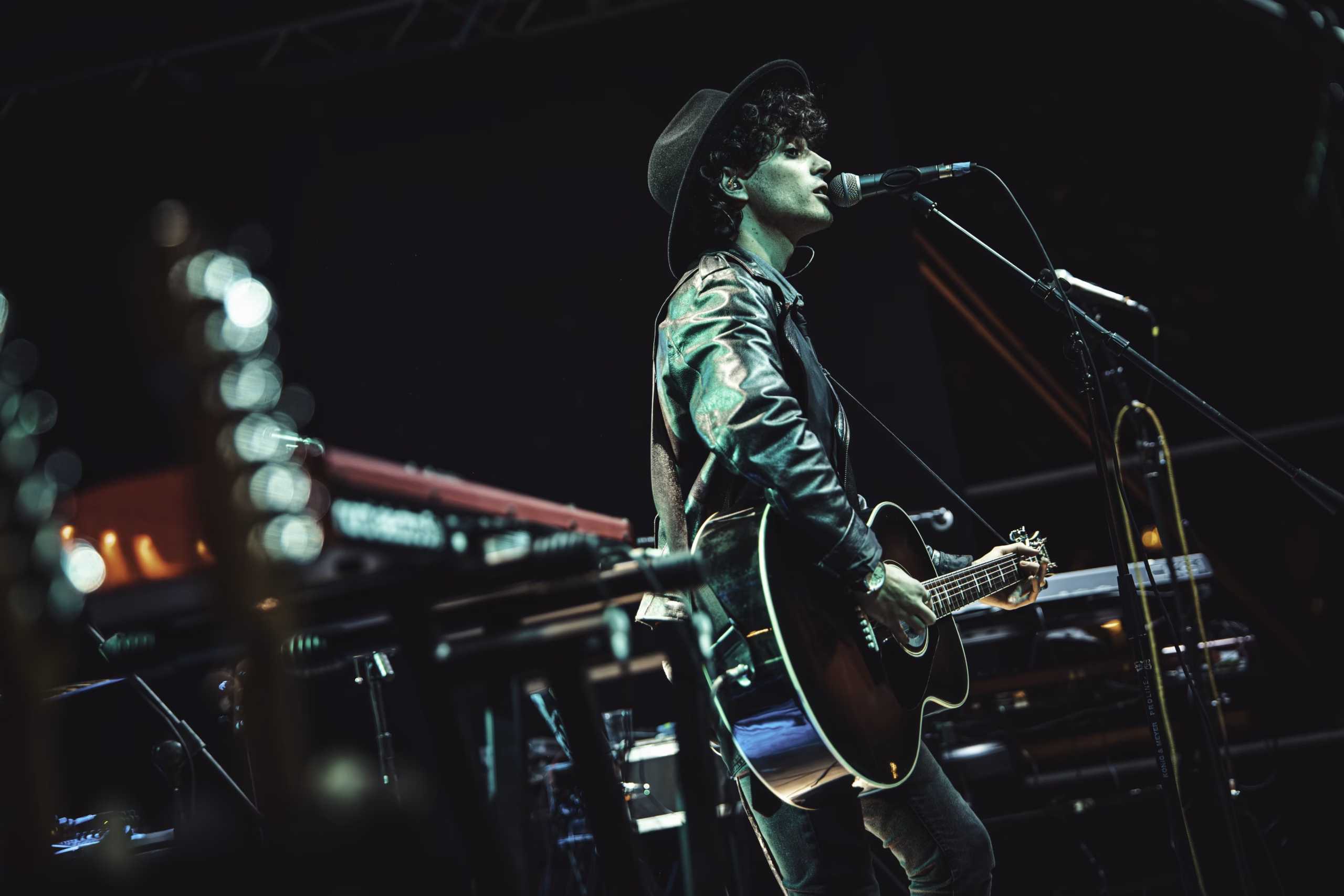
A man in a hat, black leather, strings, a microphone before his face.
In some photographs, he looks down. In others, he seems almost to forget anything exists beyond the instrument. Then he moves closer to the microphone and everything changes again.
That is what I like to photograph in musicians.
Not the musician.
The transformation.
That moment when someone steps onto a stage and, through some strange pact between electricity, adrenaline, and madness, temporarily stops belonging to the same species as the person who half an hour earlier was probably circling for parking while cursing an SUV left sideways across two spaces.
Something happens onstage.
Not always.
But when it does, you can see it.
The body changes.
The face changes.
Even the way someone stands still becomes different.
Because playing well is not only about knowing the notes.
It means reaching the point where notes stop being notes and become something else.
Anger.
Desire.
Fear.
Sex.
Nostalgia.
A name you no longer say.
A road traveled at three in the morning.
A woman you should have forgotten years ago who evidently still lives somewhere between an E-minor chord and your terrible decision-making skills.
Music is full of ghosts.
That is why it works so well.
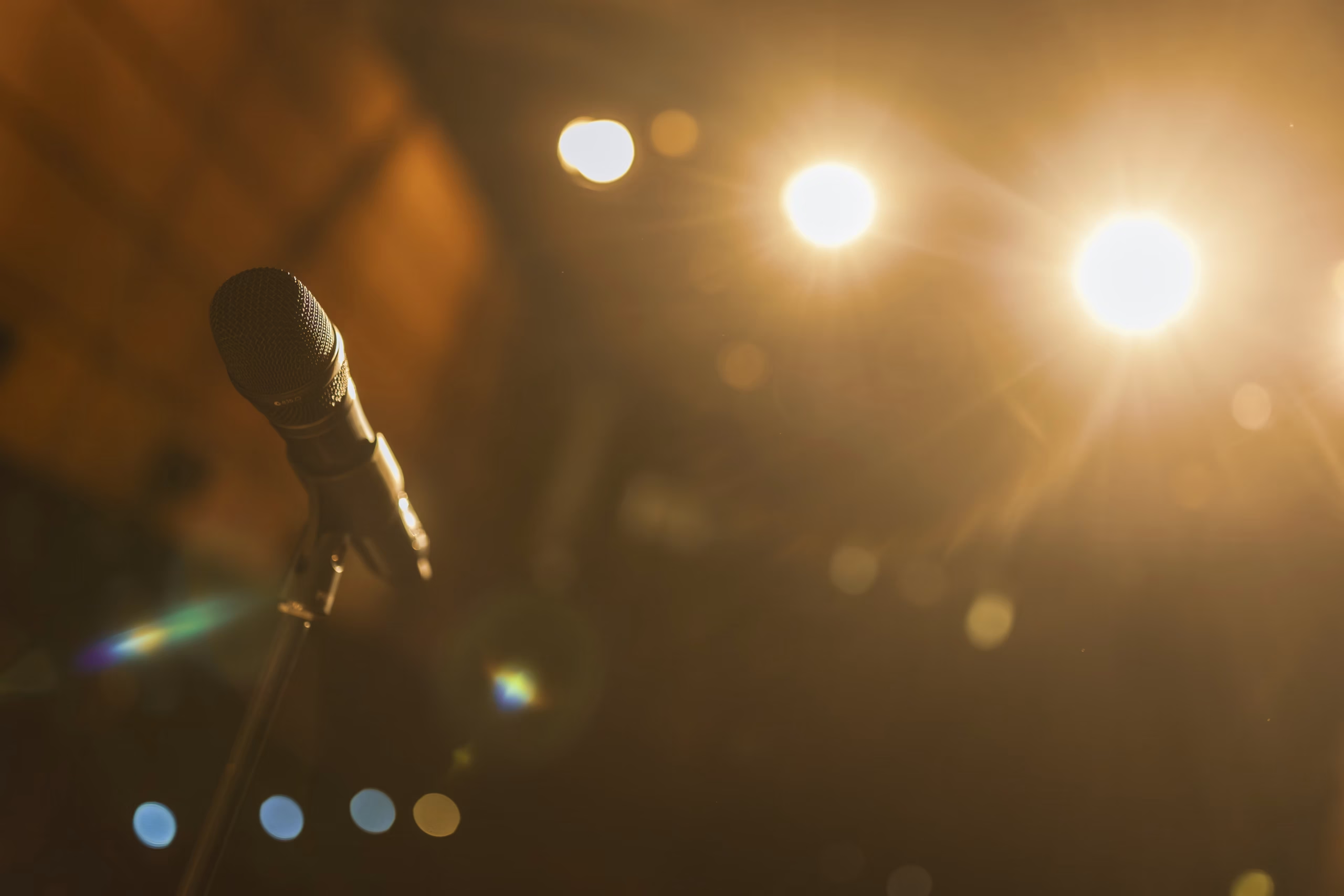
Then there is an empty microphone.
And paradoxically, that photograph says almost everything.
A microphone with no one before it is a promise.
Someone will arrive.
Someone will have something to say.
Or at least they will try.
Which is already far more than we do through much of our days.
We live surrounded by noise yet say very little.
Notifications. Reels. Advertising. Podcasts. Meetings. Phone calls. Opinions. People explaining other people to people who never asked for an explanation.
An industrial quantity of sound.
And very little music.
Then someone steps before a microphone, takes a breath, and sings something they may have written alone in a room at two in the morning while life was kicking them in the ribs.
And suddenly, we listen.
Christ, we truly listen.
Perhaps because we recognize when something comes from an honest place.
In the photographs that follow, the faces change.
The ages change.
The instruments change.
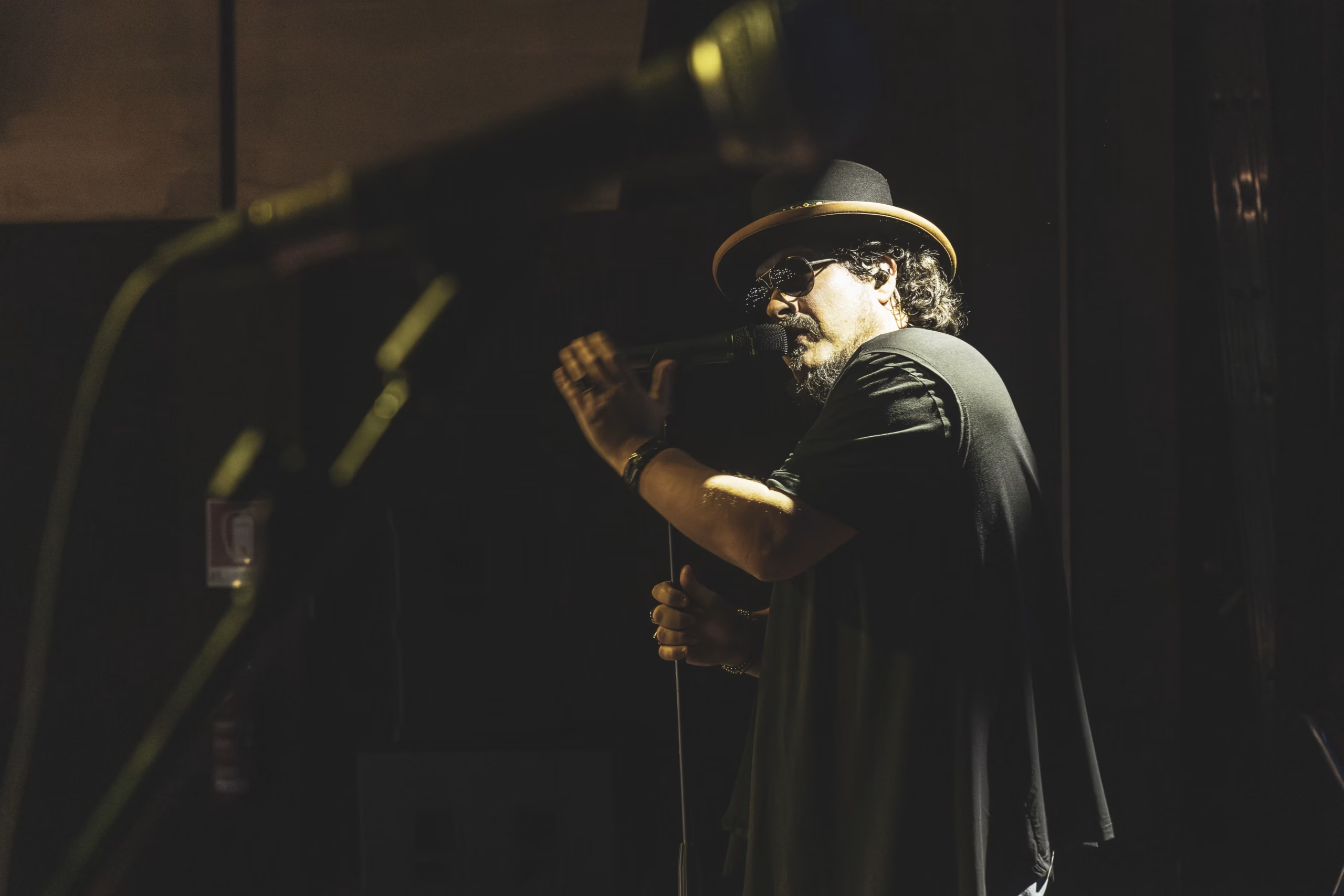
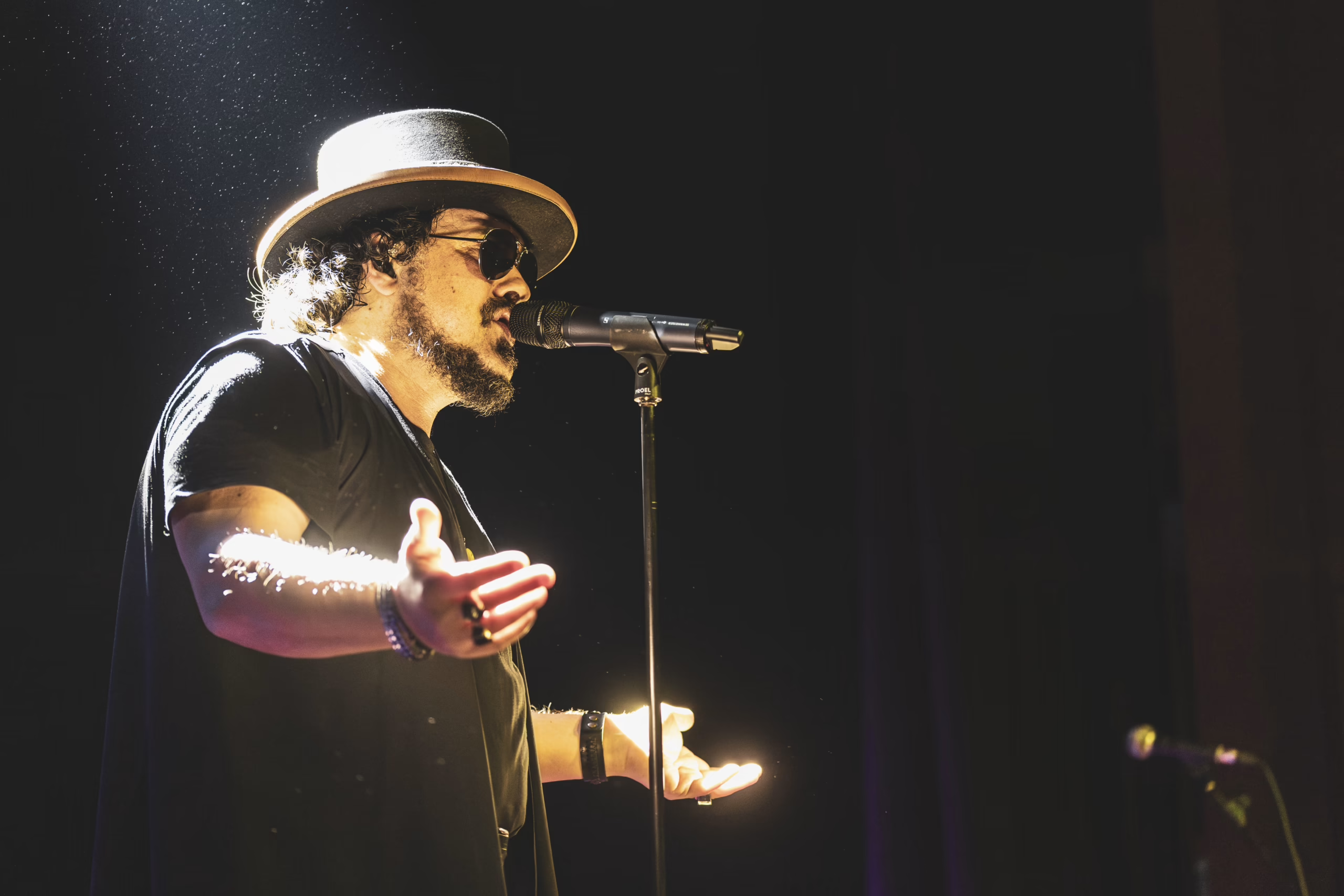
A singer in a hat and glasses grips the microphone and opens one hand toward the people before him. In another image, light explodes across him, illuminating even the dust suspended in the air.
And there it is.
The least glamorous magic of rock and roll:
sweat, dust, cables, amplifiers, aching backs, heavy instruments, and a van that has probably had a warning light glowing on the dashboard for at least three months.
So much for music videos.
Live music is a dirty trade.
And that is precisely its charm.
You can fix a record.
You can cut.
You can duplicate.
You can sample.
You can tune a voice until even the intercom at home sounds pitch-perfect.
Auto-Tune is basically Photoshop for vocal cords.
And I say that as a photographer: I know exactly how seductive it can be to fix what reality forgot to fix on its own.
But not live.
Live, you are there.
Now.
That note comes out or it does not.
That beat lands or you miss it.
That string vibrates, the voice cracks, the drummer comes in half a breath early, the guitarist holds a note a little longer than expected.
And in those very imperfections, something happens that a sterilized recording can never reproduce.
Life happens.
Which, incidentally, is almost always slightly out of tune.
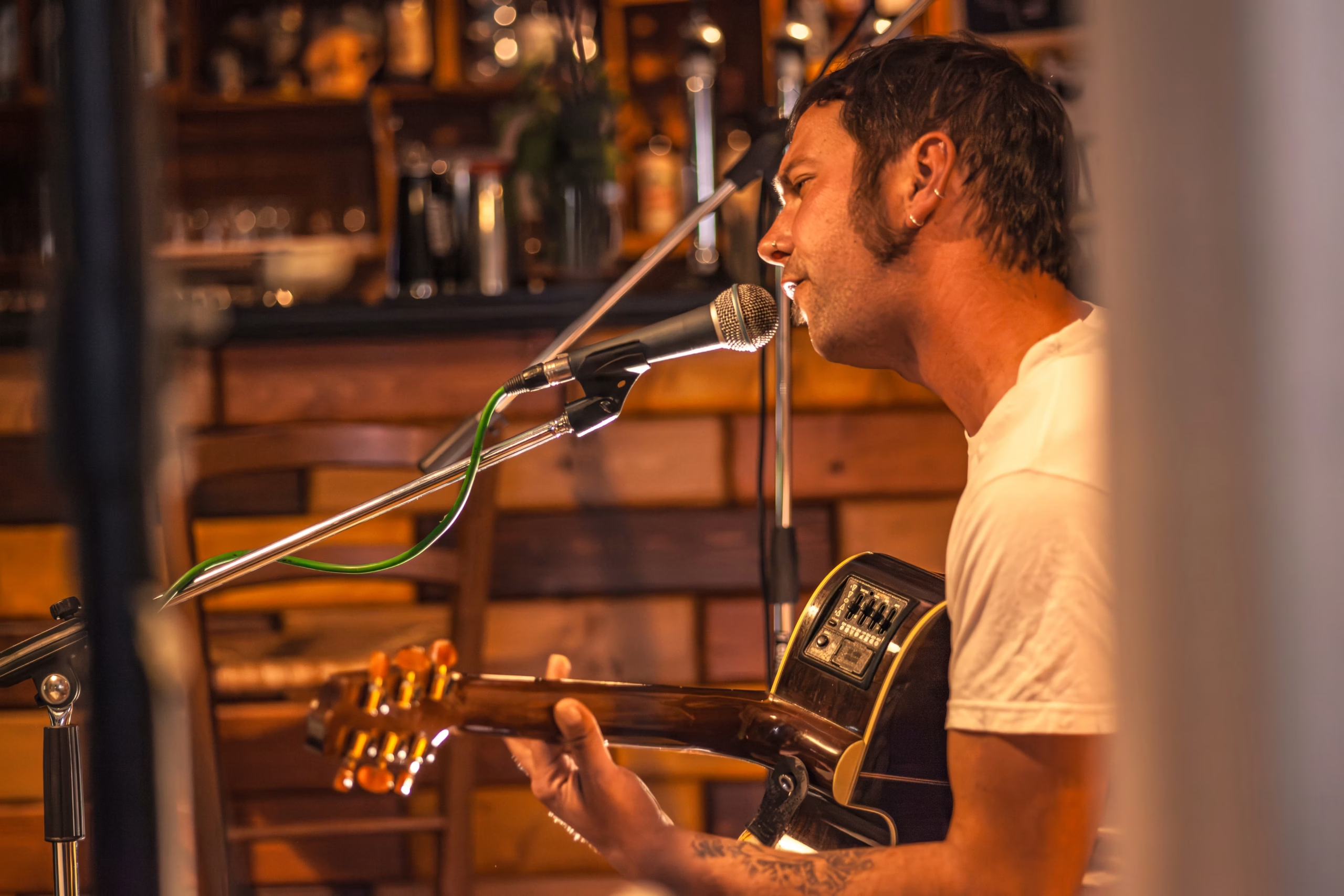
Then there is a musician in a smaller venue.
Acoustic guitar.
Microphone.
Warm lights.
No arena, no wall of amplifiers, no thousands of people screaming.
And perhaps that is where you understand something else.
Music does not need a stadium.
It needs someone carrying something inside.
You can play for fifty thousand people or seven assholes eating fries at the next table.
The question remains the same:
do you believe it?
Because the audience can tell.
Always.
You can own a four-thousand-dollar Gibson, a sound system capable of waking the dead, and a social-media strategy designed by fifteen marketing graduates.
But if you have nothing to say, in the end you are only making noise with expensive equipment.
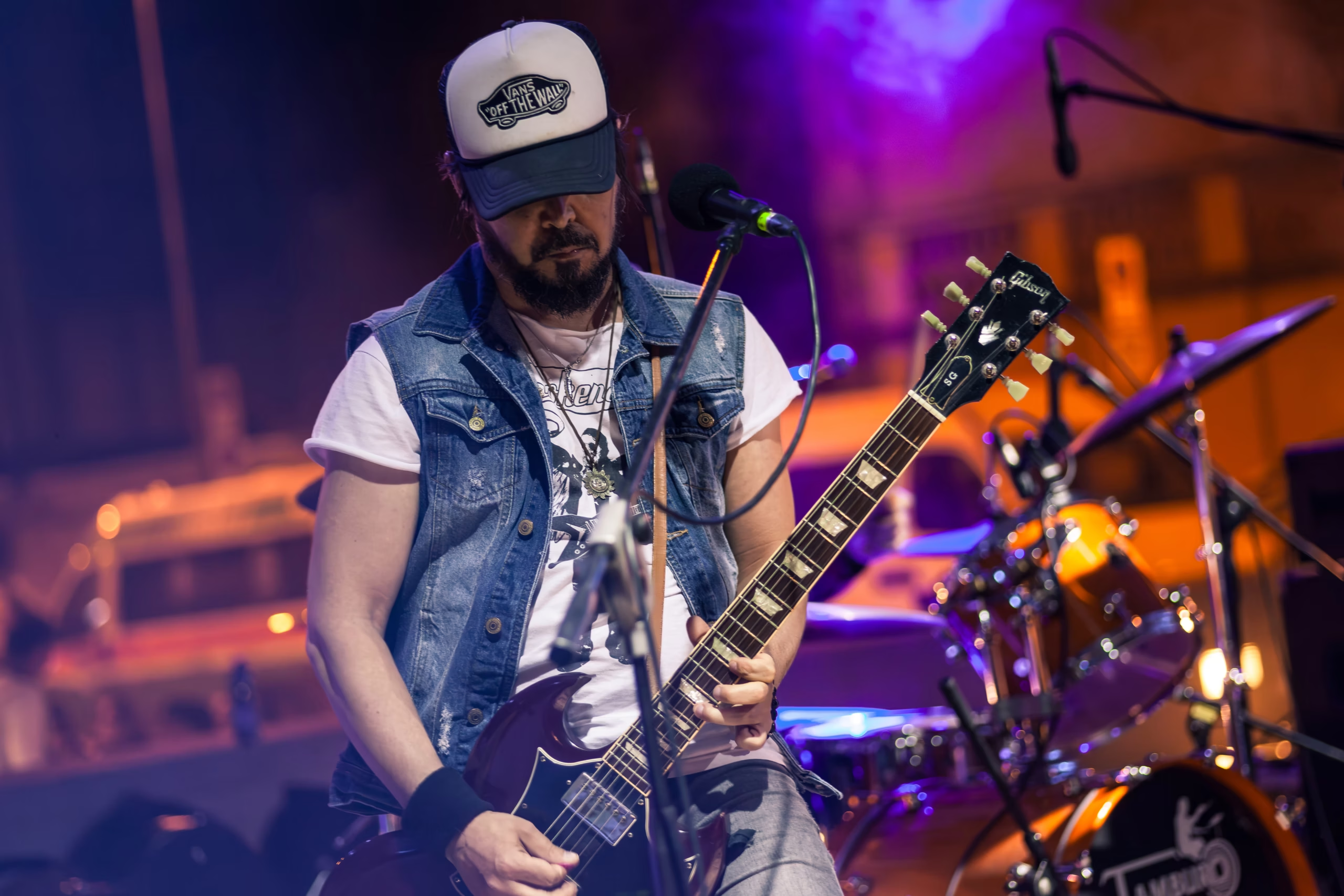
Then another electric guitar.
Baseball cap.
Denim vest.
Head down.
Hand on the fretboard.
That expression familiar to anyone who has ever seriously attempted something creative: half concentration, half trance, half “do not fuck with me.”
Yes, that makes three halves.
That is how art works.
Mathematics can wait outside.
And watching these people always brings back that small envy.
The good kind.
I never really knew how to make music.
I take photographs.
I write a few words.
Every now and then, I manage to put two sentences together without committing a crime against Italian grammar.
But taking six strings, or eighty-eight keys, or four drums and turning them into something capable of changing the mood of a stranger across the room?
That is witchcraft.
And sooner or later, I want to learn it.
Probably badly.
Probably while swearing.
But I want to know what it feels like on the other side.
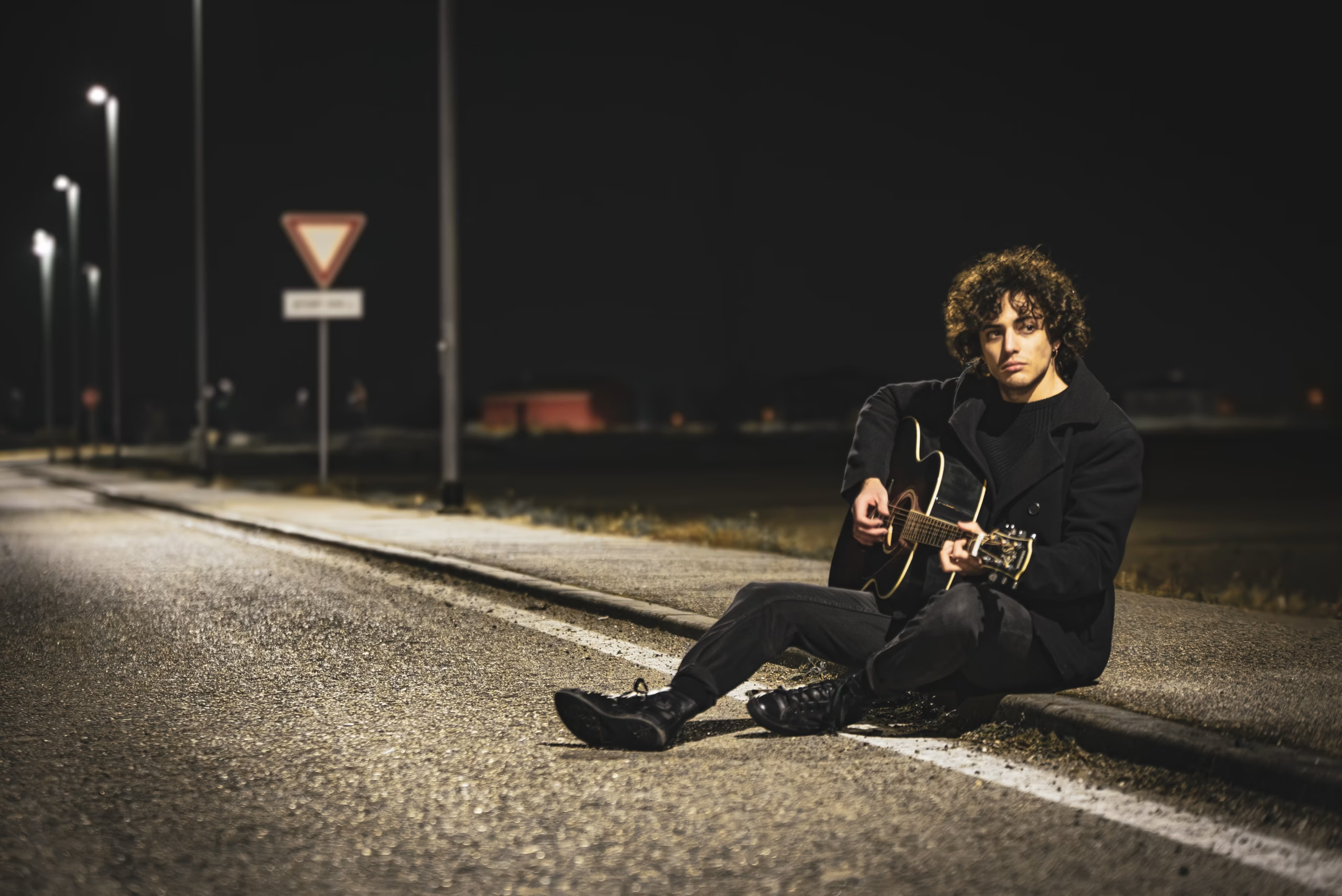
Then there is that nighttime photograph.
A man sitting at the edge of an empty road with a guitar.
No stage.
No audience.
No colored lights.
Only asphalt, streetlights, and darkness.
It may be my favorite photograph in the entire story because it removes everything unnecessary.
In the end, this is what remains.
A person.
An instrument.
Something that needs to come out.
That is probably how almost all music worth a damn is born.
Not in a marketing meeting.
Not by analyzing which chorus is most likely to go viral on TikTok.
It is born when someone is hurting.
Or feeling magnificent.
Or in love.
Or freshly abandoned.
Or no longer understands a fucking thing about their life and buys a guitar instead of going to therapy.
A financially questionable choice, but aesthetically impeccable.
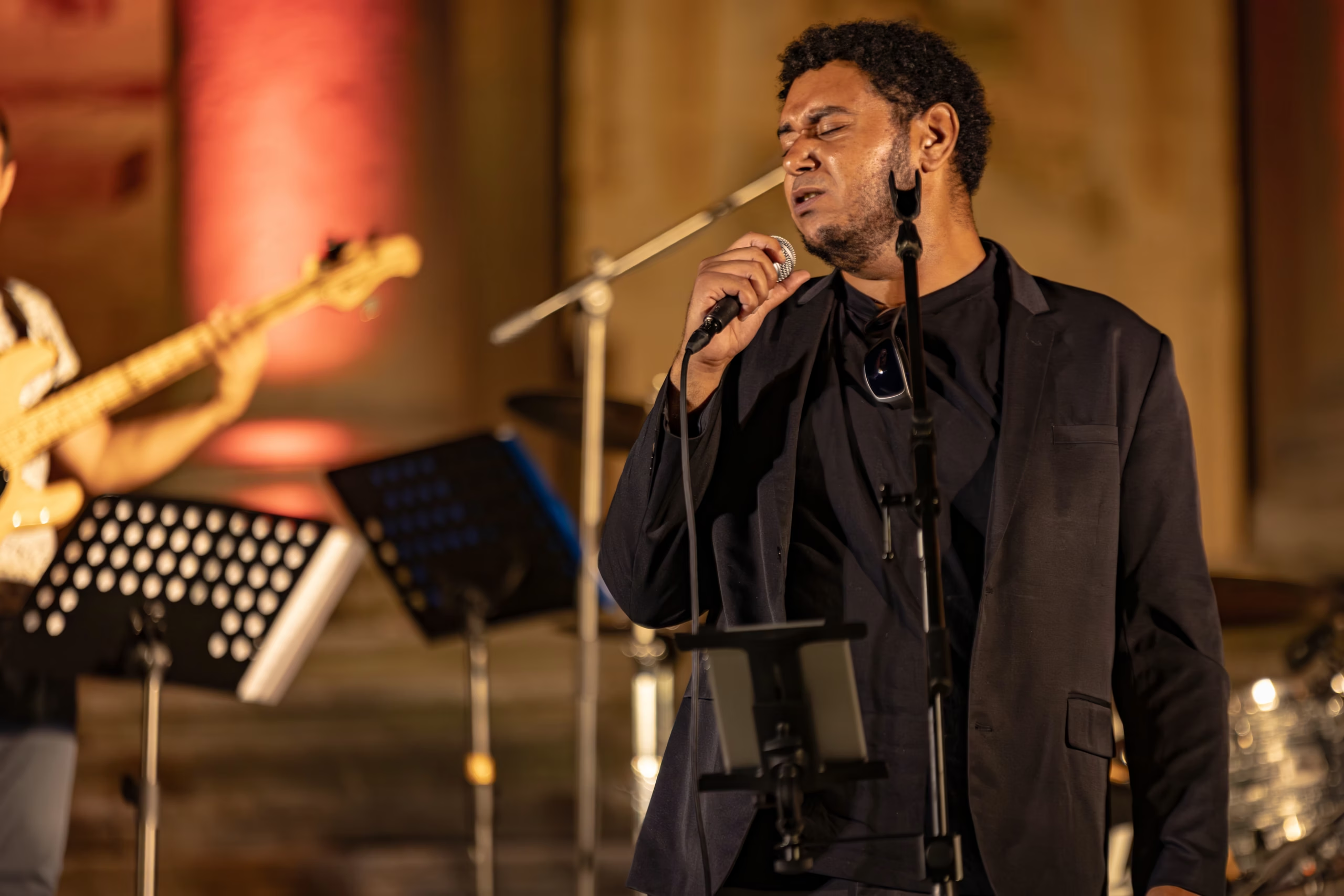
Then the stages return.
A figure almost swallowed by light, guitar in hand.
A singer with eyes closed, microphone gripped between his fingers.
And that is where music becomes more than the sum of its instruments.
Because there are moments when the singer no longer seems to be standing before an audience.
He is somewhere else.
Closed eyes are often a door.
Anything could be behind it.
A memory.
A person.
A loss.
A place.
A pain that found no ordinary words and therefore decided to become a melody.
And perhaps that is the extraordinary thing.
Music translates what we do not know how to say.
There have been moments in my life when I could not have explained what I carried inside with twenty pages and a bottle of good rum.
Then a song would begin.
Three minutes and forty-two seconds.
And some son of a bitch I had never met managed to tell my story better than I could.
It is unsettling.
And marvelous.
Music was there during the best nights.
And it was there during the shitty ones.
It was there during the journeys.
During falling in love.
During goodbyes.
During those evenings when you feel invincible and those mornings when getting out of bed resembles an engineering project funded by the European Union.
Music solves nothing.
And perhaps that is its finest quality.
It does not promise everything will be all right.
It does not sell you seven simple rules for happiness.
It does not ask you to manifest abundance while staring at yourself in the mirror at six in the morning.
It puts a hand on your shoulder and says:
“Yeah. I know.”
Then the chorus begins.
And live, all of this becomes even more violent.
Because you feel the air move.
You feel the kick drum in your stomach.
You see hands on strings.
You see the breath before a line.
You see the drummer clench her jaw.
You see the singer close his eyes.
You see that precise instant when a human being stops performing a song and begins living it.
You cannot replicate it.
Tomorrow night, they will play the same song.
It will be different.
One note will change.
A pause will last half a second longer.
Someone in the audience will shout at the wrong moment.
An amplifier will do something it should not.
And it will be perfect that way.
Because we have become obsessed with perfection in a world where almost everything we love is born from some flaw.
A rough voice.
A dirty string.
A beat dragging slightly behind.
A scar.
A photograph with too much flare.
A love that arrived at the worst possible time.
The truly memorable things rarely follow the manual.
Perhaps that is why I will always keep photographing musicians.
Because photographing music is technically impossible.
You cannot photograph a sound.
You can only photograph what sound does to a person.
A hand.
A grimace.
Closed eyes.
A body bent over a guitar.
A drumstick suspended a millisecond before impact.
A mouth before a microphone.
Light passing through smoke.
And it is all there.
They are photographs of something invisible.
Which is probably a fairly decent definition of art too.
And perhaps even of life.
We spend years searching for things we can own, measure, buy, place on a résumé, or show someone.
Then four chords played the right way arrive, and suddenly we remember that the most important things cannot be put in a pocket.
You can only feel them.
For a few minutes.
Before they end.
And when the final note dies, the lights go out, and someone starts coiling those goddamn cables across the floor, that strange feeling known to anyone who truly loves music remains.
The concert is over.
Life begins again.
Except that for a few moments in there, it had been far more bearable.