

Friends, who decided that at a certain age you have to turn the volume down?
Some passions fade with time, like old T-shirts forgotten in the sun. Others cling to your skin, settle into the wrinkles, and keep knocking against your ribs. These four men belong to the second kind: they aren’t trying to be young again, because they have no need to. They still have something to say, and they’d rather say it loudly enough to make the windows shake.
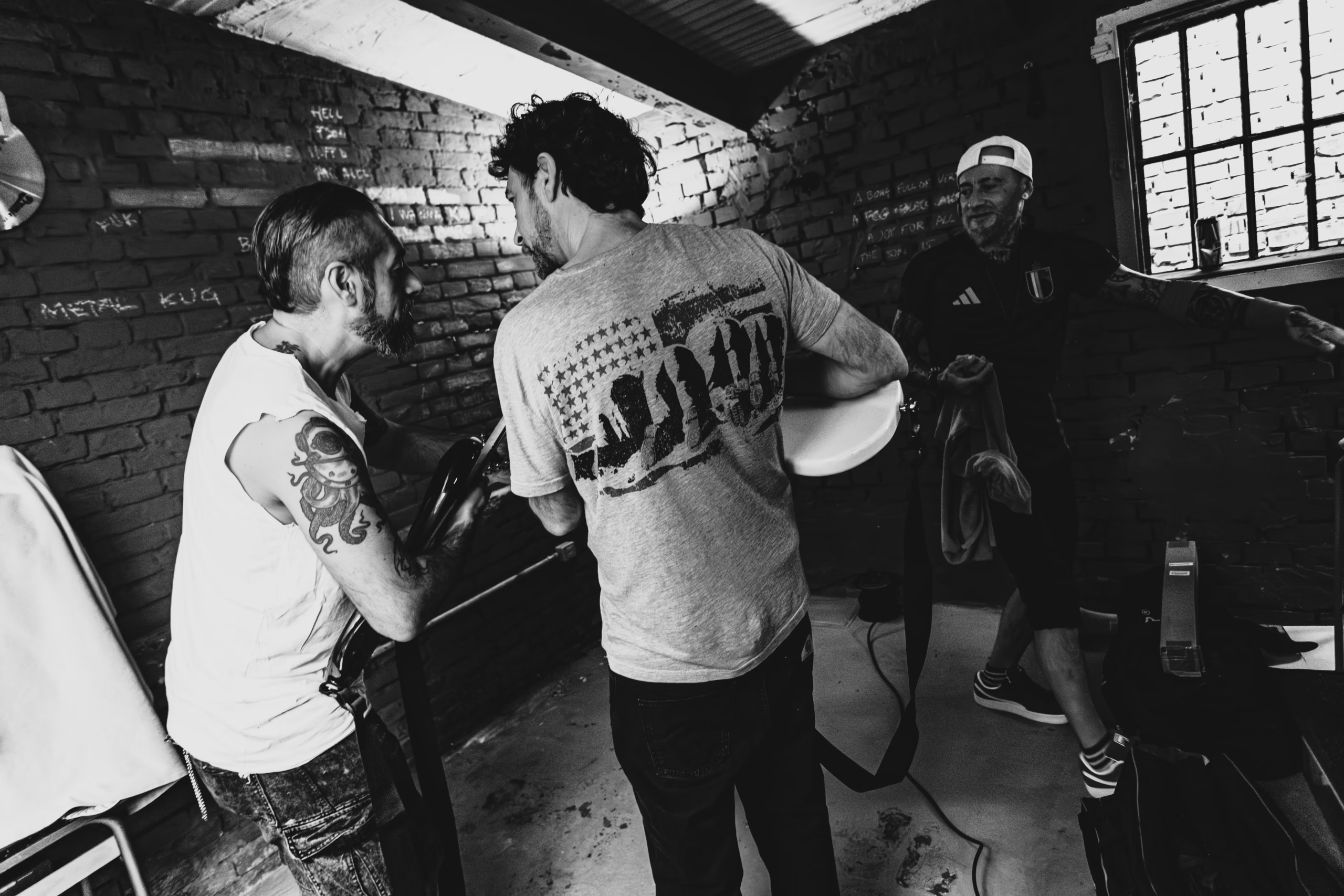
Amid bricks, bars, tattoos, beers, and a surprisingly poetic amount of toilet paper, this series tells the story of rock before the music even starts: friendship, complicity, time gone by, and everything time failed to take with it.
Take your time with it, friends. And preferably turn it up, even if photographs, technically speaking, make no noise.
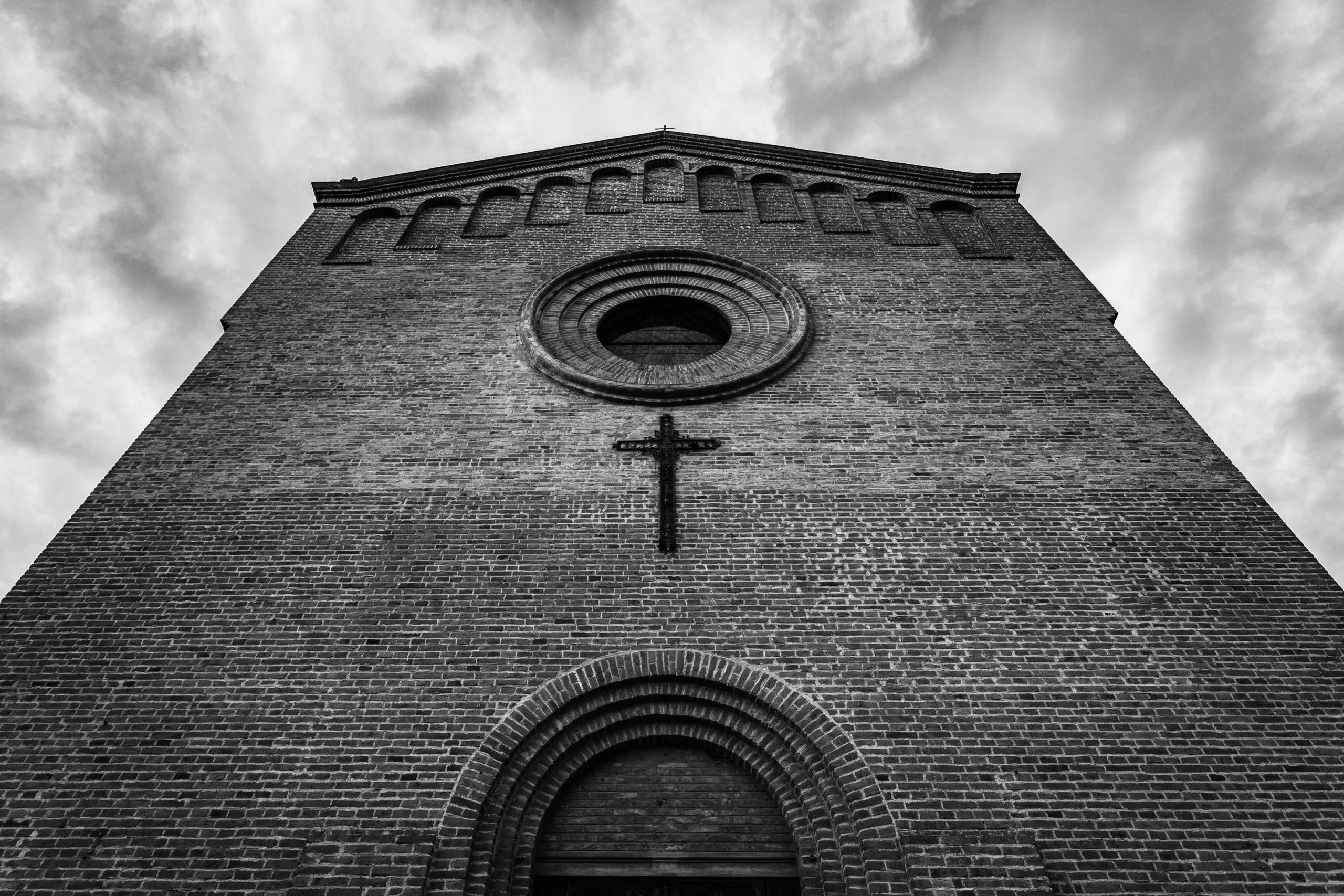
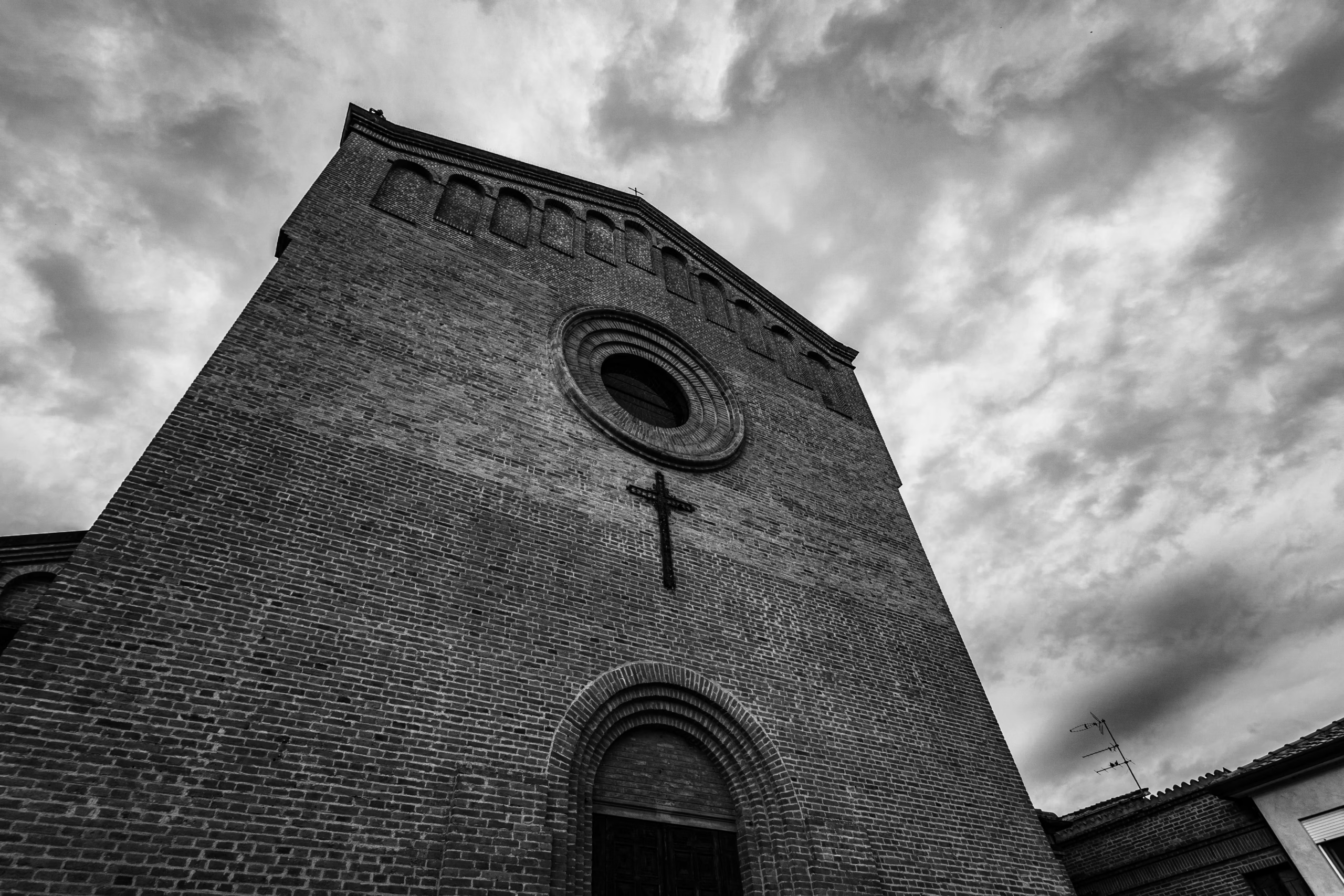
It all begins in front of a church.
Dark bricks. A cross nailed to the facade. A sky swollen with clouds, as if God had slept badly too and was waiting for someone to blame.
A low angle, stern, almost threatening. The kind that usually comes before a sermon, a funeral, or at least a decent confession full of interesting sins.
Instead, they show up.
Four rock musicians who haven’t been twenty in a very long time and, thank God, make no effort to pretend otherwise.
No desperate attempt to look like kids. No class-reunion nostalgia. No ‘back in my day’ delivered in the voice of someone who’s already double-parked his soul and left the hazards blinking.
They have wrinkles, beards, tattoos, dark circles, and that faintly dangerous air of men who’ve survived long enough to stop needing anyone’s permission.
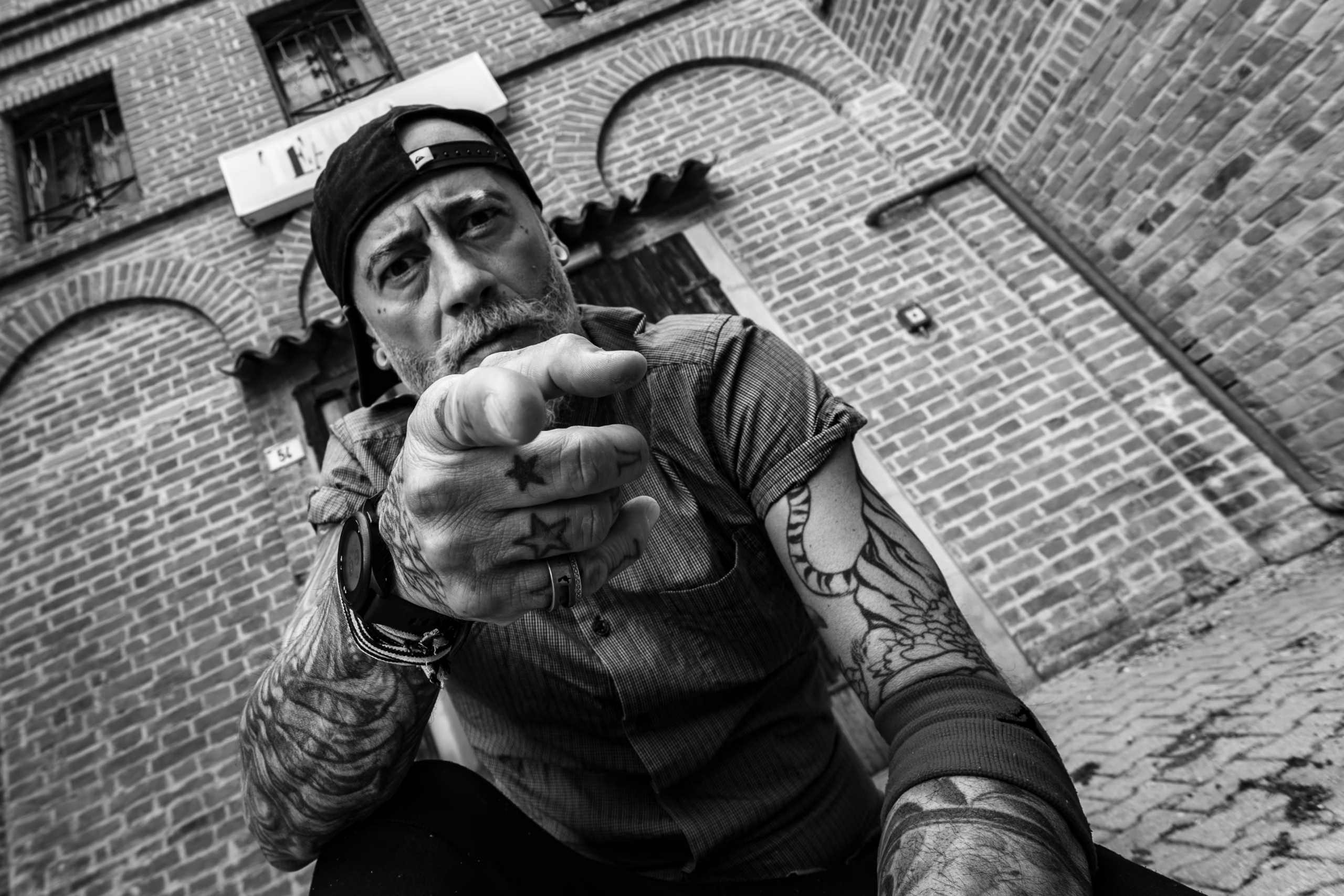
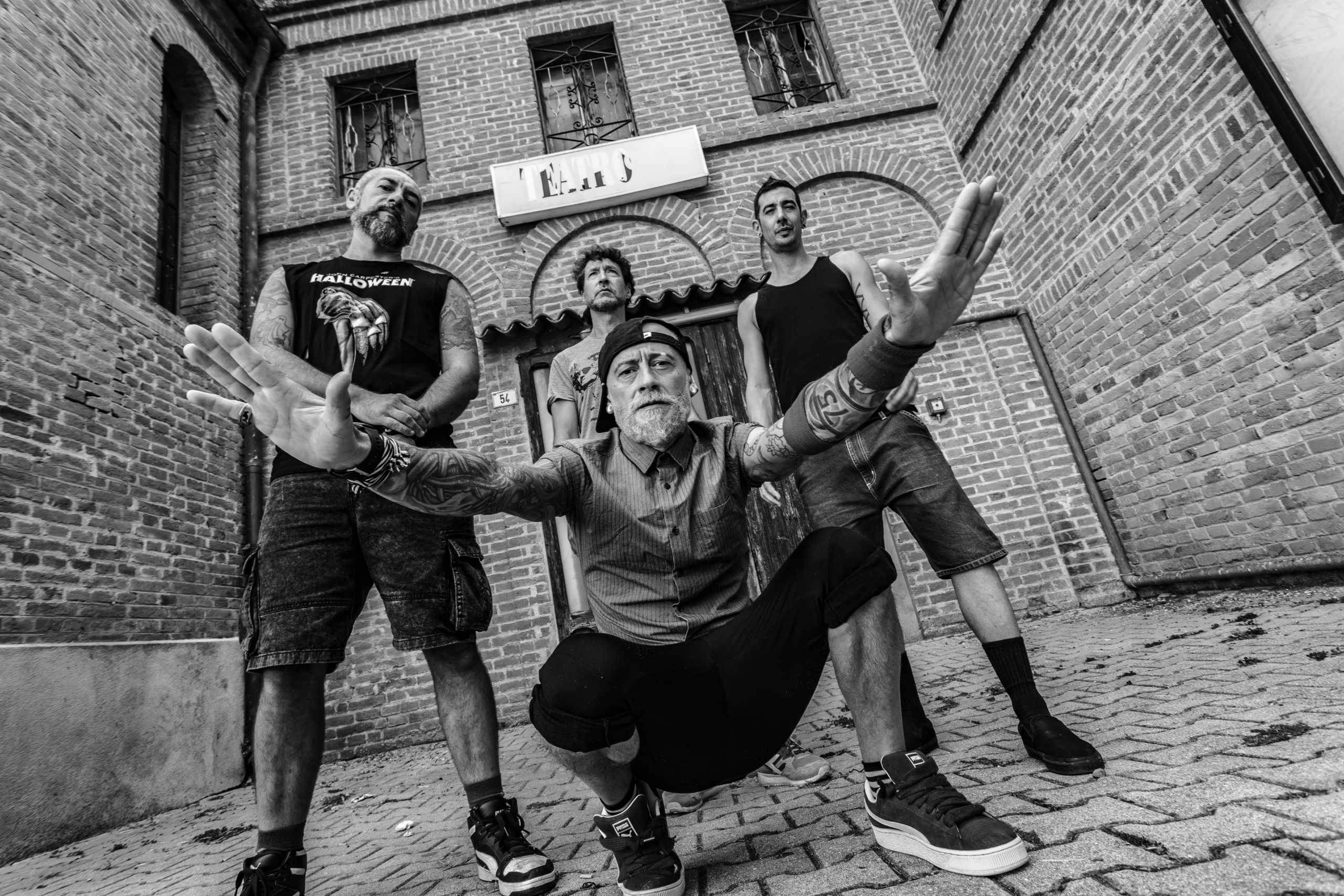
The first one steps toward the lens and points.
It’s hard to tell whether he’s calling you over, accusing you, or checking that you’re still awake. Maybe all three. Behind him are brick arches, weathered doors, and walls that seem to know plenty of stories but, like any good accomplice, have no intention of telling the cops.
His hand almost reaches inside the camera. The stars tattooed on his fingers arrive first, then the face, the beard, the stare.
He isn’t posing.
He’s invading the space.
And that’s an important distinction.
A pose seeks approval. An invasion doesn’t give a fuck.
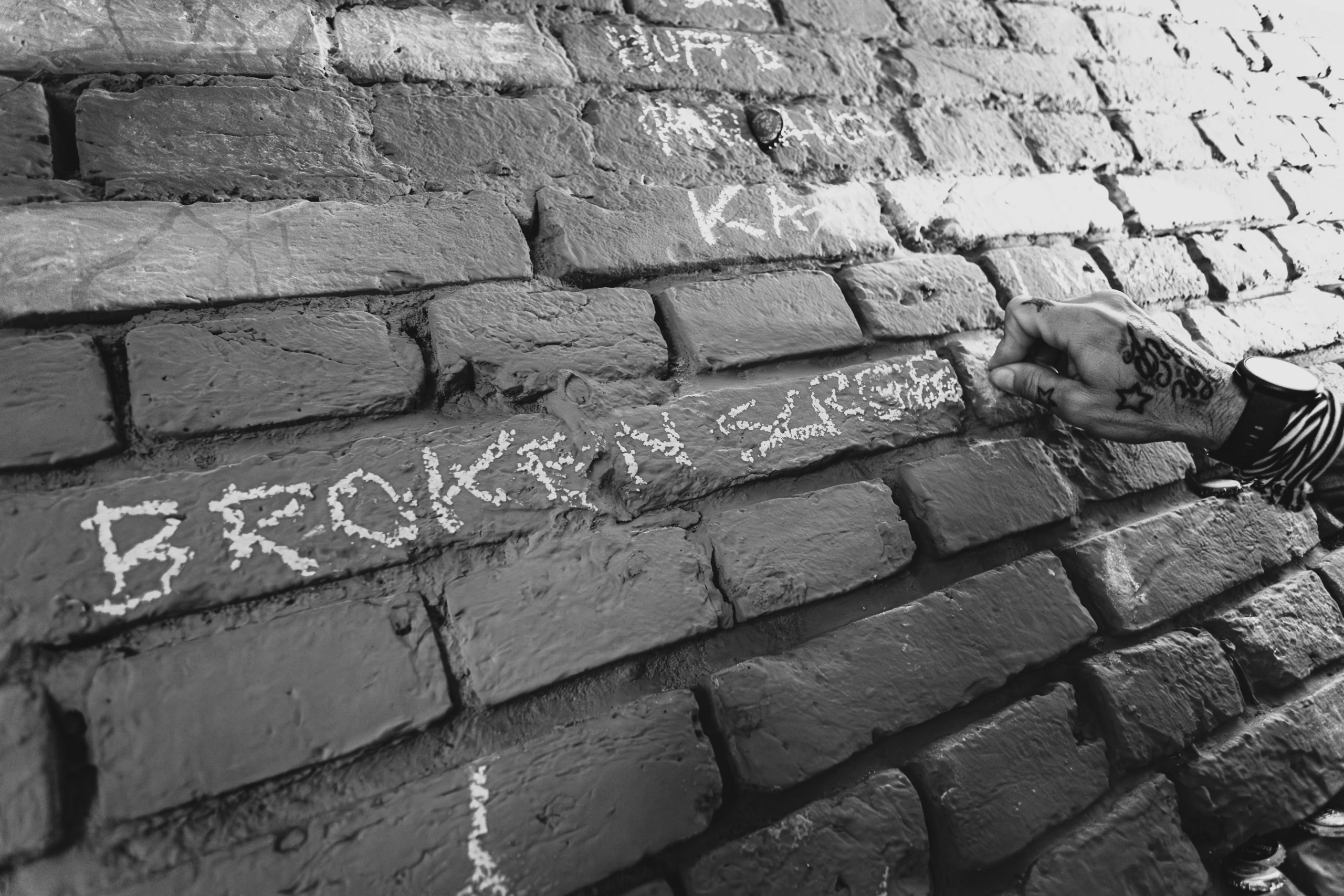
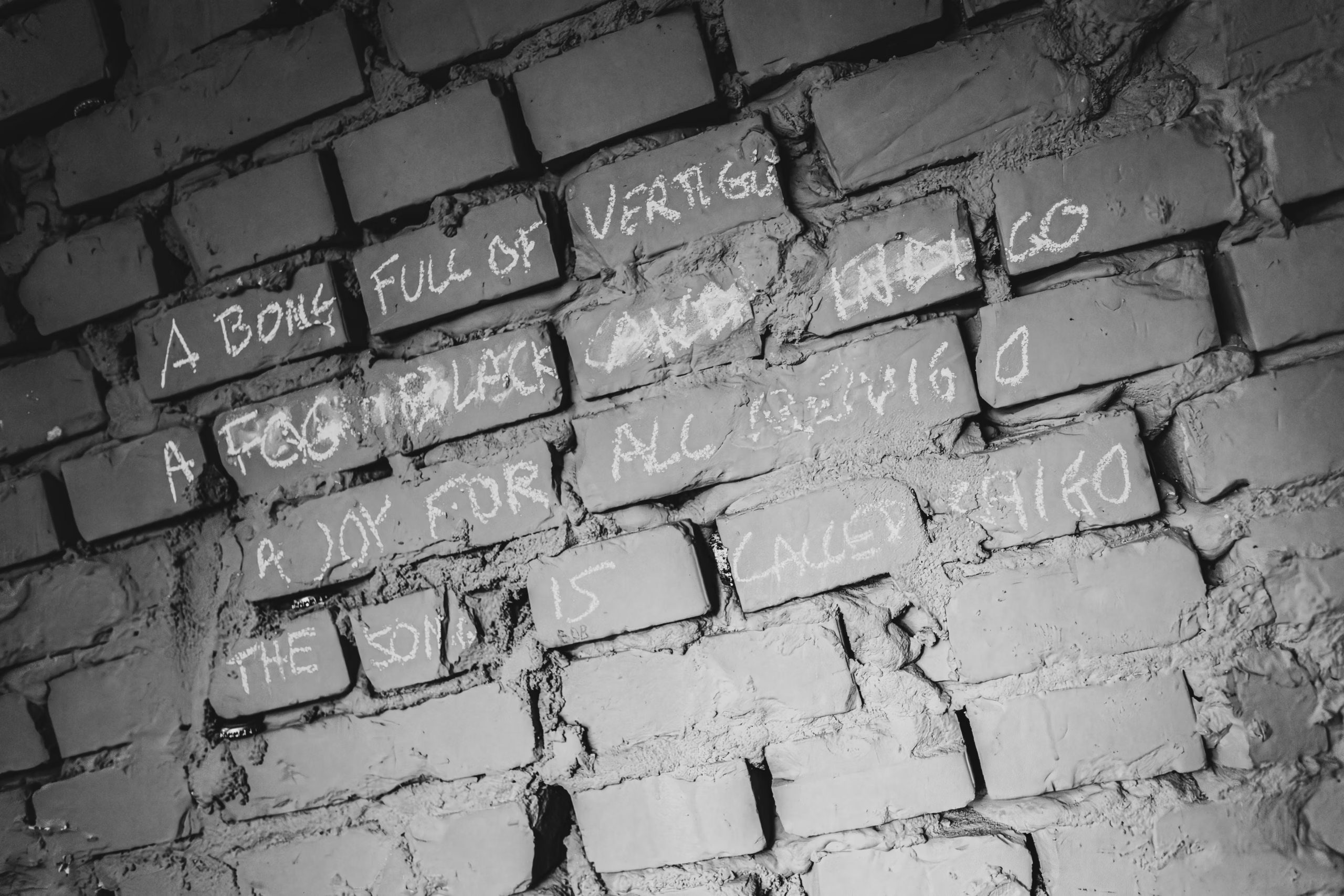
A little later, we find him again with his hood up, bent against a wall. His fingers touch the bricks as if searching for a crack, a secret passage, or maybe the exact spot where someone hid the last decent chord in rock history many years ago.
The wall stays where it is, naturally.

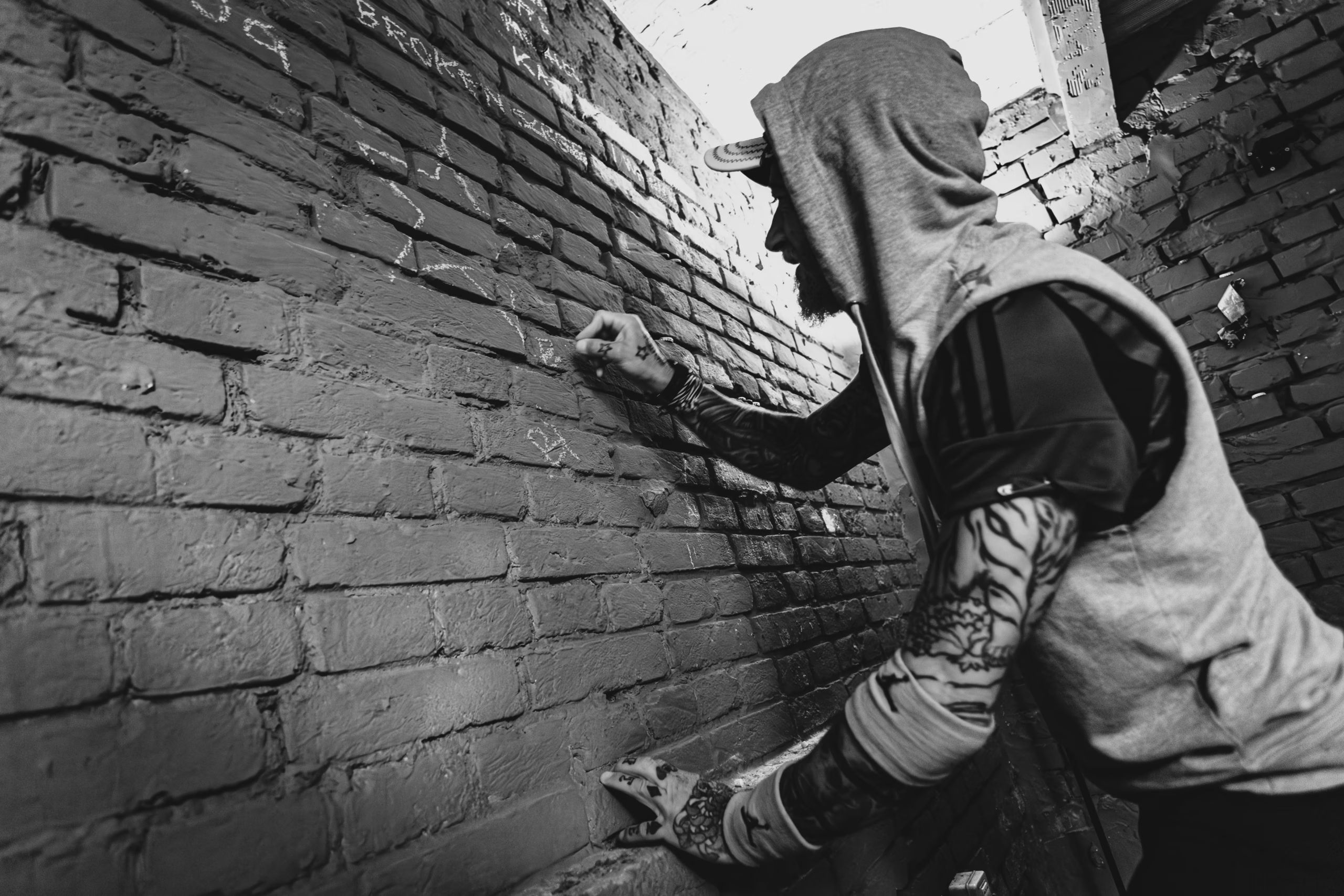
That’s what walls do: they hear everything and never answer.
But he keeps at it. Writes. Touches. Searches.
Maybe that’s what musicians do even without an instrument in their hands. They hear noises where everyone else sees only surfaces. They look for rhythm in broken things, locked doors, rusted pipes, footsteps down an empty hall.
Then a blurred hand takes over almost the entire image.
The face remains behind it, half hidden, with the hint of a smile. It’s the gesture of someone saying: fine, the photograph, the art, this whole very serious business… but let’s not get too full of ourselves.
And finally, here they are together.
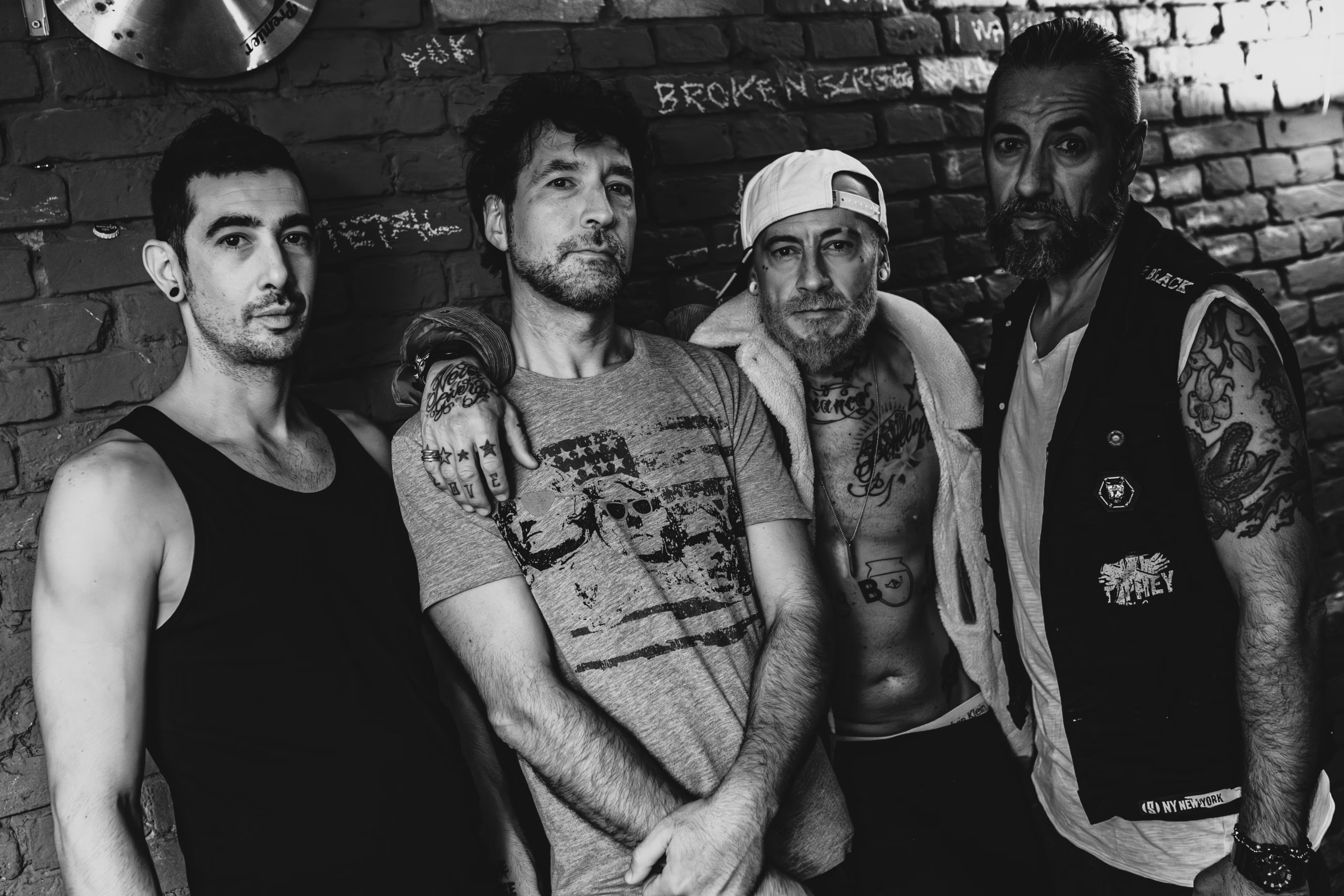
Four men against a brick wall.
One in a tank top, one in a worn T-shirt, one in a white cap with his chest covered in ink, the other in a black vest, sculpted beard, and the expression of a man who might fix your motorcycle or bury the body of whoever broke it.
They aren’t smiling.
Or rather, not the way people smile in family pictures, when someone behind the camera shouts ‘Cheese!’ and everybody pretends to be happy for a second.
These men smile with their eyes, their shoulders, the way they crowd together. An arm resting on another man’s body. That rough kind of closeness found among men used to sharing miles, rehearsals, beers, pissed-off silences, long waits, good nights, and nights when the entire audience seemed to consist of three exhausted waiters and some guy who came in to use the bathroom.
A band isn’t the sum of its musicians.
It’s a strange kind of sexless marriage with a lot more amplifiers.
You put up with each other, tell each other to fuck off, wait, lose sight of one another, find each other again on the beat. Sometimes somebody rushes, somebody falls behind, and somebody has to remind the others where the hell the chorus starts.
But when it works, it works.
And you don’t even need to hear them play to know it.
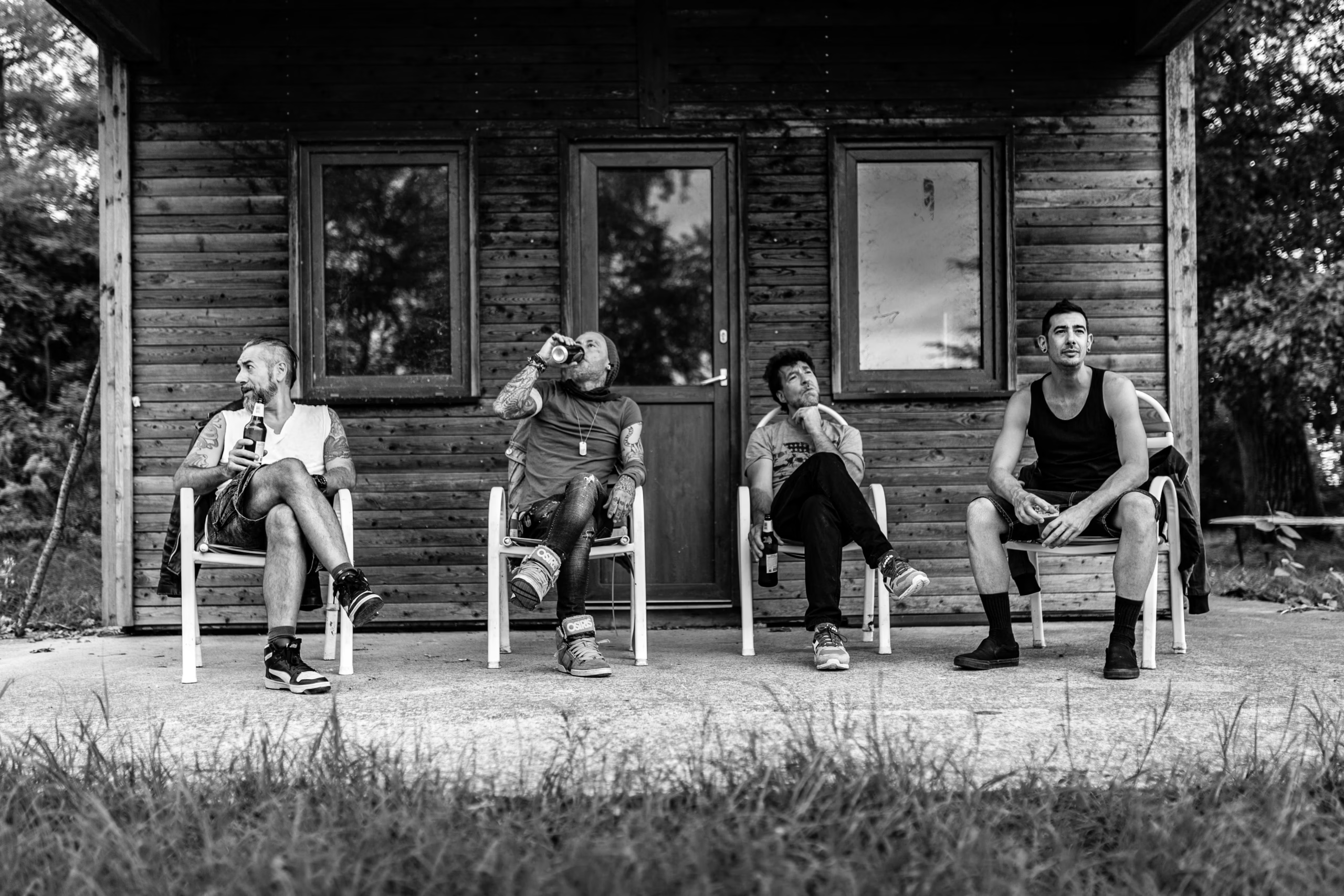
There are no guitars raised to the sky in these photographs, no drums being beaten to death, no microphones clutched like the last chance at salvation. No stage. No colored lights. None of the concert’s theatrical sweat.
There is only them.
Before the noise.
And that may be the truest part.
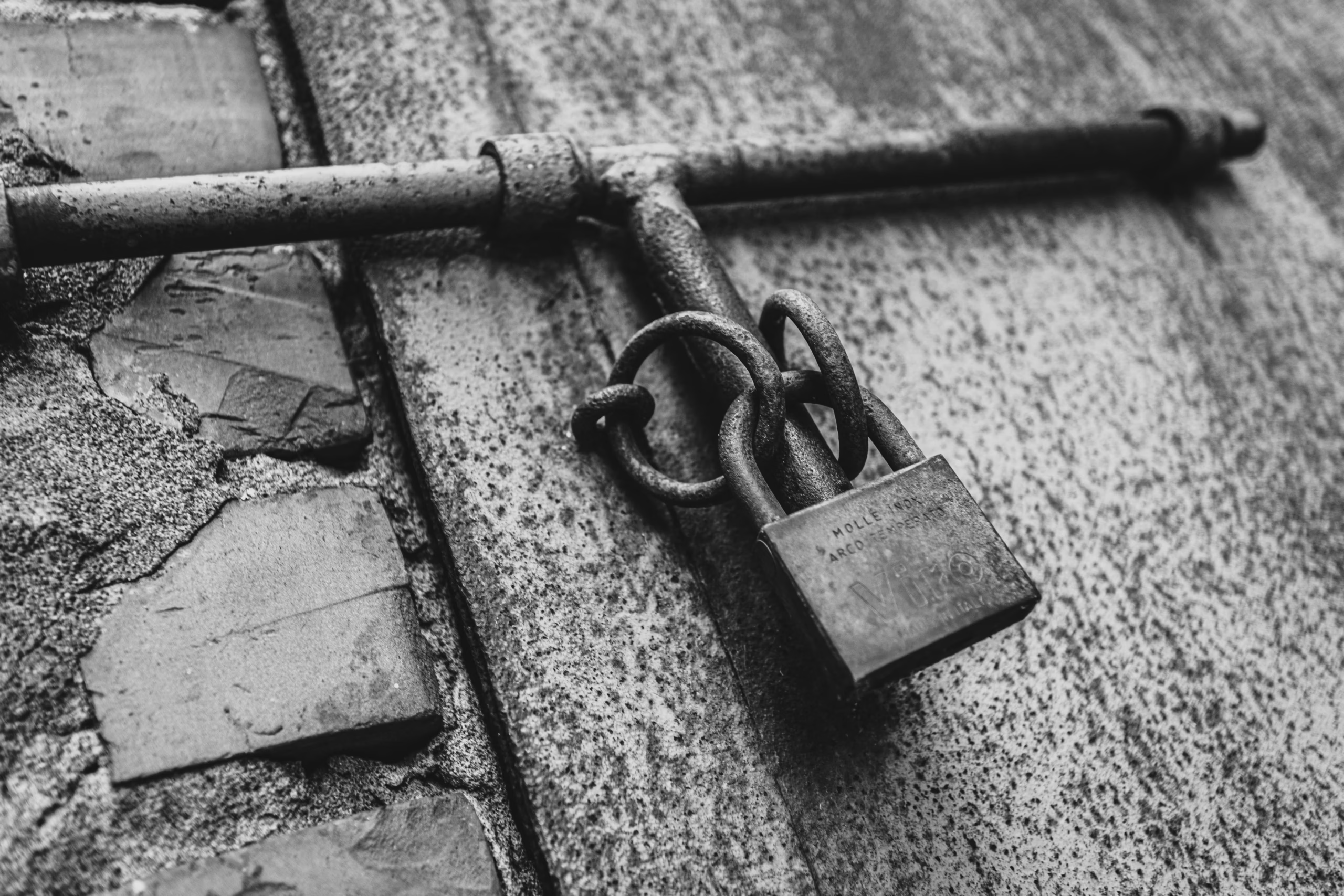
Then a padlock appears.
Old, scratched, rusted. The kind that looks as though it’s been shut so long it has forgotten that somewhere a key is supposed to exist.
We don’t know what it’s protecting.
Maybe nothing.
Things are often locked only because someone is afraid they might open.
And yet, within this sequence, that padlock feels almost like a provocation. Because everything that follows speaks of precisely the opposite: bodies taking up space, hands advancing toward the lens, men leaning out, pushing forward, squeezing into corners and climbing inside the frame.
As if photography had put up a sign saying ‘No Entry’ and they had read ‘Artists’ Entrance.’
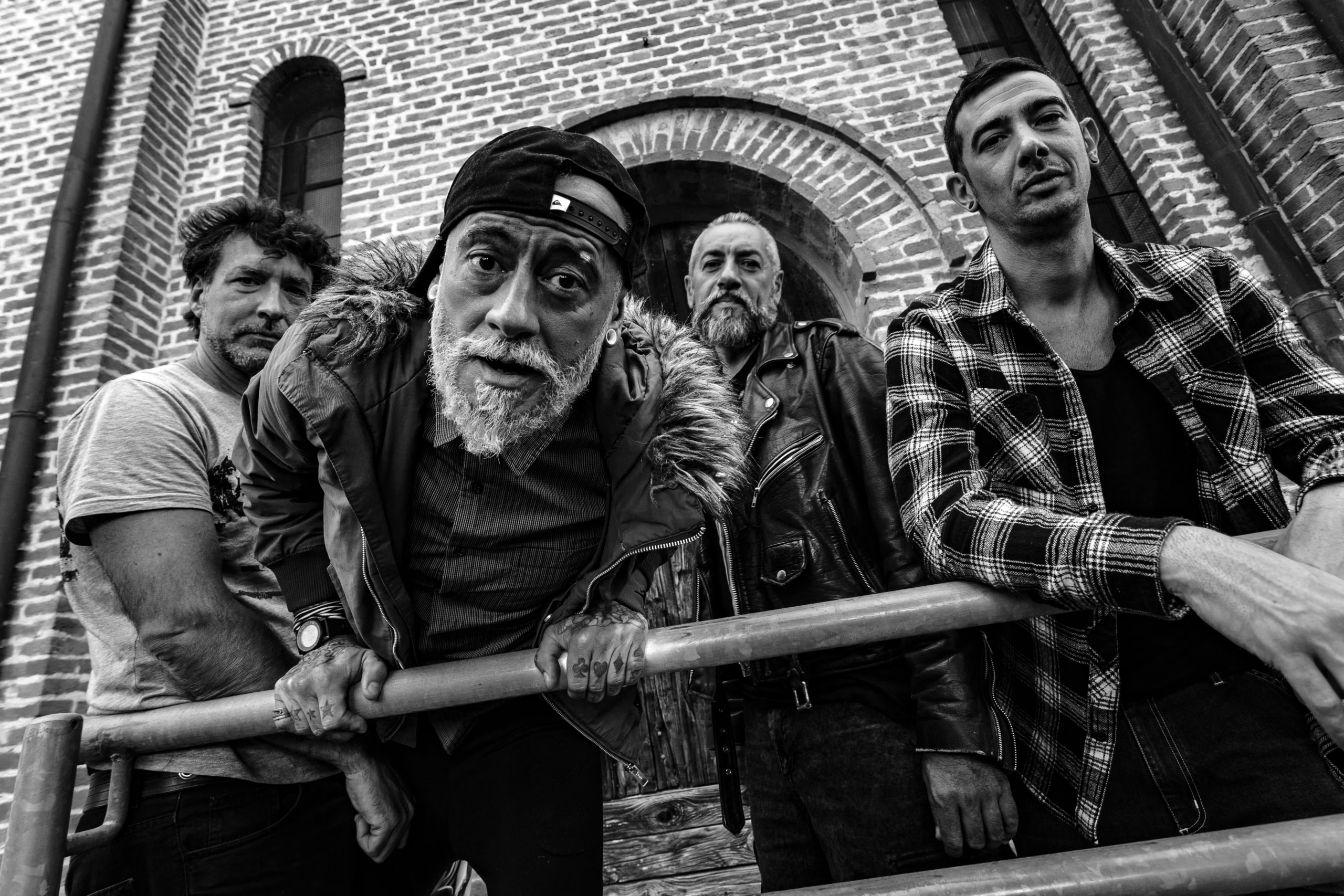
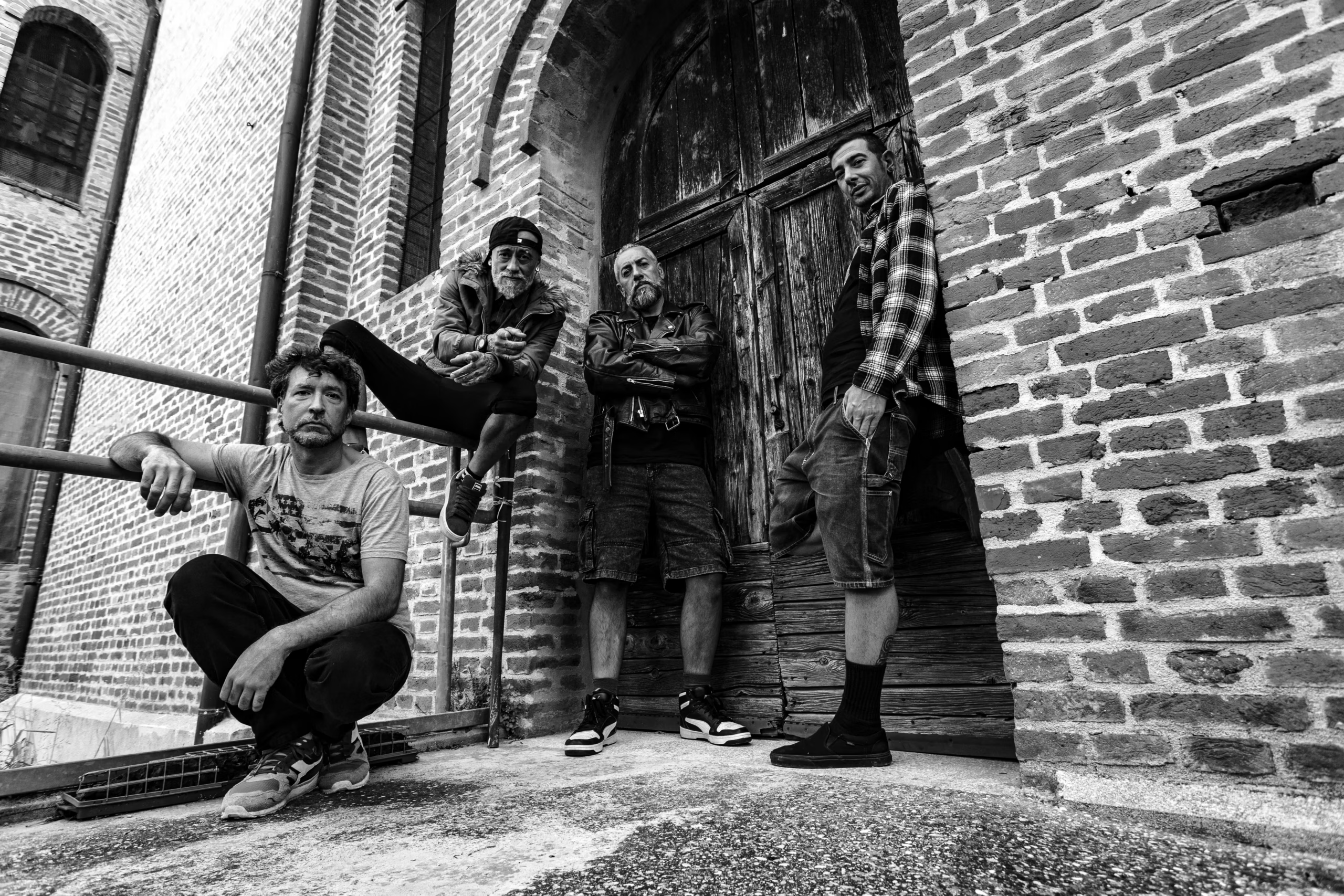
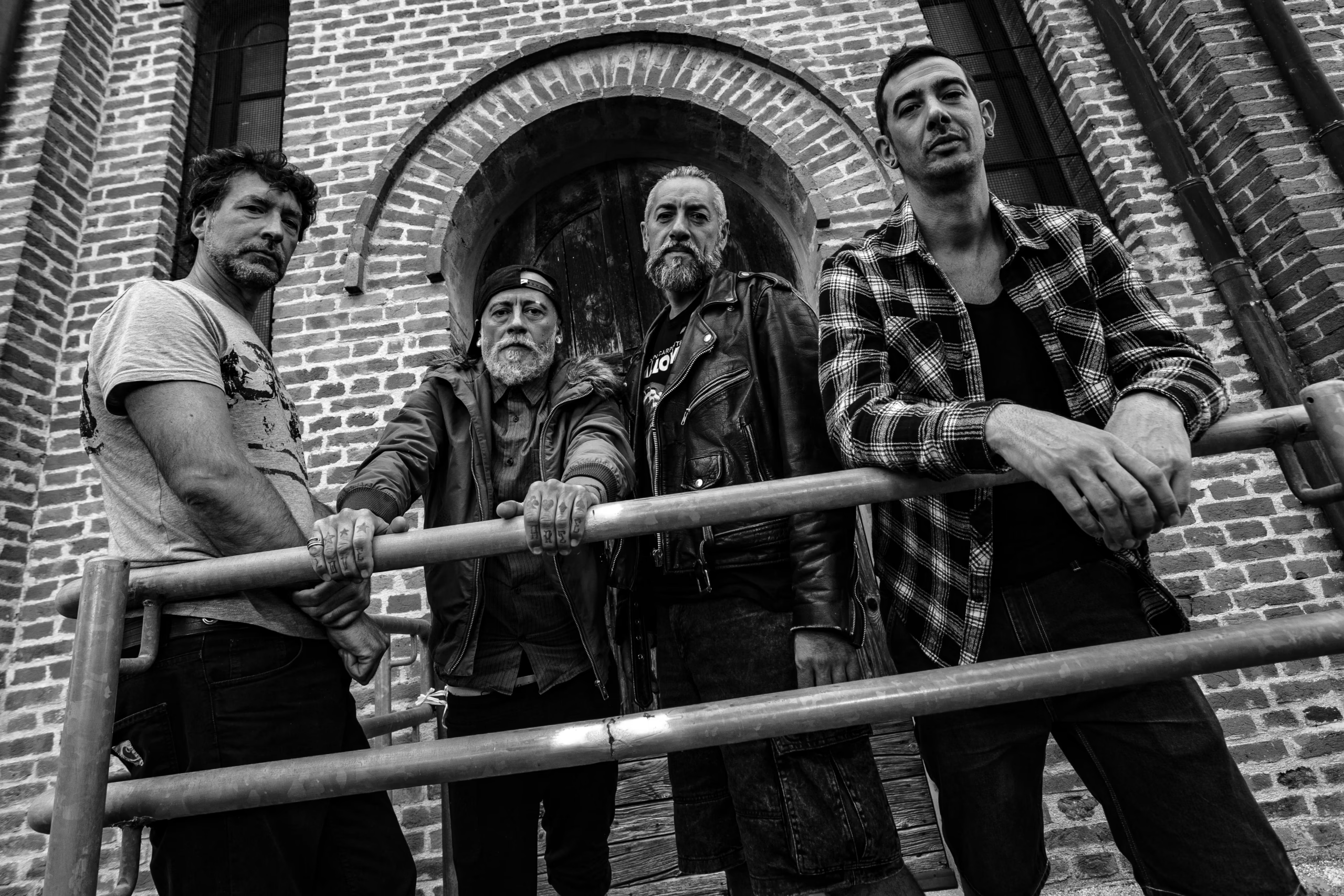
We find them again leaning on a railing in front of the church.
They look down, but not with superiority. More with the amused curiosity of men who’ve found someone lying on the ground with a camera and want to know whether he’s a professional or just another poor asshole taking perspective far too seriously.
One leans farther than the others. His hands grip the metal. His face enters the wide-angle lens and warps slightly, turning him into the frontman of some crooked liturgy.
Behind him, the others hold together.
Four different temperaments, bound by something you can’t see.
That’s how it always is with music.
You can’t truly photograph it. You can photograph a hand on a string, a mouth at a microphone, a drumstick suspended in the air. But the real music remains somewhere between one gesture and the next. Inside a tension. Inside the way four people manage, for a few minutes, to breathe in the same rhythm.
In another image, two enormous hands open in front of the lens.
They look as though they want to stop everything.
Or stretch the frame wider.
As if the space allotted weren’t enough, because some people simply weren’t made to stay neatly inside the edges.
Behind them, the other three watch. One serious, one distant, one vaguely amused. Once again, nobody plays the nice guy. Nobody tries to look reassuring.
Rock, after all, was never meant to be reassuring.
It was born to wake people up, rattle windows, piss off the neighbors, and remind us that the heart is not some refined spiritual mechanism. It’s a dirty muscle pounding against a rib cage.
Sometimes it keeps time.
Sometimes it doesn’t.
But as long as it’s beating, forcing it into silence would be a shame.
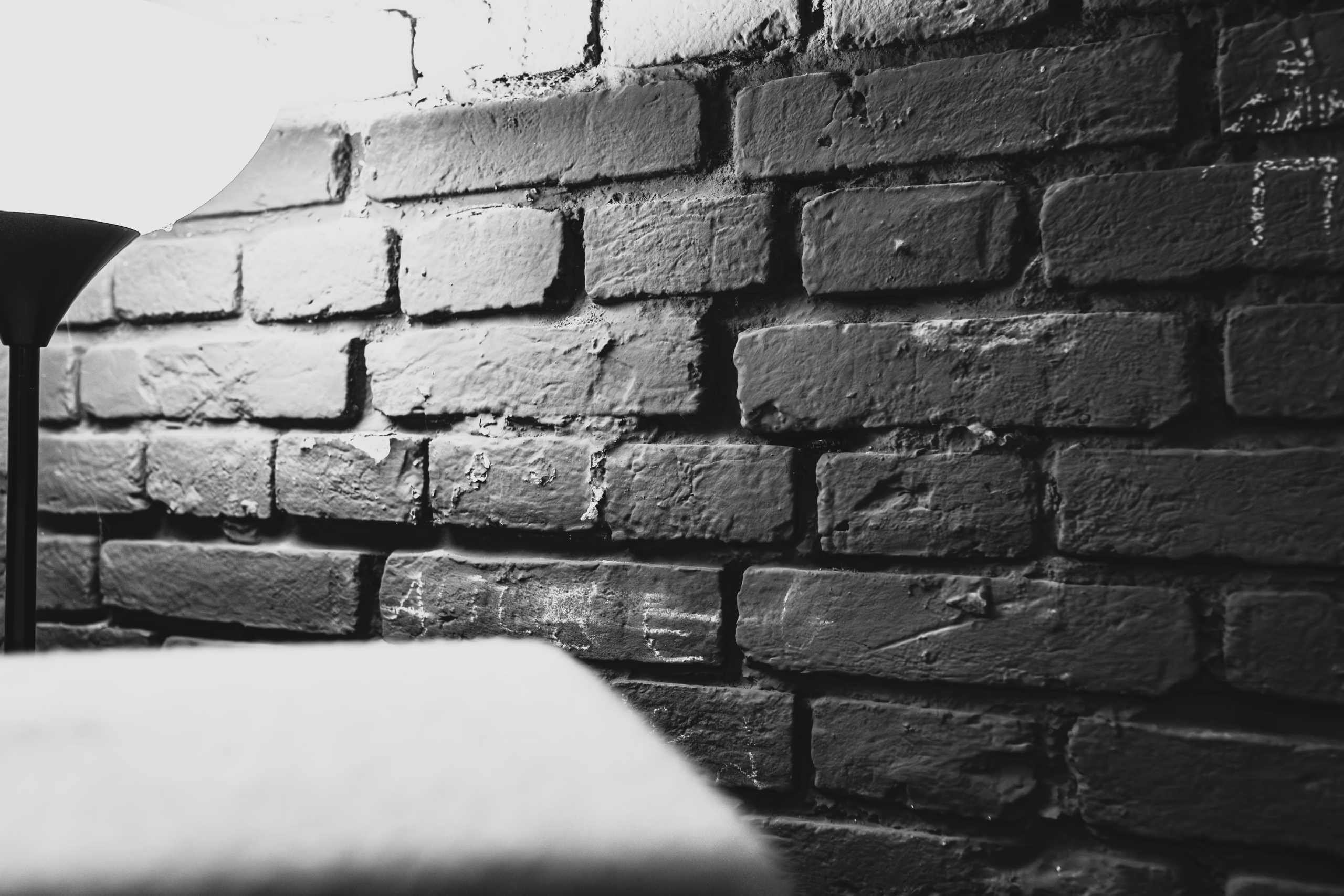
The sequence allows itself a pause.
An empty wall. A lamp switched on. Scarred bricks, worn paint, white light falling from the side.
A rest between two verses.
Even loud stories need to breathe. Even a band, sooner or later, has to stop making a racket for a moment and listen to what remains in the air.
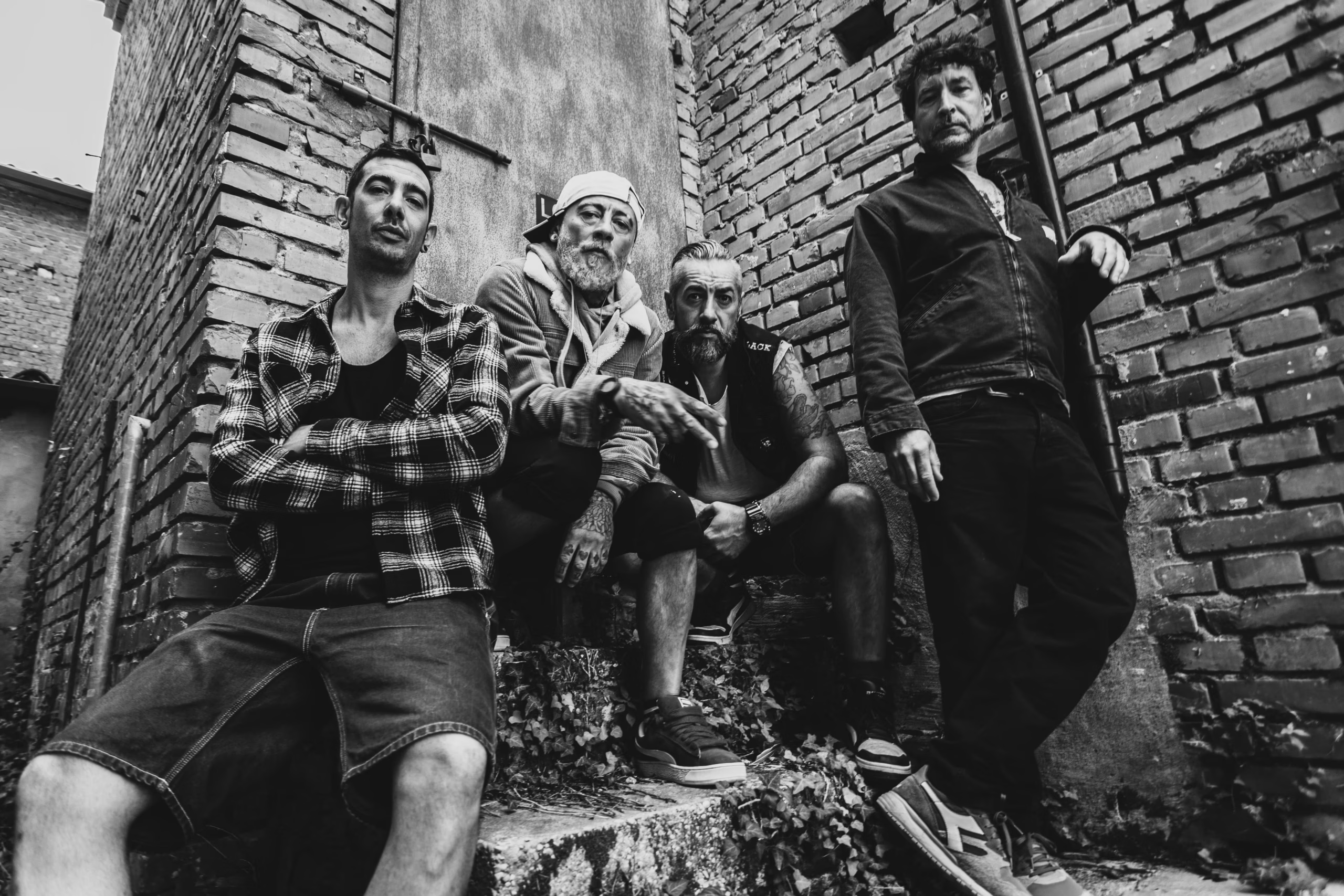
Then they return in front of an enormous old dark door.
They arrange themselves on the steps and against the walls as if the place had always belonged to them. Nobody is perfectly centered. Nobody goes looking for symmetry. The scene holds precisely because each man occupies his own corner with a different kind of ease.
One crouches. One leans. One folds his arms. One looks at the camera like a man who’s already gotten the joke but wants to see whether you will too.
They don’t look like four models dressed as musicians.
They look like four musicians temporarily forced to stand still.
And sure enough, it doesn’t last.
They change angles, tighten the space, wedge themselves between two brick walls. The wide-angle lens lengthens legs, enlarges shoes, pushes faces toward the viewer. The architecture becomes a stage set: rough, crooked, and as lived-in as they are.
The tattoos answer the cracks.
The beards answer the mortar.
The worn clothes answer the rotting doors.
Everything, somehow, carries time on its back.
But time doesn’t appear as a sentence.
It’s material.
It’s another layer of skin. A deeper sound. The difference between someone imitating an attitude and someone who’s had enough years to grow one of his own.
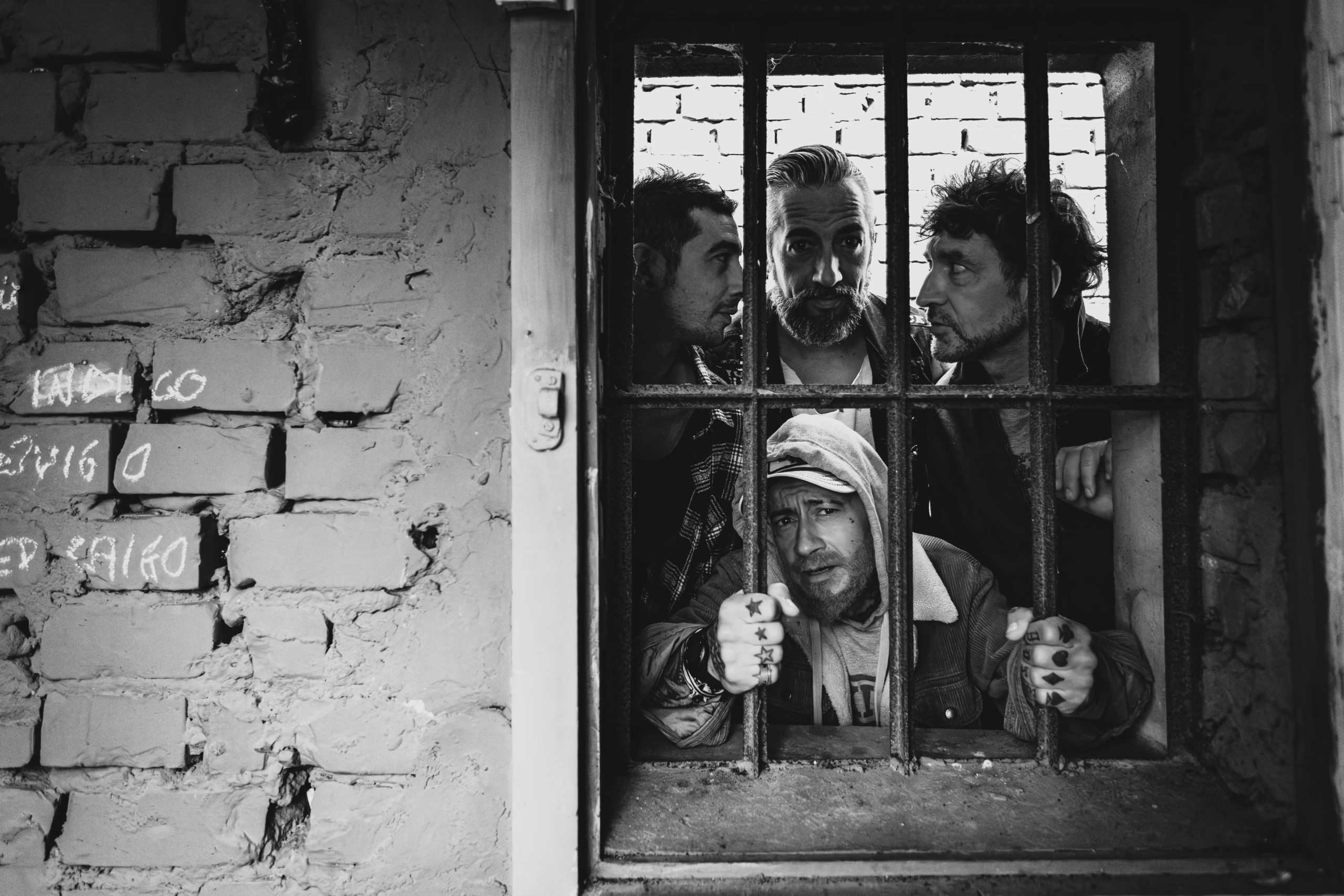
Then come the bars.
Three faces above, one below. Four men crammed behind a grate, the one in front gripping it like the happiest death-row inmate alive.
There is no drama.
There is play.
Because you can be an adult without becoming deadly serious. In fact, perhaps the real privilege of age should be exactly this: finally understanding that almost nothing deserves all the solemnity we assign it.
The bars become another set, prison a pose, captivity a gag.
Besides, anyone who keeps making music after many years has already learned how to escape.
Not necessarily from work, obligations, or daily life. Those things remain, punctual as ever and mean as bastards.
You escape for a few hours.
You walk into a rehearsal room. Plug in a cable. Check the volume. Someone counts to four and suddenly everything else stays outside.
It isn’t a permanent escape.
It’s maintenance for the soul.
And maybe that’s enough.
In front of the church they fall back into formation. The railing crosses the photograph like a line on a staff, and there they are upon it, four different notes, each carrying its own weight.
Black and white takes them outside the present without turning them into ghosts.
I didn’t choose it to make them look older.
They didn’t need the help, and it would have been a pretty shitty thing to do.
I chose it because color had nothing useful to say here.
What I needed was the black of their clothes, the white of their hands, the gray of their skin, the bricks, the iron, the shadows beneath their eyes. I needed to strip away the unnecessary and leave only character.
Black and white is not nostalgia.
It’s an interrogation.
It kills the distractions, shines a lamp in the subject’s face, and asks: all right, now that you can’t hide behind color, what’s left?
Four men are left here.
A band is left.
An old soul with absolutely no intention of acting its age is left.
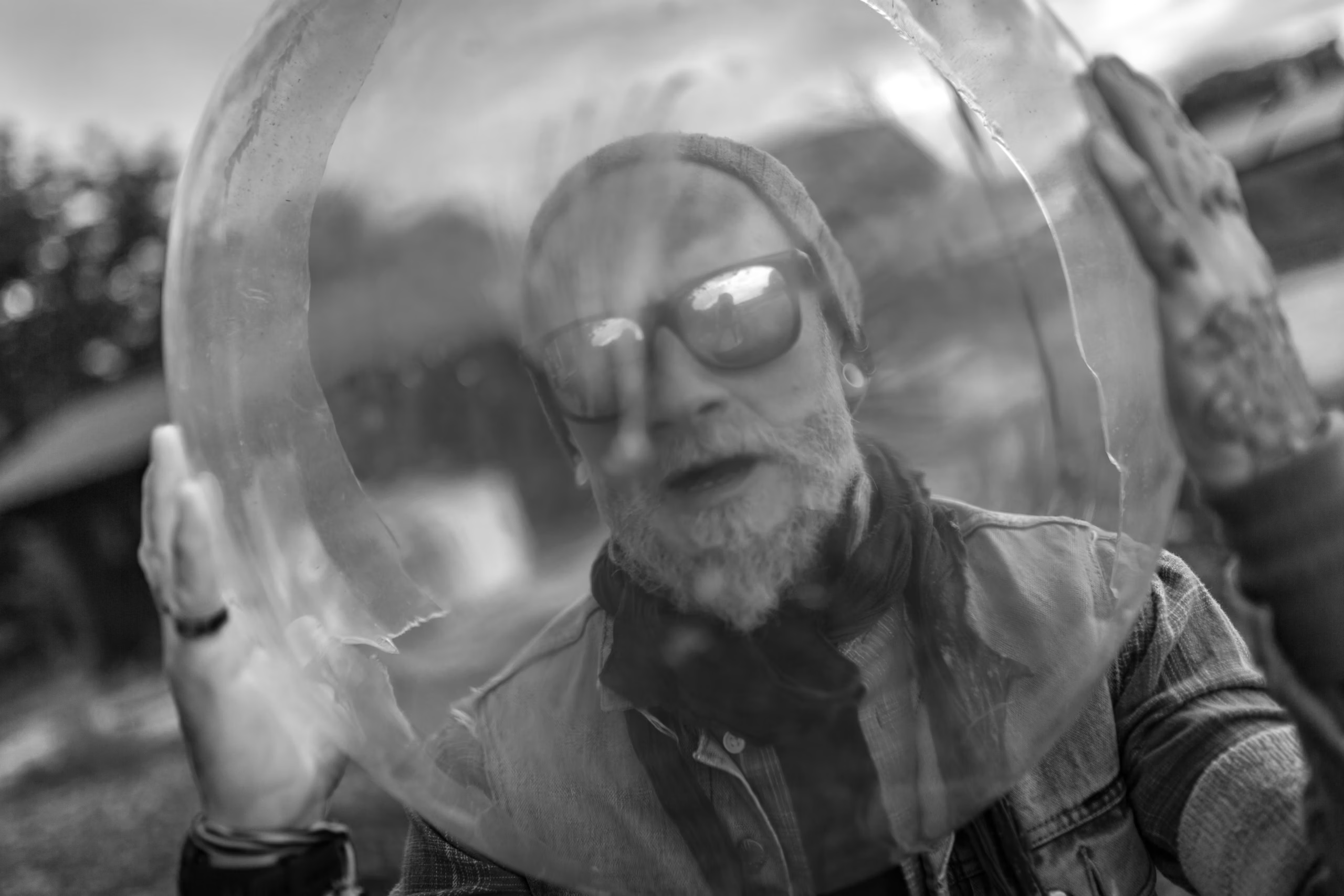
One of them appears behind a transparent membrane, broken and distorted. His face shows through scratches, reflections, and folds. He wears dark glasses and looks as though he’s watching the world from inside a bubble that survived a very long party rather badly.
It’s an imperfect portrait.
That’s why it works.
The face isn’t clean, the surface isn’t clear, the image makes no attempt to render everything understandable. Some people, some songs, and some nights become interesting precisely when they stop explaining themselves.
A little later, the four of them bend over an old tangle of iron.
They look down into the camera like mechanics summoned to decide whether the patient can still be saved.
Their expressions promise nothing good.
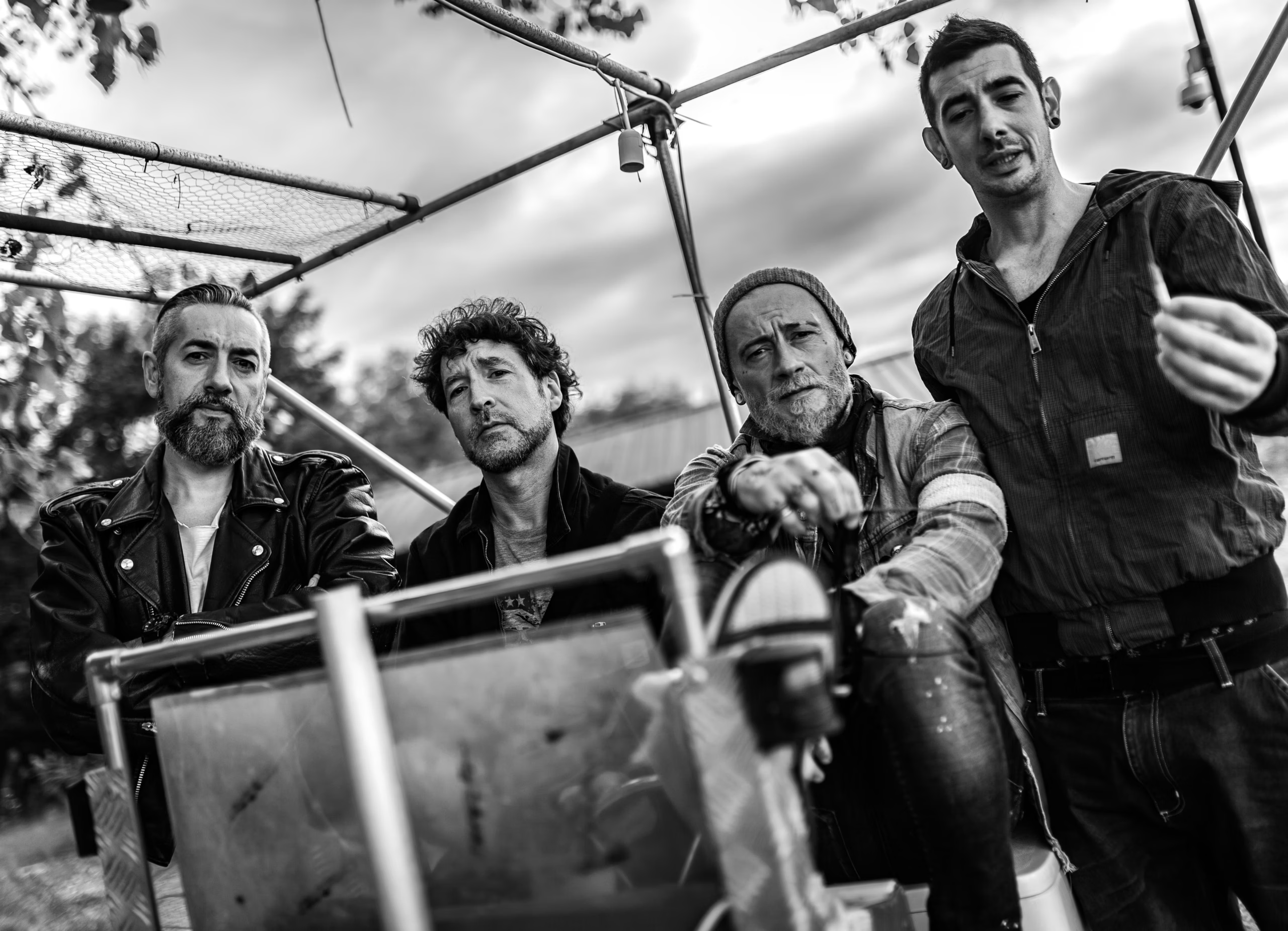


It might be a technical diagnosis, a particularly hostile condo meeting, or the last thing you see before waking up without a kidney.
But there is energy here too.
There is motion held in check. That pack-like complicity that allows four grown men to turn a piece of rusted metal into another excuse to play.
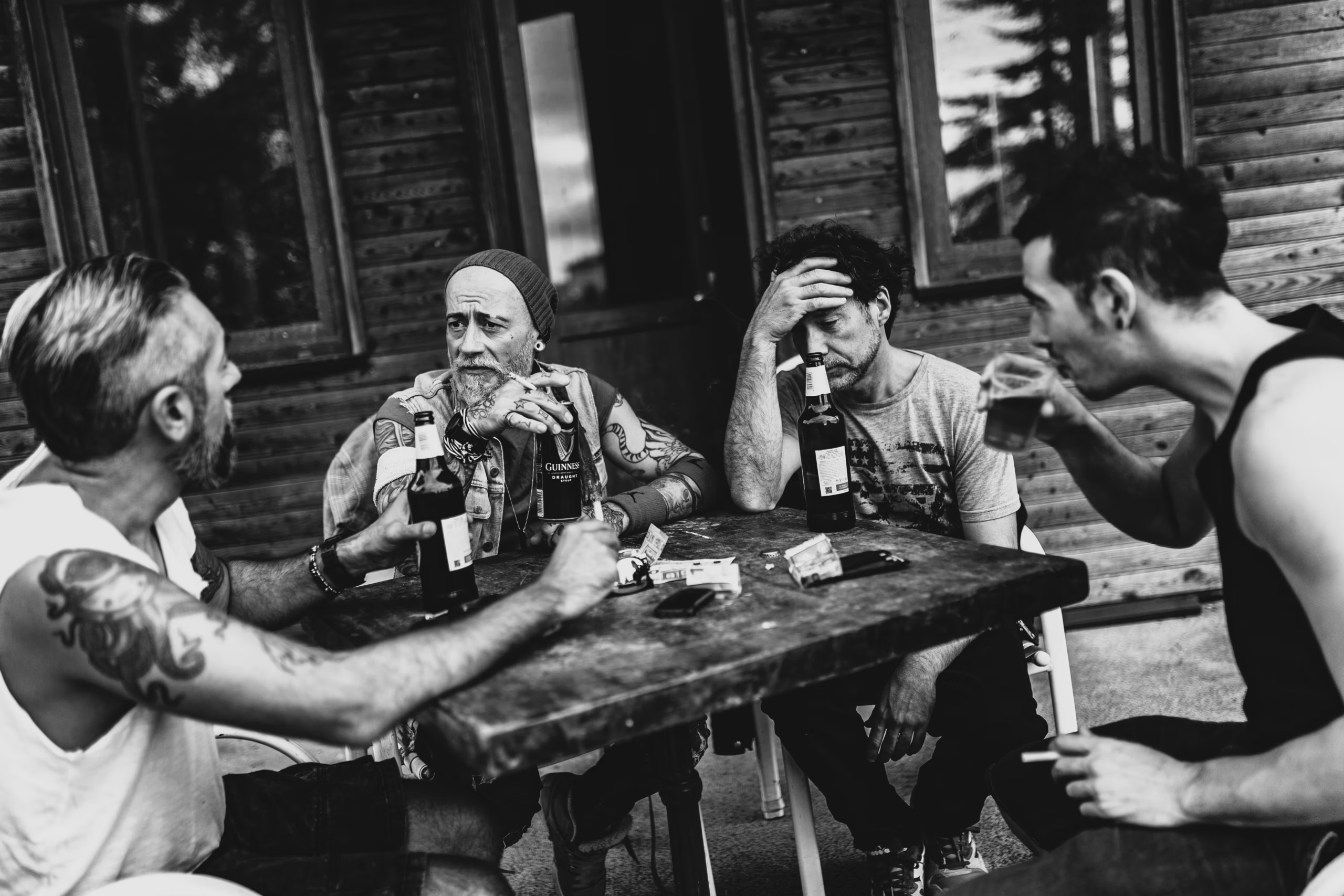
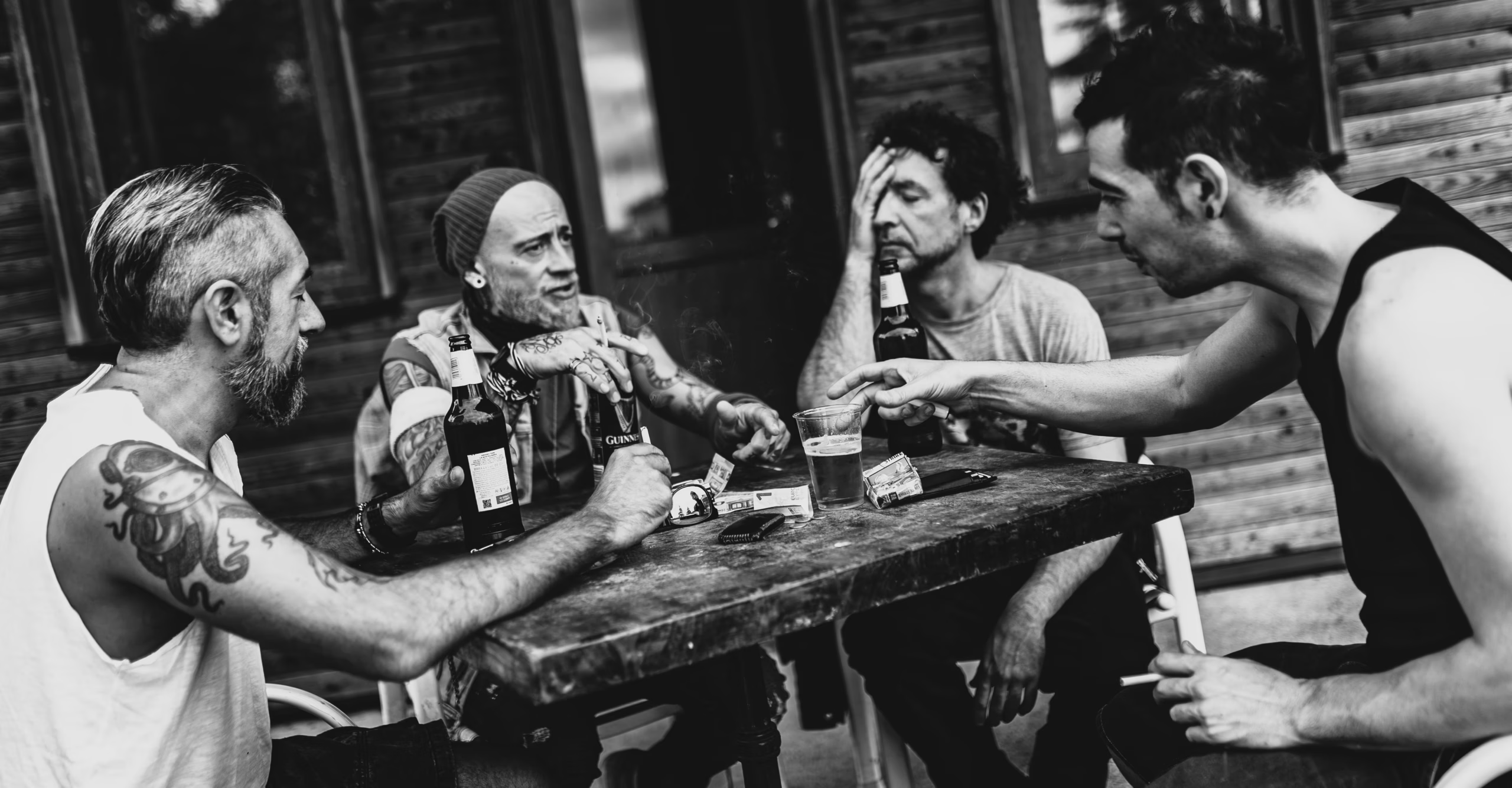
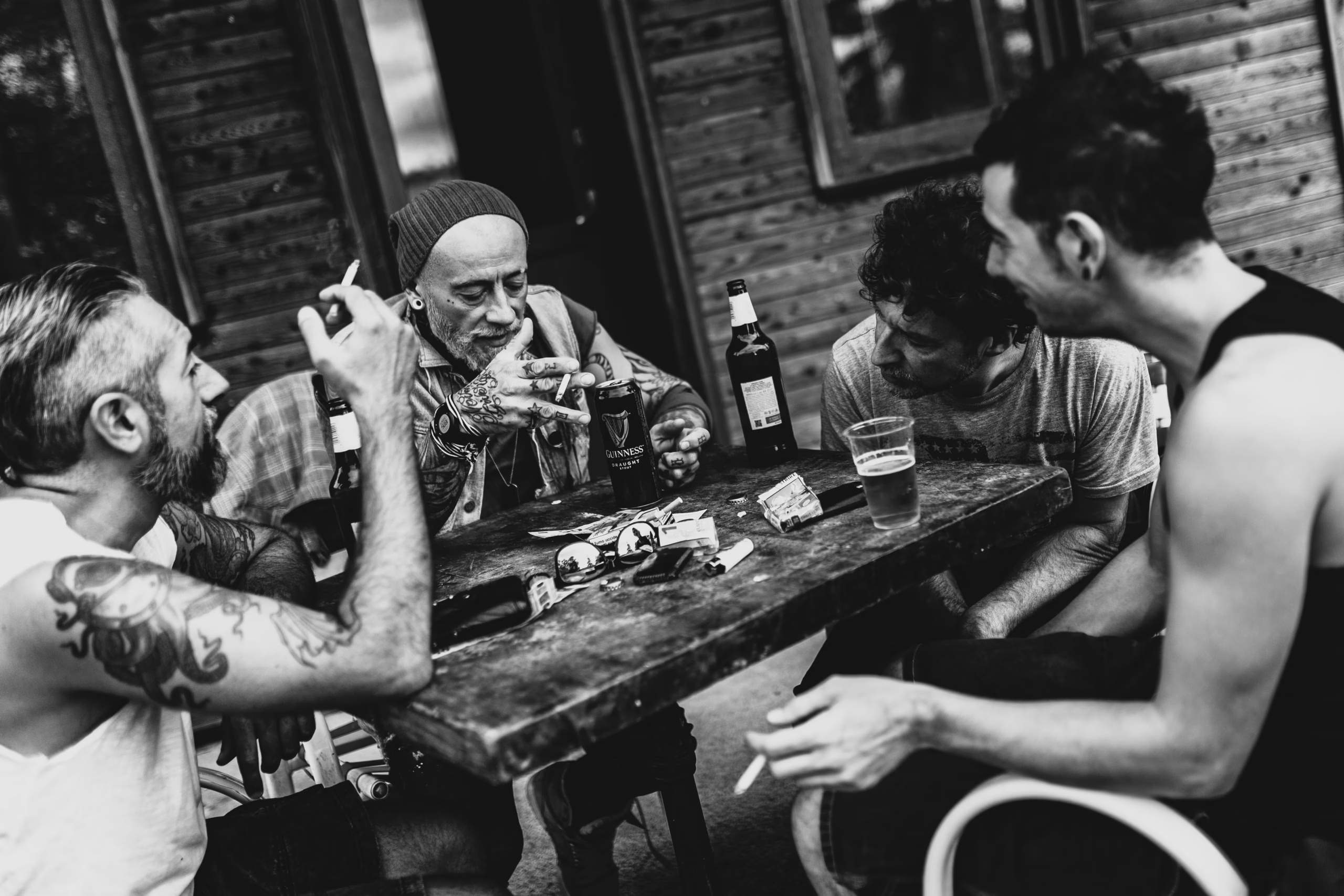
Then comes the table.
Beers. Cigarettes. Crumpled packs. Plastic cups. Keys, phones, and the small pieces of junk that always gather around real conversations.
The poses loosen.
The shoulders drop.
One talks, one listens, one drinks, one holds his forehead as if he’s just learned that the drummer wants to change the arrangement again.
It’s backstage without the stage.
What remains when no one has to hold the camera’s gaze anymore and they can go back to being simply tired, amused, absorbed, or vaguely worried about some bullshit that will already seem less important tomorrow.
I don’t know what they were saying.
And it’s better that way.
Photographs don’t have to resolve everything. Sometimes they only need to leave a door ajar and let us eavesdrop with our eyes.
Maybe they were talking about music.
Maybe about women, money, work, gigs, children, amplifiers, aches and pains, or the fact that a beer always runs out faster than an argument.
Maybe they weren’t talking about anything.
Even nothing, among the right people, can be a form of intimacy.
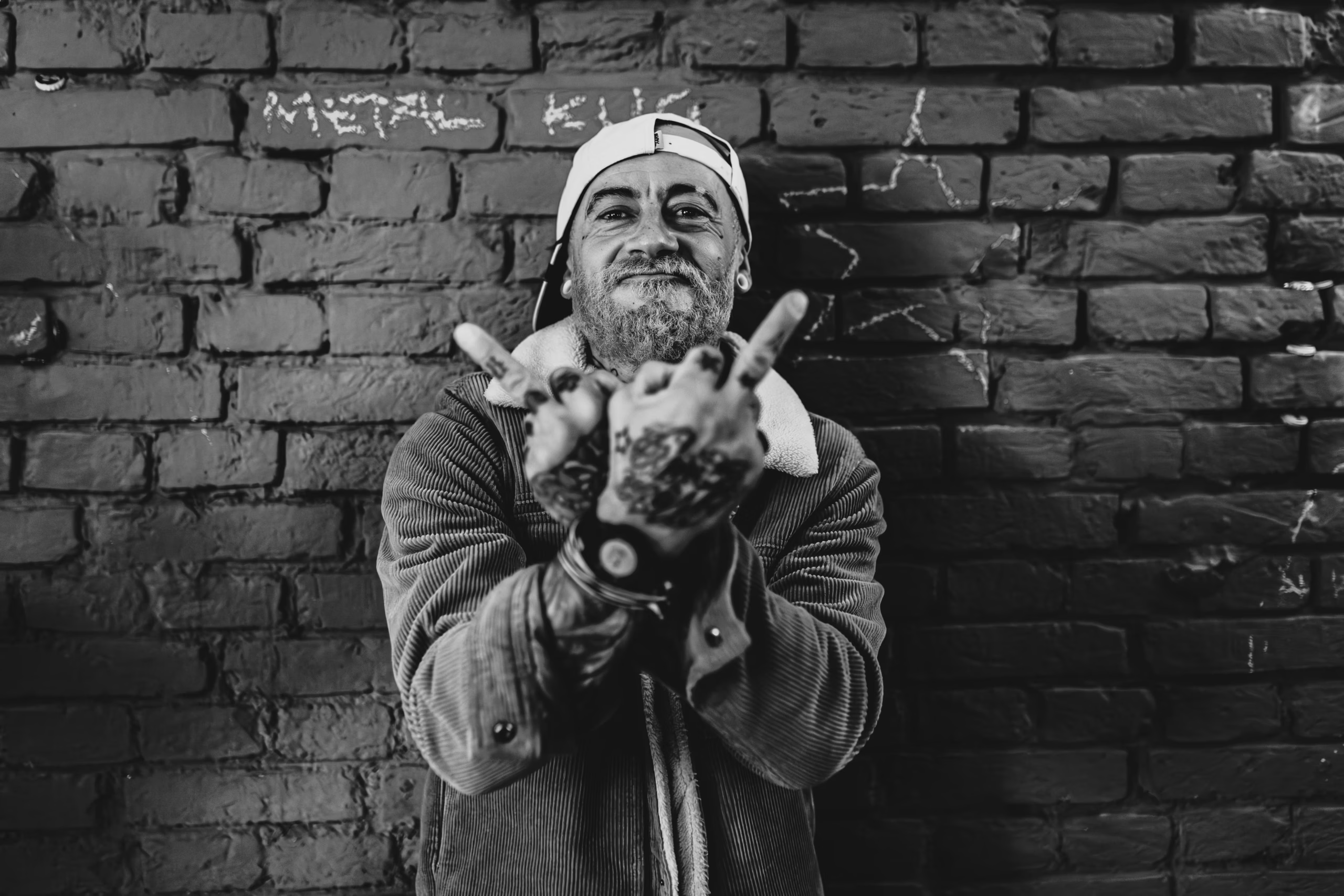
Then he returns to the wall.
White cap, beard, a smile finally opened wide.
He raises both hands and gives the lens two middle fingers, cheerfully telling the entire world to go fuck itself. There is no anger in the gesture, no need to play tough. It’s a smiling, almost affectionate fuck-you: the kind offered by someone who’s survived long enough to know that certain things don’t deserve an explanation, only two middle fingers raised with conviction.
That image may contain the whole meaning of the series.
Not eternal youth.
That’s a lie sold by people trying to move creams, cars, or aggressively named supplements.
There is something better here.
There is continuity.
The chance to grow without completely betraying the boy you once were. To change your face, your body, your responsibilities, and your address, yet still recognize the same jolt when a distorted guitar kicks in.
Life has no correct age at which you’re supposed to stop making noise.
There is no expiration date printed on the back of your neck.
No one gets to decide when a passion becomes inappropriate, when a T-shirt is too young for you, when a stage should be surrendered to someone else, or when a dream ought to be gently escorted to the door like the last drunk in the bar.
Passion doesn’t ask for ID.
It shows up, takes a seat, orders a drink, and demands to be heard.
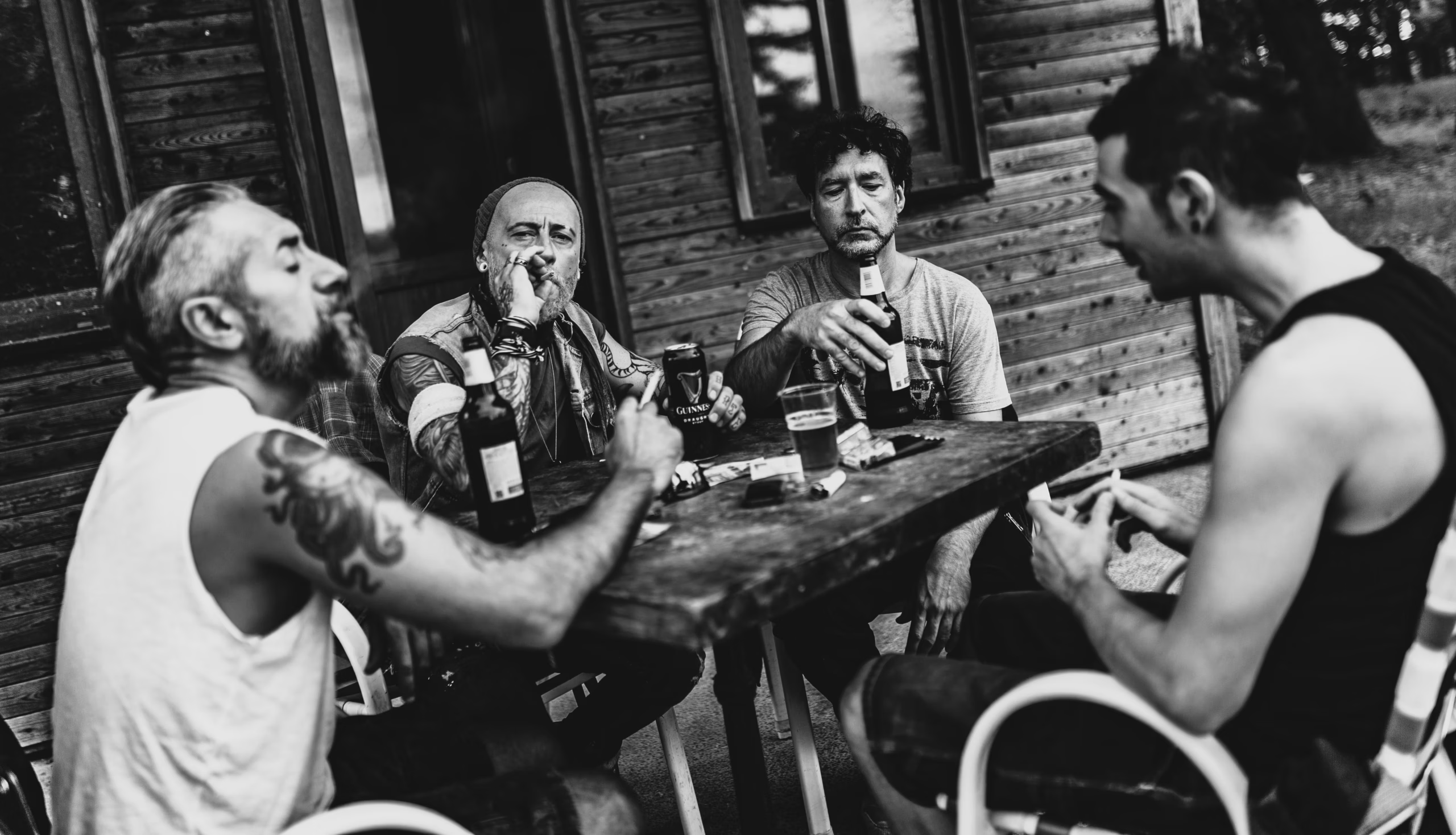
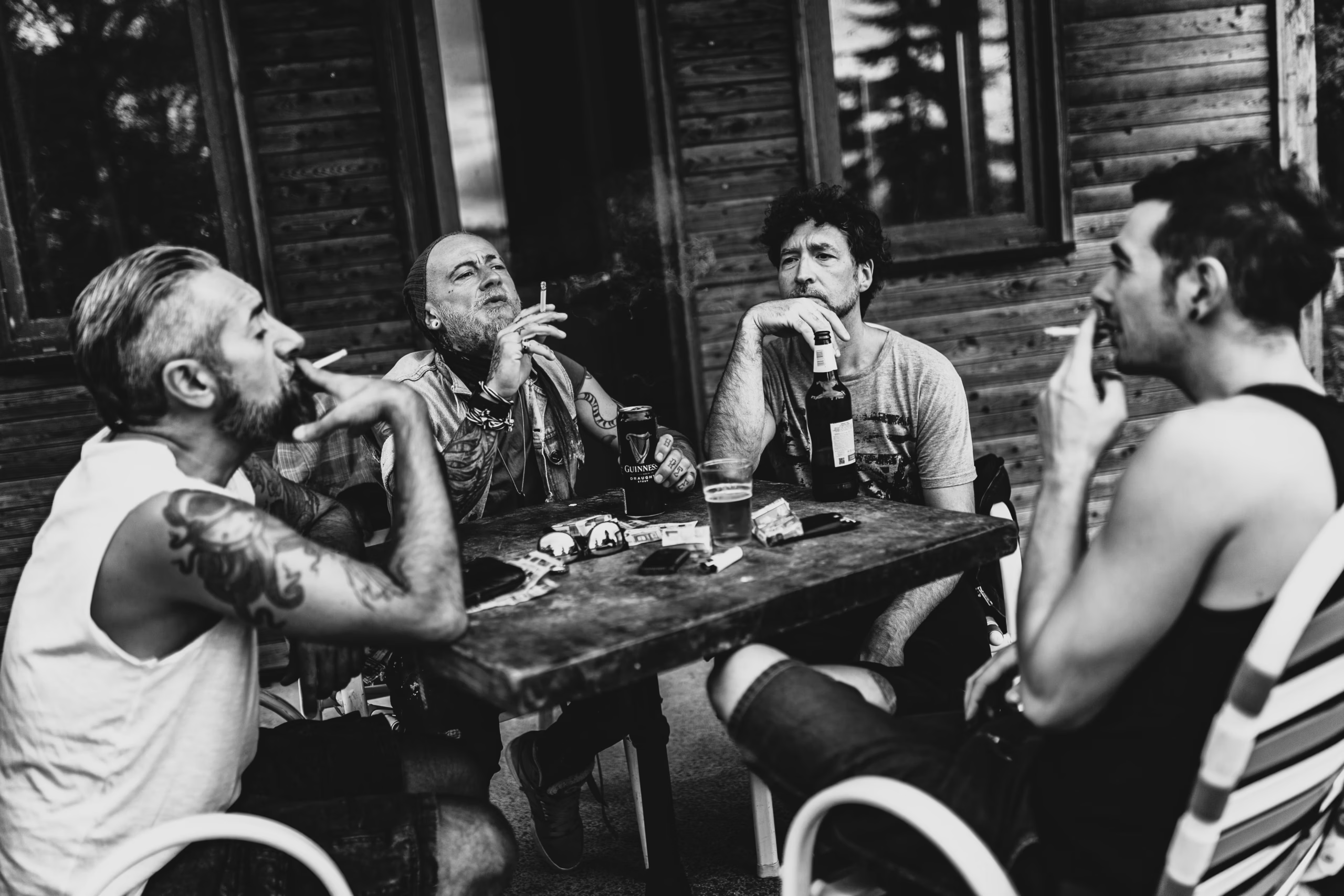
The table returns.
The bottles empty. The smoke rises. Gestures slow and faces become more honest. One looks into the distance, one speaks, one seems lost inside a thought, and the other holds his glass with the attention normally reserved for matters of some importance.
These images are less heroic than the others.
And that’s exactly why I like them.
Because rock isn’t only the scream, the leather, the tattoo, and the pose against the wall.
It’s also the exhaustion afterward.
The cigarette smoked in silence.
The joke nobody laughs at, which is therefore repeated louder.
The friend who listens even though he’s already heard that story ten times.
It’s staying around the same table when there is nothing left to prove.
I could have ended it here.
With the beer, the smoke, and that fine masculine melancholy that always looks fucking magnificent in black-and-white photographs.
It would have been elegant.
Almost poetic.
Maybe even moving.
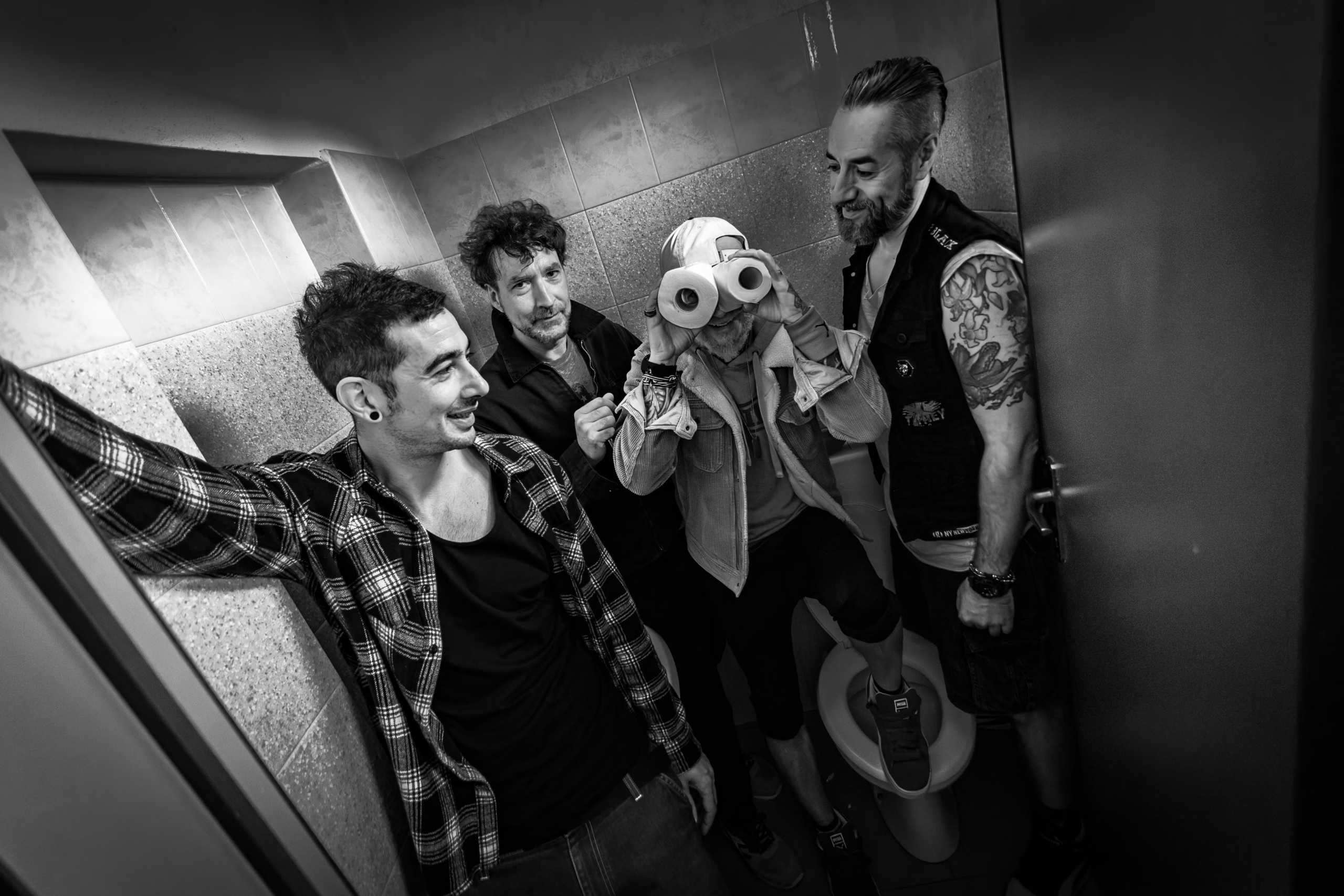
But fortunately, they fucked the whole thing up by walking into a bathroom.
And there they are, squeezed between tiles and bathroom fixtures, four grown men laughing while one uses two rolls of toilet paper as binoculars, a foot planted on the toilet and the triumphant expression of someone who has finally spotted the horizon.
It’s the final image.
And it’s the right one.
Because it keeps the whole series from becoming a pretentious celebration of music, friendship, time, and all those important words that, if left alone too long, begin to think they’re better than human beings.
That photograph puts everything back in its place.
Rock can be soul, anger, passion, resistance, and identity.
But it also has to preserve a certain measure of healthy idiocy.
It has to let you walk into a bathroom with your friends and turn two rolls of toilet paper into a telescope.
It has to remind you that you are not a legend.
You are only a human being with a few scars, a handful of songs, and the stubborn desire to have a little more fun before somebody turns out the lights.
Maybe that’s exactly why I chose this series.
Among so many jobs, so many nights, and thousands of images, these photographs kept calling to me.
Not because they showed four perfect men.
But because they showed four men alive.
Alive when they stare hard into the lens.
Alive when they lean on one another.
Alive behind bars, in front of locked doors, around a table, or crammed into a shithouse.
Alive in the wrinkles, the tattoos, the beards, the smiles, and that form of energy that belongs neither to the young nor the old.
It belongs to whoever has it.
The world can change its clothes, its language, its speed, and its bad habits. It can polish everything, compress everything, turn everything into quick content to consume and forget.
But somewhere there will always be four people willing to walk into a room, plug in their instruments, and make enough noise to remember who they are.
As long as that happens, the old soul won’t be dead.
It will simply be out there.
With a beer on the table, a cigarette between its fingers, and the volume much too high.
Just as it should be.