Friends, this time the photographs were not gathered along a road. They clung to my clothes after a shoot.
These images were born during the making of a music video. One of the musicians becomes character, accomplice, and puppeteer in a story that begins with a telephone call and ends in the back room of a promise. Between the two are a poker table, a suitcase full of dollars, a few too many drinks, beautiful women, lights capable of forgiving any sin, and a man convinced that luck has finally learned his address.
It looks like a story about a con. In truth, it is a story about the value we assign to things, the price we place on ourselves, and that old paper magician we call money.
Look at them in order. Take your time.
Because certain photographs do not want to be observed. They want to escort you to the table, let you win, and only then present the bill.
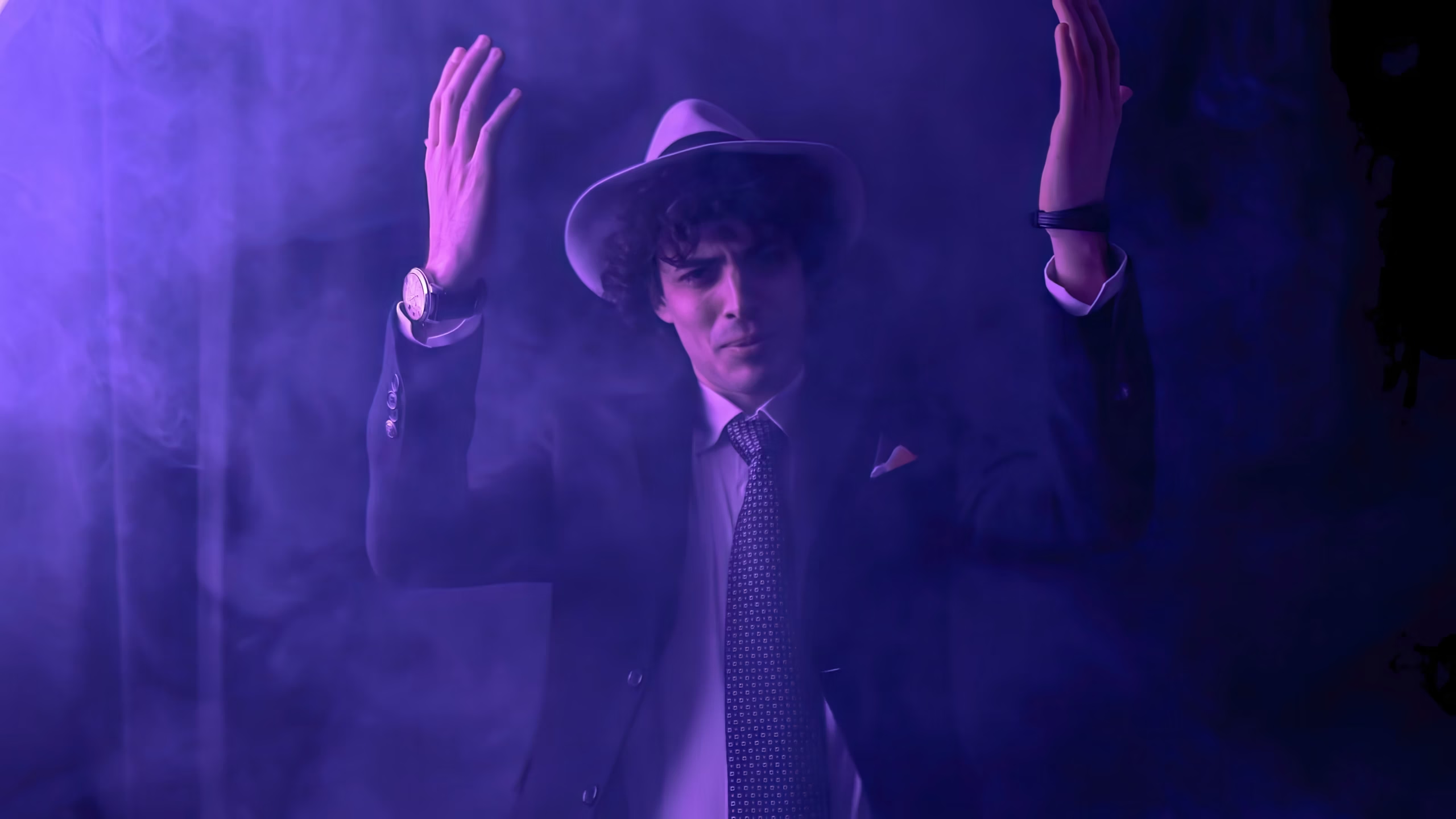
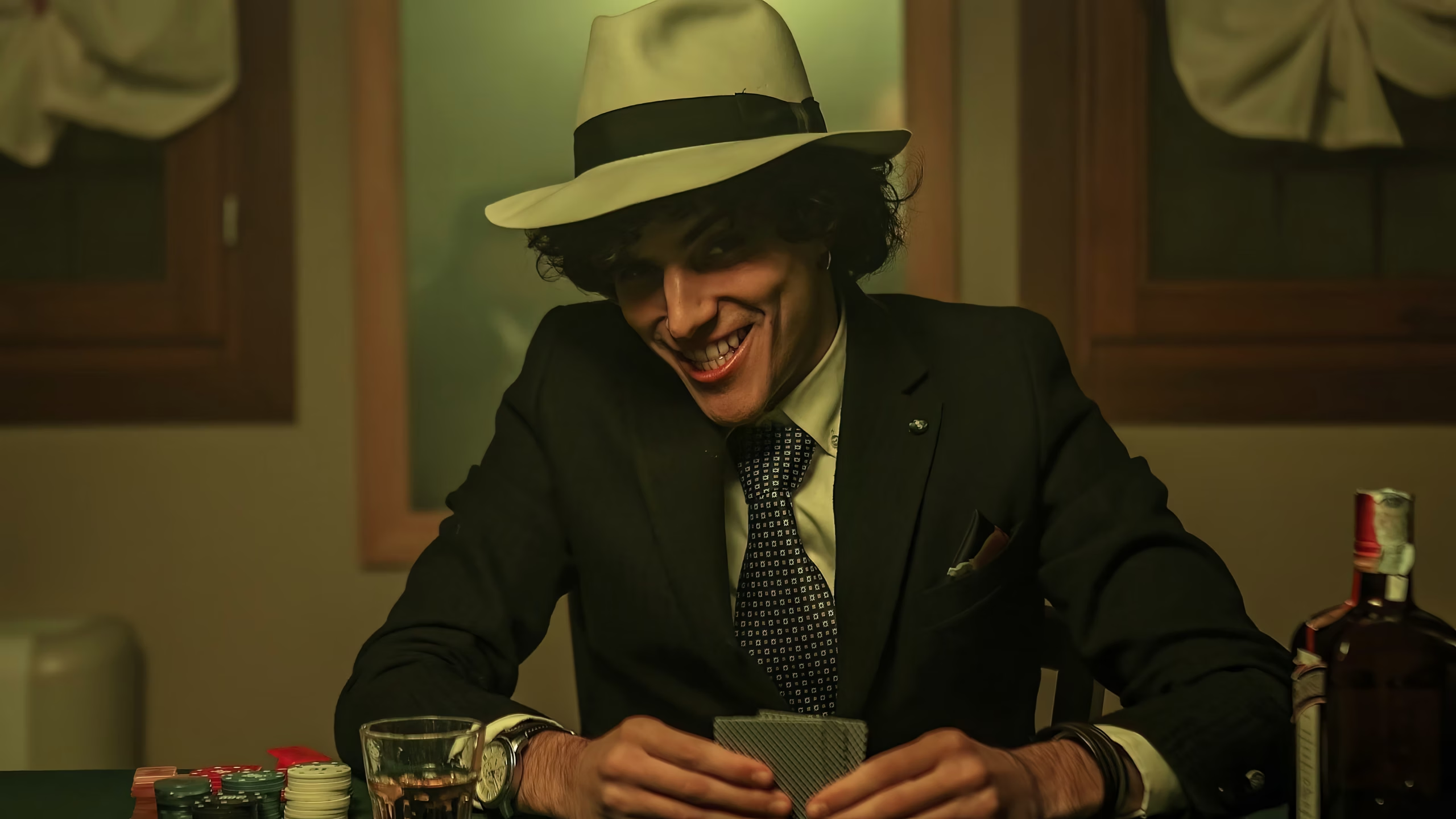
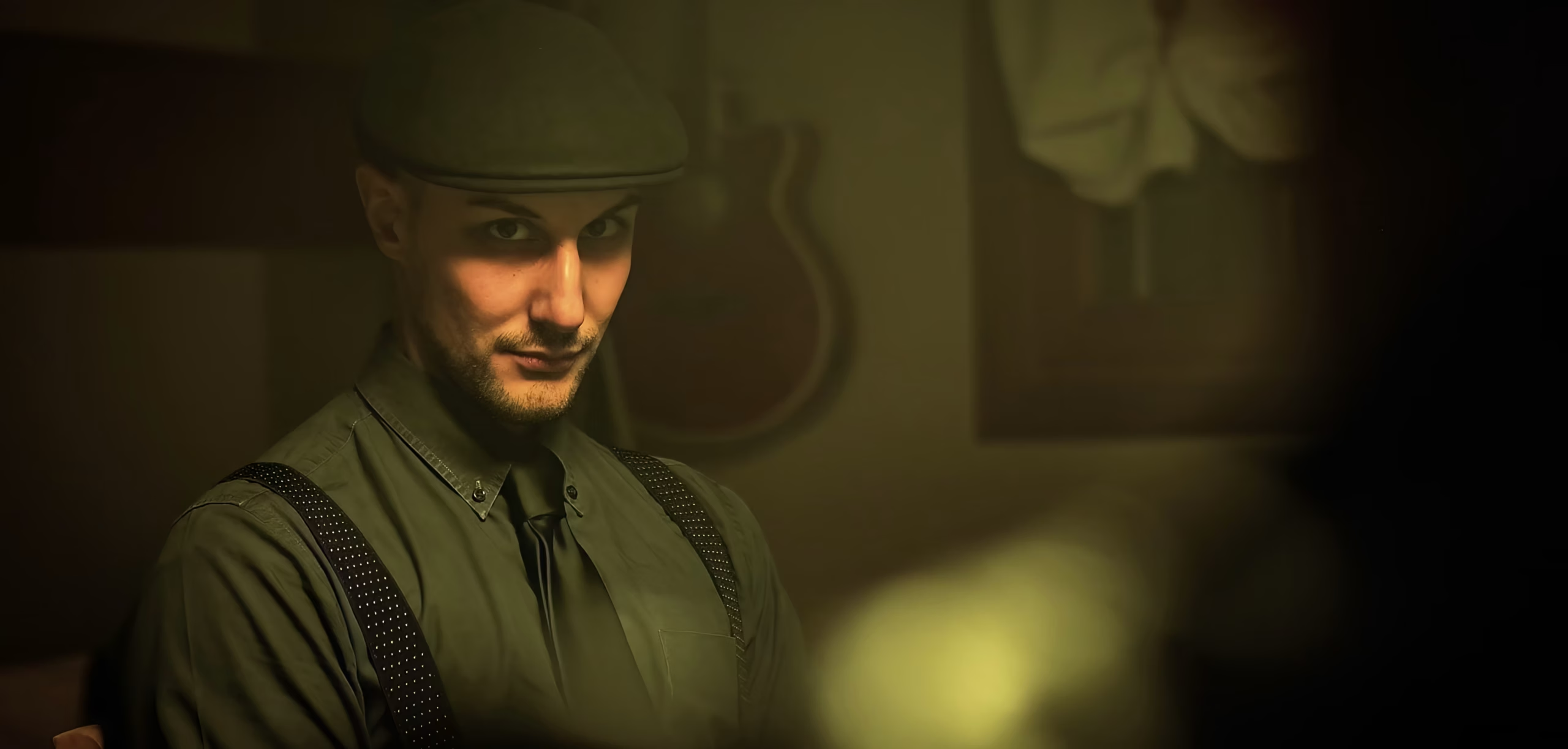
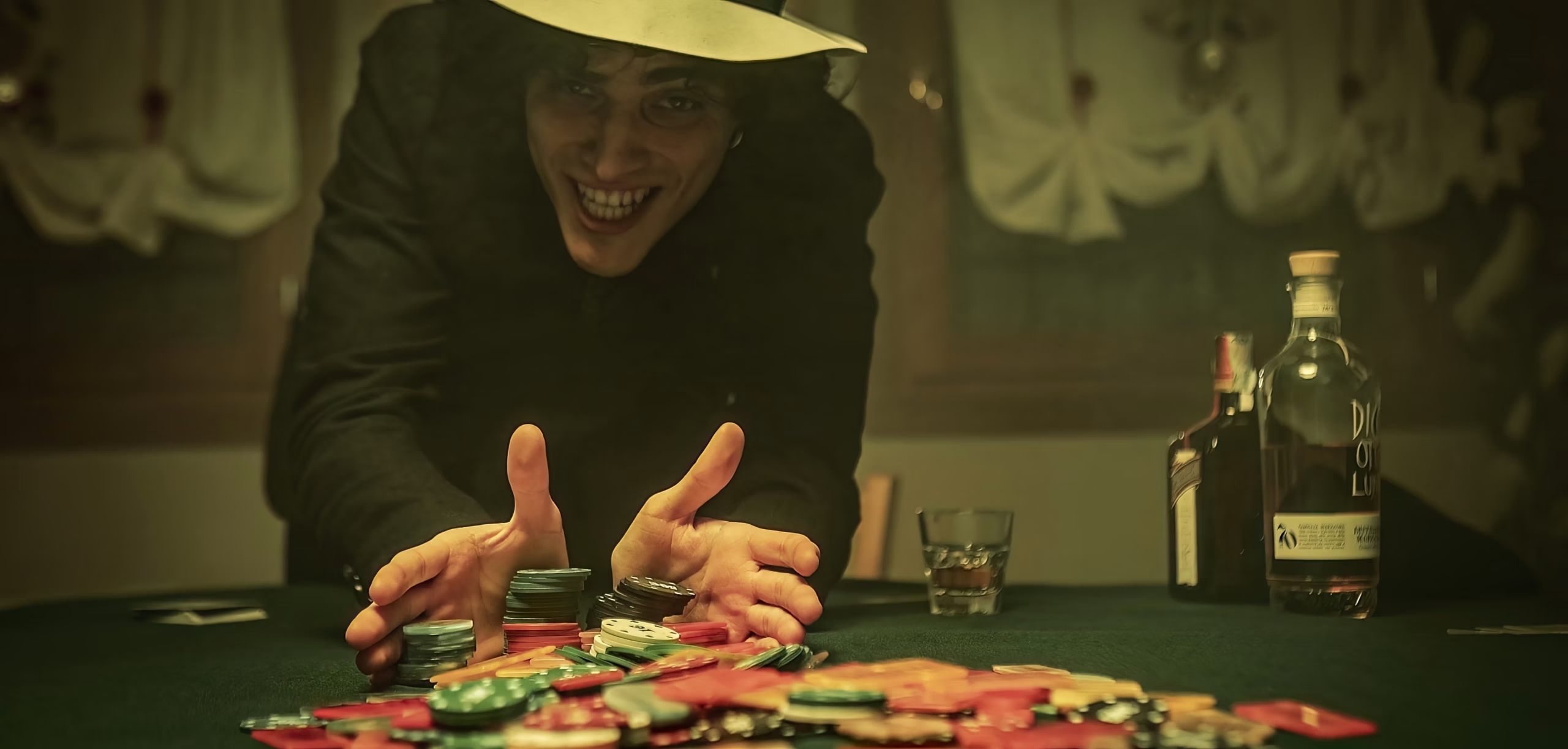
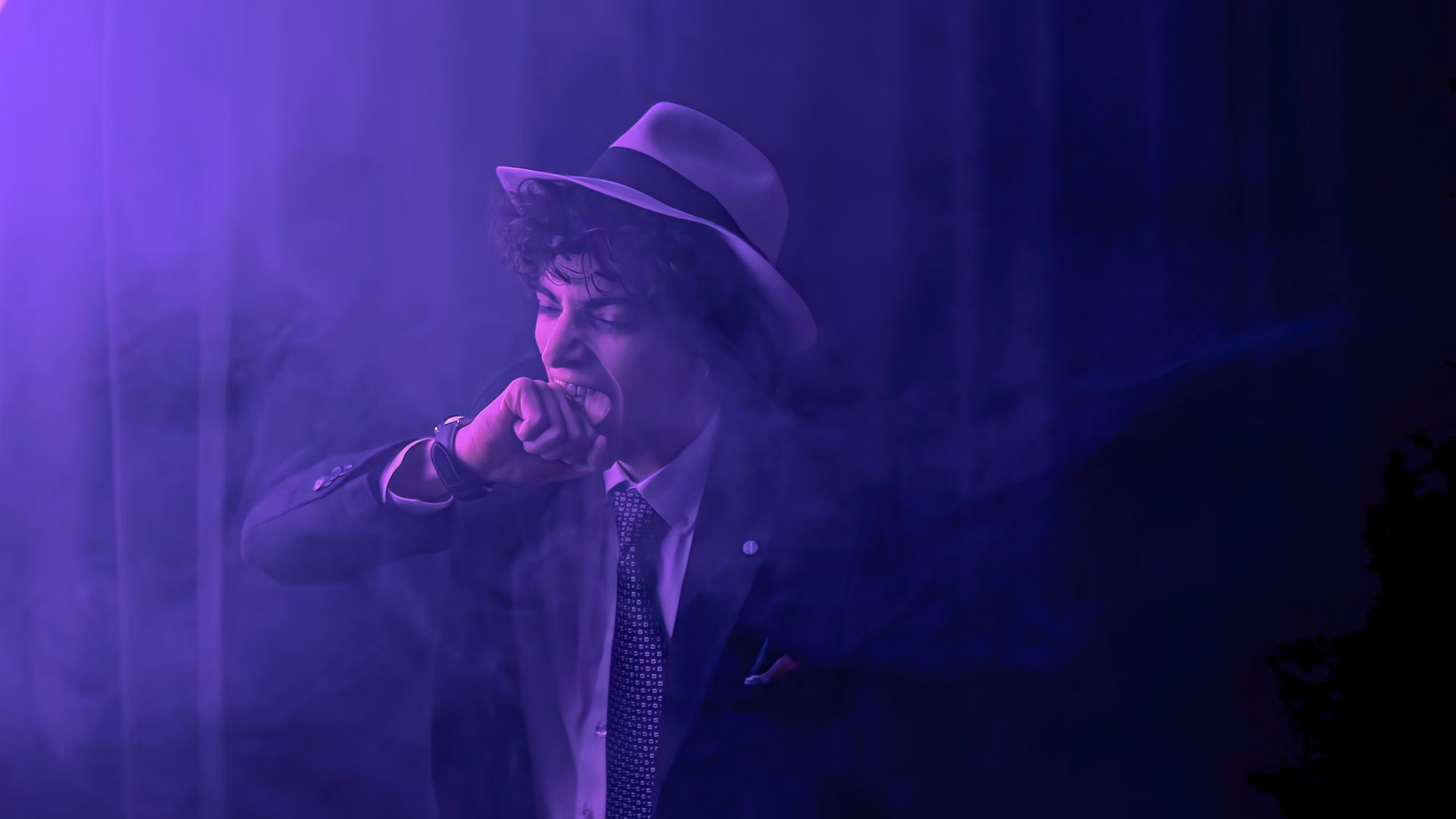
The first man appears in violet light, a white hat tilted on his head and the smile of someone who has already read the final page while everyone else is still choosing a book.
He does not look particularly evil.
The truly dangerous ones almost never do. They have no need. Cheap evil raises its voice, smashes bottles, and leaves fingerprints everywhere. The professional kind puts on a clean shirt, checks the time, and calls you by name.
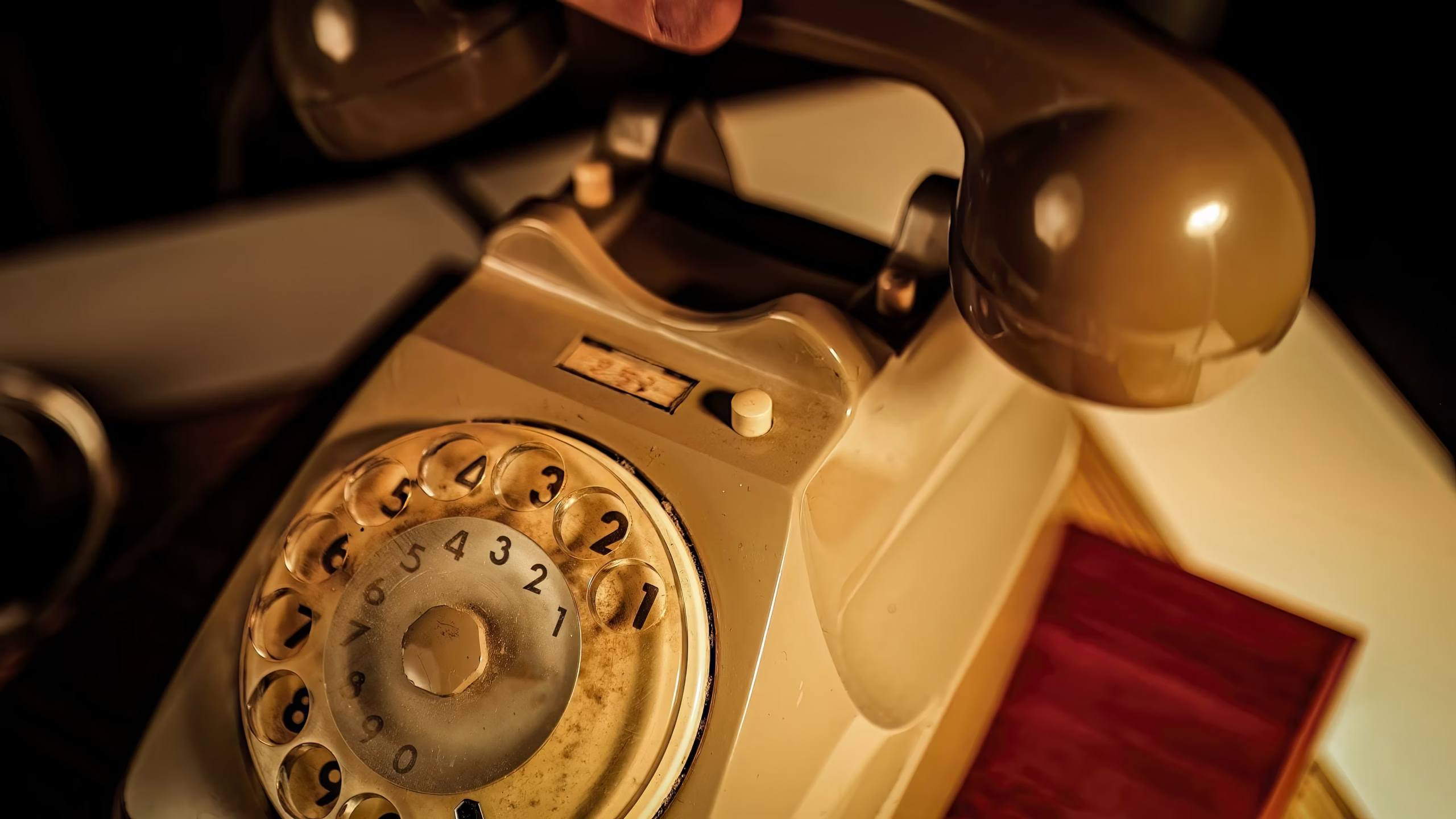
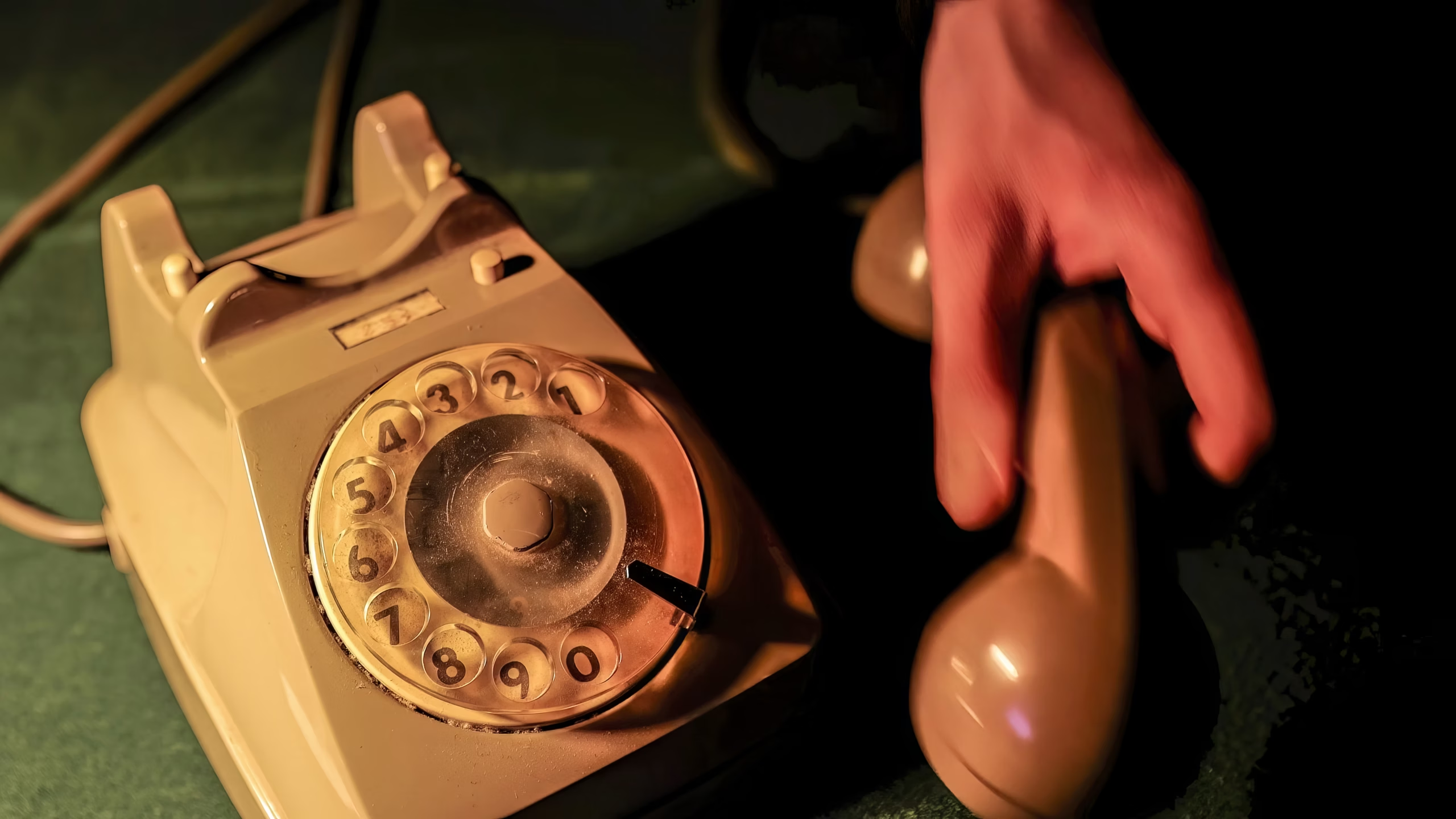
On the table sits an old ivory telephone.
It has a rotary dial at its center, a little roulette wheel trained to ring. The man slips in a finger, turns, lets the wheel return, and dials the number with the calm of a surgeon who has no intention of saving the patient.
Every con with a certain elegance begins this way.
It does not break down the door.
It calls.
Then waits for you to say ‘hello.’
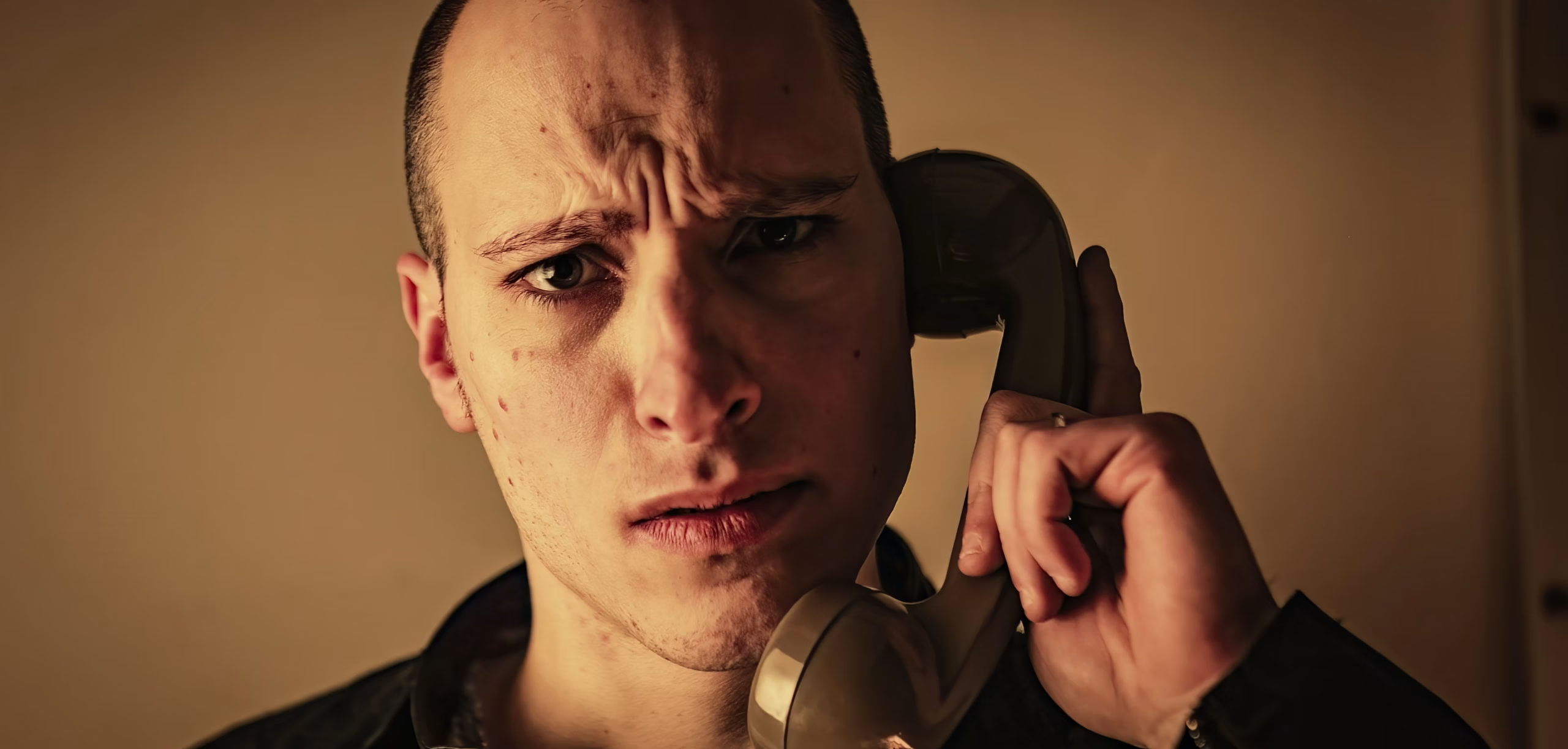
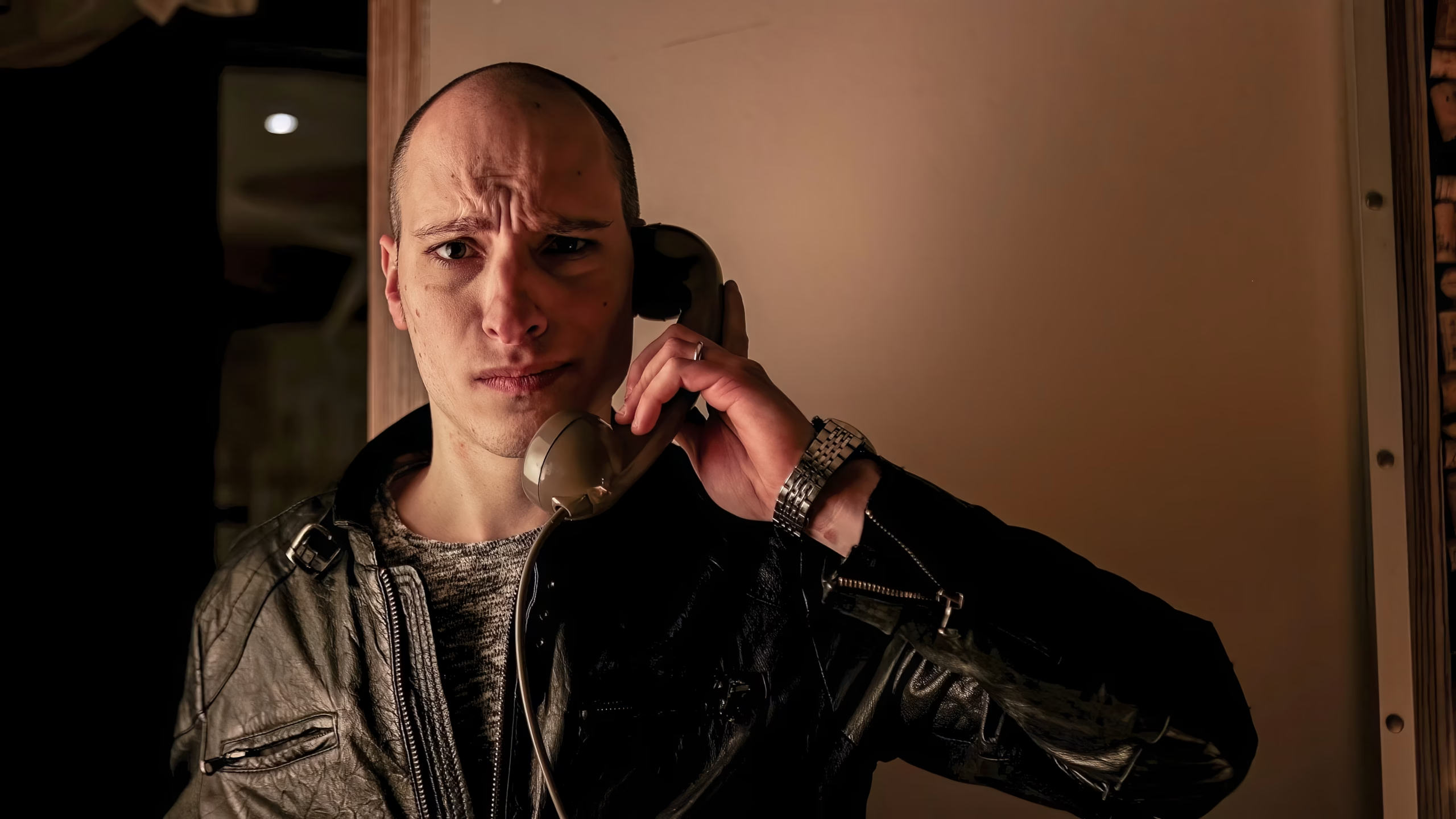
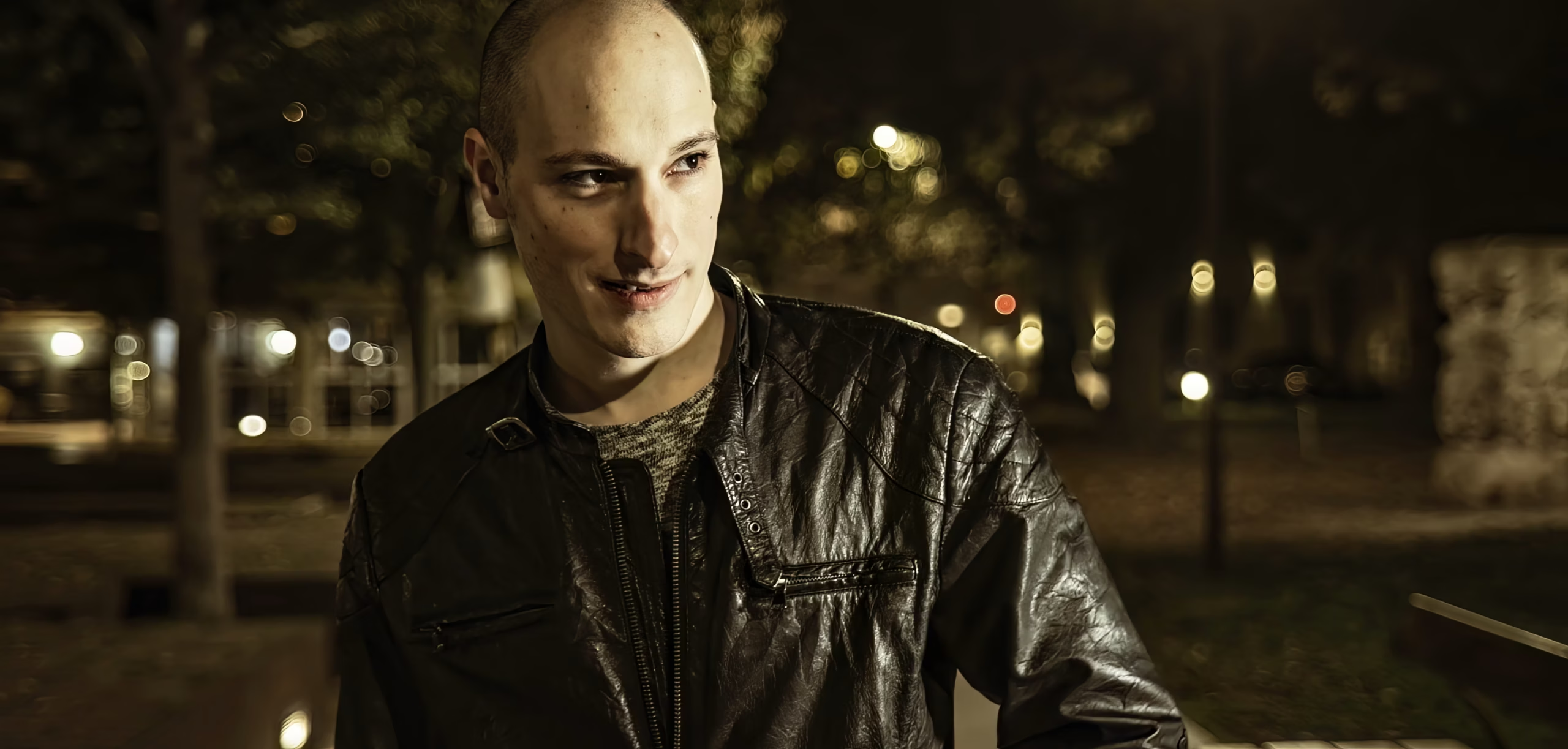
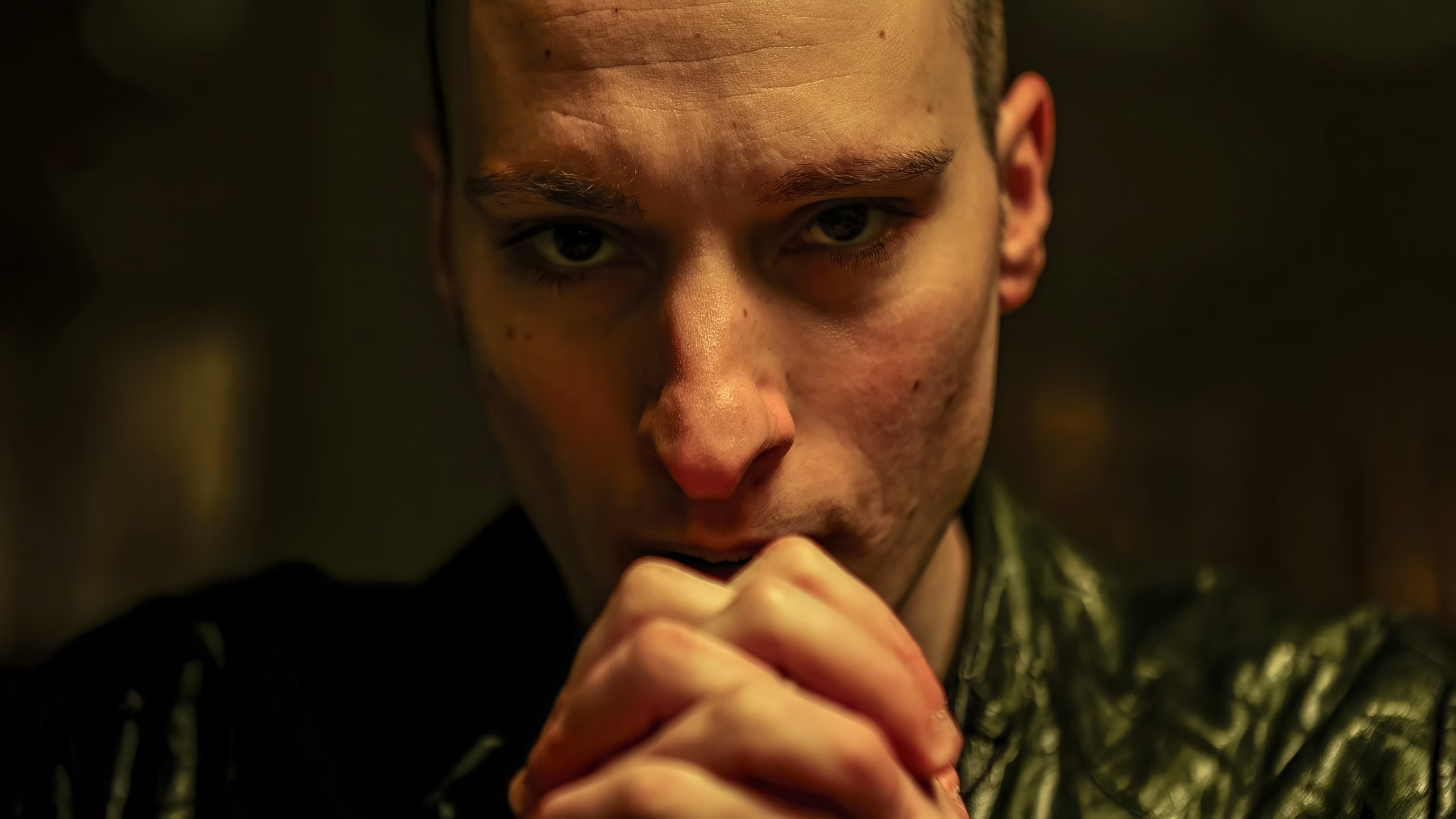
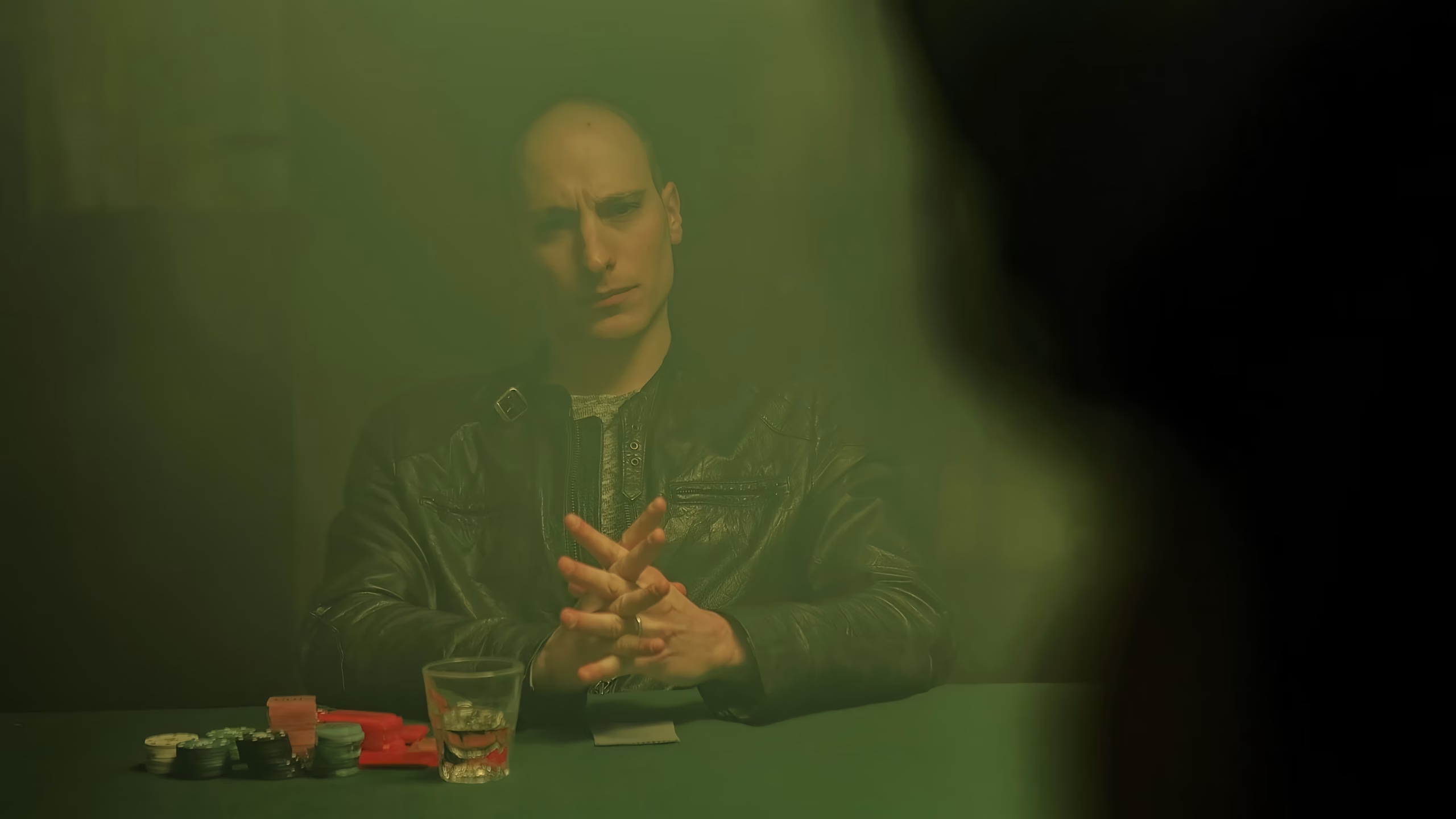
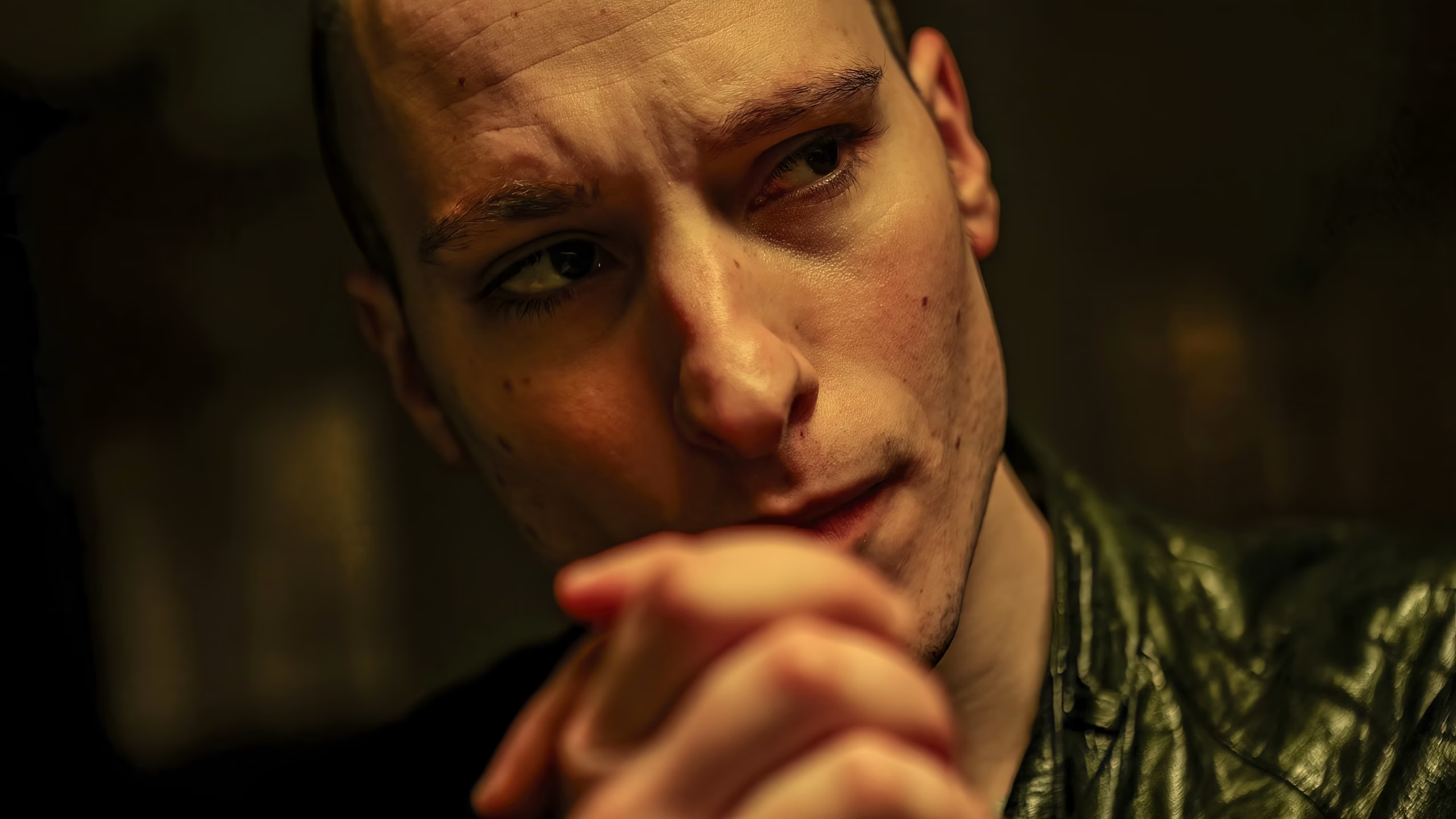
At the other end answers a man with a shaved head, a leather jacket, and the face of someone who has already paid quite a few bills without ever understanding what he ordered. He holds the receiver in both hands, like a grenade that has just spoken his name with affection.
He listens.
Hesitates.
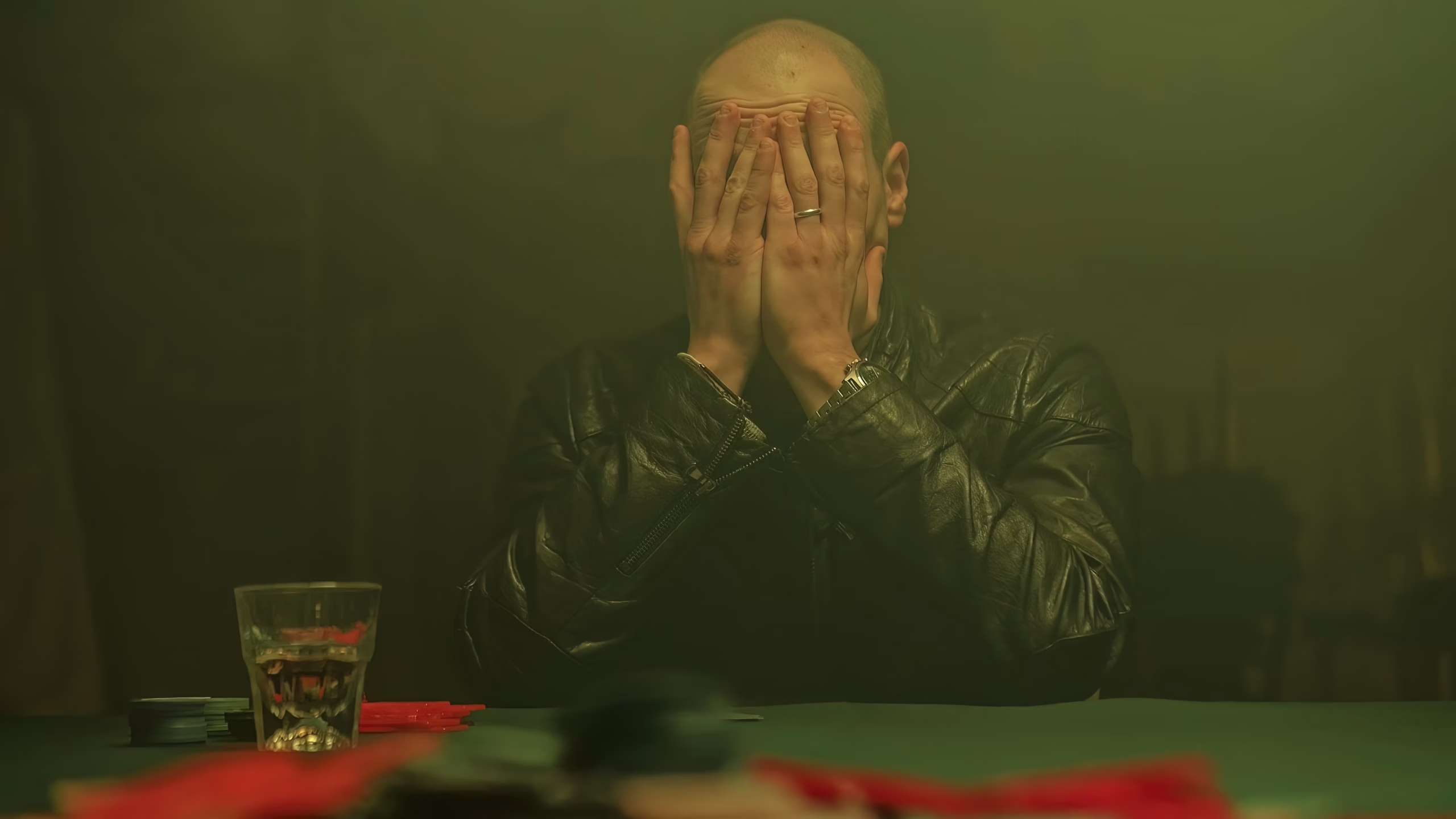
Runs a hand over his face.
Meanwhile, the man in the hat smiles through his violet fog and raises his arms like a conductor. He is not conducting a song. He is tuning someone else’s heartbeat.
A pause.
A promise.
An address.
Perhaps a sentence delivered in just the right tone: come over, there is a game, a sure thing, nothing complicated.
The best scams never need too much explanation. Explanations make people think. Opportunities, by contrast, must appear simple. They must enter your head like a stupid song and remain there long enough to persuade you the idea was yours.
The man hangs up.
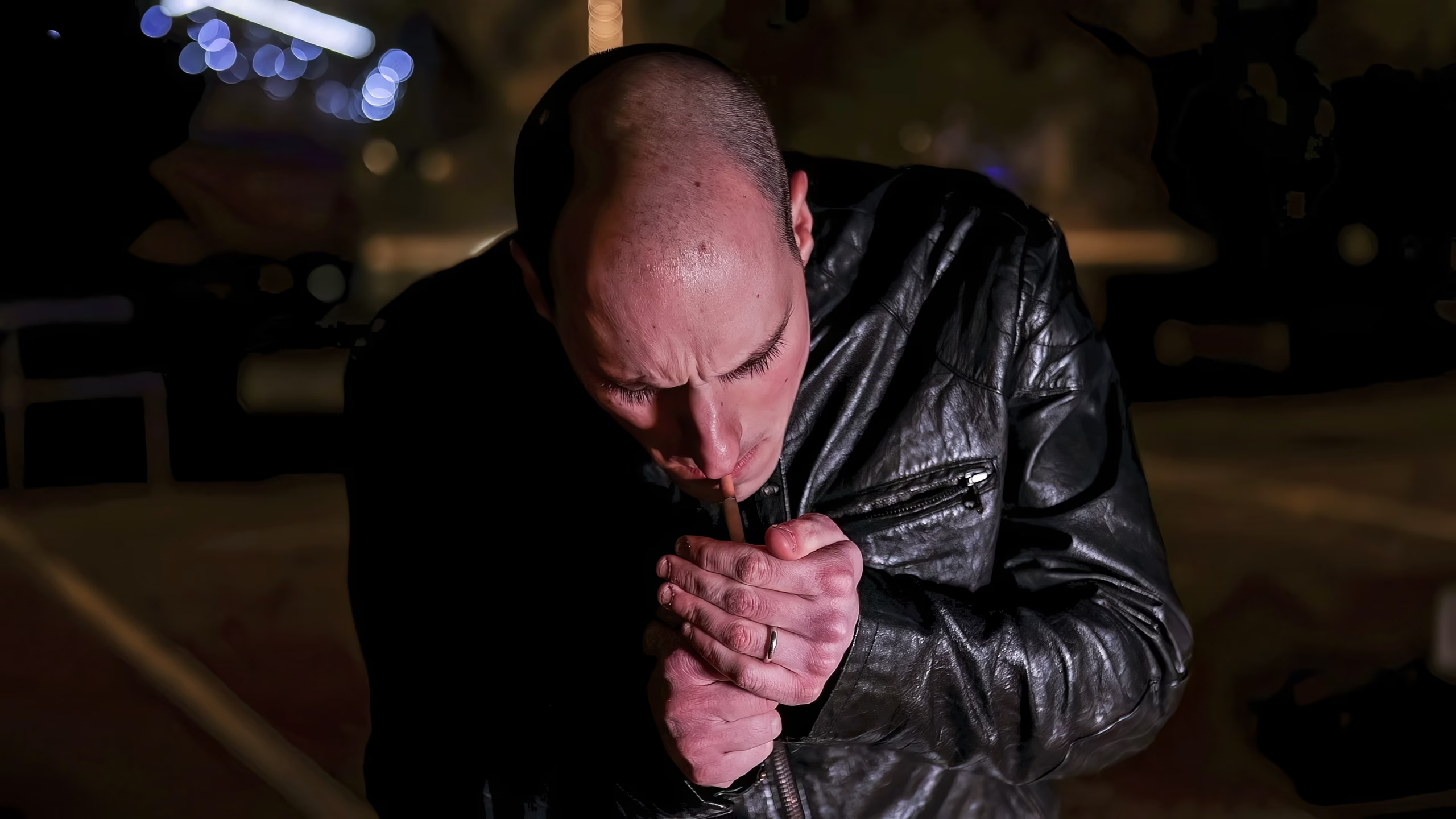
Soon afterward, he is outside in the night with a cigarette between his fingers. The flame illuminates his face for an instant. That is always the decisive moment: the five silent minutes in which you could still go home, make yourself something to eat, and spare yourself a catastrophe.
We use those five minutes to light a cigarette.
Then we go.
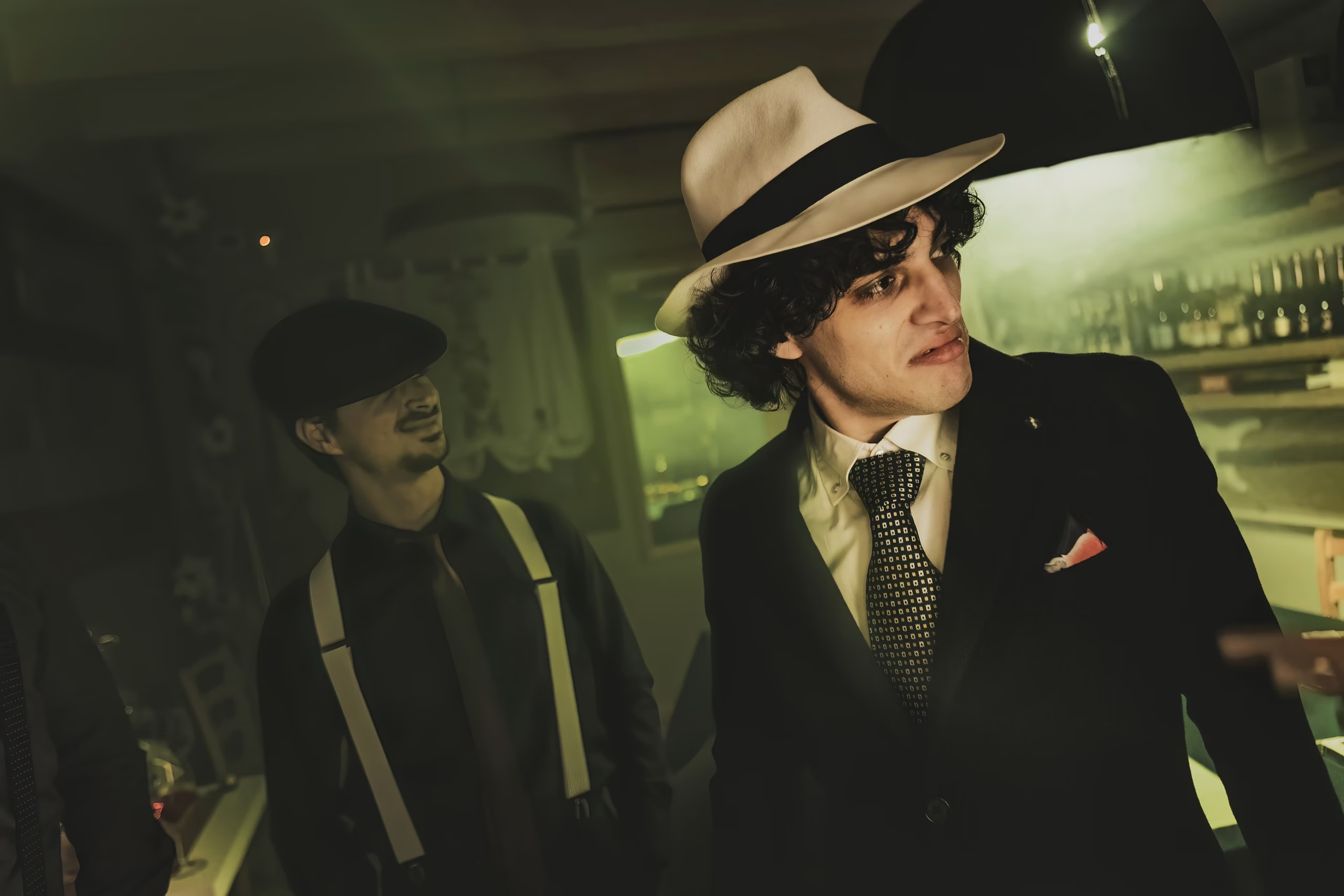
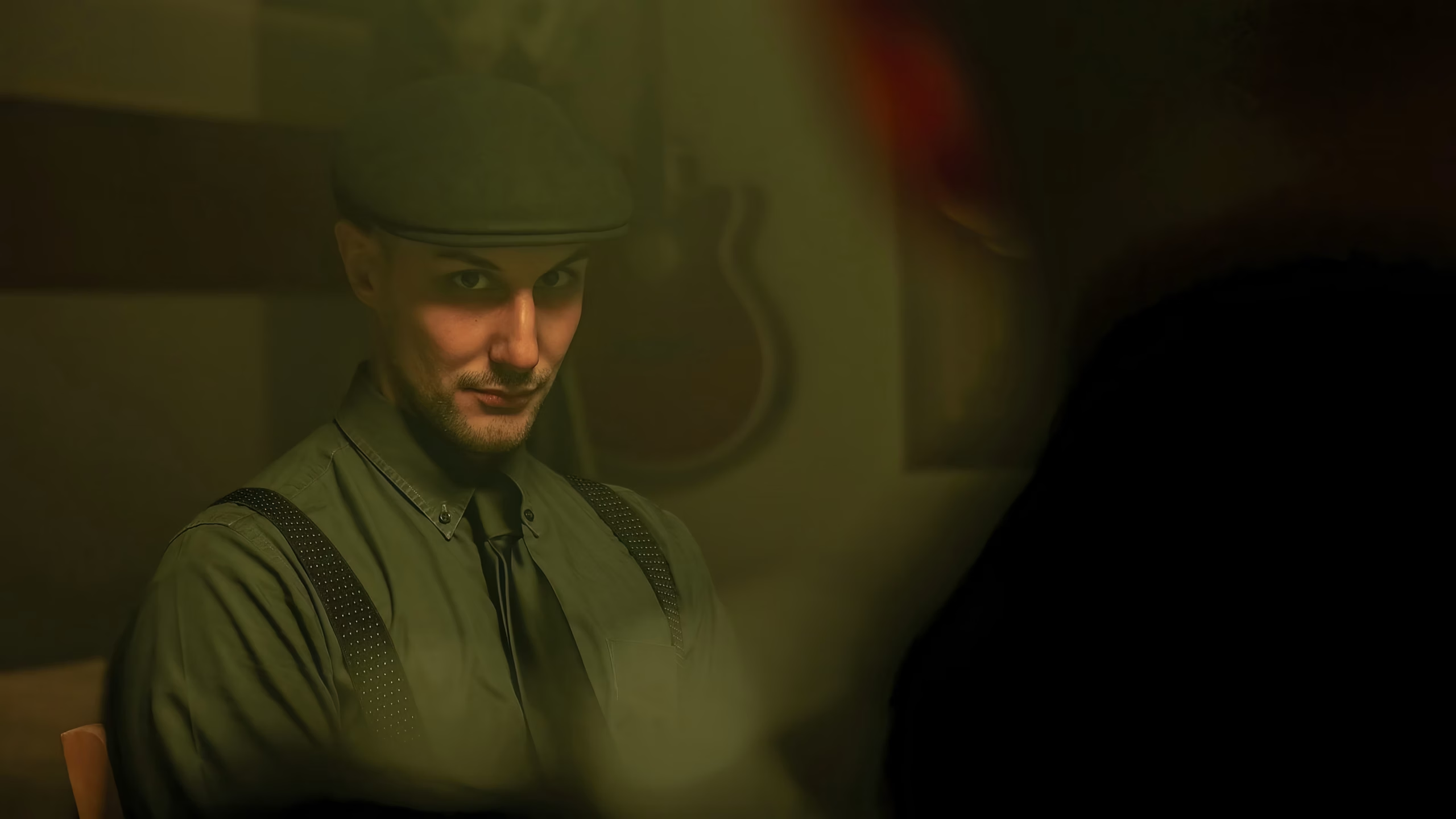
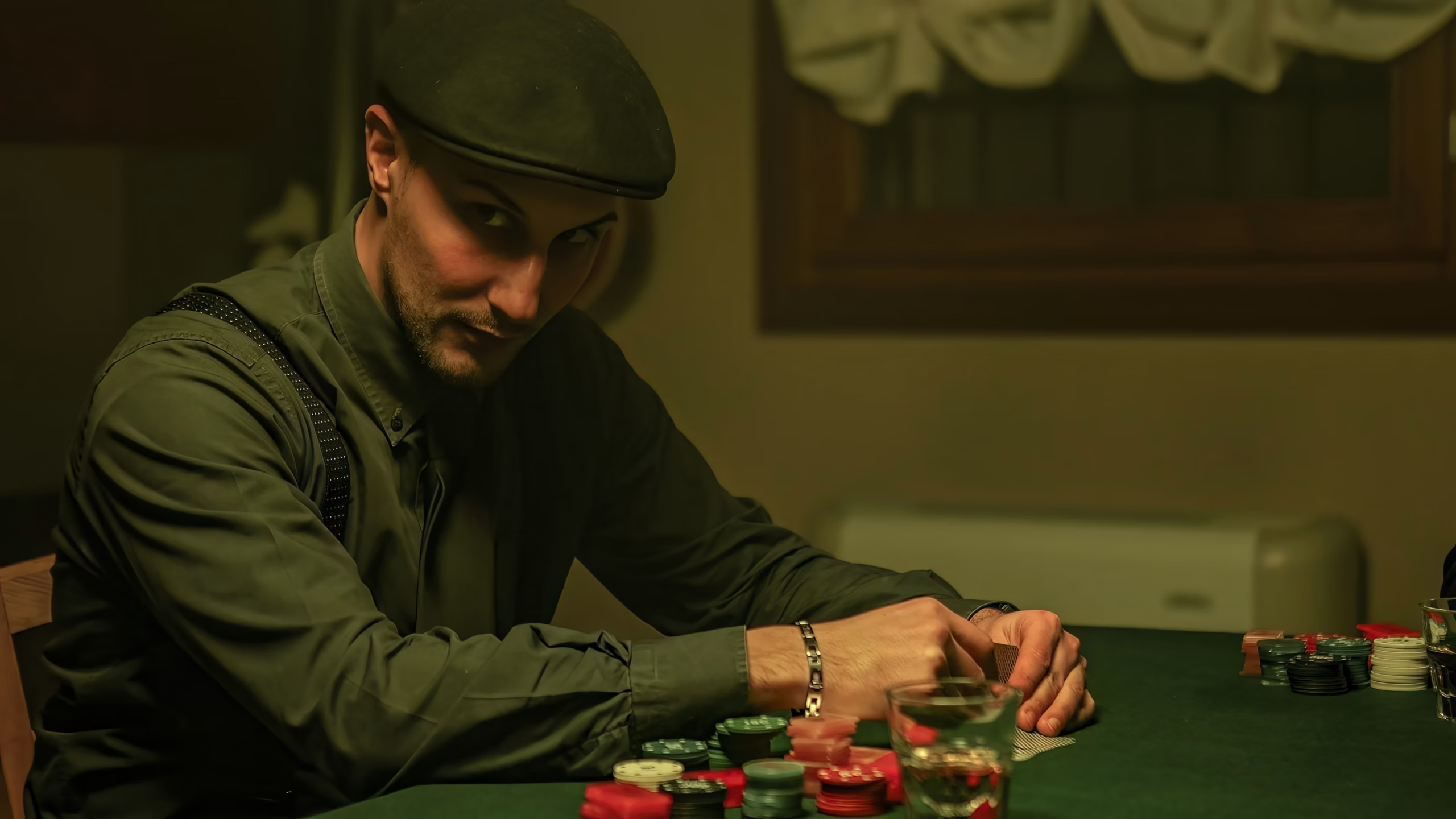
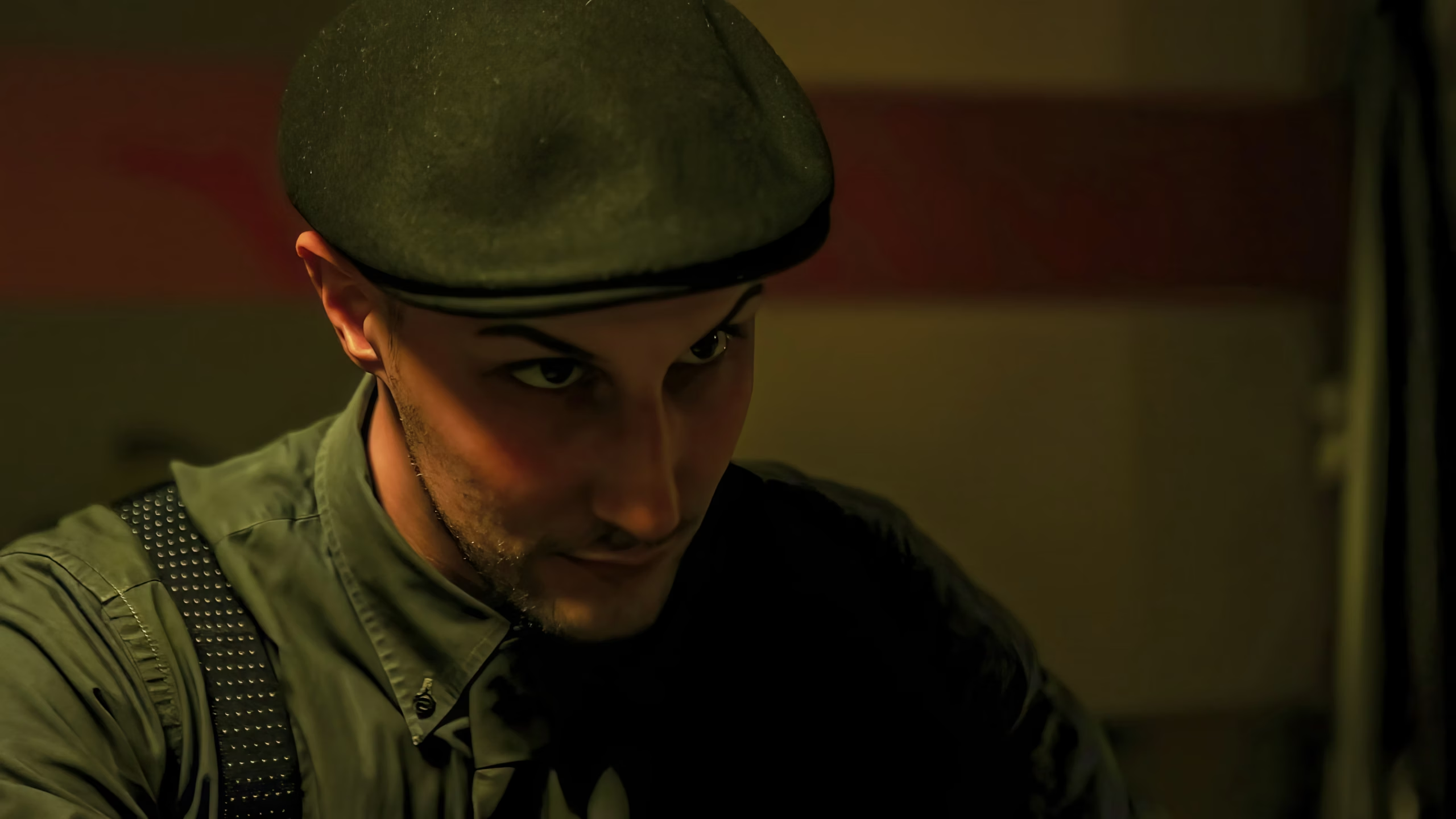
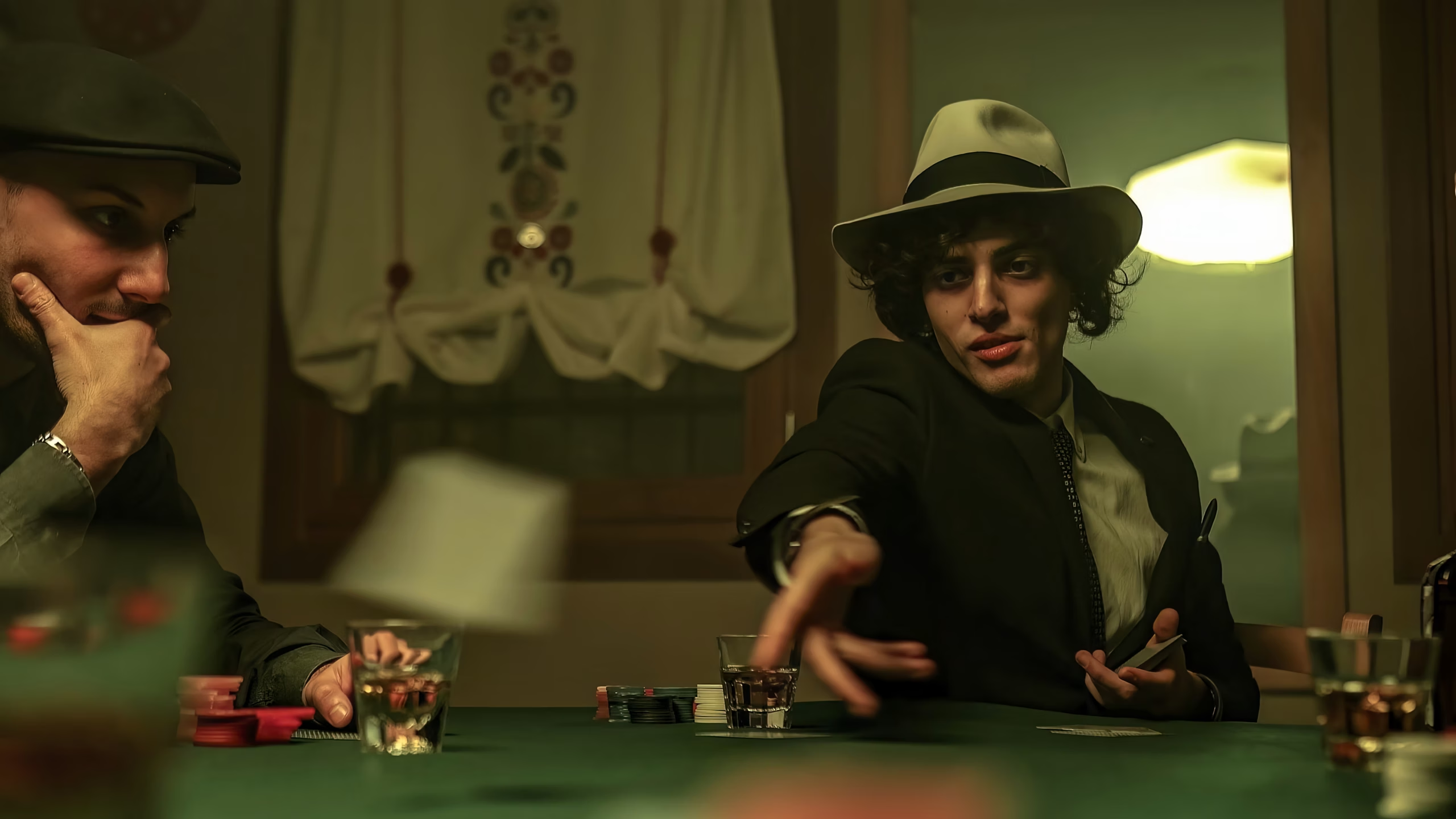
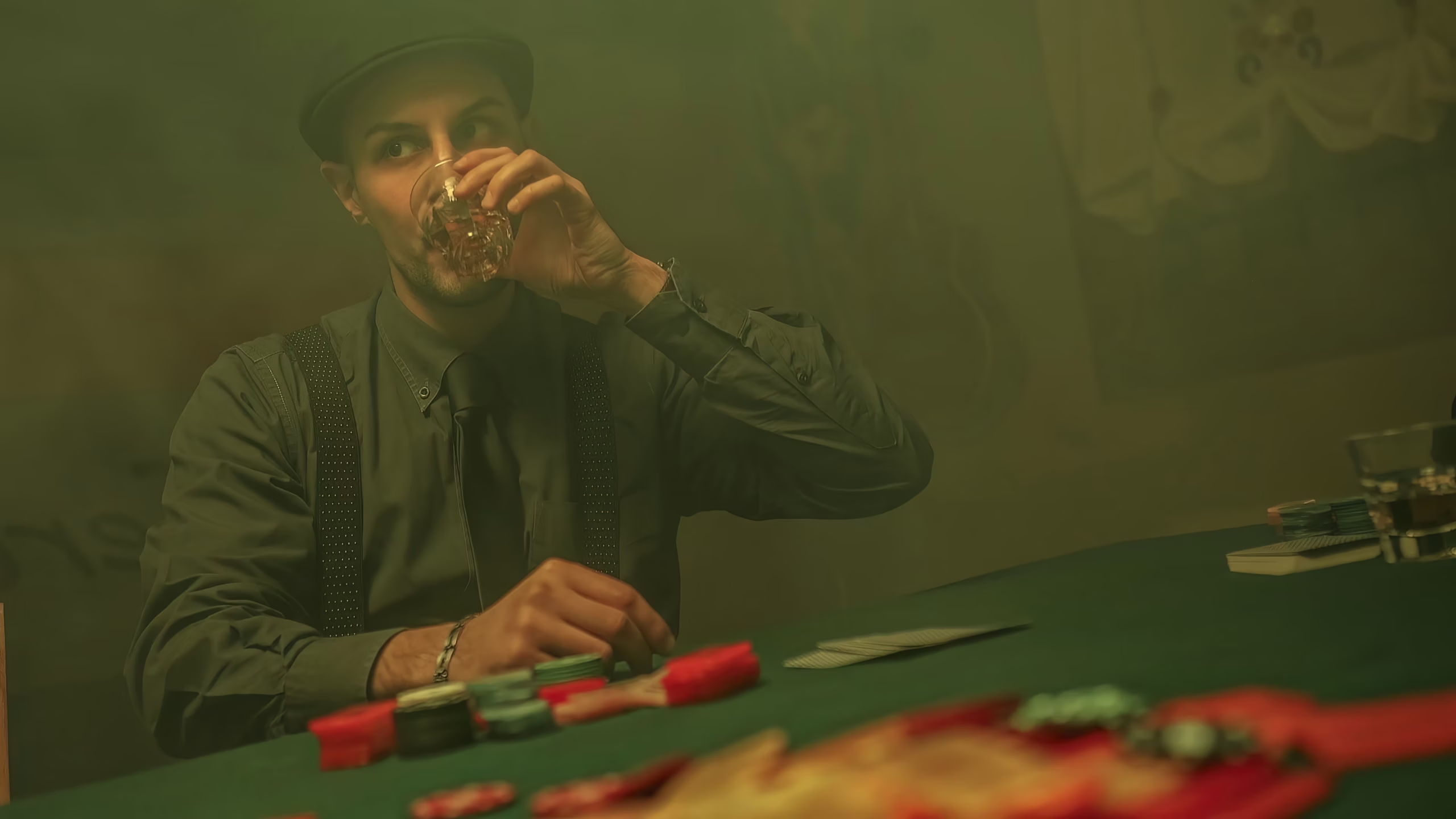
The card room has weary walls, suspended smoke, and a green table the color of hopes when they begin to rot. Waiting for him are the man in the hat and another fellow in a cap, a pale shirt, and suspenders. The sort of man who seems to have stepped out of a family photograph in which, years later, someone drew a red circle around the culprit.
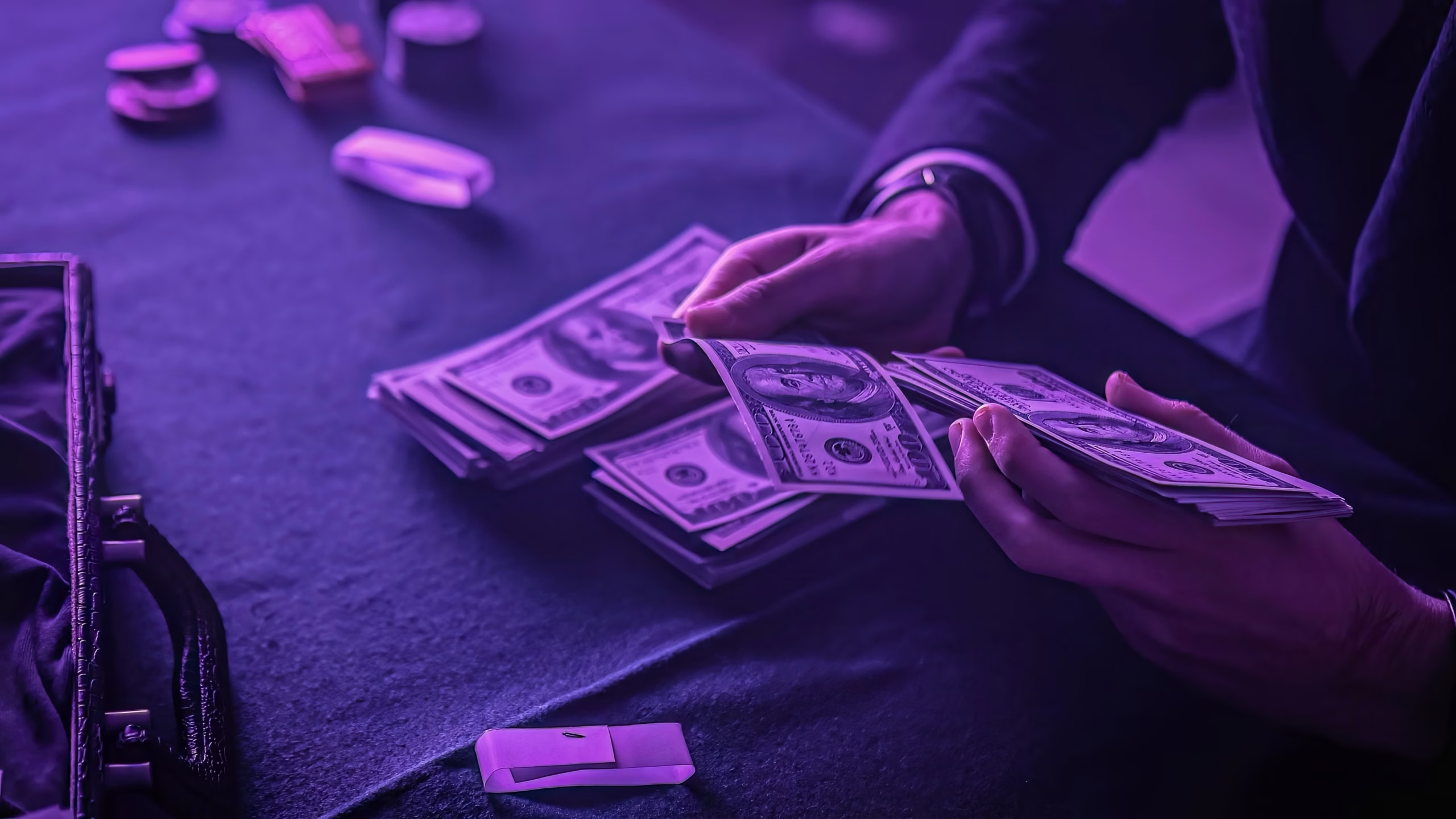
A suitcase arrives on the table.
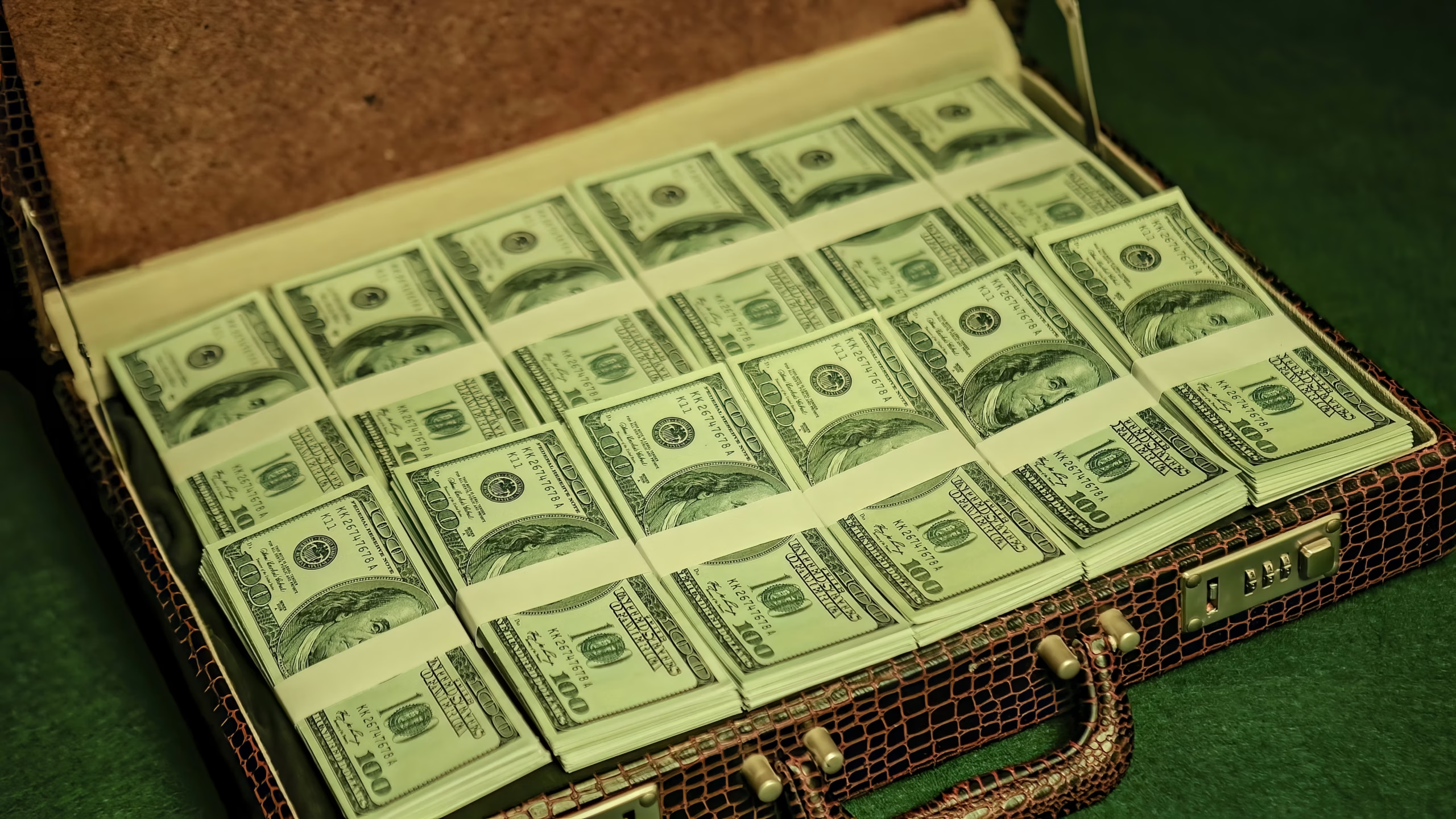
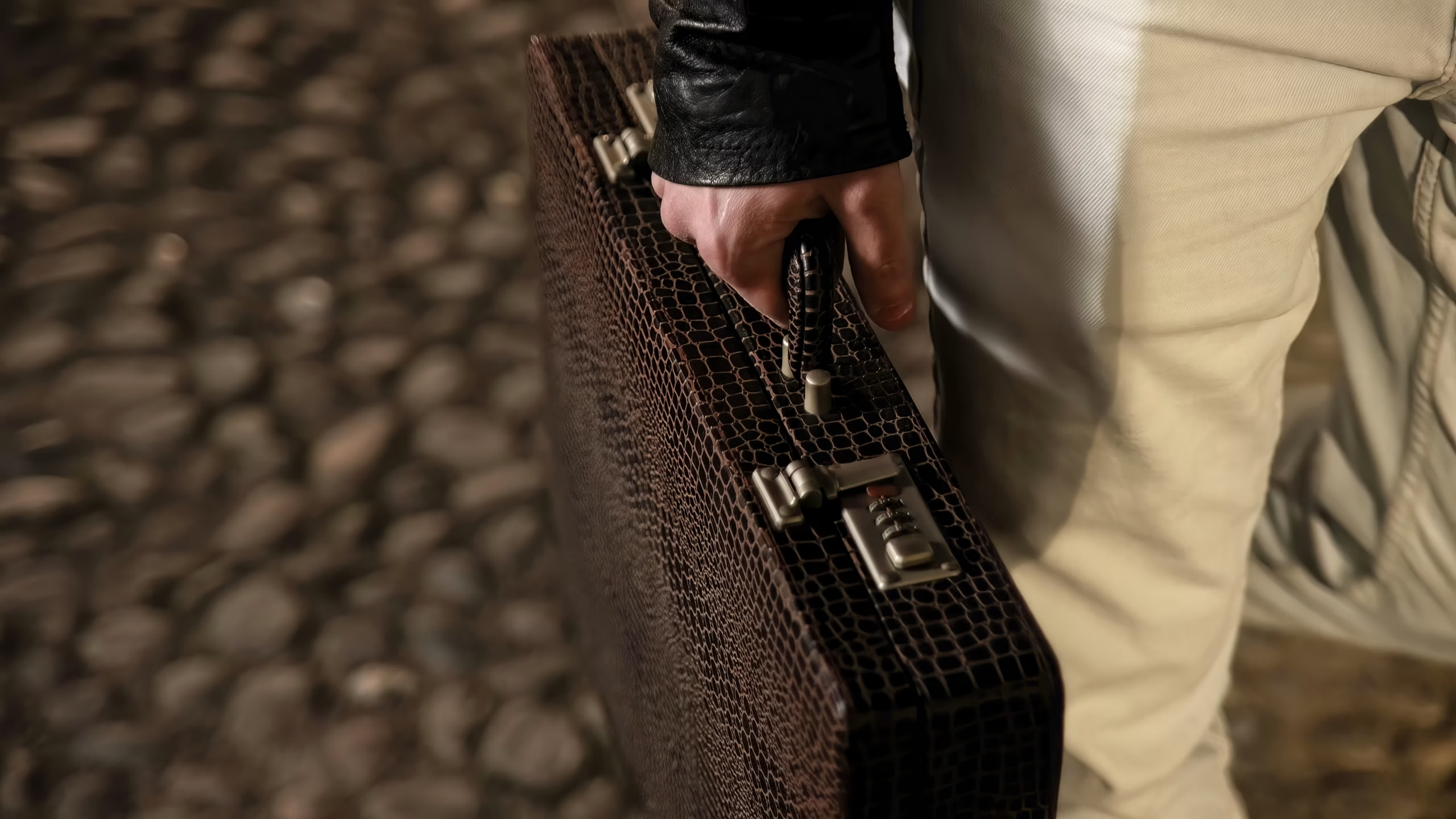
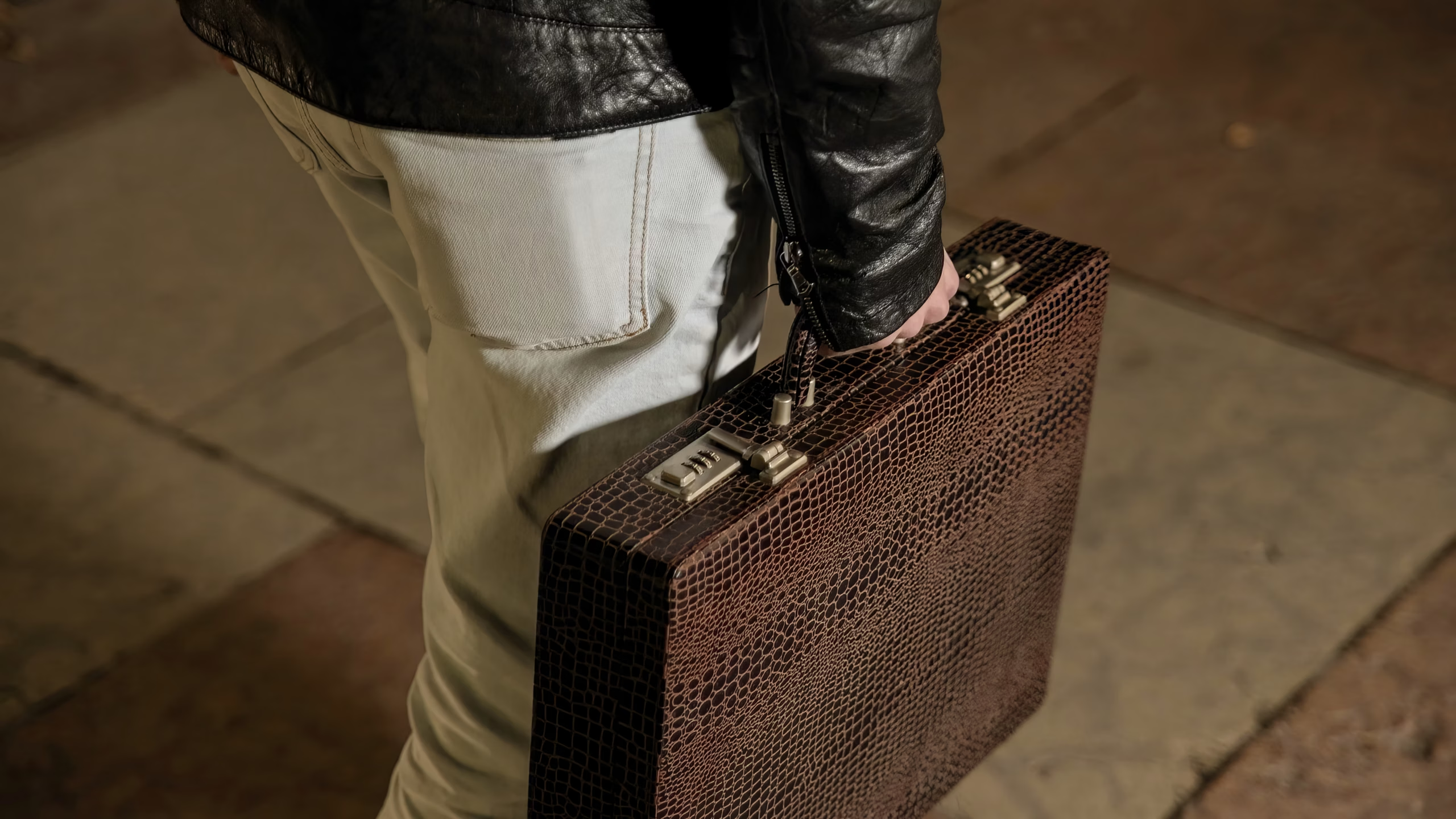
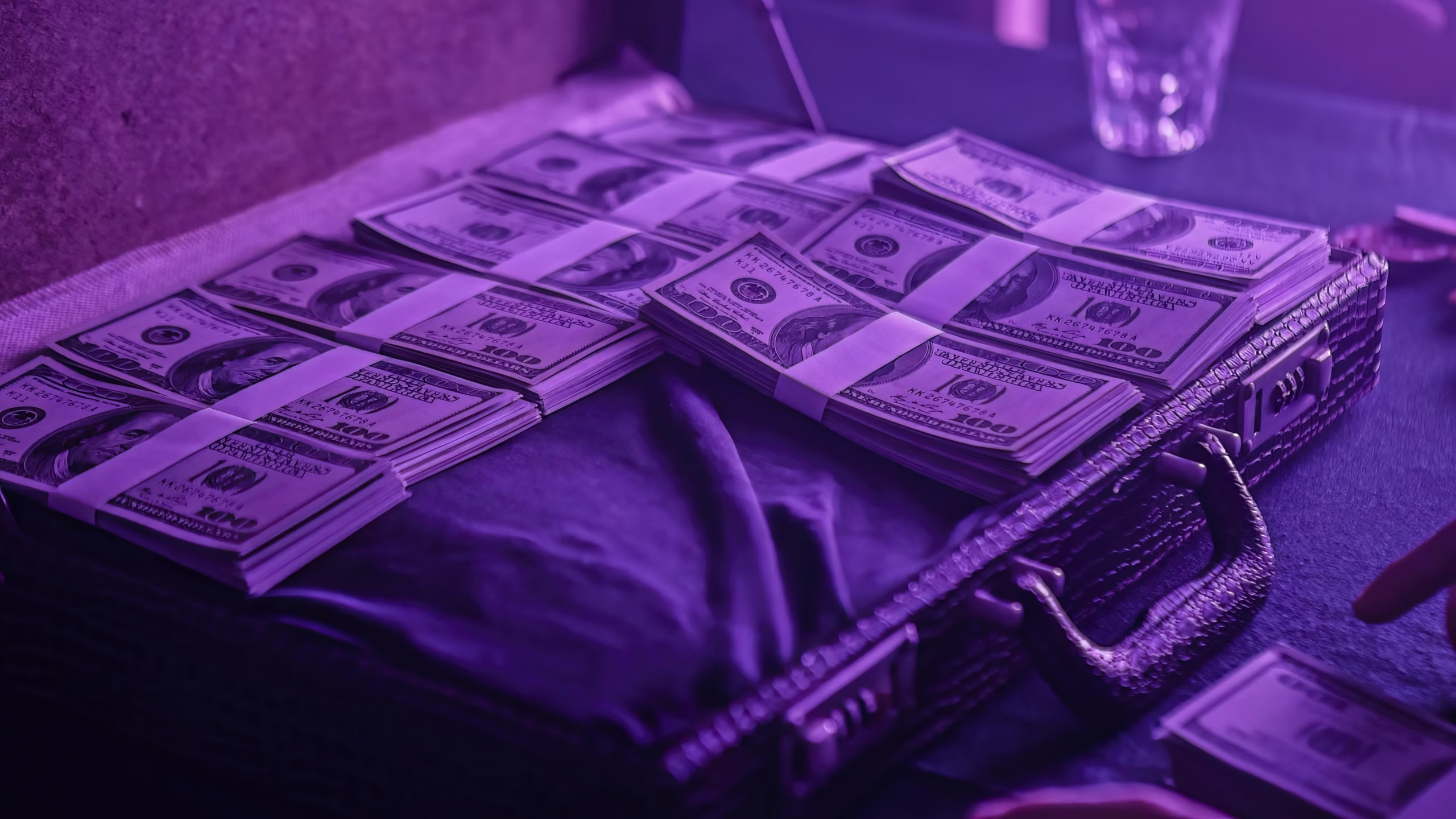
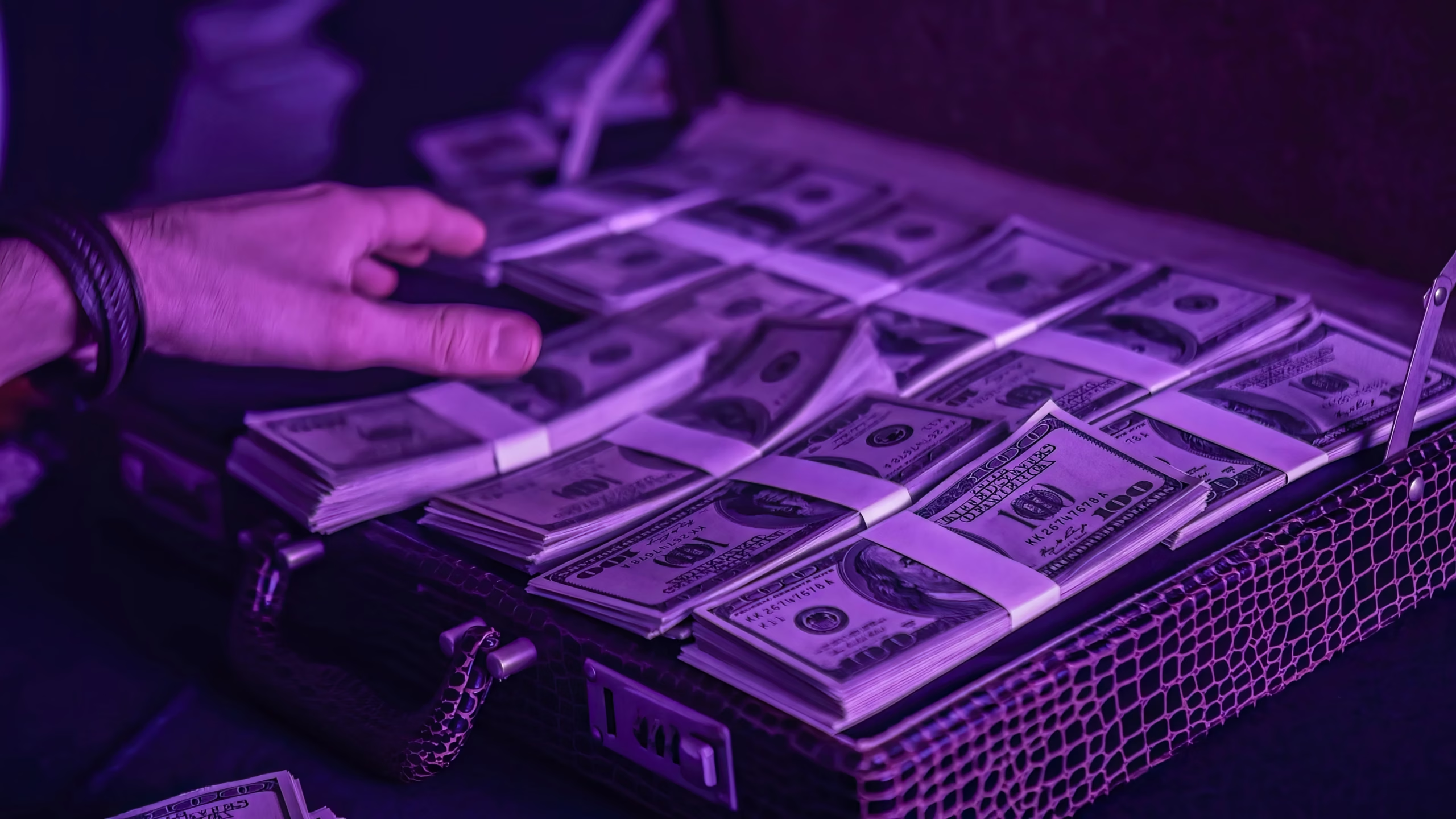
Dark leather, reptilian surface, metal clasps. It looks as though a small prehistoric animal died to protect the contents.
Hands release the catches.
The lid rises.
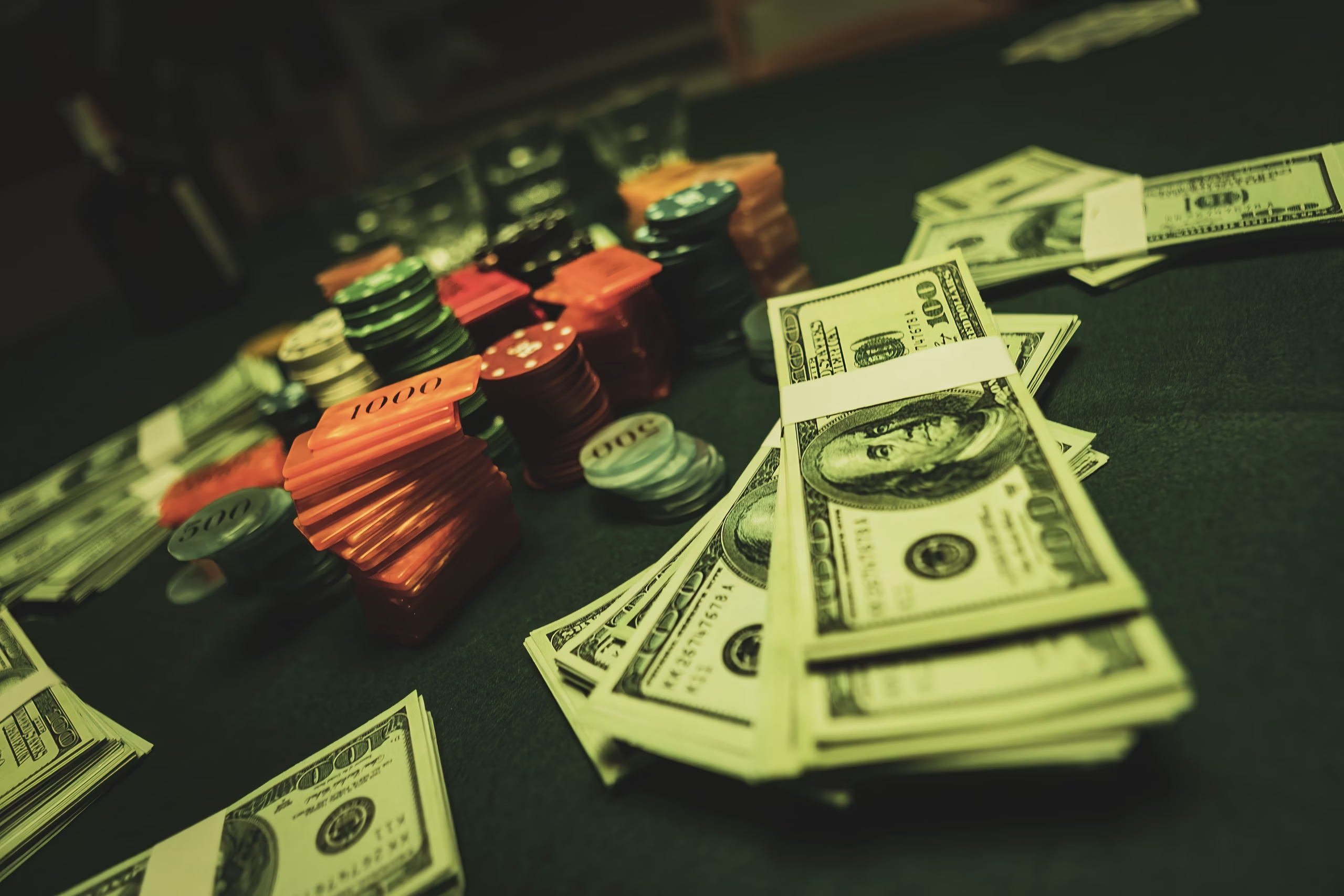
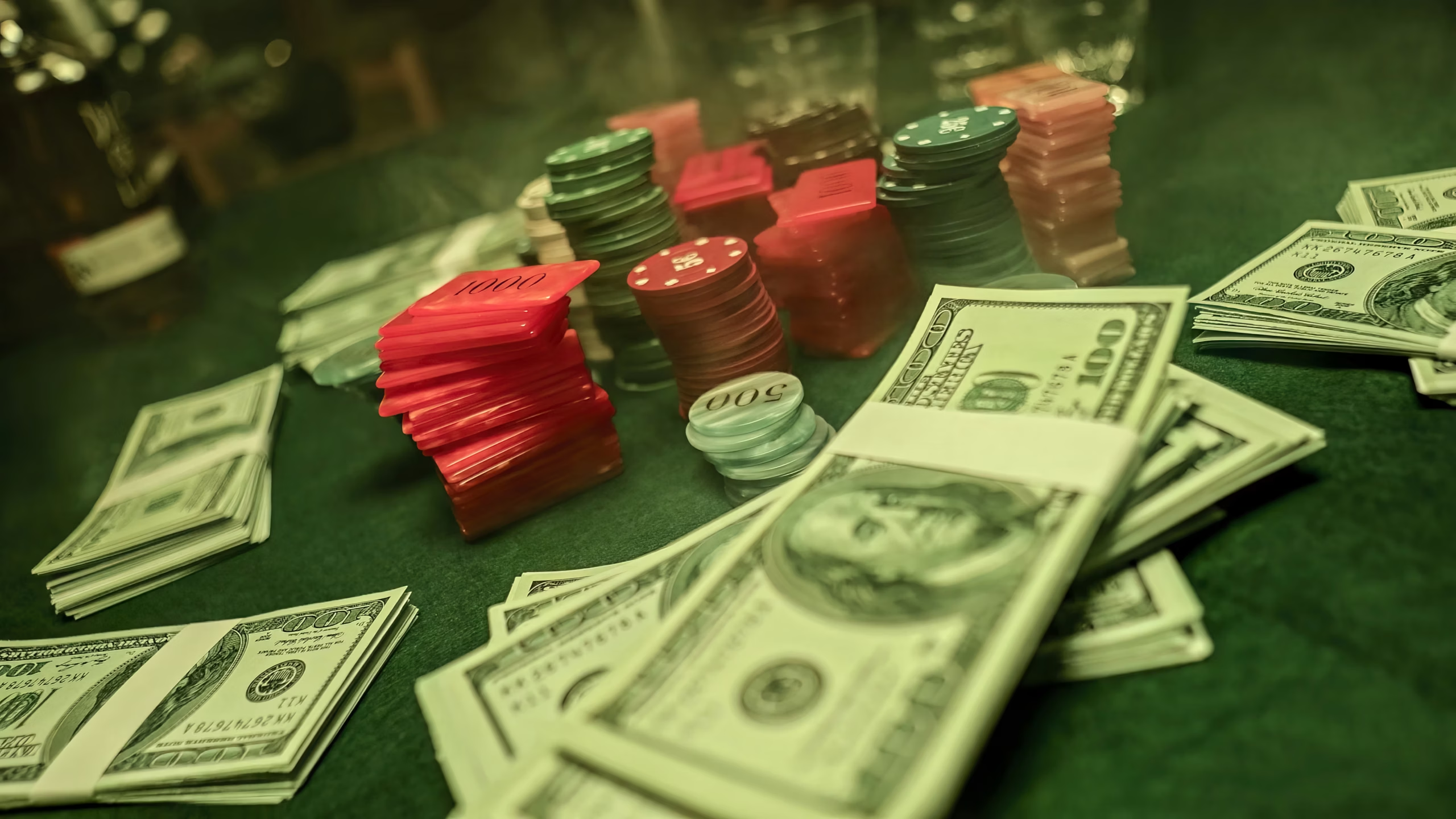
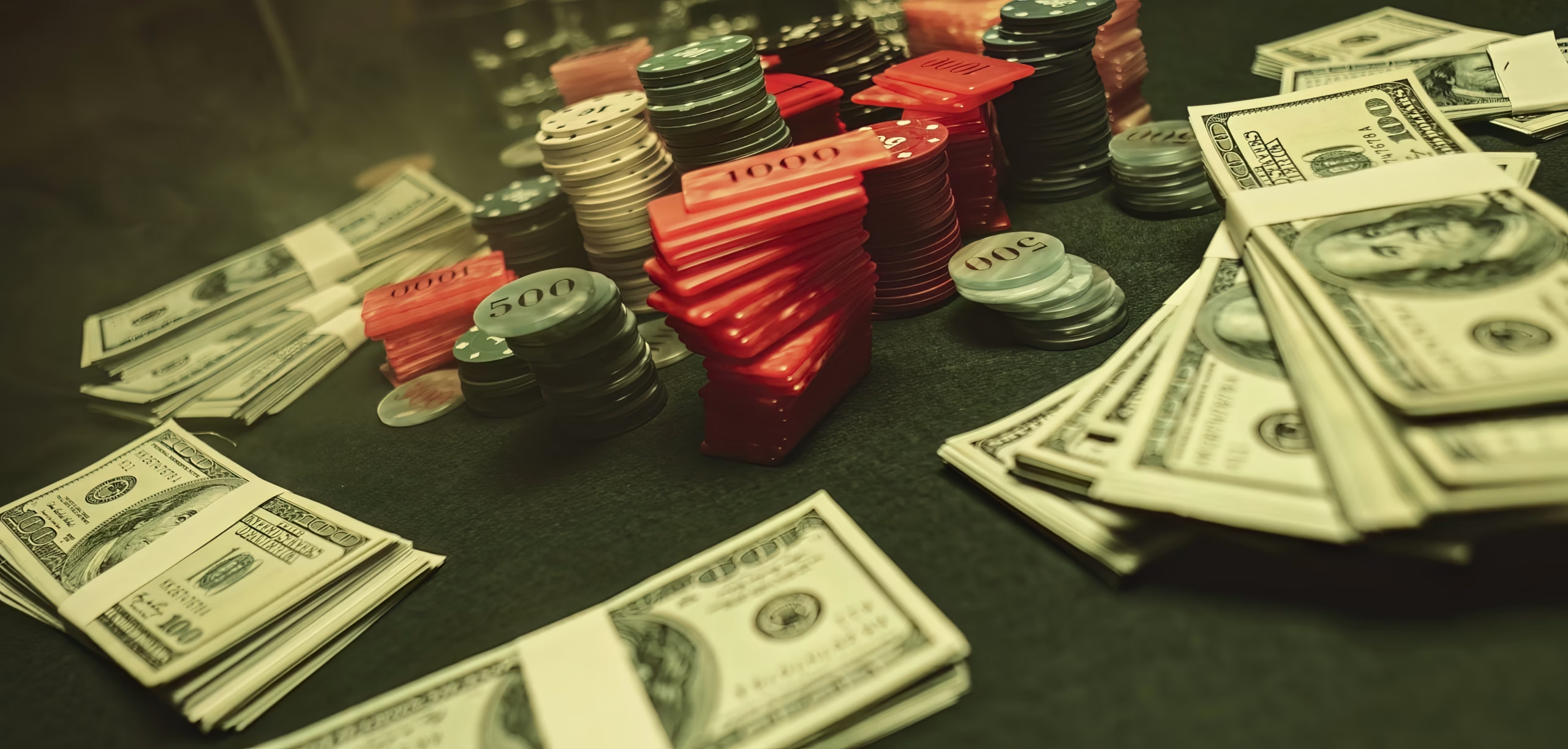
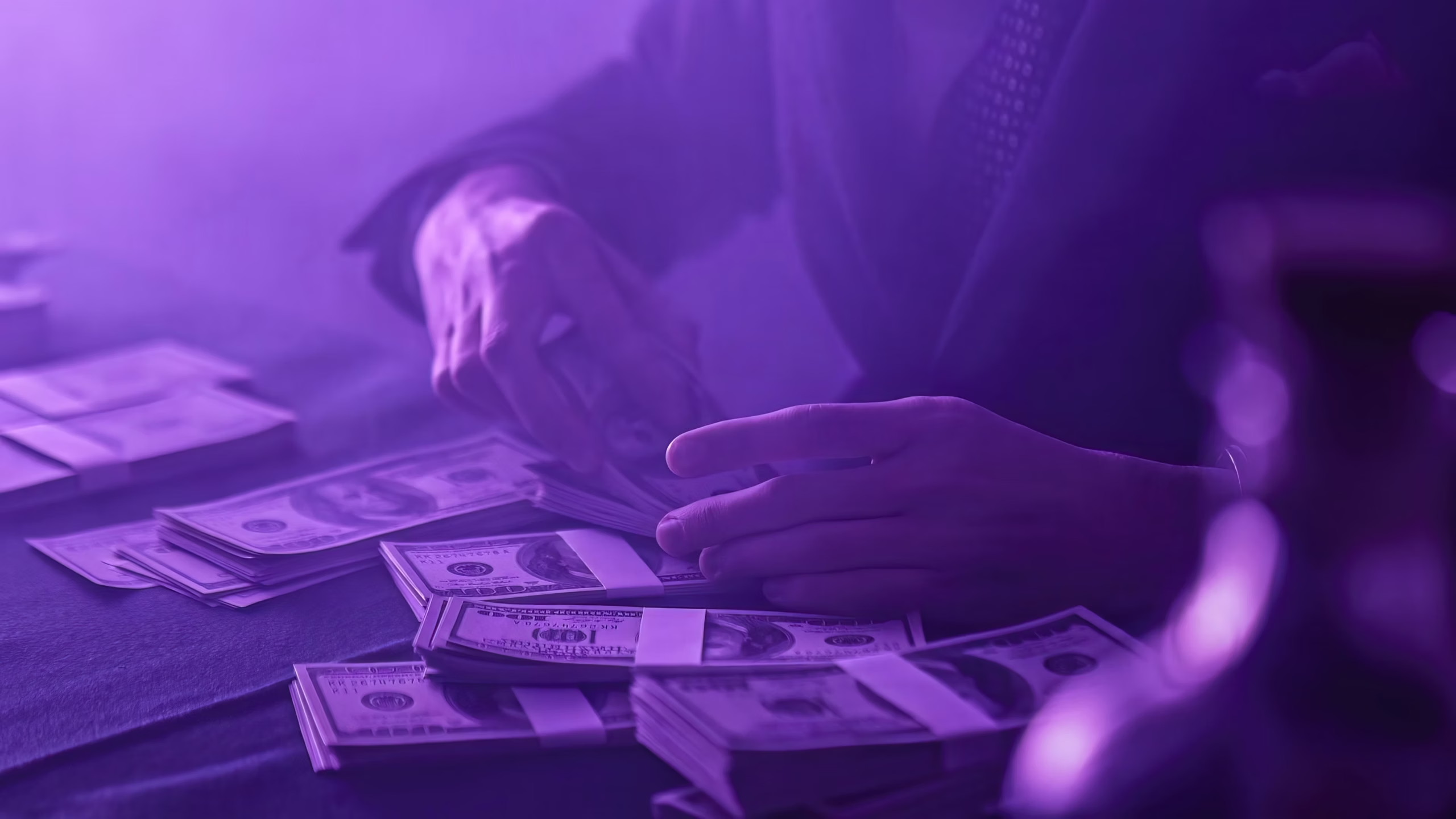
Inside are dollars. Neat, compact, almost solemn bundles. Benjamin Franklin regards them all with the dead expression of someone who knows that whatever happens, human beings will be blamed.
The newcomer stares at the suitcase.
And the suitcase stares back.
This is the moment when money performs its finest trick: it remains perfectly still and lets our imagination do all the work.
A house.
A car.
A debt erased.
A vacation.
A woman who did not answer before and suddenly manages to find her phone.
A father who is finally proud.
A different life, packaged in paper rectangles and bound with a rubber band.
Money never promises anything openly. We are the ones who lend it a voice. It merely sits there with its numbers and dead faces while we tell it everything it is supposed to save us from.
A banknote, after all, is a voice committed to paper.
A rumor with a serial number.
There is less philosophy between a genuine banknote and a counterfeit one than we care to admit. Both are paper. One has a bank, a law, and enough men in uniform behind it to demand that everyone agree. The other has only a printer and considerably worse legal prospects.
One is value because the system blessed it.
The other is a crime because the system did not collect the royalties.
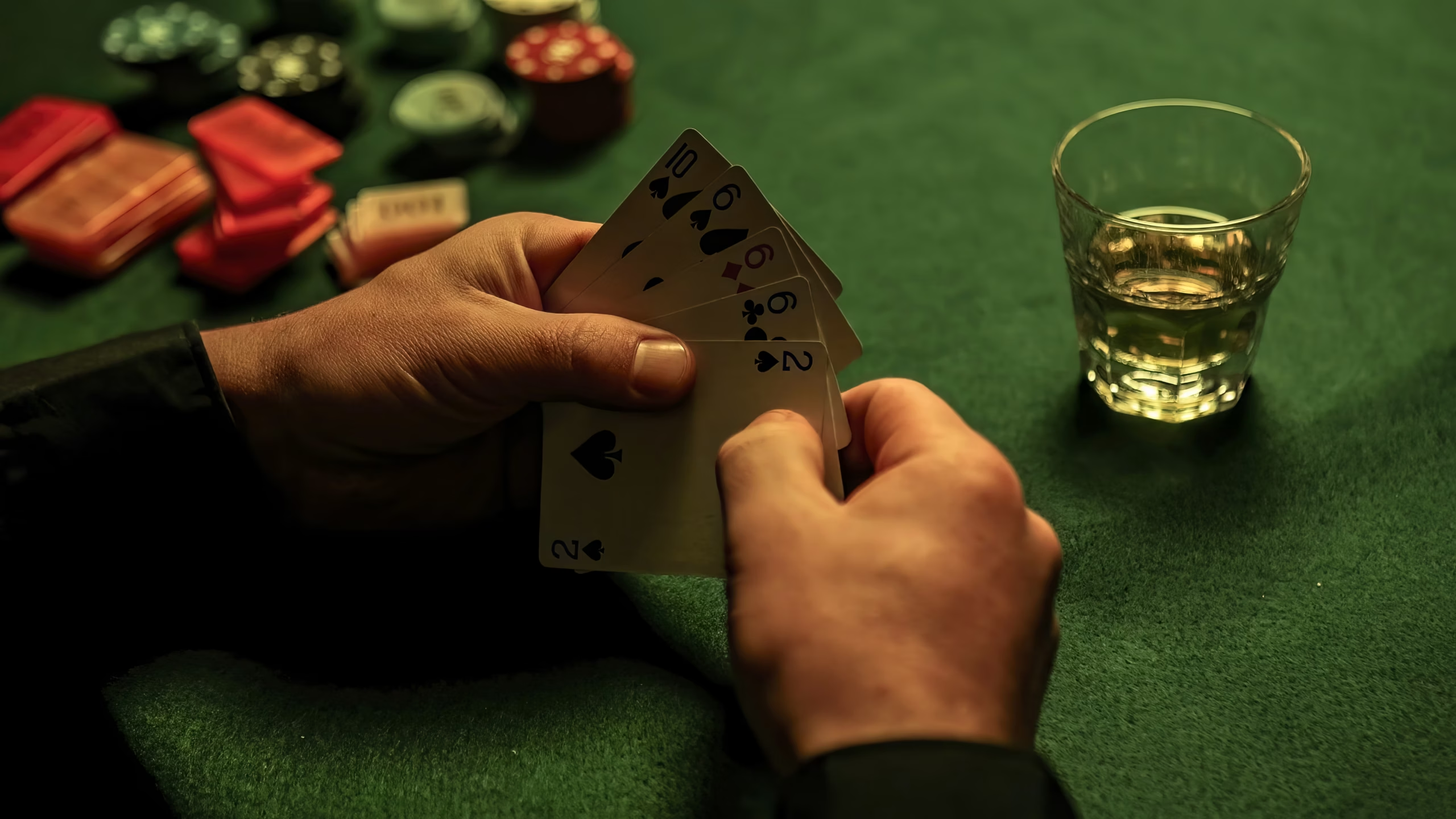
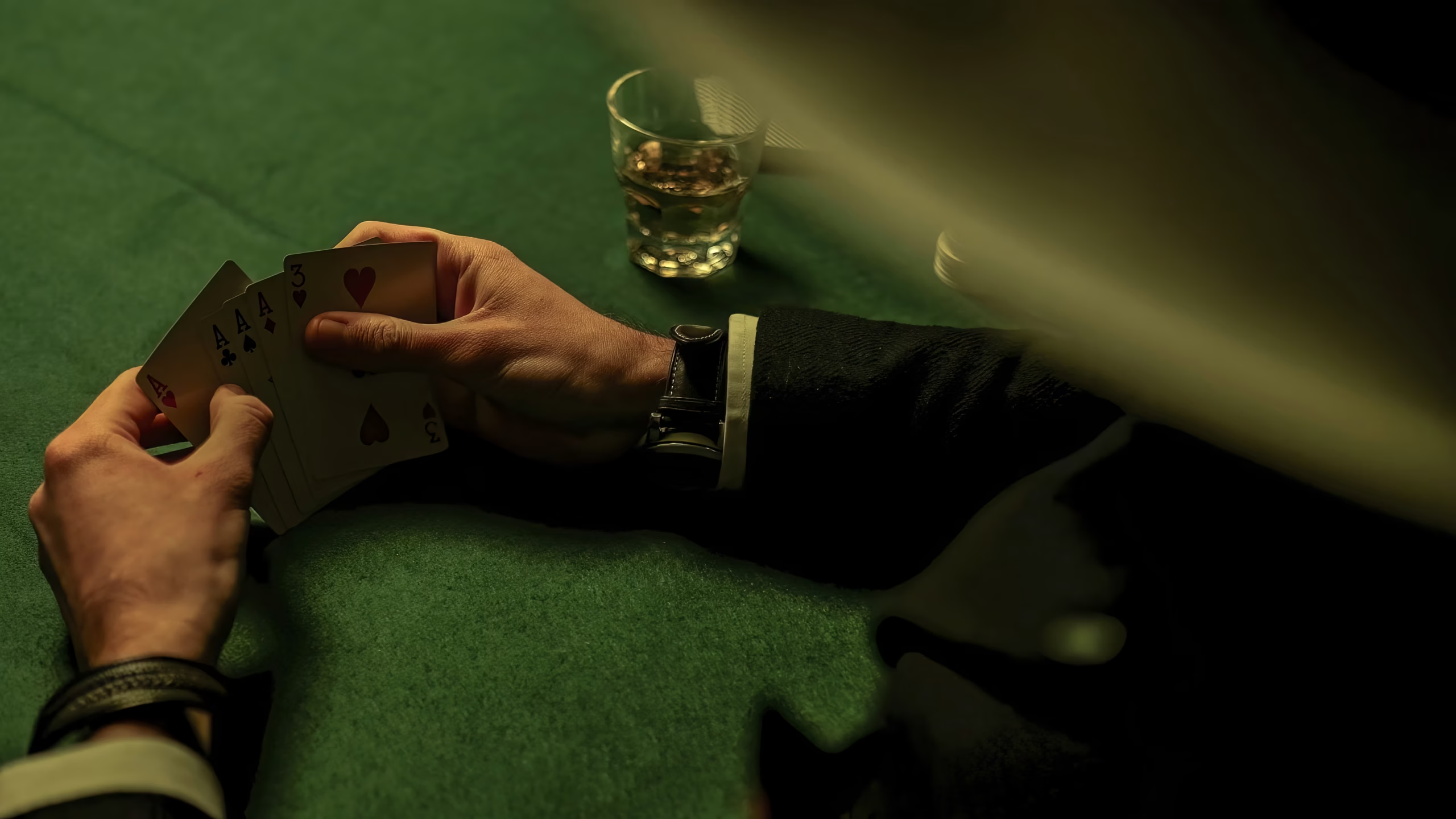
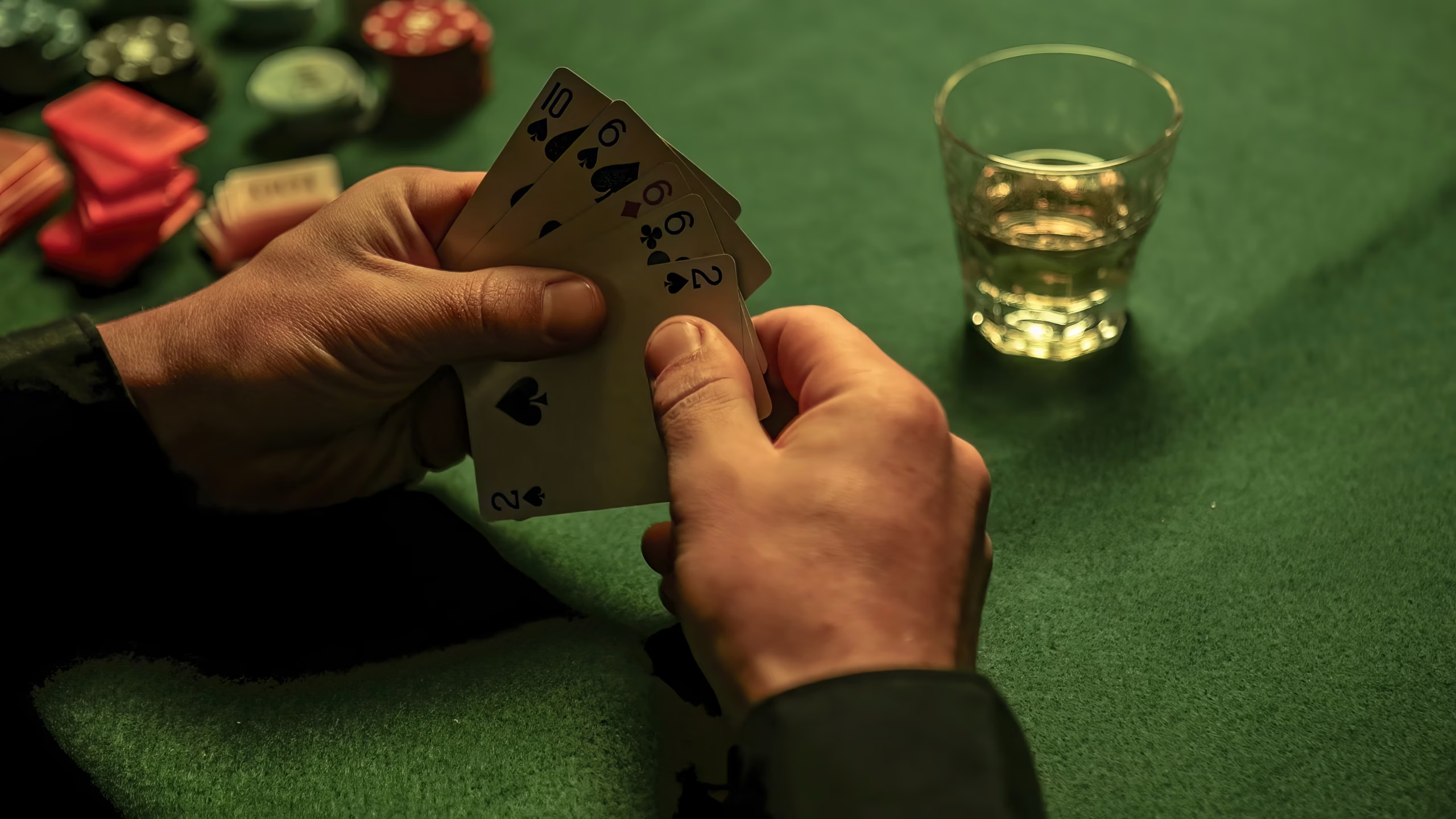
The game begins.
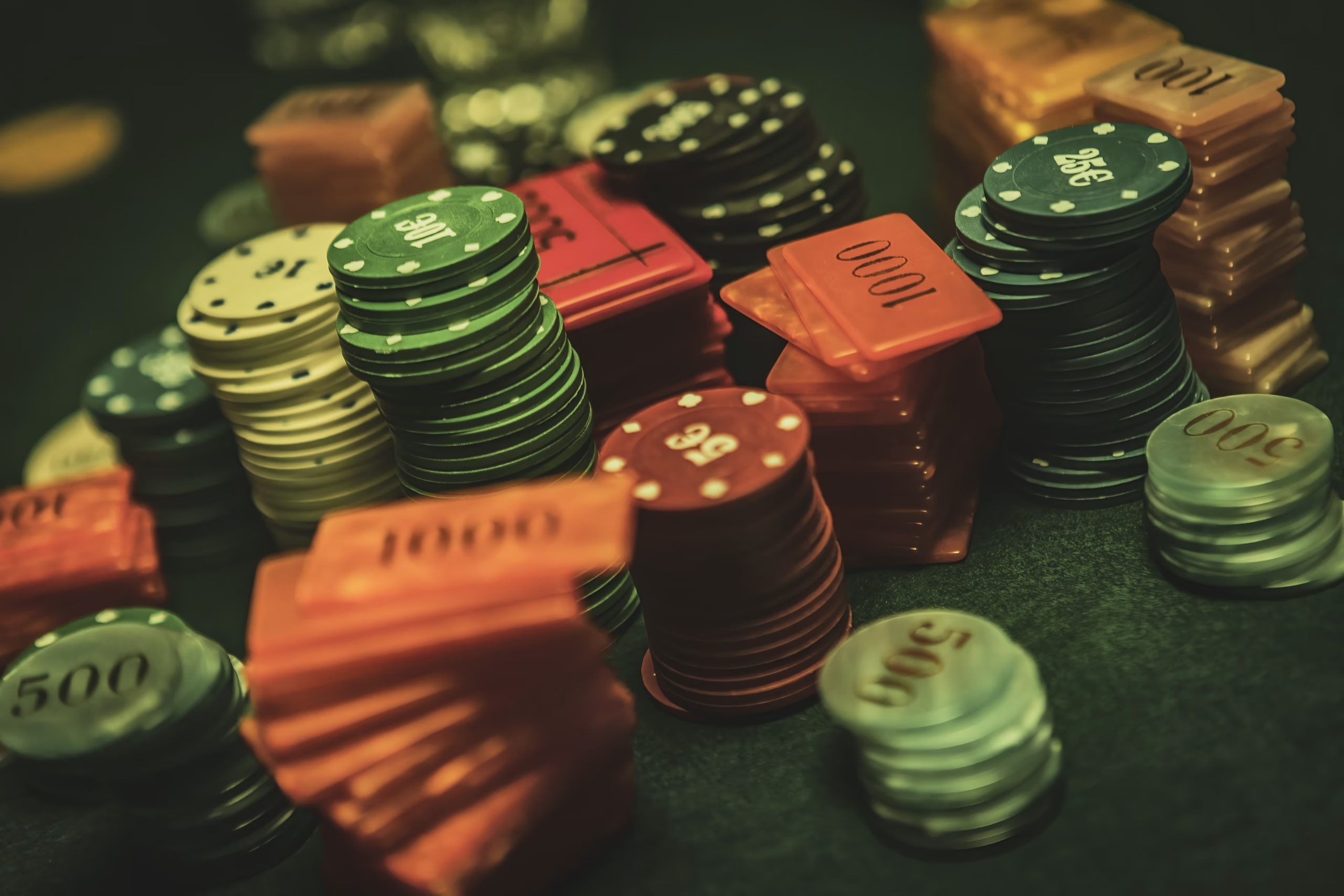
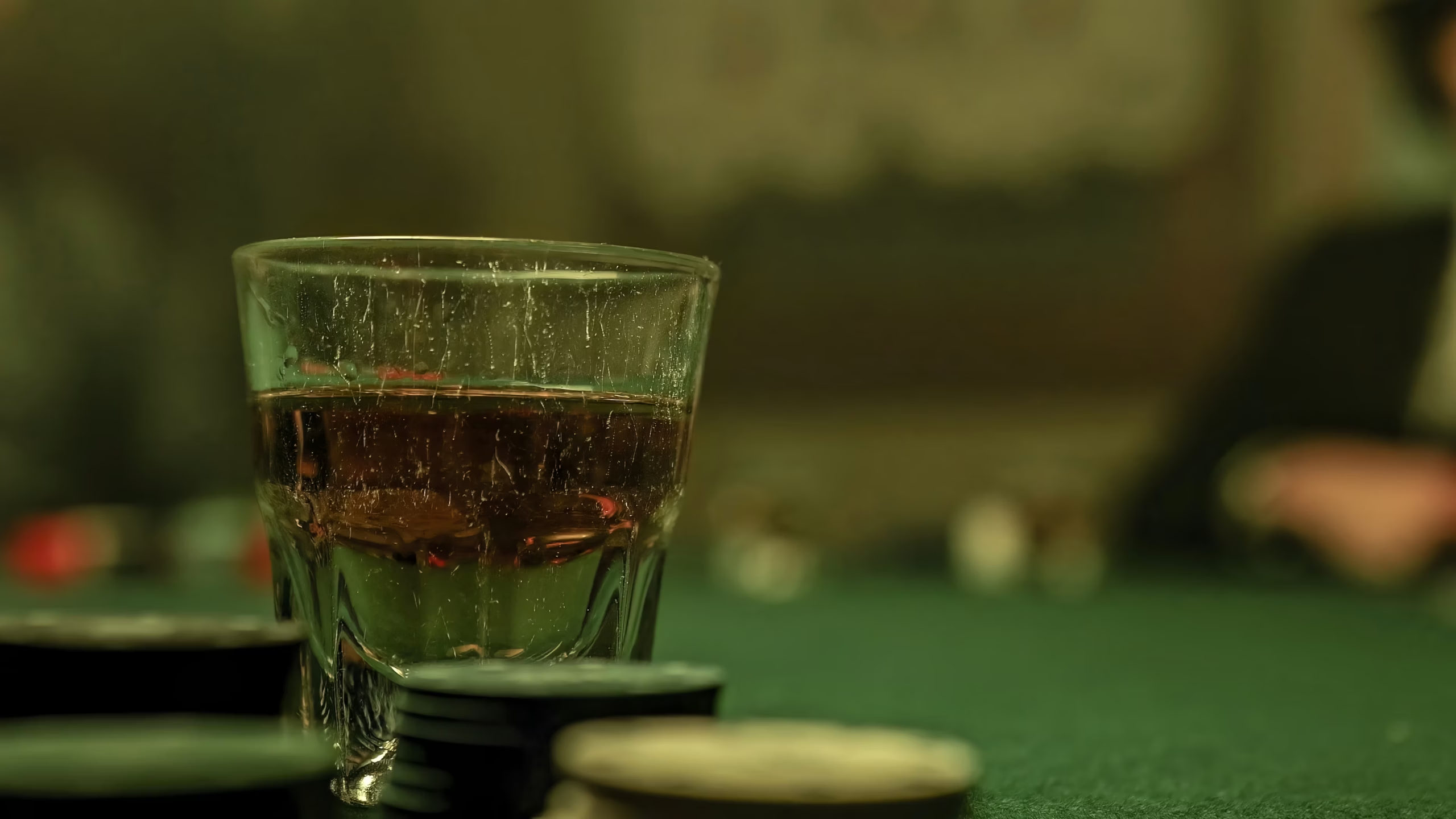
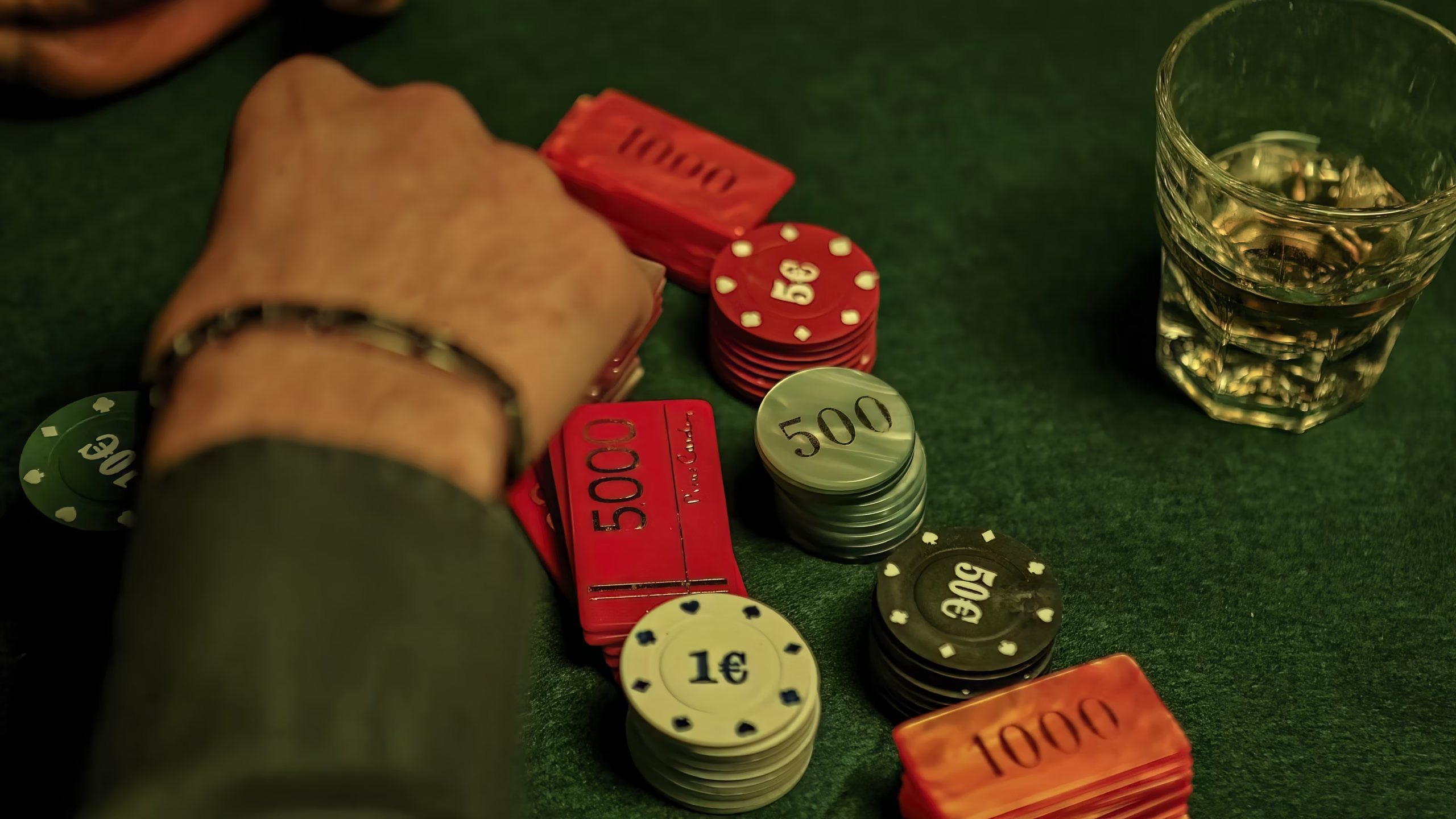
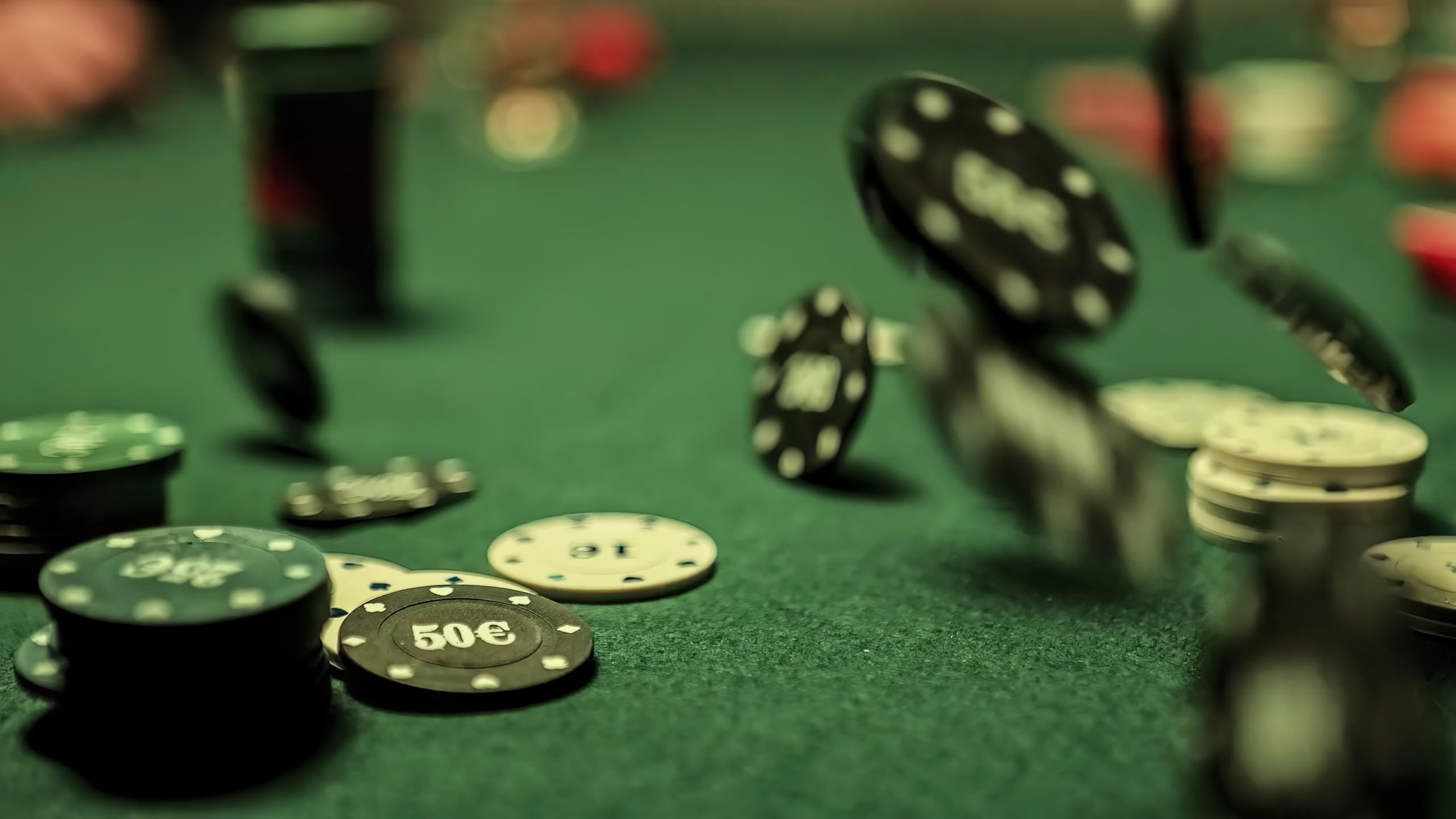
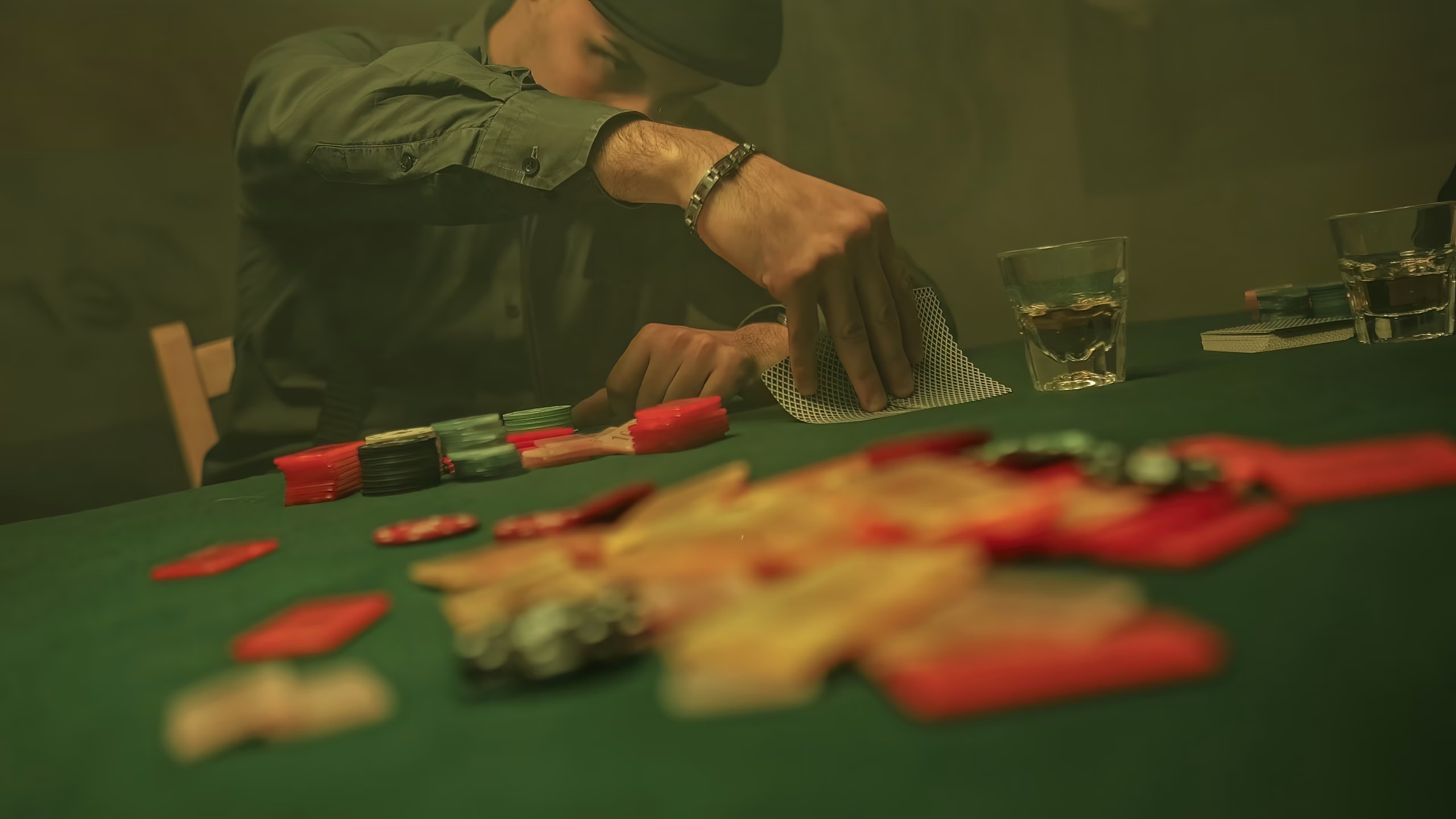
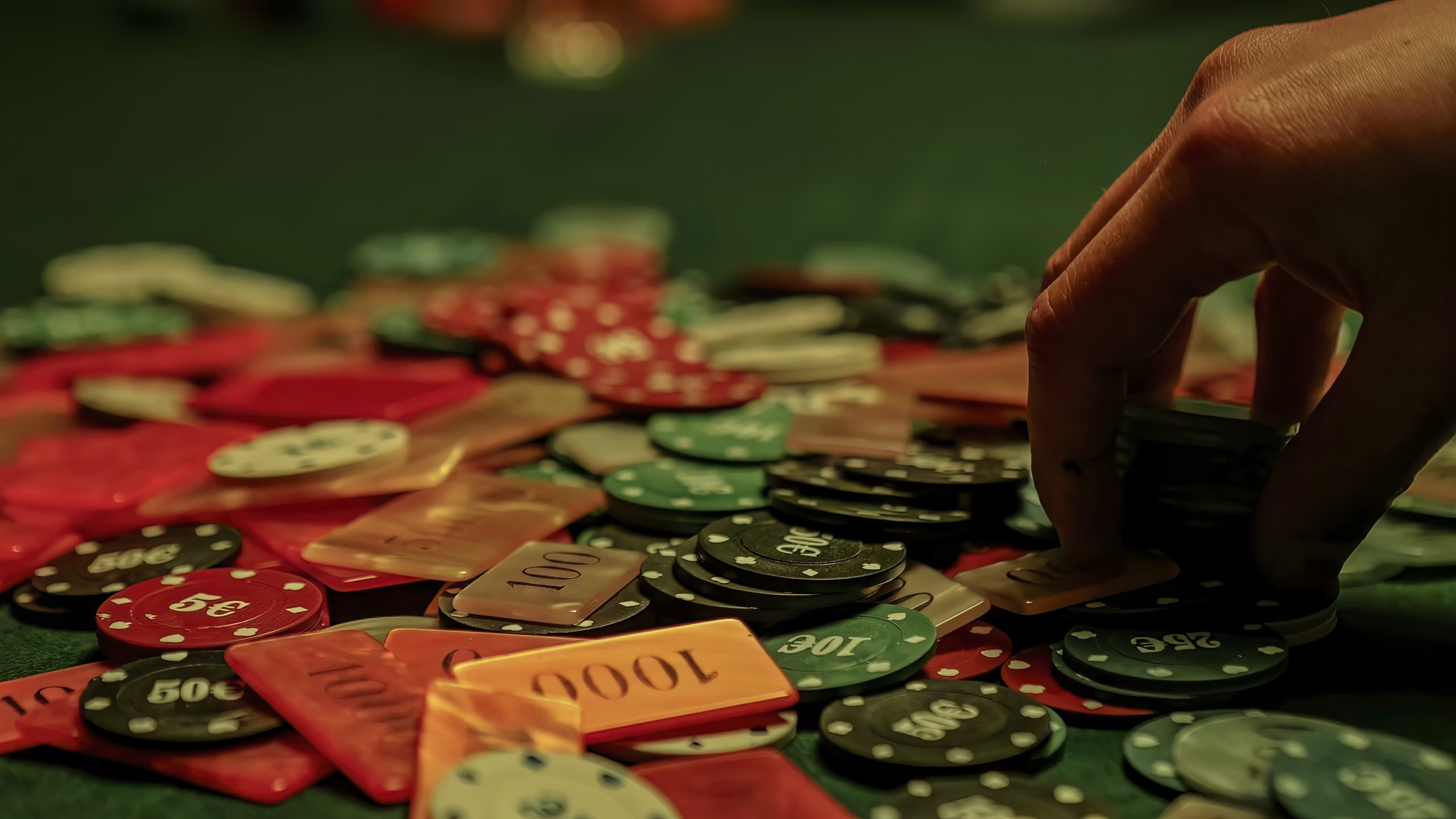
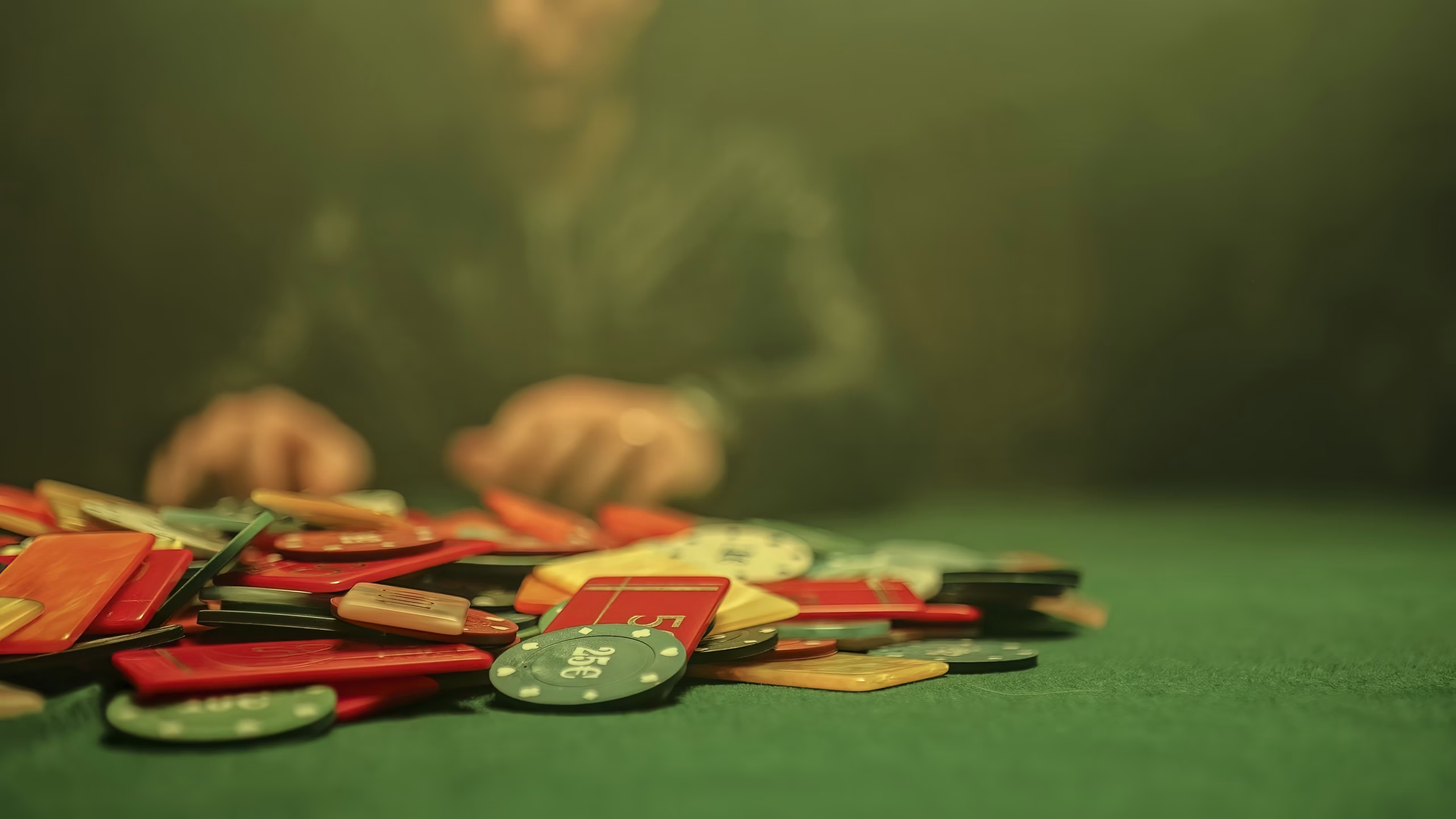
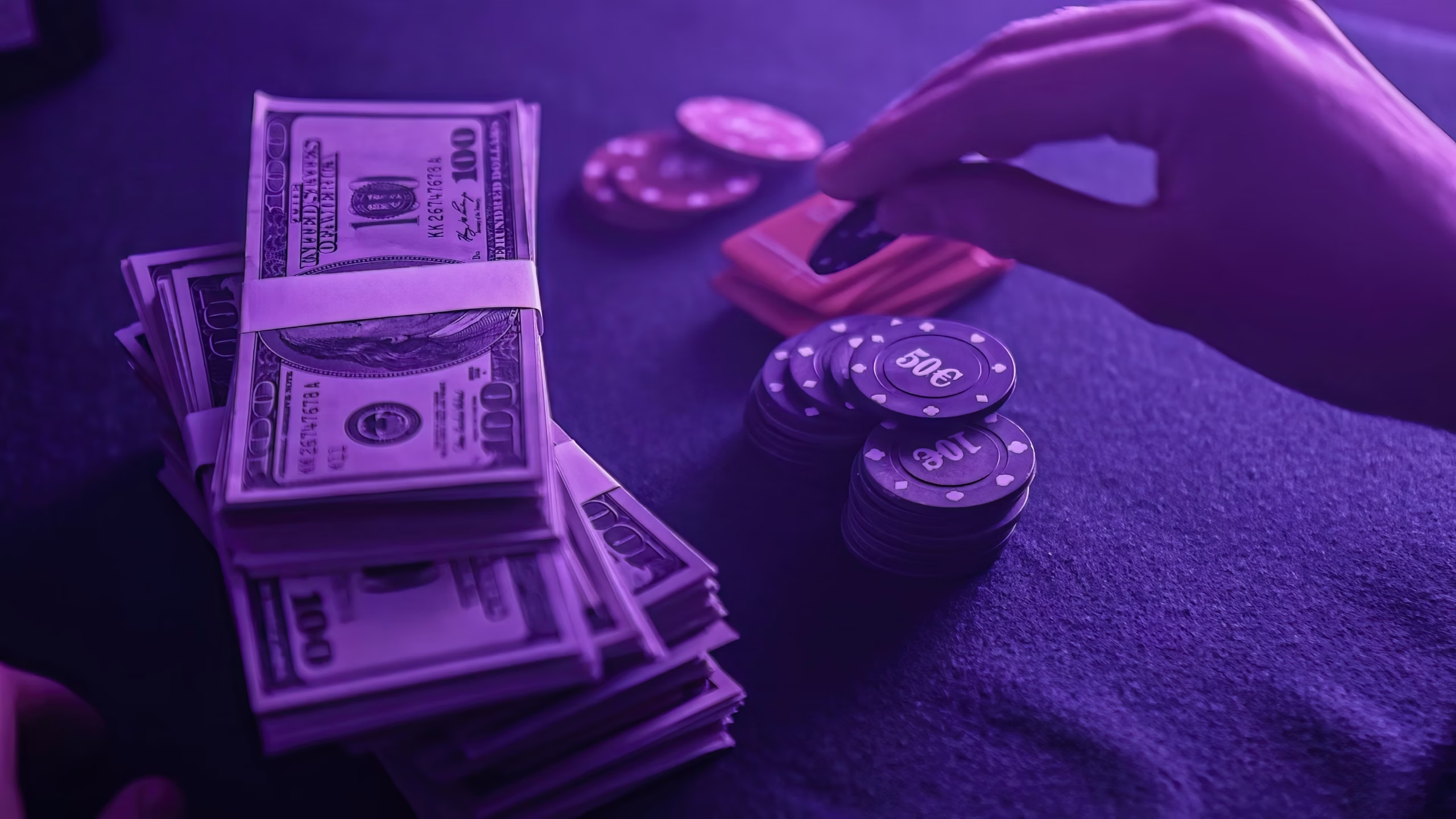
Cards slide across the table. Glasses fill. Chips strike one another with that dry, almost childish sound, like plastic teeth that once belonged to a very small, very hungry god.
The man in the cap watches.
The man in the hat deals.
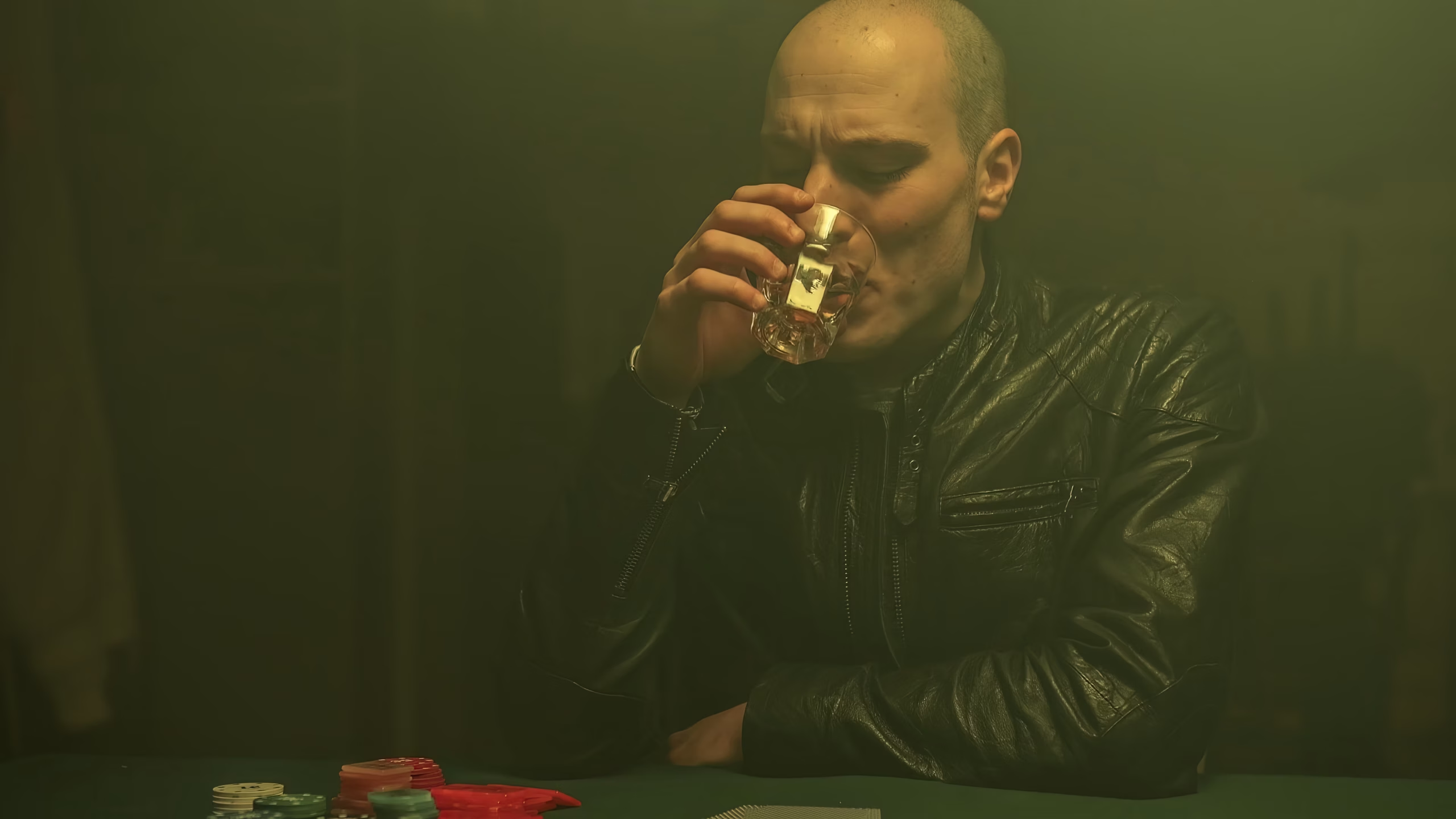
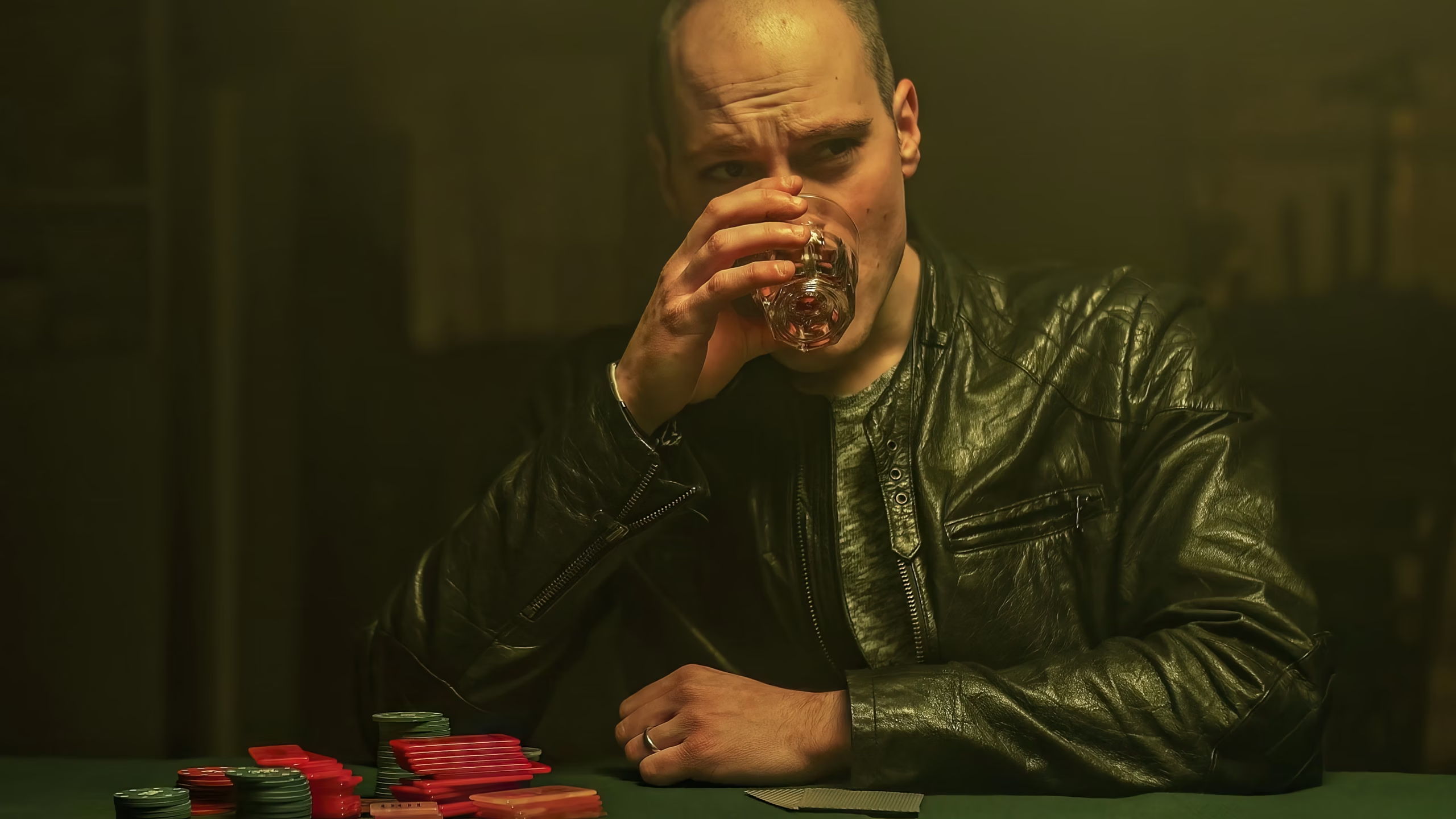
The newcomer drinks.
At first his hands are rigid. He holds his cards too close to his chest, watches the others, searches their faces for a crack. But there are no faces on the opposite side of the table. There are actors who already know the script.
A glance.
A bet.
A sip of whiskey.
More chips in the center.
The pile grows.
Slowly, doubt retreats.
That is always how it works. No one takes your caution all at once. They steal it an inch at a time, rewarding you whenever you lower your guard. A small win. A good card. A smile poorly suppressed. The feeling of blood beginning to run faster.
Meanwhile, the whiskey does its job. It rents courage by the glass and sends the bill the following morning.
The cards change hands.
The chips accumulate.
The man in the cap looks annoyed at precisely the right moment. The one in the hat lets a smile escape. Our man looks at his hand, the table, the money.
Then he bets.
Again.
More and more.
The trap is not designed to make him lose.
That is the vicious part.
The trap is designed to make him win.
The house understood long ago what we keep forgetting: a loser goes home. A winner returns—with an appetite, friends, and the certainty that he has finally discovered how the world works.
Hope costs less than advertising.
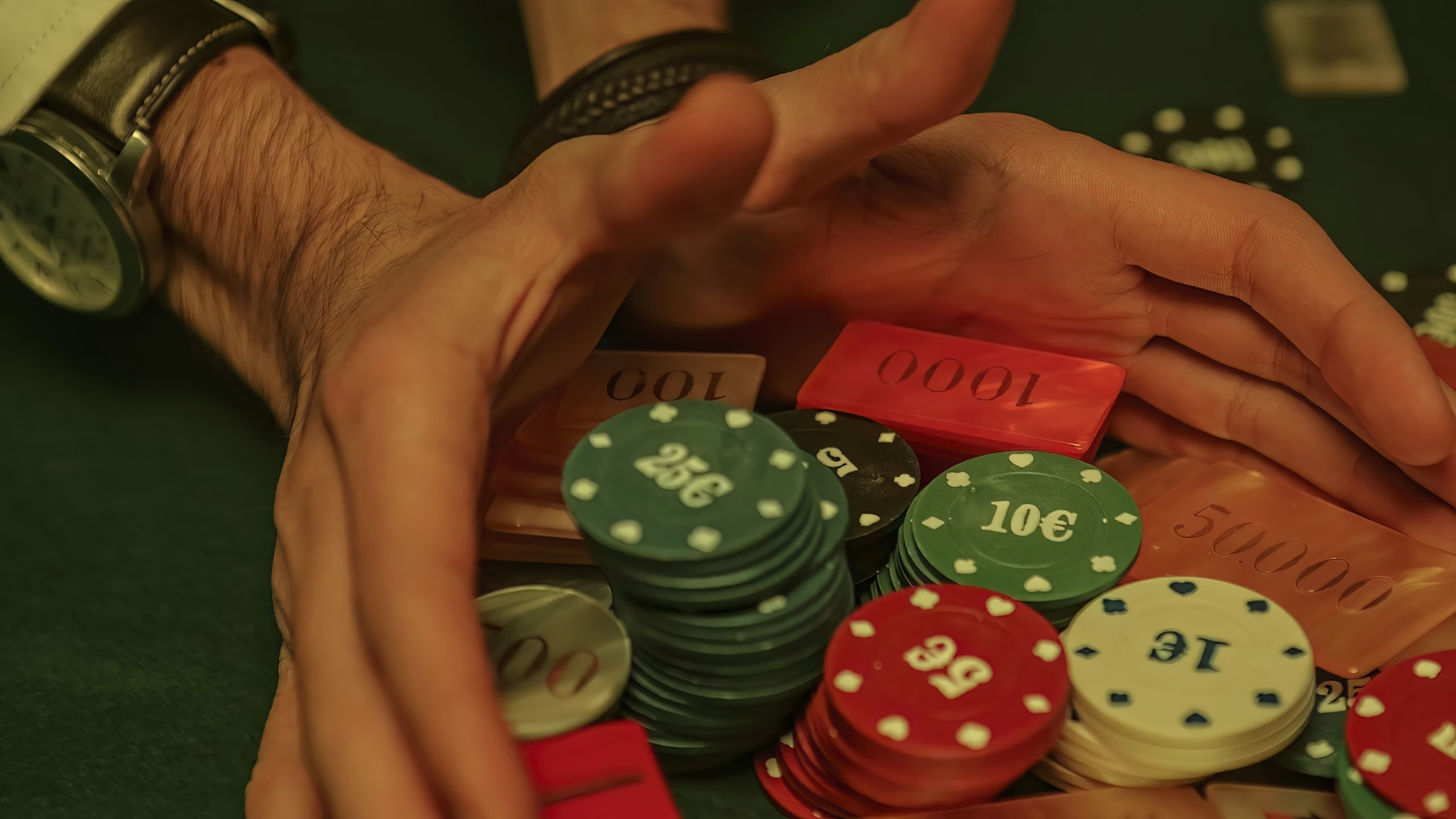
Chips fly across the table. Hands reach forward. The pile is pushed toward him.
He has won.
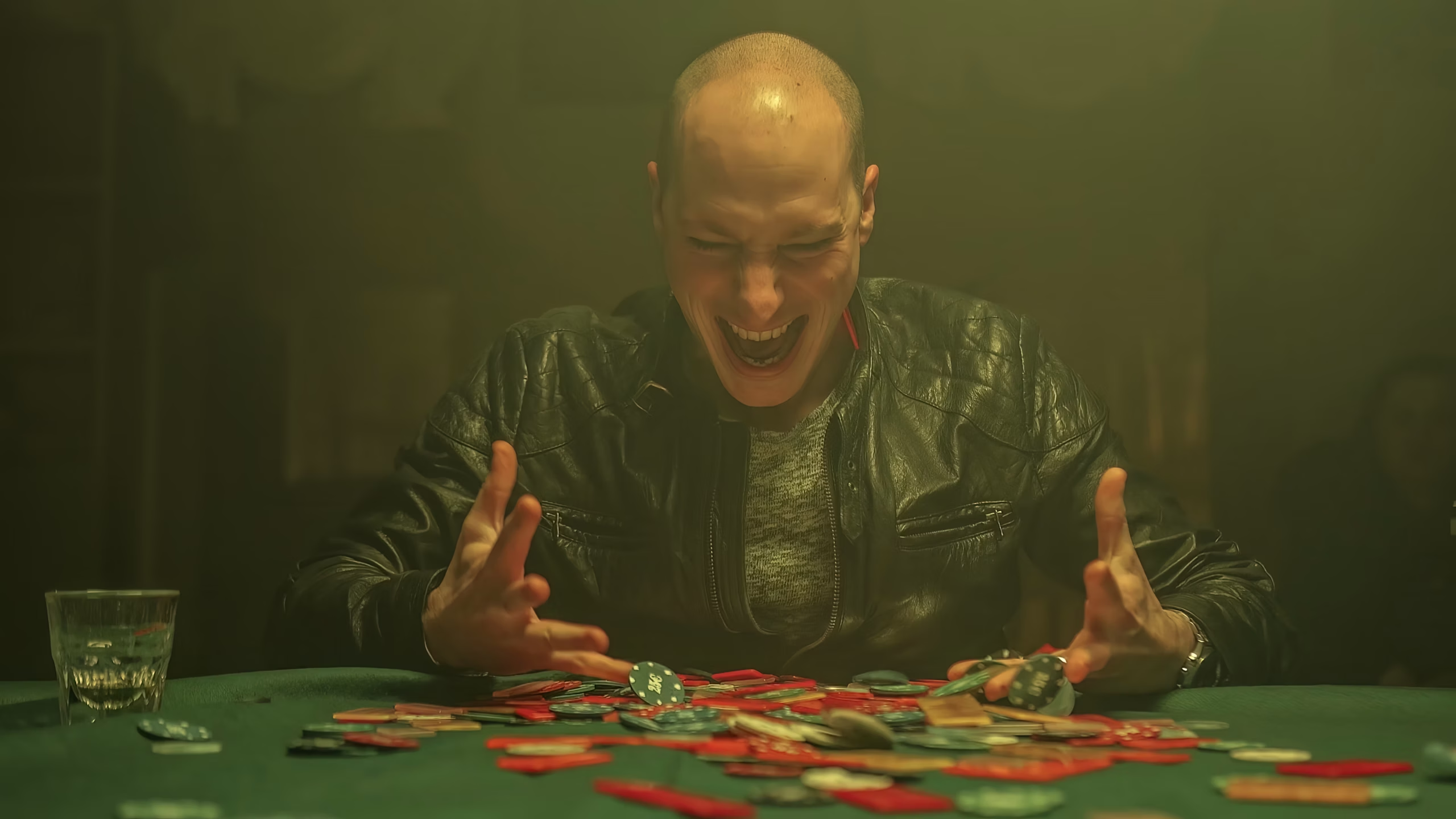
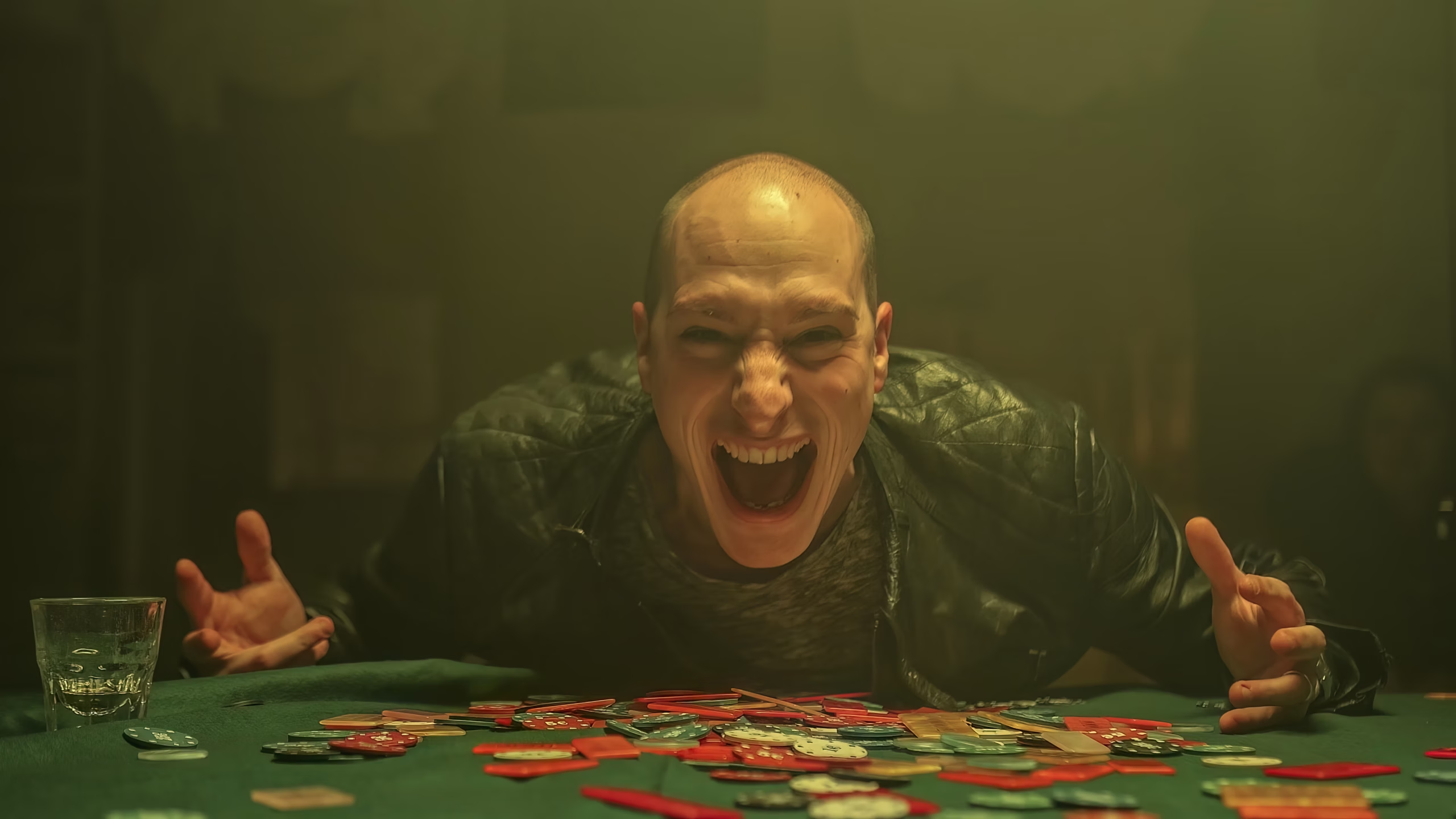
For an instant, he remains motionless, unable to believe it. Then doubt breaks. His face changes: first surprise, then fever, and finally religion.
He shouts.
Laughs.
He throws himself onto the chips as though they were oxygen and he had spent his life underwater. He clutches them, heaps them up, lets them fall between his fingers. Behind him, the others watch the transformation with the serenity of trained professionals.
They have not handed him a fortune.
They have installed a conviction.
When he leaves, he carries the suitcase in one hand. He walks as though the sidewalk were built expressly to escort him toward his future.
He does not notice that the handle is not a handle.
It is a leash, neatly folded.
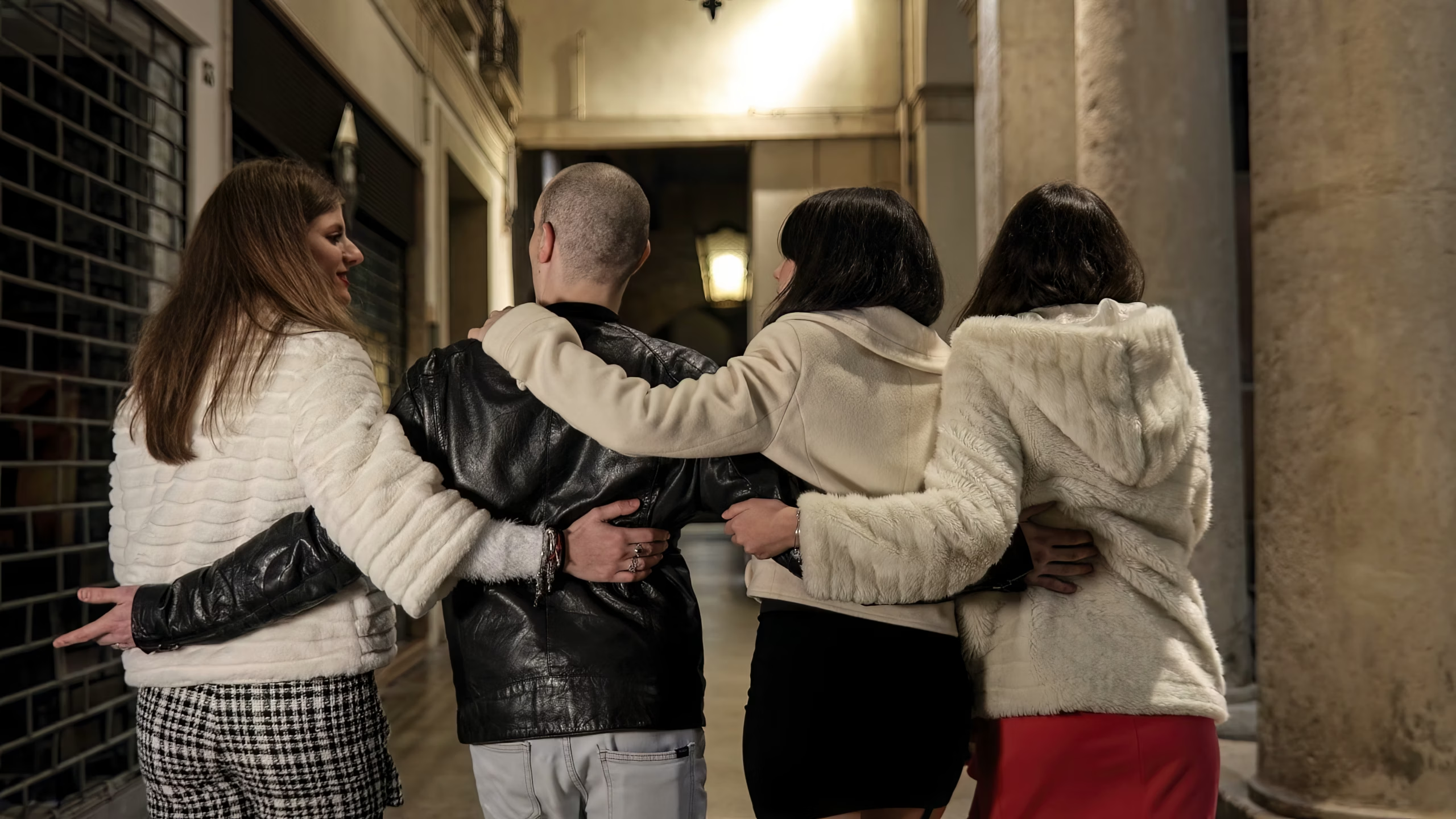
Three women wait outside. Pale coats, dark dresses, red lips, and that nocturnal elegance that makes everything look more expensive than it is. They watch him. He straightens his shoulders, adjusts his jacket, assumes the expression of a man who believes he has finally become visible.
That is one of money’s most seductive effects: it does not necessarily change the way others see you. It changes the version of yourself you send ahead to make the introductions.
He believes they are looking at the man.
Perhaps they are looking at the event moving around the man.
Perhaps that is all he is looking at as well.
It does not matter. The night asks no questions when it smells cash.
The women surround him. Hands settle on his shoulders. Bodies draw near. He smiles with the suitcase at his side and his newly purchased confidence still fresh from the package.
Money cannot buy love, the old saying goes.
True.
But it can rent a terrifyingly convincing dress rehearsal.
And there is nothing wrong with a transaction when everyone knows the price. Tragedy begins when one of the participants mistakes it for destiny.
They enter the club.
The light turns pink, violet, blue. Colors designed expressly to keep reality from holding a stable shape. Music covers hesitation, alcohol polishes lies, and every face appears to have something urgent to promise.
The beers arrive, swollen with foam.
Then the colorful drinks, little aquariums filled with sweet poison.
Hands arrive at his neck, kisses on his cheeks, laughing mouths close to his ear. Banknotes emerge from the suitcase and begin passing from hand to hand.
One.
Ten.
A hundred.
They fly above the table.
Settle on bodies.
Remain caught between fingers, against chests, upon skin.
He scatters them like feed, and the room suddenly fills with wings.
For a few hours, he becomes the club’s weather center. He decides when money rains, when the drinks arrive, when the music must continue. One woman kisses his cheek, another seeks his mouth. He laughs, raises his hands, lets the dollars fall around him.
He believes he is desired.
In truth, he is sponsoring the weather.
Every banknote is spent twice: first to buy something, then to reassure him that he is now worth enough to receive it.
That is what truly gets consumed.
Not the money.
The endless verification of one’s existence.
Another drink.
Another kiss.
Another mental photograph to use against his loneliness tomorrow.
The night grants him everything he ordered. Not because it is generous, but because it is an impeccable business. It serves him attention, desire, a temporary version of himself in which failures, bills, and unanswered calls do not exist.
And he pays.
He pays for the table.
Pays for the drinks.
Pays for the music.
Pays for that brief anesthesia during which no one—least of all him—must wonder who he truly is.
Then one of the women picks up a banknote.
Looks at it.
Folds it.
Runs it between her fingers.
The pink light does its best, but certain lies have the wrong texture.
The woman brings the money closer to her eyes. Her smile disappears. In a single second, the club acquires an accounting department.
She looks at the banknote.
Then at him.
He keeps smiling, still oblivious, still drunk on the finest version of himself. He tries to understand why the atmosphere has changed. Why the hands have stopped. Why the kisses have suddenly remembered where they belong.
The woman shows him the money.
Counterfeit.
The word need not be spoken. It cuts across his face like a blade.
And here is the trick’s true masterpiece: when the money proves false, the accusation does not stop at the paper.
It reaches the man.
If the dollars were false, was the respect false too?
Were the kisses false?
Was the confidence false?
Was that version of him, the one that had filled the entire room for a few hours, false?
The women step away. One points at him, furious. Voices overlap. The music continues, because music is paid not to have a conscience.
For an instant, the story returns to the man in the white hat, alone in the violet fog. He sings, smiles, accompanies the fall from a distance. A Greek chorus with the air of someone who could sell you tickets to watch your own accident.
Then the banknotes begin to rain again.
Before, they were champagne.
Now they are dead moths.
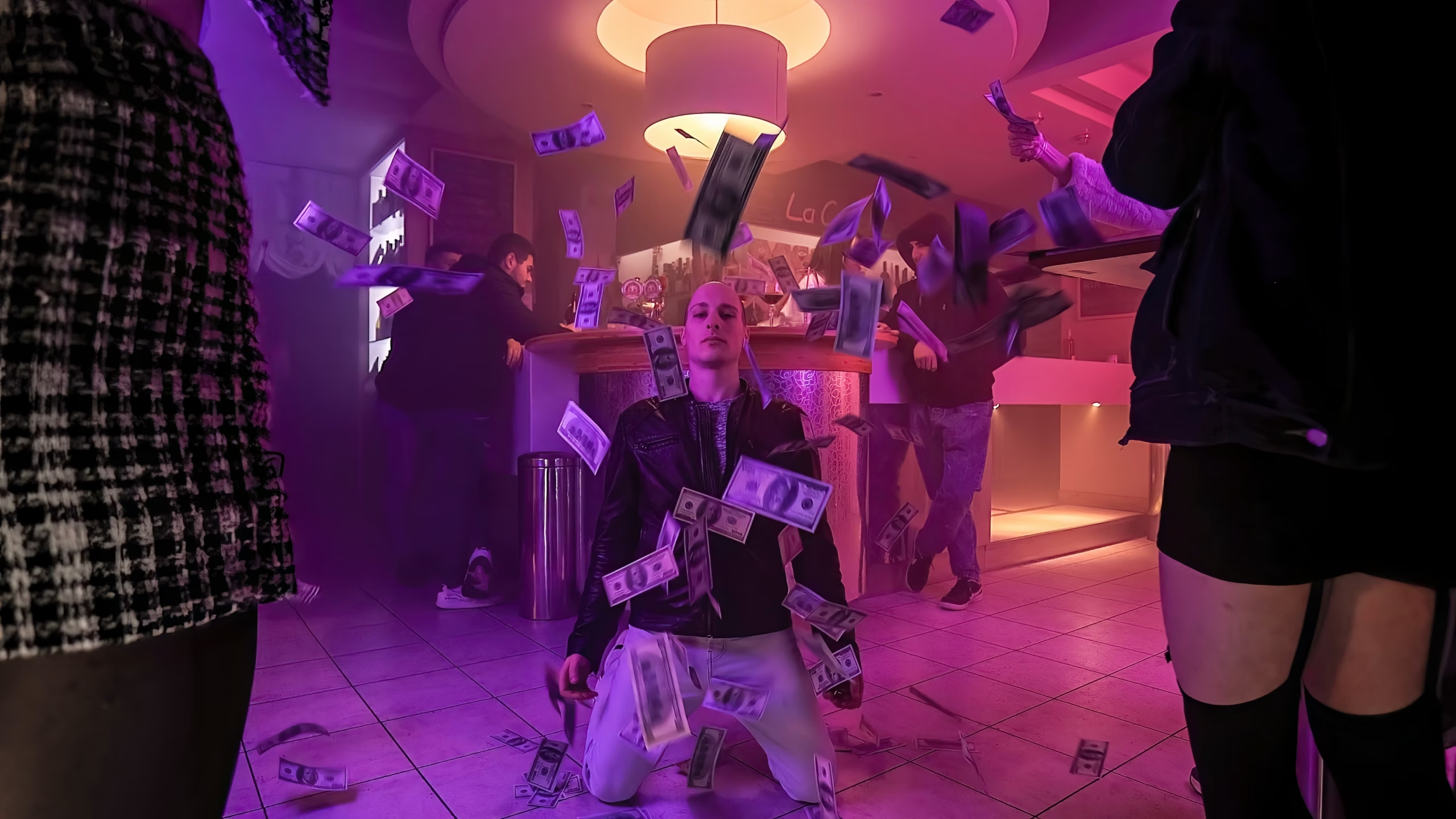
They fall on the man’s shoulders, onto the floor, around his knees. The same paper that minutes earlier seemed capable of opening any door cannot even cover his shame now.
He kneels.
People leave the frame. The colors go out. The women depart, the party changes owners, and the night revokes everything it granted him.
A parking lot remains.
Distant lights.
Asphalt.
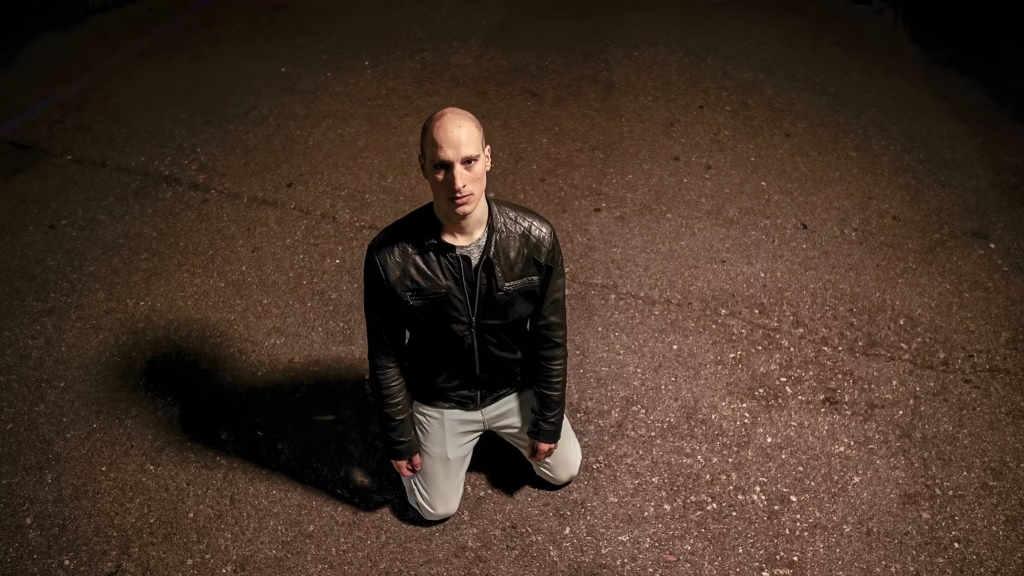
One man alone, kneeling in the middle of an empty expanse, small as a printing error at the bottom of a contract.
The city continues living behind him. Windows remain lit, roads lead elsewhere, someone laughs inside another club. The world does not stop when a man discovers he has been fucked. At most, it slows for an instant to get a better look.
His face holds more than the despair of someone who has lost money.
There is something worse.
The realization that he never won at all.
The money was false, but the beer was real.
The kisses may have been rented, but the humiliation is genuine.
The hangover will be real.
The emptiness is real.
Shame, now that has a perfect watermark.
Curious: at the end of a con, the only authentic things are always the consequences.
While he searches the asphalt for an answer, elsewhere the hands of the man in the hat are already back at work.
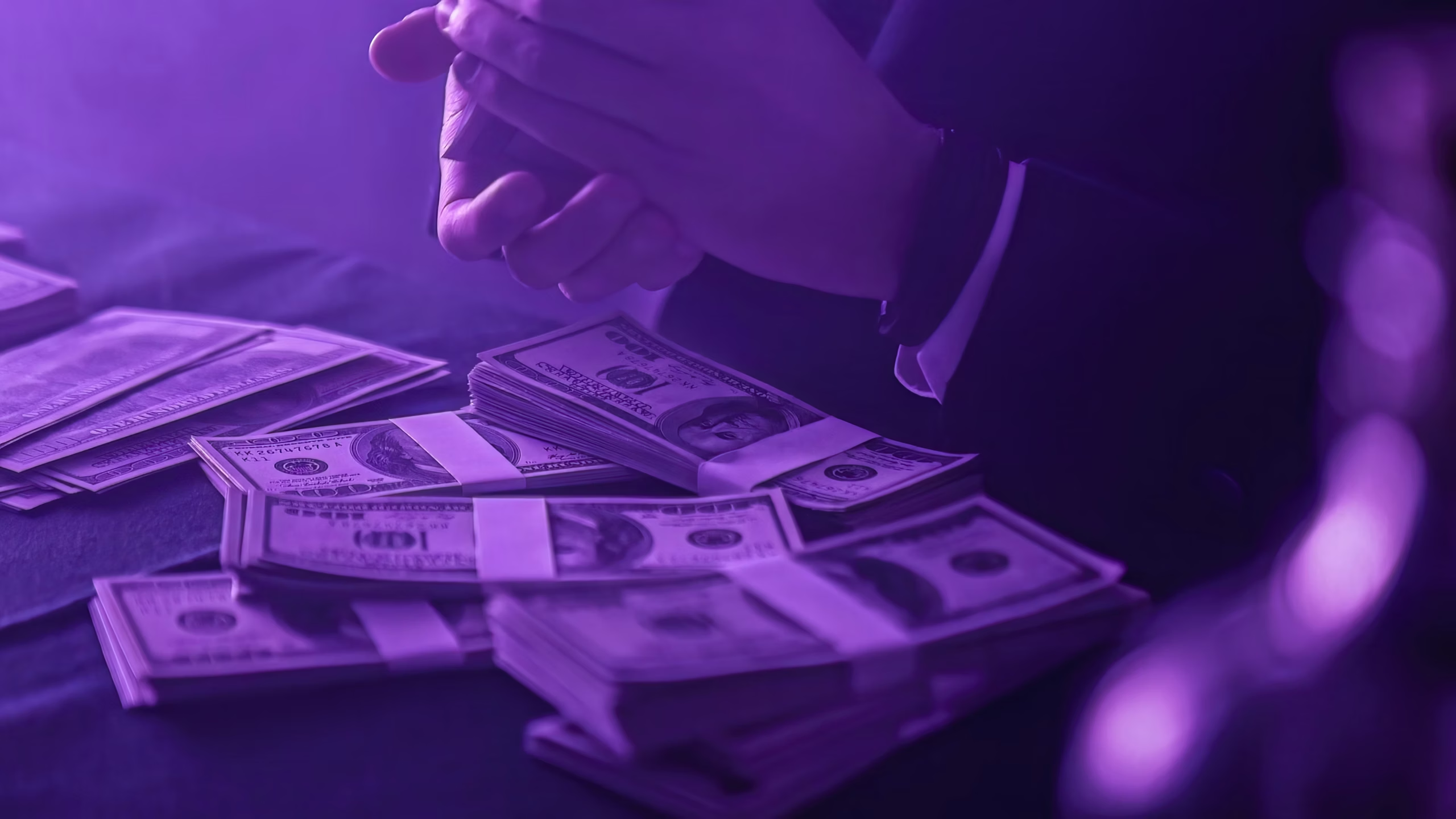
They straighten the banknotes.
Form new bundles.
Tighten the rubber bands.
They measure, arrange, refill the suitcase. On the table are scissors, tools, chips, and piles of paper. There is no hurry. No anger. Not even any particular satisfaction.
Only procedure.
Organized evil rarely resembles a monster. Far more often, it resembles a clerk who knows his filing system perfectly.
The man checks the money, caresses it, brings a bundle close to his face. Almost kisses it. Not the way one kisses a person. The way one thanks an actor who never misses a line.
Then the suitcase closes.
Ready.
It was not the spoils.
It was the bait.
It was not the end of the con, but its shipping department.
Somewhere, there will be another person tired of losing. Another face convinced that the world finally owes it something. Another human being willing to trade suspicion for hope, provided hope arrives in a handsome suitcase.
This is the system.
It does not need to hate you. Hatred requires energy. It only needs to process you.
It lends you the chips to sit at the table, charges rent for the chair, then demands interest on the time you spent playing. If you lose, it is your fault. If you win, part of the winnings belongs to the house anyway.
And you call all this freedom because the word ‘chain’ tested poorly in advertising campaigns.
We invented money to measure exchanges and ended up using it as a unit of measure for human beings. We handed it our hours, our backs, our teeth, our sleep, our loves, and even our right to feel that we are enough.
Money is an order disguised as a number.



A singular god: it needs believers to exist and collectors to perform miracles.
We sacrifice forty years of life to it, hoping that in return it will grant us a few weeks in which to pretend we are free. We run, accumulate, compare. We look at other people’s tables and wonder why they have more chips, never noticing that none of us owns the casino.
Those who control the house do not need to know every player.
They need only decide what the chips are worth.
We do the rest.
We watch one another. Compare ourselves. Sell ourselves. Judge ourselves by the cut of a jacket, the car, the neighborhood, the number printed on a statement. We have become volunteer guards in a prison built of colored paper.
That is why the true con in this story is not the counterfeit dollars.
The true con is convincing that man that real dollars would have made the night real.
That they would have made the kisses sincere.
That they would have transformed attention into affection.
That they would have bought a better version of him.
The paper was not the only false thing.
The promise was false.
The last photograph returns to the asphalt.
We see him from above, still kneeling, alone within a space too vast. He raises his face as though the bill had come from heaven and he wanted to speak to the manager.
But the manager does not appear.
He is already preparing another suitcase.
Winning is not enough.
In certain games, winning is merely the most elegant way for the house to choose you.
Somewhere, meanwhile, an old telephone has begun to ring again.
The house does not need you to believe forever.
It only needs you to say ‘hello’ once.
————————————————————-
The Price of Things That Do Not Exist
Friends, this time the photographs were not gathered along a road. They clung to my clothes after a shoot.
These images were born during the making of a music video. One of the musicians becomes character, accomplice, and puppeteer in a story that begins with a telephone call and ends in the back room of a promise. Between the two are a poker table, a suitcase full of dollars, a few too many drinks, beautiful women, lights capable of forgiving any sin, and a man convinced that luck has finally learned his address.
It looks like a story about a con. In truth, it is a story about the value we assign to things, the price we place on ourselves, and that old paper magician we call money.
Look at them in order. Take your time.
Because certain photographs do not want to be observed. They want to escort you to the table, let you win, and only then present the bill.
The man in the white hat appears inside a violet fog that looks like a bruise on God’s lung.
His tie is loosened, his hands raised, and he wears the smile of someone who has already slept with your future, found it mediocre, and decided to leave the bill on your nightstand anyway.
He does not look like a demon.
Demons are tacky. Horns, flames, threats, cavernous voices. All spectacle fit for frightening old ladies and selling crucifixes. Serious evil needs no introduction. It dresses well, arrives on time, and already knows your name.
Above all, it knows what you desire.
On the table sits an old ivory telephone, one of those with a rotary dial in the middle, from an age when even scams required patience. The man slips a finger into the first number, turns, lets the wheel return. Then another. And another.
Every click of the dial is a small gear locking into place somewhere in another person’s life.
A well-made con does not chase you with a gun.
It does not break down the door.
It does not drag you by the hair.
It calls.
And waits politely for you to answer.
At the other end is a man with a shaved head, a leather jacket, and the face of someone life has used as an ashtray for years without ever asking whether he minded.
He lifts the receiver.
‘Hello?’
An innocent word.
One of the most dangerous ever invented.
The man listens. First with one hand, then with both, gripping the telephone as though that piece of plastic might deliver a diagnosis, an absolution, or at least one decent reason to go on believing the world has not forgotten him.
We cannot hear the voice at the other end, but we can imagine it.
Warm.
Certain.
With enough honey to conceal the blade.
There is a game.
An opportunity.
A simple deal.
A friendly table.
Nothing strange, nothing dangerous, nothing a smart person could not handle.
These are always the words that precede the worst disasters: relax, trust me, it is simple.
The man in the hat continues talking from his violet cloud. He moves his hands like a conductor, except the orchestra is not before him. It is at the other end of the telephone. He is conducting his victim’s breathing, lowering the volume of suspicion, slowly bringing in the violins of greed.
His smile says the first act is going beautifully.
The shaved-headed man remains silent.
He still has the chance to hang up.
Life often grants us a brief escape corridor before it truly fucks us. Five minutes in which common sense knocks, clears its throat politely, and tries to remind us of every time we promised not to behave like assholes again.
We usually spend those five minutes lighting a cigarette.
And that is exactly what he does.
He goes out into the night, shields the flame with his hand, inhales. For an instant, his face is lit from below. He looks like a man who has already understood everything but is unwilling to surrender the possibility that he might be wrong.
Because hope is one hell of a whore.
She can arrive filthy, drunk, with lipstick on her teeth and an expired license, and we will still manage to persuade ourselves that perhaps this time she truly means to drive us home.
And so the man goes to the appointment.
The card room is green, yellow, sickly. Smoke hangs in the air, bottles sit on the table, and the aquarium light makes human beings resemble fish convinced they are sharks.
Waiting for him are the man in the hat and another fellow in a cap, pale shirt, and suspenders. He has the face of an accountant raised in a family of undertakers. He does not smile too much, talk too much, or make one fucking move that has not already been agreed upon.
The newcomer looks at them both.
They look at him.
Then the suitcase appears on the table.
It is dark, rigid, covered in leather resembling crocodile skin. A small portable coffin, elegant enough to make you forget that something dead may be inside.
Fingers release the metal catches.
One.
Two.
The lid rises.
Dollars.
Whole bundles. Hundreds of banknotes arranged in compact rows, bound, compressed, disciplined. Benjamin Franklin watches everyone with the dead expression of someone who knows that whatever happens, the living will be blamed.
He stares at them.
His mouth remains slightly open.
And in that instant, the suitcase no longer contains paper. It contains a house, a car, expensive bottles, nights without an alarm clock, erased debts, suddenly gracious people, and women who, by sheer coincidence, have just rediscovered how fascinating his sense of humor is.
It contains every time he was told no.
Every closed door.
Every evening spent staring at the ceiling, wondering when the fuck the best part of his life was going to begin.
Money is the most powerful hallucinogen ever produced.
You do not have to smoke it.
You do not have to snort it.
You do not have to melt it in a spoon.
All you have to do is look at it.
It remains perfectly still and lets your brain take the trip.
That suitcase shows him a different man. Stronger, more desirable, more respected. One who need not ask the price before ordering. One who is not put on hold. One who enters a room and is noticed before he says a word.
Money is not promising him freedom.
It is selling him a new personality.
And this is where the story ceases to be merely about counterfeit bills.
Because, if we are prepared to be honest enough to ruin the aperitif, there is a far less romantic difference between real and false money than we are told.
Both are pieces of paper.
There is less philosophy between a genuine banknote and a counterfeit one than we care to admit. Both are paper. One has a bank, a law, and enough men in uniform behind it to demand that everyone agree. The other has only a printer and considerably worse legal prospects.
One is value because the system blessed it.
The other is a crime because the system did not collect the royalties.
The paper does not know what it is worth.
We know on its behalf.
Or rather: someone decides, we obey, and then spend the rest of our lives calling that fucking obedience natural.
The suitcase closes again.
The game begins.
Cards slide across the green table. Chips collide with a dry sound, little plastic teeth that once belonged to a hungry god. Whiskey fills the glasses. Cigarette smoke stretches above their heads like a thought no one dares speak aloud.
The man in the cap takes his cards and barely looks at them.
He does not need to know what he holds.
He already knows the ending.
The man in the hat deals. He does so elegantly, smiling like a private physician who has just found another test to prescribe.
The newcomer takes his cards.
He grips them too tightly.
He watches the others.
He searches for a tremor, a hesitation, a detail that might betray the trick. But you cannot read the face of someone who is not playing. The other two are merely acting the part of men interested in winning.
He is the only true player.
Which means, naturally, that he is already fucked.
A bet.
A sip.
Another card.
The pile at the center grows.
At first, our man is cautious. He keeps the chips close, drinks slowly, shifts his gaze from his cards to the other faces. In his head, a few alarms are still sounding.
Then he wins a hand.
Nothing enormous.
Enough.
Doubt takes one step back.
He wins another.
The fellow in the cap lowers his eyes with precisely the right amount of annoyance. The man in the hat shakes his head and feigns displeasure.
The victim draws breath.
His back straightens.
His fingers grow quicker.
This is the true art of manipulation: not taking away your caution, but rewarding you every time you decide to ignore it.
They give you candy while dismantling the back door.
Another hand.
Another small victory.
The whiskey does the rest.
Alcohol is rented courage. They hand you the keys for a few hours, and the following morning you discover the insurance did not cover shame.
The man drinks.
The warning signals go quiet one by one.
The chips multiply.
Banknotes spread across the table.
Hands exchange cards, move glasses, push bets forward. Every gesture appears casual, but the entire room is a mechanism built around him. Even the silence is rigged.
The fellow in the cap provokes him with a look.
The man in the hat drops a card.
The stakes rise.
Our man looks at his hand and feels something awaken beneath his breastbone. It is not intuition. It is not courage. It is not luck.
It is his ego, which has just taken off its pants.
He bets.
The others raise.
He drinks.
Bets again.
By now, a small empire of colored plastic, cash, and compressed desires lies on the table. Everything he has been taught to want is there, inches from his fingers.
Wealth.
Redemption.
Definitive proof that he has not been some ordinary asshole his entire life.
Then the final cards arrive.
A glance passes between the two accomplices.
Almost invisible.
The man in the hat smiles.
Our man reveals his hand.
Silence.
He has won.
For a few seconds, he does not understand.
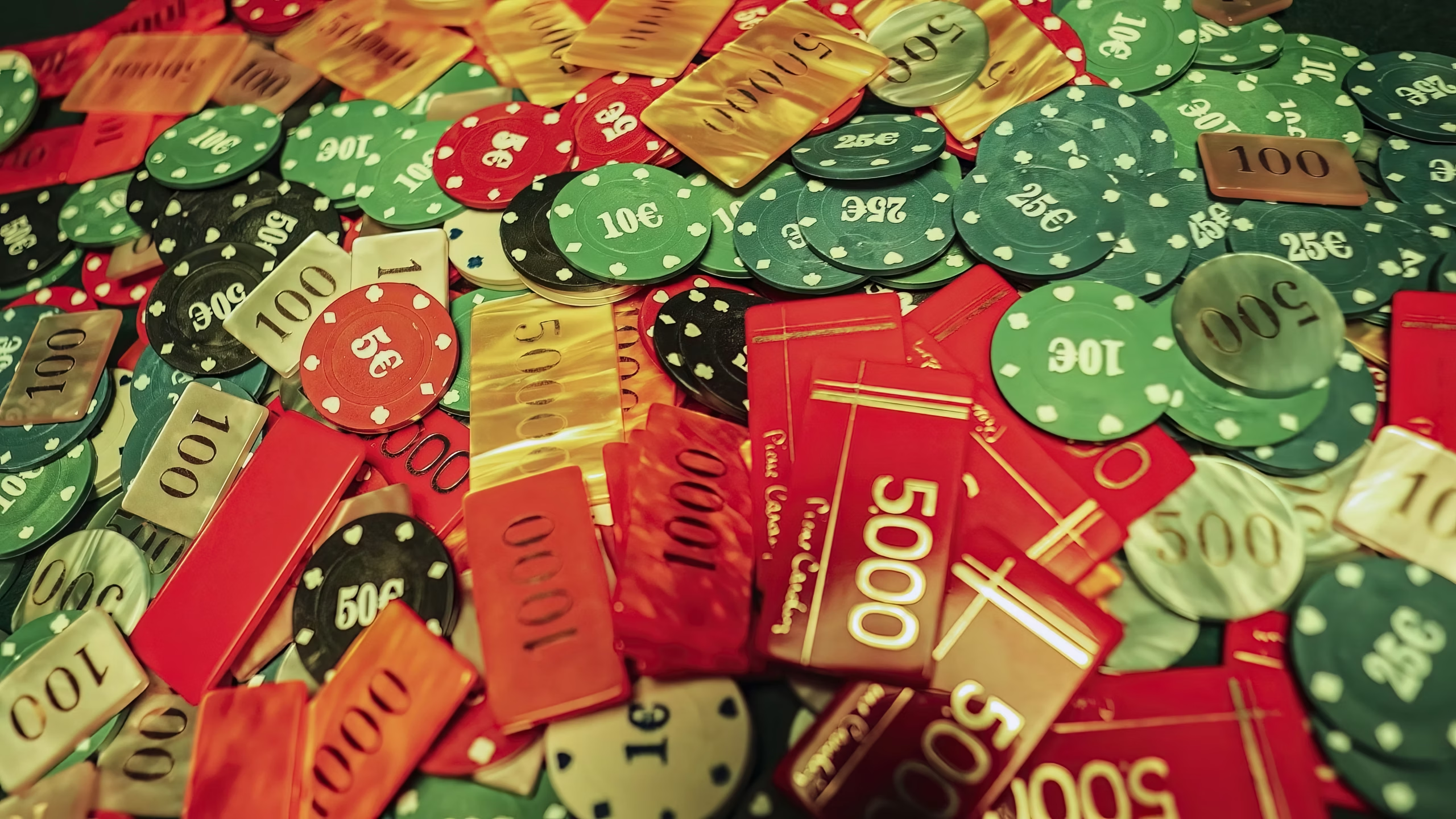
He looks at the cards, then the others, then the pile at the center. He searches for the catch, but this time the catch looks exactly like victory.
And that is the point.
The house is not trying to make him lose.
It is letting him win on purpose.
Because a loser gets up, curses, and leaves.
A winner stays.
A winner returns.
A winner tells his friends how easy it is.
A winner sells the trap far better than any advertisement.
The house does not fuck you by taking everything at once.
It fucks you by giving you enough to desire the rest.
The chips are pushed toward him.
They fall, roll, accumulate. The man lunges forward. He grabs them, shouts, laughs. His face is contorted like someone having an orgasm with his own self-esteem after years in a sexless marriage.
He clutches the chips.
Bends over the table.
Gathers the money.
For the first time, perhaps, he feels he has gotten away with it. He does not yet know with what, but it does not matter. Happiness is not always having an answer. Sometimes it is merely silencing the question long enough.
The others watch him celebrate.
The fellow in the cap pretends to be bitter.
The man in the hat watches with almost paternal satisfaction.
Not that of a father who has seen his son succeed.
That of a farmer who has just discovered the livestock will enter the pen by itself.
The suitcase is handed over.
Now it is his.
Or so he believes.
When he walks into the night, he carries it in one hand as though he has just bought the sidewalk too. The leather jacket looks more expensive, his back straighter; even his face seems to have changed.
Money possesses this strange ability: it does not necessarily make a man more handsome, but it grants his insecurity a reserved table.
He is not carrying the suitcase.
The suitcase is carrying him.
The handle looks elegant, solid, prestigious.
But it remains a leash.
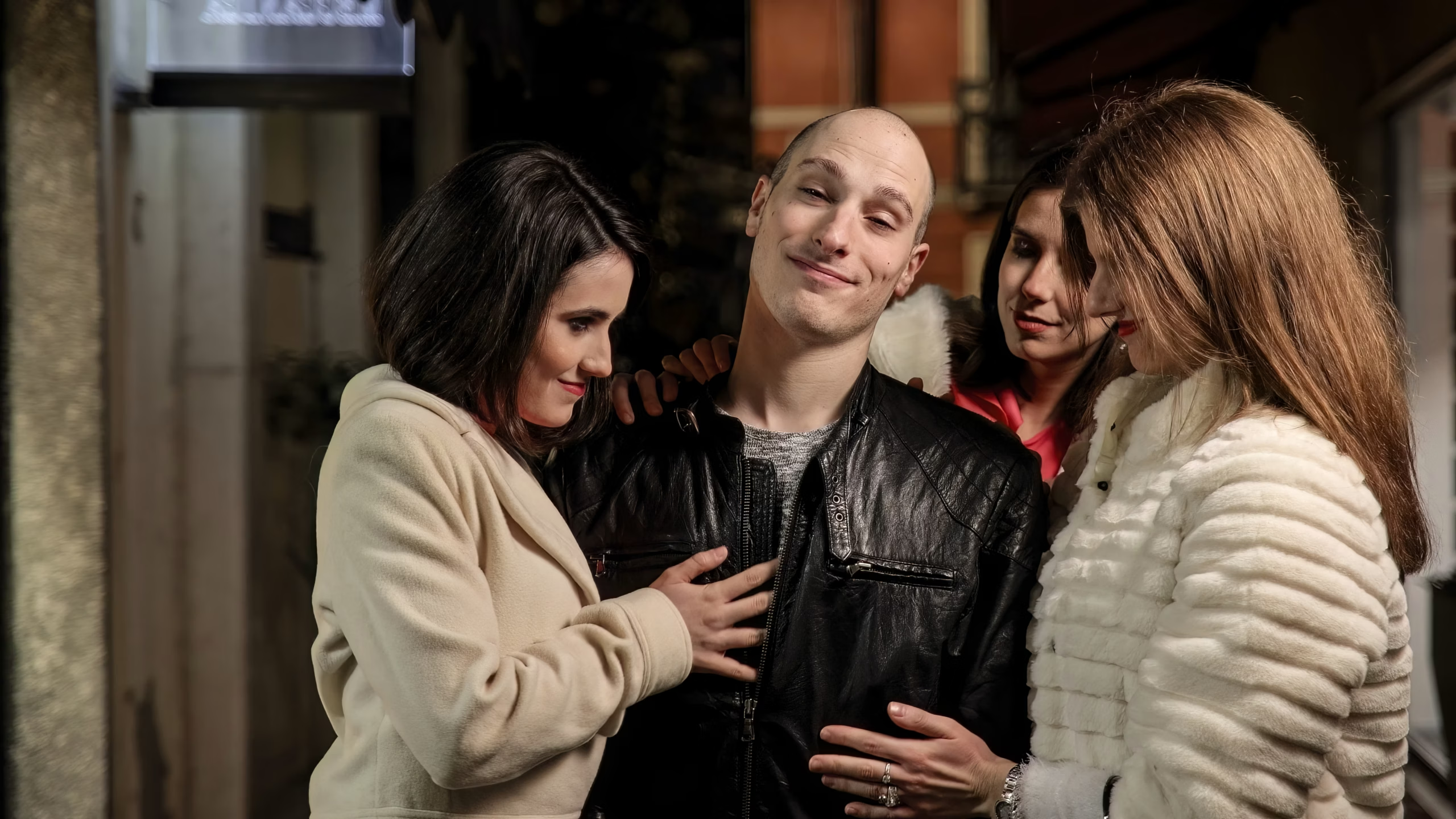
Outside, he meets three women.
Pale coats, dark dresses, lipstick, jewelry. They lean against the night like a badly illustrated promise. They watch him approach, and he immediately feels the money shining through the suitcase’s skin.
The women are not the con.
They are not the villains of the story.
They are merely other people inside the same fucking casino. They, too, know the difference between someone who can pay for the table and someone who has to ask the price of the water. They, too, have learned the language of value, because the world teaches it long before it explains love.
He approaches.
A hand brushes his shoulder.
Another settles on his chest.
Someone laughs.
He interprets every gesture as a secret ballot on his virility and, for the first time, believes he has won that one too.
He thinks they are seeing him.
In truth, they see the atmosphere walking before him.
And perhaps he is doing precisely the same thing to them.
He does not see people.
He sees proof that money works.
The old saying tells us money cannot buy love.
True.
But it can rent a body double with a magnificent ass, a lovely perfume, and a very short memory.
The problem is not the contract.
The problem is calling it destiny.
They enter the club.
The lights are pink, violet, blue. The colors of neon signs, fresh bruises, and paradise decorated by a cocaine addict with a corporate credit card.
The music is loud.
The glasses arrive full.
The beers wear a thick head of foam; the cocktails are the color of antifreeze and the candy we ate as children before learning that sweetness, too, could destroy something.
The night opens before him.
Not with love.
With its legs.
One woman draws close to his neck. Another kisses his cheek. A hand remains on his thigh a second longer than necessary. He smiles, drinks, lets himself be touched. Every inch of skin he receives becomes a receipt confirming his new identity.
Now he is somebody.
Now they want him.
Now the world has finally stopped passing by without looking at him.
He opens the suitcase.
The banknotes begin to emerge.
One bundle.
Then another.
Dollars pass over the table, between fingers, into cleavages, against glasses. They fly through the air and fall across bodies.
He scatters them like feed, and the room fills with wings.
One woman kisses his cheek.
Another seeks his mouth.
Someone lifts a banknote and laughs. Glasses collide. Hands slide, caress, take, ask. He buys drinks for everyone, pays for the table, pays for the music, pays for the version of himself he never wants to stop playing.
Money is pornography for people with their clothes on.
It promises power, access, obedience. It lets you believe that anything can be opened, moved, or penetrated, provided you have enough digits to place on the table.
He is not spending dollars alone.
He is buying confirmation.
Every banknote says he is interesting.
Every drink ordered says he matters.
Every hand on his body says he exists.
Every kiss whispers that all the preceding years were merely a misunderstanding.
No one wants to admit how easy it is to rent a man’s self-esteem.
All it takes is a dark room, a few compliments, and someone close enough to make him forget that loneliness, too, can put on convincing makeup.
He laughs.
Drinks.
Kisses.
Lets the dollars rain down upon him.
For one night, he becomes the owner of other people’s time. He decides when another round arrives, when they stay, when they move, when the party goes on. People orbit the suitcase, and he mistakes that artificial gravity for his own charm.
He believes he is the sun.
He is merely the one paying the electricity bill.
Then a woman picks up a banknote.
At first, there is nothing dramatic. A small movement of the fingers. The paper is folded, rubbed, examined more closely.
Her thumb understands before her brain does.
Something is wrong.
The texture.
The print.
The feeling of holding a promise that lacks weight.
The woman brings the dollar close to her eyes.
Holds it up to the light.
The music continues, but the party has just lost blood.
Her smile disappears.
She looks at the banknote.
Then at him.
The man continues drinking. He is still laughing, still immersed in the character he purchased hours earlier. He does not notice the change at once. The room has the same light, the music the same volume, the glasses are still half full.
And yet everything has changed.
The hands stop.
Bodies move a few inches away.
Smiles are withdrawn.
The woman shows him the banknote.
Counterfeit.
A single word.
Enough to empty a man faster than a bullet.
He takes the dollar.
Looks at it.
Does not understand.
He tries to smile, perhaps to explain, perhaps to invent a story quickly enough that he will not have to watch the one he already told himself die.
But lies require preparation. Truth, that bitch, can arrive drunk and late and still manage to ruin everyone’s evening.
The woman points a finger at him.
Voices rise.
A second banknote is checked.
Then another.
Counterfeit.
All of them.
The money loses its value at the same moment he loses his shape.
Because the con’s true masterpiece does not lie in counterfeiting the paper.
It lies in binding the man’s identity to that paper.
If the dollars are false, then what was real?
The kisses?
The laughter?
The hands upon him?
The confidence?
The way he entered the room?
The feeling of finally being desired?
The suitcase held more than his money.
It held the version of himself he had only just begun to love.
And now that version is dying in public.
For an instant, the story returns to the man in the white hat, immersed in violet fog. He sings, gestures, smiles at the camera. He looks like the host of a show whose grand prize is watching your own dignity demolished.
He feels no pity.
Not because he is cruel.
Because pity would slow down business.
Inside the club, banknotes begin flying again.
But they are no longer symbols of abundance.
They are garbage.
Before, they fell like champagne. Now they resemble dandruff from a dead god.
The women throw them at him. Dollars strike his face, his shoulders, the floor. Some cling to his clothes, others slide beneath the tables.
The man kneels.
Minutes earlier, they knelt to move closer to the suitcase.
Now they do so to move away from him.
The party is torn off him along with the stares, the kisses, and that erection of the ego he mistook for happiness.
He remains on the floor.
Surrounded by hundreds of thousands of dollars worth fuck-all.
A snowfall of dead promises.
Then the club disappears.
The people disappear.
The colors disappear.
A parking lot remains in the night.
Distant lights, asphalt, buildings that know nothing about him and have no intention of learning. The man is still kneeling. Small, alone, abandoned inside a space too vast.
The city continues breathing.
Somewhere, someone laughs.
Someone makes love.
Someone counts real money.
Someone else is signing a loan that will suck twenty years from his life with the administrative delicacy of a blowjob perfectly orchestrated by the most skillful whore in town.




















The world does not stop when you discover you have been fucked.
At most, the world sends you the invoice.
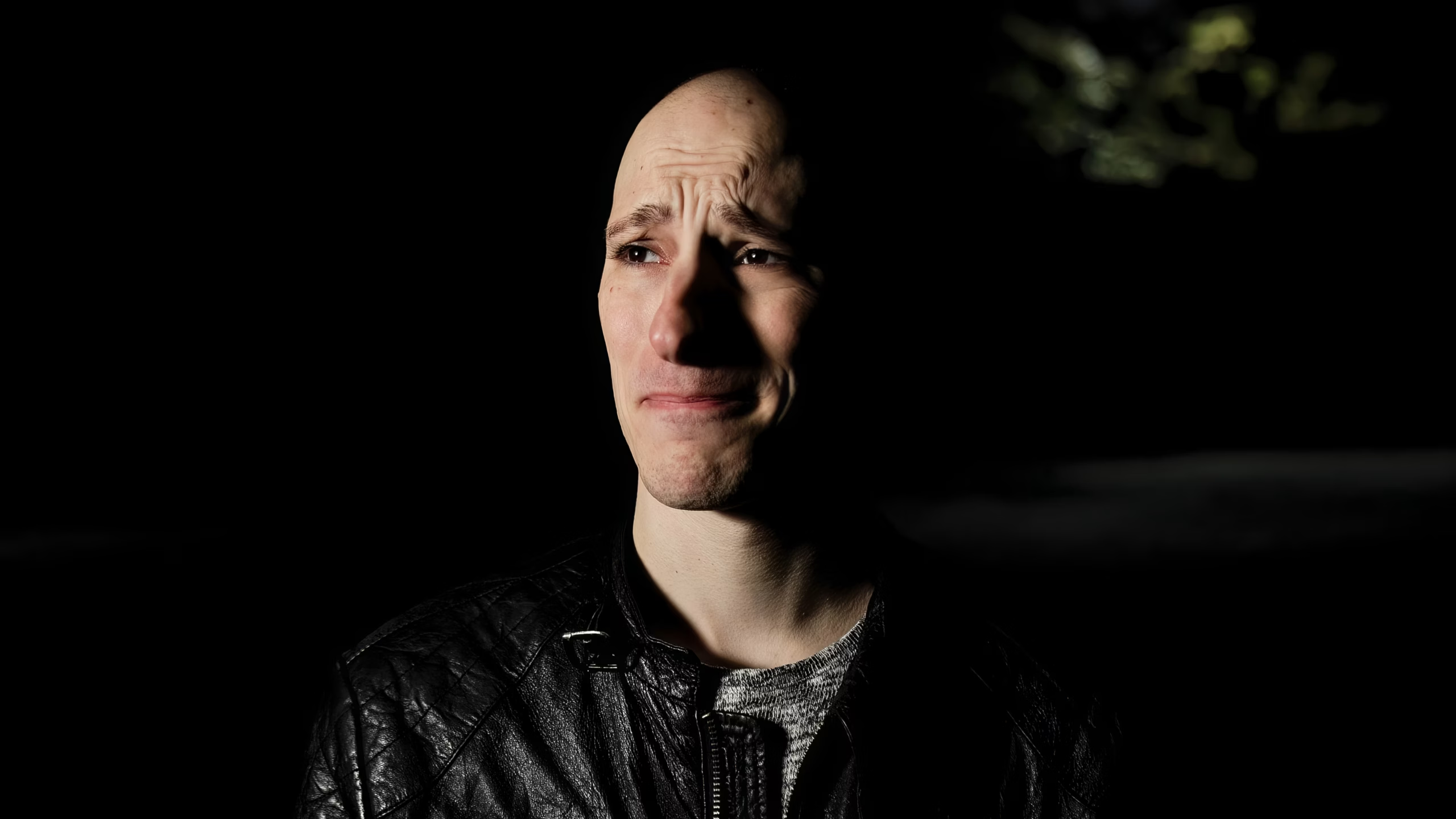
The man’s face emerges from the darkness.
The lights cut across the wrinkles, the beard, the eyes. He does not look merely desperate. He looks offended. As though he had spent his life agreeing to play by the rules and had just discovered the rules were a dirty napkin upon which someone had written ‘trust me.’
The dollars were false.
The beer was not.
The kisses may have been rented, but the shame is genuine.
The hangover will be real.
The pain is real.
The memory of people regarding him as a king, followed immediately by that of the same people pointing at him as a pathetic asshole, will remain real for a very long time.
At the end of a con, the consequences are always the only genuine merchandise.
While he searches the asphalt for answers, the man in the hat is already back at work.
His hands appear above a table.
They straighten the banknotes.
Stack them.
Compress them.
Tighten rubber bands around the bundles. On the table are scissors, tools, chips, and piles of paper. No hurry. No excitement. No villainous cackle from a comic-book antagonist.
Only precision.
Modern evil does not live in a castle.
It has an office.
It does not wear a cape.
It wears a shirt.
It does not sacrifice you upon an altar.
It has you sign at the bottom of the page after assuring you the terms and conditions are merely a formality.
The system does not need to hate you.
Hatred is personal and, above all, consumes energy.
The system processes you.
It assigns you a number, an interest rate, a deadline. It lends you the money required to buy the cage, then persuades you to take pride in the number of rooms. It lends you the chips to sit at the table and demands that you return more chips than you received.
When you ask where you are supposed to find the difference, it points to a job.
When the job is not enough, it offers another loan.
When even that is not enough, it calls you irresponsible.
It is a perfect mechanism.
The victim feels guilty, and the executioner sends Christmas greetings.
Someone establishes the value of money. Someone creates it, distributes it, lends it. We offer as collateral our years, homes, nights, health, the children we do not see grow because we are too busy repaying time in the form of interest.
They lend us a number.
We return pieces of life.
And we even have the poor taste to thank them.
Money was supposed to measure exchanges. We ended up using it to measure people.
How much do you earn?
What car do you own?
Where do you live?
How much did your watch cost?
How many rooms does your house have?
Which phone is in your pocket while you say you do not feel like enough?
We turned a convention into a religion and then acted surprised when the temple began demanding sacrifices.
Money is a particularly shitty god.
It does not create the world.
It does not heal the sick.
It does not forgive.
It does not even promise an afterlife.
It wants everything now.
Your hours.
Your back.
Your sleep.
The calls you do not make.
The people you do not love because you are tired.
The dreams you postpone.
The teeth you clench every morning as you enter a place you hate to pay for something you bought in the hope of making that place easier to endure.
And we keep kneeling.
Believers, atheists, cocktail-hour revolutionaries, artists, office workers, family men, and assholes making payments on a Porsche: all before the same altar, a card inserted into a slot and the hope that the machine will say ‘transaction approved.’
Those who own the house do not have to control every player personally.
They need only control the chips.
We take care of the rest.
We judge one another.
Compare ourselves.
Humiliate ourselves.
Sell ourselves.
We look at the pile belonging to the man beside us and wonder why it is larger, never noticing that neither of us owns the table.
That is the real con these images describe.
Not the suitcase.
Not the game.
Not the poorly printed dollars.
The real con is convincing that man that if the banknotes had been genuine, he would have become genuine too.
That real money would have made the kisses real.
That it would have transformed attention into affection.
Converted desire into love.
Bought dignity wholesale and happiness without a receipt.
But even with genuine dollars, morning would have come.
The glasses would have emptied.
The women would have returned to their lives.
The music would have stopped.
And he would have remained alone with a lighter suitcase and exactly the same hole inside.
The paper was false.
The hunger was not.
The man in the hat picks up a bundle and brings it close to his face.
Caresses it.
Almost kisses it.
Then places it in the suitcase with the others. Perfect order. Everything ready to begin again.
That is not the stolen property.
It is the bait.
It is not the end of the con.
It is the shipping department.
Somewhere, another victim already exists. Another man tired of feeling insignificant. Someone awaiting his opportunity, his redemption, definitive proof that the world has finally noticed him.
The machine knows.
The machine does not sleep.
The machine feels no remorse because remorse does not appear on the quarterly statement.
The suitcase closes.
The final image, however, does not belong to the man in the hat.
It returns to the asphalt.
The camera looks down at the kneeling man. Around him is nothing but the parking lot, the dirty light, and an enormous expanse of empty space.
He lifts his face.
He seems to ask the sky for an explanation.
The sky does not answer.
It probably has a mortgage too.
Winning is not enough.
In certain games, victory is merely the lubricant the house uses before it fucks you.
Somewhere, meanwhile, an old telephone has begun ringing again.
Someone looks at it.
Hesitates.
Common sense tries once more to knock, but hope speaks louder. At the other end of the line, a gentle voice promises a game, an opportunity, a shorter road to finally getting somewhere.
The house does not need you to believe the lie for the rest of your life.
It only needs you to believe long enough to lift the receiver.
Long enough to say ‘hello.’
The rest of the work, as always, you will do yourself.