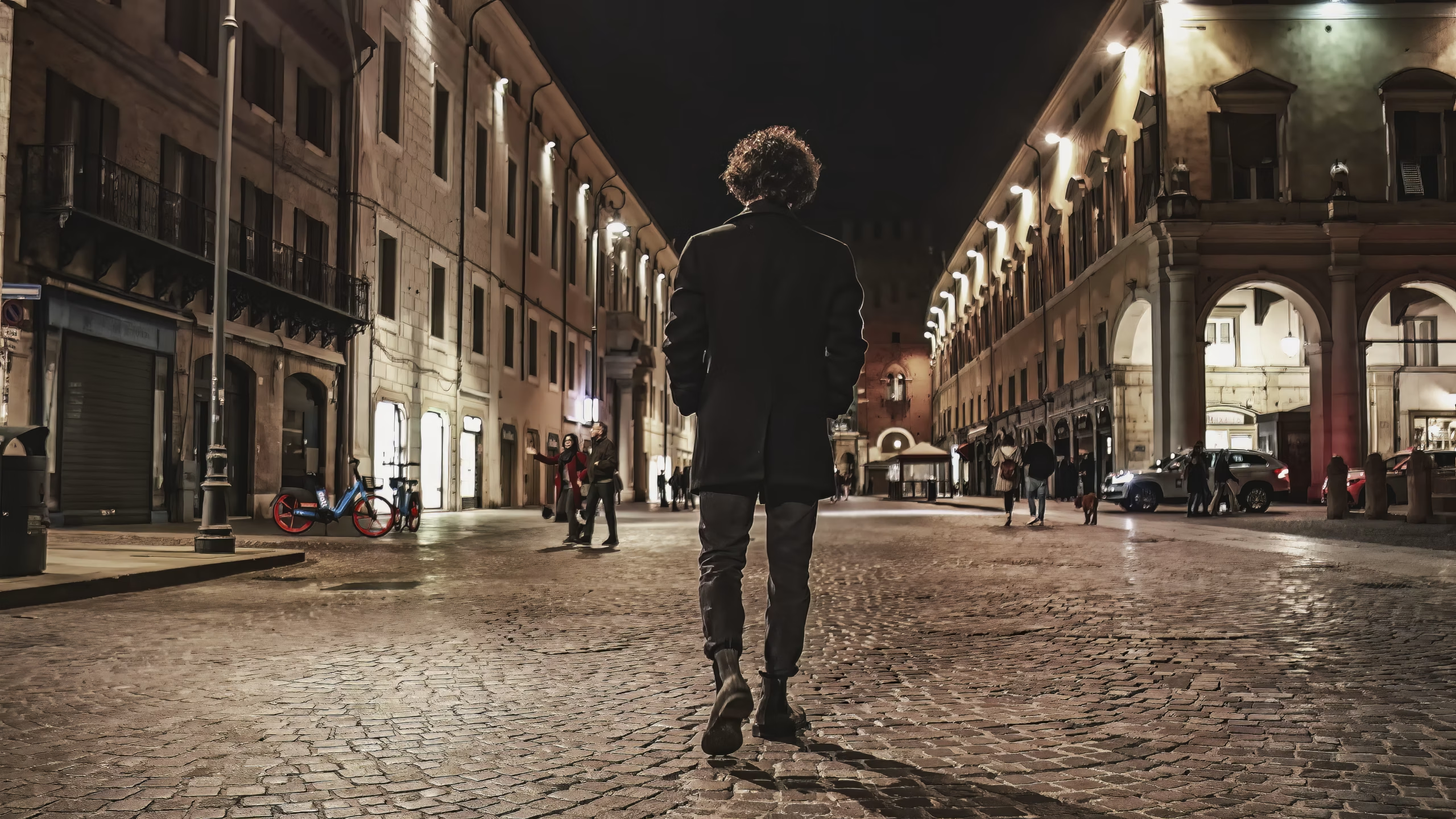
Friends, have you ever walked at night through a city full of people and felt that everyone had received life’s instruction manual except you? Couples holding hands, friends laughing over a drink, people who seem to know exactly where they are going. And there you are among them, hands in your pockets and a few too many questions. This story is about one of those journeys through a city at night that had the usual bad taste to be beautiful.
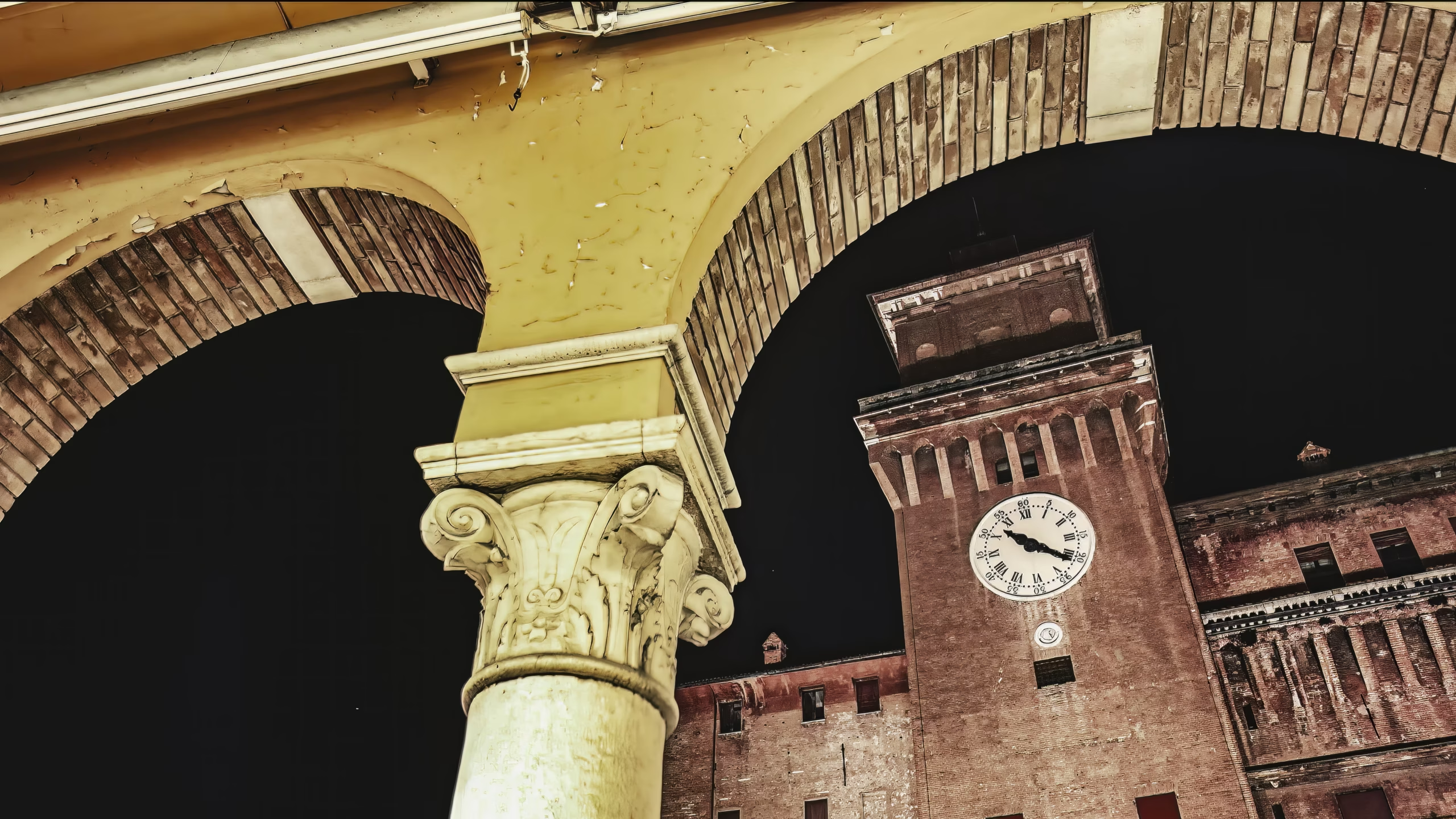
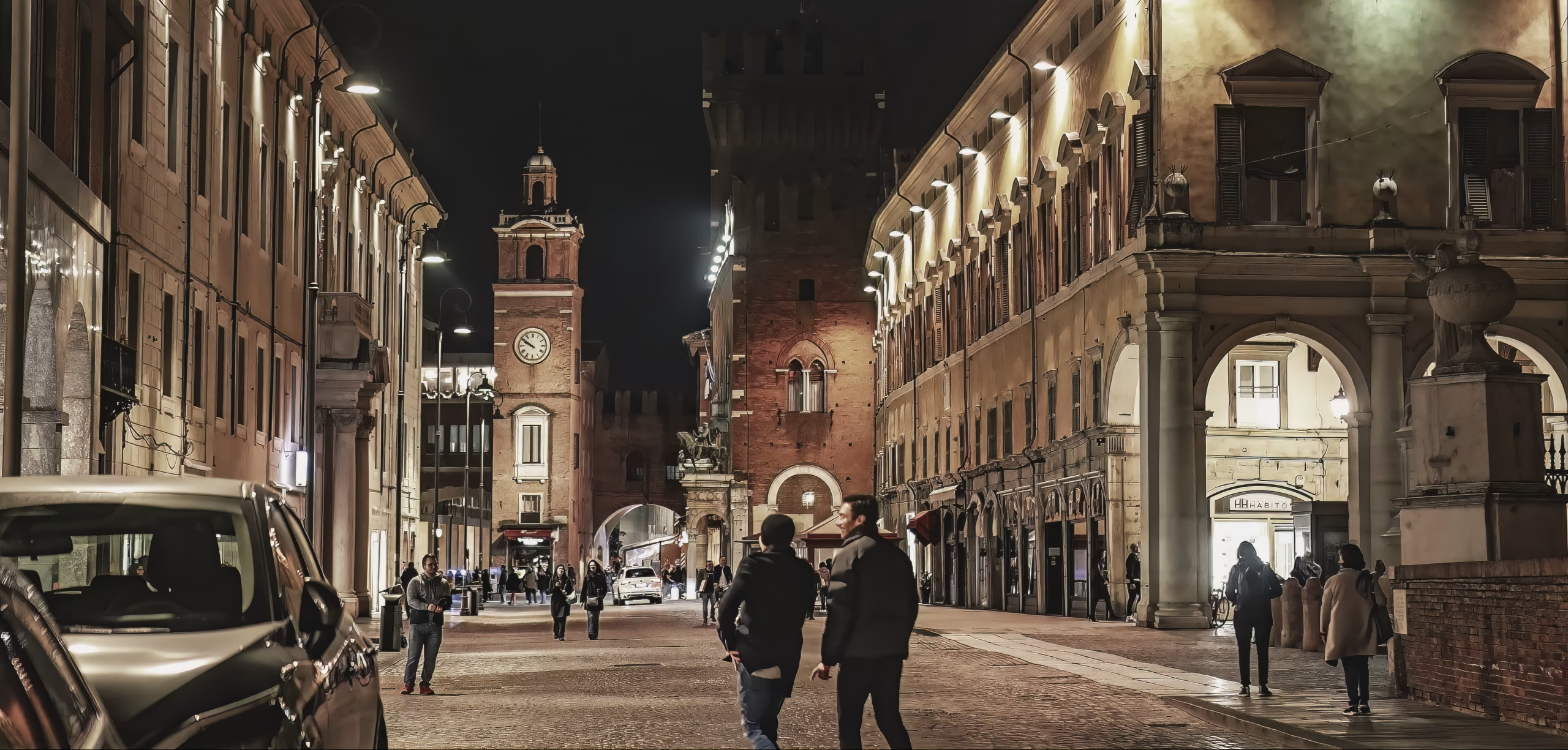
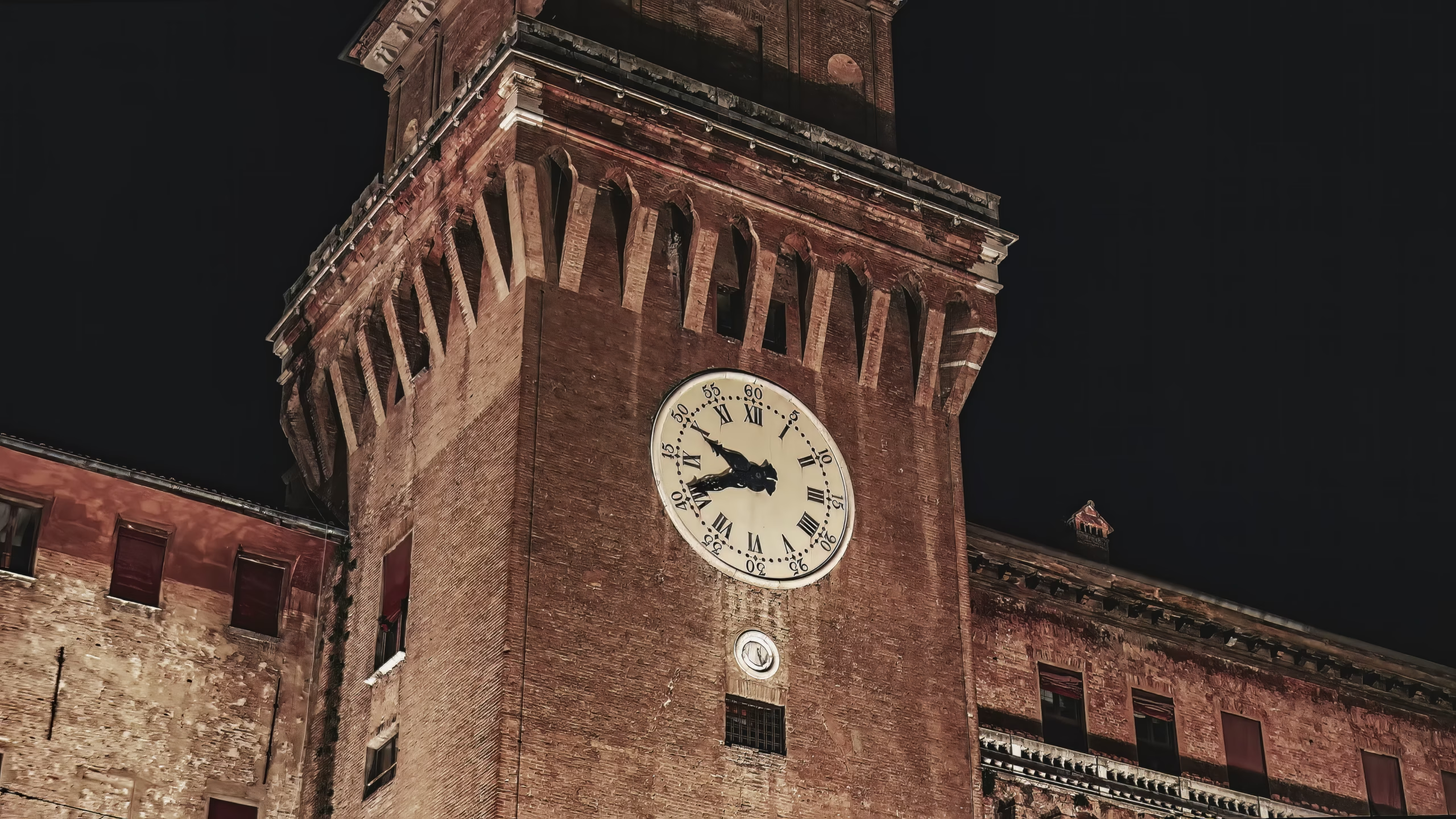
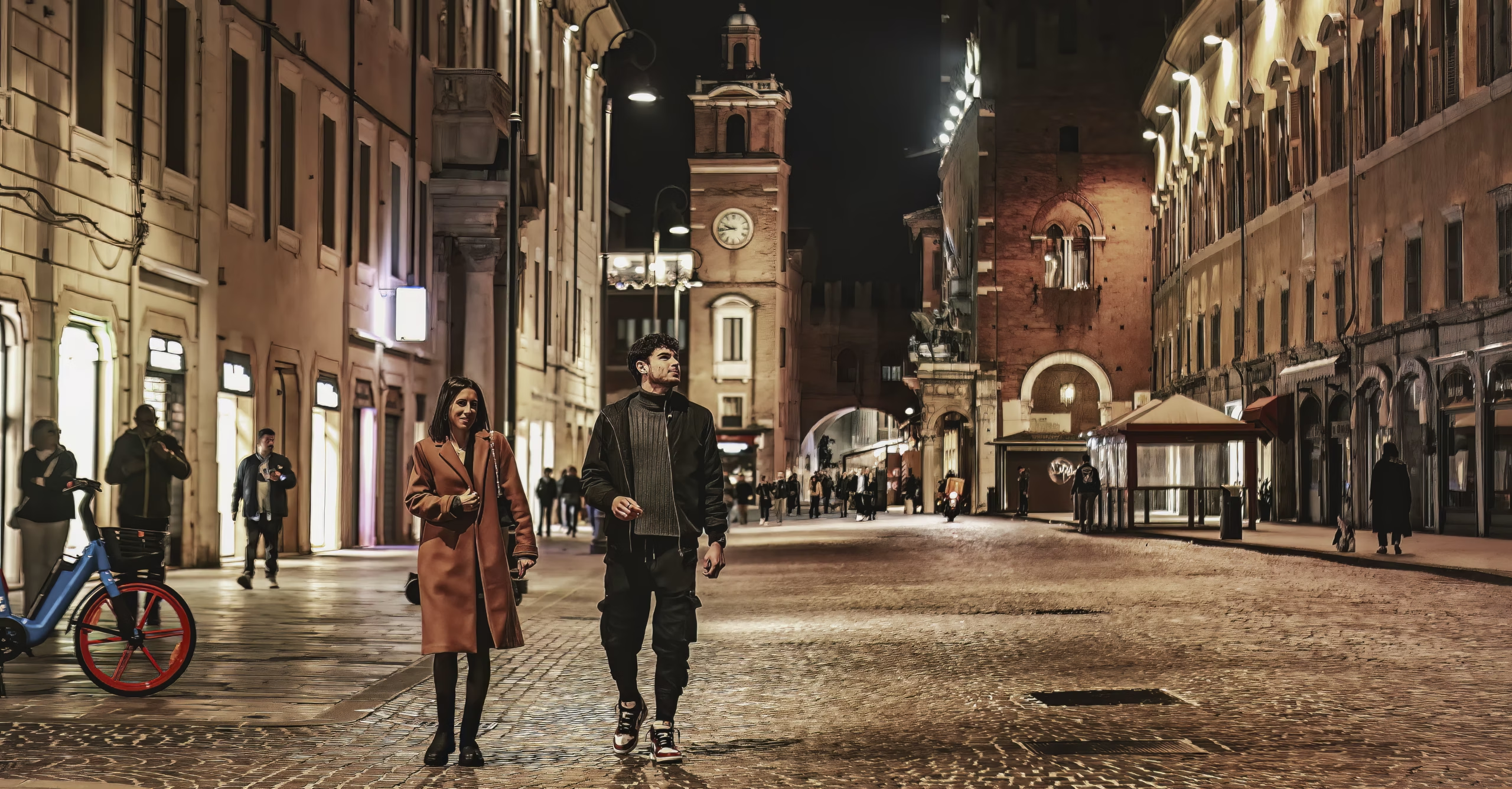
It was one of those old Italian cities built when men still had enough patience to carve capitals, raise towers, and mount an enormous clock on a building so that, centuries later, someone could look at it and realize he was still running late for his own life.
Red brick.
Arcades.
Dark windows.
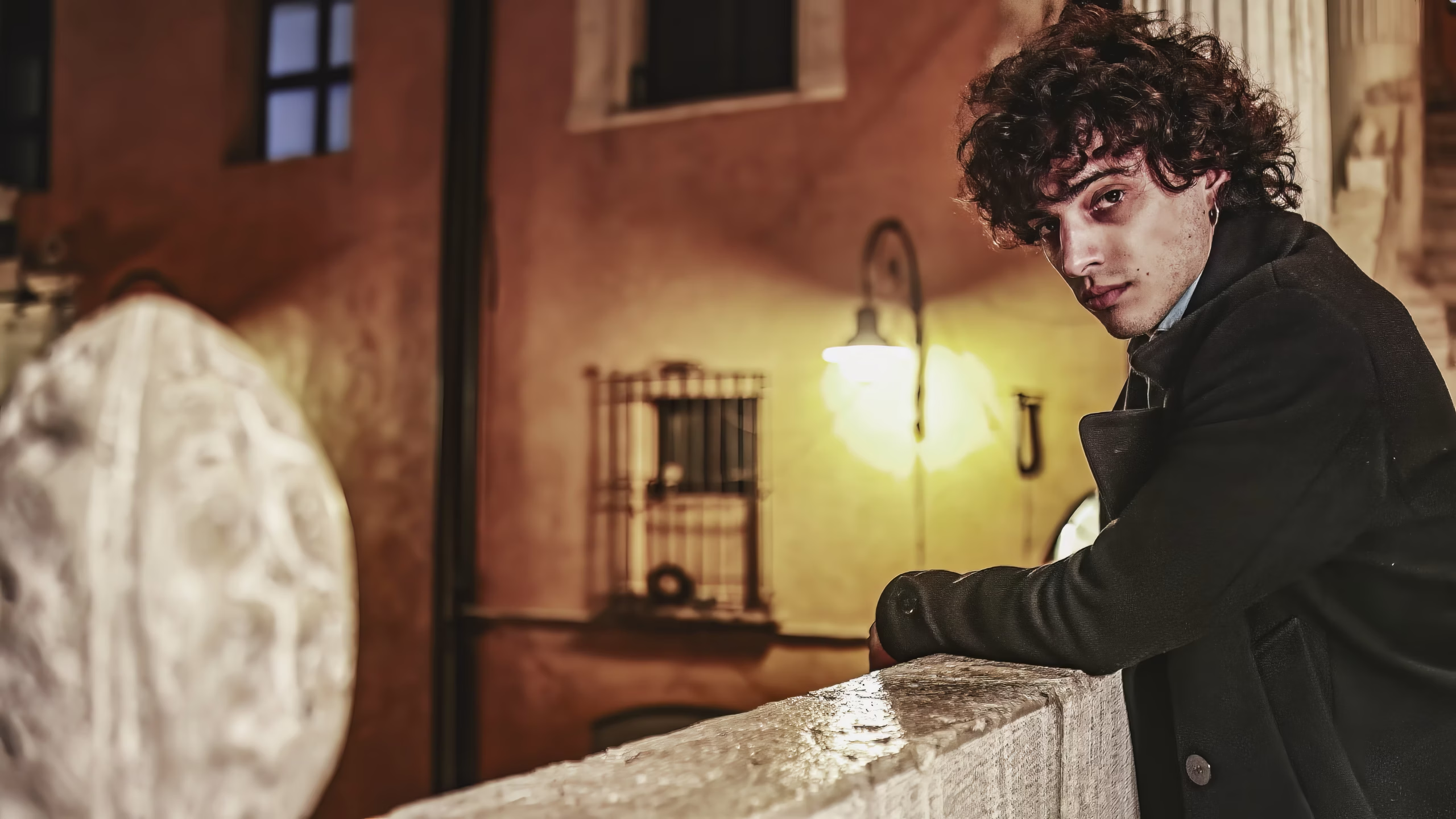
Streetlights hanging from walls like small domesticated moons.
Stones worn by thousands of shoes, dates, journeys home, betrayals, weddings, funerals, and drunken nights that art history, inexplicably, still fails to discuss often enough.
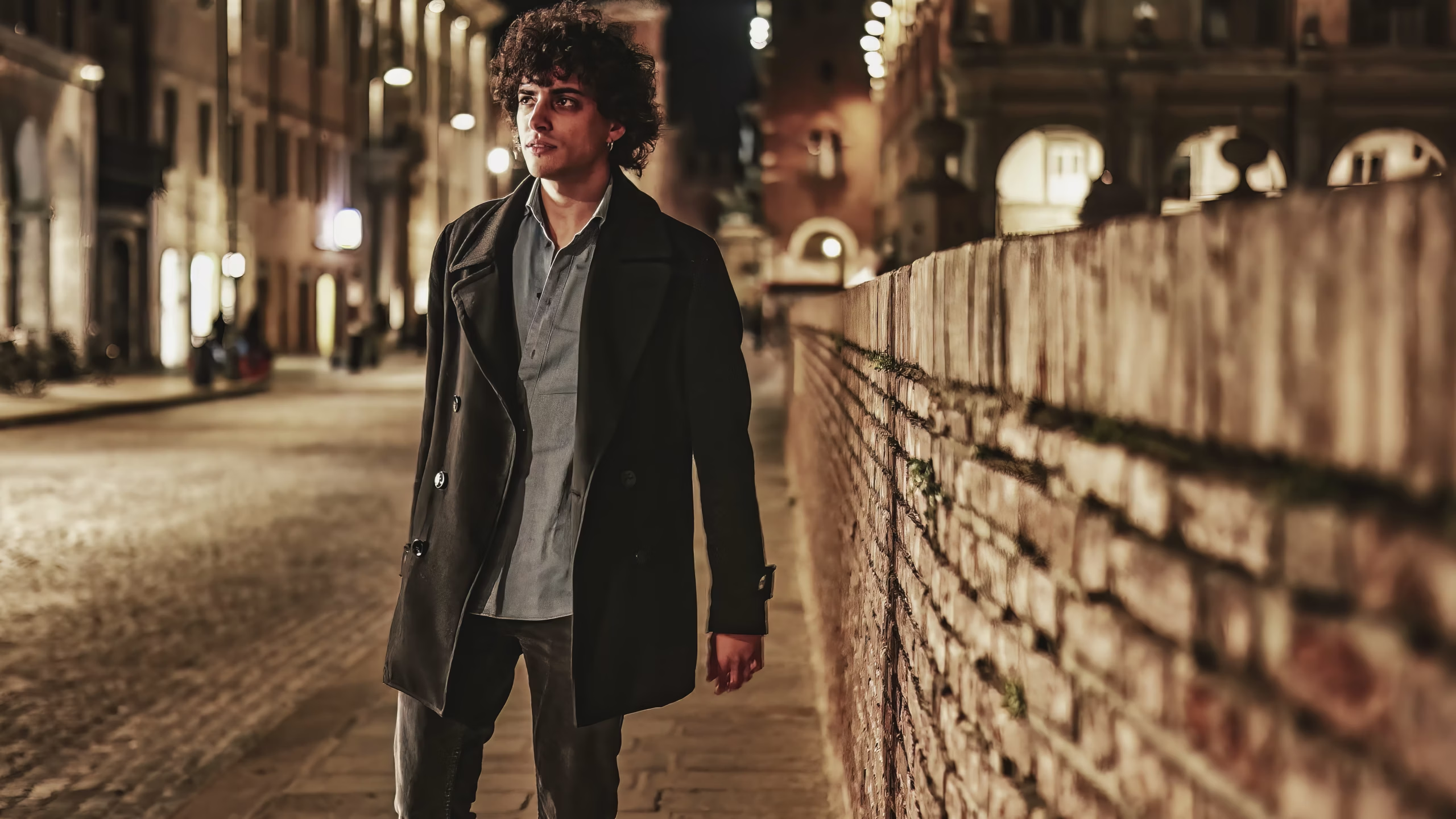
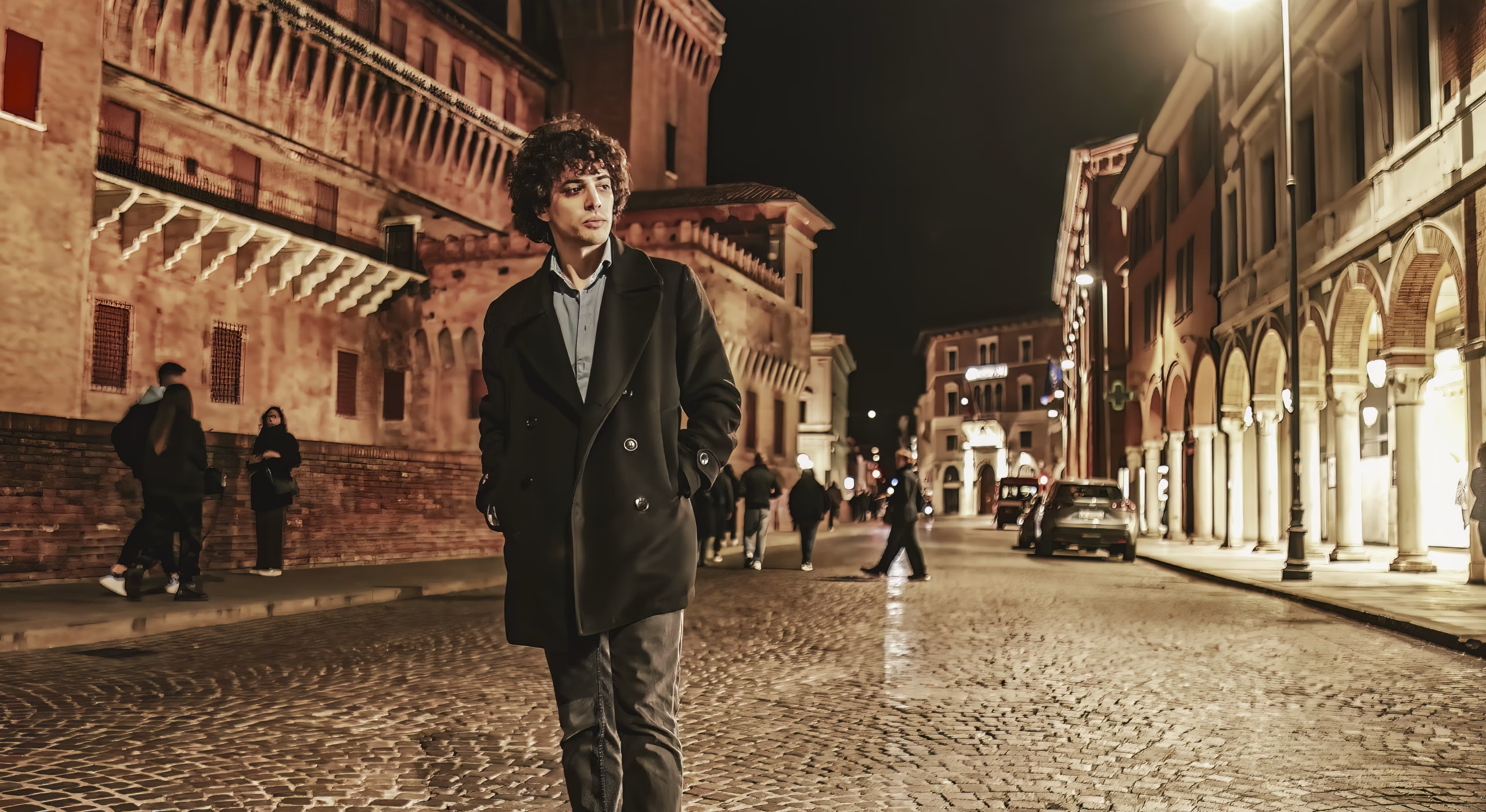
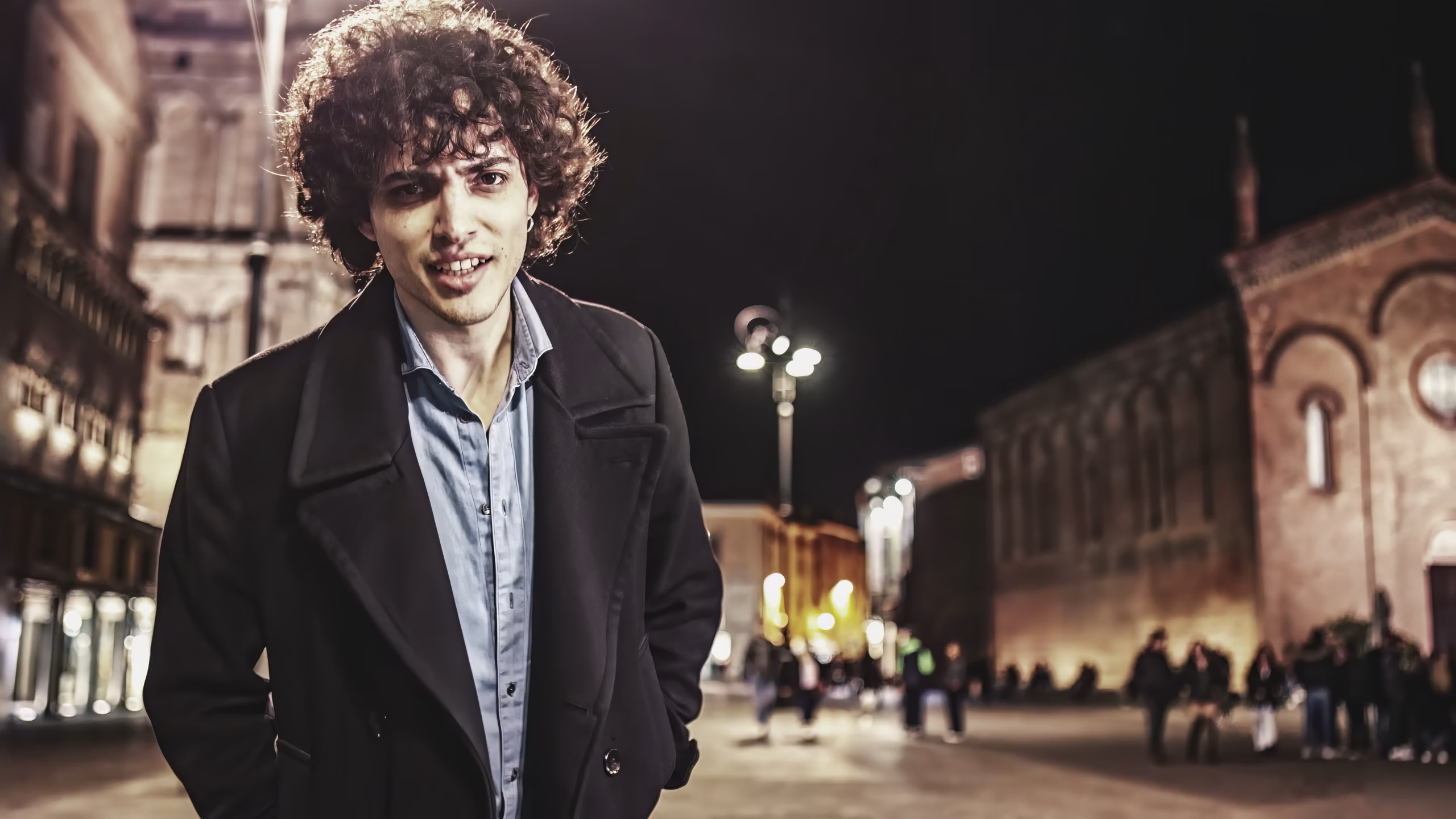
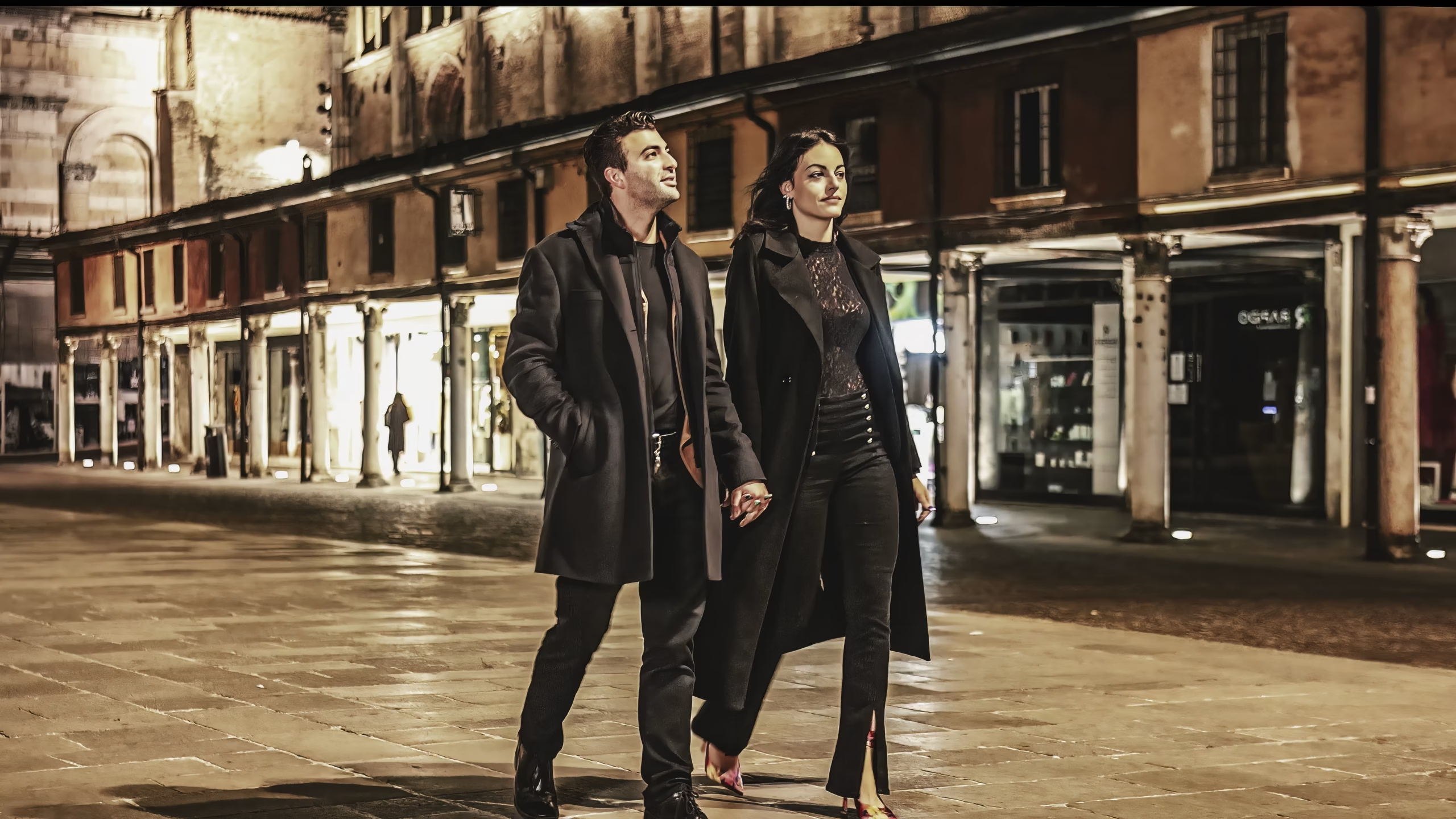
And in the middle of all this, he walked.
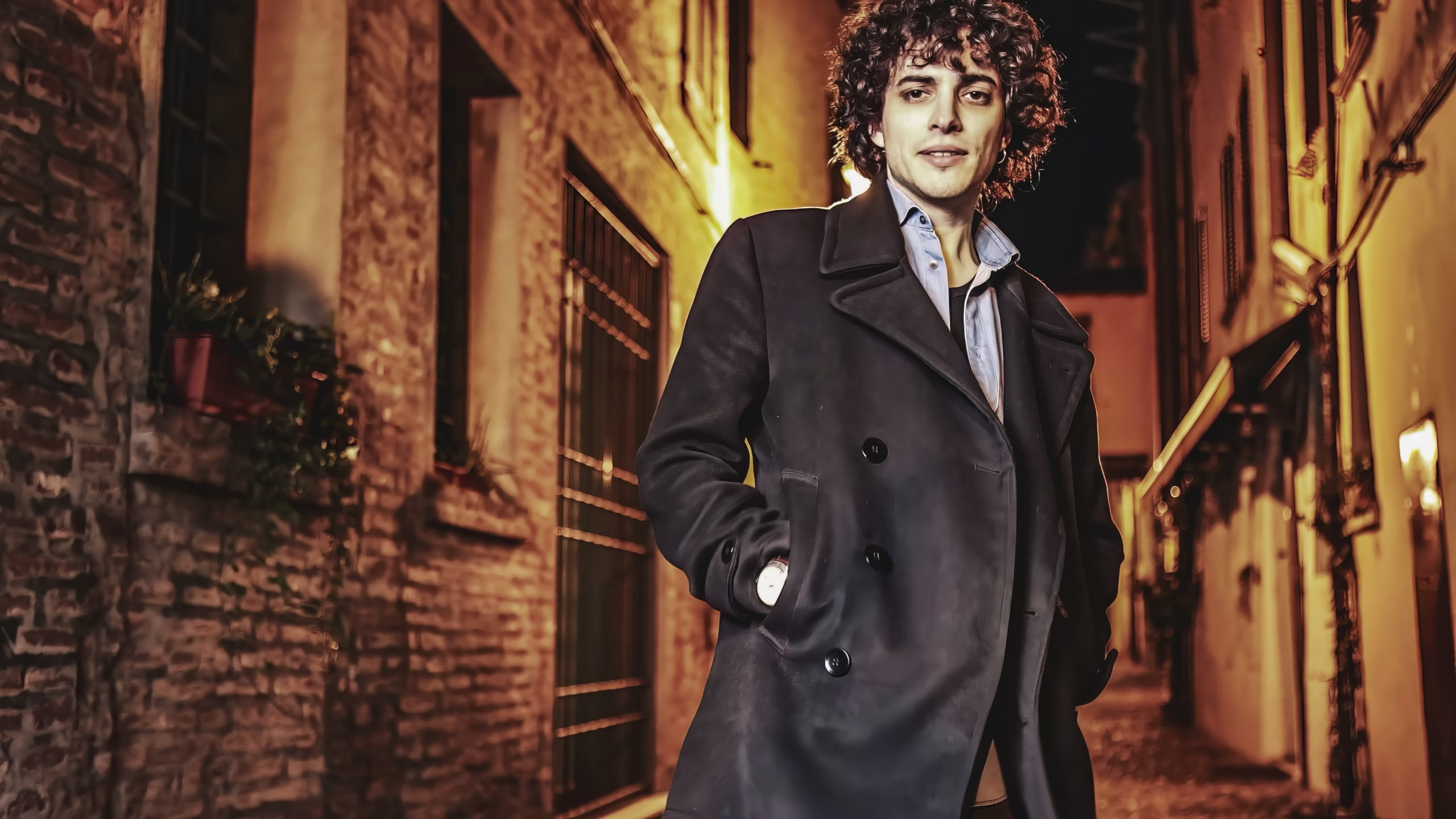
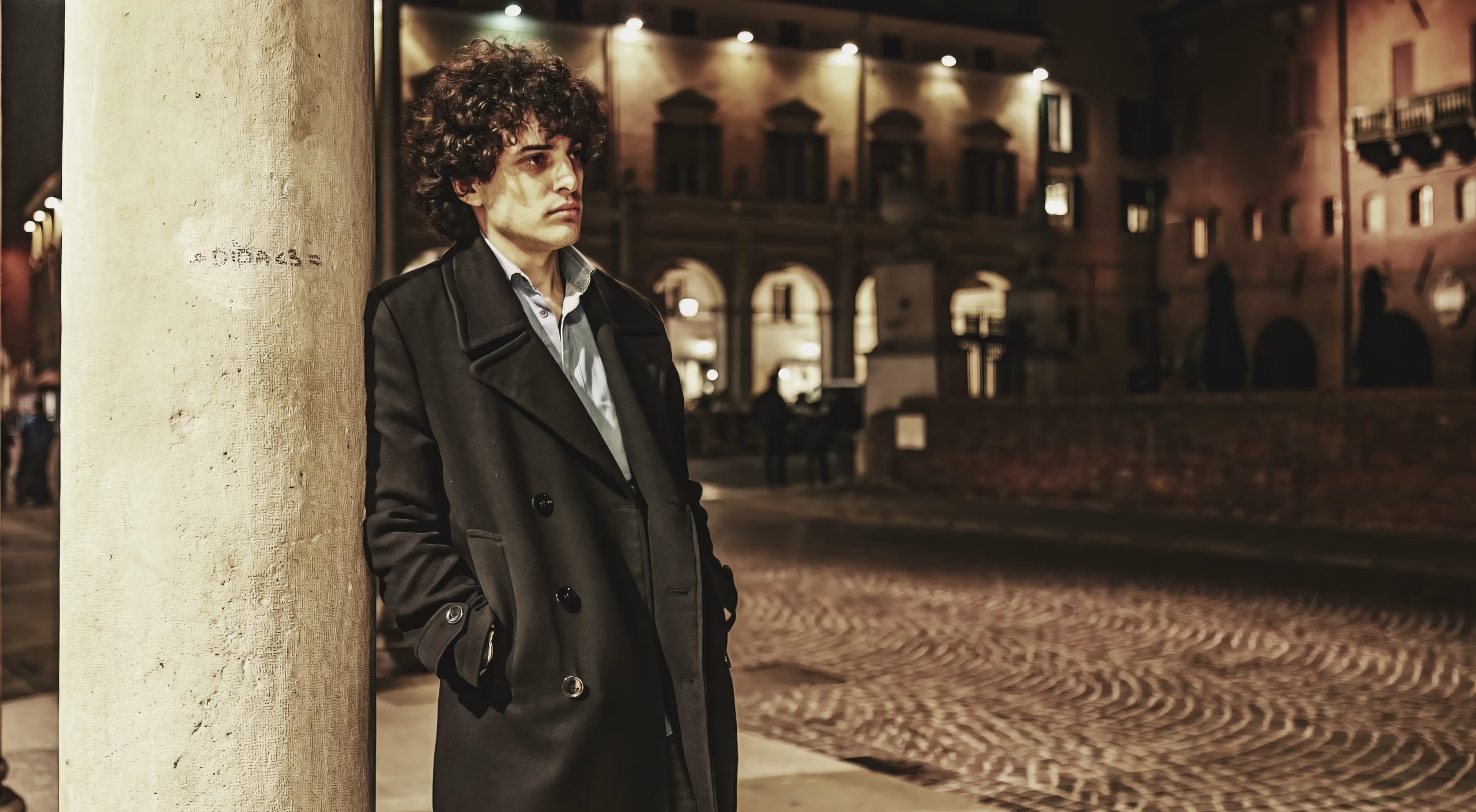
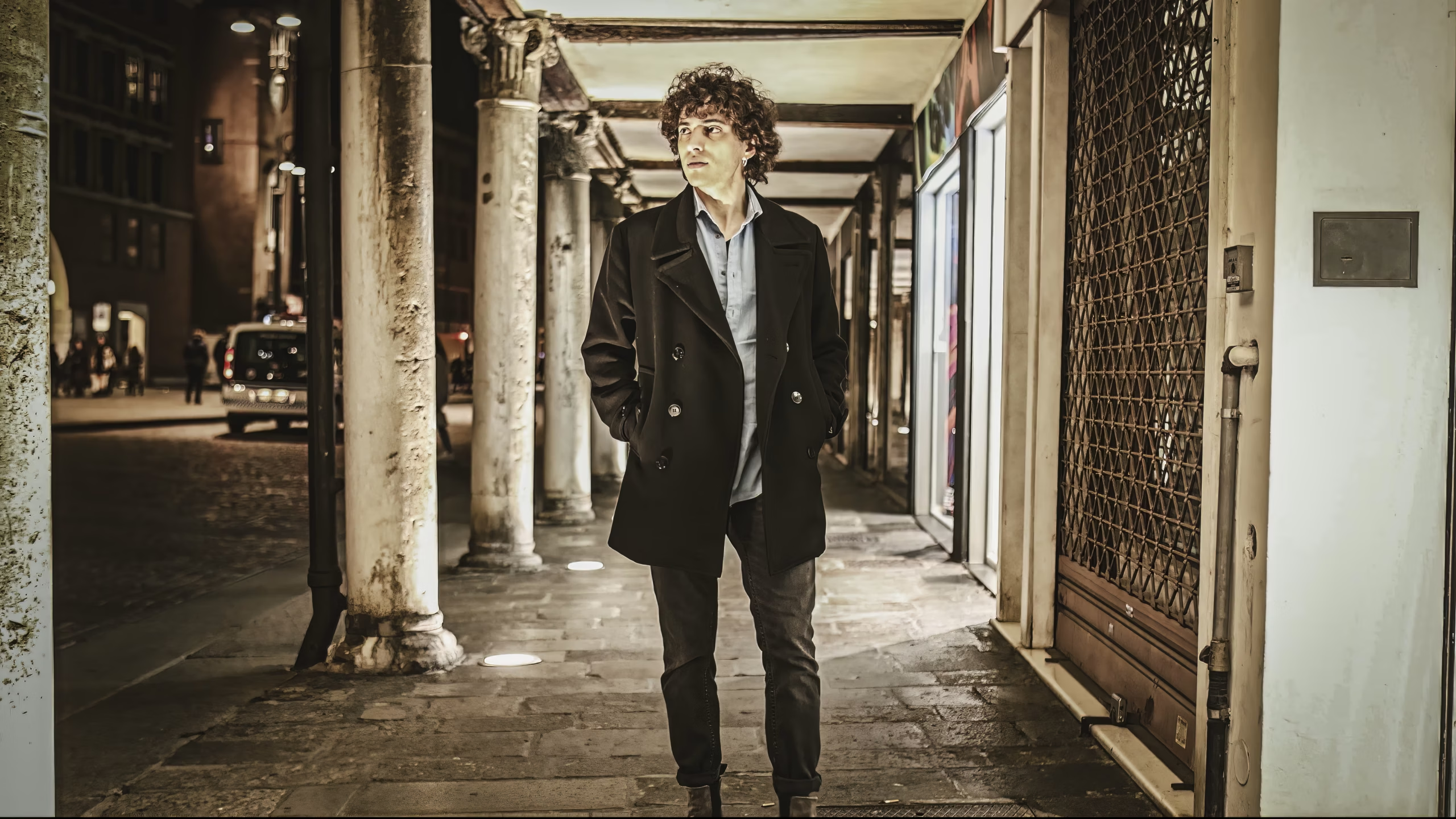
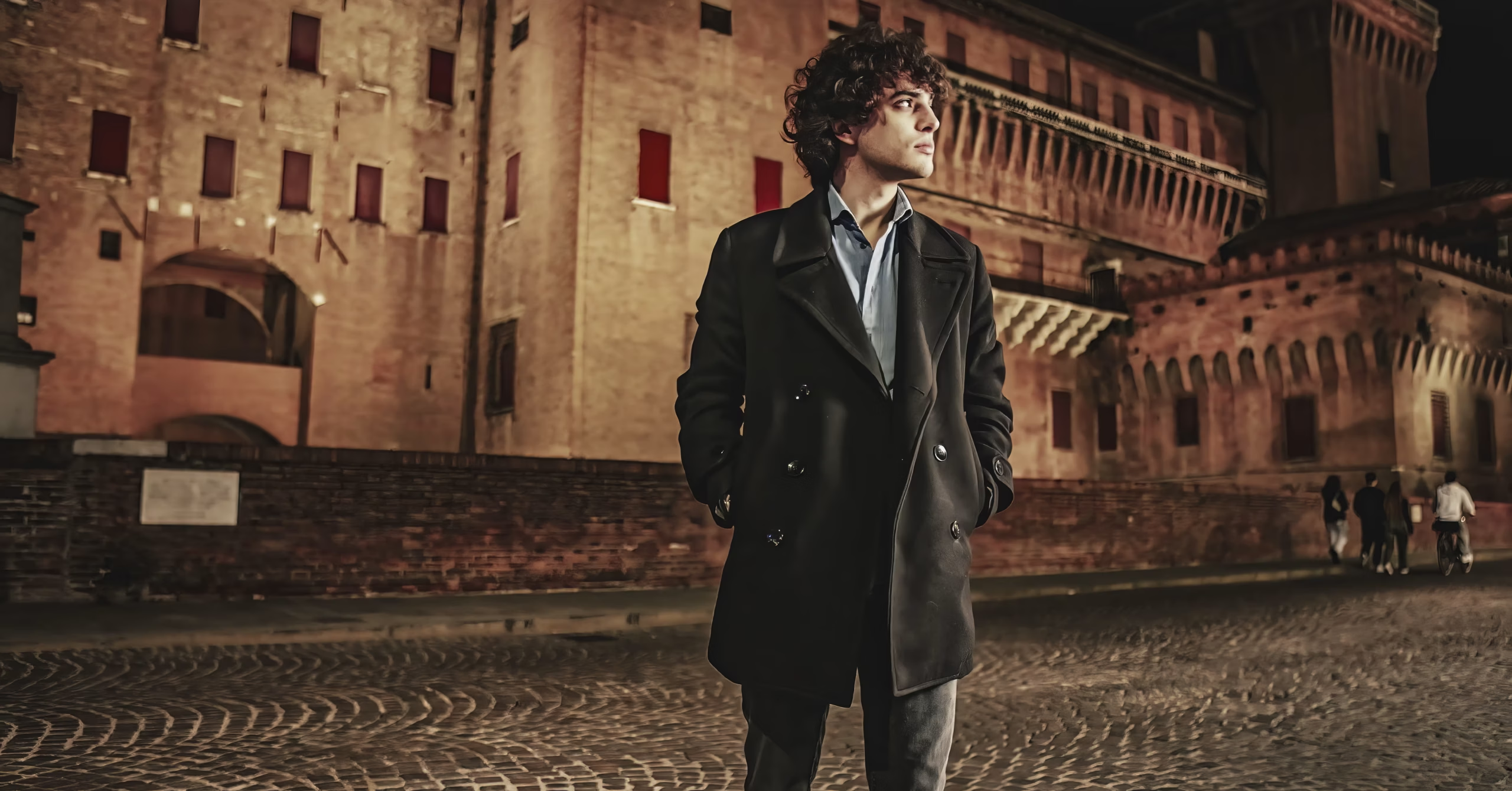
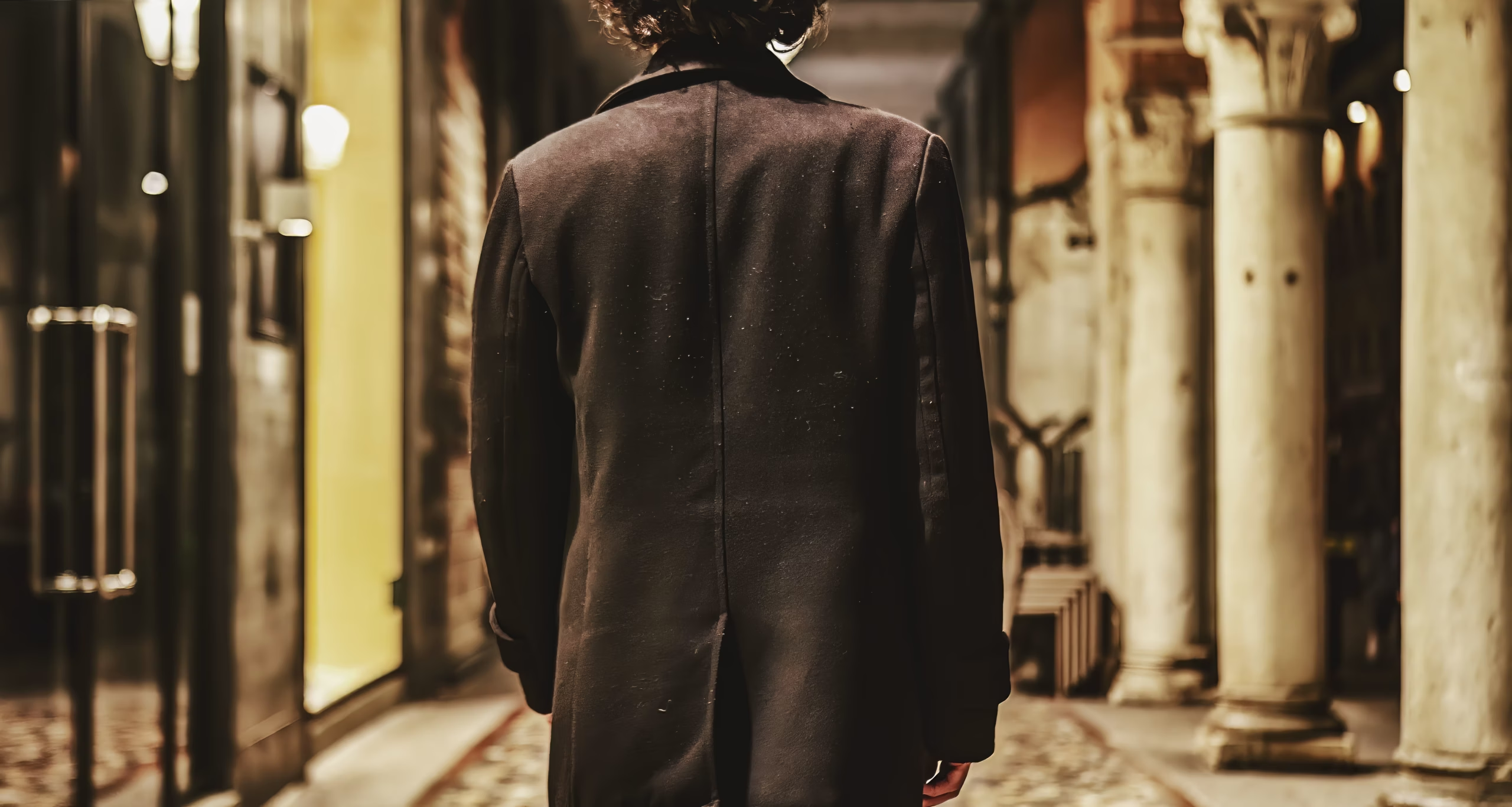
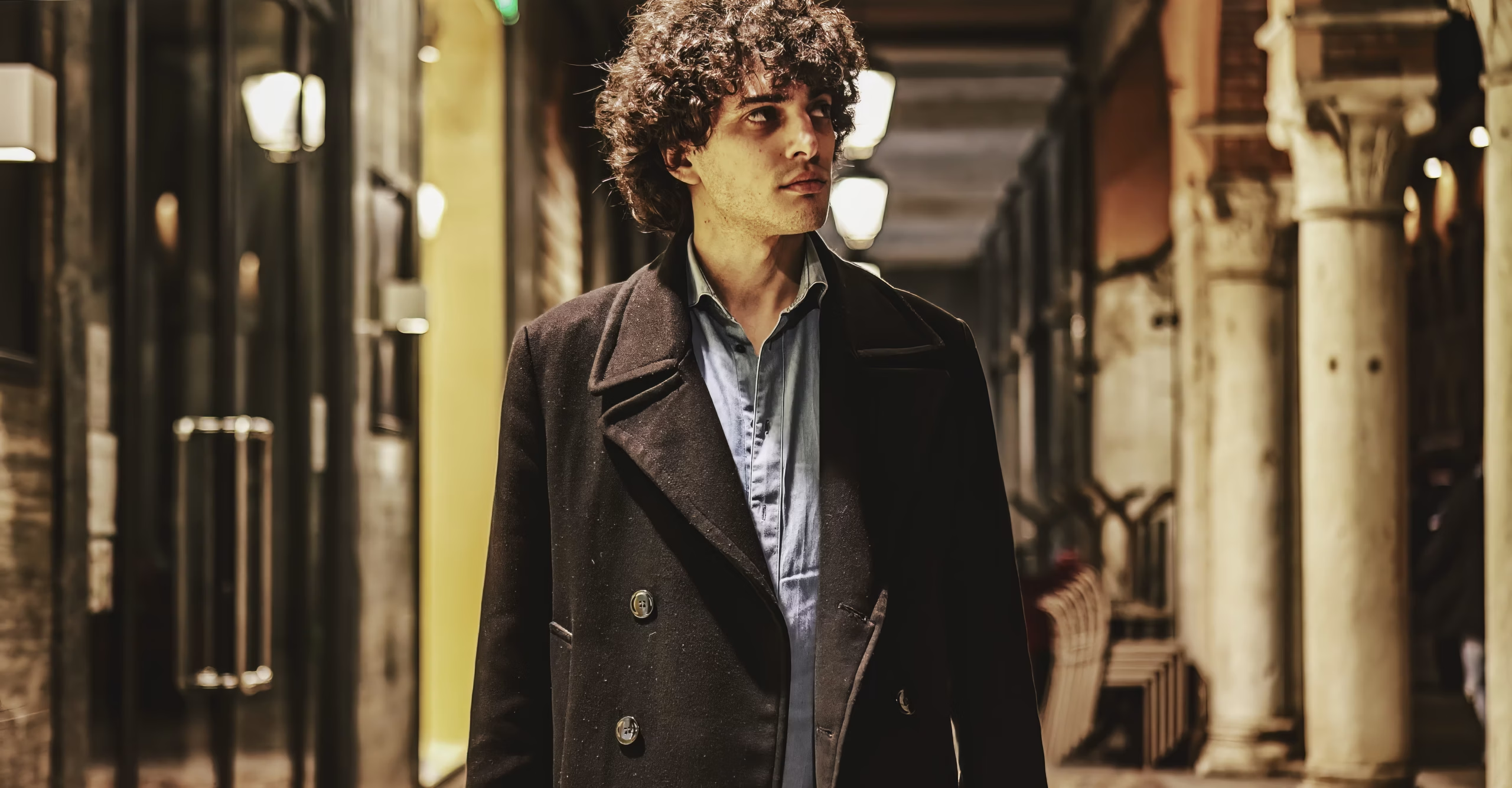
Black coat, hands in his pockets, and that particular expression of someone who is not geographically lost but would still like to see an arrow reading:
THIS WAY, ASSHOLE.
There wasn’t one.
Naturally.
Life is very careful about posting signs when you need to park, pay a tax, or refrain from pissing against a medieval wall.
When you need to understand what the fuck to do with the next thirty years, however, it suddenly becomes minimalist.
So he walked.
He looked up.
Looked at the towers.
Looked at the clock.
The clock, for its part, did what clocks do best: counted other people’s time without offering any explanation of his own.
The hands moved forward.
Nothing personal.
Perhaps that is the most offensive thing about time: it has nothing against you.
It simply does not give a fuck.
He raised his eyes toward that enormous face embedded in the bricks and for a few seconds felt what human beings feel when they realize an object built three hundred years before them will probably survive their death too.
A solid blow to the ego.
Free of charge.
He went on.
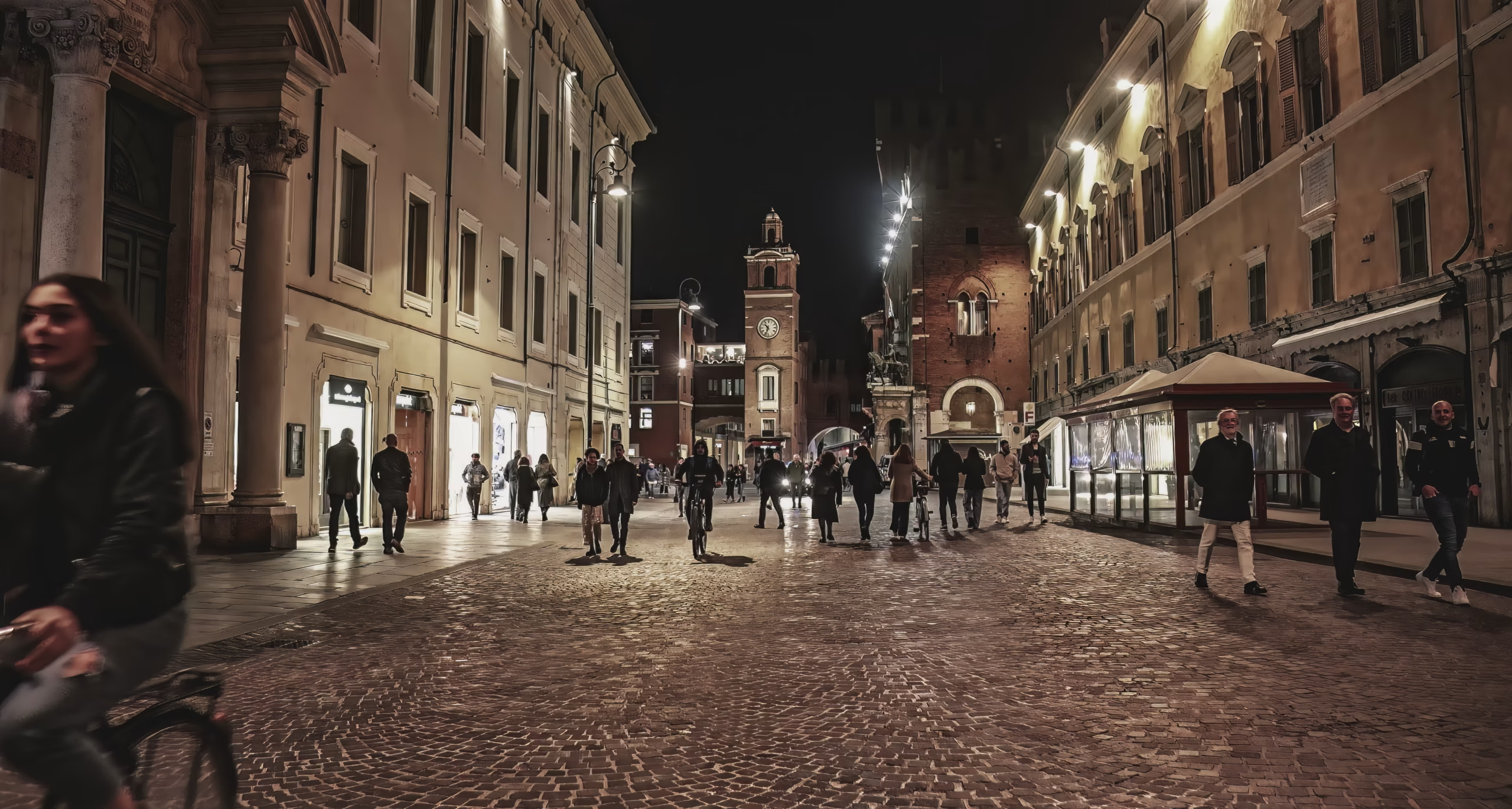
Around him, the city continued to live.
And that was the problem.
People lived.
They even seemed rather good at it.
Two people walked side by side, discussing something that probably seemed important, at least in that moment. A woman smiled. Someone crossed the street. Someone else rode a bicycle with no obvious existential crisis, which already appeared to be a remarkable talent.
He watched everything.
Not as a tourist watches.
As an anthropologist infiltrating a species to which he belongs biologically but whose customs he still does not entirely understand.
Look at them.
They walk.
They talk.
They embrace.
They plan the weekend.
Choose where to eat.
Book vacations.
Buy new curtains for the living room.
And they even seem convinced that all this possesses some kind of logic.
Fascinating.
Disturbing, but fascinating.
He continued along the main street.
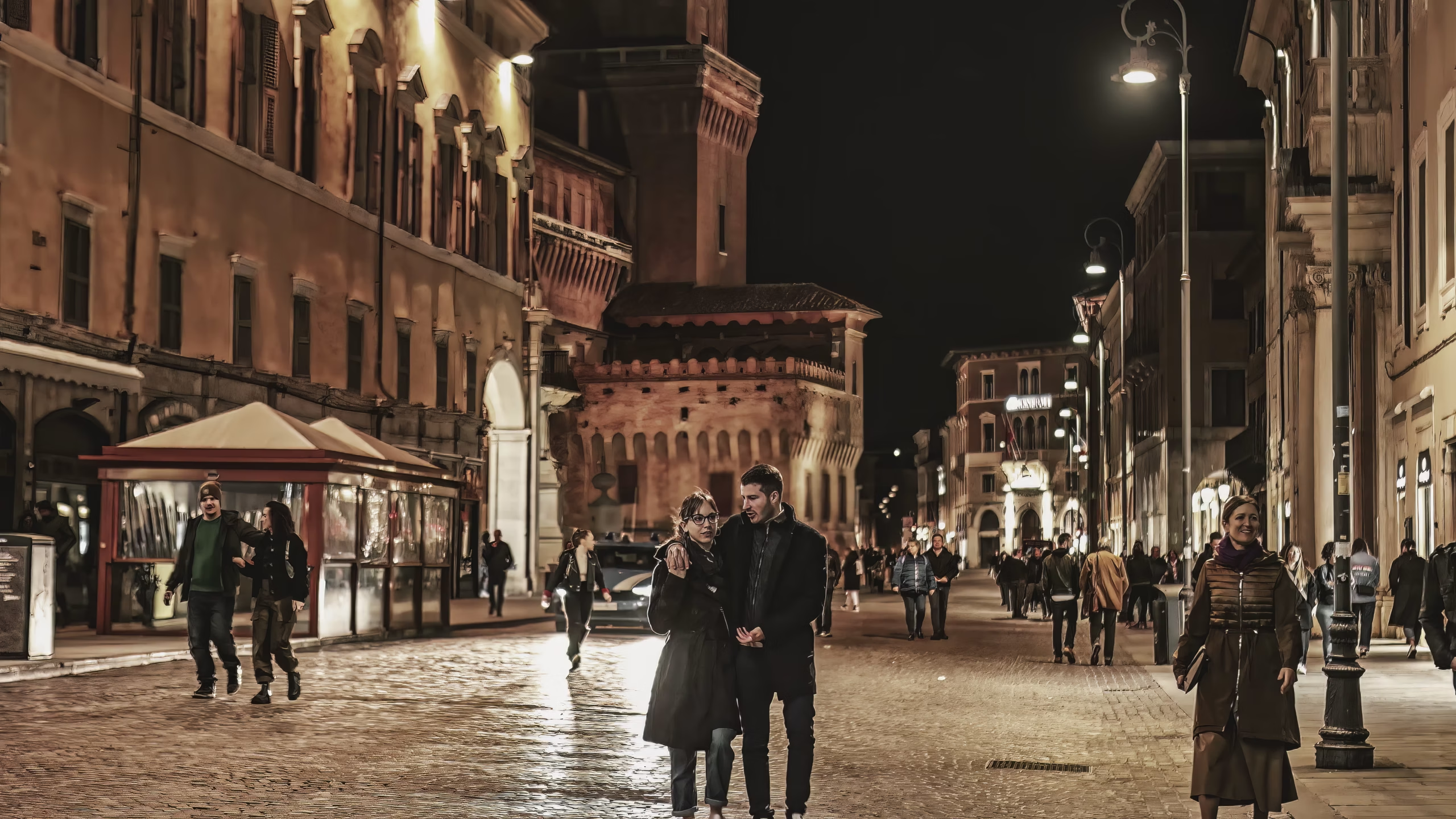
A couple passed before him.
Holding hands.
Not pressed together in that life-insurance-commercial way, but close enough to suggest that, at least for that evening, they had decided to cross the world together.
He watched them.
Not with envy.
Or perhaps with envy.
Let’s call it that adult form of envy which has learned to dress well and introduce itself as curiosity.
He wondered how it worked.
How the fuck does one human being look at another and say: good, among seven billion potential emotional disasters, I will try this one?
And above all: how do some people look so calm while doing it?
Perhaps they were happy.
Truly happy.
A possibility we tend to underestimate because it comforts us far more to believe everyone is pretending.
It is easier.
If everyone is acting, then no one has understood something we failed to understand.
But what if someone is genuinely at peace?
Ah.
That is where the trouble begins.
Because then you must consider the terrible possibility that there is no universal curse.
That perhaps there are simply different lives.
Different wounds.
Different lessons.
Different luck.
Different timing.
And that someone has already learned the thing against which you are still banging your head like a pigeon against glass.
Farther on, three people sat at a table.
A few glasses.
A phone.
A cloud of smoke.
A conversation.
An insignificant scene, therefore perfect.
Because real life has this nasty habit of hiding inside things that do not seem worthy of a photograph.
A laugh lasting two seconds.
A glance.
A stupid joke.
Someone showing something on a phone.
Someone saying, “No, wait, you have to see this.”
And suddenly three people are exactly where they want to be.
At least for one minute.
Perhaps that was what he was trying to understand.
Not happiness.
That word has been raped enough by advertising, amateur psychologists, and mugs printed with motivational quotes.
He was searching for something more modest.
Presence.
That apparently ordinary ability to inhabit a moment without analyzing it to death.
He, meanwhile, analyzed everything.
It was his talent.
And probably a substantial pain in the ass.
He looked at a couple and thought about love.
Looked at a group of friends and thought about loneliness.
Looked at a clock and thought about death.
A normal person would have looked at the clock and thought: it is eleven.
But that would have been too easy.
He continued.
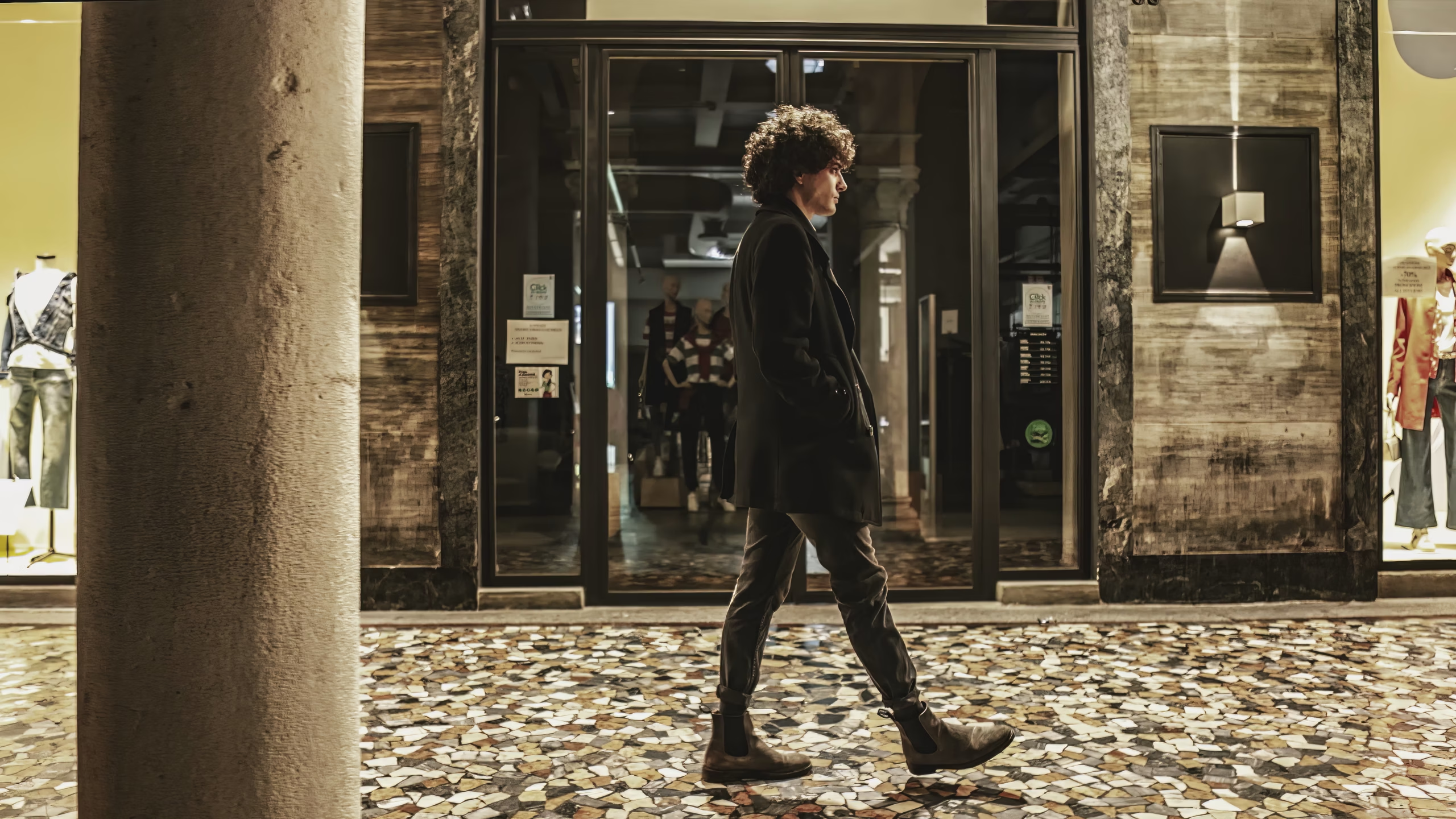
Passed beneath the arcades.
The sound of his footsteps changed.
Voices drew closer, then disappeared.
Each arch seemed to open onto a different small scene.
A woman walking quickly.
A man talking on the phone.
Two young men leaning against a wall.
A bicycle.
A window display.
A door.
The smell of food from somewhere nearby.
The sound of glasses.
Perfume.
Smoke.
Cold.
Life.
All of it there.
All of it at once.
And it was strange because he still felt alone, but that loneliness did not resemble absence.
It was more like a kind of distance.
Like watching a party from the other side of glass.
You can see everything.
You can even hear something.
But those couple of transparent inches always remain between you and the rest of the world.
Perhaps some people are born that way.
Not alone.
Lateral.
Condemned—or fortunate—to stand half a step outside things.
Close enough to participate.
Far enough to observe.
Writers, probably.
Photographers.
Musicians.
Madmen.
People in love after being left.
And that indefinable category of individuals who, at some point during a party, stop talking and watch the others, wondering what kind of miracle it is simply to be there.
He belonged to that kind.
He walked through the city and watched it at the same time.
Watched people enter and leave their small stories.
Those beginning an evening.
Those ending it.
Those who had probably just argued.
Those who would end up in bed with someone.
Those who would return home alone.
Those who would say “I love you” for the first time that night.
Those who would say it for the last.
Those who would say nothing because the right words, as always, would occur to them half an hour later.
The city kept it all without comment.
Cities are good at that.
Probably because they have seen too much.
A street may have witnessed the finest day of your life and a stranger’s absolute despair ten minutes earlier.
Then the street cleaner arrives at five in the morning.
Cleans.
And it begins again.
There was something comforting in that brutality.
The young man kept walking.
Sometimes he looked surprised.
Sometimes almost amused.
Sometimes his eyes held that anger with no precise target, probably the most exhausting kind of all.
Because when you are angry at someone, at least you know where to send the invoice.
When you are angry at life, it becomes more complicated.
It has no address.
It does not answer emails.
And customer service is terrible.
He would have liked to stop her.
Grab her by the collar.
Ask her:
“All right, bitch. What is the point?”
Because sometimes there seemed to be a point.
Other times, no.
Other times still, the point seemed to be precisely to stop looking for one.
And perhaps that was the hypothesis that irritated him most.
Because we were raised to believe everything must lead somewhere.
Study in order to work.
Work in order to earn.
Earn in order to live.
Live in order to…
And there the sentence suddenly tends to become less convincing.
Perhaps there is not always an “in order to.”
Perhaps some things simply exist because they exist.
A walk.
A city.
A night.
A drink.
A woman laughing.
A stranger passing beside you.
Ten seconds of music from a bar.
An illuminated building.
A conversation you will never have.
A person you will never see again.
Not everything must become something.
Slowly, he began to like this idea.
The couple he had seen earlier continued on their way.
Other people arrived.
Others left.
Some walked with arms around one another.
Others alone.
And suddenly loneliness stopped resembling a sentence and began to look like a position.
You are here.
The others are there.
Sometimes the paths intersect.
Someone stays for twenty years.
Someone for twenty minutes.
Someone just long enough to order two drinks and tell you a story you will inexplicably remember for the rest of your life.
Then gone.
It is brutal.
But there is a strange elegance to it.
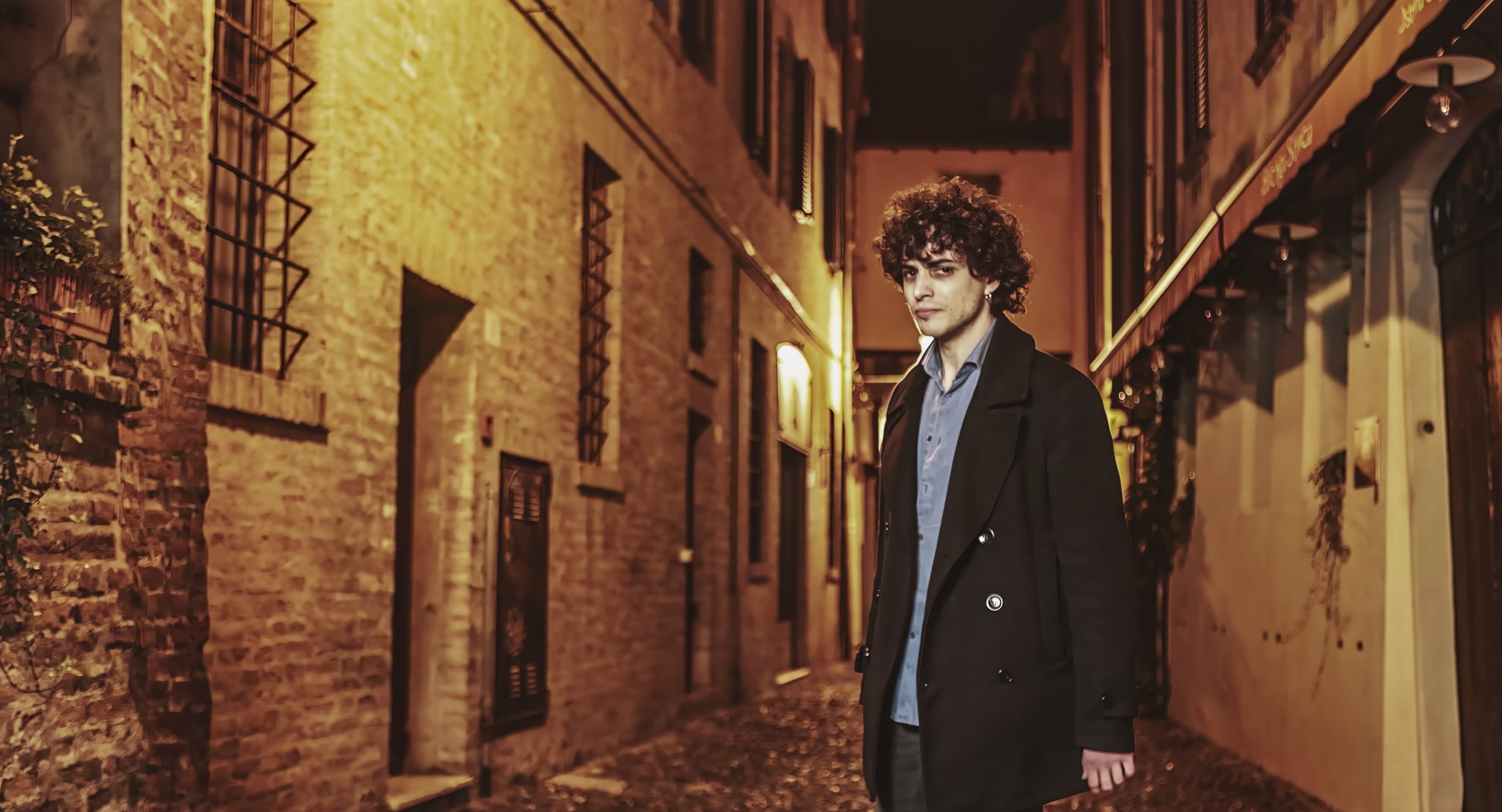
He turned into an alley.
The light grew warmer.
The walls seemed to draw closer.
The outside world disappeared for a moment.
And there, among old bricks and shuttered windows, he finally stopped.
He still had questions.
Of course.
Those bastards rarely take a night off.
But for a few minutes, he had stopped demanding an answer.
Which is not spiritual enlightenment.
Let’s not exaggerate.
It is already something.
Then came the bar.
Because after a certain hour, even interior journeys need a counter.
A drink.
One without therapeutic ambitions.
No rituals.
No “I drink to forget” uttered while gazing mournfully at the ice like someone in a French film.
Simply a drink.
The kind that warms the stomach a little and loosens by half a turn the screws with which you keep your brain clamped shut all day.
Alcohol solves fuck-all.
This part matters.
Problems are excellent swimmers.
In fact, the next morning they are often still there, seated on the edge of the bed, fresh as roses, while you look as though a bus ran over you.
But sometimes a drink lowers the volume.
It does not turn off the radio.
It lowers the volume.
And when the mind stops screaming for a few minutes, something curious can happen.
You begin hearing thoughts again.
The real ones.
Not anxiety’s thoughts.
Not fear’s.
Not the imaginary arguments you had in the shower with people who, in reality, are probably eating pizza and not thinking about you at all.
Simpler thoughts.
Dirtier.
More honest.
Perhaps that night he did not need to understand anything.
Perhaps he had simply gone out to see.
To look.
To record.
To be present.
The discovery was almost offensive in its simplicity.
We spend half our lives convinced we must do something.
Build.
Conquer.
Correct.
Solve.
Become.
What if sometimes the task were simply to observe?
To stay.
Take note.
Let what passes before us enter somewhere.
A smile.
A building.
A couple.
Three friends over a drink.
A street shining beneath the lamps.
An old clock that keeps counting.
Perhaps living also means accumulating these things.
Not to possess them.
To be slowly changed by their passing.
He left the bar.
The city was the same.
Obviously.
No revelation had ignited a new constellation above the rooftops.
No angelic choir.
No voice from heaven.
No mysterious woman appearing from nowhere to tell him he was finally ready to love.
A shame.
It would have been convenient.
There were still the same stones.
The same streetlights.
The same arcades.
The same people.
The same night.
And yet something seemed slightly displaced.
Perhaps it was the alcohol.
We cannot rule it out.
But perhaps it was also him.
An inch.
Half an inch.
Enough.
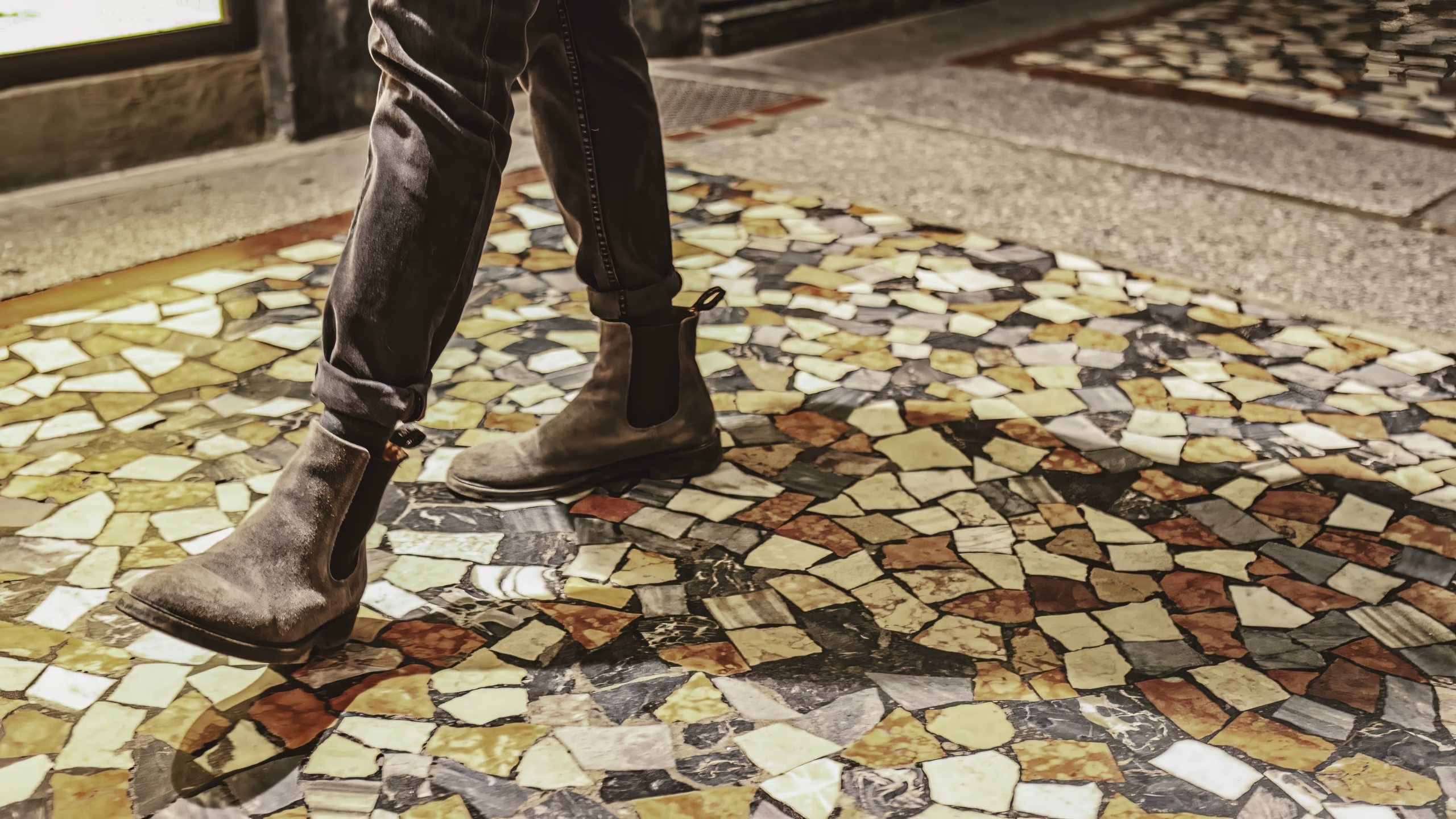
He began walking again.
Footsteps on the mosaic.
Hands back in his pockets.
Eyes still curious.
The anger had not disappeared.
Nor the confusion.
And perhaps that made everything more believable.
Real transformations rarely have closing credits.
You do not understand something and become a new man from that moment onward.
You understand something.
Then do something stupid.
Then forget it.
Then understand it again.
Then perhaps lose it for another three years.
Welcome to personal evolution.
Mandatory subscription, no customer support.
But he kept walking.
And this time he no longer seemed desperately searching for a destination.
He watched.
A couple.
A window.
A bicycle.
A wall.
A light.
A face.
The entire city seemed transformed into an enormous plotless book, in which every person was a sentence he would never read completely.
And perhaps that was precisely its beauty.
Not knowing.
Not knowing how other people’s stories end.
Not even knowing his own.
Seeing someone smile without knowing what they have survived.
Seeing someone walk alone without knowing whether they are sad or finally free.
Seeing two people hold hands without knowing whether they will stay together for forty years or one of them will throw a plate against a wall three weeks from now.
Photography stops the moment.
Life, that bitch, continues immediately afterward.
Perhaps that was why he loved watching others so much.
It reminded him there is no single correct way to inhabit the world.
Some cross the night embracing someone.
Some drink with friends.
Some pedal home.
Some smoke outside a bar.
Some lose themselves in alleys.
And some walk alone in a black coat with the irritating sense of having too much to say to a universe that, at least that night, seems to have other things to do.
None necessarily more right.
None necessarily happier.
Only different stories.
And perhaps the serenity he saw in others was not proof they had understood everything.
Perhaps they had simply learned to live more comfortably with what they had not understood.
The possibility almost made him smile.
Almost.
Let’s not exaggerate.
He continued walking as the night slowly began to wear itself away.
The clock was still there.
Its hands a little farther ahead.
Naturally.
Time had learned nothing from all that reflection.
Perhaps he had.
Something small.
Not an answer.
More like a truce.
Life was not asking him to understand everything that night.
Perhaps it was asking him nothing at all. Toward that strange territory existing between what we see in others and what we still cannot understand in ourselves.
He kept walking.
The city of other people was still there.
Someone laughed.
Someone held hands.
Someone was going home.
Someone else was probably doing something stupid they would remember for years.
Everything perfectly normal.
Or perfectly absurd.
It depends on how much you have drunk and how long you spend thinking.
He continued watching them, but this time without trying to understand which mysterious secret they had discovered before him.
Perhaps they had discovered none.
Perhaps that couple did not know whether they would last.
Perhaps those three friends at the table had problems they were not discussing.
Perhaps the one laughing loudest was doing worst of all.
Or perhaps not.
And that was precisely the point.
He could not know.
For once, strangely, he did not need to.
We spend an embarrassing amount of our existence looking at other people’s lives like illuminated windows from outside, convinced there is something inside that we lack.
The answer.
The right person.
Peace.
The instruction manual.
Then perhaps you enter and discover they have been searching for the remote for twenty minutes and have not spoken since Tuesday.
Life also possesses this marvelous sense of humor.
From a distance, everything always looks more orderly.
Once again he slipped his hands into his pockets and resumed walking.
The city had given him no answer.
Neither had the drink.
The old clock continued doing its work as a professional bastard: taking minutes without returning explanations.
And yet that night he had learned something.
Something small.
Probably useless.
Therefore perhaps important.
Not everyone walking confidently knows where they are going.
Some have simply learned to walk without knowing.
Perhaps that was all.
Not immediately finding a direction.
Not fixing yourself.
Not suddenly becoming wise, resolved, happy, and all that other bullshit that works beautifully in biographies written after someone dies.
Simply continuing.
Looking.
Meeting.
Losing.
Having a drink sometimes.
Taking a wrong turn.
Changing your mind.
Allowing yourself to be surprised by a beautiful city at the exact moment you are angry enough not to admit it is beautiful.
And moving forward.
One step after another.
Among others.
Like others.
Different from others.
Alone, perhaps.
But not necessarily lost.
Because perhaps life is not the thing that will happen once we finally understand where the fuck we are going.
Perhaps life is exactly everything we see while we continue walking without knowing.
And that night, for the first time, the city of other people seemed a little less like it belonged to other people.