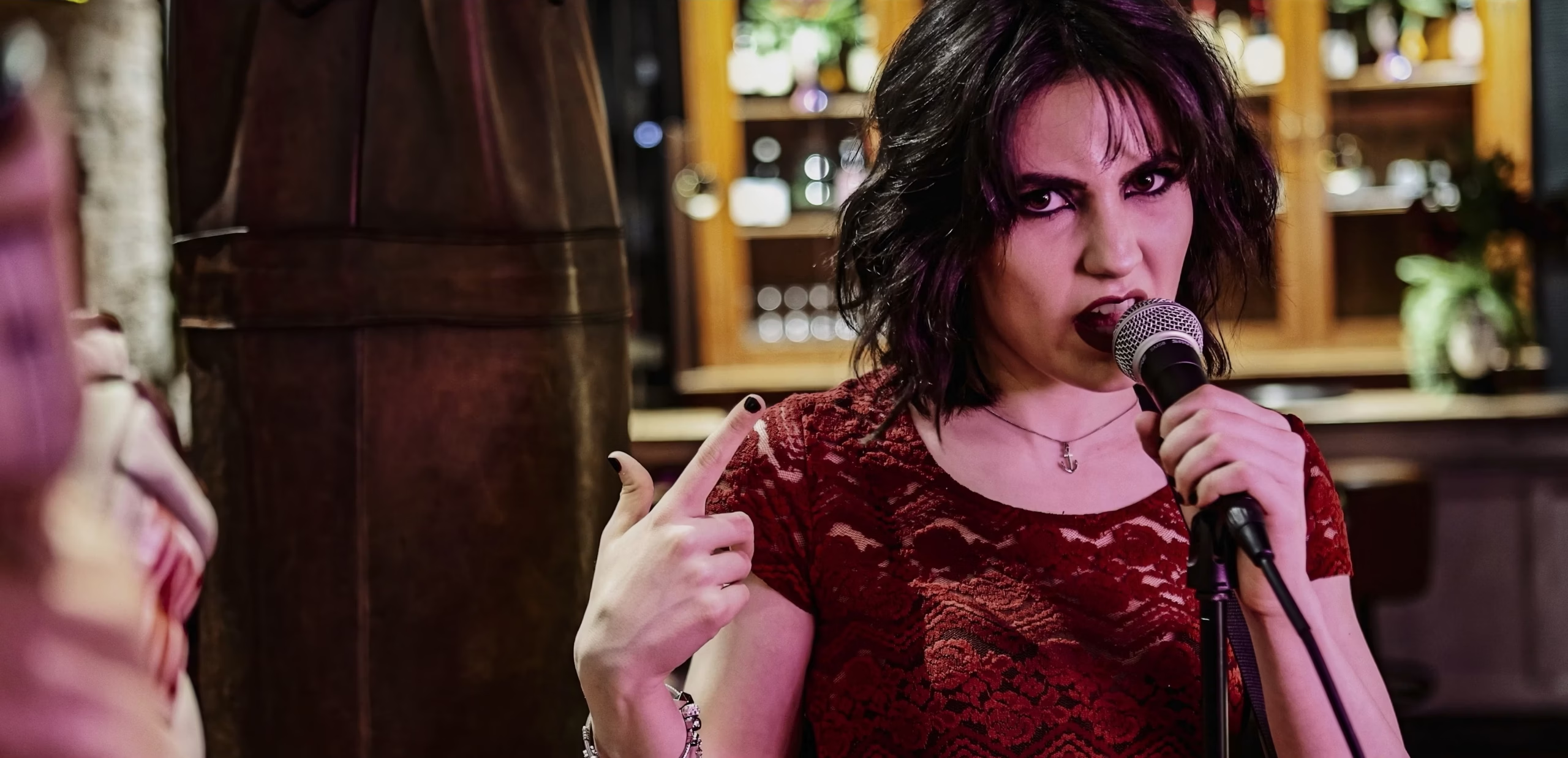
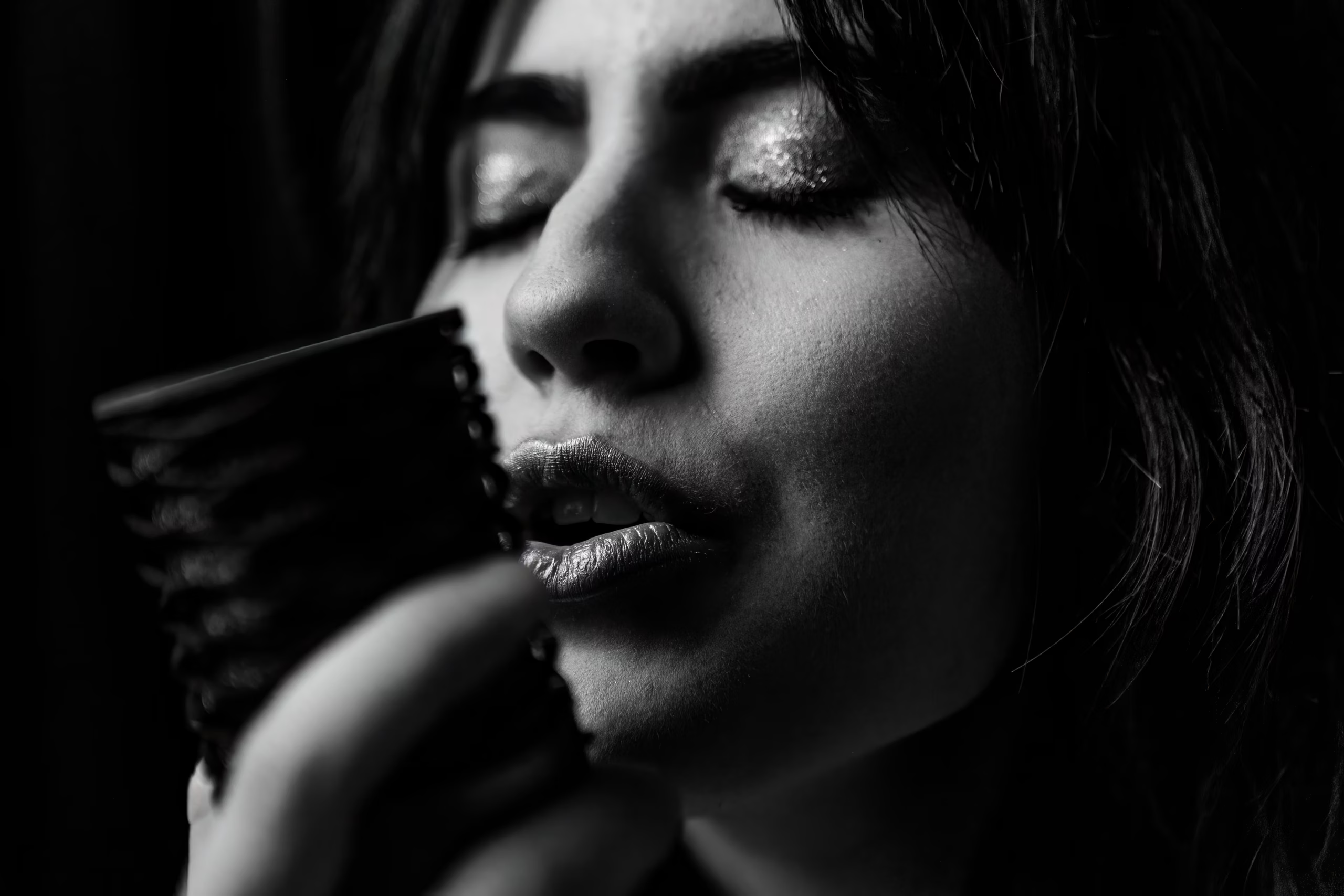
Tell me… how many people do you carry inside when no one is watching? The one who lives, the one who imagines, the one who behaves, and the one who, at least in her own head, sends everything magnificently to hell. This time we’re talking about a woman, a microphone, and the creature born every time she begins to sing. One sings the story. The other walks into it with a drink in her hand, fishnets on her legs, and enough trouble in her eyes to deserve a guitar solo. And perhaps that is precisely the problem with art: sometimes we invent characters merely to let certain parts of us live without asking permission.
There are nights when a woman enters a room carrying more than her body, her makeup, her legs, or that expression that says, ‘I know exactly what you’re thinking, darling, and you should probably keep it to yourself.’
She carries an entire novel.
No, novels are too orderly, too polite, too full of chapters pretending to know everything.
She carried a song.
One of the dirty, scratched, slightly drunk kind. The kind seemingly born at three in the morning, lipstick half gone, a badly extinguished cigarette nearby, and a truth no one had the nerve to say aloud. The kind of song that, if you listen closely, doesn’t simply tell you a story: it drags you into an emotional mess and locks the door from outside.
And that is exactly what happens in this sequence.
First comes the voice.
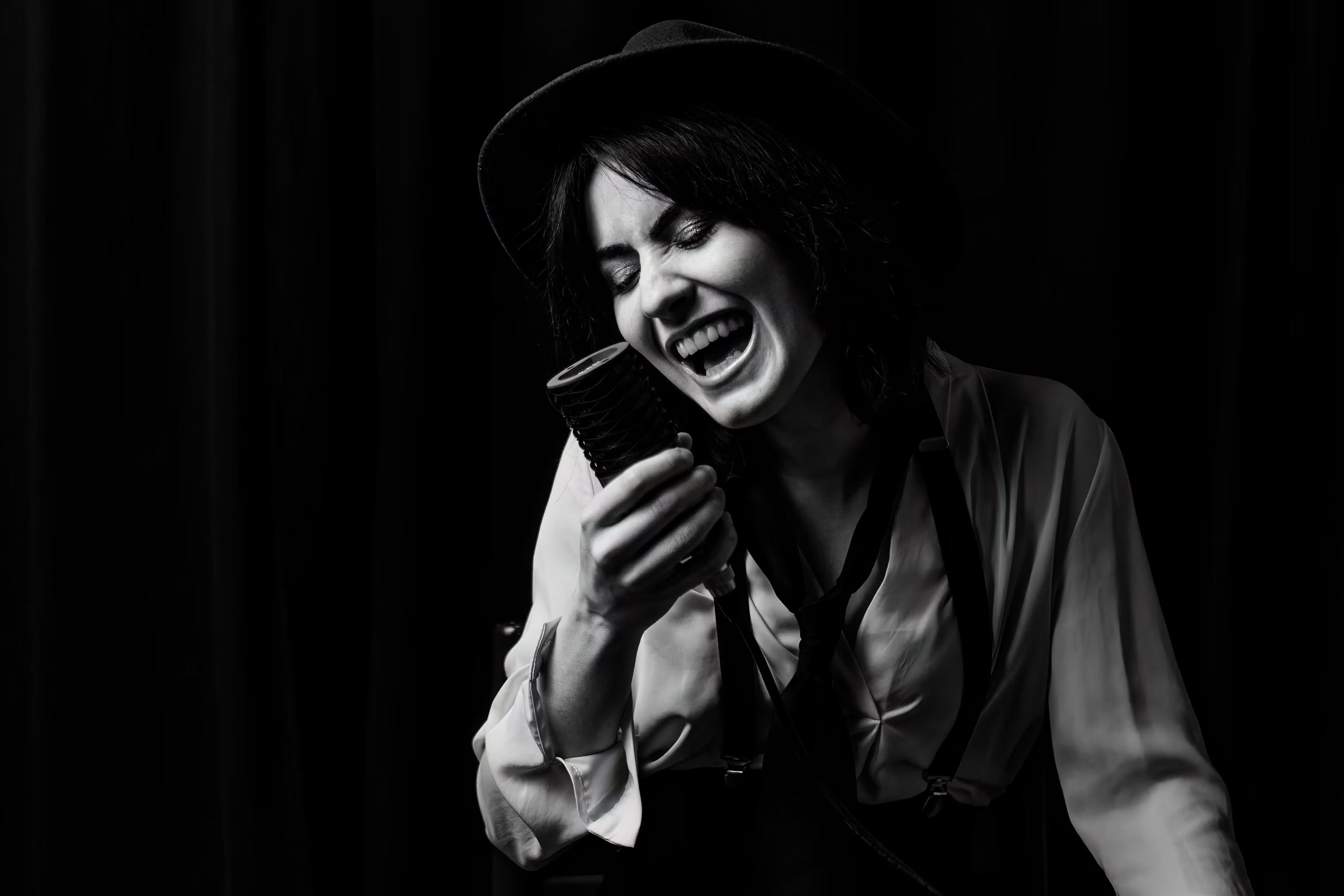
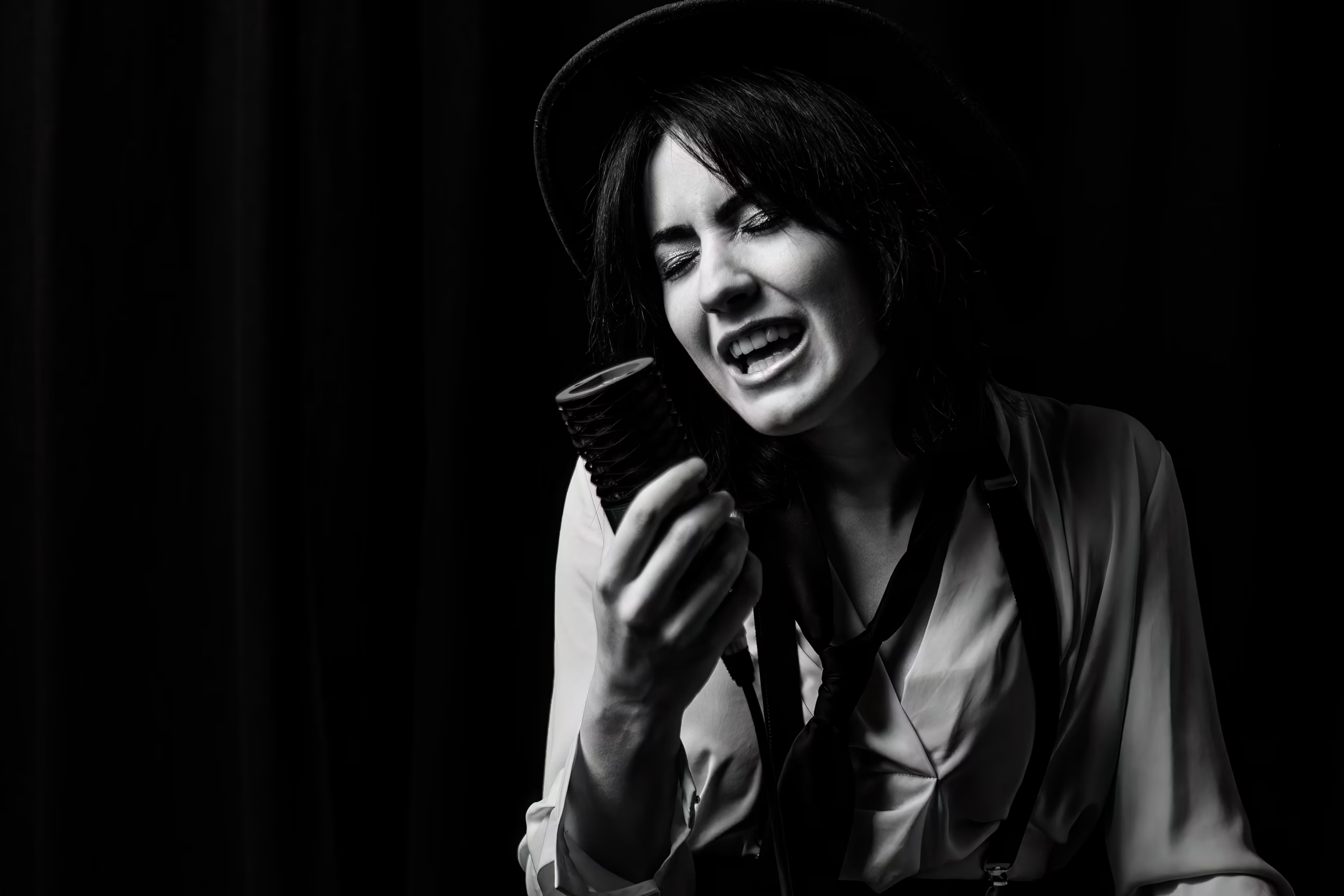
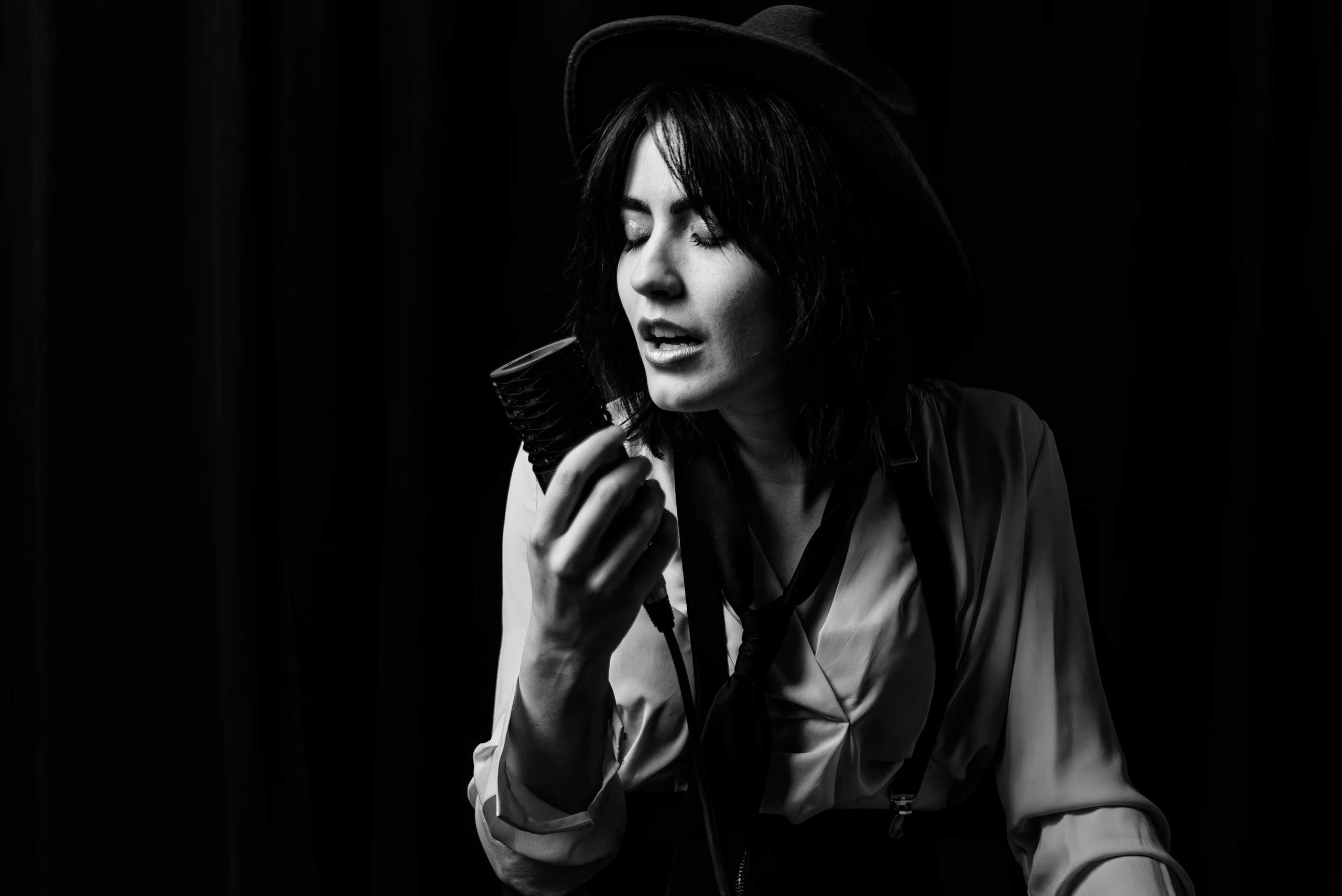
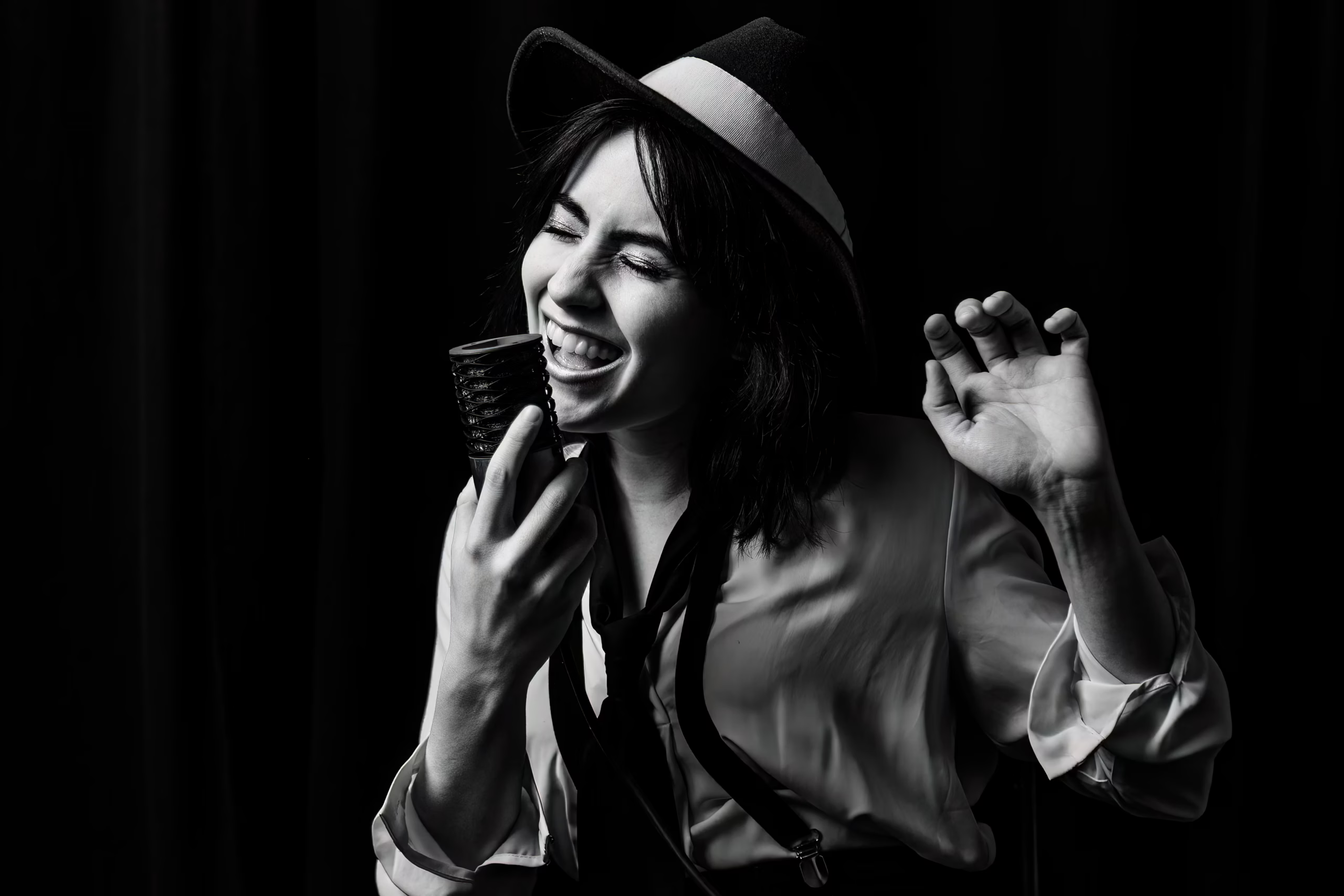
Black and white. The right shadows. A microphone from another age—the stuff of jazz clubs, cheap whiskey, and men with discounted hearts. She grips it as though she isn’t singing a song but strangling a confession. Eyes closed, mouth wide, face tightened into that marvelous grimace found only on people who stop performing and begin to truly feel.
There, she isn’t beautiful in the ordinary sense.
There, she is alive.
And the difference, let’s admit it, is vast.
Because beautiful women are everywhere. Instagram is full of immaculate faces with empty eyes and souls in airplane mode. Living women are rarer. The living ones look ready either to break or bite you. They make you think that even if they kissed you, they’d probably leave a bruise somewhere. Maybe not on the skin. But somewhere.
In black and white, she is that: not a pose, not a character, but the mysterious animal living beneath the makeup, beneath the clothes, beneath every clever sentence we use to defend ourselves from other people.
Then, as in every good rock song, the change arrives.
And here comes the other her.
Color explodes. Pink, red, warm shadows, a living room out of some alcoholic dream halfway between David Lynch and an after-dinner drink gone wrong. An armchair worn just enough, a glass in her hand, fishnets, and the gaze of someone who knows perfectly well the difference between love and addiction and, if she’s being honest, isn’t convinced the second is always worse.
Here she doesn’t sing.
Here she performs the song.
The song has grown flesh, legs, a mouth, sarcasm.








She is no longer the girl putting her soul into her throat. She is the girl entering the story that throat created. The one who drinks slowly while looking at you as if you were a negligible possibility. The one who stretches across the chair as though the world were boring but tolerable, provided there is a good drink, the wrong light, and someone to destabilize now and then.
She is cocky, yes.
But in the right way.
Not the swagger of idiots, which is merely cheap deodorant sprayed over insecurity. No. Hers belongs to someone hurt often enough to learn how to smile while sharpening the knife. Not necessarily to use it. Mostly to remind you that she could.
There is something deeply theatrical about her, yet true. Like everyone who invents a mask only to give themselves permission to tell the truth.
And in her, truth is always double.
On one side, the singer.
On the other, the character.
On one side, the woman who closes her eyes and lets the song out.
On the other, the woman who inhabits it, dirties it, stretches out inside it like on an unmade couch after a long night.
Two alter egos, yes.
But also two different ways of surviving.
The first is art.
The second is private legend.
The first says: this is who I am when I feel.
The second says: this is who I am when I refuse to be taken alive.
And between them are the details doing all the dirty work.
The fingers on the glass.
Eyes that seek no approval.
Lips parted as though she were about to tell you a secret or elegantly tell you to go fuck yourself.
The neck, the lights, the velvet, the set’s perfect chaos.
You can almost hear the track while looking at her.
Something with dirty drums, a guitar that refuses to behave, and a woman’s voice capable of moving from caress to slap within a single chorus.
And then you understand that you aren’t merely looking at a series of photographs.
You’re watching a song break itself into images.
Every photograph is a verse.
Every expression a rhyme wrong in exactly the right way.
Every change of atmosphere a minor chord landing on you without permission.
Then the story opens wider.
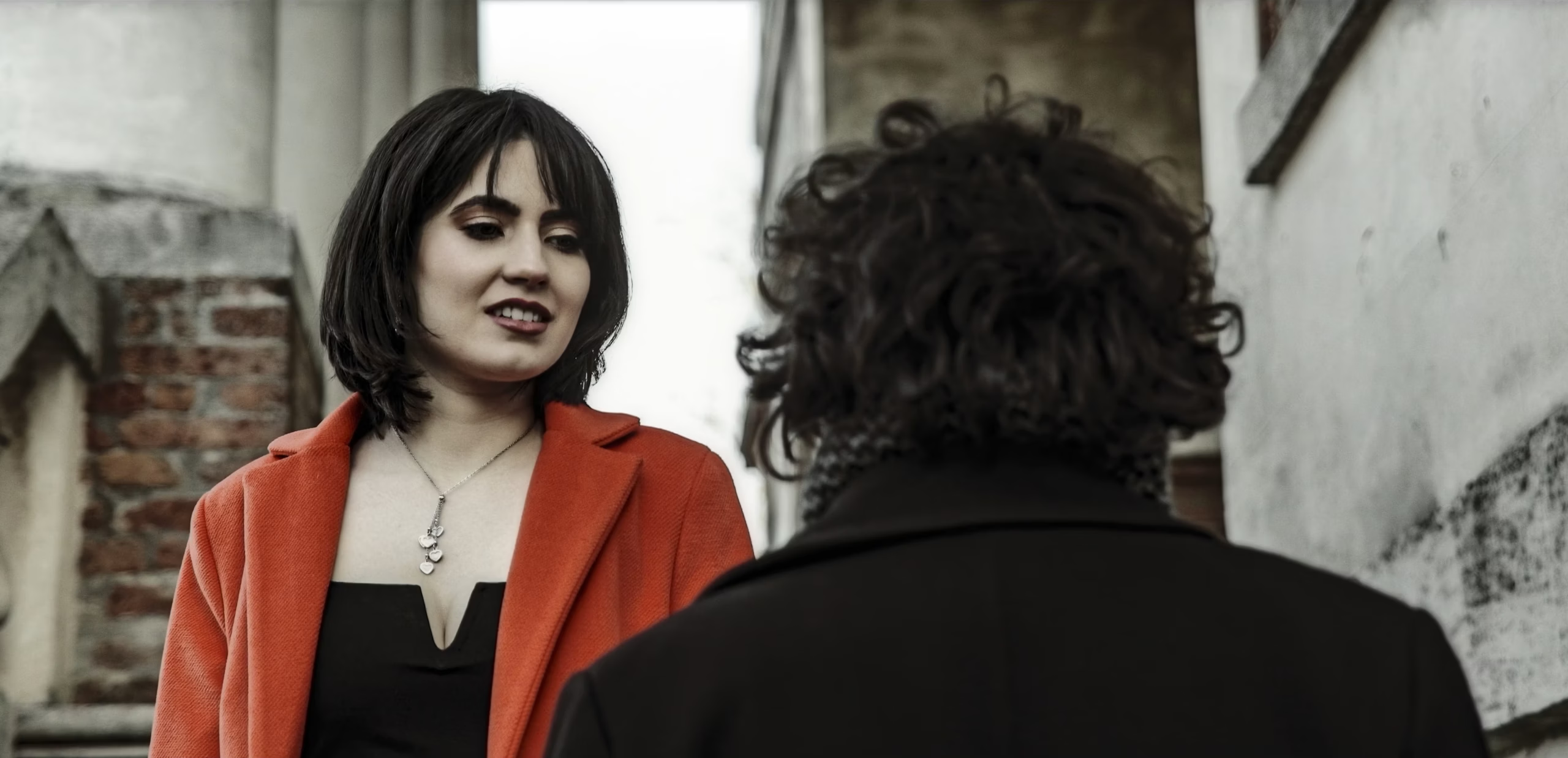
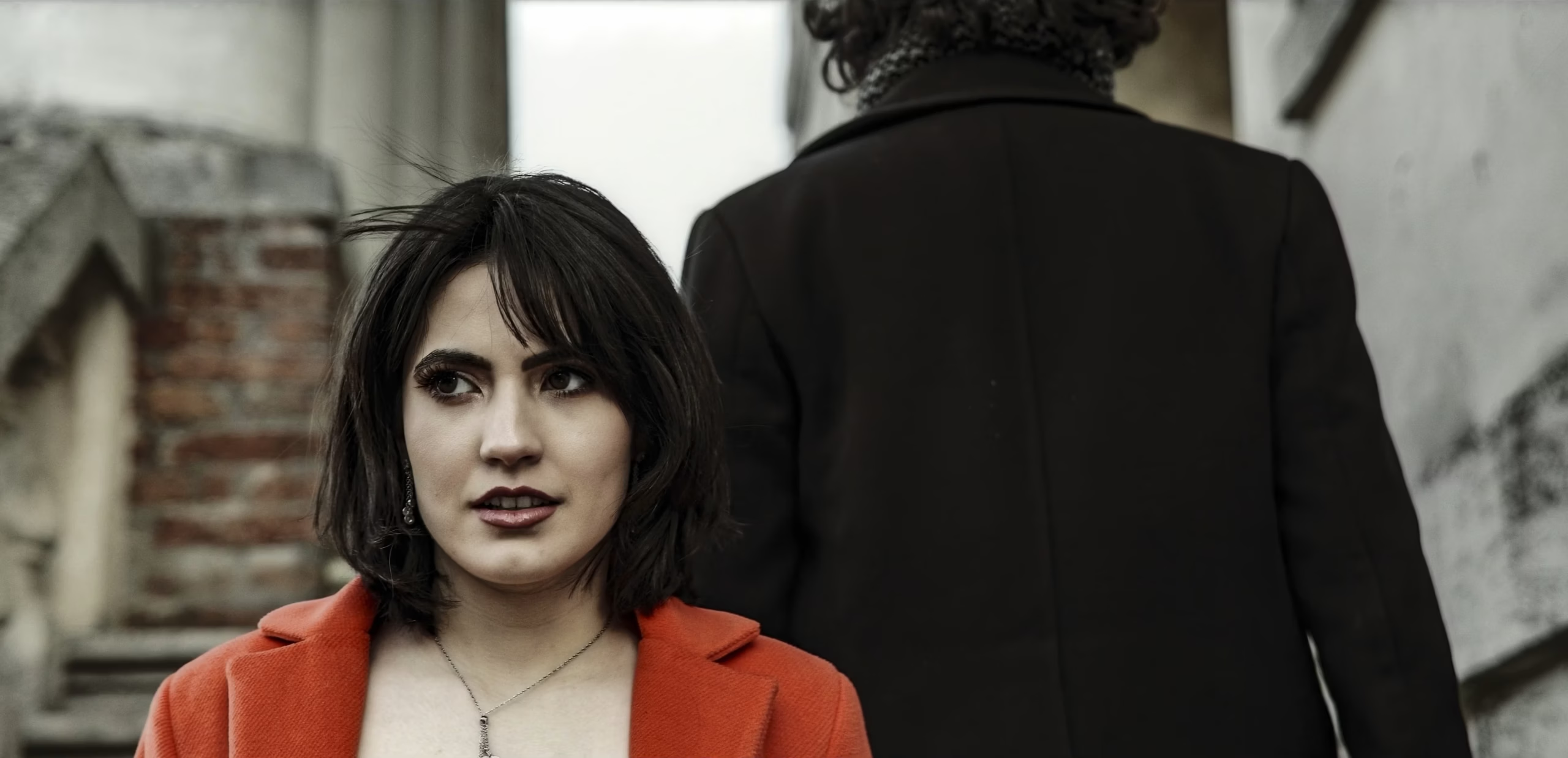
It leaves the living room, the microphone, the room itself, and steps out for air. It moves elsewhere. Another body appears, another gaze, another presence. A young man. Dark coat, tousled hair, the air of someone who probably thinks too much and sleeps badly. The kind of face that, in a well-written novel, would not be there by chance. And no one is ever there by chance in stories like these, even if everyone pretends otherwise to look sophisticated.
She changes again.
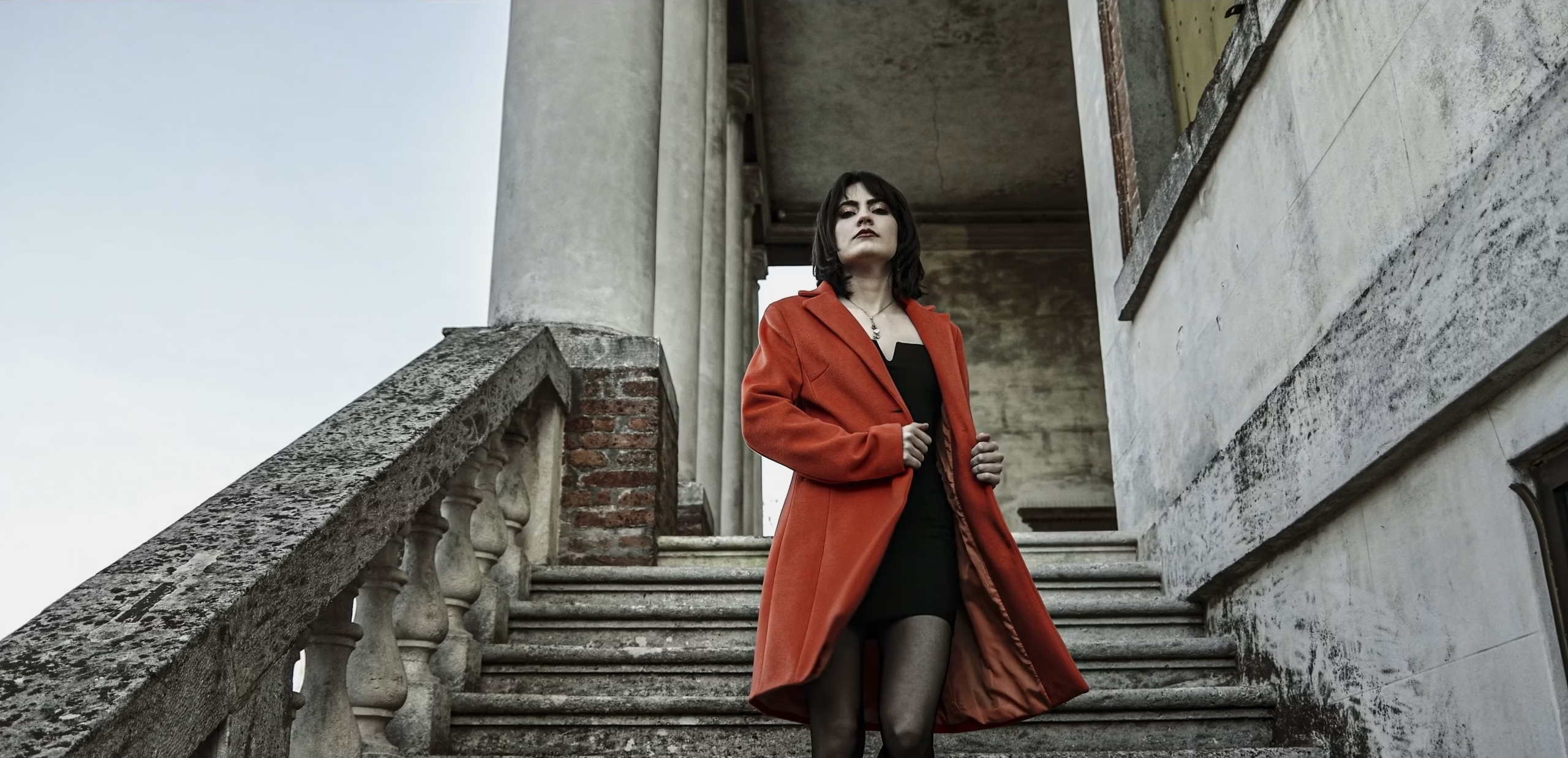
She appears in that orange coat, a declaration of war against the fog. She stands on the stairs, above him, before him, beside him, against him. It doesn’t matter. The feeling remains the same in every frame: she dominates the scene even when she seems merely to cross it.
She is no longer only the singer.
No longer only the woman from the living room.
Now she is the woman in the story.
The one who descends the stairs as though she knows something everyone else has yet to understand. The one who looks at a man and, within three seconds, manages to intrigue, confuse, and unsettle him at once. A kind of natural athletic talent, but with more charm and less fair play.
They need very little explanation between them.
The best stories work that way.
A meeting.
An imbalance.
An attraction that hasn’t yet decided whether it wants to become tenderness or an accident.
She looks at him closely, almost studies him. He looks like someone trying to absorb the blow, but he already knows he has entered a territory where somebody else writes the rules. And that somebody, obviously, is her.
There is something adorable and dangerous in the game.
Her above, him farther back.
Her moving forward, him nearly overwhelmed.
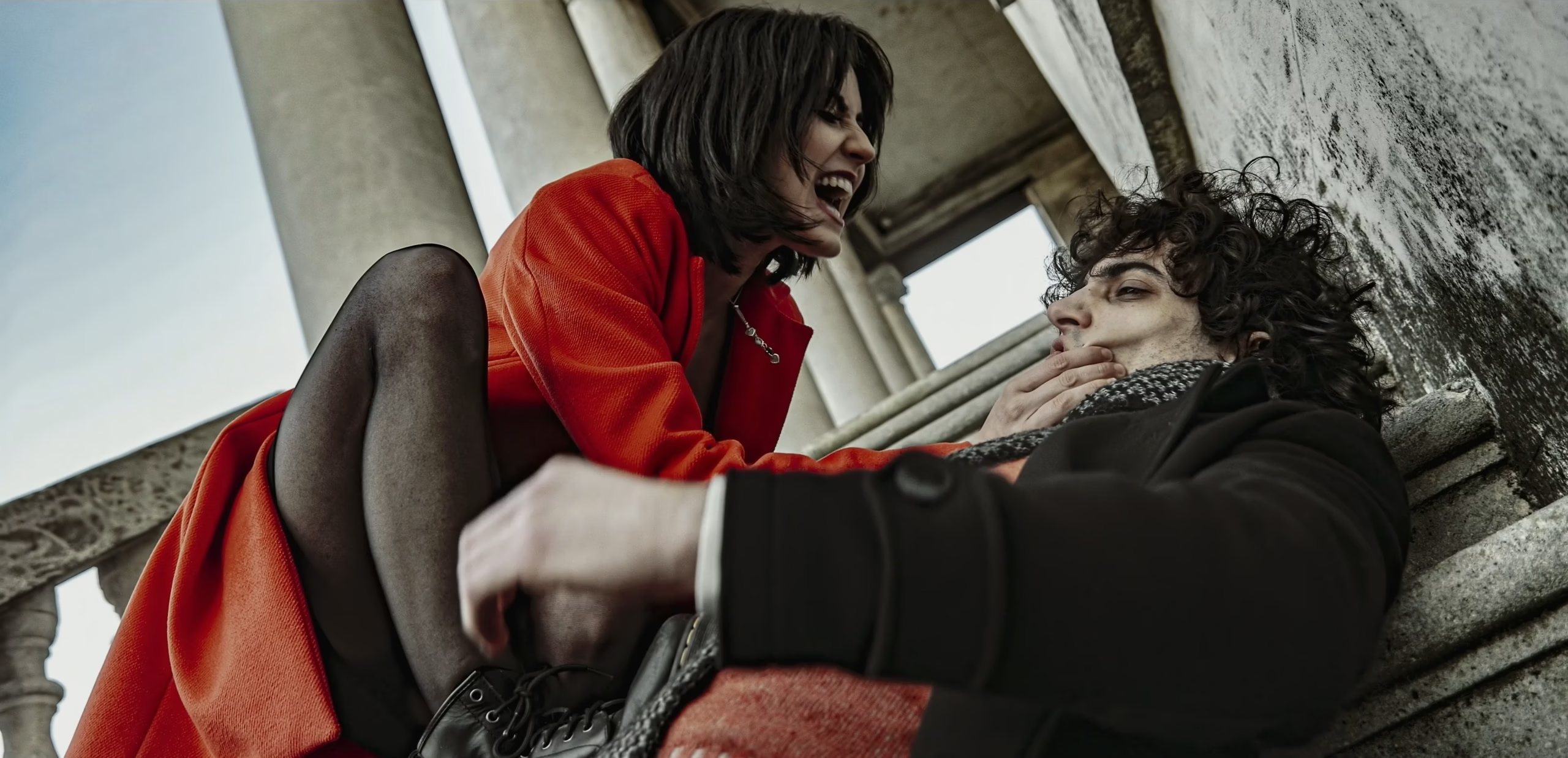
Her laughing, or perhaps roaring.
Her covering his mouth, invading his space, entering his scene like certain truths that arrive without knocking.
It is cinema, certainly.
But also an all-too-real dynamic.
Because some people don’t seduce you by asking you to come closer.
They seduce you by moving the floor beneath your feet.
And she has precisely that energy: not the muse’s. That’s an idea for lazy men who put women on pedestals to avoid actually dealing with them. No. She isn’t a muse. She’s a spark with legs. The best part of the evening and the worst trouble of the following week.
Then we go back inside. Or perhaps we never truly left. Because the beauty of certain stories is that inside and outside aren’t places. They are states of mind. The living room returns, and so does the wine. The lights continue their magnificent work of making everything more sensual and more false, which are nearly the same thing. She drinks. Watches. Thinks. Allows herself to be watched without giving herself away completely. Every image seems to say: Yes, you may look. But don’t think you’ve understood.
And she’s right.
Because you don’t understand a woman like this all at once.
Perhaps you never understand her at all.
Perhaps the most you can do is listen.
Which has always been the best solution with songs and interesting people.
In some frames she looks tired. In others, amused. In still others she appears ready to say something devastating, one of those sentences that stays on you for weeks, like: ‘Don’t worry, you didn’t disappoint me. I already expected nothing.’ But then she drinks, almost smiles, turns away, loses herself elsewhere.
Here her duality becomes the most fascinating part of the story.
Because the black-and-white singer is almost pure intention. Nerve, breath, a heart thrown open. She is the part that creates. The one that takes chaos and turns it into sound. The one that sweats truth in front of an old microphone and doesn’t give a damn about looking perfect.
The woman in red, meanwhile, is the narrative result of all that chaos. She is the fantasy born from art. The character an author would invent after listening to that voice too long. The song translated into flesh and provocation, crooked looks and half-full glasses, a femininity that neither apologizes nor promises salvation.
One creates.
The other burns.
One sings desire.
The other sits on it and crosses her legs.
One closes her eyes because she feels too much.
The other keeps hers wide open because she knows all too well what happens when you lower your guard.
And that is precisely where, to me, the shoot stops being merely ‘beautiful’ and becomes genuinely narrative.
Because it tells something we all know, if we think about it: no one is only one person. We all have at least two versions of ourselves. The one that truly feels and the one that invents a character to live through it without being crushed. The one that suffers and the one that turns it into irony. The one that strips naked and the one that puts on her best coat and tells the world to fend for itself.
Here, she plays them both.
And she plays them well precisely because she makes no attempt to tidy them up.
There is no moral, no redemption, none of the usual independent-film bullshit where somebody finally ‘learns to love herself.’ Thank God. I leave that garbage to motivational courses and Instagram bios written in cursive.
There is something more honest here.
There is a woman who sings and, through singing, gives birth to her double.
There is a woman who drinks and, while drinking, seems to reconsider every time being desired wasn’t necessarily the same as being truly seen.
There is a woman who meets a man and throws him off balance not because she wants to win, but because she doesn’t know how to exist quietly.
There is a woman who, in the end, returns to the microphone anyway.
And that may be the most beautiful part.
Because after the game, the wine, the flirting, the trouble, the emotional corridors, the stairs, the bodies too close, the silences, the half-sexy threats, the half-wrecked living rooms, and that usual glorious confusion surrounding nights worth remembering… we return there.
To the music.
As always.
Because for certain people, music isn’t a frame.
It is the final confession.
The only place where the mask and the true face stop fighting and agree, for three and a half minutes at least, to coexist.
In the final section, when you see her again with the microphone in her hand, making that gesture both irreverent and brazen, still carrying all her electricity, you understand that it doesn’t matter how many lives she holds inside. It doesn’t matter how many alter egos inhabit her. It doesn’t matter whether outside she is a whiskey girl with crooked eyes, a queen of chaos in fishnets and the right armchair, or a theatrical creature who appeared on a staircase to magnificently ruin somebody’s peace.
In the end, her center remains the same.
The voice.
That is where all her versions meet.
The rebel.
The ill-mannered romantic.
The late-night barroom diva.
The girl who plays with danger as though it were a new shade of lipstick.
The woman who laughs in the world’s face and then, deep down, turns it into a song so it cannot crush her.
And perhaps that is what this sequence truly tells: not the story of a girl and her character, but of a girl who multiplies herself in order to tell the truth more clearly.
One part sings.
The other lives what was sung.
One gives birth to the song.
The other walks through it in heels, with wine, fishnets, anger, beauty, and all the required trouble.
And between them stand us: spectators, witnesses, poor idiots with enough memory to recognize the moment a photograph stops being merely a photograph and begins to resemble something more dangerous.
Like a memory we never lived.
Like a woman we never had who, for that very reason, continues to seem perfect.
Like a song heard too late in a night that lasted too long, while somebody laughed, somebody else drank, everyone was a little broken, and yet for a few minutes it seemed all right.
No, not all right.
Perfect.
Because certain souls were not made to sit neatly.
They were made to vibrate.
To get dirty.
To put themselves onstage.
To seduce, scream, drink, bite into the night, turn themselves into characters, then become human again an instant before the dark.
Here, she does exactly that.
First she sings.
Then she becomes the song.
Then she drinks it.
Then looks it in the eye.
Then drags it onto a staircase.
Then lays it across an armchair.
Then carries it into a half-wrecked living room.
Then places it back before a microphone.
And honestly, there is nothing we can do but remain there and listen.
Because some women pass through.
Others stay.
And then there are those who, even after they leave, abandon the chorus inside your head.